Illinois Affidavit for Service by Publication
What this document covers
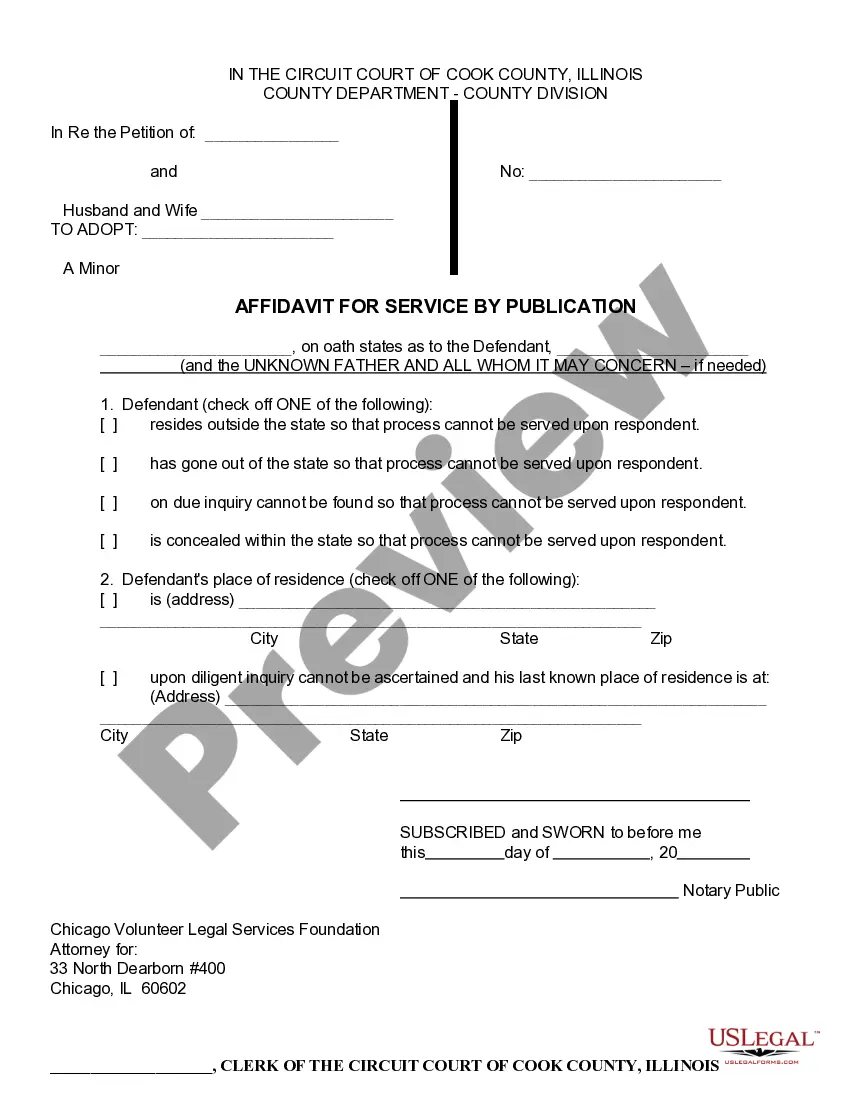
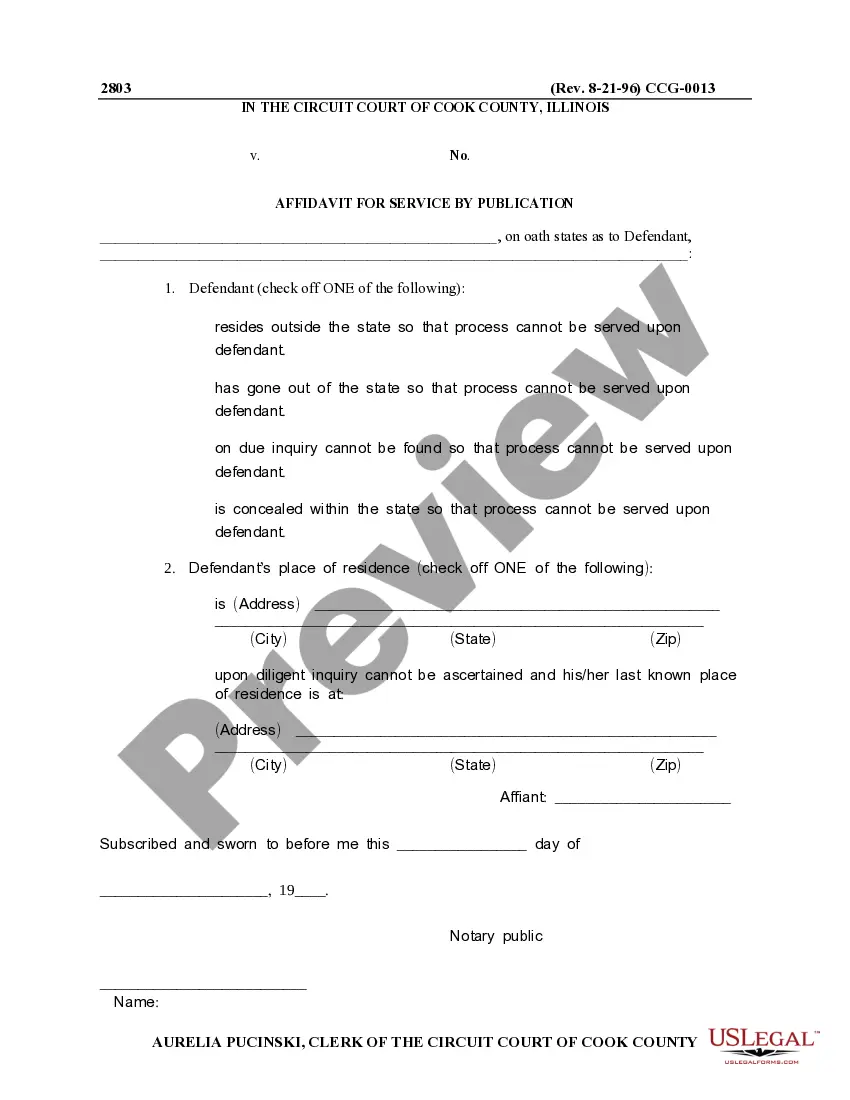
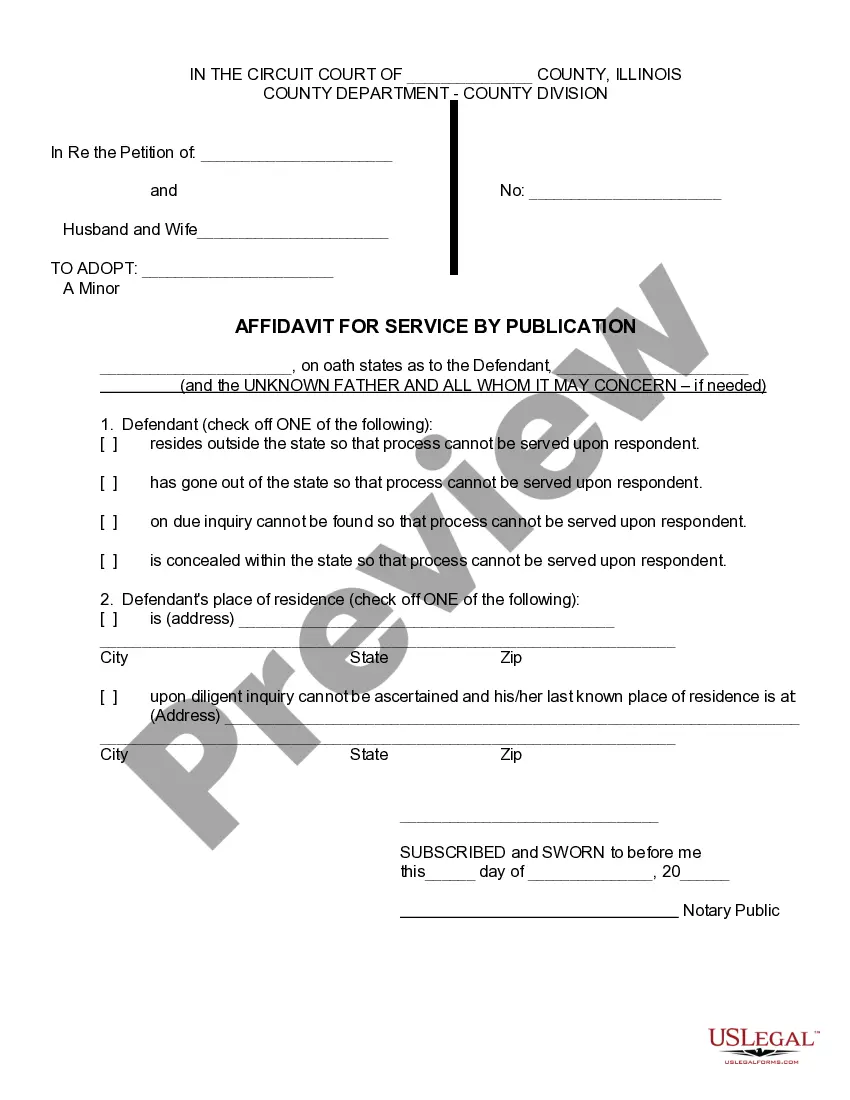
The Affidavit for Service by Publication is a legal document used when an individual cannot be located for court-related purposes. This form allows the affiant to declare under oath that they have made reasonable efforts to locate the defendant but were unsuccessful. This type of affidavit is essential in cases where traditional methods of serving notice are not viable, such as when a defendant resides outside the state, has left the state, or cannot be found despite diligent inquiry.
Key components of this form
- Affiant's sworn statement detailing efforts made to locate the defendant.
- Checkbox options to specify the reason for not serving the defendant directly.
- Spaces for the defendant's last known address or a statement regarding inability to ascertain their residence.
- Signature line for the affiant and section for notarization.
- Clerk's acknowledgment for filing with the court.
When to use this form
This form is used in legal proceedings when you need to notify a defendant about a court case, but you cannot deliver the legal documents in person. Examples include adoption cases, divorce proceedings, or any matters where a partyâs whereabouts are unknown. It is particularly useful when the defendant is believed to be outside the jurisdiction of the court or has deliberately avoided being served.
Who this form is for
- Individuals or couples involved in adoption proceedings.
- Parties filing for divorce or dissolution of marriage where a spouse cannot be found.
- Anyone required to notify a defendant of legal action when direct service is not possible.
- Attorneys representing clients in cases necessitating service by publication.
How to prepare this document
- Identify the parties involved in the legal case, including the affiant and defendant.
- Check the appropriate box indicating the reason the defendant cannot be served.
- Fill in the last known address of the defendant, if known, or state that it cannot be ascertained.
- Sign the affidavit before a notary public; ensure all signatures are completed where required.
- File the completed and notarized affidavit with the circuit court.
Notarization guidance
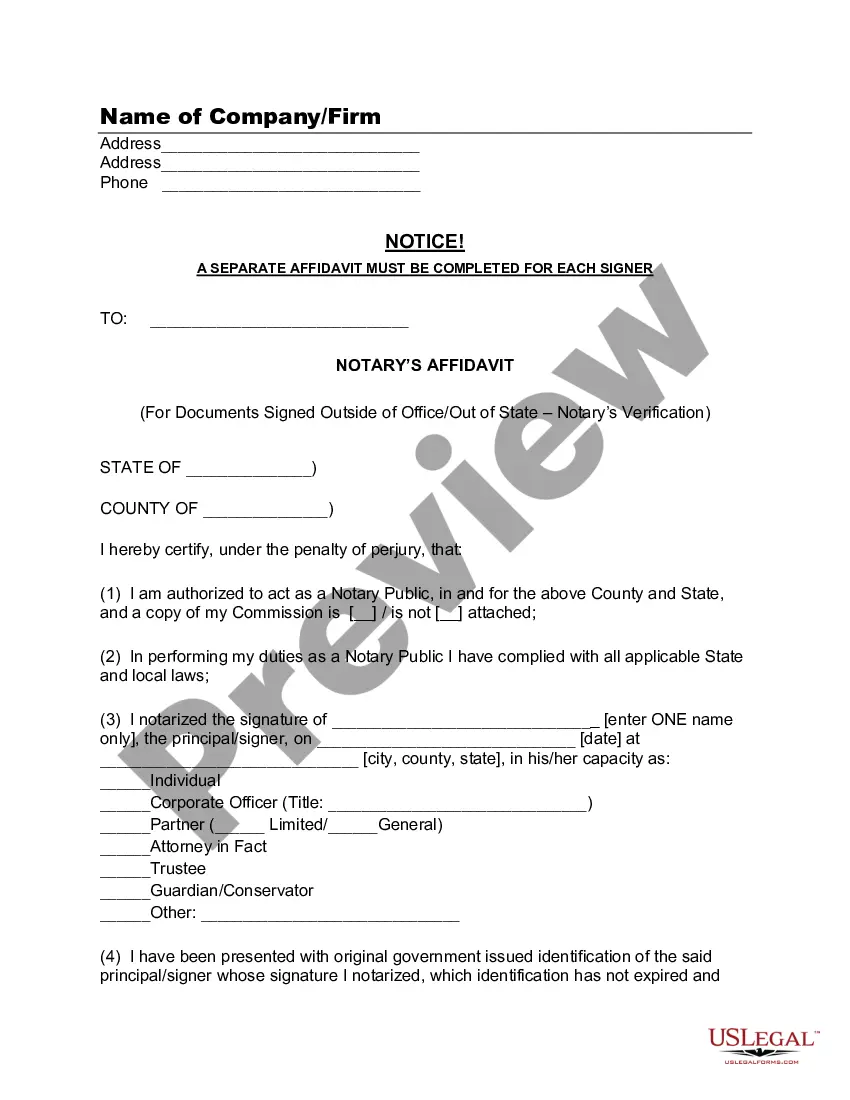
Yes, this form must be notarized to be legally valid. The affidavit requires the signature of the affiant to be witnessed by a notary public, affirming the truth of the statements made. US Legal Forms offers integrated online notarization for convenience, allowing you to complete the process securely from your home.
Get your form ready online
Our built-in tools help you complete, sign, share, and store your documents in one place.
Make edits, fill in missing information, and update formatting in US Legal Forms—just like you would in MS Word.
Download a copy, print it, send it by email, or mail it via USPS—whatever works best for your next step.
Sign and collect signatures with our SignNow integration. Send to multiple recipients, set reminders, and more. Go Premium to unlock E-Sign.
If this form requires notarization, complete it online through a secure video call—no need to meet a notary in person or wait for an appointment.
We protect your documents and personal data by following strict security and privacy standards.

Make edits, fill in missing information, and update formatting in US Legal Forms—just like you would in MS Word.

Download a copy, print it, send it by email, or mail it via USPS—whatever works best for your next step.

Sign and collect signatures with our SignNow integration. Send to multiple recipients, set reminders, and more. Go Premium to unlock E-Sign.

If this form requires notarization, complete it online through a secure video call—no need to meet a notary in person or wait for an appointment.

We protect your documents and personal data by following strict security and privacy standards.
Mistakes to watch out for
- Failing to provide complete and accurate information about the defendant.
- Not checking the appropriate reason for inability to serve.
- Neglecting to sign the affidavit in the presence of a notary.
- Forgetting to file the notarized affidavit with the court in a timely manner.
Benefits of completing this form online
- Convenient access to professionally drafted legal forms.
- Edit and customize the document to fit your specific needs.
- Reliable templates ensure compliance with legal requirements.
- Immediate downloads for quick completion and filing.
Quick recap
- The Affidavit for Service by Publication is necessary when personal service of legal documents is not possible.
- It is essential to include accurate information and reasons for the inability to serve.
- Notarization is required for the document to hold legal weight in court proceedings.
- This form is primarily used in Illinois and should comply with local court rules.
Looking for another form?


Form popularity
FAQ
Serving a summons through publication in a newspaper A person needs to file a Motion for Leave to Serve by Publication and an Affidavit for Service by Publication before being allowed to give service through the newspaper.
The receipt for certified or registered mail shall state the name and address of the addressee, and the date of mailing, and shall be filed by the clerk.
If the defendant is a private corporation, it can be served by leaving a copy of the legal documents with the agent that is registered with the state or with any officer or agent of the corporation located in the state. It can also be served by publication and mail like individuals.
In some situations where the process server truly failed to serve you the court papers properly, the court cannot pass a judgment against you because it has no personal jurisdiction over you. Thus, they will postpone the case to another court date where the process server will attempt to serve you again.
As you may recall, the Illinois Code of Civil Procedure allows substitute service, through which process can be served by leaving a copy of the summons at a defendant's abode, with some family member or resident over the age of 13. 735 ILCS 5/2-203(a)(2).
SPRINGFIELD, Ill. (WTVO) ? The Illinois Supreme Court has amended a rule that allows residents to be served a court summons through social media, text, or email.
Serving a summons through publication in a newspaper A person needs to file a Motion for Leave to Serve by Publication and an Affidavit for Service by Publication before being allowed to give service through the newspaper.
For example, in Illinois, the rules generally require an ?affidavit? be notarized, though there are specific types of affidavits to which the requirement does not apply, such as affidavits being filed in support of a motion for summary judgment or a motion for involuntary dismissal.