Illinois Estate Planning Questionnaire
About this form
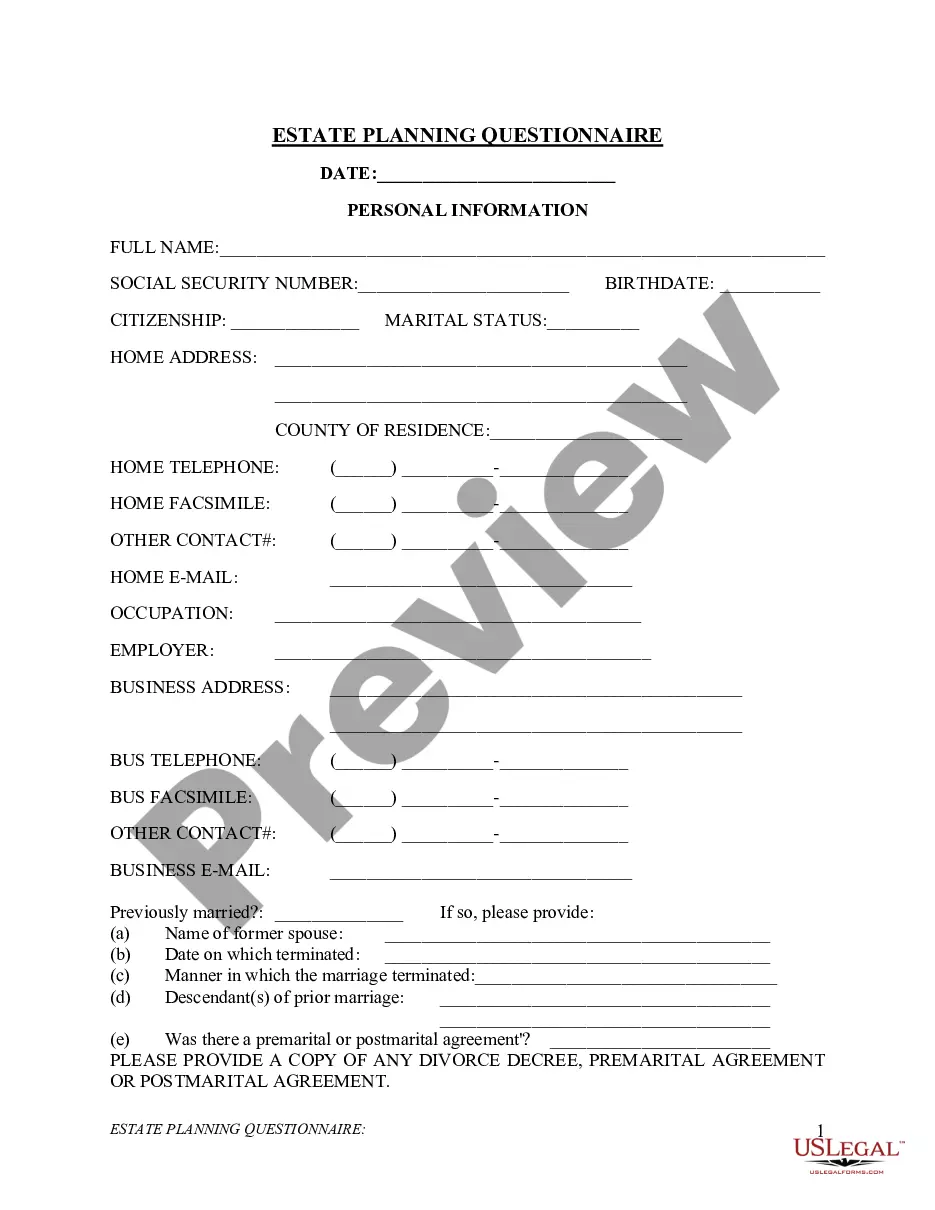
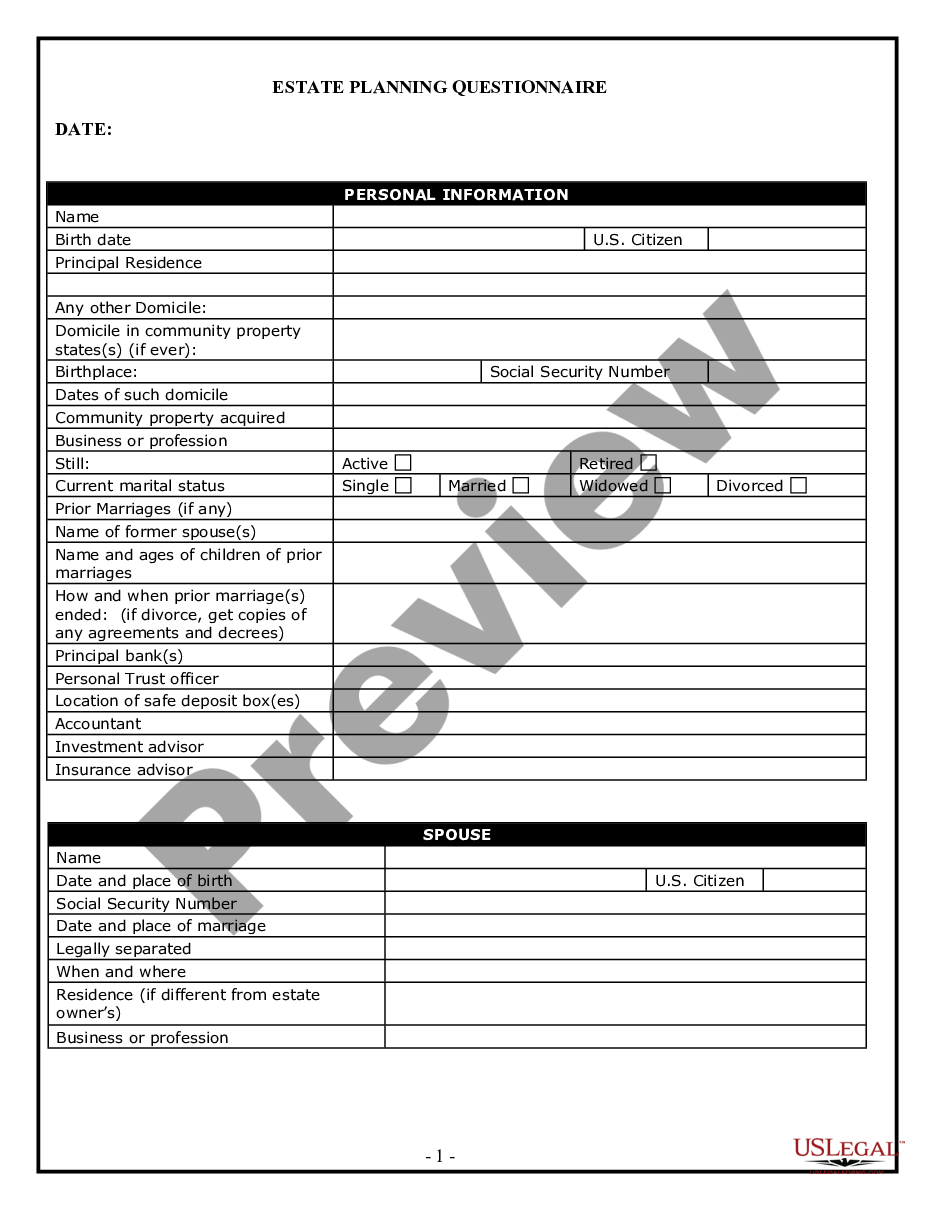
The Estate Planning Questionnaire is a comprehensive document designed to gather essential personal, financial, and familial information for individuals preparing their estate plans. This form helps streamline discussions with an attorney or estate planner, allowing them to create a tailored estate plan that meets your unique needs. Unlike other estate planning documents, this questionnaire focuses on collecting specific details that form the foundation of your estate planning process.
Main sections of this form
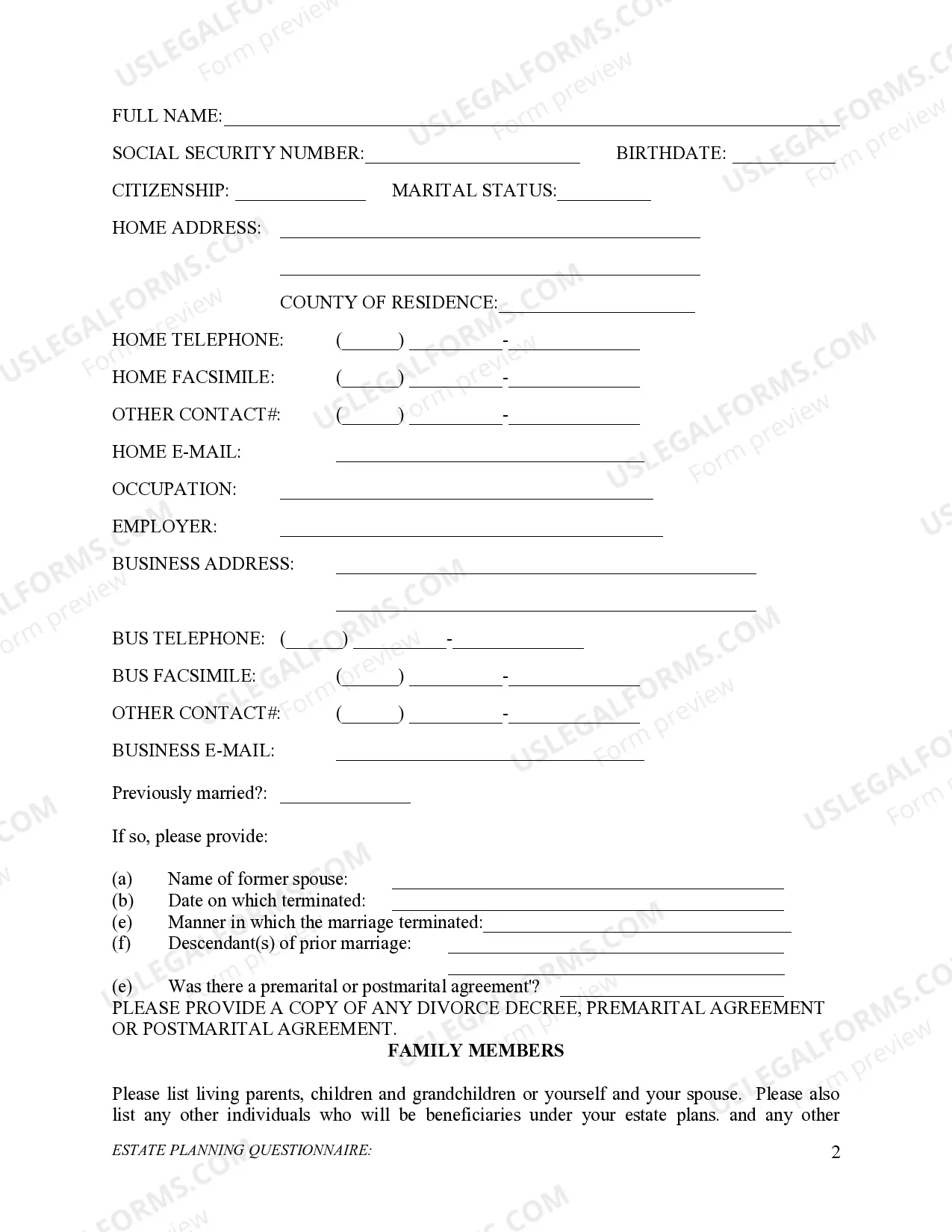
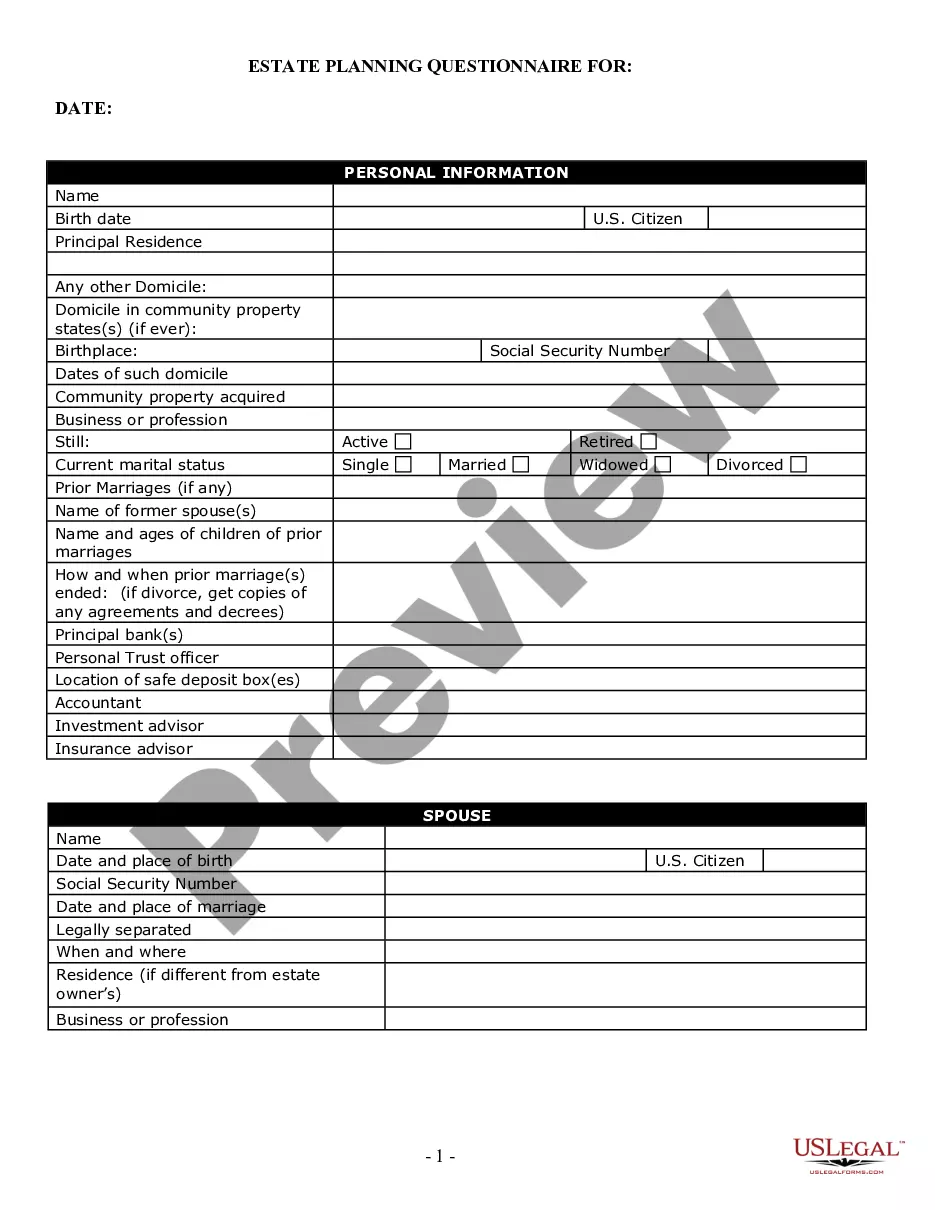
- Personal information, including full name, Social Security number, and contact details.
- Marital status and details regarding any prior marriages and dependents.
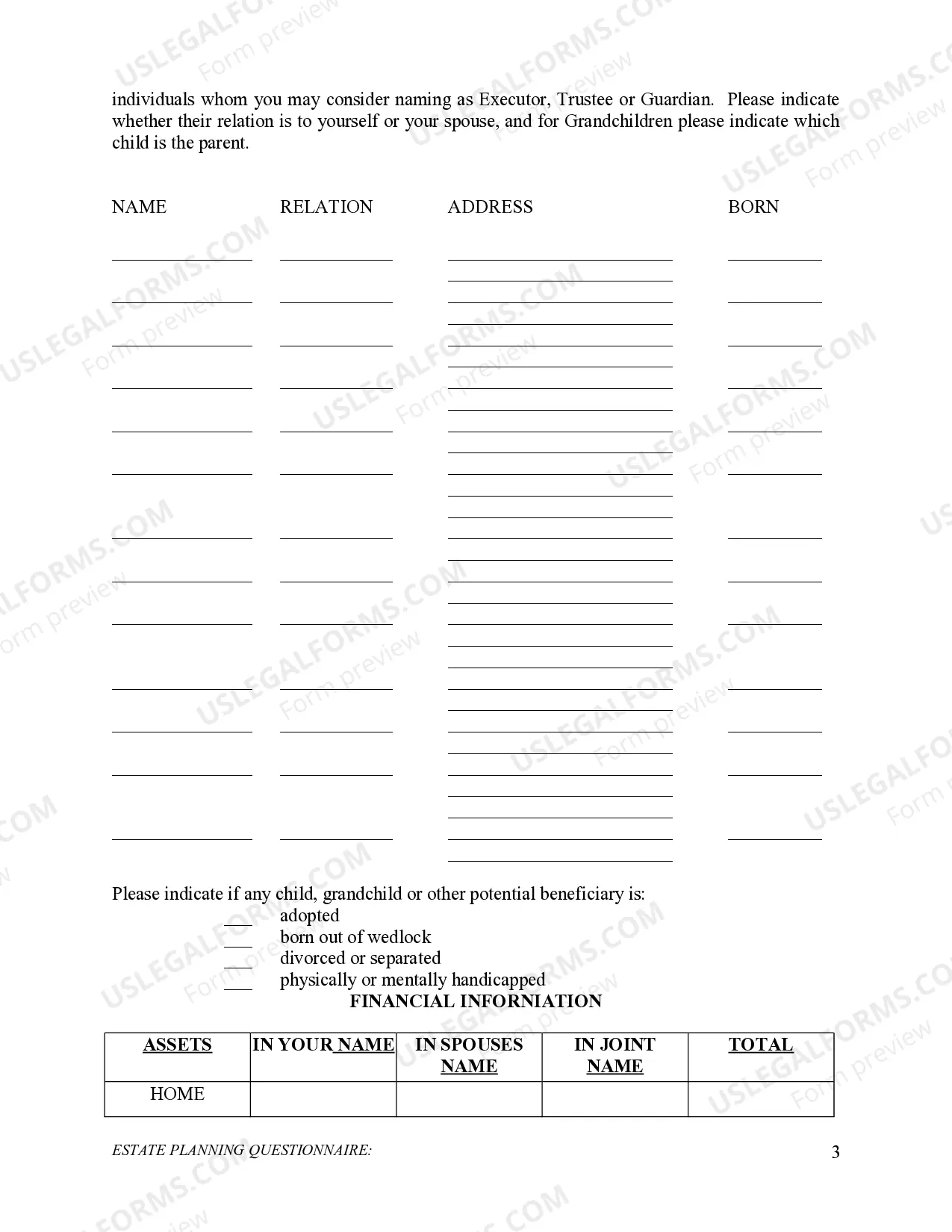
- Information about family members who may be beneficiaries, executors, or guardians.
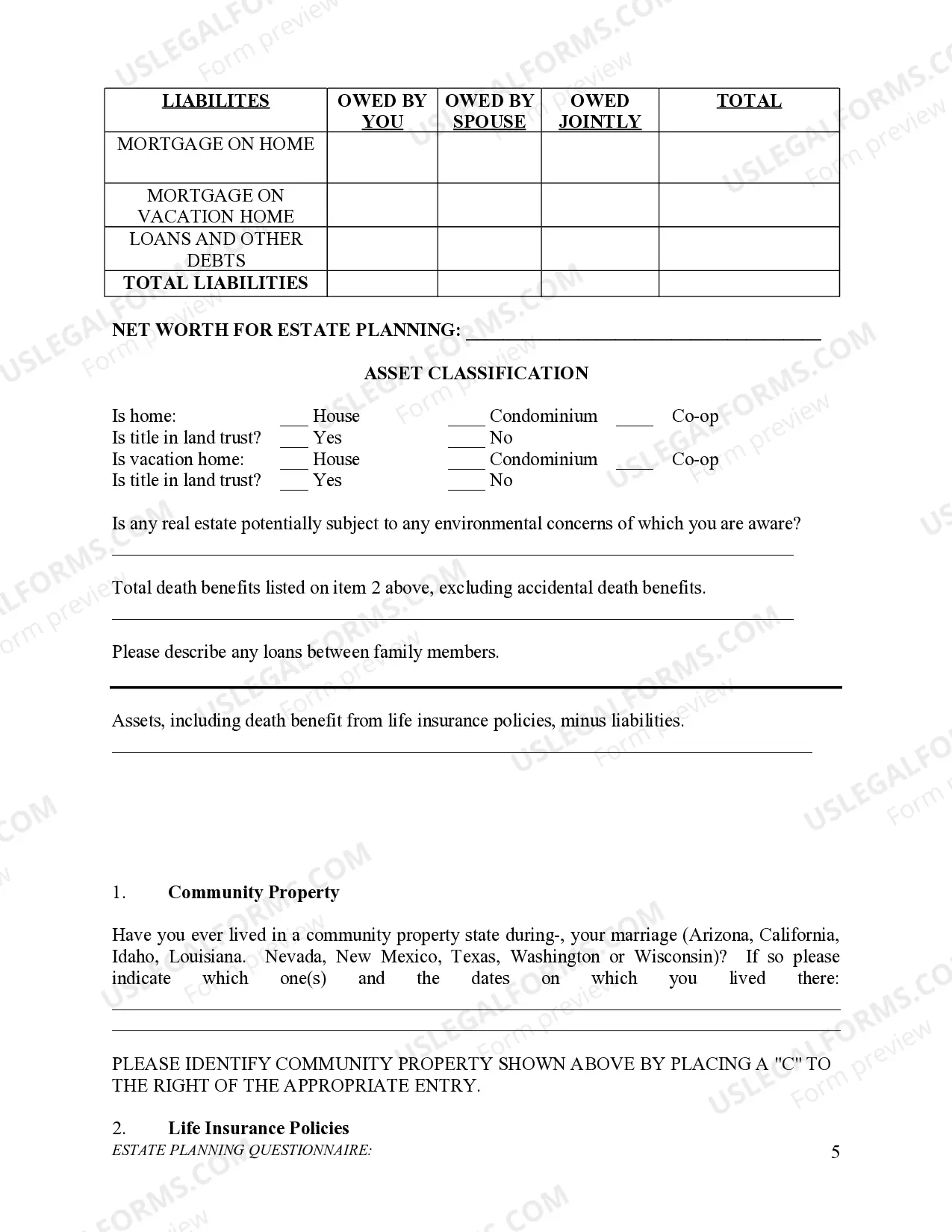
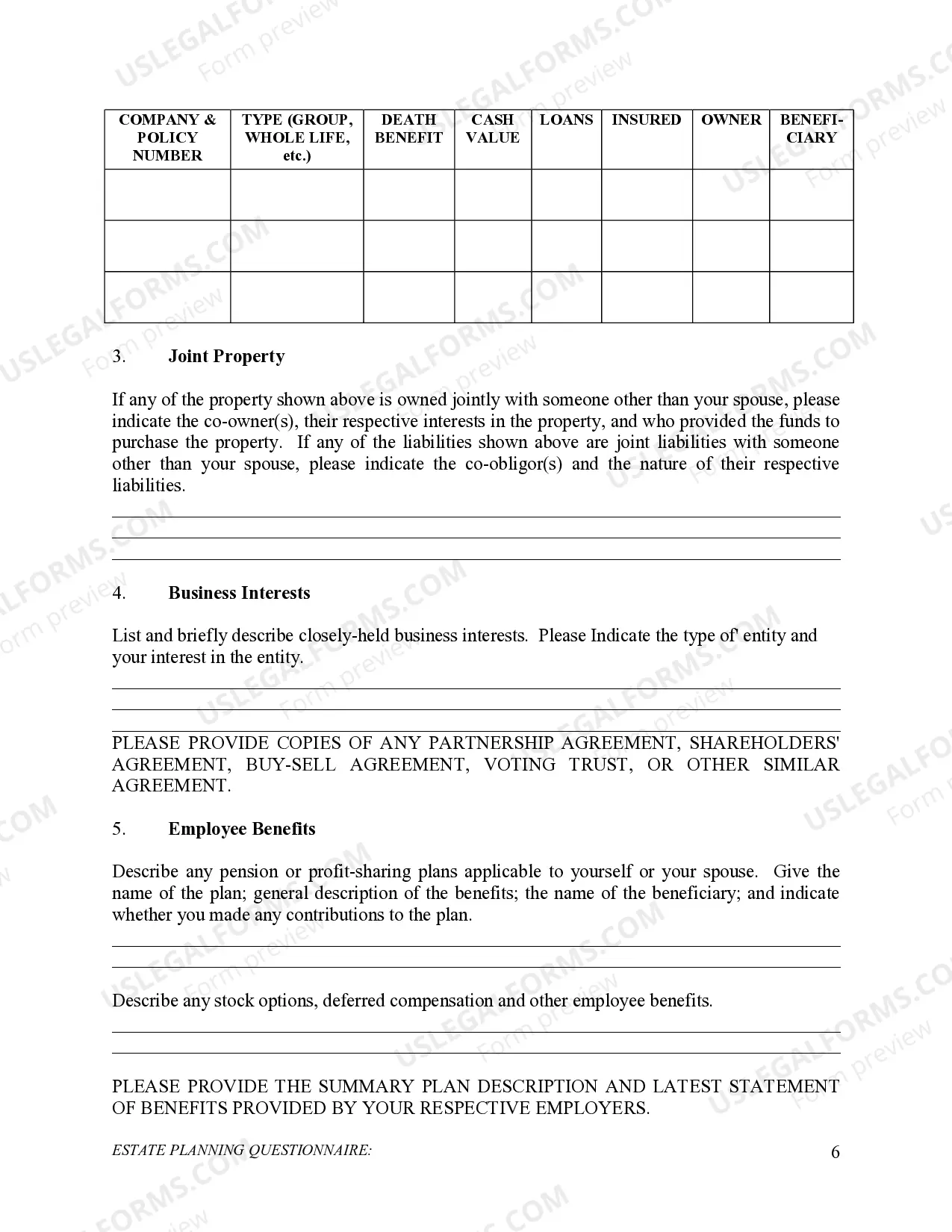
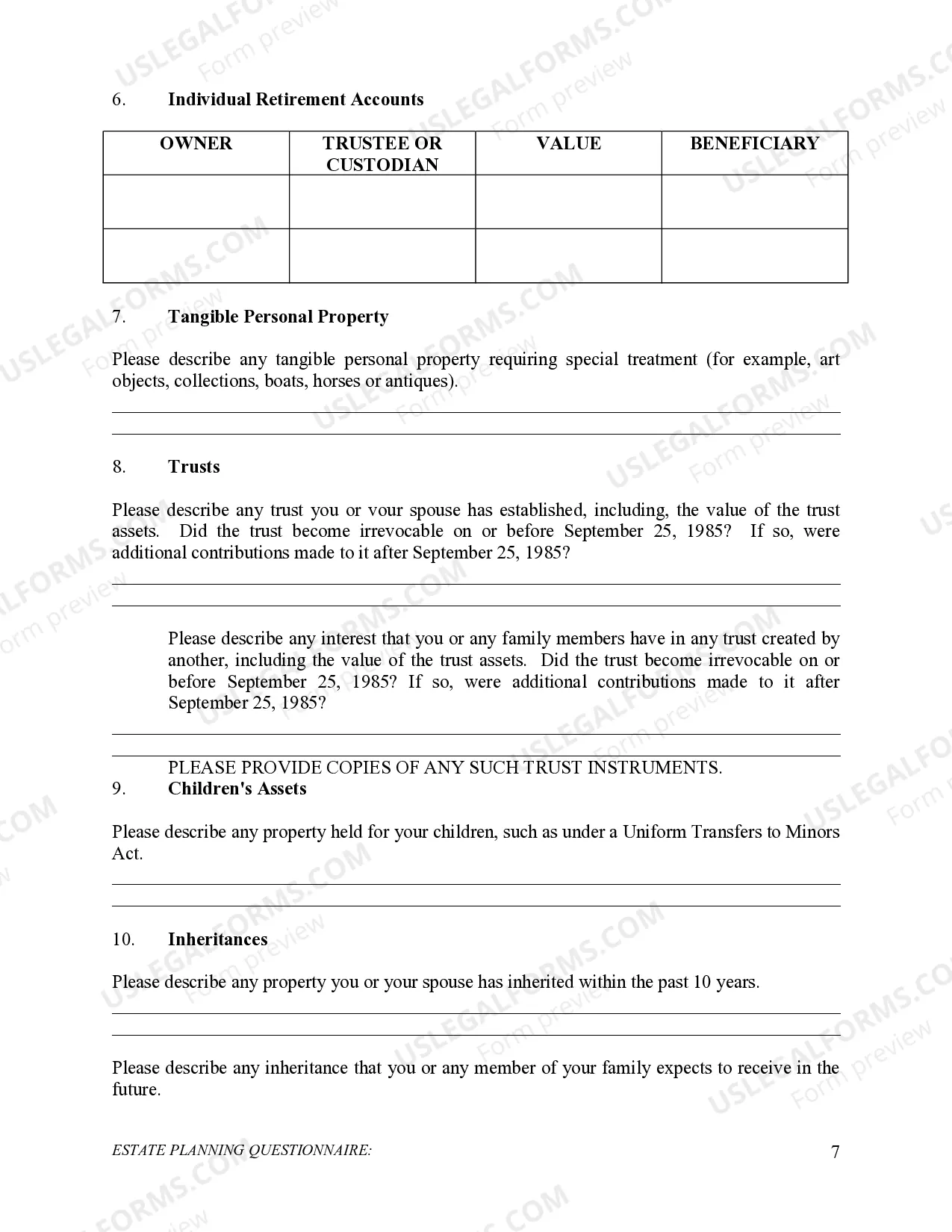
- Financial information, including assets, liabilities, and any business interests.
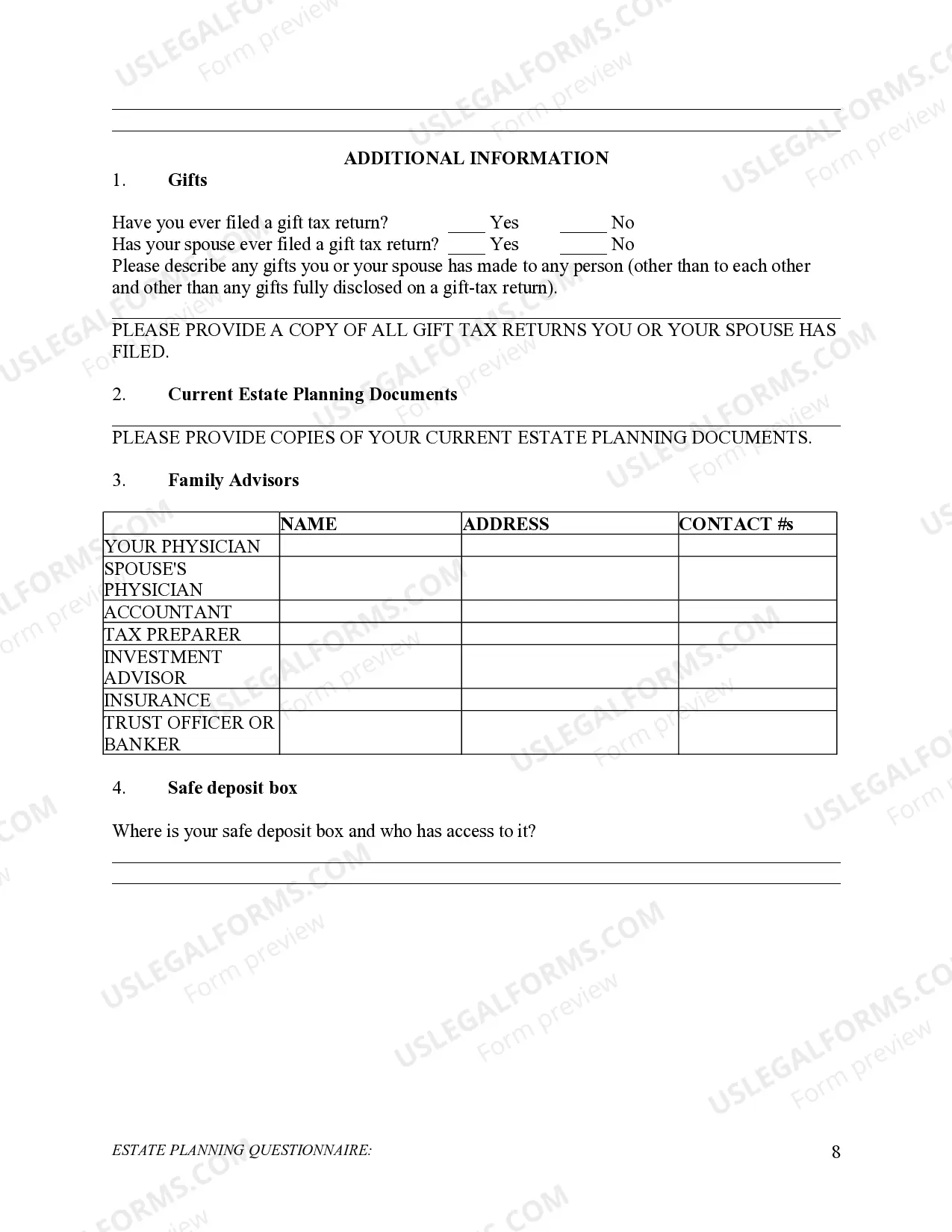
- Details of current estate planning documents and family advisors.


When this form is needed
This form should be completed prior to meeting with an estate planning attorney or financial advisor. Use it when you want to ensure that all relevant information about your assets, family dynamics, and financial responsibilities is organized and available for discussion. It is particularly useful for those who are starting their estate planning process or revising existing plans due to changes in family or financial situations.
Who should use this form
- Individuals looking to establish or update their estate planning documents.
- Married couples and individuals with dependents, such as children or grandchildren.
- People who have experienced changes in their personal circumstances, such as divorce or acquisition of new assets.
- Anyone needing to clarify their wishes regarding asset distribution after death.
Steps to complete this form
- Begin by entering the date at the top of the form.
- Fill in your personal details, including your full name, contact information, and marital status.
- Provide details about any previous marriages and current family members, including potential beneficiaries.
- List your financial assets and liabilities to give a clear picture of your net worth.
- Include information on any current estate planning documents you have, such as wills or trusts.
Is notarization required?
This form does not typically require notarization to be legally valid. However, some jurisdictions or document types may still require it. US Legal Forms provides secure online notarization powered by Notarize, available 24/7 for added convenience.
Get your form ready online
Our built-in tools help you complete, sign, share, and store your documents in one place.
Make edits, fill in missing information, and update formatting in US Legal Forms—just like you would in MS Word.
Download a copy, print it, send it by email, or mail it via USPS—whatever works best for your next step.
Sign and collect signatures with our SignNow integration. Send to multiple recipients, set reminders, and more. Go Premium to unlock E-Sign.
If this form requires notarization, complete it online through a secure video call—no need to meet a notary in person or wait for an appointment.
We protect your documents and personal data by following strict security and privacy standards.

Make edits, fill in missing information, and update formatting in US Legal Forms—just like you would in MS Word.

Download a copy, print it, send it by email, or mail it via USPS—whatever works best for your next step.

Sign and collect signatures with our SignNow integration. Send to multiple recipients, set reminders, and more. Go Premium to unlock E-Sign.

If this form requires notarization, complete it online through a secure video call—no need to meet a notary in person or wait for an appointment.

We protect your documents and personal data by following strict security and privacy standards.
Typical mistakes to avoid
- Leaving out crucial details about previous marriages or dependents, which can affect estate planning.
- Underreporting assets or liabilities, leading to an inaccurate net worth assessment.
- Failure to include family advisors or correct contact information.
- Not reviewing the completed form for errors before submission.
Benefits of completing this form online
- Accessible and convenient, allowing you to fill it out at your own pace.
- Editable format enables you to make changes easily as your circumstances change.
- The secure platform provides peace of mind regarding the confidentiality of your information.
- Creates a well-organized document that you can bring to your attorney for effective planning.
Looking for another form?



Form popularity
FAQ
Ways to Reduce or Eliminate the Illinois estate tax: Use advanced gift and estate planning techniques. Life insurance planning. Assets left to a surviving spouse or civil union partner are exempt from the Illinois estate tax. Assets left to charity are exempt from the Illinois estate tax.
Illinois is one of only 12 states to still impose an estate tax. Six other states impose an inheritance tax on assets transferred from a deceased person's estate.
Estate taxes should be paid within nine months after the death of the loved one. What about Illinois Estate Tax? Estates valued under $4 million do not need to file estate taxes in Illinois. For estates over $4 million, the tax rate is graduated with the upper level ($10.04 million and up) at 16 percent.
If a person dies without a will, the person died intestate. The person who died is called the decedent. The decedent's property is given to the decedent's heirs during a probate court case.If the person had no spouse or children, then their property goes to their next closest surviving relatives.
Generally, only spouses, registered domestic partners, and blood relatives inherit under intestate succession laws; unmarried partners, friends, and charities get nothing.If there are no children, the surviving spouse often receives all the property.
The Illinois estate tax rate is graduated and goes up to 16%. It is applied on estates worth more than $4 million.
An inheritance tax is imposed on someone who actually receives an inheritance. But there's no federal or Illinois tax on inheritances. Some states do have inheritance taxes, but not Illinois. Illinoisans who inherit money or property, or receive it as a gift, are not taxed.
But there's no federal or Illinois tax on inheritances.Illinoisans who inherit money or property, or receive it as a gift, are not taxed.
Illinois Estate Tax Exemptions and RatesIllinois' estate tax exemption will remain at $4,000,000 in 2021 with no adjustments for inflation. Like many states, their highest maximum estate tax is 16% and they do not offer portability for spouses.