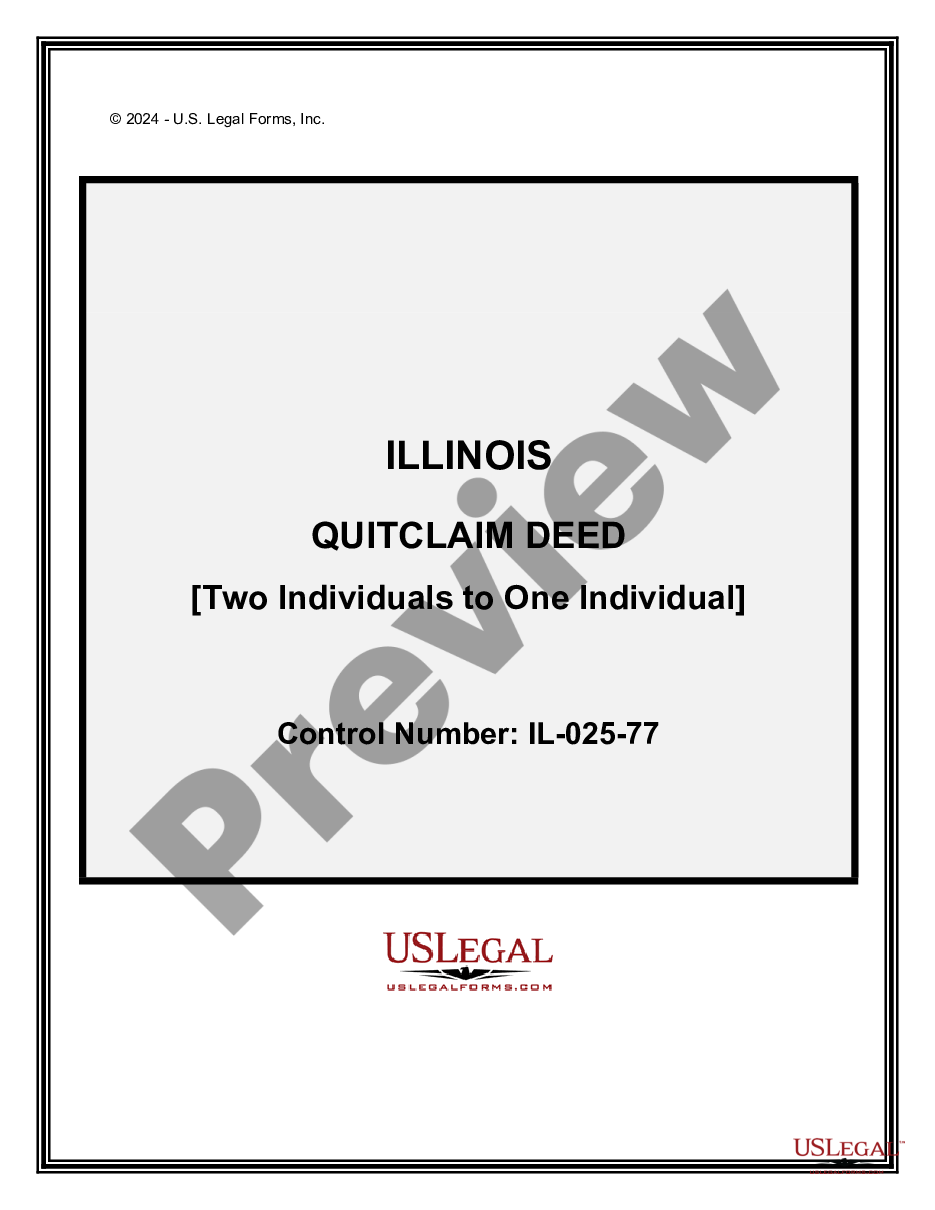
Illinois Quitclaim Deed from Two Individuals to One Individual
What is this form?
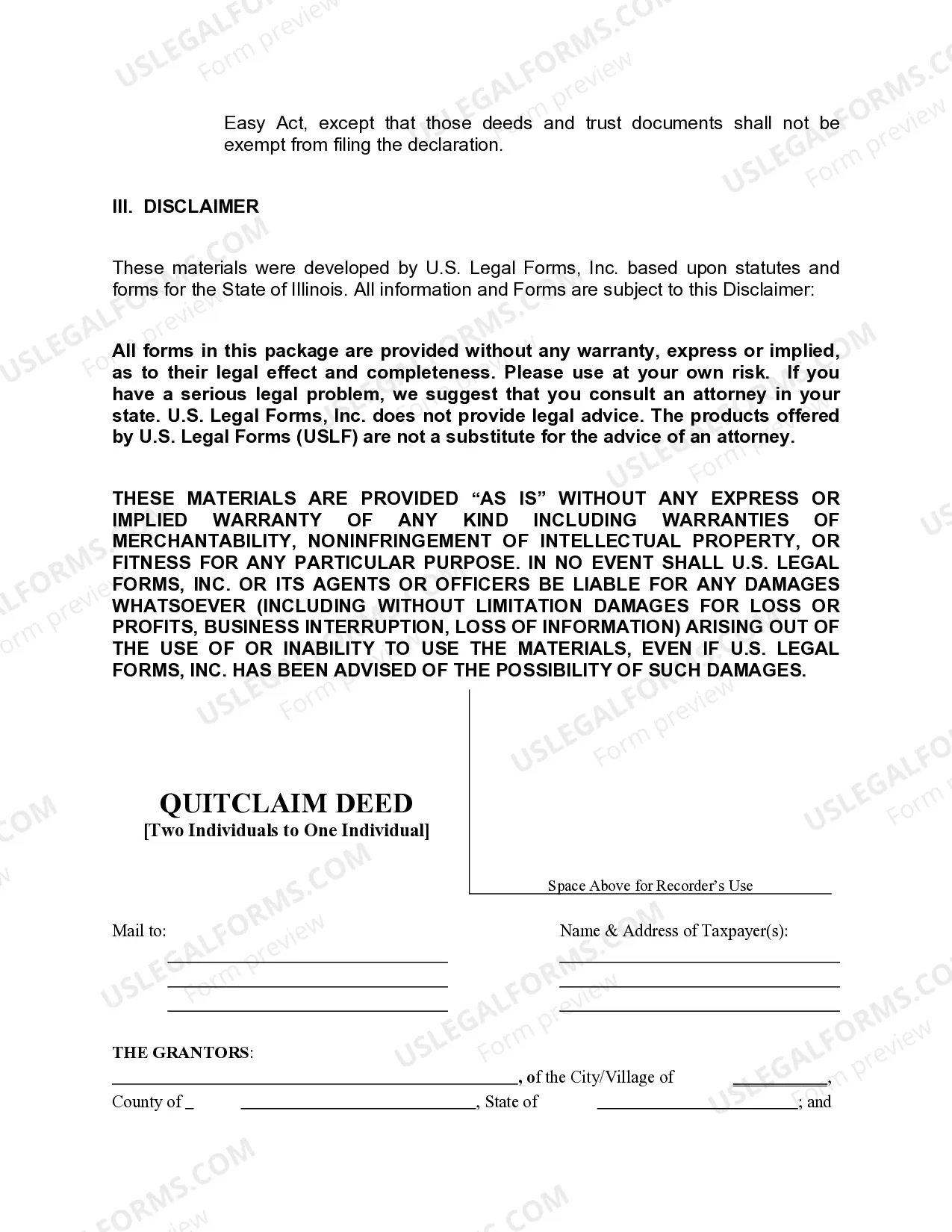
The Quitclaim Deed from Two Individuals to One Individual is a legal document that allows two individuals (the Grantors) to transfer their interest in a property to a single individual (the Grantee). This form differs from a warranty deed, as it conveys any ownership interest without guaranteeing the title's validity. It is important for transferring property quickly and simply, particularly in informal situations among family members or friends.
Form components explained
- Identifying information of the Grantors and Grantee.
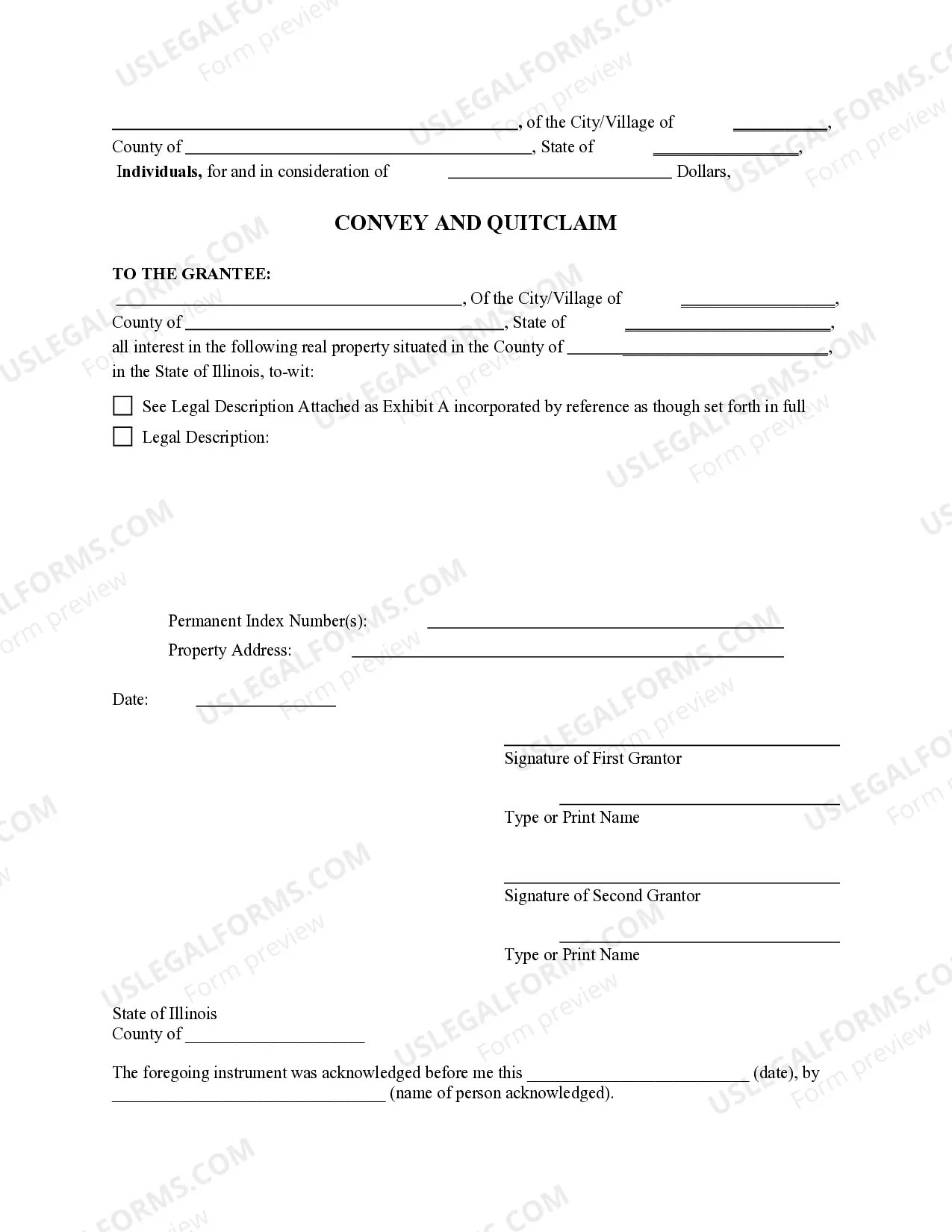
- Description of the property being transferred.
- Legal language conveying the quitclaim nature of the deed.
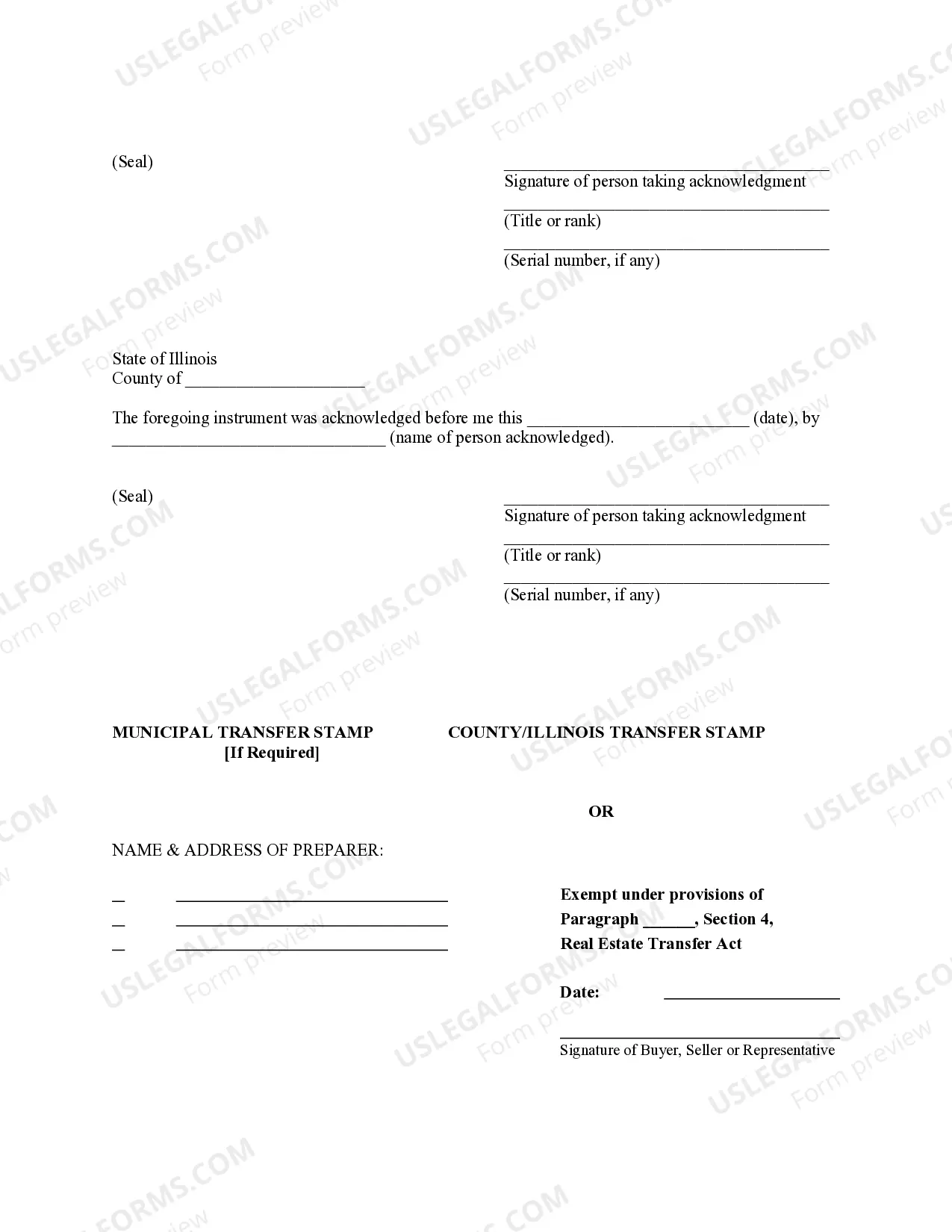
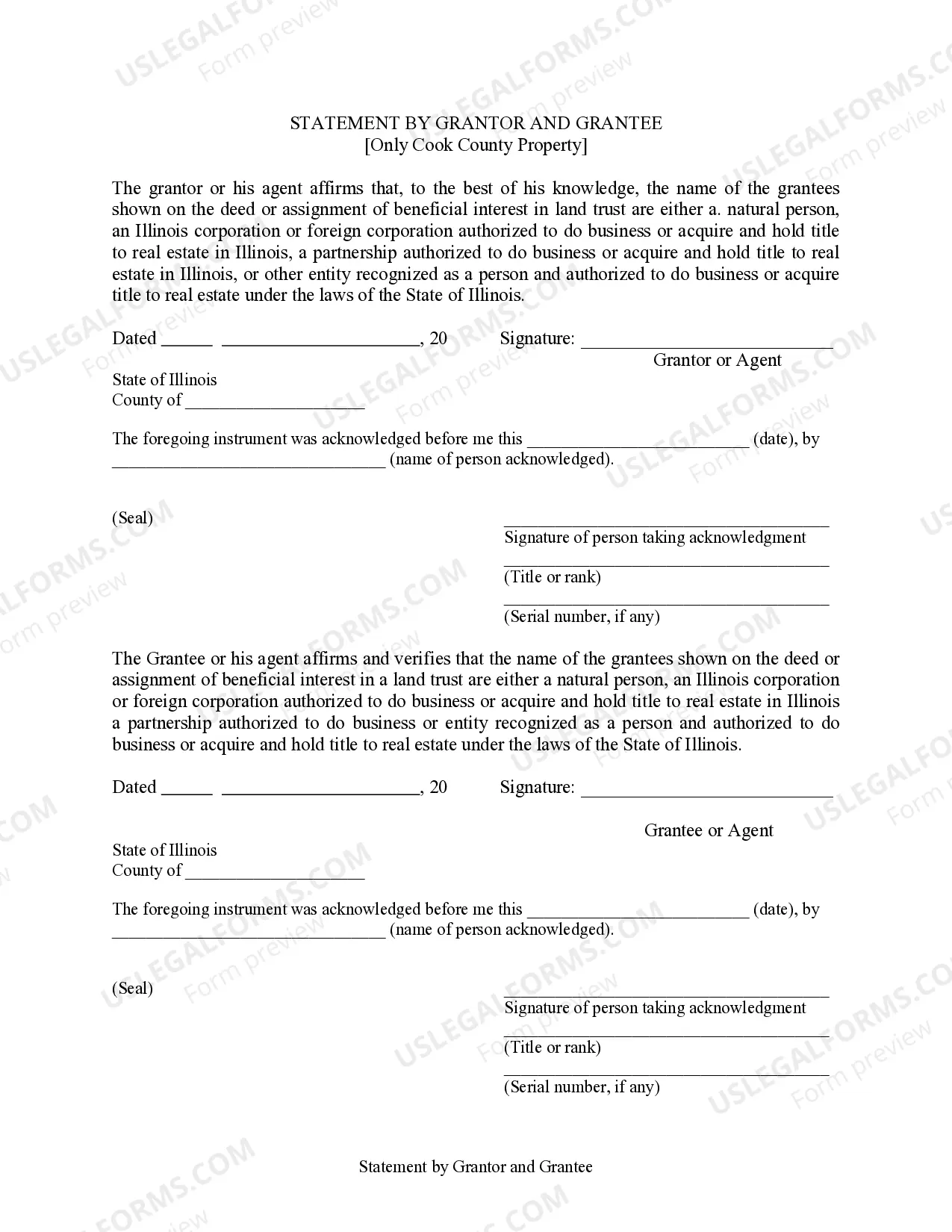
- Notary acknowledgment fields to validate the deed.







When this form is needed
This Quitclaim Deed is typically used when two individuals wish to transfer ownership of a property to one individual. Situations may include transferring property between family members, resolving ownership issues, or simplifying property holdings when one partner is buying out another's share. It is especially useful when there is no need for a title guarantee.
Who needs this form
This form is suitable for individuals who:
- Are co-owners of a property and want to transfer their interest to a single owner.
- Wish to simplify property ownership arrangements.
- Are involved in informal agreements where a warranty deed is not necessary.
Instructions for completing this form
- Identify and enter the full names and addresses of the Grantors (two individuals).
- Specify the full name and address of the Grantee (one individual).
- Clearly describe the property being transferred, including a legal description if necessary.
- Have the Grantors sign the deed in the presence of a notary public.
- Ensure the notary public completes the acknowledgment section to verify the authenticity of the signatures.
Notarization requirements for this form
Yes, this form must be notarized to be legally valid. All parties involved in the transfer need to sign the Quitclaim Deed in the presence of a notary public, ensuring the authenticity of the signatures. U.S. Legal Forms offers integrated online notarization services, making it convenient and secure to have documents notarized at any time through a video call.
Get your form ready online
Our built-in tools help you complete, sign, share, and store your documents in one place.
Make edits, fill in missing information, and update formatting in US Legal Forms—just like you would in MS Word.
Download a copy, print it, send it by email, or mail it via USPS—whatever works best for your next step.
Sign and collect signatures with our SignNow integration. Send to multiple recipients, set reminders, and more. Go Premium to unlock E-Sign.
If this form requires notarization, complete it online through a secure video call—no need to meet a notary in person or wait for an appointment.
We protect your documents and personal data by following strict security and privacy standards.

Make edits, fill in missing information, and update formatting in US Legal Forms—just like you would in MS Word.

Download a copy, print it, send it by email, or mail it via USPS—whatever works best for your next step.

Sign and collect signatures with our SignNow integration. Send to multiple recipients, set reminders, and more. Go Premium to unlock E-Sign.

If this form requires notarization, complete it online through a secure video call—no need to meet a notary in person or wait for an appointment.

We protect your documents and personal data by following strict security and privacy standards.
Avoid these common issues
- Failing to include a clear, legal description of the property.
- Not having the document notarized, which can render it invalid.
- Inaccurately filling out the names of Grantors or the Grantee.
- Neglecting to make copies for personal records after signing.
Advantages of online completion
- Easily editable using a computer, saving time and effort.
- Provides a clear and legally compliant template for property transfer.
- Allows for a quick and convenient way to prepare important legal documents without needing to visit a lawyer's office.
What to keep in mind
- The Quitclaim Deed is used for transferring property rights between individuals.
- It is important to ensure accurate information is provided to avoid legal issues later on.
- Notarization is a key step in making the deed legally enforceable.
Looking for another form?
Form popularity
FAQ
Yes, both parties generally need to be present when executing an Illinois Quitclaim Deed from Two Individuals to One Individual. Each party must sign the deed to acknowledge their consent to the transfer of ownership. While you can prepare the document in advance, having both parties sign in the presence of a notary adds an extra layer of validity. This step ensures that the transaction is legally binding and secure.
A person who signs a quitclaim deed to transfer property they do not own results in no title at all being transferred since there is no actual ownership interest. The quitclaim deed only transfers the type of title you own.
It's usually a very straightforward transaction, but it's possible for a quitclaim deed to be challenged. If a quitclaim deed is challenged in court, the issue becomes whether the property was legally transferred and if the grantor had the legal right to transfer the property.
The Quit Claim Deed form uses the terms of Grantor (Seller or Owner of said property) and Grantee (Buyer of said property) for the two parties involved. First, the parties must fill in the date. Then, write in the name of the county and state in which the property is located.
One of the most common ways property owners add spouses to real estate titles is by using quitclaim deeds. Once completed and filed, quitclaim deed forms effectually transfer a share of ownership from the owners, or grantors, to their spouses, or the grantees.
Step 1: Download the IL quitclaim deed form. Step 2: Add the return address. Step 3: Under the title, Illinois Quitclaim Deed, list the county where the deed is being prepared and the property is located.
But you might be wondering if an owner can transfer a deed to another person without a real estate lawyer. The answer is yes. Parties to a transaction are always free to prepare their own deeds.A quitclaim deed, for example, is far simpler than a warranty deed.