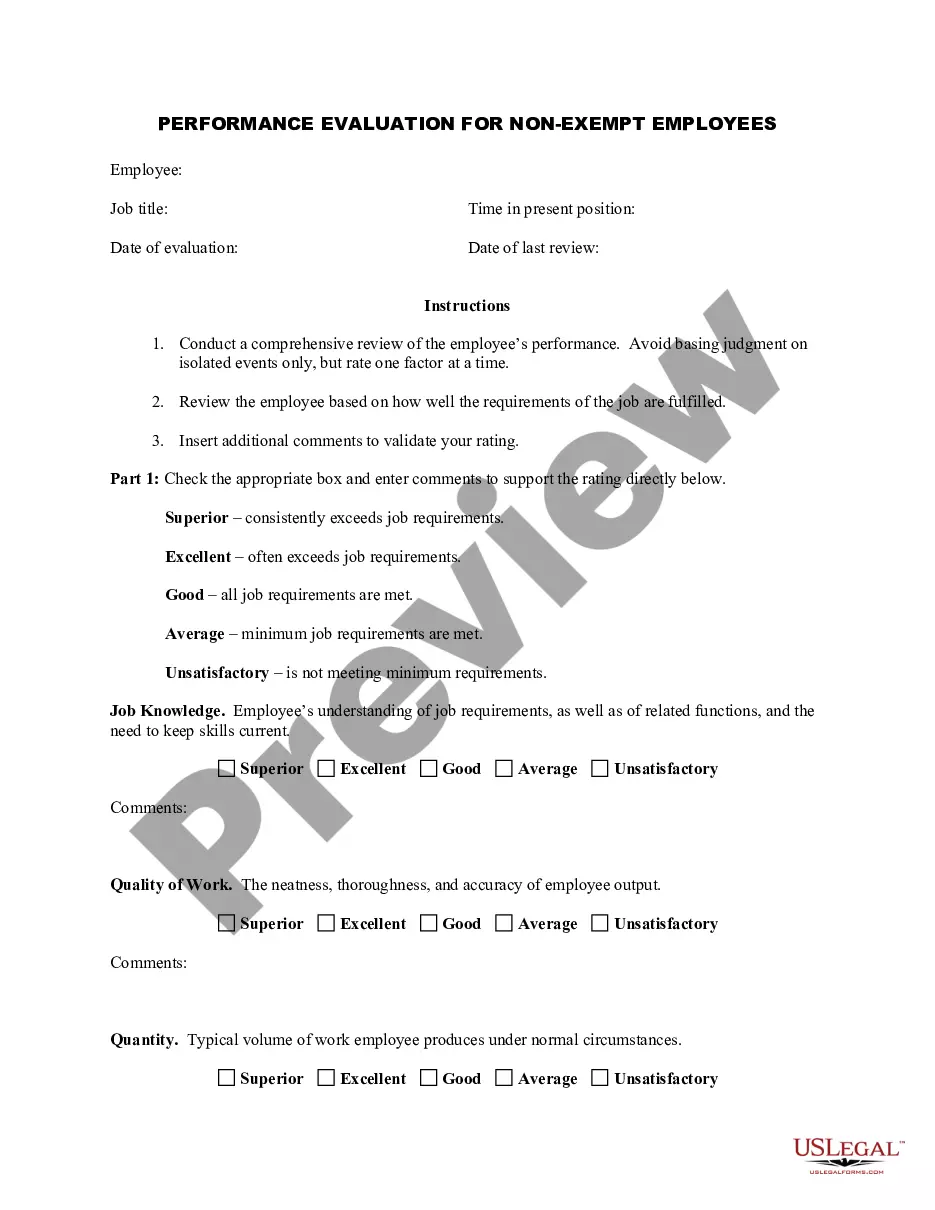
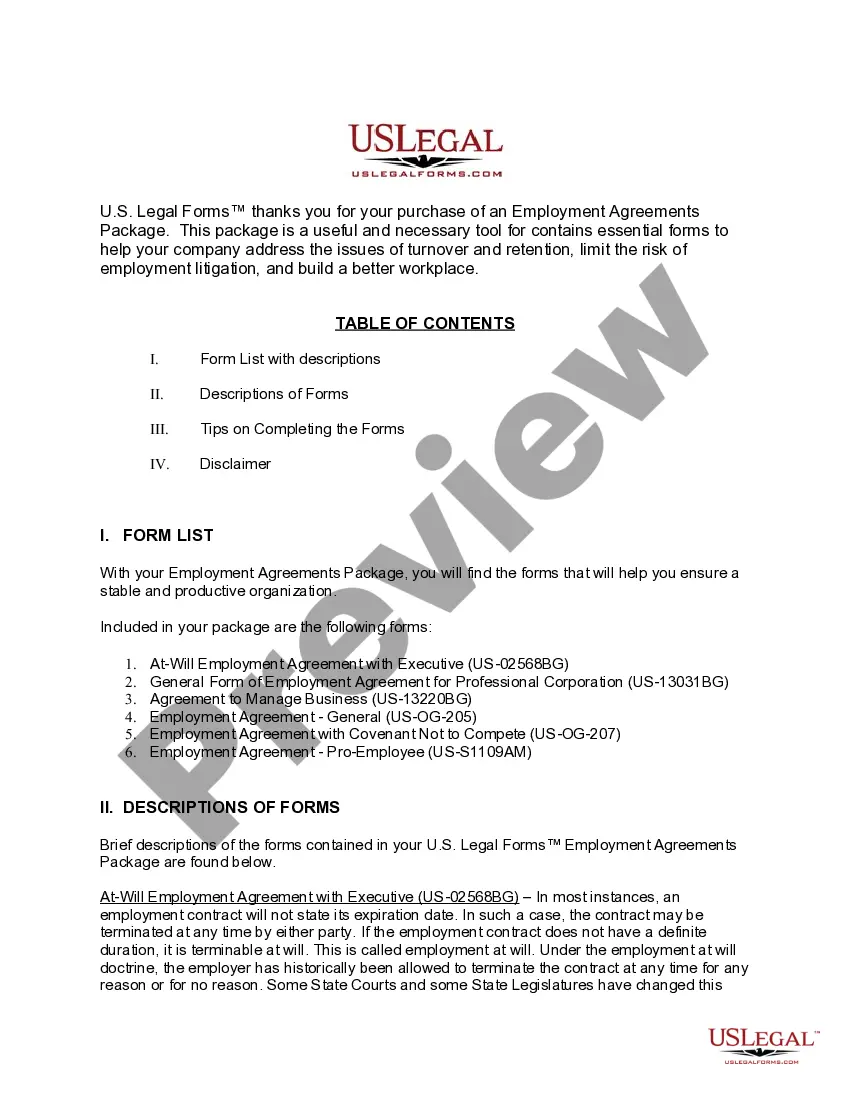
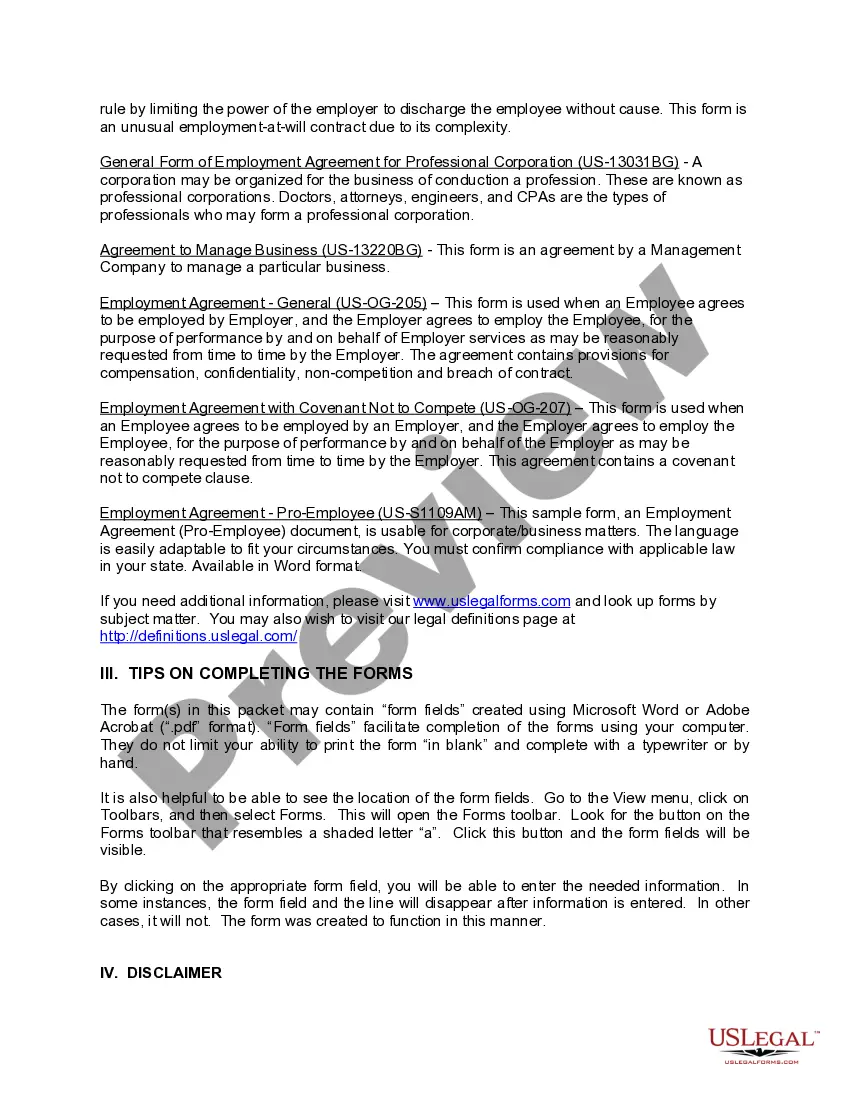
Idaho Employment Agreements Package
Description
Get your form ready online
Our built-in tools help you complete, sign, share, and store your documents in one place.
Make edits, fill in missing information, and update formatting in US Legal Forms—just like you would in MS Word.
Download a copy, print it, send it by email, or mail it via USPS—whatever works best for your next step.
Sign and collect signatures with our SignNow integration. Send to multiple recipients, set reminders, and more. Go Premium to unlock E-Sign.
If this form requires notarization, complete it online through a secure video call—no need to meet a notary in person or wait for an appointment.
We protect your documents and personal data by following strict security and privacy standards.

Make edits, fill in missing information, and update formatting in US Legal Forms—just like you would in MS Word.

Download a copy, print it, send it by email, or mail it via USPS—whatever works best for your next step.

Sign and collect signatures with our SignNow integration. Send to multiple recipients, set reminders, and more. Go Premium to unlock E-Sign.

If this form requires notarization, complete it online through a secure video call—no need to meet a notary in person or wait for an appointment.

We protect your documents and personal data by following strict security and privacy standards.
Looking for another form?




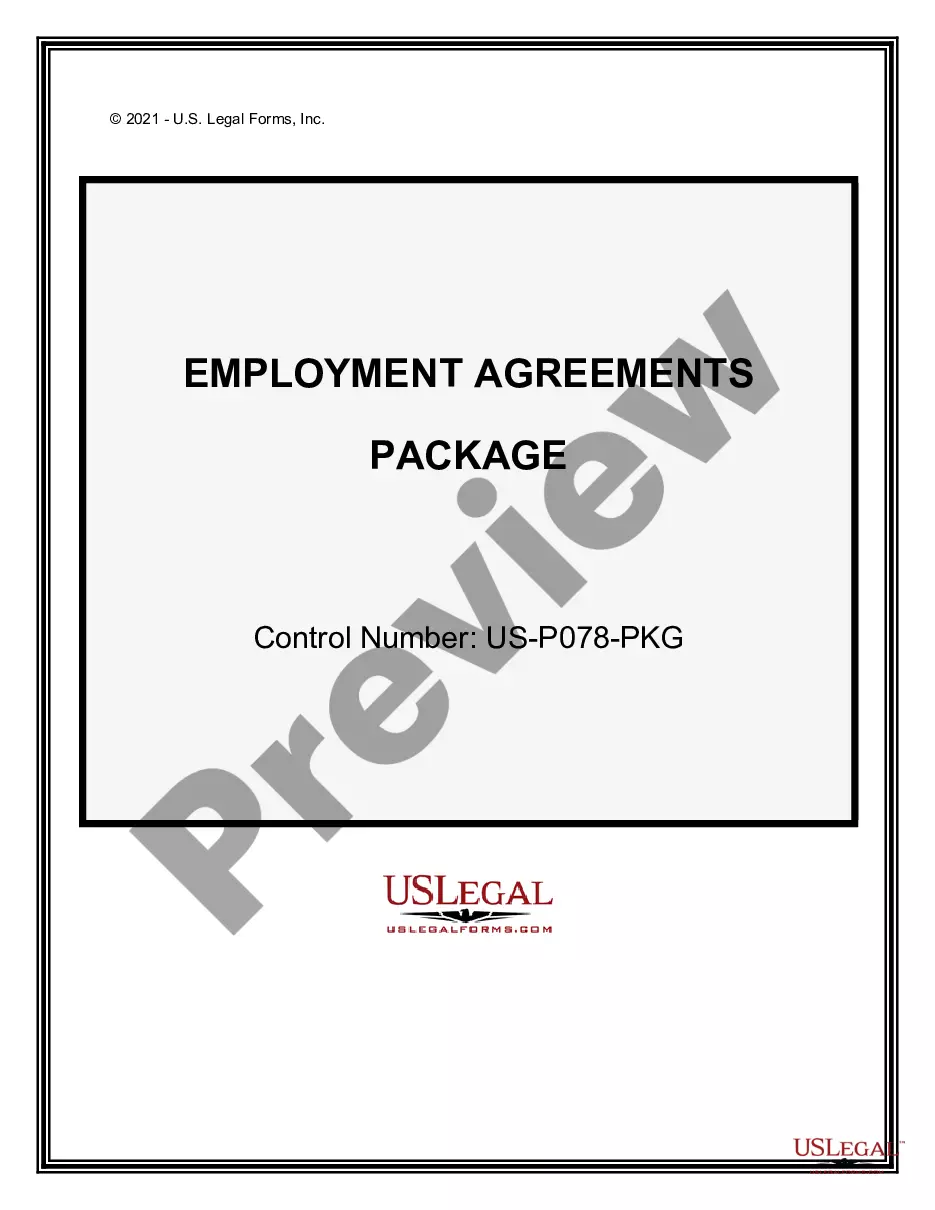
How to fill out Employment Agreements Package?
Discovering the right lawful document design can be quite a have a problem. Obviously, there are tons of themes available online, but how do you get the lawful type you need? Utilize the US Legal Forms internet site. The services provides thousands of themes, like the Idaho Employment Agreements Package, which you can use for enterprise and personal needs. Each of the types are inspected by specialists and meet state and federal demands.
If you are already signed up, log in to your profile and then click the Acquire option to find the Idaho Employment Agreements Package. Utilize your profile to look from the lawful types you possess ordered in the past. Check out the My Forms tab of the profile and obtain an additional version of the document you need.
If you are a fresh customer of US Legal Forms, here are easy recommendations for you to stick to:
- Initially, make sure you have selected the right type for your city/state. You may check out the shape utilizing the Preview option and look at the shape information to guarantee this is basically the right one for you.
- In case the type will not meet your needs, utilize the Seach industry to get the right type.
- Once you are positive that the shape is suitable, select the Acquire now option to find the type.
- Choose the costs prepare you want and enter in the needed information and facts. Design your profile and pay for an order with your PayPal profile or charge card.
- Select the file structure and acquire the lawful document design to your product.
- Comprehensive, revise and print out and indicator the acquired Idaho Employment Agreements Package.
US Legal Forms is definitely the biggest catalogue of lawful types for which you can find various document themes. Utilize the service to acquire skillfully-manufactured papers that stick to state demands.
Form popularity
FAQ
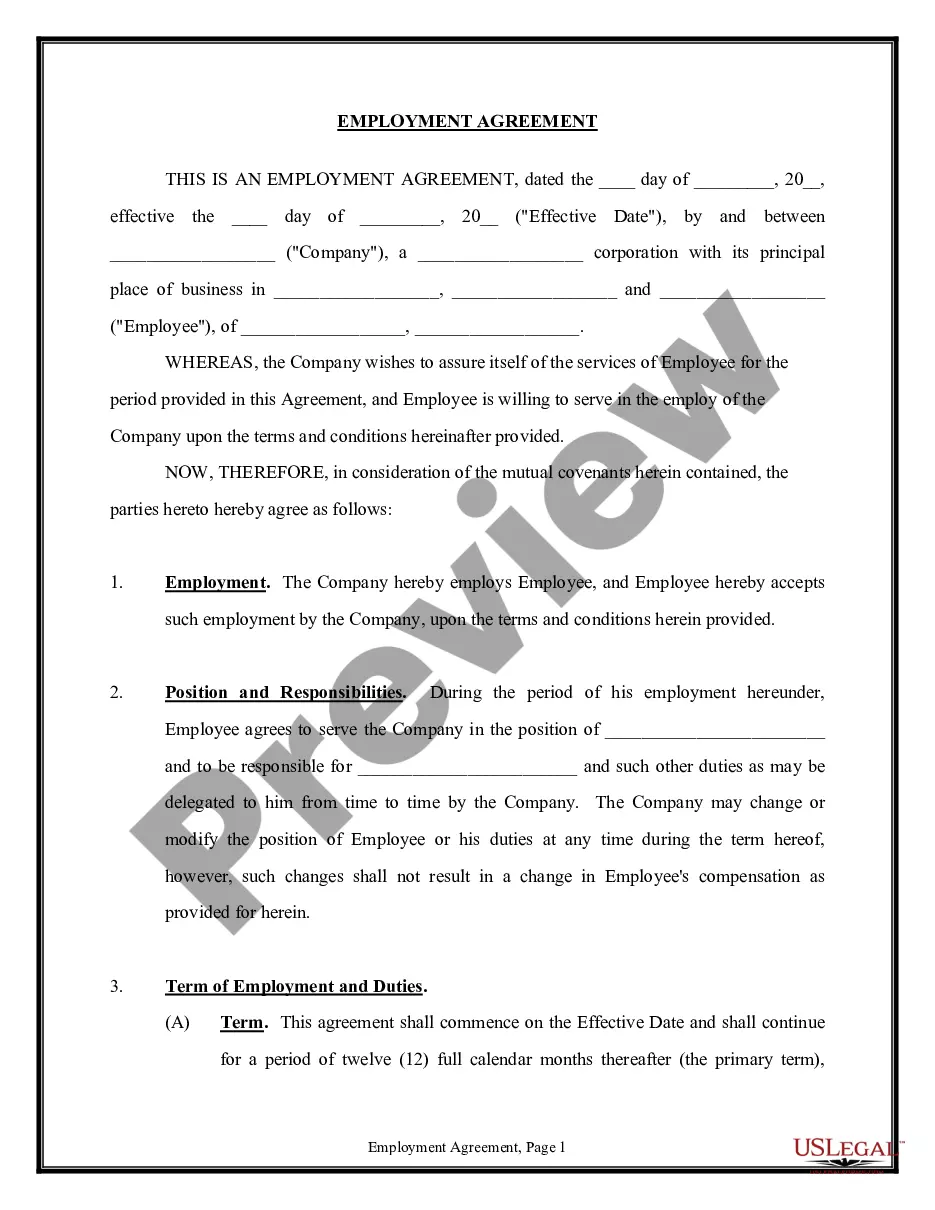
Here are some steps you may use to guide you when you write an employment contract: Title the employment contract. ... Identify the parties. ... List the term and conditions. ... Outline the job responsibilities. ... Include compensation details. ... Use specific contract terms. ... Consult with an employment lawyer.
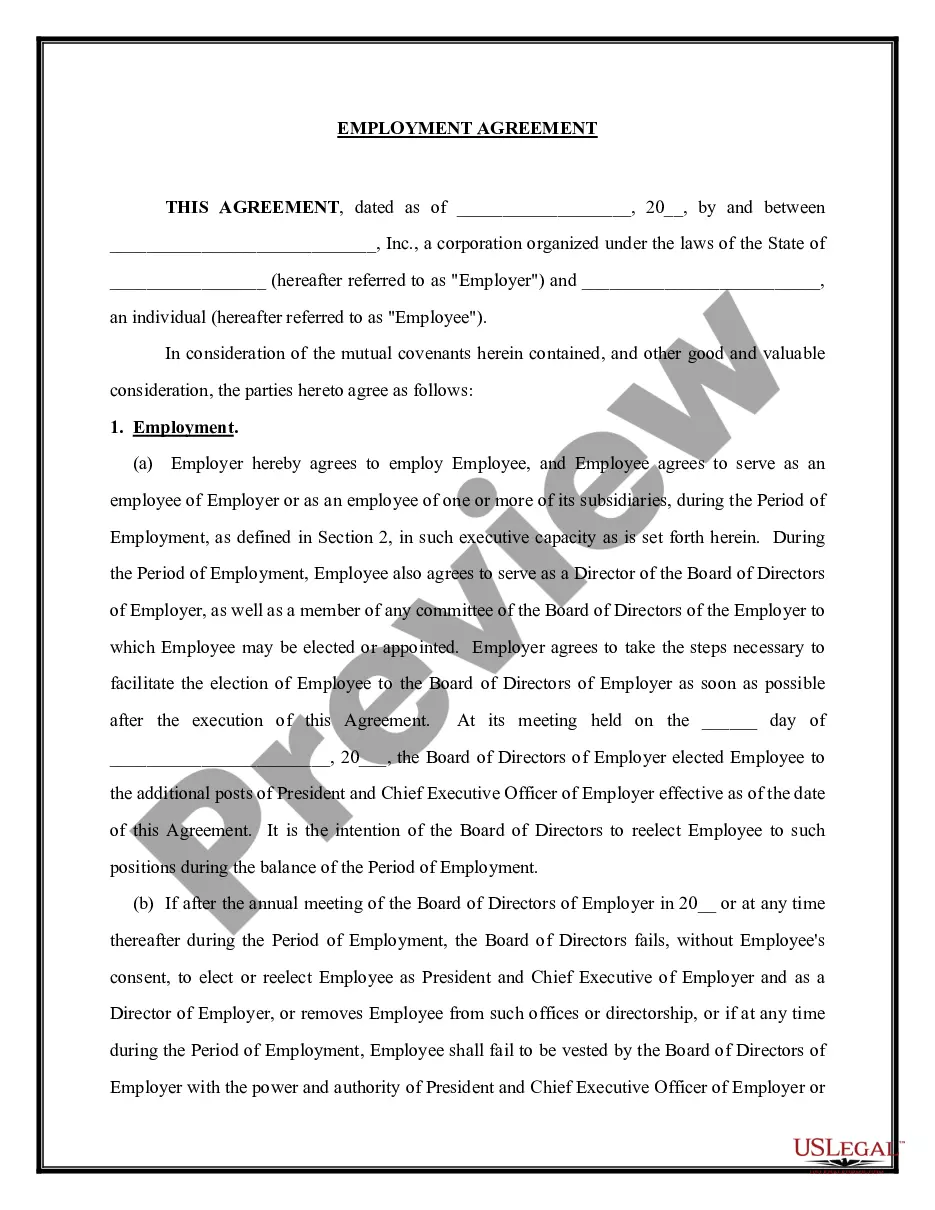
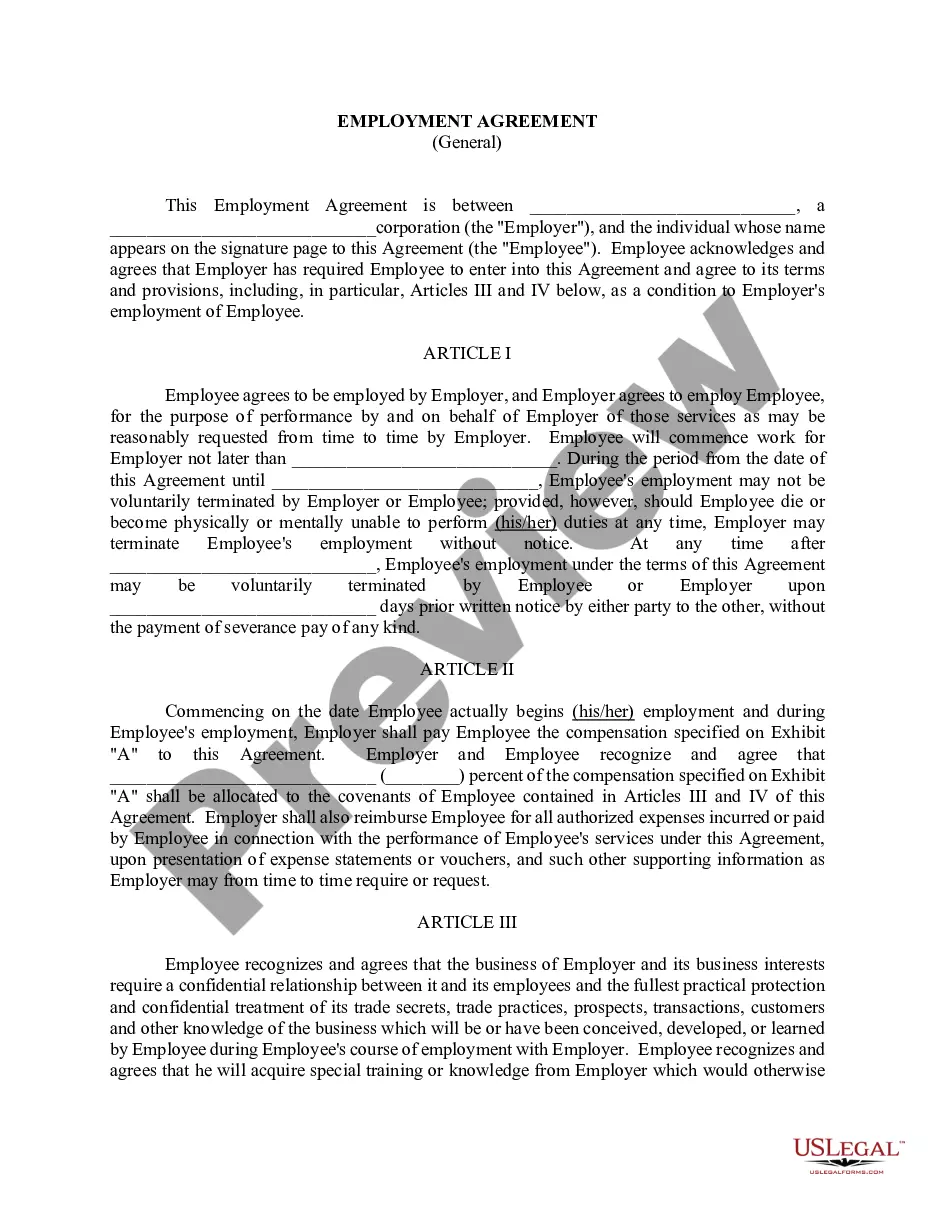
The employment agreement spells out the rules, rights, and responsibilities of both the employer and the employee and includes any special obligations or terms that are unique to the position. Employees can negotiate the terms of their employment, including salary and benefits, before signing an employment contract.
This includes: Pay intervals (for example, weekly or monthly) Paid leave, including your annual leave and public holiday entitlements. Sick pay. Pension and pension schemes. Period of notice to be given by employer or employee. Details of any collective agreements that may affect your terms of employment.
Role requirements: Job title and job duties. Employment duration: Contract start date and end date (if contracted), and probationary period (usually 90 days) Compensation: Pay rate (hourly or annual salary), bonus structure, stock options, and pay dates.
What is the difference between an offer letter and an employment contract? An offer letter is a short congratulatory note extending a job offer, while an employment contract is an extended written agreement setting out the terms and conditions of employment.
Enforcing a contract comes down to six key elements: offer, acceptance, awareness, consideration, capacity, and legality. If a contract lacks any of these elements, you may not have the legal right to enforce it.
Table of Contents Job title and duties. Salary. Employment dates. Working hours. Place of work (remote versus on-site) Employee benefits. Sick leave. Intellectual property ownership.