Idaho Affidavit for Collection of Personal Property Pursuant to Small Estate Proceeding
About this form
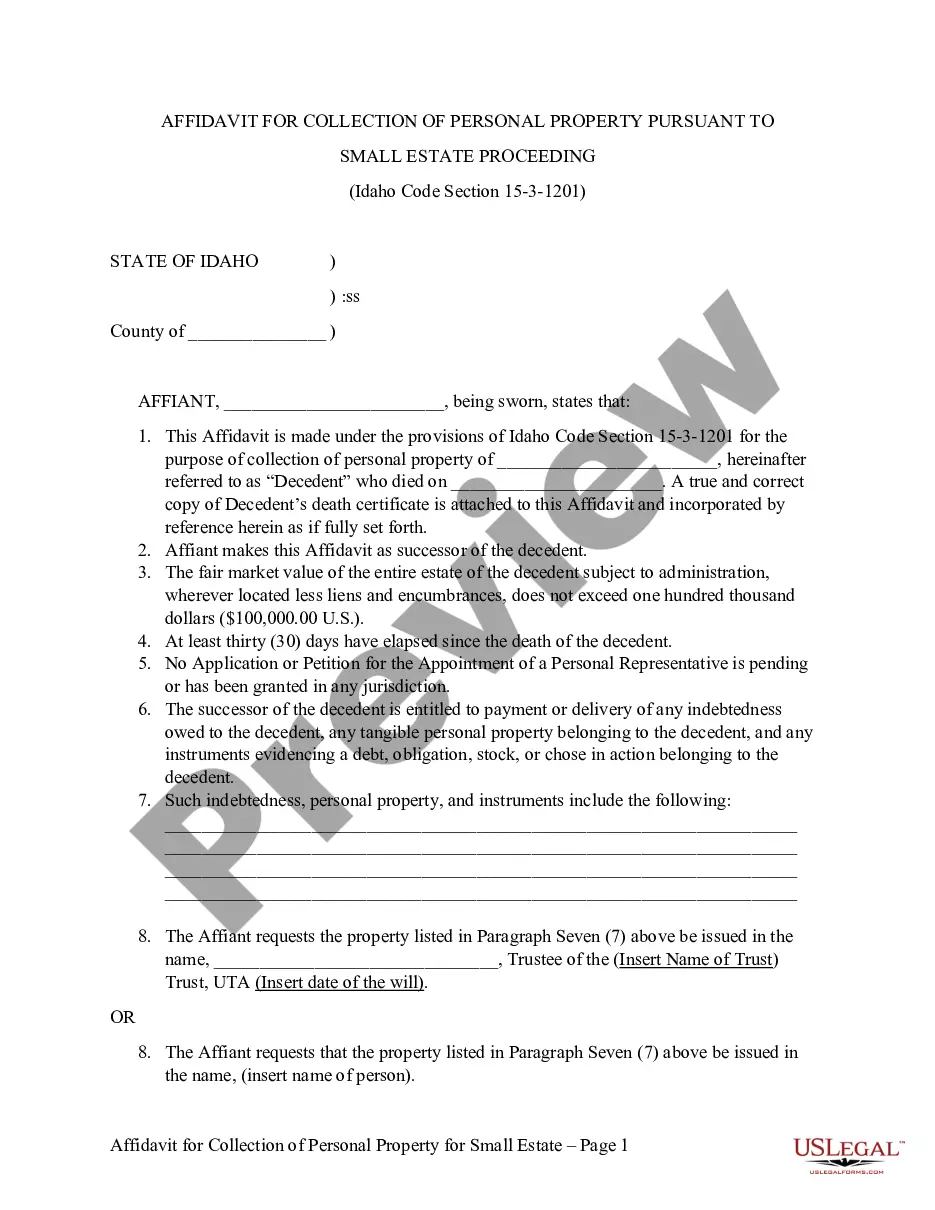
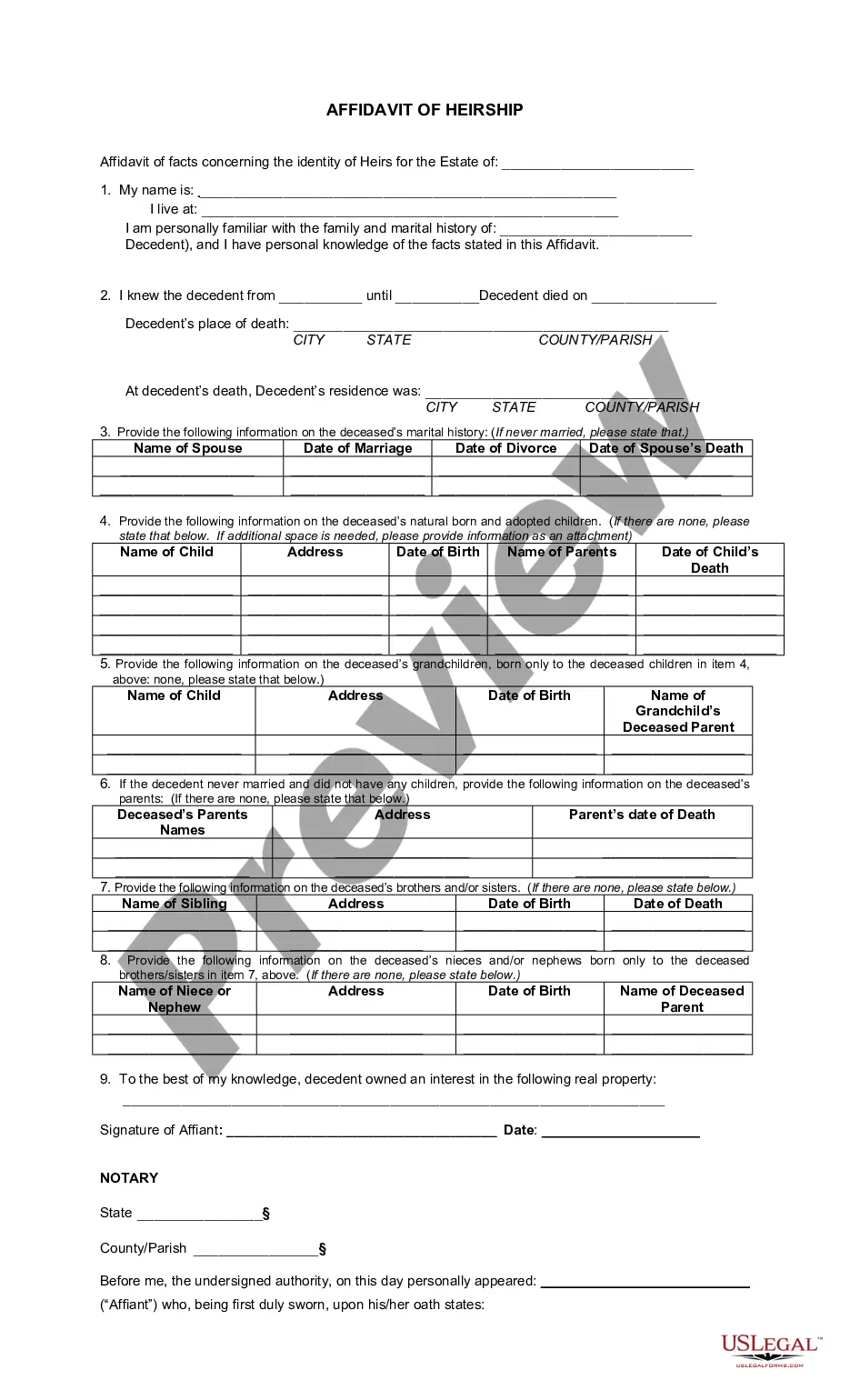
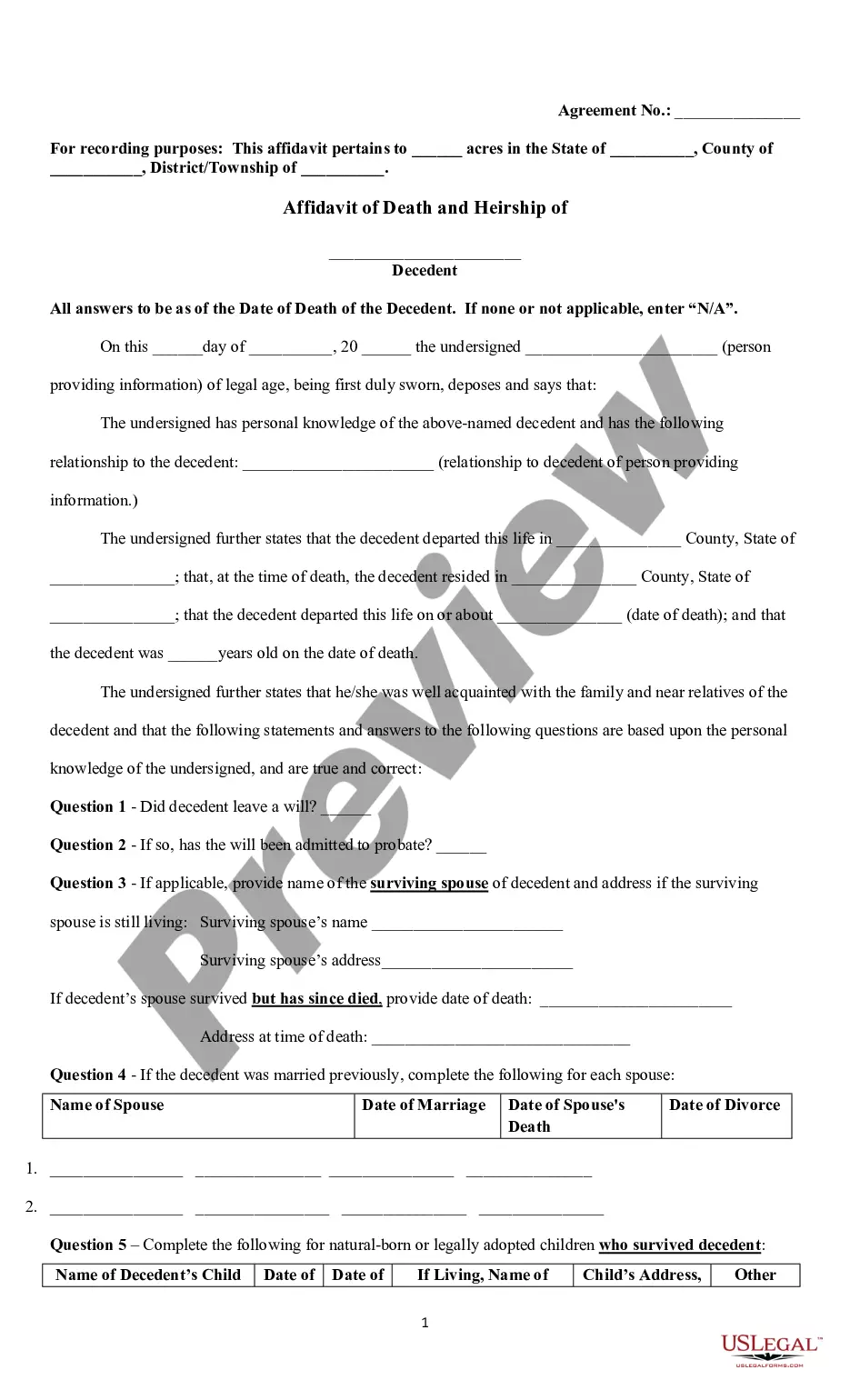
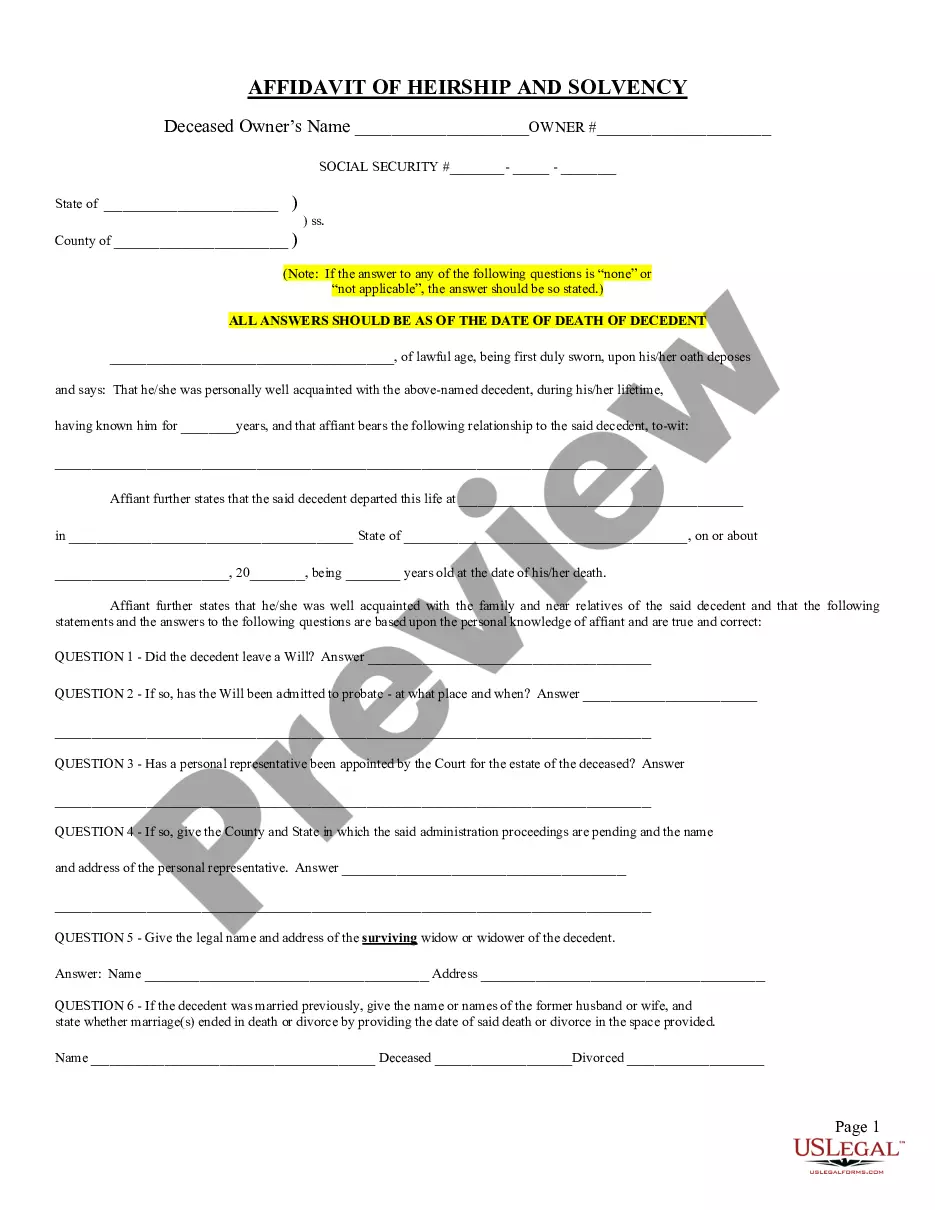
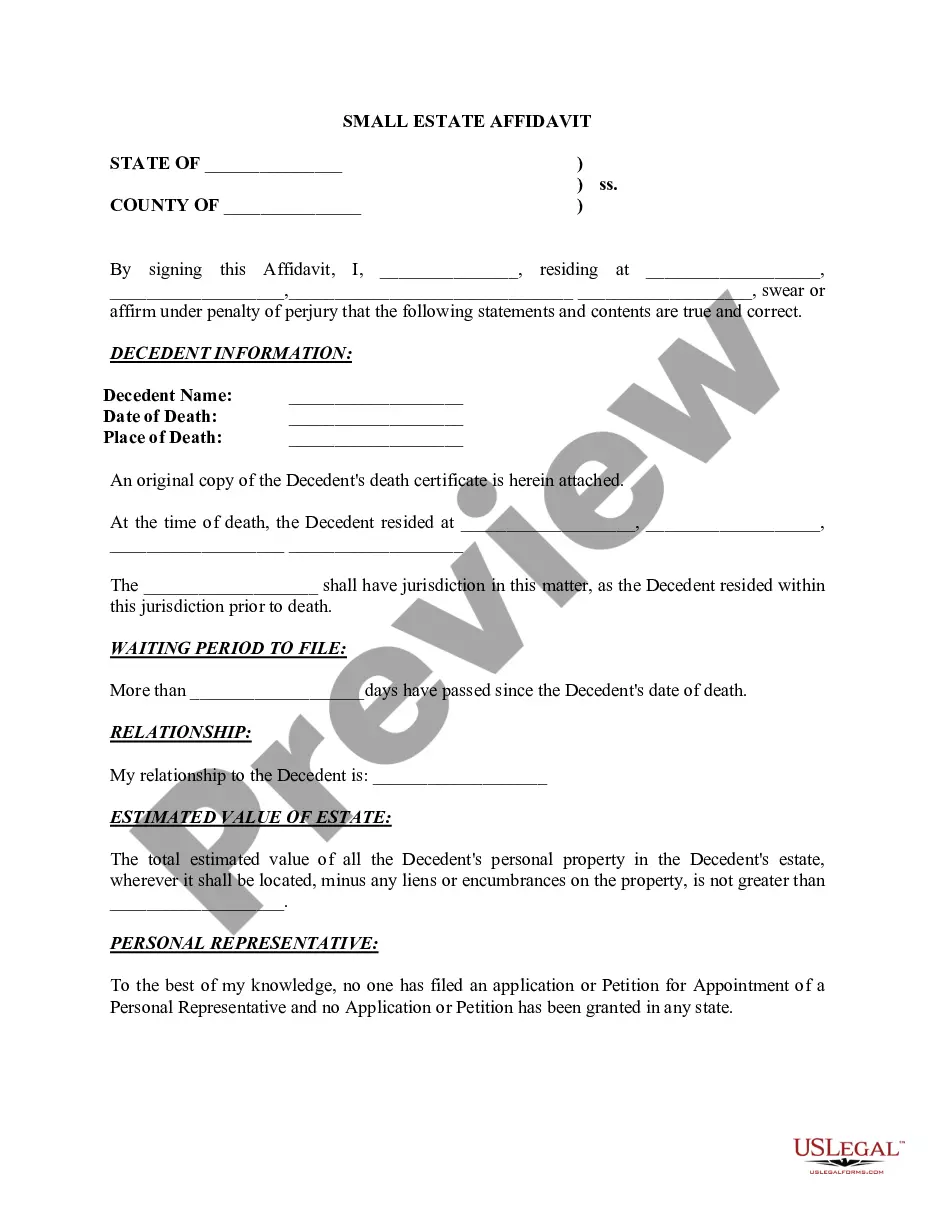
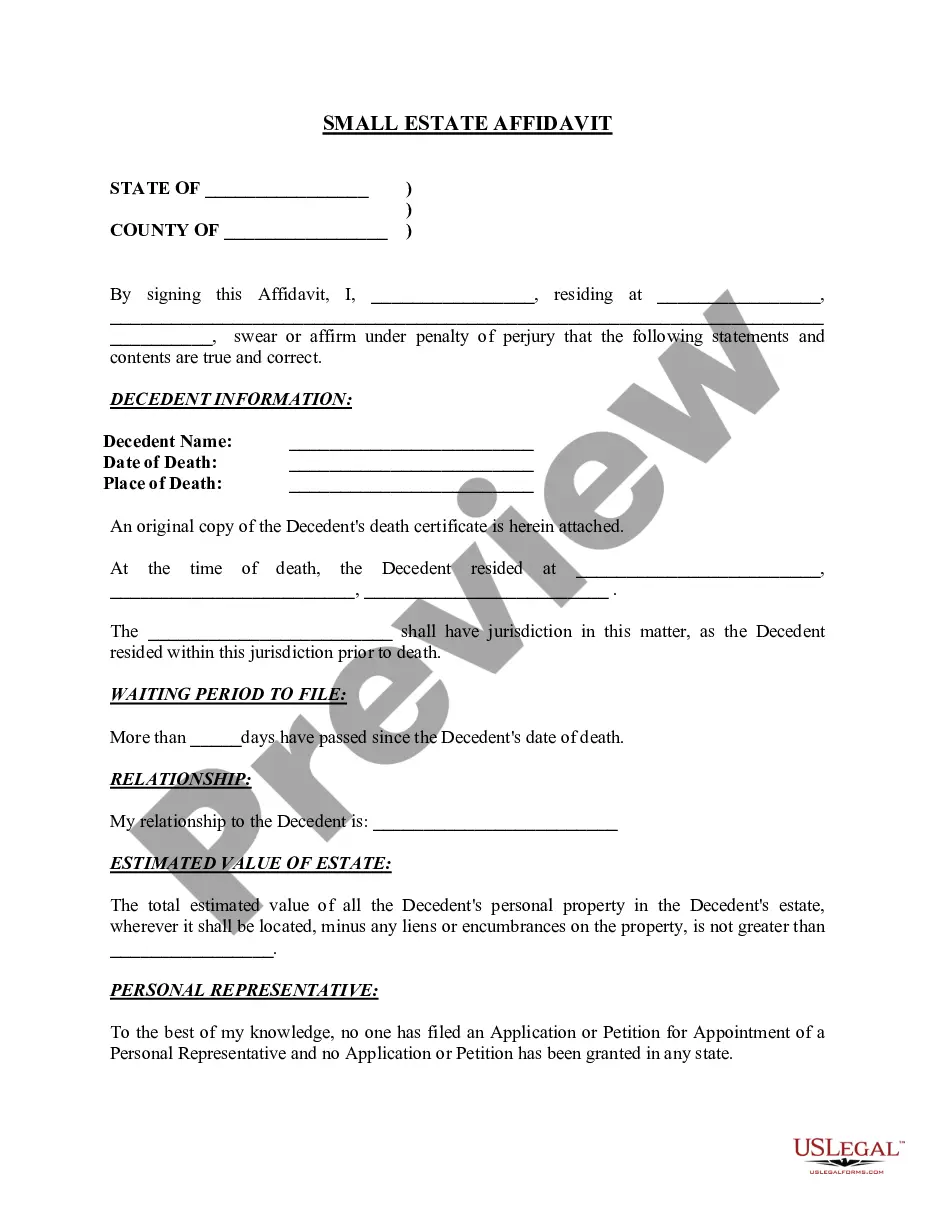
The Affidavit for Collection of Personal Property Pursuant to Small Estate Proceeding is a legal document used to collect the personal belongings and financial assets of a deceased individual, known as the decedent. This affidavit is particularly relevant for small estates, where the total value does not exceed one hundred thousand dollars. It serves as a simplified method to administer the estate without the need for a full probate process, making it easier for successors to access the decedent's property following their death.
Key parts of this document
- Affiant's information: Name and signature of the person making the affidavit.
- Decedent's information: Name and date of death of the individual whose estate is being claimed.
- Property declaration: Description of the personal property and assets being claimed.
- Fair market value confirmation: Statement confirming the estate's total value does not exceed one hundred thousand dollars.
- Successor eligibility: Claims the affiant's entitlement to the decedent's property as a legal successor.
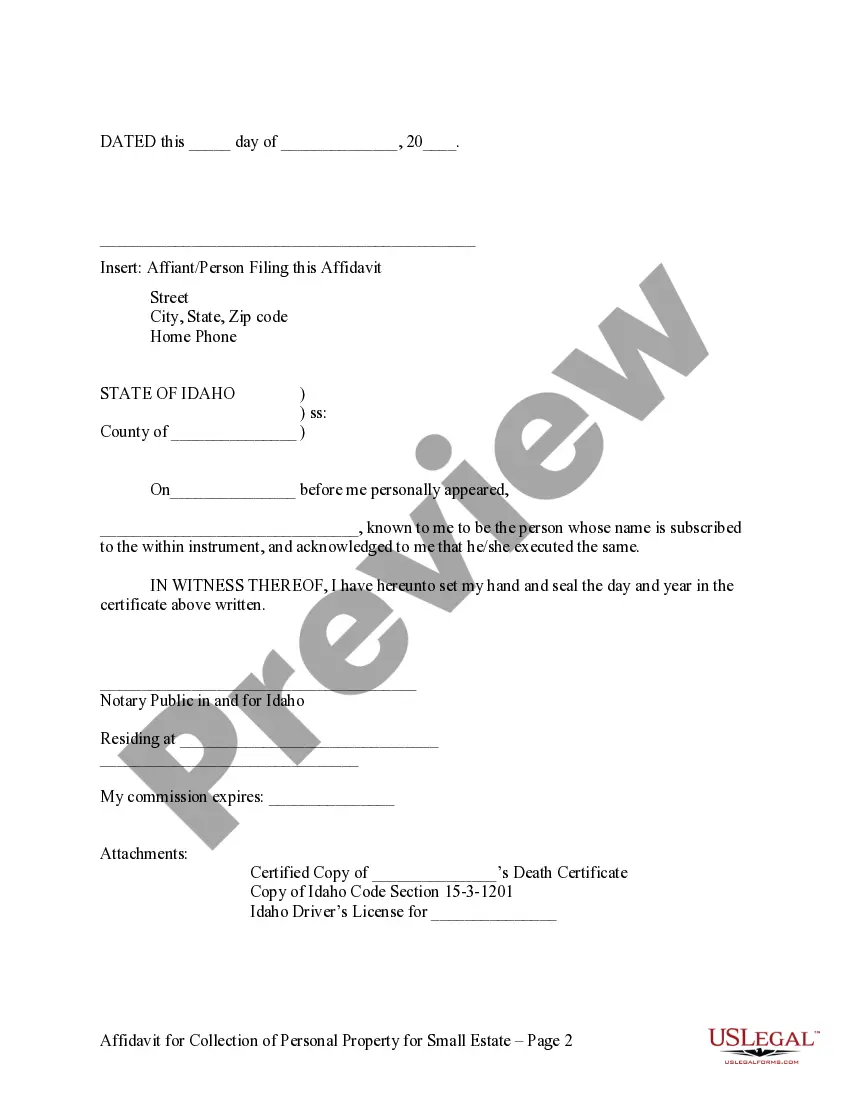
- Attachments: A death certificate and relevant documents must be included with the affidavit.
Situations where this form applies
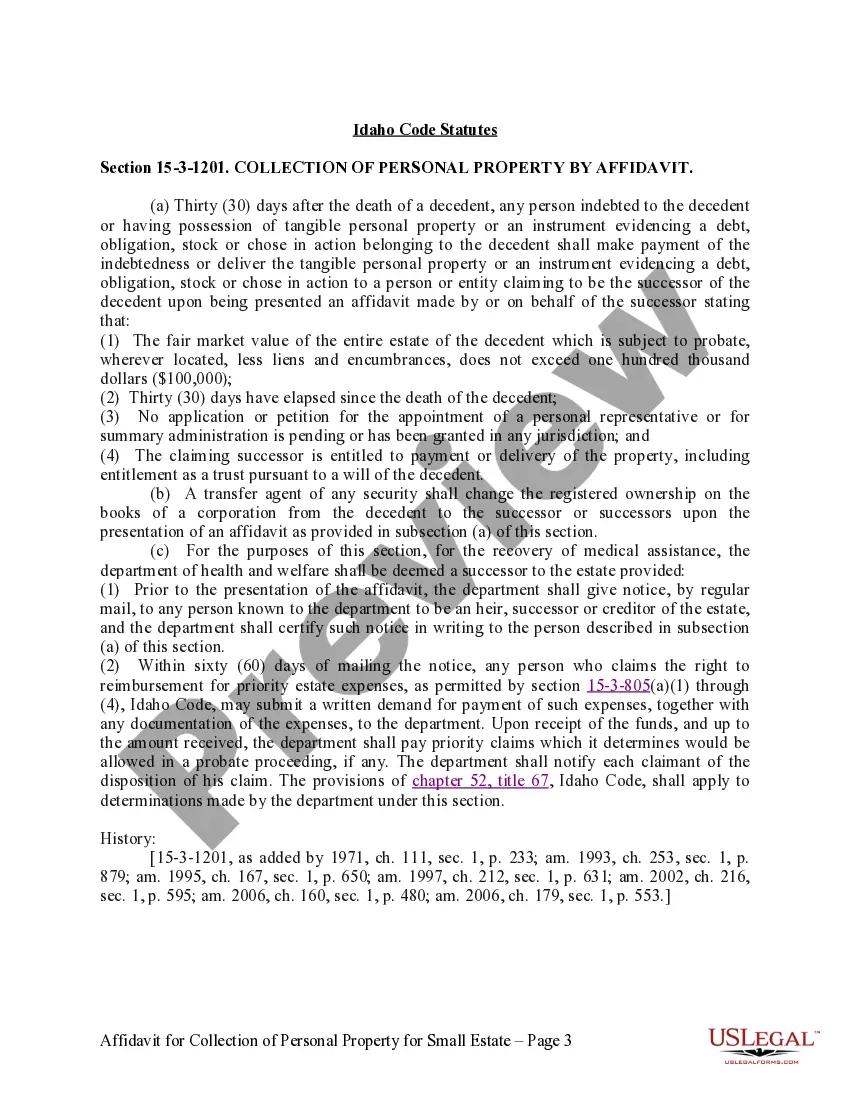
This affidavit is suitable for situations where an individual passes away and their estate falls under the small estate threshold according to Idaho law. It is typically used after thirty days have elapsed since the decedent's death, allowing heirs or successors to collect personal property without engaging in formal probate, provided there is no pending application for a personal representative.
Who needs this form
- Individuals who are the legal successors of a deceased person.
- Heirs or beneficiaries entitled to receive property from a small estate.
- Family members handling the estate of a decedent with a value under one hundred thousand dollars.
Steps to complete this form
- Identify the affiant: Fill in the name of the person executing the affidavit.
- Provide decedent details: Enter the name and date of death of the decedent.
- List the personal property: Clearly describe the assets and property to be collected.
- Verify fair market value: State the total value of the estate does not exceed one hundred thousand dollars.
- Attach required documents: Include a certified copy of the decedent's death certificate and other necessary documentation.
- Sign and notarize: The affiant must sign the affidavit in front of a notary public.
Notarization guidance
Yes, this form must be notarized to be legally valid. Notarization ensures the authenticity of the signatures and that the statements made in the affidavit are sworn to be true. US Legal Forms provides integrated online notarization services, which allow users to complete this process securely via video call, without needing to travel.
Get your form ready online
Our built-in tools help you complete, sign, share, and store your documents in one place.
Make edits, fill in missing information, and update formatting in US Legal Forms—just like you would in MS Word.
Download a copy, print it, send it by email, or mail it via USPS—whatever works best for your next step.
Sign and collect signatures with our SignNow integration. Send to multiple recipients, set reminders, and more. Go Premium to unlock E-Sign.
If this form requires notarization, complete it online through a secure video call—no need to meet a notary in person or wait for an appointment.
We protect your documents and personal data by following strict security and privacy standards.

Make edits, fill in missing information, and update formatting in US Legal Forms—just like you would in MS Word.

Download a copy, print it, send it by email, or mail it via USPS—whatever works best for your next step.

Sign and collect signatures with our SignNow integration. Send to multiple recipients, set reminders, and more. Go Premium to unlock E-Sign.

If this form requires notarization, complete it online through a secure video call—no need to meet a notary in person or wait for an appointment.

We protect your documents and personal data by following strict security and privacy standards.
Mistakes to watch out for
- Failing to attach the death certificate or other required documents.
- Not accurately stating the total value of the estate.
- Not allowing the required thirty days to pass after the decedent's death before filing the affidavit.
- Omitting property that rightfully belongs to the estate.
- Not obtaining notarization as required.
Benefits of completing this form online
- Convenience: Download and complete the form quickly from the comfort of your home.
- Editability: Customize the form to suit specific needs and circumstances.
- Reliability: Access professionally drafted templates created by licensed attorneys.
Looking for another form?
Form popularity
FAQ
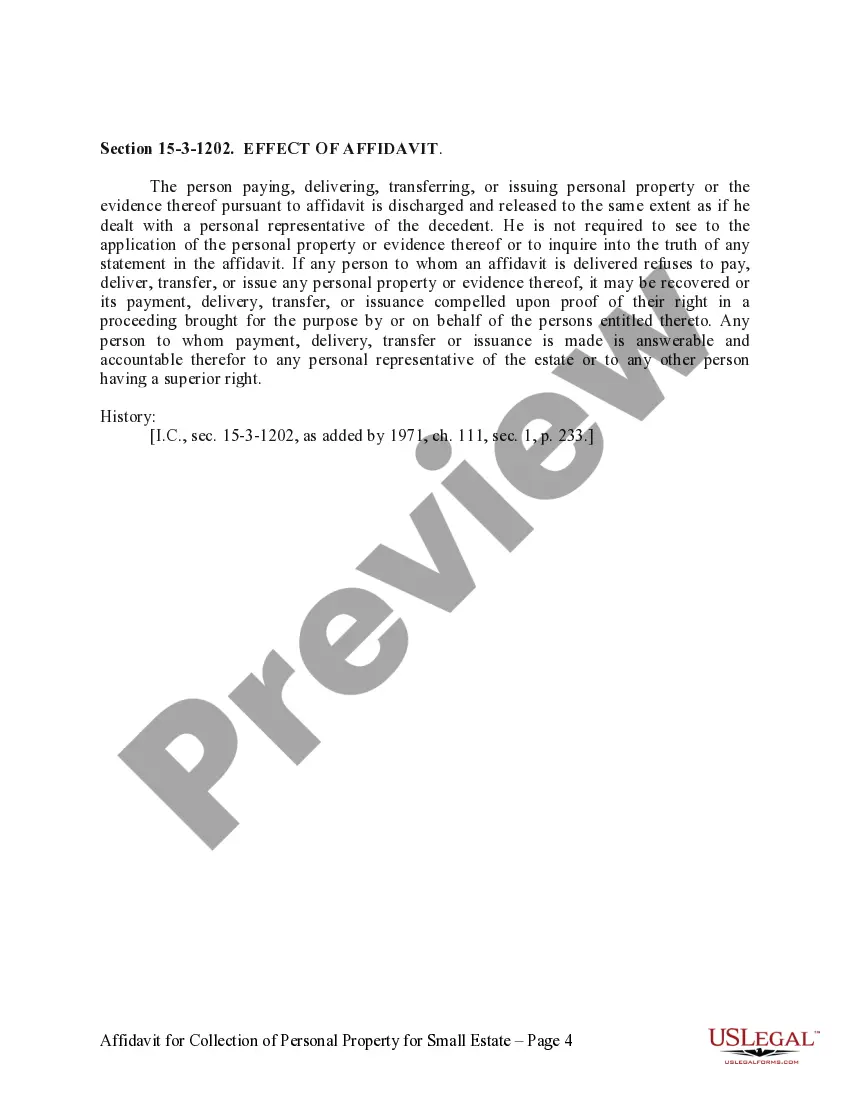
A Lack of Probate affidavit may be used when the deceased owned less than $100,000.00 in personal property and did not own real estate. With an affidavit, you do not go to court to direct the distribution of property. The successor or beneficiary can claim any of the belongings of the deceased.
Ing to Idaho Code § 15-3-1201 et seq., after a family member or loved one passes away, an individual can use a small estate affidavit that specifically identifies them as the recipient of personal property owned by the decedent. The small estate affidavit has to have some specific language in it.
A South Carolina small estate affidavit is a document that is used to claim property from a deceased person's estate. It can only be used for estates that are worth less than $25,000. For small estates, petitioning for this process is the first step to avoiding an expensive and time-consuming probate process.
An Idaho small estate affidavit permits the successor of a qualifying estate to collect inherited property without any court involvement. If the decedent's estate is worth $100,000 or less after consideration of any liens and debts, it qualifies as a small estate.
Step 1 ? Wait Thirty (30) Days. State law says a small estate affidavit cannot be used until thirty (30) days have passed since the death of a decedent.Step 2 ? Prepare Affidavit.Step 3 ? Get It Notarized.Step 4 ? Collect the Assets.Statement 1.Statement 5.Idaho Notarized Signing.
Summary administration is a simplified and expedited method, under Idaho law, for distributing a decedent's estate. Summary administration for a survivng spouse is available under Idaho Code § 15-3-1205.