Arizona Quitclaim Deed - Four Individuals to Three Individuals
About this form
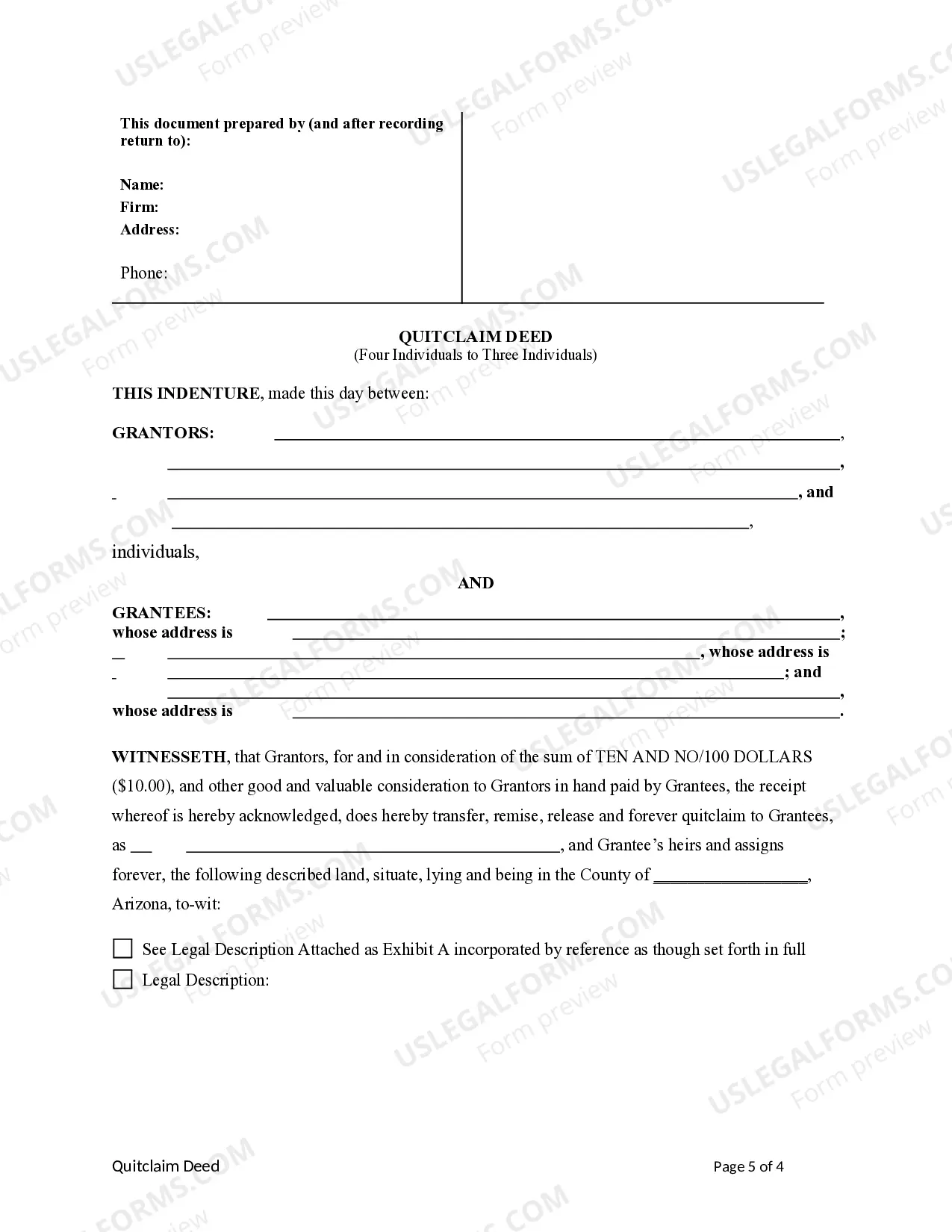
The Quitclaim Deed is a legal document used to transfer property ownership from four individuals (grantors) to three individuals (grantees). Unlike a warranty deed, this form conveys any interest the grantors may have in the property without guaranteeing that the title is clear. This makes it particularly useful in situations where the grantors may not have definitive proof of ownership or when the transfer is between family members or acquaintances.
Key components of this form
- Identification of the grantors and grantees.
- Description of the property being transferred.
- Statement confirming the grantors are quitting any claim to the property.
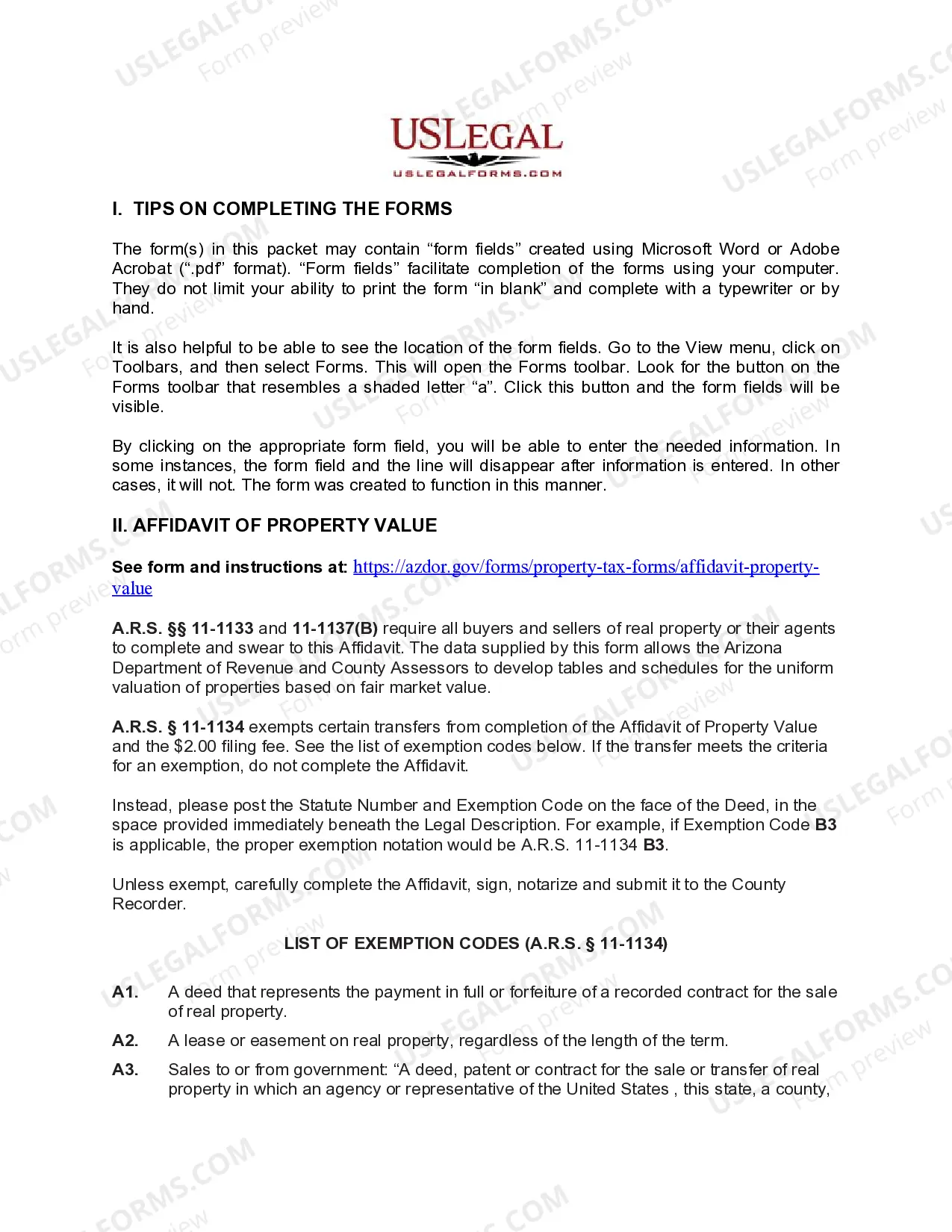
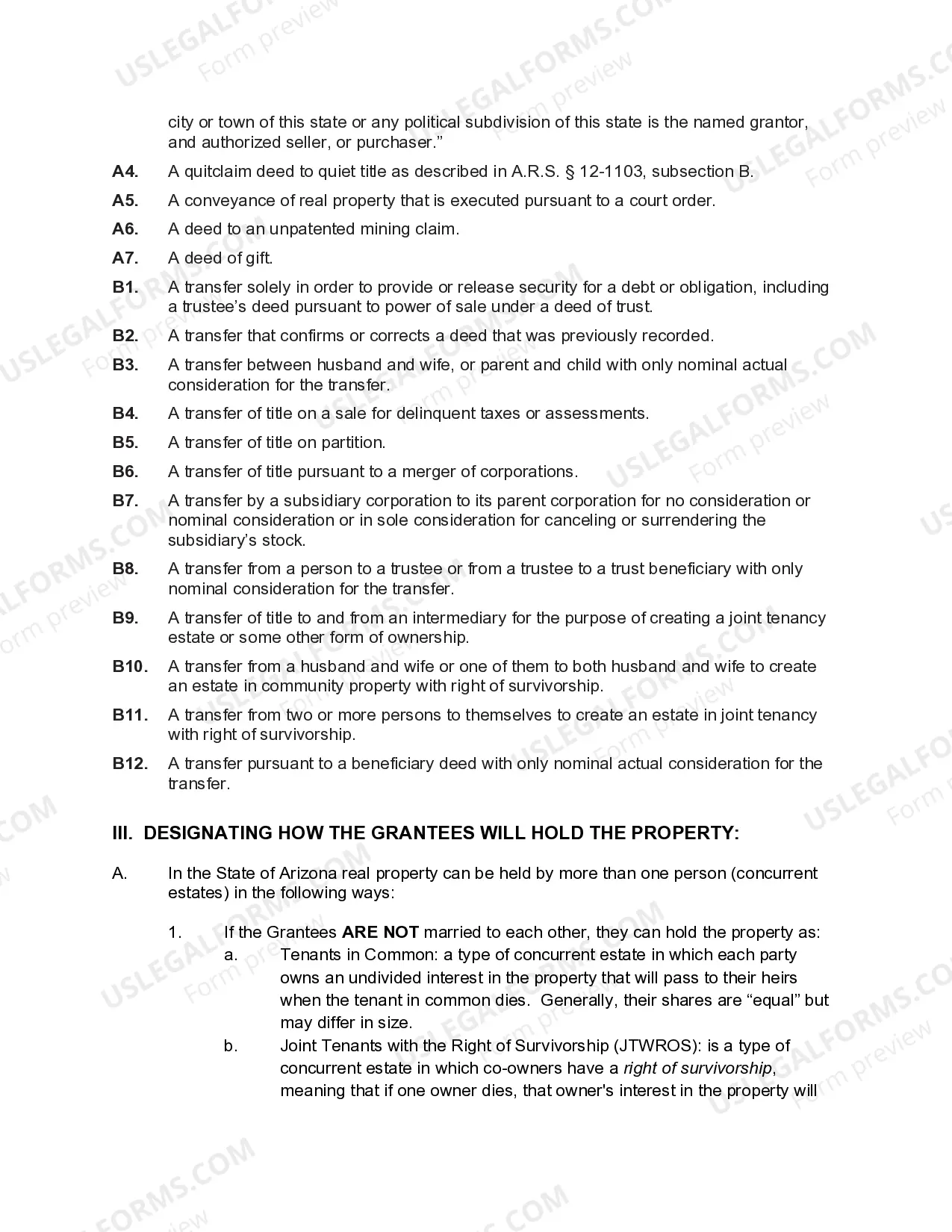
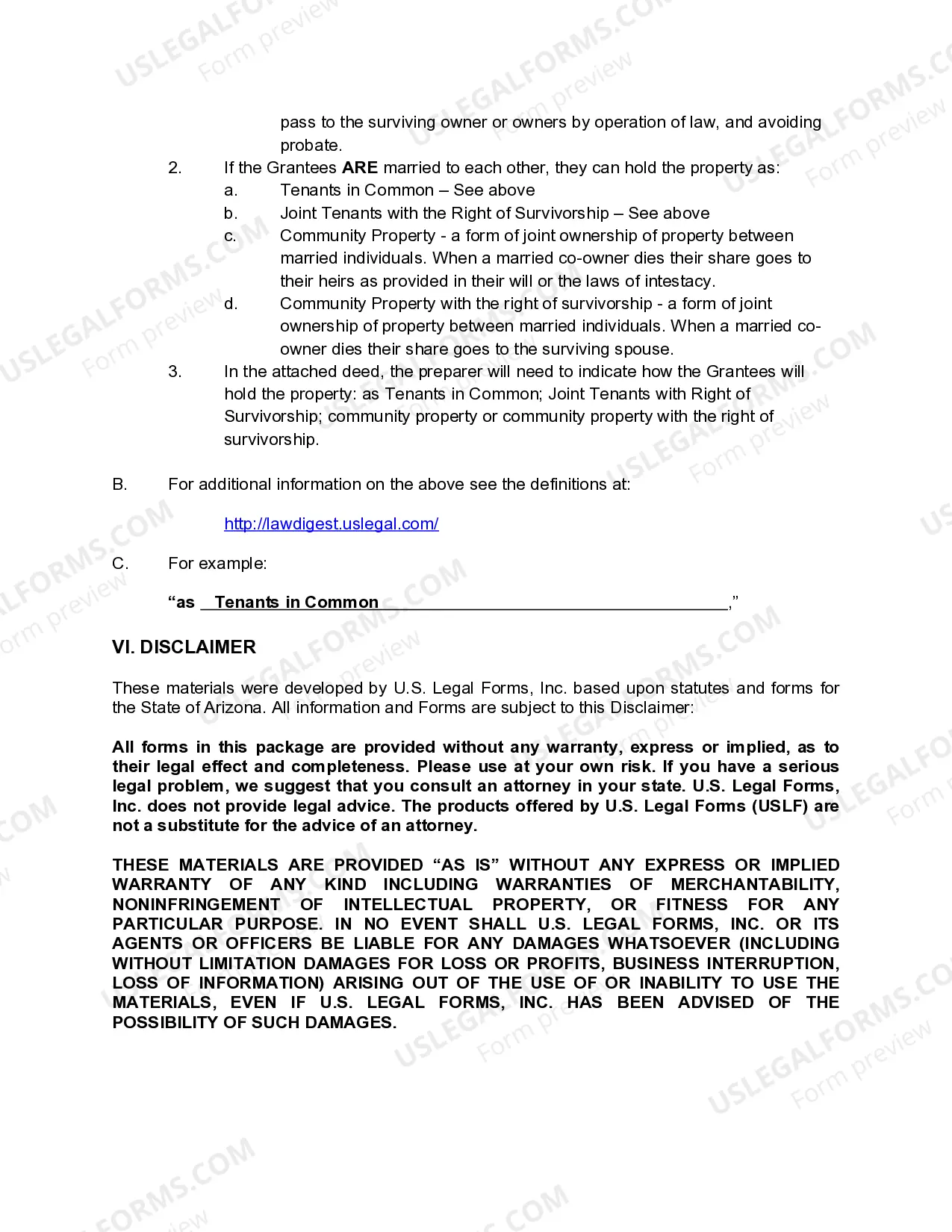
- Provisions on how the grantees will hold the property (e.g., tenants in common, joint tenants with right of survivorship).
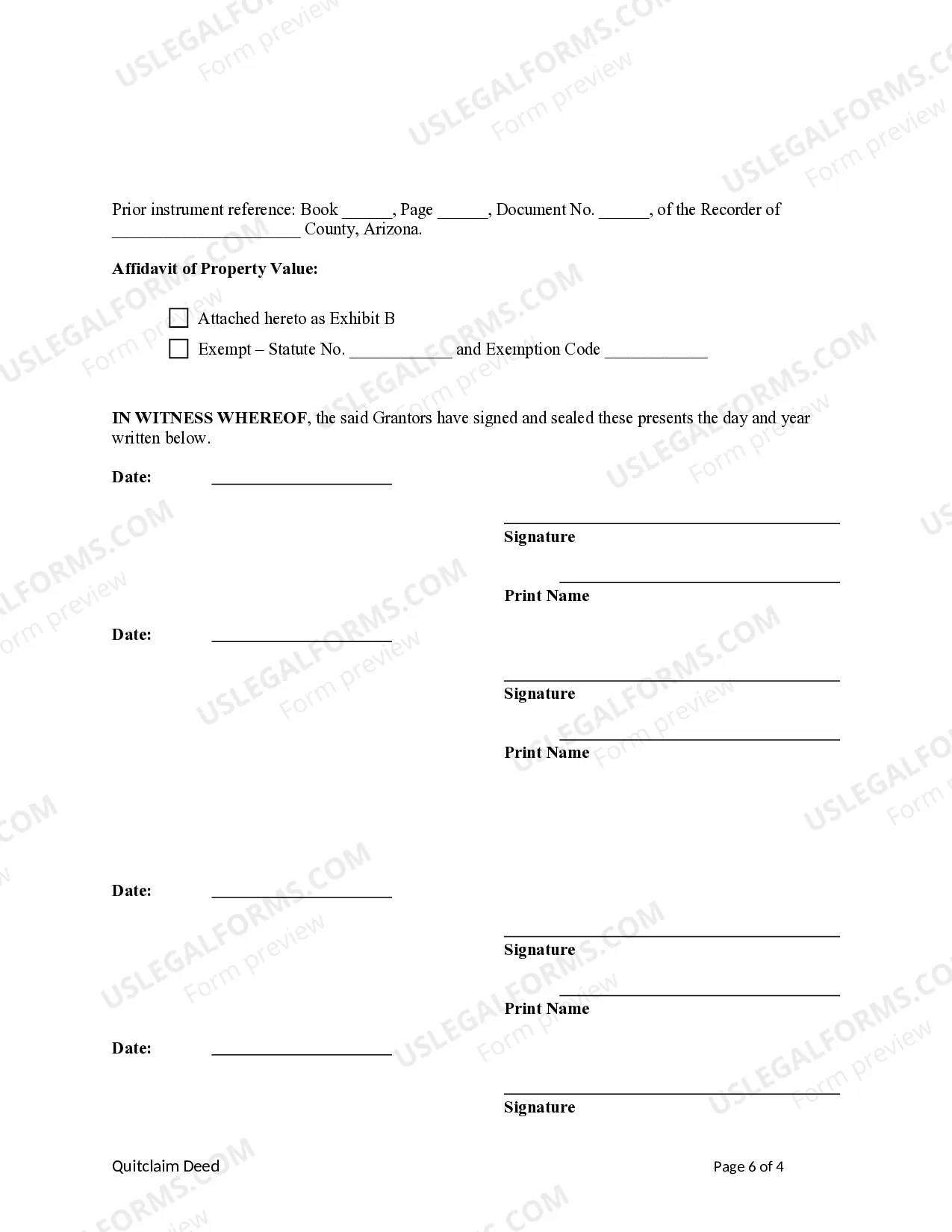
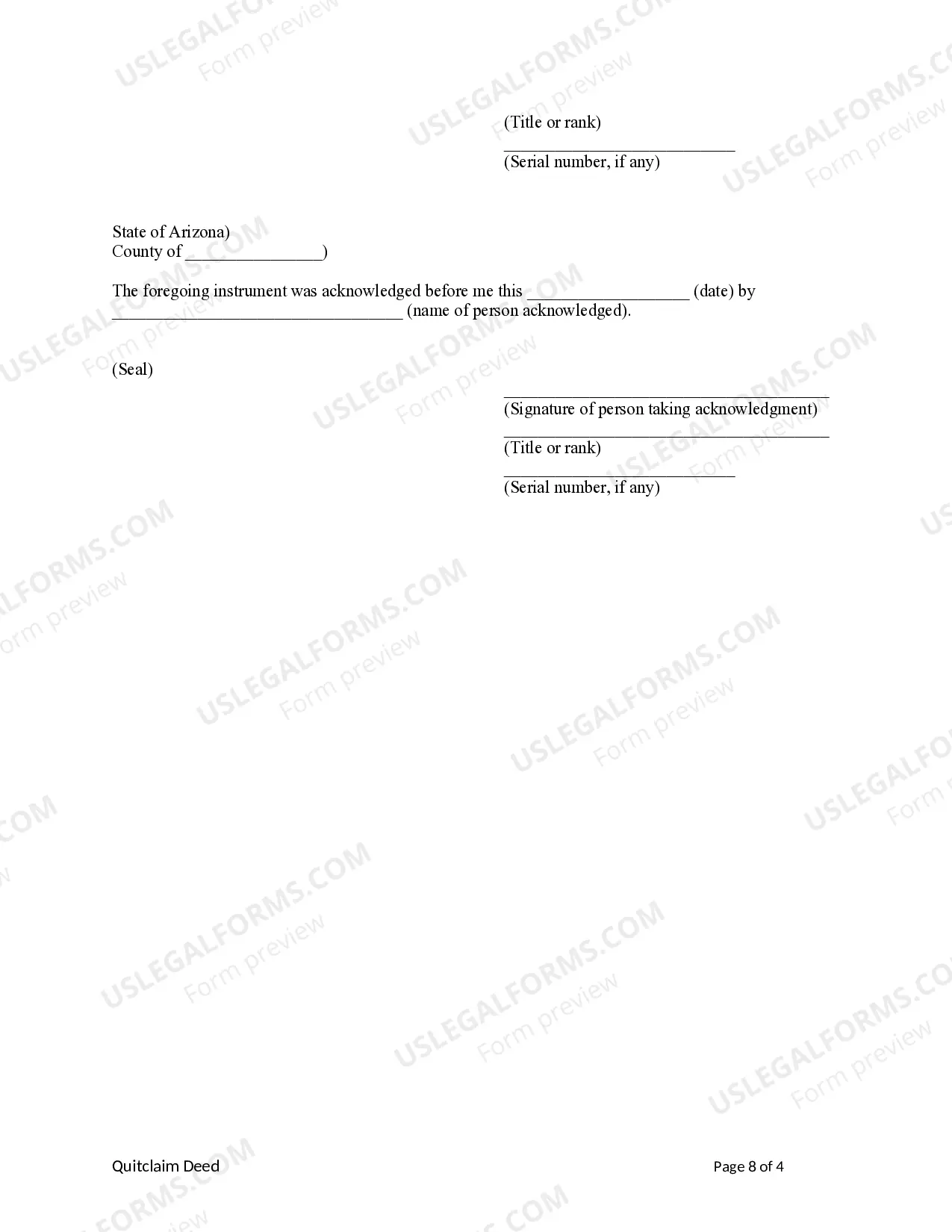
- Signature lines for the grantors.





Situations where this form applies
This Quitclaim Deed is typically used when property is being transferred between friends or family members and there is a need to relinquish any ownership rights. It is also useful in settling estates or transferring interests among co-owners of property. This form is appropriate when the grantors do not need to provide warranties about the title of the property.
Who can use this document
- Individuals seeking to transfer property ownership among family or friends.
- Co-owners wanting to update the title of a shared property.
- Trustees or administrators handling an estate distribution.
- Persons looking to correct names or interests on a property title.
How to complete this form
- Identify and list the names of all four grantors.
- List the names of the three grantees accurately.
- Provide a clear and detailed description of the property being transferred.
- Choose how the grantees will hold the property (e.g., tenants in common or joint tenants with right of survivorship).
- Have all grantors sign and date the deed to validate the transfer.
Notarization requirements for this form
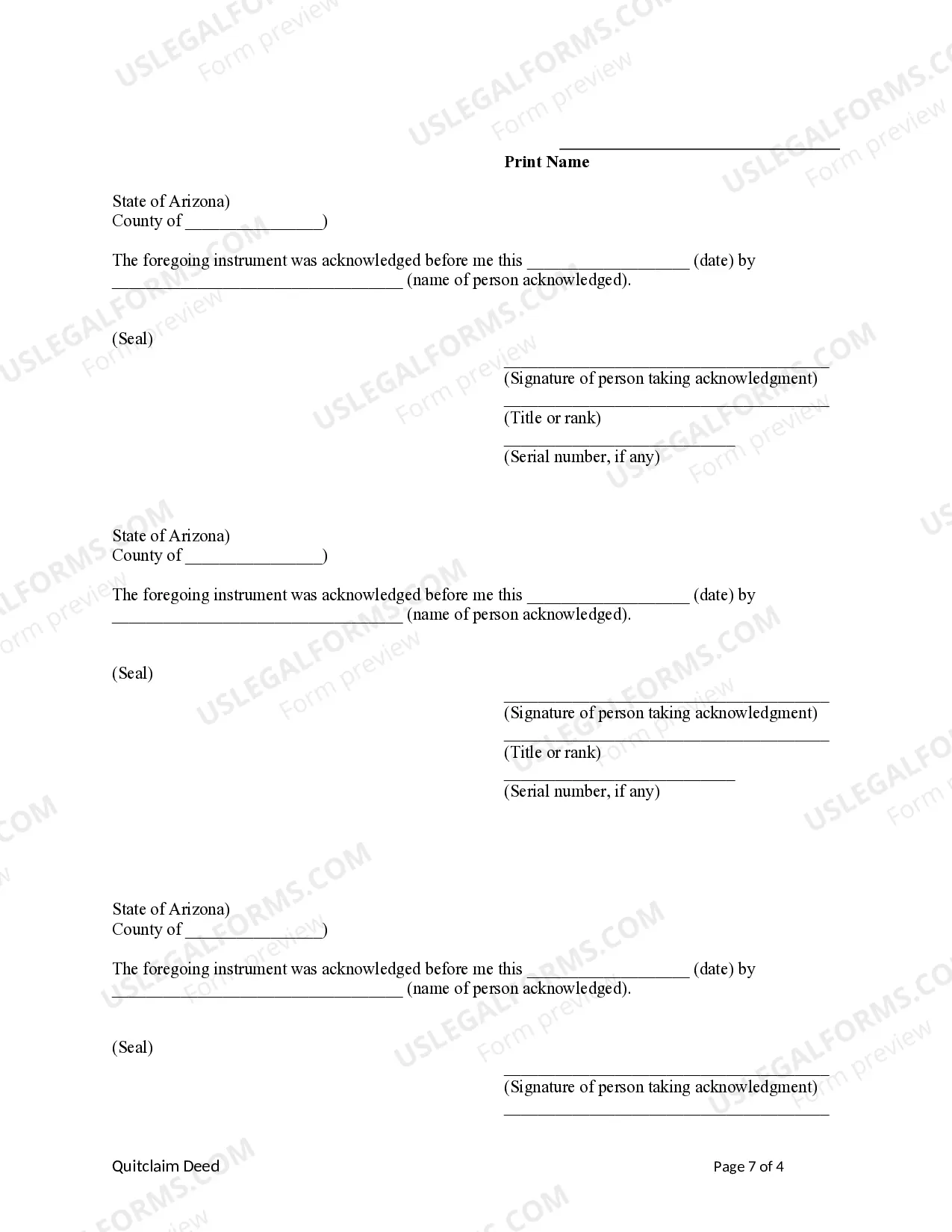
Notarization is required for this form to take effect. Our online notarization service, powered by Notarize, lets you verify and sign documents remotely through an encrypted video session, available 24/7.
Get your form ready online
Our built-in tools help you complete, sign, share, and store your documents in one place.
Make edits, fill in missing information, and update formatting in US Legal Forms—just like you would in MS Word.
Download a copy, print it, send it by email, or mail it via USPS—whatever works best for your next step.
Sign and collect signatures with our SignNow integration. Send to multiple recipients, set reminders, and more. Go Premium to unlock E-Sign.
If this form requires notarization, complete it online through a secure video call—no need to meet a notary in person or wait for an appointment.
We protect your documents and personal data by following strict security and privacy standards.

Make edits, fill in missing information, and update formatting in US Legal Forms—just like you would in MS Word.

Download a copy, print it, send it by email, or mail it via USPS—whatever works best for your next step.

Sign and collect signatures with our SignNow integration. Send to multiple recipients, set reminders, and more. Go Premium to unlock E-Sign.

If this form requires notarization, complete it online through a secure video call—no need to meet a notary in person or wait for an appointment.

We protect your documents and personal data by following strict security and privacy standards.
Avoid these common issues
- Incorrectly identifying the grantors or grantees.
- Failing to include a full description of the property.
- Not indicating how the grantees will hold the property.
- Skipping signatures or dates on the deed.
Benefits of using this form online
- Convenience of filling out the form from anywhere, at any time.
- Editability allows you to ensure accurate information is provided.
- Access to legal forms drafted by licensed attorneys, ensuring compliance with state laws.
Main things to remember
- The Quitclaim Deed is a quick way to transfer property rights without warranties.
- Ensure all parties' names are accurate and complete for legal validity.
- Understand how the grantees intend to hold the property to avoid future disputes.
Looking for another form?


Form popularity
FAQ
To record a deed in Arizona, it is essential to provide accurate information, such as the names of all parties involved and a clear legal description of the property. Additionally, the deed must be signed by the grantor and notarized. Recording the Arizona Quitclaim Deed - Four Individuals to Three Individuals protects ownership rights and provides a public record, ensuring transparency and legality.
Joint ownership of property in Arizona refers to an arrangement where two or more individuals hold title to the same property together. With this type of ownership, each party has equal rights to the property, making it ideal for families or partners. The Arizona Quitclaim Deed - Four Individuals to Three Individuals facilitates this type of joint ownership, allowing smooth transitions and shared responsibilities.
Arizona law does not limit the number of individuals who can be on a property deed. You can legally include as many names as you wish on the deed, as long as all parties agree to the arrangement. This means the Arizona Quitclaim Deed - Four Individuals to Three Individuals can efficiently transfer ownership among multiple parties, ensuring everyone remains informed.
In Arizona, you can have multiple names listed on a home title. Typically, individuals can co-own property through a Quitclaim Deed. When transferring ownership, the title may include several names, making it easy for families or groups to share a property. The Arizona Quitclaim Deed - Four Individuals to Three Individuals allows for flexibility in ownership arrangements.
To add someone to your deed in Arizona, start by filling out a Quitclaim Deed form with all required information, including the current parties and the new person's details. You will then need to sign the document in front of a notary public and file it with your local county recorder's office. Using platforms like US Legal Forms can provide the templates and instructions you need to ensure a smooth process.
A Quitclaim Deed in Arizona can list multiple individuals as owners. You can have four individuals on the deed and easily modify it to transfer ownership to three individuals if desired. There is no strict limit on the number of owners, but clarity in ownership interest is crucial. Services like US Legal Forms can help you navigate the process effectively.
The best way to add someone to a deed in Arizona is by using a Quitclaim Deed. This legal document will enable you to transfer your ownership interest to another person efficiently. You will need to gather the necessary information, fill out the form correctly, and have it notarized. If you want assurance that your forms are accurate, check out US Legal Forms for comprehensive guidance.
Yes, you can add a third person to your deed using an Arizona Quitclaim Deed. This document allows property owners to transfer their interest to others easily, making it possible to move from four individuals to three individuals. You must complete the deed with accurate details and obtain signatures from all parties involved. When in doubt, consider using a service like US Legal Forms to ensure your paperwork is correct.
If you want to add your spouse to a deed in Arizona, you will do so using a Quit Claim Deed. First, gather the necessary information, including your spouse's name and the property details. Complete the deed, ensuring both of you sign it in front of a notary. After that, submit the completed deed to the county recorder for official recognition. For an easy experience, uLegalForms provides helpful templates and instructions for such transactions.
To add someone to a home title with a Quit Claim Deed in Arizona, you'll need to clearly identify the current owner and the person being added. Fill out the deed with both parties' names, their addresses, and a detailed legal description of the property. After both sign the deed in front of a notary, you must file it with the county recorder’s office. For a straightforward process, consider uLegalForms as your go-to resource.