Idaho Permanent Slope Easement and Temporary Construction Easement for Roadway Purposes
About this form
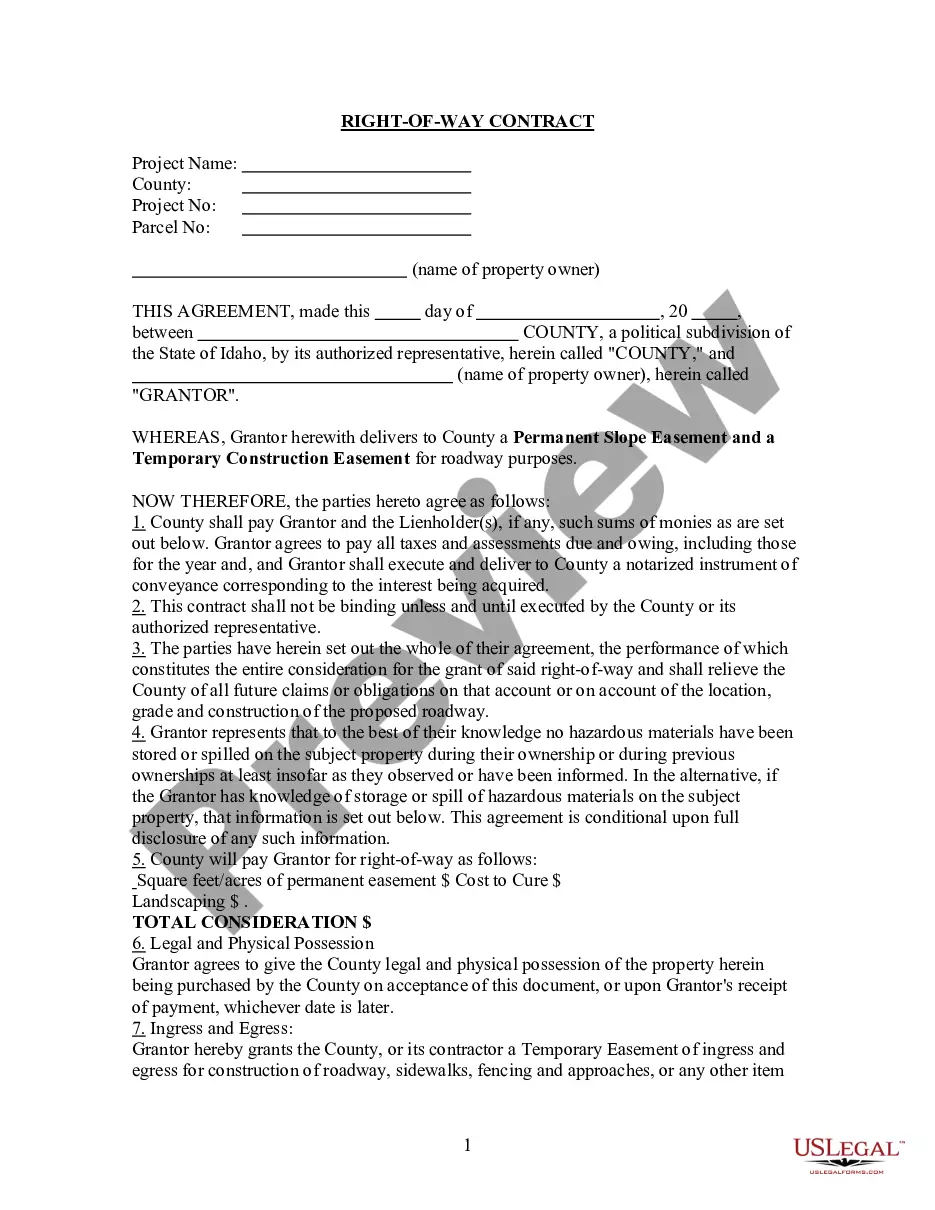
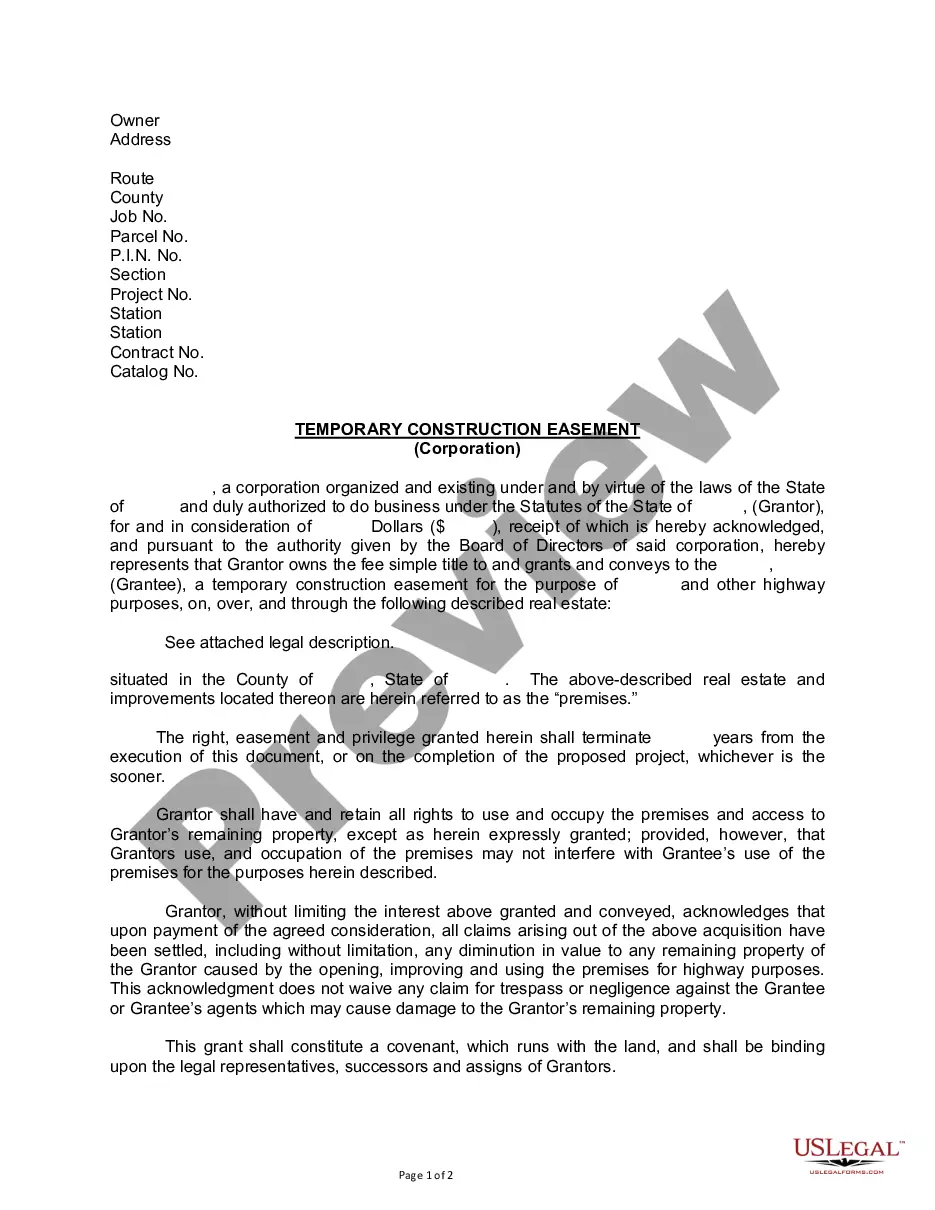
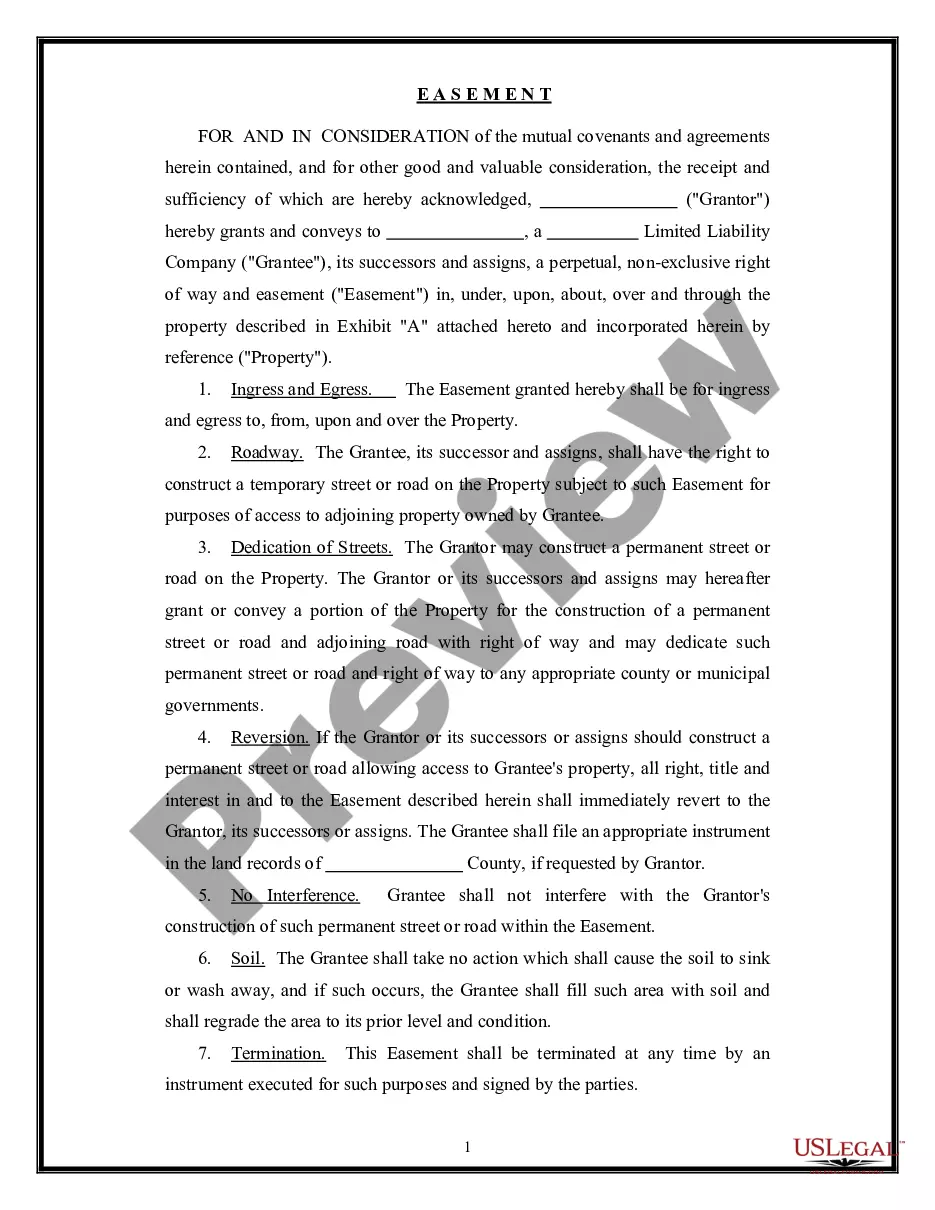
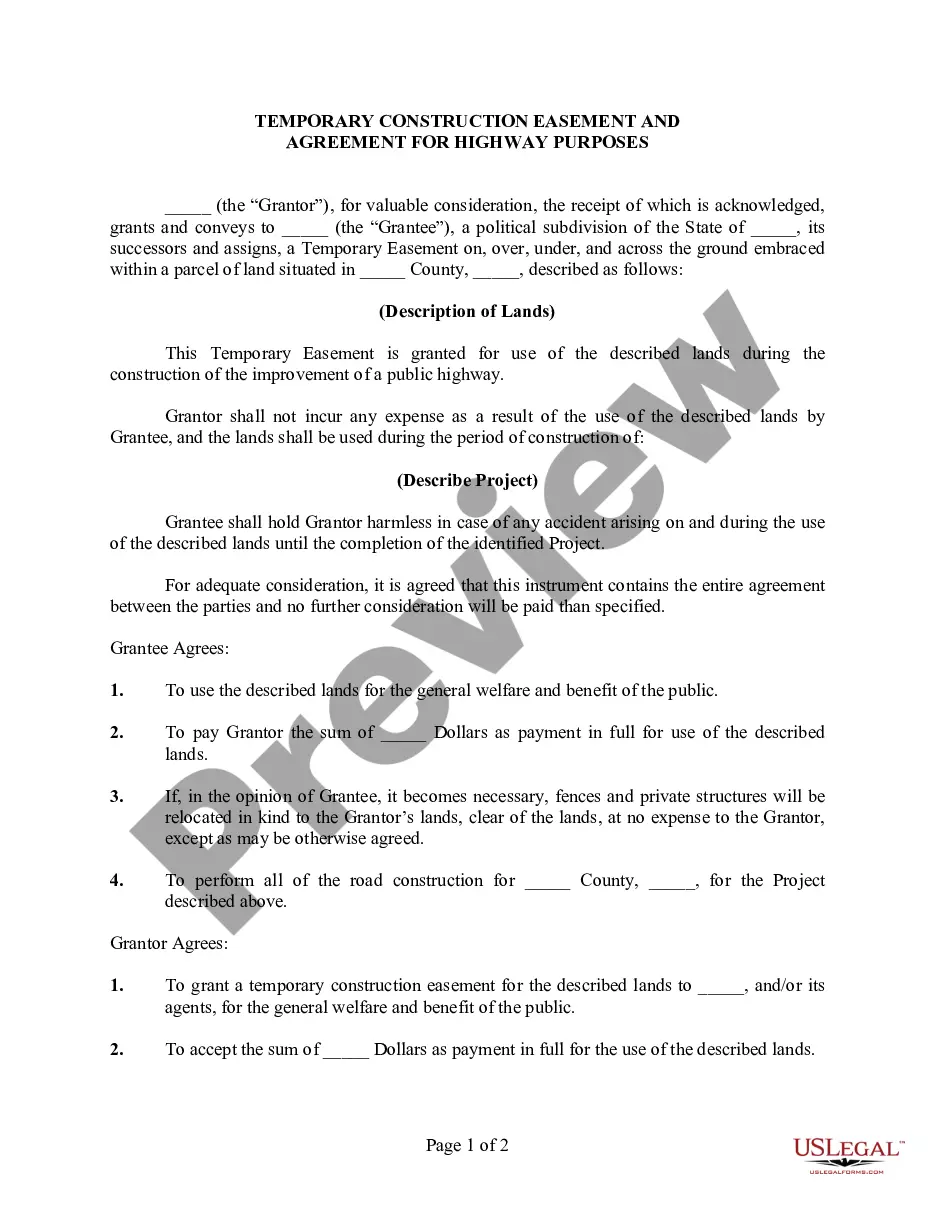
The Permanent Slope Easement and Temporary Construction Easement for Roadway Purposes is a legal document that grants a government entity, typically a county, the right to access and use a portion of private property for roadway construction and maintenance. This form establishes both a temporary easement for construction and a permanent easement for ongoing maintenance of the roadway. Unlike other types of easements, this document specifically addresses roadway use and ensures that the county can fulfill its obligations while protecting the property owner's interests.
What’s included in this form
- Payment terms for the easement, including amounts due to the property owner.
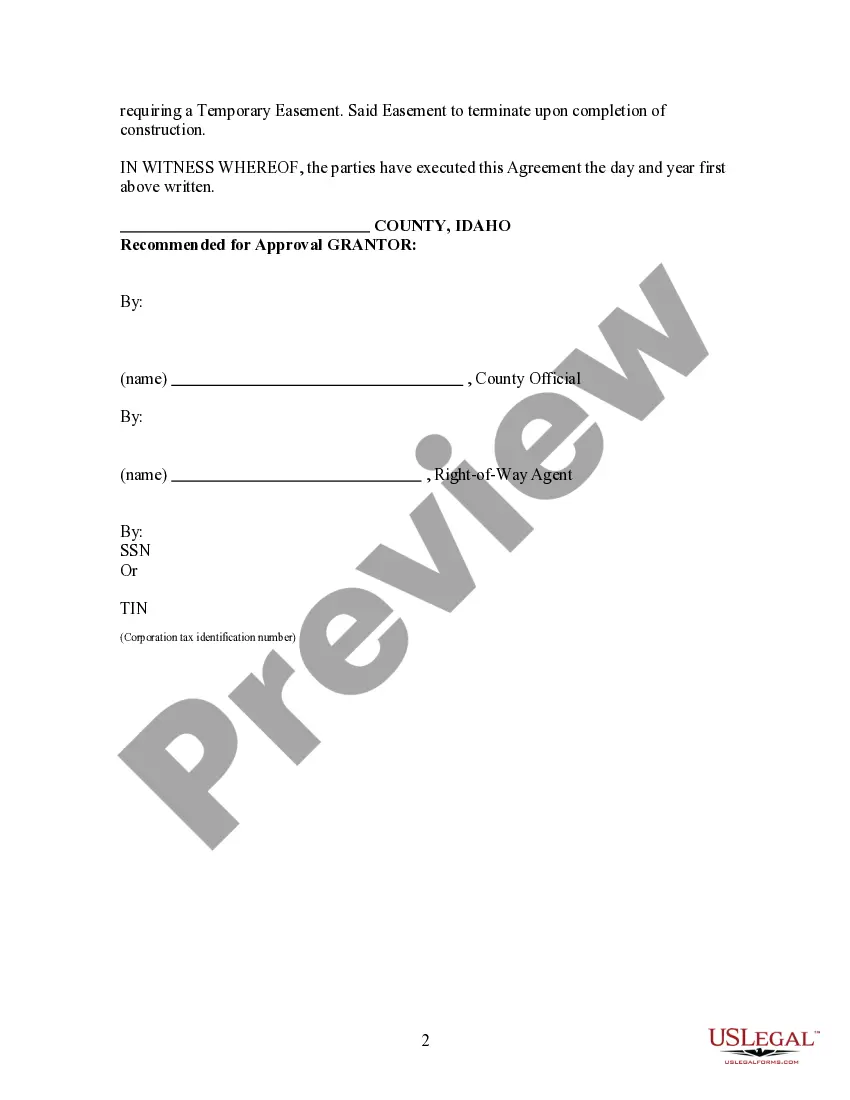
- Conditions that render the contract binding, requiring execution by the county's authorized representative.
- Disclosure of hazardous material storage on the property, impacting the agreement's validity.
- Specific details on the dimensions and costs associated with the easement.
- Legal and physical possession transfer instructions for the property involved.
- Ingress and egress rights ensuring access to and from the property.

When to use this document
This form is typically used when a county requires access to private property for constructing or maintaining a roadway. It is essential in situations where the county needs to establish legal rights to navigate through or utilize segments of land owned by private individuals or entities. Use this form to formalize agreements related to both temporary construction activities and long-term maintenance obligations.
Who needs this form
- County or local government officials responsible for roadway construction and maintenance.
- Property owners whose land is affected by county roadway projects.
- Legal representatives involved in real estate or municipal law matters.
Instructions for completing this form
- Identify all parties involved, including the county and the property owner.
- Specify the exact dimensions of the easement being granted, using the provided fields.
- Enter total payment amounts and any costs associated with the easement.
- Include disclosures regarding any hazardous materials present on the property.
- Ensure all parties sign the document where required and retain a copy for record-keeping.
Does this document require notarization?
This form must be notarized to be legally valid. US Legal Forms provides secure online notarization powered by Notarize, allowing you to complete the process through a verified video call.
Get your form ready online
Our built-in tools help you complete, sign, share, and store your documents in one place.
Make edits, fill in missing information, and update formatting in US Legal Forms—just like you would in MS Word.
Download a copy, print it, send it by email, or mail it via USPS—whatever works best for your next step.
Sign and collect signatures with our SignNow integration. Send to multiple recipients, set reminders, and more. Go Premium to unlock E-Sign.
If this form requires notarization, complete it online through a secure video call—no need to meet a notary in person or wait for an appointment.
We protect your documents and personal data by following strict security and privacy standards.

Make edits, fill in missing information, and update formatting in US Legal Forms—just like you would in MS Word.

Download a copy, print it, send it by email, or mail it via USPS—whatever works best for your next step.

Sign and collect signatures with our SignNow integration. Send to multiple recipients, set reminders, and more. Go Premium to unlock E-Sign.

If this form requires notarization, complete it online through a secure video call—no need to meet a notary in person or wait for an appointment.

We protect your documents and personal data by following strict security and privacy standards.
Mistakes to watch out for
- Failing to disclose existing hazardous materials on the property can void the agreement.
- Not securing all necessary signatures, which could render the document unenforceable.
- Omitting critical details, such as dimensions of the easement, leading to misunderstandings.
Benefits of using this form online
- Convenient access to legal documents that can be downloaded and printed easily.
- Editable fields allow for personalized information to be added efficiently.
- Access to templates drafted by licensed attorneys, ensuring reliability and compliance with legal standards.
Legal use & context
- The easement must serve a public purpose, such as road maintenance or construction.
- Failure to comply with local statutes regarding easements may lead to legal disputes.
- Properly executed easements prevent future claims or obligations from arising.
Summary of main points
- This form combines both temporary and permanent rights for road construction purposes.
- Accurate details and full disclosure about the property are critical.
- Notarization may be required for legal validity.
- The form should be customized to comply with state-specific regulations.
Looking for another form?

Form popularity
FAQ
An easement holder is not allowed to occupy or exclude others from using the land unless they interfere with the easement holder's use.The owner of the land may continue to use it, according to . Easements are usually held to be permanent unless the agreement states otherwise.
A slope easement is an easement in land which will contain or be used for the construction of a slope on your property and generally will be used to adjust the elevation difference between your property and your adjoining property because it...
An easement usually is written so that it lasts forever. This is known as a perpetual easement. Where state law allows, an easement may be written for a specified period of years; this is known as a term easement. Only gifts of perpetual easement, however, can qualify a donor for income- and estate-tax benefits.
An access easement is a right to pass over someone else's property for you guessed it access. A private road also provides access to one's land.Generally, only a limited number of people may use an access easement.
Permanent easement means an easement that lasts in perpetuity.
You are not permitted to build for that reason is the "slope easement". satisfy that. right up against the edge of the roadway could be a traffic hazard.
Types of Easements An easement may be classified as either an easement appurtenant or an easement in gross. Easement Appurtenant. An easement appurtenant is an easement that benefits one parcel of land, known as the dominant tenement, to the detriment of another parcel of land, known as the servient tenement.
So, having an easement on a property may have a permanent outcome on the property with rights of the home owner. But not all easements are bad.If you live in a rural area, you run into bad easement issues more often, typically where the easement was created by a parcel owner next to your land.