Arkansas Letter to Lienholder to Notify of Trust
What is this form?
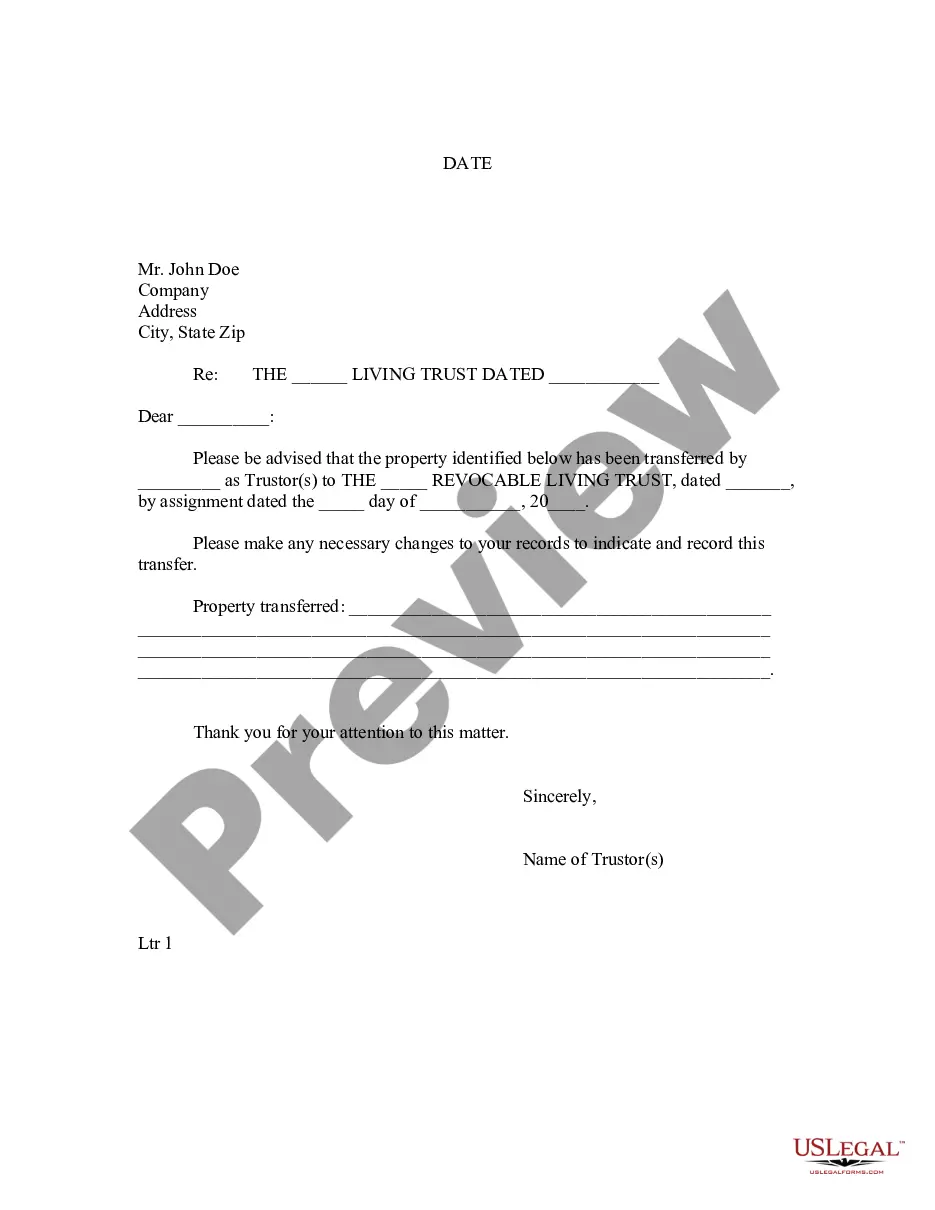
The Letter to Lienholder to Notify of Trust is a formal notice informing a lienholder that certain property has been transferred into a living trust. This letter is essential in estate planning, as it ensures that the lienholder updates their records to reflect the new ownership structure. Unlike general transfer notices, this letter specifically addresses the obligations related to assets placed in a trust, contributing to a seamless transition of property ownership.
Form components explained
- Date of the letter
- Identification of the lienholder, including their name and address
- Details of the living trust, including its name and date
- Specifying the property transferred into the trust
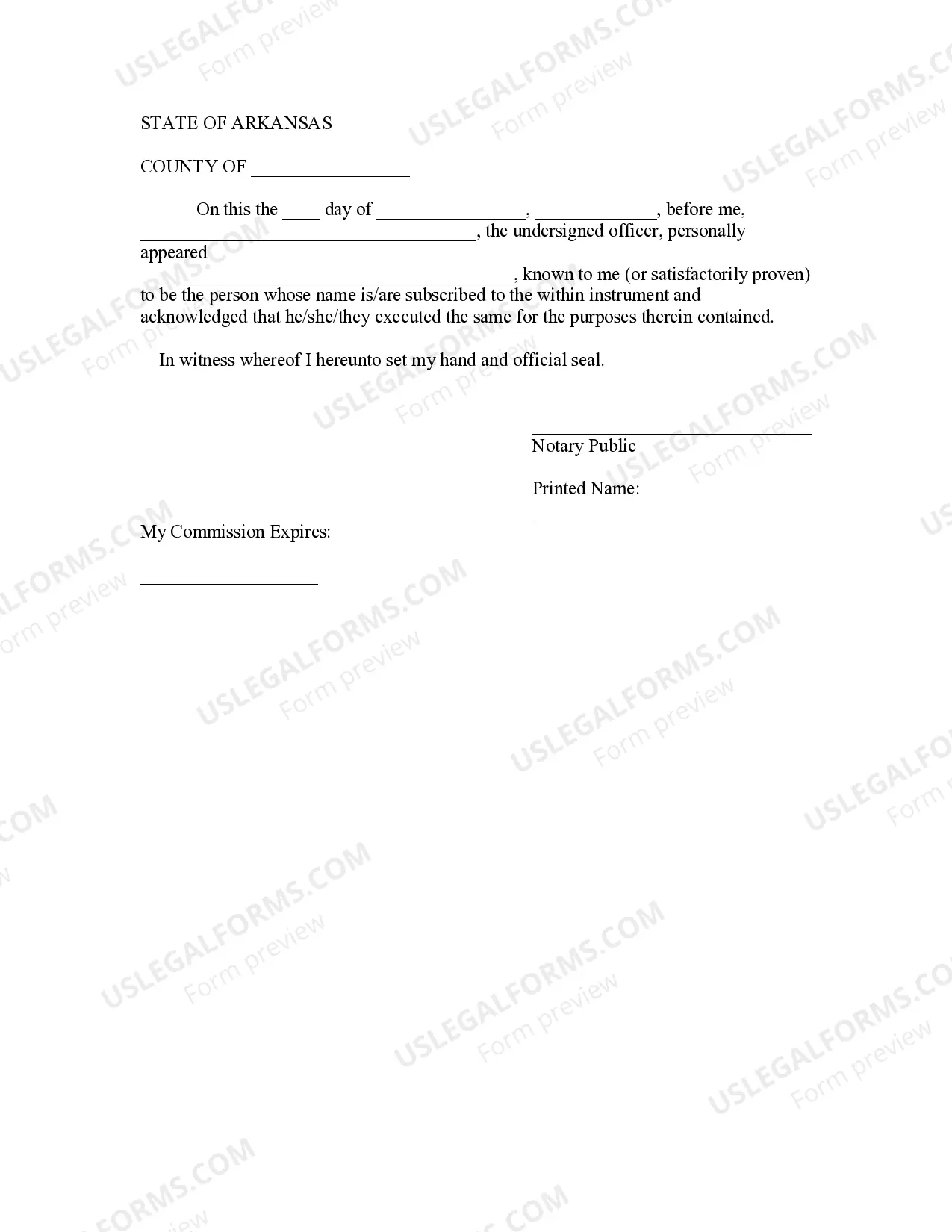
- Trustor's signature blocks, including notarization details
When this form is needed
This form is used when a trustor has placed property into a living trust and needs to notify the lienholder of the property's change in ownership. It is particularly important when the lienholder has a financial interest in the property, such as a mortgage lender, to ensure that their records are accurate and up to date. Additionally, this letter may be beneficial during estate planning or in estate settlement situations.
Who needs this form
- Trustors who have created a living trust and transferred property into it
- Individuals looking to inform lienholders about changes in property ownership
- Estate planners or legal representatives managing trusts and estates
Steps to complete this form
- Insert the date at the top of the letter.
- Fill in the lienholder's name and address.
- Specify the name and date of the living trust in the subject line.
- Provide details about the property transferred to the trust.
- Sign and date the letter, ensuring it is notarized where required.
Does this form need to be notarized?
This form must be notarized to be legally valid. US Legal Forms provides secure online notarization powered by Notarize, allowing you to complete the process through a verified video call.
Get your form ready online
Our built-in tools help you complete, sign, share, and store your documents in one place.
Make edits, fill in missing information, and update formatting in US Legal Forms—just like you would in MS Word.
Download a copy, print it, send it by email, or mail it via USPS—whatever works best for your next step.
Sign and collect signatures with our SignNow integration. Send to multiple recipients, set reminders, and more. Go Premium to unlock E-Sign.
If this form requires notarization, complete it online through a secure video call—no need to meet a notary in person or wait for an appointment.
We protect your documents and personal data by following strict security and privacy standards.

Make edits, fill in missing information, and update formatting in US Legal Forms—just like you would in MS Word.

Download a copy, print it, send it by email, or mail it via USPS—whatever works best for your next step.

Sign and collect signatures with our SignNow integration. Send to multiple recipients, set reminders, and more. Go Premium to unlock E-Sign.

If this form requires notarization, complete it online through a secure video call—no need to meet a notary in person or wait for an appointment.

We protect your documents and personal data by following strict security and privacy standards.
Mistakes to watch out for
- Failing to include all required property details.
- Not updating the lienholder's name or address correctly.
- Omitting the date of the living trust or transfer date.
- Neglecting to notarize the form when necessary.
Advantages of online completion
- Immediate access to professionally drafted legal templates.
- Editable formats allow for easy customization to fit individual needs.
- Convenient download and print options for quick delivery.
Looking for another form?
Form popularity
FAQ
To write an Arkansas Letter to Lienholder to Notify of Trust, start by clearly stating your intention to inform the lienholder about the trust. Include essential details such as the trust's name, its effective date, and any relevant contact information. It’s important to specify the authority of the trustee in managing the trust assets. Be concise and direct, ensuring the lienholder understands their obligations regarding the trust.
A Notice of Intent to Lien in Arkansas is a preliminary notice that signals the intent to file a lien before actually proceeding with the filing. It allows the debtor an opportunity to settle the debt and prevent the formal lien from being recorded. By sending an Arkansas Letter to Lienholder to Notify of Trust as a notice of intent, you can foster open dialogue and potentially avoid legal complications. This step can save both time and resources for everyone involved.
A lien letter is a document that formally notifies a property owner of a creditor's claim against their property. This letter informs the owner of the specific debt and the potential risks of not resolving the outstanding amount. Utilizing the Arkansas Letter to Lienholder to Notify of Trust can clarify responsibilities and timelines for settlement, ensuring all parties are clear about their obligations. This communication is vital to avoid misunderstandings.
In Arkansas, a lien generally remains on your property for five years unless the lienholder takes action to extend it. After this period, the lien can be removed if the lienholder does not initiate enforcement. It's important to regularly review any liens against your property, which may include reviewing the Arkansas Letter to Lienholder to Notify of Trust for compliance. Keeping track helps you maintain clear property titles.
To file a lien in Arkansas, start by gathering the necessary information about the debt and the property. Next, complete the appropriate Arkansas Letter to Lienholder to Notify of Trust. Once you have the letter ready, you must file it with the county clerk's office where the property is located. It is essential to follow all specific procedures to ensure your lien is valid and enforceable.
A letter for breach of trust serves as a formal communication to a lienholder regarding issues that may arise due to a breach of established trust. It is critical to address these matters promptly to protect your interests and ensure compliance with legal obligations. In the context of an Arkansas Letter to Lienholder to Notify of Trust, this letter highlights specific concerns and outlines actions required to remedy the situation. Using a well-crafted letter can facilitate resolution and maintain transparency between parties.
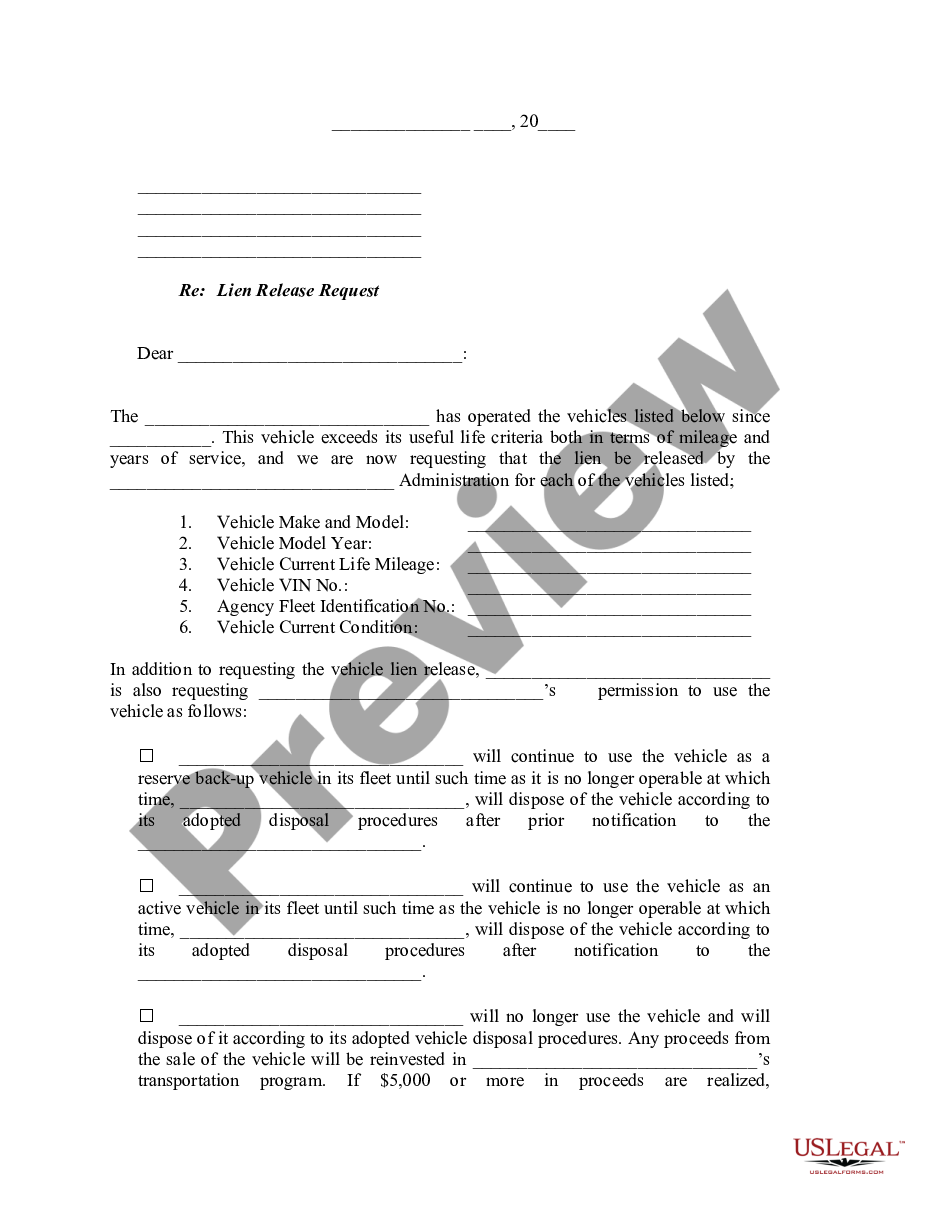
A lien is a claim on property to ensure payment of a debt. When you borrow money to purchase a car, the lender files a lien on the vehicle with the state to insure that if the loan defaults, the lender can take the car. When the debt is fully repaid, a release of the lien is provided by the lender.
The car (vehicle) lien release form is a document that is used by a lending institution or entity after a borrower has paid the loan in full and the borrower would like to retrieve the title to their vehicle.
Depending on state laws, paper titles are generally mailed and electronic titles and/or liens are released to the motor vehicle agency approximately 10 business days after the payoff is received. Allow 15-30 days for receipt of your title based on mail time and/or motor vehicle agency process.
A lien release allows an entity or individual that owns property to waive any debt that was owed on their behalf and was attached to their property. A lien can effect the sale or lease of real estate as a title company will most likely request that the payment be secured before any transaction.