Arkansas Revocation of Living Trust

What is this form?
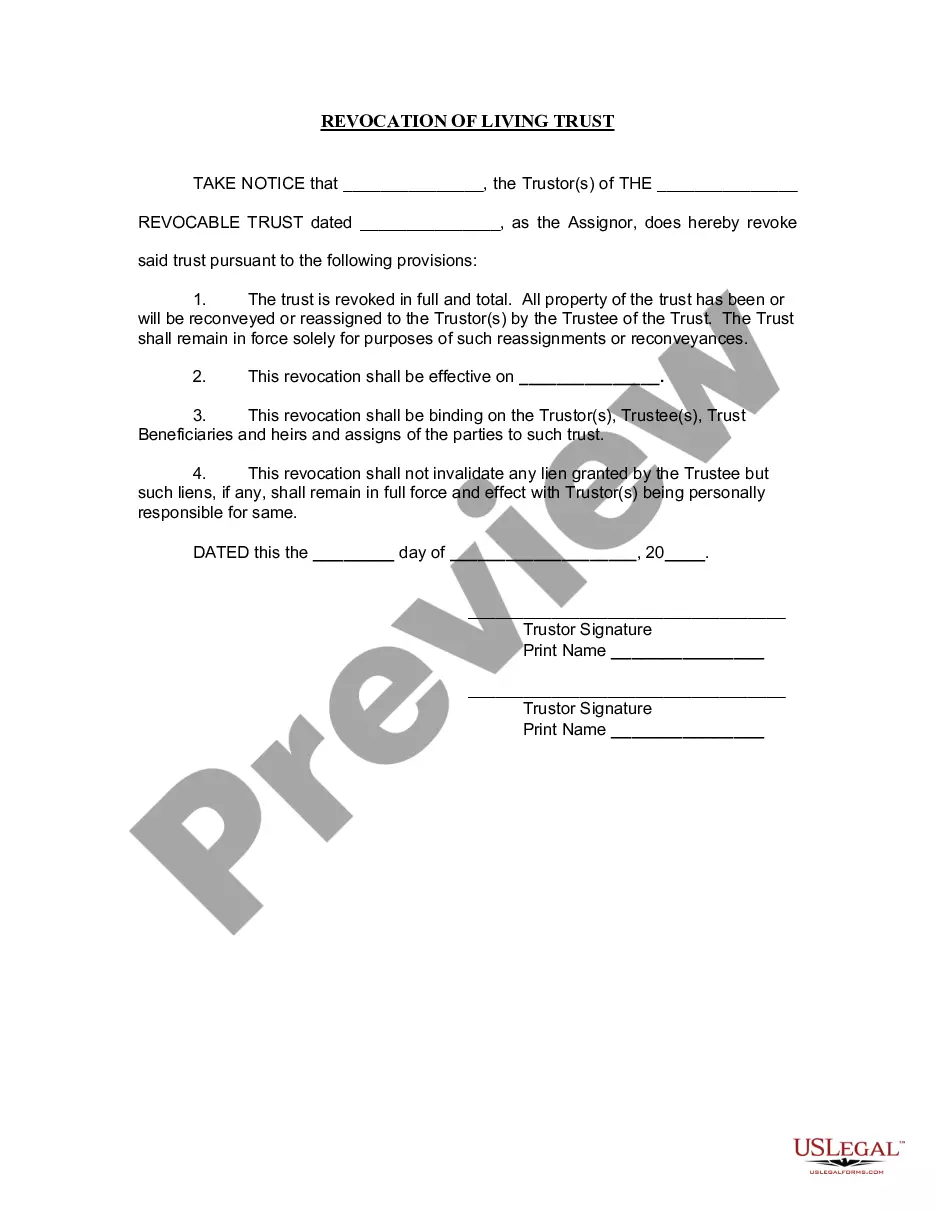
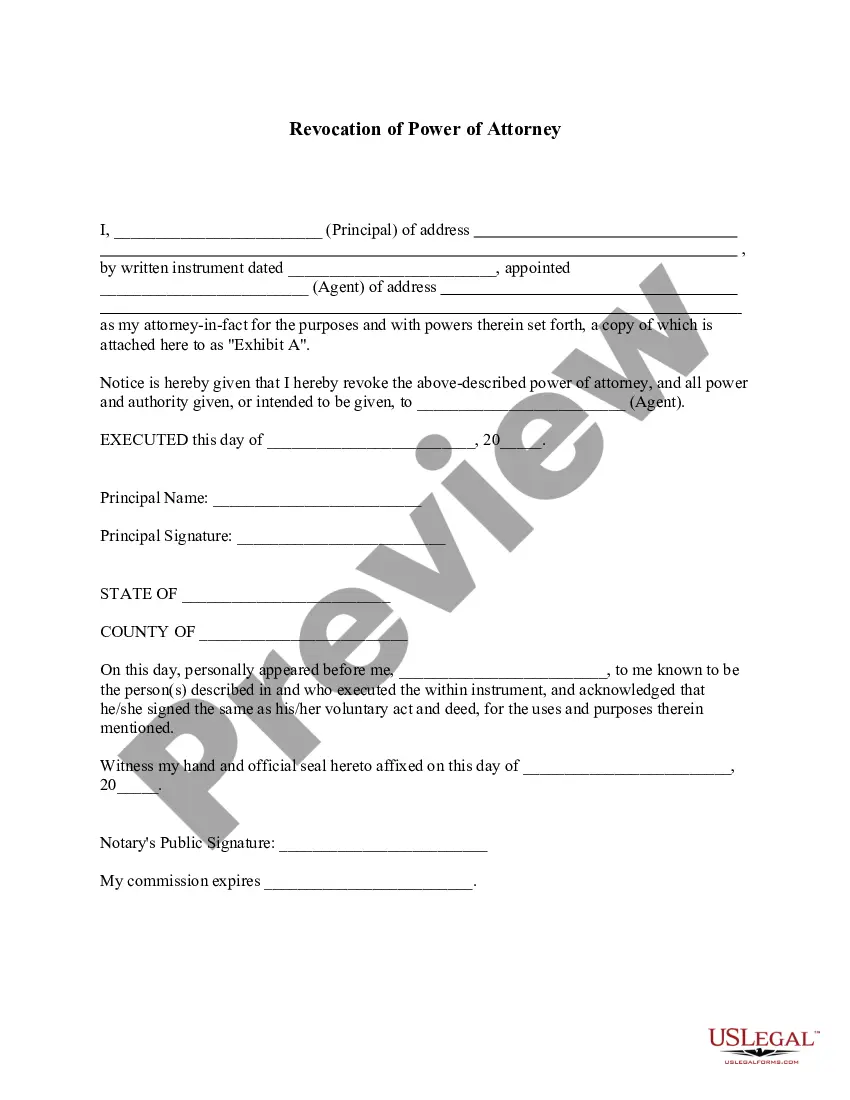
The Revocation of Living Trust is a legal document designed to formally cancel a previously established living trust. A living trust is a financial arrangement created during the trustor's lifetime where assets are managed for the benefit of named beneficiaries. This form ensures the complete nullification of a specific living trust, allowing the return of trust property to the trustor. It is essential for anyone looking to end a trust and regain control over their assets.
Form components explained
- Identification of the trustor(s) and the specific revocable trust being revoked.
- A declaration of the revocation of the trust in full.
- Details regarding the reconveyance or reassignment of trust property to the trustor(s).
- The effective date of the revocation.
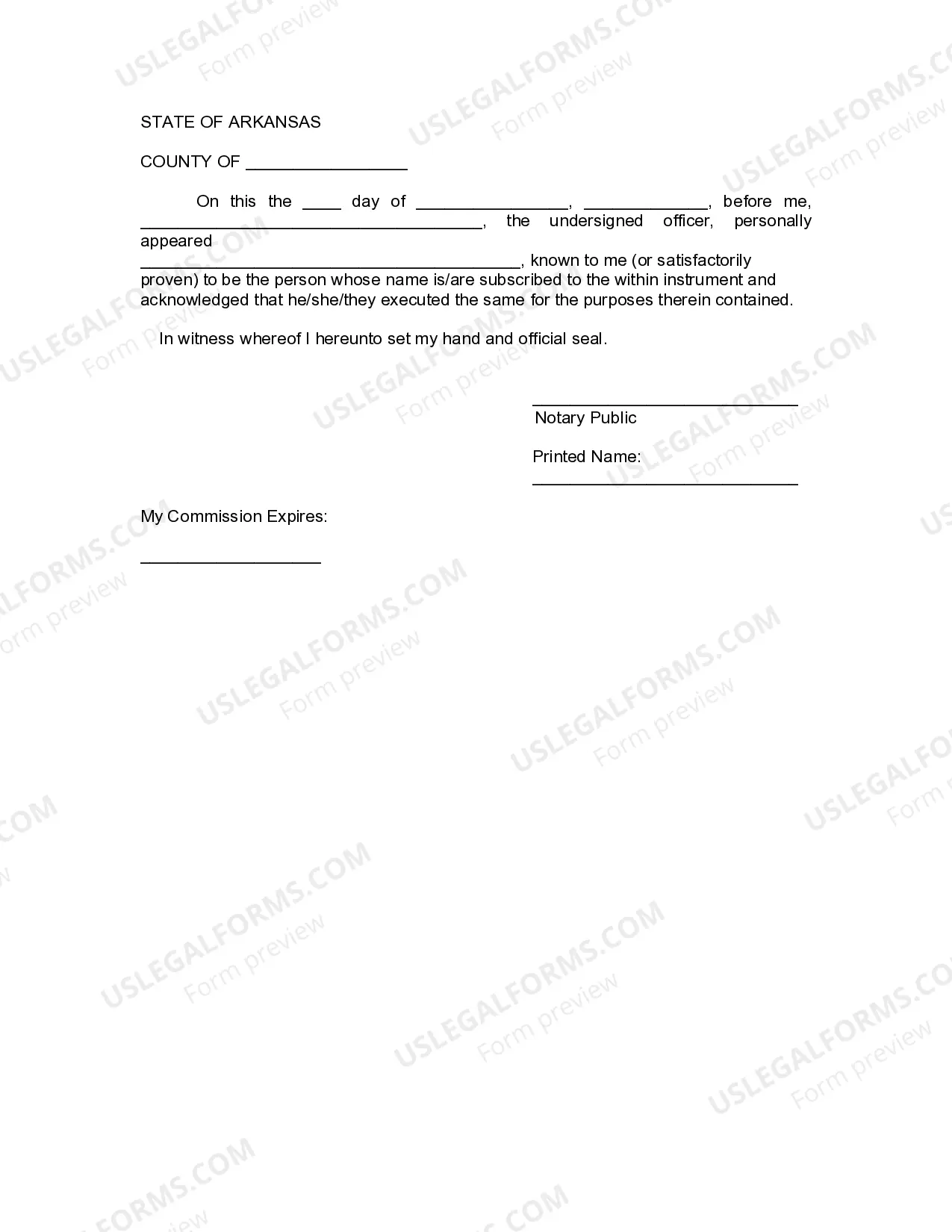
- Signatures of the trustor(s) and acknowledgment by a notary public.

When this form is needed
This form is necessary when the trustor decides to terminate a living trust for various reasons, such as changes in personal circumstances, shifting financial strategies, or the desire to restructure an estate plan. It is also useful if the trustor has decided to create a new trust or if the trust has served its intended purpose.
Who needs this form
- Trustors who wish to revoke their living trust.
- Individuals managing estates with complex trust arrangements.
- Anyone seeking to consolidate or simplify their financial planning.
Instructions for completing this form
- Identify the trustor(s) and specify the name of the living trust being revoked.
- Complete the declaration of revocation, ensuring it states the trust is revoked in full.
- If applicable, detail any property being reconveyed or reassigned.
- Enter the effective date for the revocation of the trust.
- Have the trustor(s) sign the document in the presence of a notary public.
Is notarization required?
This form must be notarized to be legally valid. US Legal Forms provides secure online notarization powered by Notarize, allowing you to complete the process through a verified video call.
Get your form ready online
Our built-in tools help you complete, sign, share, and store your documents in one place.
Make edits, fill in missing information, and update formatting in US Legal Forms—just like you would in MS Word.
Download a copy, print it, send it by email, or mail it via USPS—whatever works best for your next step.
Sign and collect signatures with our SignNow integration. Send to multiple recipients, set reminders, and more. Go Premium to unlock E-Sign.
If this form requires notarization, complete it online through a secure video call—no need to meet a notary in person or wait for an appointment.
We protect your documents and personal data by following strict security and privacy standards.

Make edits, fill in missing information, and update formatting in US Legal Forms—just like you would in MS Word.

Download a copy, print it, send it by email, or mail it via USPS—whatever works best for your next step.

Sign and collect signatures with our SignNow integration. Send to multiple recipients, set reminders, and more. Go Premium to unlock E-Sign.

If this form requires notarization, complete it online through a secure video call—no need to meet a notary in person or wait for an appointment.

We protect your documents and personal data by following strict security and privacy standards.
Avoid these common issues
- Failing to include the effective date of the revocation.
- Not obtaining the required notarization for the signatures.
- Not accurately identifying the specific trust being revoked.
Advantages of online completion
- Convenience of downloading the form anytime, anywhere.
- Editable format that allows customization to suit individual needs.
- Access to professionally drafted forms ensures legal compliance.
What to keep in mind
- This form is essential for anyone wishing to revoke a living trust and reclaim their assets.
- Proper completion and notarization of the form are necessary for it to be effective.
- Utilizing online resources makes the process efficient and reliable.
Looking for another form?
Form popularity
FAQ
A notice of revocation is typically a formal letter that states the grantor’s intent to revoke a trust. For instance, the letter might include the grantor's name, the name of the trust, and a statement reflecting the wish to revoke it. In addition, the notice should specify that all parties involved, such as trustees and beneficiaries, should be informed of this change. Crafting a clear and effective notice can easily be managed with resources from US Legal Forms, ensuring you meet all legal requirements for Arkansas Revocation of Living Trust.
You can revoke a revocable trust by creating a written revocation statement that explicitly states your intent to terminate the trust. The statement should include details such as the name of the trust and your signature. In Arkansas, it’s crucial to follow the methods outlined in your original trust document to ensure proper revocation. Utilizing US Legal Forms can simplify this process by providing templates and guidance tailored to Arkansas Revocation of Living Trust.
An effective revocation of a trust can be illustrated by a signed written statement expressing the grantor’s desire to rescind the trust. This statement should clarify which trust is being revoked and include the date of revocation. In Arkansas, such a document should ideally also be notarized for authenticity. This action reflects your control over your Arkansas Revocation of Living Trust, allowing for necessary adjustments in your estate planning.
An example of revocation is when the trust grantor executes a formal document indicating their wish to terminate the trust. This document must comply with state laws and establish intent to revoke, providing clear evidence of the grantor’s decision. In the context of an Arkansas Revocation of Living Trust, such actions must follow specific protocols to ensure validity. This revocation could also be communicated verbally, but written documentation is advisable.
Yes, you can remove yourself from a revocable trust in Arkansas. Since a revocable trust allows for adjustments, you simply need to follow the steps outlined in the trust document. This process involves creating and signing a notice of removal or an amendment to the trust. Such actions are part of your rights as a grantor, reflecting the flexibility of an Arkansas Revocation of Living Trust.
A trust can become revoked through a specific document, usually called a revocation of trust. The original trust document should state the methods for revocation, ensuring clarity. To revoke an Arkansas Revocation of Living Trust, you must follow the procedures outlined in the trust agreement. This often involves drafting a formal revocation document and notifying relevant parties.
While irrevocable trusts are not easily modified, there are certain circumstances under which changes can be made. For example, if all beneficiaries agree, or if a court finds it necessary to change the trust terms to fulfill its purpose, modifications could occur. Understanding these conditions is crucial for effectively managing an Arkansas Revocation of Living Trust. Consulting an attorney can offer further insight into potential changes.
To terminate a trust in Arkansas, you first need to review the trust document for specific termination clauses. Generally, you can terminate a trust by distributing the assets to the beneficiaries as outlined in the trust. If any complexities arise, you may need to consult with legal professionals to ensure compliance with state regulations, especially regarding an Arkansas Revocation of Living Trust.
A revocation of living trust refers to the process of canceling a trust you previously established. This action allows you to reclaim ownership of the assets that were transferred to the trust. In Arkansas, a well-documented revocation will ensure your intentions are clear and legally binding. If you need assistance with this process, consider using resources like US Legal Forms for guidance.
An irrevocable trust is typically challenging to revoke due to its nature. However, you may be able to dissolve the trust through specific legal procedures or modifications approved by the beneficiaries and the court. If you’re dealing with an Arkansas Revocation of Living Trust, consulting with legal professionals can provide clarity on your options and ensure compliance with state laws.