Iowa Flooring Contract for Contractor
About this form
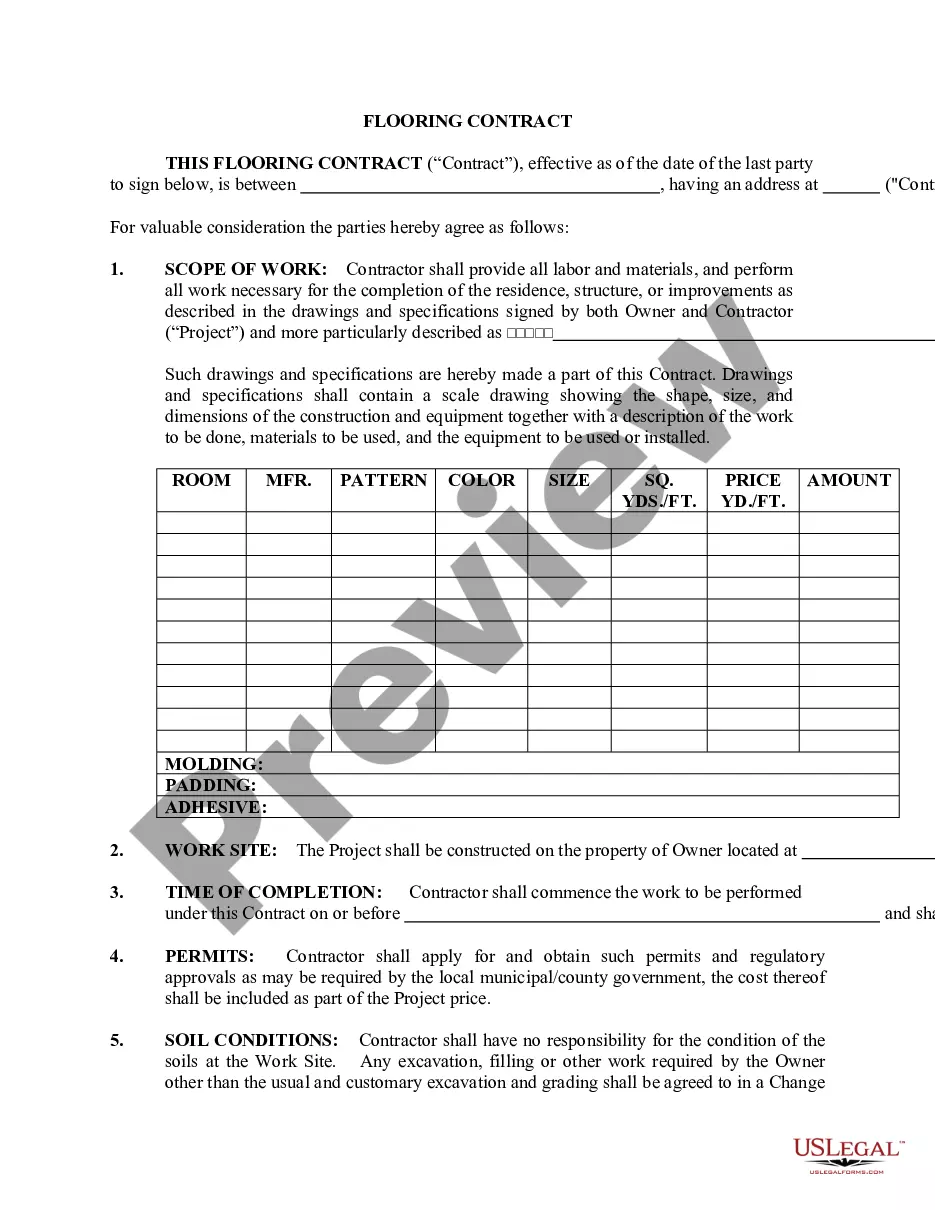
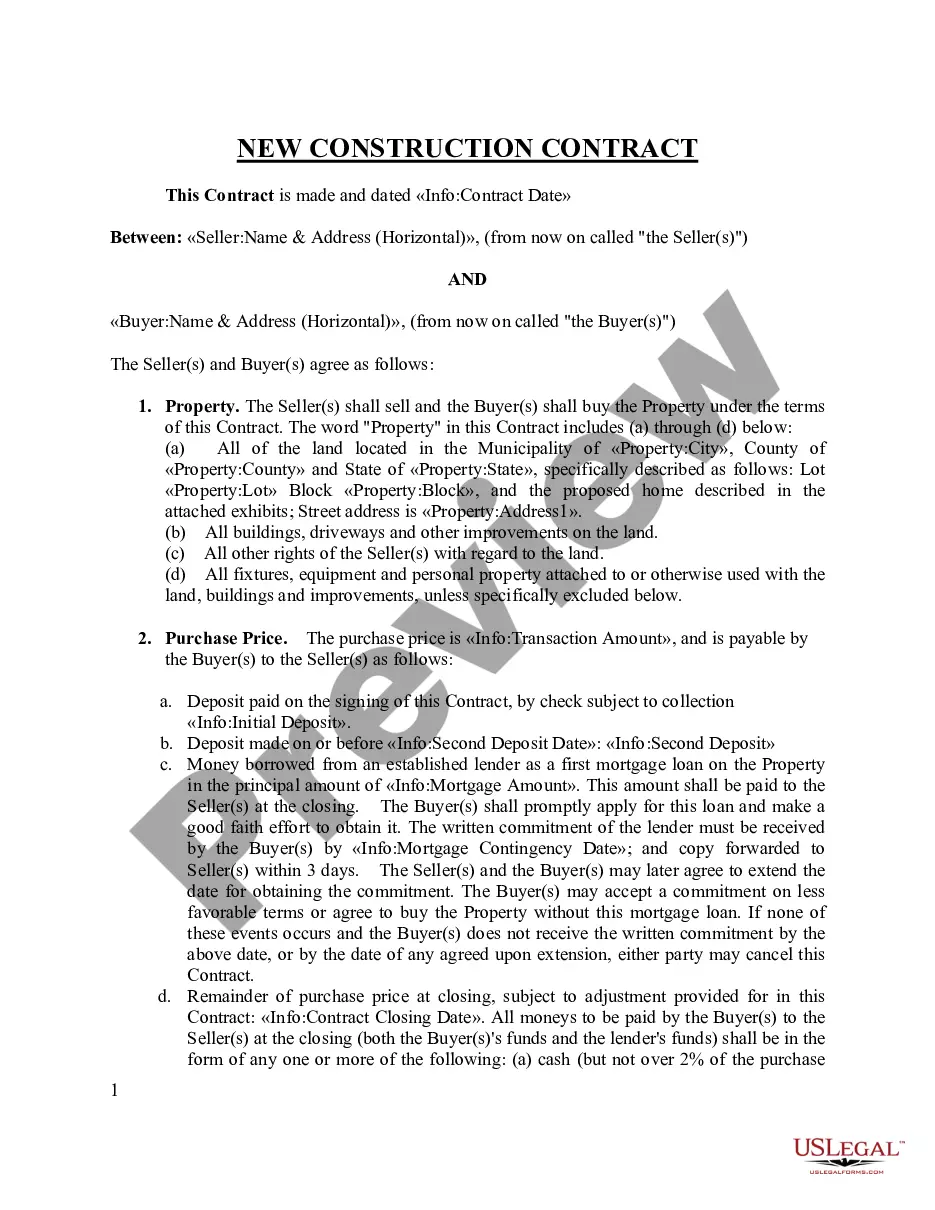
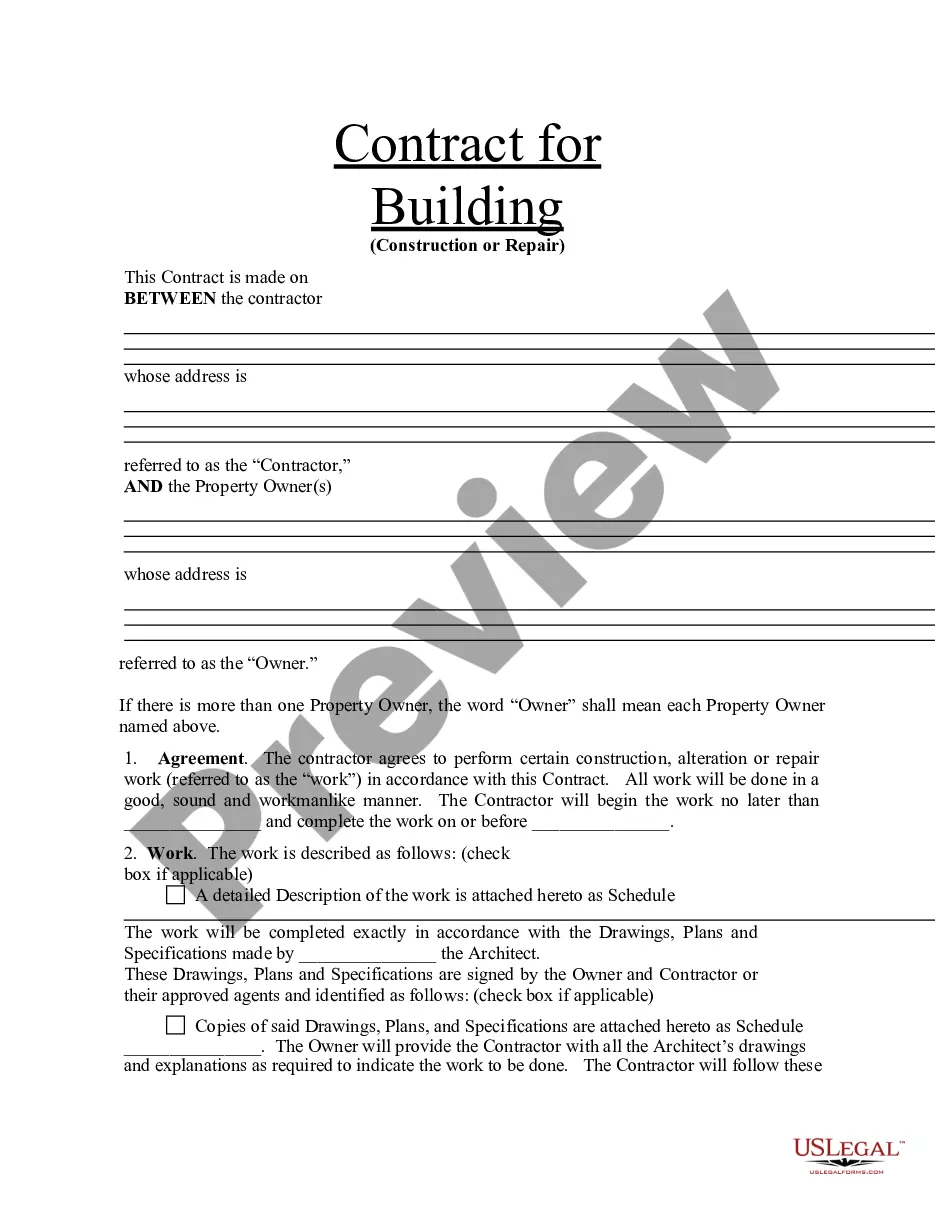
The Flooring Contract for Contractor is a legally binding agreement created for use between flooring contractors and property owners. This form specifies payment arrangements, including both cost plus and fixed fee options, and covers essential aspects such as change orders, warranties, and insurance requirements. It is specifically tailored to comply with Iowa state laws, making it an ideal choice for local projects.
Key components of this form
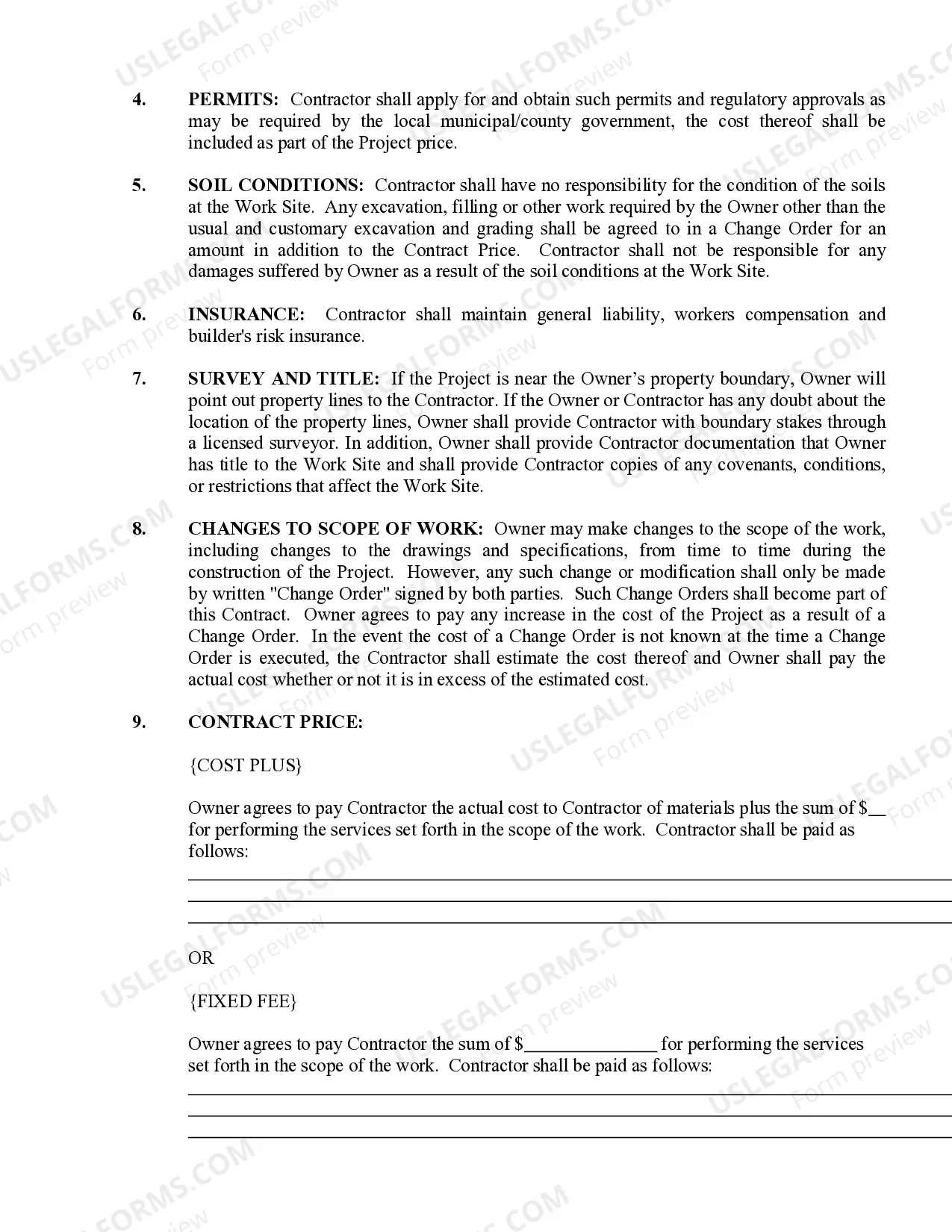
- Permits: Contractor obligations to obtain necessary local permits.
- Soil conditions: Clarifies contractor responsibilities regarding soil issues at the work site.
- Insurance: Requirements for contractors' general liability and other necessary insurance policies.
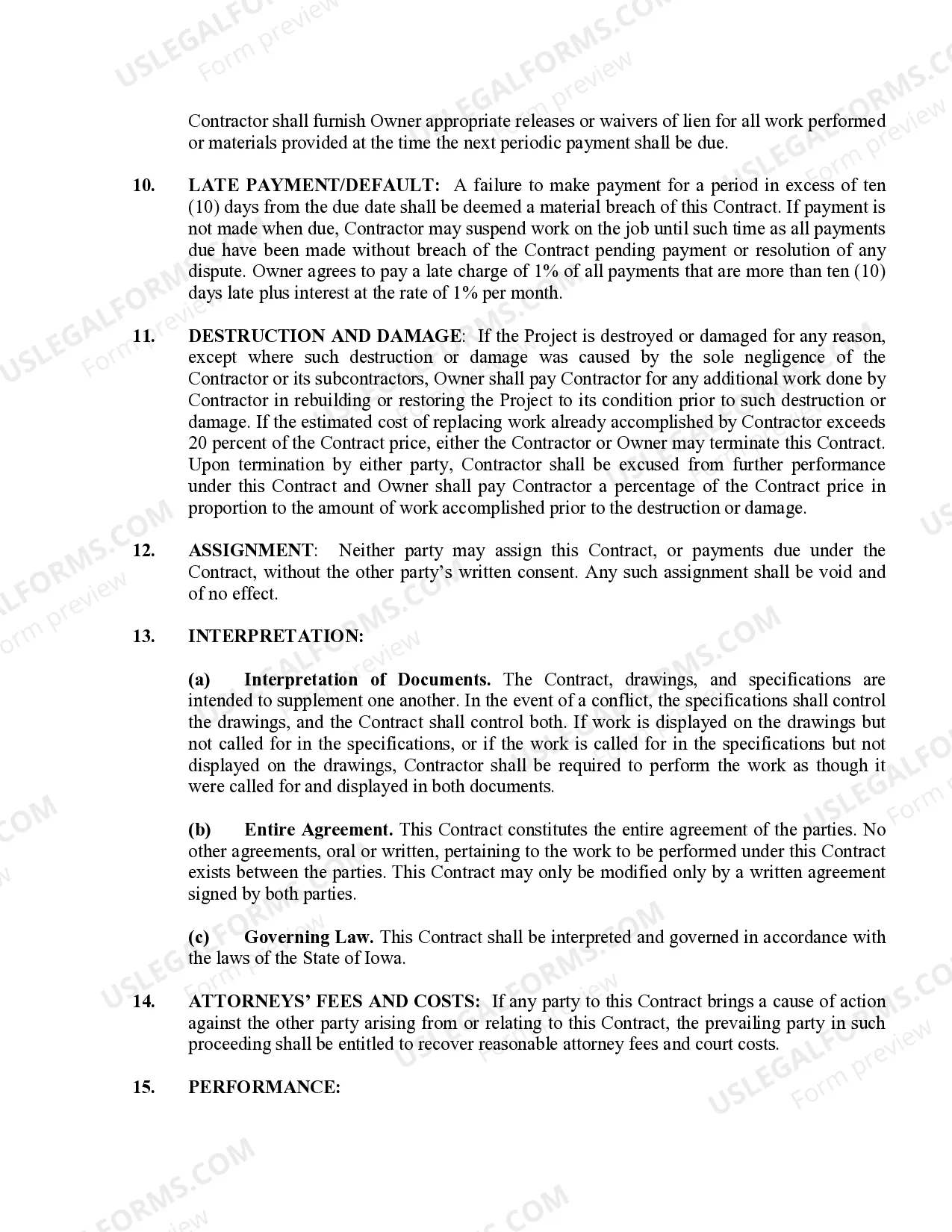
- Change orders: Process for modifying project scope and costs after the contract is signed.
- Contract price: Includes options for cost plus and fixed fee pricing arrangements.
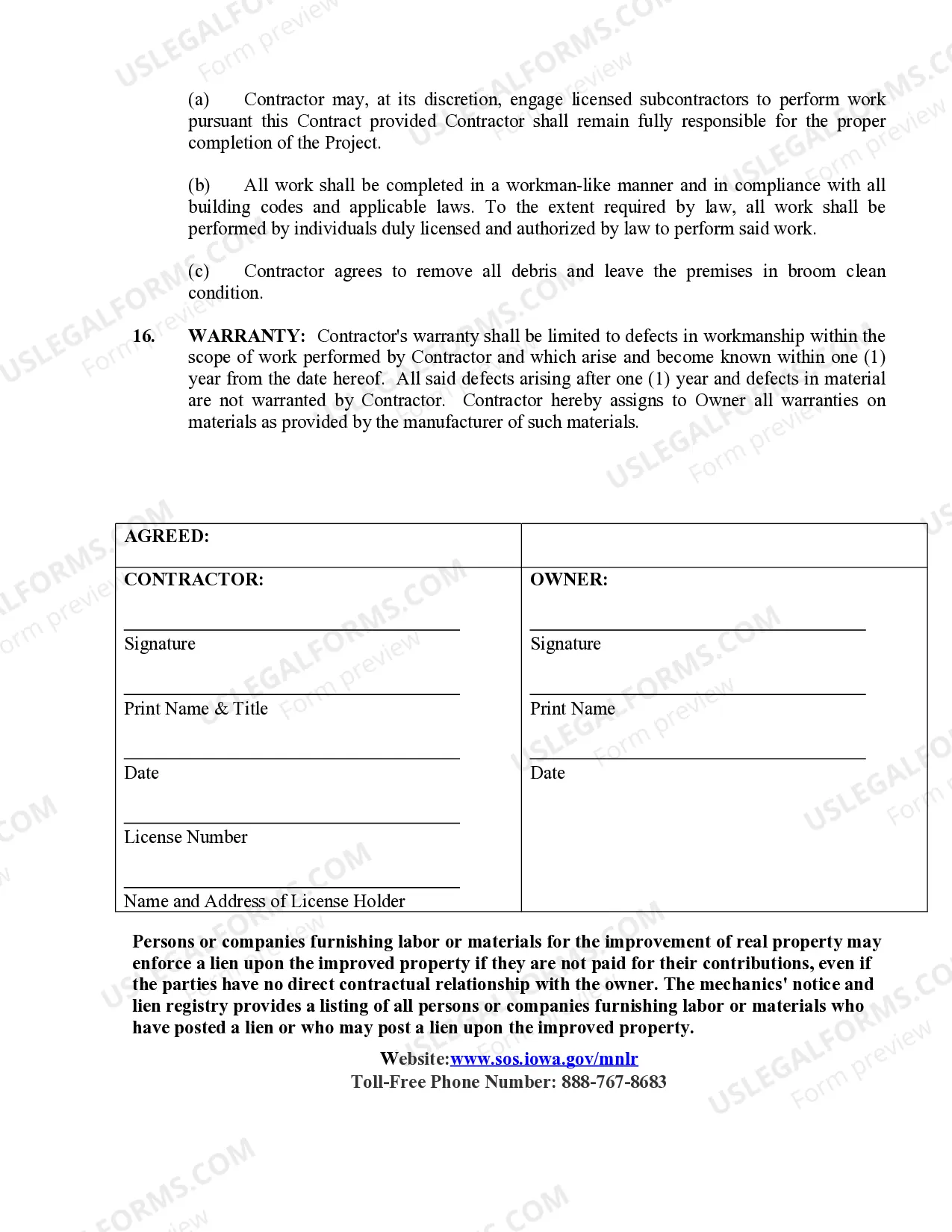
- Warranty: Covers defects in workmanship and material warranties provided by manufacturers.
Common use cases
This form should be used when a property owner is hiring a contractor to install or renovate flooring. It is suitable for both residential and commercial projects where an agreement on pricing, work scope, and project details is essential. The Flooring Contract ensures that both parties understand their rights and obligations, reducing the potential for disputes during the project.
Who this form is for
- Property owners looking to hire a flooring contractor.
- Flooring contractors seeking a structured contract to outline terms of service.
- Individuals or businesses undertaking flooring projects in Iowa.
How to prepare this document
- Identify the parties: Provide the names and addresses of the contractor and property owner.
- Define the work: Clearly describe the flooring project, including materials and specifications.
- Specify payment terms: Select either a cost plus or fixed fee arrangement and detail the cost structure.
- List required permits: Ensure all necessary permits are accounted for and add them to the contract price.
- Include insurance information: Ensure the contractor provides proof of relevant insurance coverage.
Notarization guidance
Notarization is not commonly needed for this form. However, certain documents or local rules may make it necessary. Our notarization service, powered by Notarize, allows you to finalize it securely online anytime, day or night.
Get your form ready online
Our built-in tools help you complete, sign, share, and store your documents in one place.
Make edits, fill in missing information, and update formatting in US Legal Forms—just like you would in MS Word.
Download a copy, print it, send it by email, or mail it via USPS—whatever works best for your next step.
Sign and collect signatures with our SignNow integration. Send to multiple recipients, set reminders, and more. Go Premium to unlock E-Sign.
If this form requires notarization, complete it online through a secure video call—no need to meet a notary in person or wait for an appointment.
We protect your documents and personal data by following strict security and privacy standards.

Make edits, fill in missing information, and update formatting in US Legal Forms—just like you would in MS Word.

Download a copy, print it, send it by email, or mail it via USPS—whatever works best for your next step.

Sign and collect signatures with our SignNow integration. Send to multiple recipients, set reminders, and more. Go Premium to unlock E-Sign.

If this form requires notarization, complete it online through a secure video call—no need to meet a notary in person or wait for an appointment.

We protect your documents and personal data by following strict security and privacy standards.
Common mistakes
- Failing to specify the exact scope of work can lead to misunderstandings later.
- Not documenting change orders promptly can result in disputes over additional costs.
- Ignoring state-specific legal requirements for contracts can invalidate agreements.
- Neglecting to verify the contractor's insurance coverage can leave the owner liable in case of accidents.
Why complete this form online
- Convenience: Easily download and fill out the form, saving time and effort.
- Editability: Modify the document as needed for your specific project requirements.
- Reliability: Use professionally drafted templates to ensure legal compliance and accuracy.
Looking for another form?


Form popularity
FAQ
The 2-year contractor rule in Iowa refers to a legal provision that pertains to the timeframe in which a contractor can make claims against a client for unpaid services. After two years, it may be challenging to enforce payment claims legally. Including appropriate language in your Iowa Flooring Contract for Contractor can clarify these terms and encourage timely payment. Always consult with a legal expert to ensure compliance.
The five essential elements of a construction contract are clear identification of all parties involved, a detailed description of the work to be performed, timelines, payment terms, and compliance with regulations. When creating an Iowa Flooring Contract for Contractor, verify that these elements are addressed. This thoroughness fosters trust and accountability in the construction process.
A contractor contract should include the project scope, payment terms, timelines, and specific responsibilities of all parties involved. Additionally, it is important to outline dispute resolution methods and warranty information. Using an Iowa Flooring Contract for Contractor template can help ensure you cover all necessary points. A well-drafted contract minimizes misunderstandings and promotes a successful project.
Yes, Iowa does require a contractor license for certain types of contracting work, including flooring projects. Ensuring you have the appropriate license protects you legally and can enhance your credibility with clients. Check with the Iowa Department of Public Safety for specific licensing requirements. Compliance is crucial when drafting your Iowa Flooring Contract for Contractor.
To fill out a contractor agreement effectively, start by gathering all pertinent details about the project. Include the project's scope, timeline, and payment terms. Utilizing an Iowa Flooring Contract for Contractor template can streamline this process, ensuring you do not miss any critical sections. Remember, clarity and detail lead to a smooth working relationship.
The five essential elements of a contract include an offer, acceptance, mutual consent, consideration, and legal purpose. When drafting an Iowa Flooring Contract for Contractor, ensure each element is clearly defined. This clarity prevents misunderstandings and protects both parties in the agreement. By incorporating these elements, you can establish a strong and enforceable contract.
To become a floor subcontractor in Iowa, you need to start by obtaining the necessary licenses and certifications. Familiarize yourself with the Iowa flooring contract for contractor, as it outlines the legal requirements and responsibilities. Building a portfolio showcasing your previous work can help you attract contractors looking for quality subcontractors. Additionally, networking within the industry can open doors to various contracting opportunities.
Yes, Iowa requires certain contractors to be licensed, depending on the type of work they perform. This ensures that contractors meet specific standards and regulations in their field. When hiring a contractor for flooring, you should verify their licensing and consider using an Iowa Flooring Contract for Contractor to establish a professional agreement.
Writing a contract for contractors involves clearly defining the scope of work, payment terms, and deadlines. Including specific details about materials and responsibilities helps prevent misunderstandings. With the support of platforms like uslegalforms, you can create an Iowa Flooring Contract for Contractor tailored to your project needs.
Yes, contractors perform flooring work regularly in both residential and commercial sectors. This includes installing hardwood, tile, carpet, and other types of flooring. By using an Iowa Flooring Contract for Contractor, you can define the scope of work and ensure that all parties are on the same page.