Georgia Decree Modifying or Amending Final Judgment and Decree of Divorce Restoring Maiden Name
Understanding this form
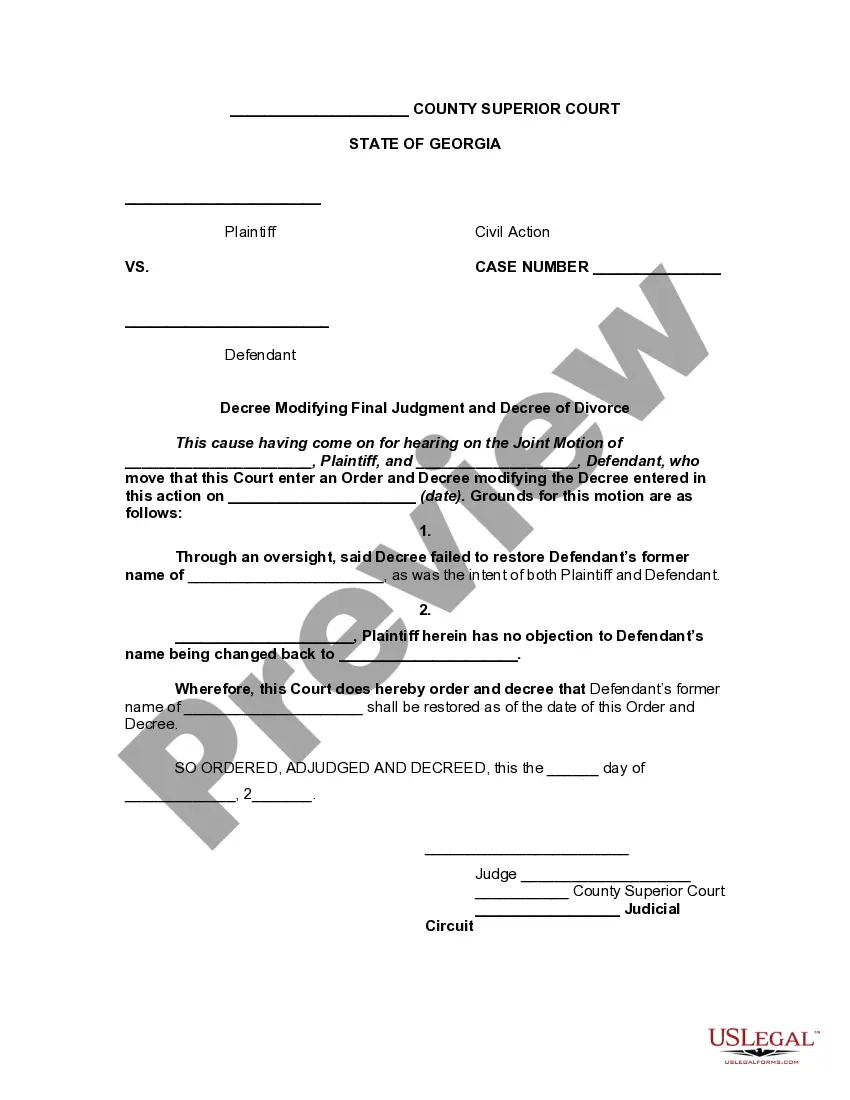
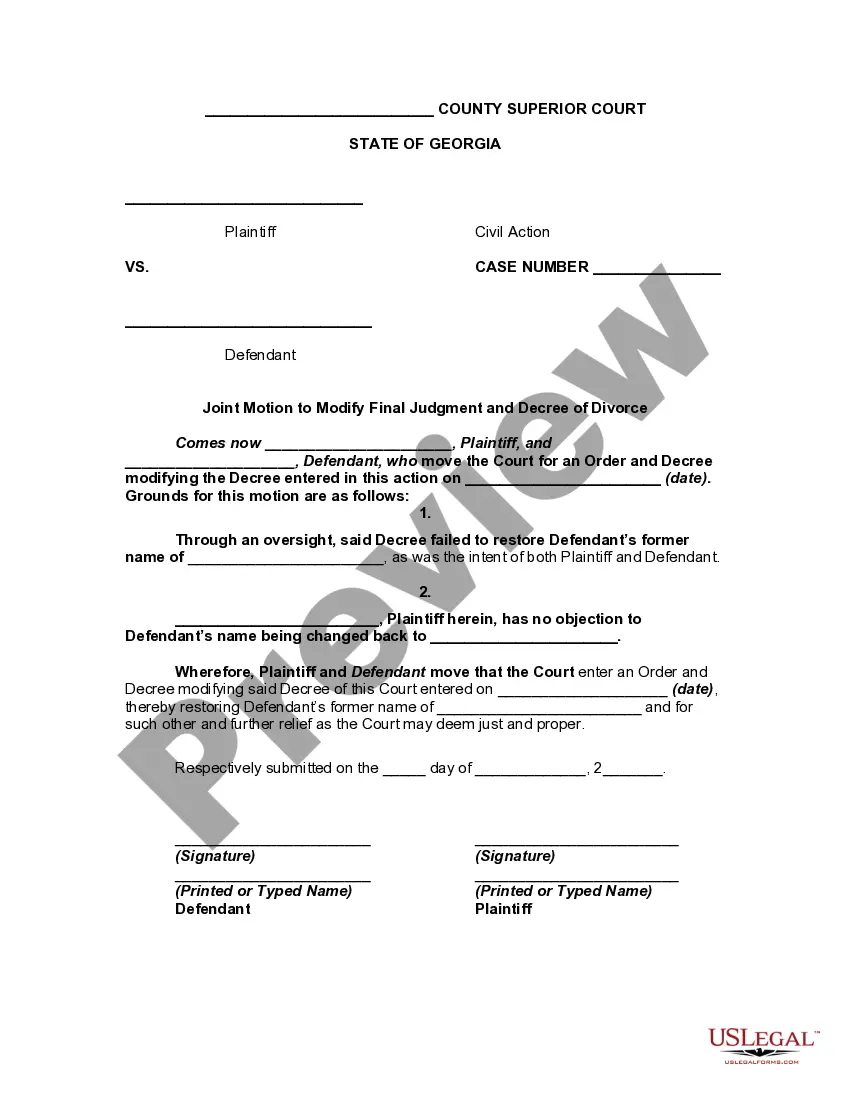
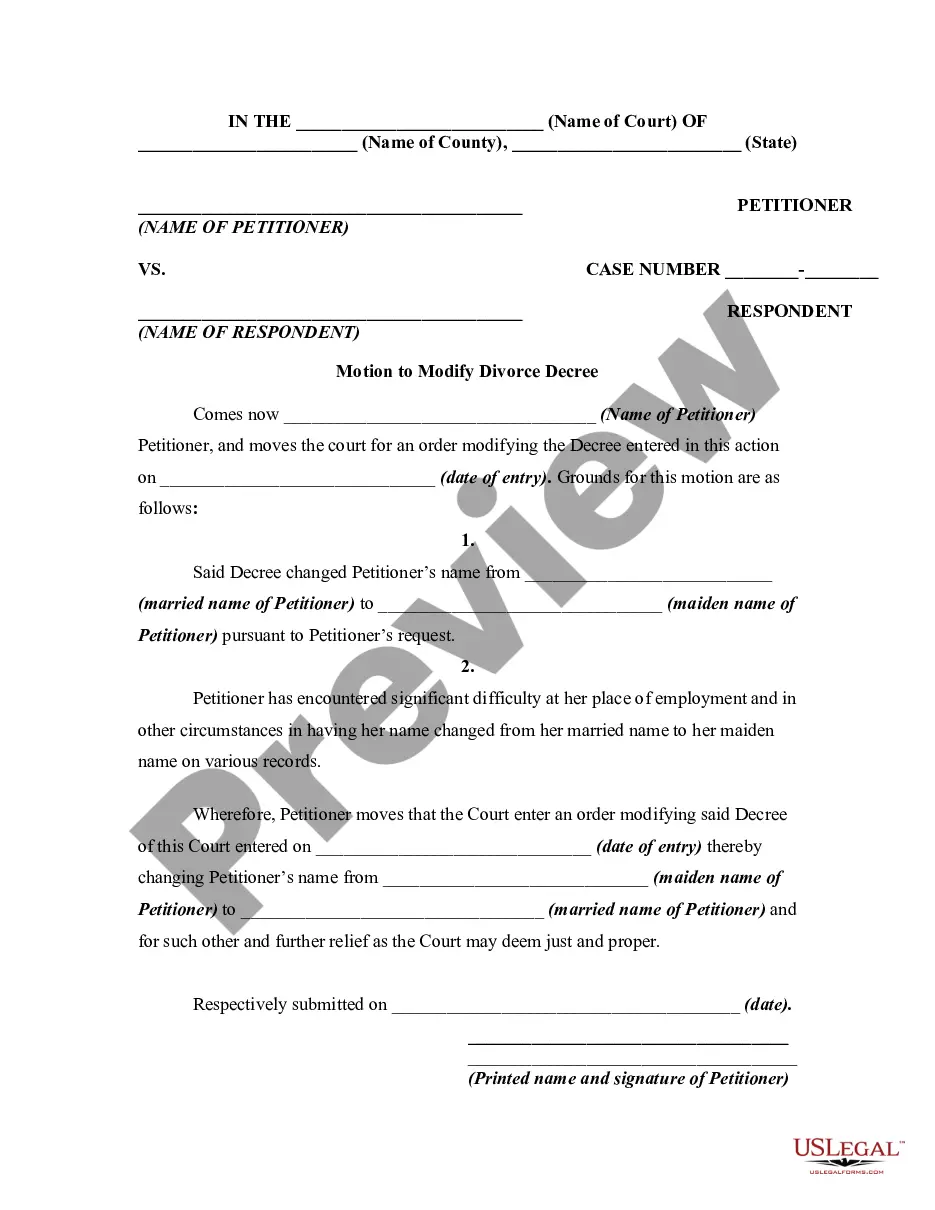
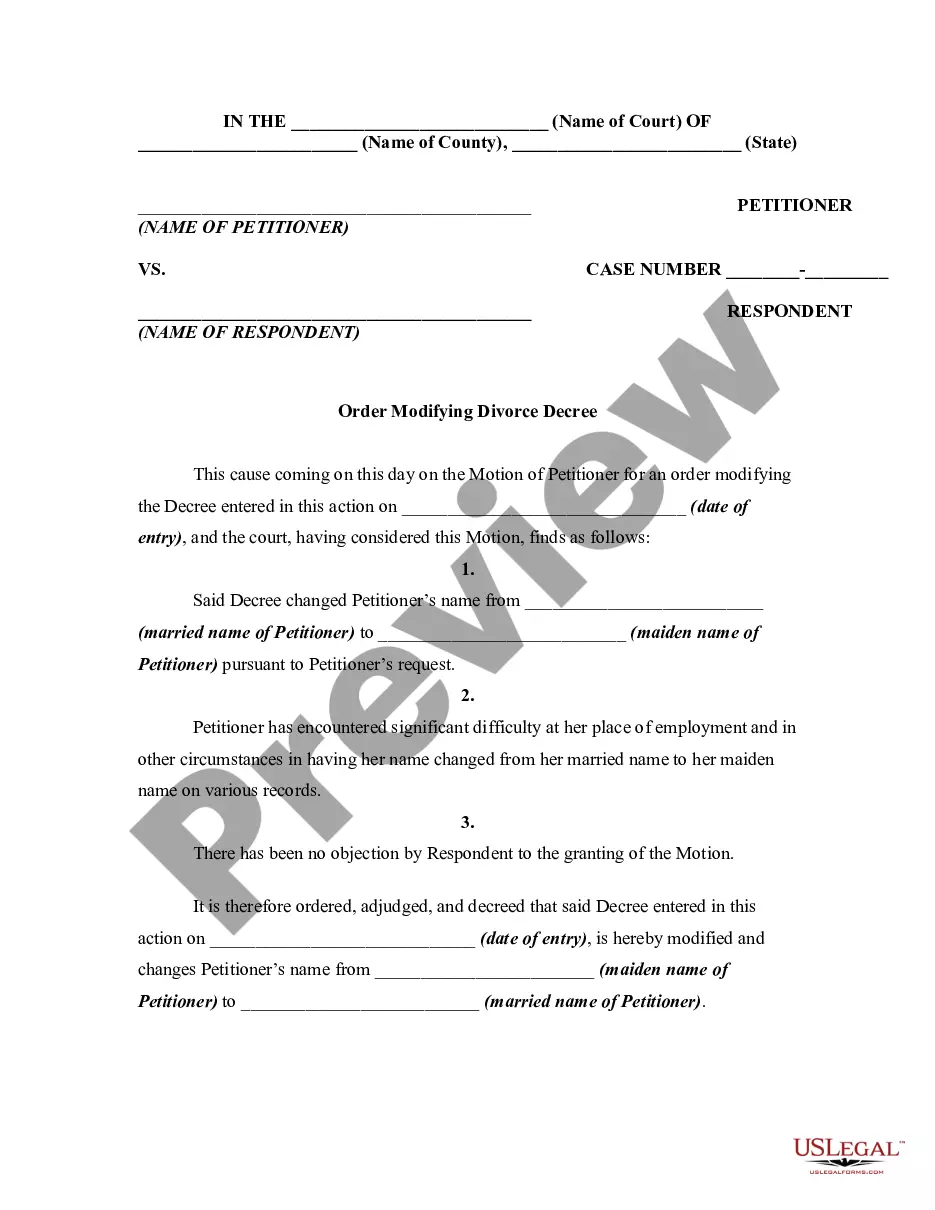
The decree modifying or amending final judgment and decree of divorce restoring maiden name is a legal document used to officially change a divorced individual's name back to their maiden name. This form is specifically designed for cases in which the divorce decree did not include the restoration of the maiden name, despite it being the intention of both parties. This form is essential for ensuring that legal records accurately reflect a person's identity after a divorce, differing from other related forms that may not address name changes.
Key parts of this document
- Identification of the parties involved (plaintiff and defendant).
- Case number and title of the case.
- Grounds for the motion to amend the divorce decree.
- Specific mention of the name being restored to the defendant's maiden name.
- Signature of the judge and date of the order.
When to use this document
This form should be used when a divorced individual wishes to modify their divorce decree to restore their maiden name. This typically occurs after a divorce has been finalized, and it is discovered that the decree did not reflect the intended name change. It is especially relevant when both parties agree to the change and wish to formalize it through the court.
Who this form is for
- Individuals who have recently been divorced and wish to change their name back to a maiden name.
- Both plaintiffs and defendants in a divorce case where the name restoration was overlooked.
- Anyone seeking to amend a divorce decree for clarity regarding their legal identity.
Completing this form step by step
- Identify the parties involved by filling in the names of the plaintiff and defendant.
- Enter the case number and title of the case at the top of the document.
- Specify the date of the original decree that is being modified.
- State the grounds for the name change and indicate that both parties agree to it.
- Have the judge sign and date the order to finalize the modification.
Does this document require notarization?
Notarization is not commonly needed for this form. However, certain documents or local rules may make it necessary. Our notarization service, powered by Notarize, allows you to finalize it securely online anytime, day or night.
Get your form ready online
Our built-in tools help you complete, sign, share, and store your documents in one place.
Make edits, fill in missing information, and update formatting in US Legal Forms—just like you would in MS Word.
Download a copy, print it, send it by email, or mail it via USPS—whatever works best for your next step.
Sign and collect signatures with our SignNow integration. Send to multiple recipients, set reminders, and more. Go Premium to unlock E-Sign.
If this form requires notarization, complete it online through a secure video call—no need to meet a notary in person or wait for an appointment.
We protect your documents and personal data by following strict security and privacy standards.

Make edits, fill in missing information, and update formatting in US Legal Forms—just like you would in MS Word.

Download a copy, print it, send it by email, or mail it via USPS—whatever works best for your next step.

Sign and collect signatures with our SignNow integration. Send to multiple recipients, set reminders, and more. Go Premium to unlock E-Sign.

If this form requires notarization, complete it online through a secure video call—no need to meet a notary in person or wait for an appointment.

We protect your documents and personal data by following strict security and privacy standards.
Typical mistakes to avoid
- Failing to include the date of the original divorce decree.
- Not securing both parties' agreement on the name change before filing.
- Leaving sections blank or incomplete, which may delay processing.
Why use this form online
- Convenience of downloading and completing the form from anywhere.
- Editability allows personal customization to meet specific needs.
- Access to professionally drafted legal content ensures reliability and compliance with legal standards.
Looking for another form?
Form popularity
FAQ
Yes, a divorce decree can be modified in Georgia. If you wish to change your name or address through a Georgia Decree Modifying or Amending Final Judgment and Decree of Divorce Restoring Maiden Name, you must file a petition with the court. It's important to understand the legal requirements, and platforms like uslegalforms can provide the necessary resources to guide you through this process.
Changing back to your maiden name after divorce in Georgia involves acquiring a Georgia Decree Modifying or Amending Final Judgment and Decree of Divorce Restoring Maiden Name. You will need to file the appropriate legal paperwork and potentially attend a court hearing. Once approved, you can update your personal records and identification documents to reflect your maiden name.
To change back to your maiden name with Social Security, you must first obtain a Georgia Decree Modifying or Amending Final Judgment and Decree of Divorce Restoring Maiden Name. Then, you can fill out the application for a new Social Security card and provide the court documentation. This ensures that your Social Security records reflect your name change accurately.
A woman can revert to her maiden name through a legal process that involves obtaining a Georgia Decree Modifying or Amending Final Judgment and Decree of Divorce Restoring Maiden Name. By properly filing the required documentation in court, you can successfully reclaim your name. Many individuals find this process straightforward when they follow legal guidelines.
Your last name does not automatically change back after divorce unless you have requested it through a Georgia Decree Modifying or Amending Final Judgment and Decree of Divorce Restoring Maiden Name. It is essential to explicitly state your wishes regarding your maiden name in the divorce decree to ensure that the change is recognized legally.
To revert back to your maiden name, you will need to file a petition for a Georgia Decree Modifying or Amending Final Judgment and Decree of Divorce Restoring Maiden Name. This process requires submitting the necessary court documents and attending a hearing. With the court's approval, you'll be able to celebrate your identity by reclaiming your maiden name.
To modify a divorce decree in Georgia, you need to file a petition with the court that issued the original decree. This petition should clearly outline the reasons for modification and evidence supporting your request. Utilizing resources from USLegalForms can simplify the process, guiding you in the preparation of the necessary documentation related to the Georgia Decree Modifying or Amending Final Judgment and Decree of Divorce Restoring Maiden Name, helping you effectively navigate the legal landscape.
The time it takes to amend a divorce decree can vary depending on several factors, such as court schedules and the complexity of the issues being addressed. Generally, you may expect the process to take several weeks to a few months from the time you file your petition to when the court issues a ruling. Engaging with professionals who specialize in Georgia Decree Modifying or Amending Final Judgment and Decree of Divorce Restoring Maiden Name can help expedite the process and reduce uncertainties.
A divorce decree may be deemed invalid for several reasons, such as lack of jurisdiction, fraud, or the failure of one party to adhere to the legal process. If essential legal requirements are not met, the court may rule that the decree is not legally binding. Understanding the implications of the Georgia Decree Modifying or Amending Final Judgment and Decree of Divorce Restoring Maiden Name can help ensure that all necessary criteria are fulfilled to maintain the validity of your divorce decree.
Yes, a divorce settlement can be modified, particularly under specific circumstances such as changes in financial situations or the needs of the children involved. To initiate this process, you must file a petition with the court, which may lead to a hearing. It's essential to understand how the Georgia Decree Modifying or Amending Final Judgment and Decree of Divorce Restoring Maiden Name plays a role in these modifications, ensuring that all aspects of your divorce settlement are correctly addressed.