Georgia Siding Contract for Contractor
Understanding this form
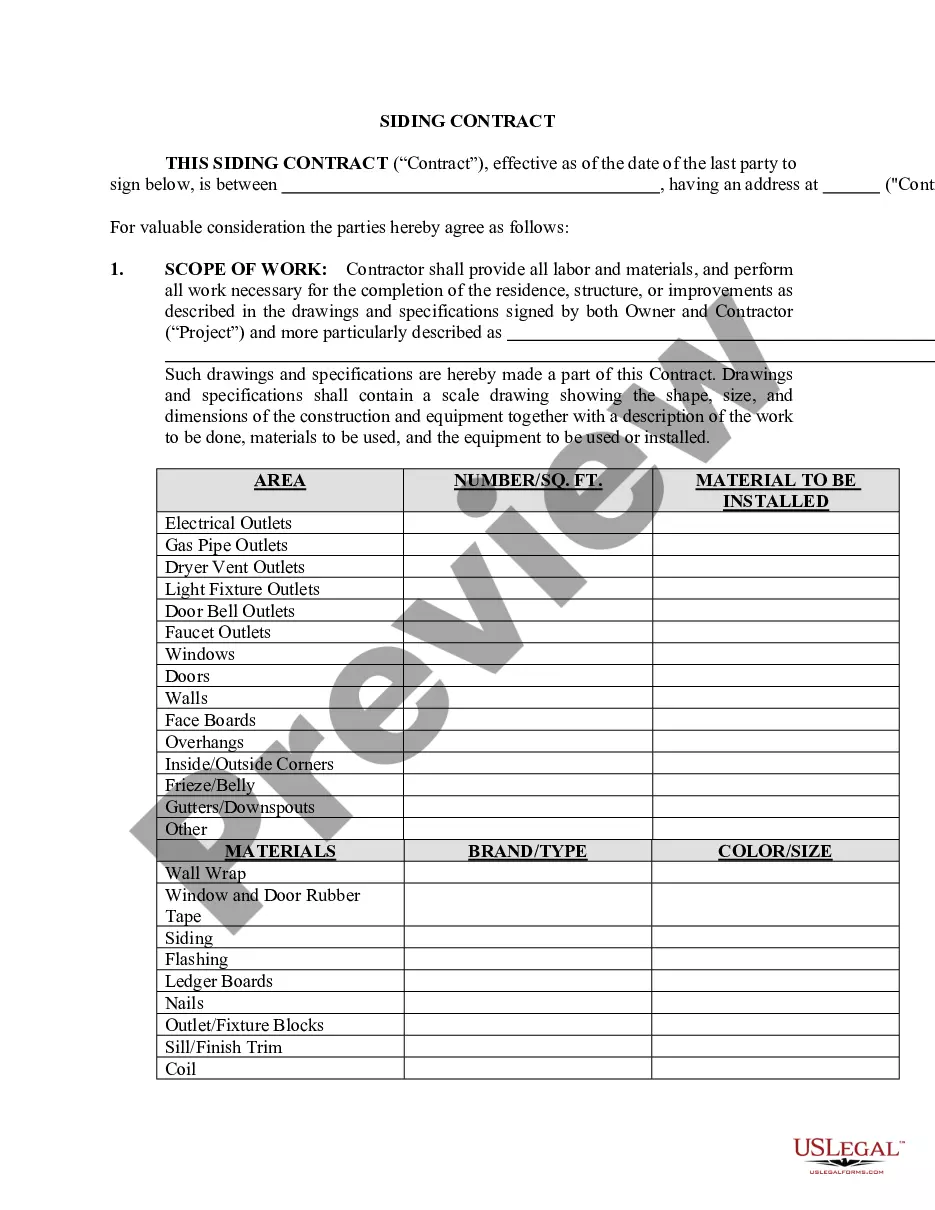
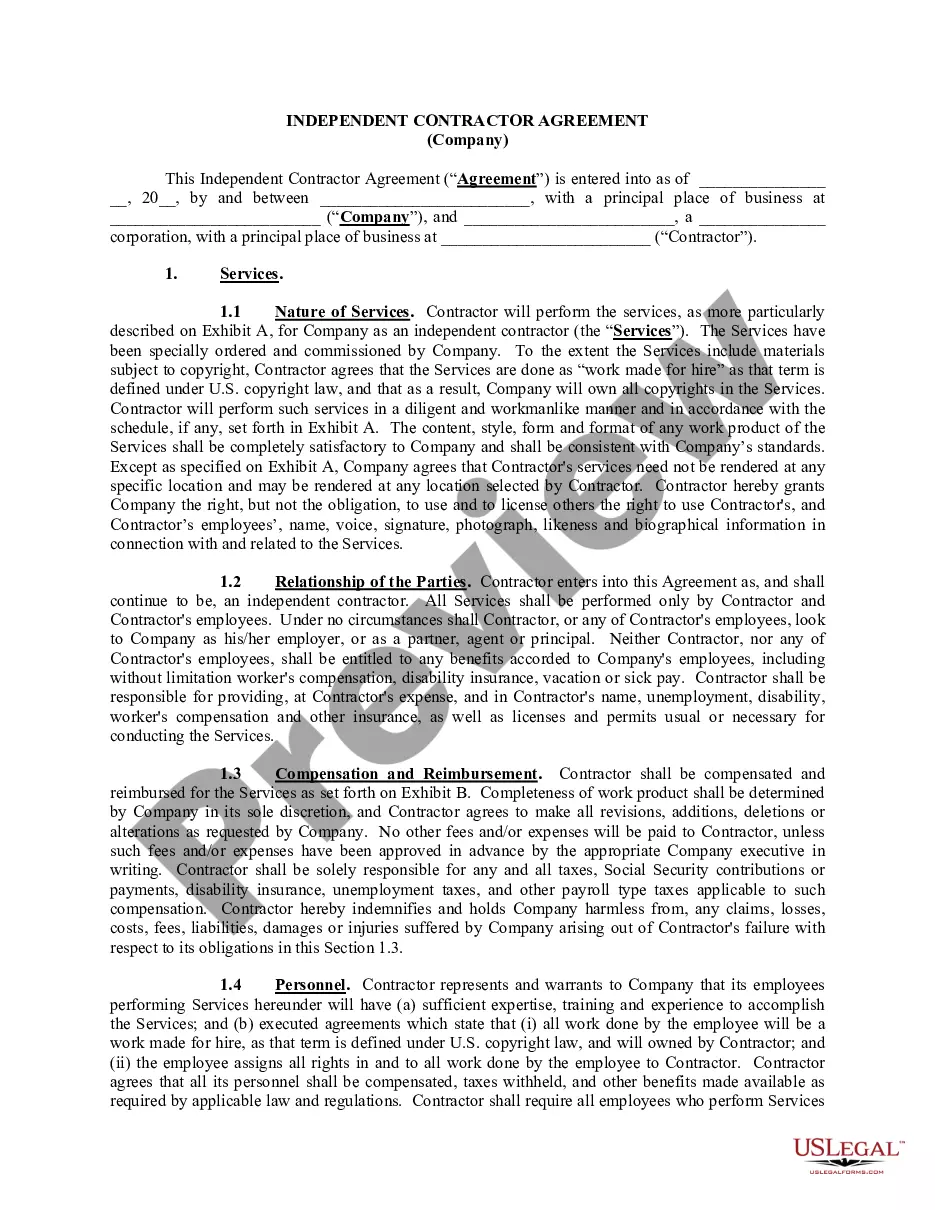
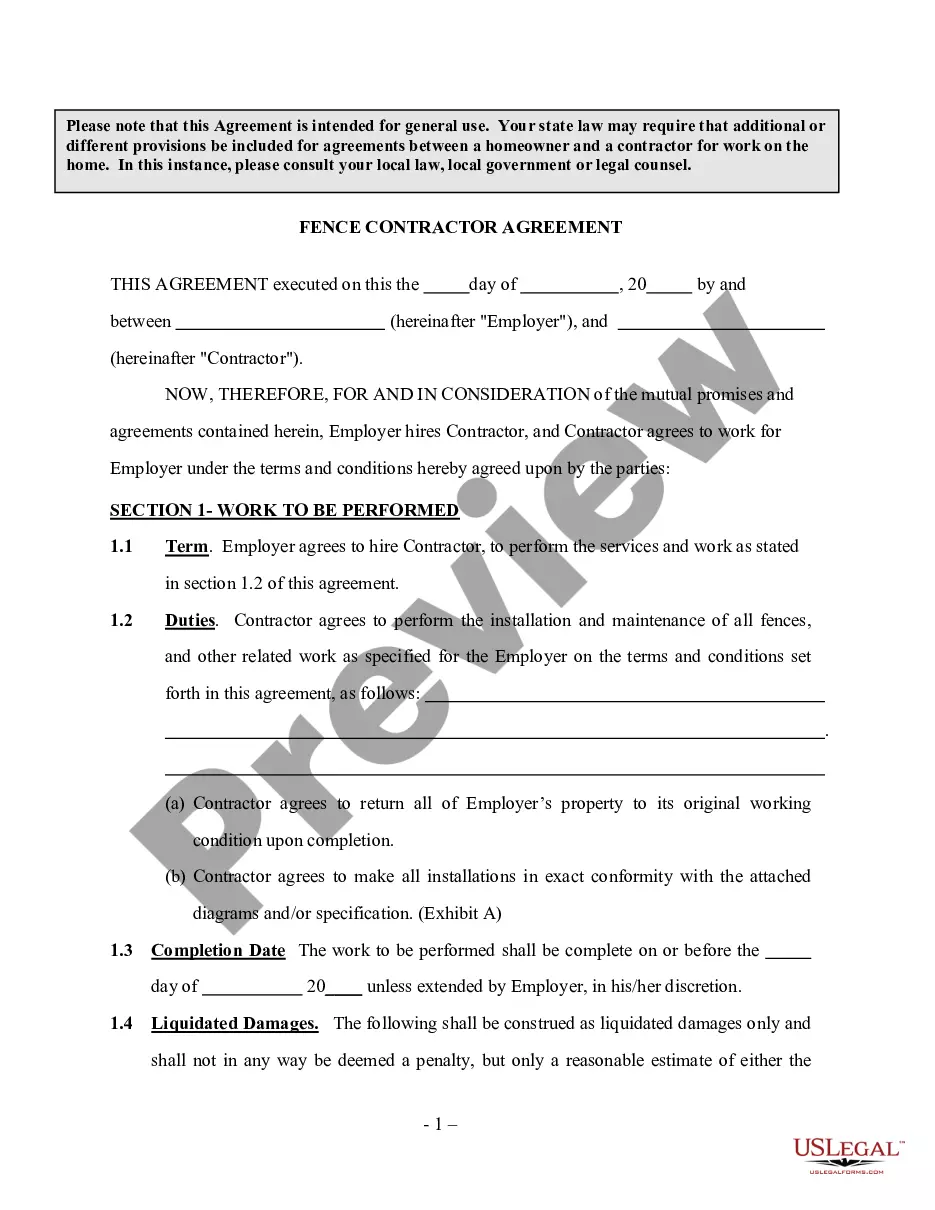
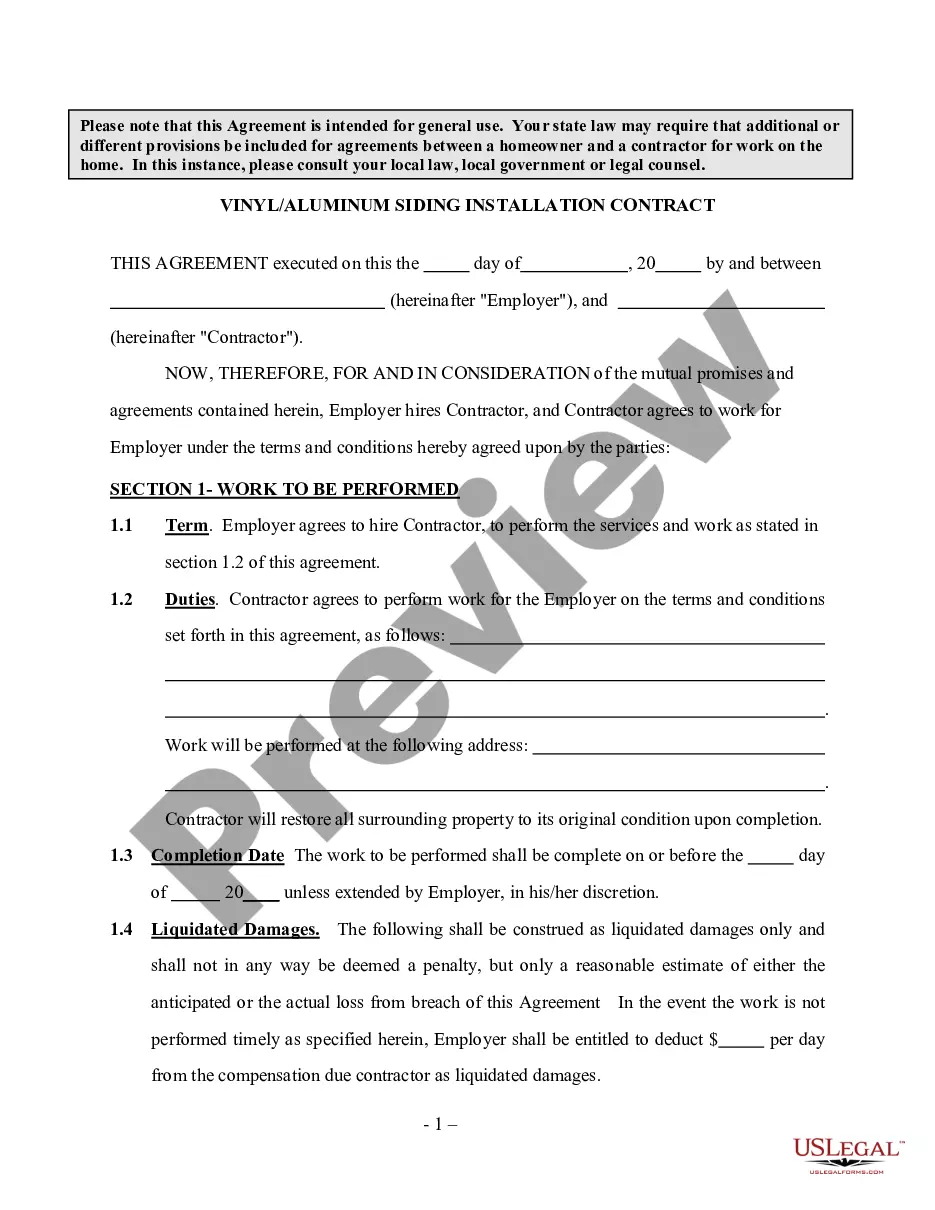
The Siding Contract for Contractor is a legal document specifically designed for agreements between siding contractors and property owners. This form establishes the terms of work, payment structures, and responsibilities related to siding installation. It ensures compliance with Georgia state laws and outlines critical aspects that protect both parties, setting it apart from general contractor agreements.
Key parts of this document
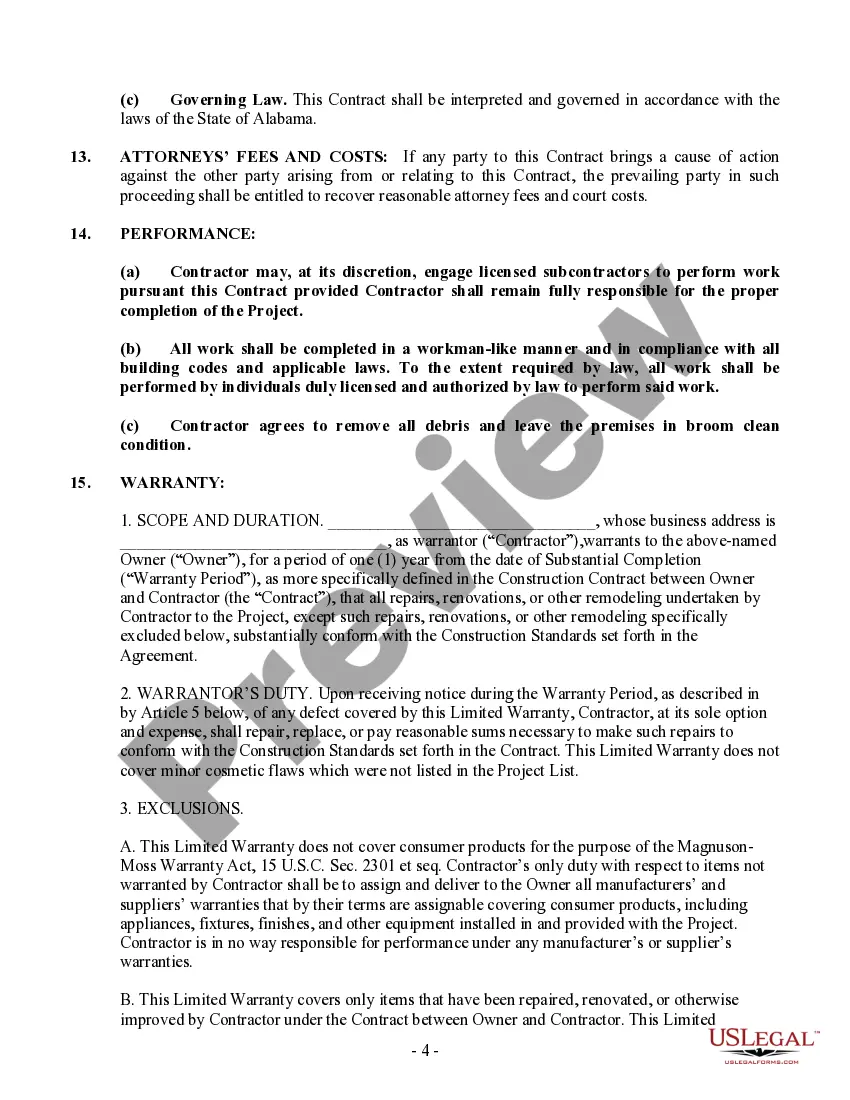
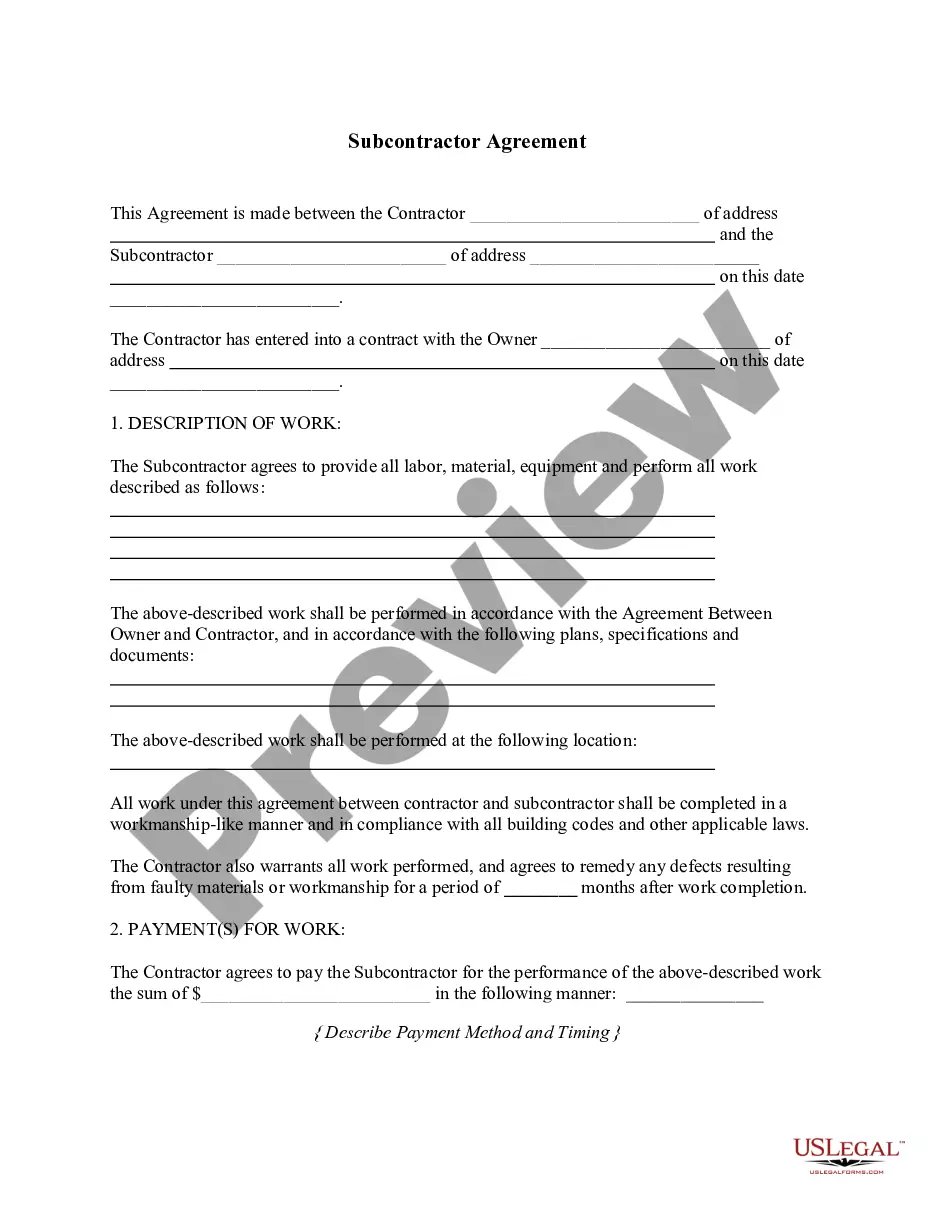
- Project scope, including specific siding materials and installation details.
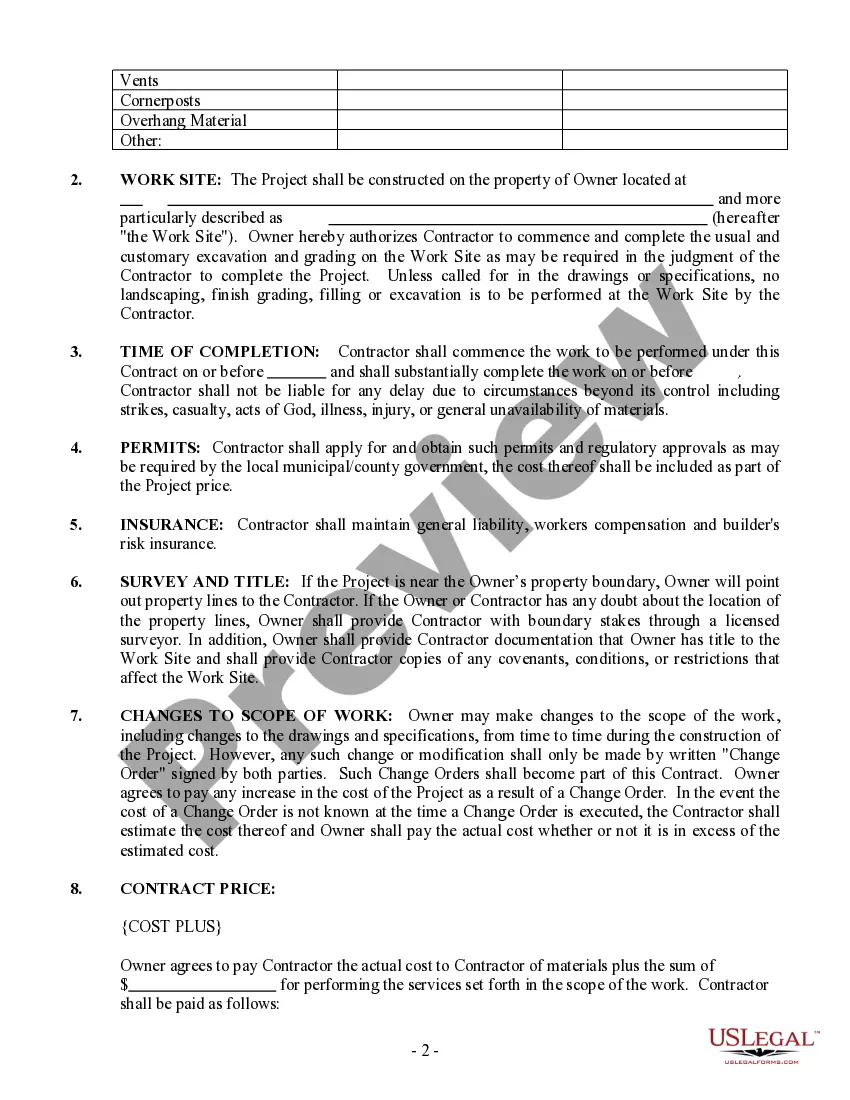
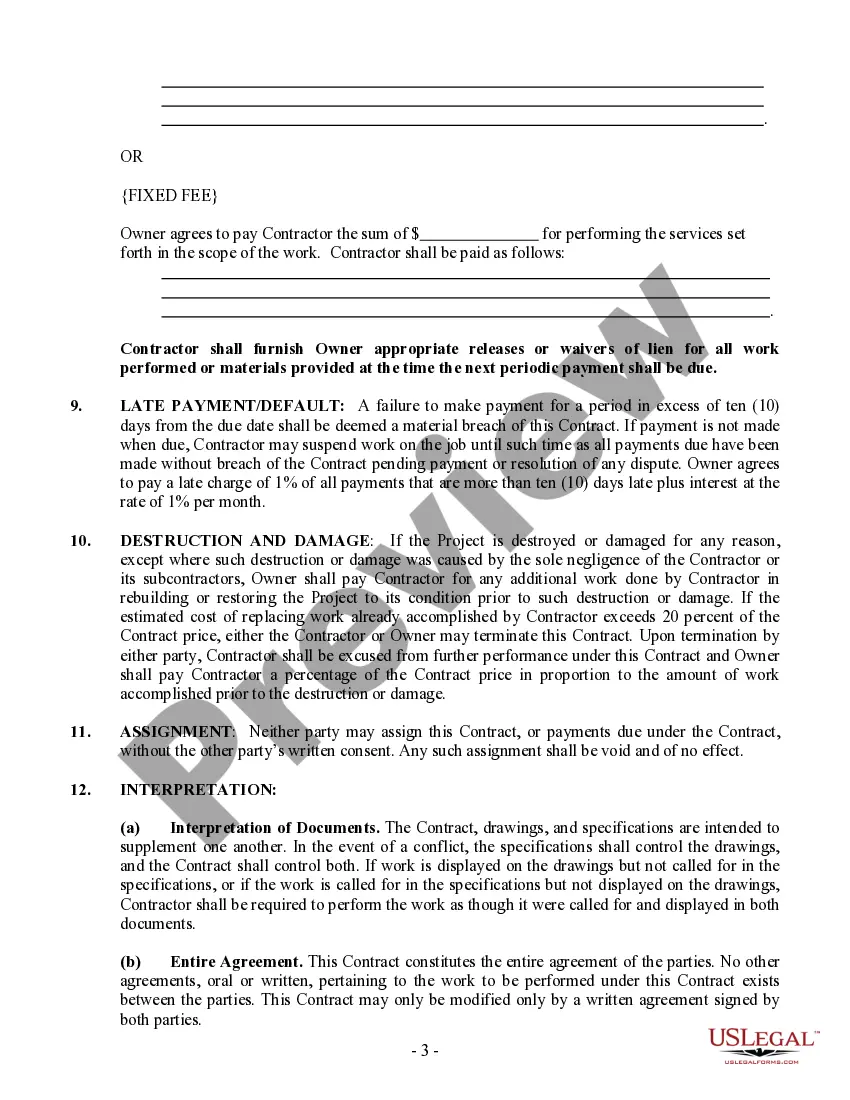
- Payment arrangements, allowing for either fixed fee or cost-plus structures.
- Change orders, detailing how alterations to the project are handled.
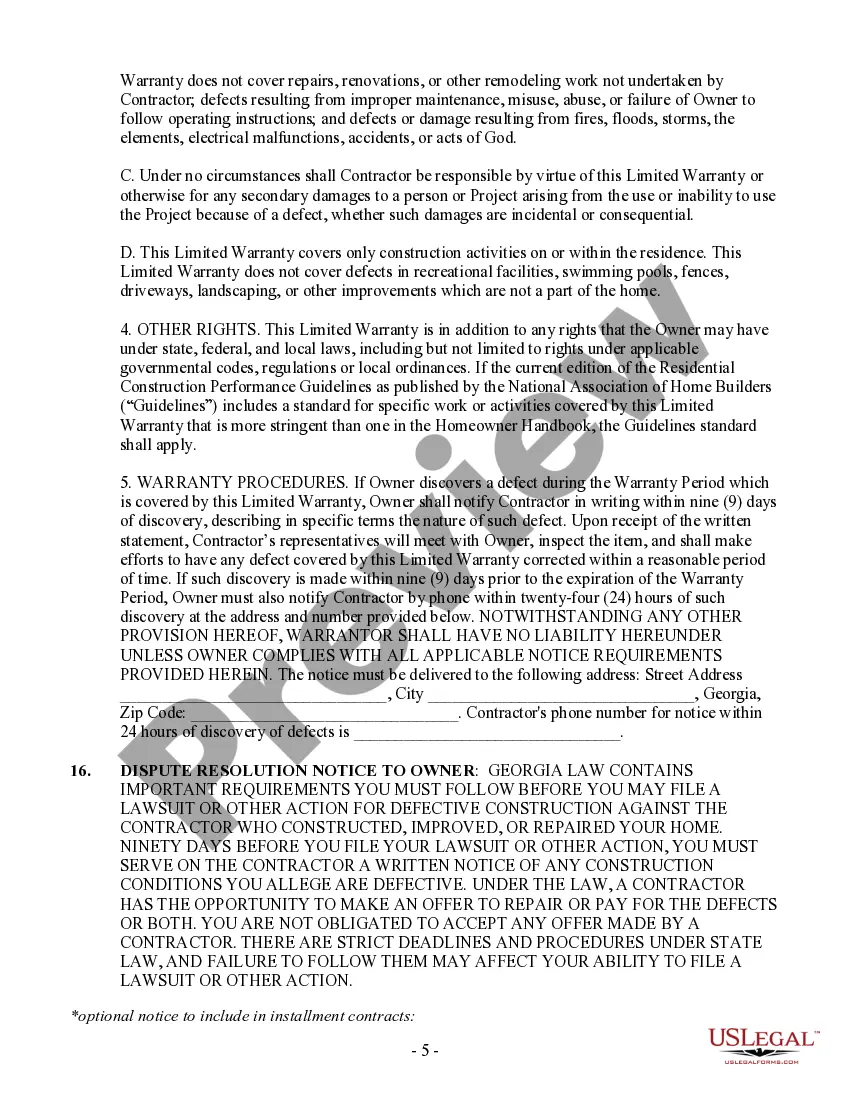
- Insurance and warranty requirements, ensuring coverage for work performed.
- Regulatory approvals, mandating contractors to secure necessary permits.
- Dispute resolution guidelines, outlining proper communication and legal procedures.

Common use cases
This form is essential when property owners hire siding contractors for installation or renovation projects. Use this contract to clarify terms related to costs, project execution, and warranties before the work begins. It is particularly useful for projects that require adherence to specific local regulations or where sizable investments are involved.
Who can use this document
This form is intended for:
- Siding contractors seeking to establish clear agreements with property owners.
- Property owners who want to ensure that their rights and responsibilities are documented and protected.
- Individuals involved in residential or commercial siding projects within Georgia.
Steps to complete this form
Follow these steps to complete the Siding Contract:
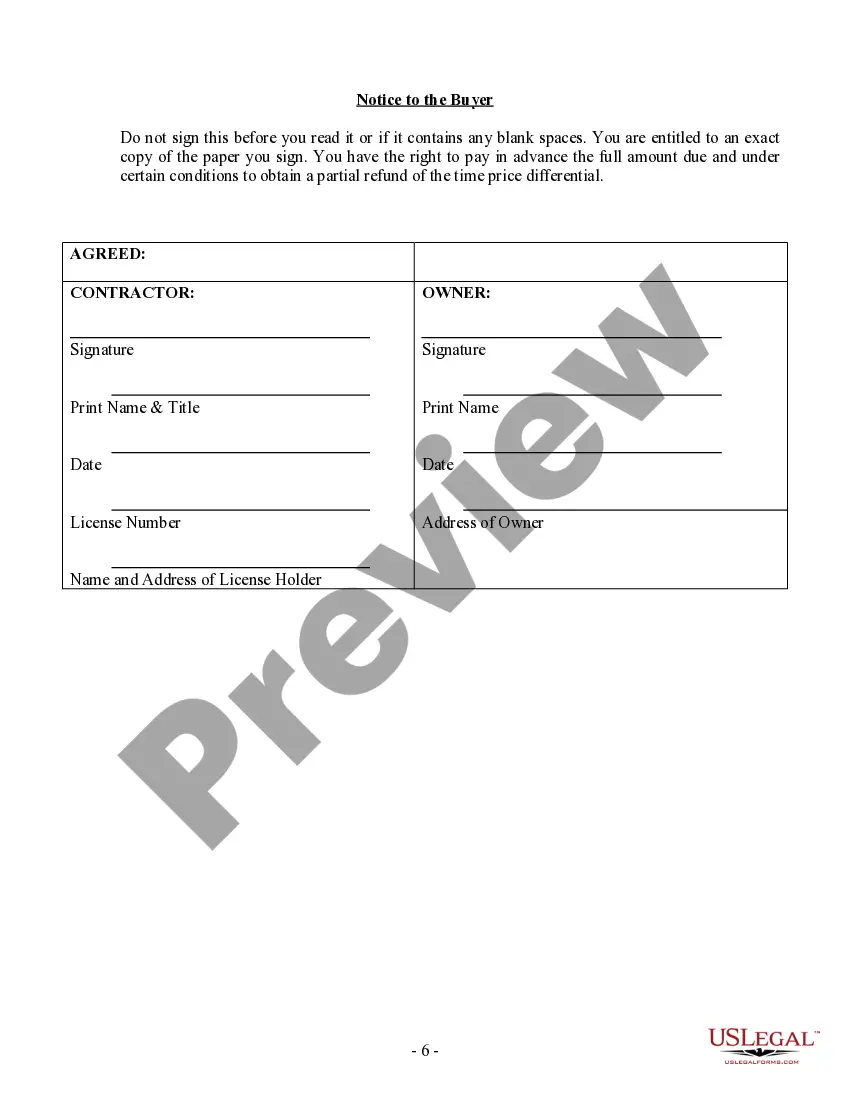
- Identify the parties involved, including full names and addresses of the contractor and property owner.
- Specify the project scope, including the exact siding materials and dimensions required.
- Detail payment structures, selecting either a fixed fee or cost-plus approach.
- Enter necessary permits and regulatory approvals that the contractor must obtain.
- Include warranty information and the duration of coverage for the siding work performed.
Notarization guidance
This form does not typically require notarization unless specified by local law. However, notarizing your contract can add an extra layer of authenticity and security, protecting both parties involved in the agreement.
Get your form ready online
Our built-in tools help you complete, sign, share, and store your documents in one place.
Make edits, fill in missing information, and update formatting in US Legal Forms—just like you would in MS Word.
Download a copy, print it, send it by email, or mail it via USPS—whatever works best for your next step.
Sign and collect signatures with our SignNow integration. Send to multiple recipients, set reminders, and more. Go Premium to unlock E-Sign.
If this form requires notarization, complete it online through a secure video call—no need to meet a notary in person or wait for an appointment.
We protect your documents and personal data by following strict security and privacy standards.

Make edits, fill in missing information, and update formatting in US Legal Forms—just like you would in MS Word.

Download a copy, print it, send it by email, or mail it via USPS—whatever works best for your next step.

Sign and collect signatures with our SignNow integration. Send to multiple recipients, set reminders, and more. Go Premium to unlock E-Sign.

If this form requires notarization, complete it online through a secure video call—no need to meet a notary in person or wait for an appointment.

We protect your documents and personal data by following strict security and privacy standards.
Typical mistakes to avoid
- Failing to specify all project details, leading to misunderstandings about the scope of work.
- Omitting necessary changes orders for alterations made during the project.
- Not ensuring all parties sign the contract, resulting in unenforceable agreements.
- Neglecting to clarify warranty terms, which can lead to disputes post-project completion.
- Leaving out permit requirements, which can result in legal issues with local authorities.
Why use this form online
- Convenient access to a legally vetted document that saves time and effort.
- Editable fields allow customization to meet specific project needs.
- Ensures reliability and compliance with state regulations, reducing legal risks.
- Quick download options streamline the contract creation process.
- Easy to complete, making it suitable for those without legal expertise.
Summary of main points
- The Siding Contract for Contractor clarifies roles, responsibilities, and project terms for siding installations.
- It is specifically designed for use in Georgia, ensuring compliance with local laws.
- The contract allows for flexibility in payment arrangements, accommodating various project scales.
- Proper completion of this form minimizes potential disputes between contractors and property owners.
Looking for another form?

Form popularity
FAQ
As an independent contractor in Georgia, the need for a business license often depends on the services you provide and your local regulations. Generally, if you provide a service that requires licensure, you will need a business license to operate legally. For your Georgia Siding Contract for Contractor, it's wise to consult local regulations to understand your specific requirements and ensure you are compliant.
Subcontractors in Georgia typically need to have a license, especially if they perform specialized work. This licensing helps guarantee that they meet the required standards for safety and quality. When working with your main contractor under a Georgia Siding Contract for Contractor, ensure that all subcontracted work meets state licensing requirements to protect your investment.
In Georgia, a 1099 contractor does not always need a business license, but it often depends on the type of work they perform and local regulations. If the contractor provides services that require licensing, they must obtain the appropriate licenses. When entering a Georgia Siding Contract for Contractor, verify if your contractor possesses the necessary licenses and permits to ensure compliance.
Yes, you can file a 1099 without a business license in certain situations. However, it is important to ensure that the contractor performs services legitimately. If you are engaging someone under a Georgia Siding Contract for Contractor, double-check the documentation to confirm their work status, as it helps avoid any potential tax issues.
Filling out a contractor agreement requires inserting relevant information, such as the contractor's name, the project scope, and payment terms. Be detailed yet concise to avoid any misunderstandings. Using a GA Siding Contract for Contractor format simplifies this process and ensures you cover all important aspects.
Writing a simple contract agreement starts with identifying the parties involved and specifying the agreement's purpose. State the terms and conditions clearly, ensuring both parties understand their responsibilities. For siding projects, a Georgia Siding Contract for Contractor can streamline this process and make sure you include all necessary elements.
To write a small agreement, keep it concise while clearly outlining the main terms of the arrangement. Focus on essential details like the task at hand, payment details, and timelines. You might consider a Georgia Siding Contract for Contractor to ensure all critical points are addressed without unnecessary complexity.
Filling out a contract form involves entering details such as the names of the involved parties, addresses, and specific terms related to the service. Be thorough in defining the scope of work and payment conditions to avoid confusion later. Utilizing a Georgia Siding Contract for Contractor will guide you through necessary sections to complete.
Yes, you can write your own contract agreement, but it's essential to ensure it meets legal standards. To create a solid contract, use clear language and cover all necessary terms, such as project scope and deadlines. A Georgia Siding Contract for Contractor template is a valuable resource to help you draft a compliant agreement.
When writing construction contracts, avoid vague language, as it can lead to misunderstandings. Ensure you do not leave out critical details like deadlines or payment schedules, which are vital for a successful project. Using a well-structured Georgia Siding Contract for Contractor can help you sidestep these pitfalls.