Florida Writ of Possession
What this document covers
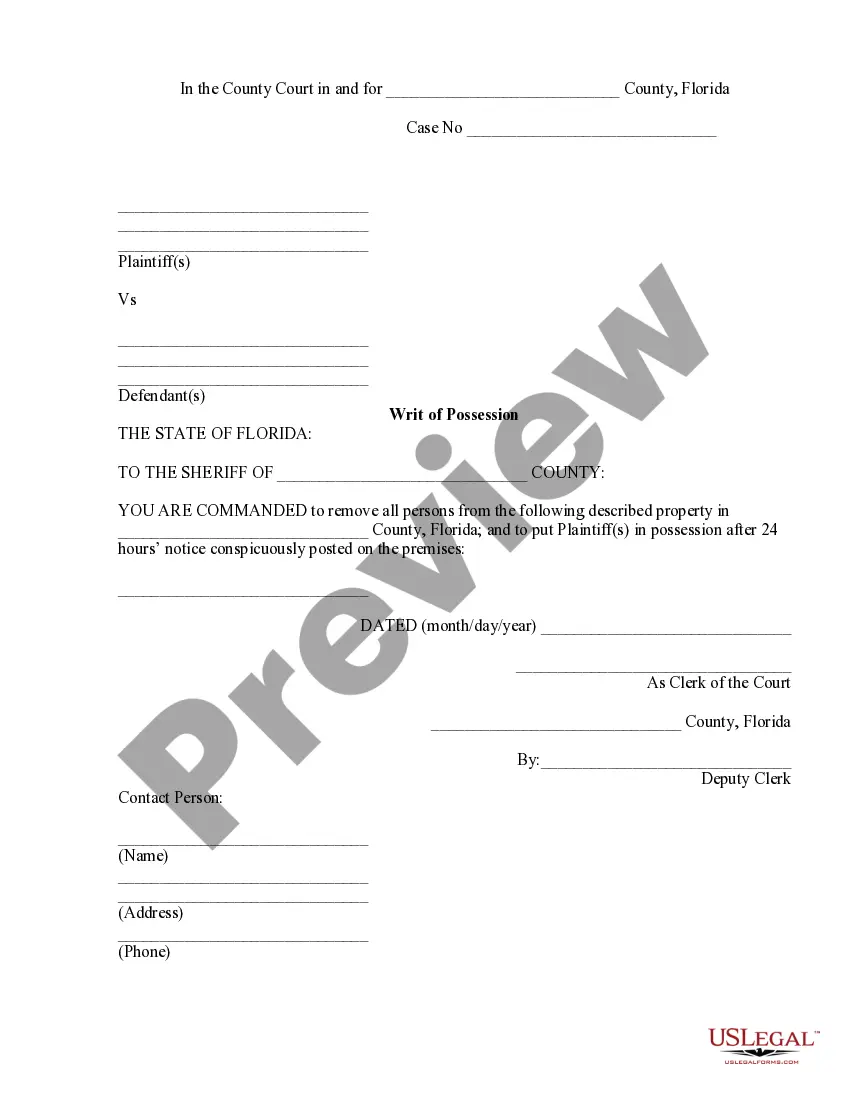
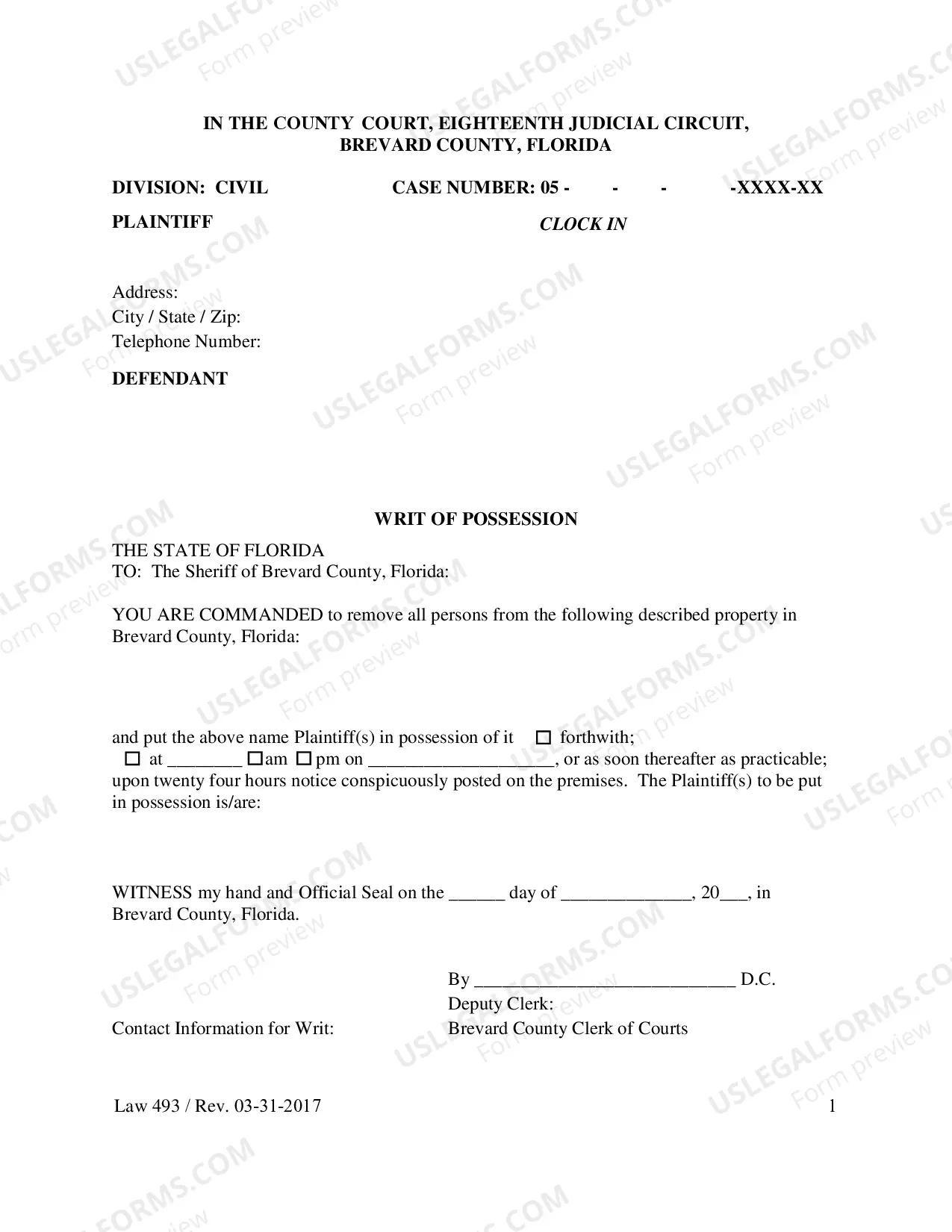
The Florida Writ of Possession is a legal document that authorizes a sheriff to remove a tenant from a property following an eviction process. This form is specifically designed for landlords who have obtained a judgment in their favor and need to regain possession of their property from a tenant who is unlawfully remaining. Unlike other eviction forms, the Writ of Possession facilitates the physical removal of a tenant after the initial eviction process has concluded.
Key components of this form
- Case number field for identification.
- Names of the plaintiff(s) and defendant(s).
- Property description and county location.
- A directive to the sheriff to remove occupants from the property.
- Notification details for posting on the premises.
- Space for the court clerk's signature and contact information.

Situations where this form applies
You should use this form when a court has granted you a judgment for possession of your rental property, and you need to proceed with the eviction of a tenant who has not vacated the premises. It is applicable in situations where tenants refuse to leave after an eviction notice has been served or when a judgment for eviction has been granted by the court. Utilizing the Writ of Possession is an essential step in the legal eviction process.
Who should use this form
- Landlords seeking to reclaim their rental property from a tenant.
- Property managers acting on behalf of the landlord.
- Individuals with a legal claim to the property against a current occupant.
- Anyone who has received a court judgment for possession of the property.
How to prepare this document
- Identify and enter the case number at the top of the form.
- List the names of the plaintiff(s) and defendant(s) accurately.
- Provide a detailed description of the property, including county information.
- Specify the notification instructions for posting on the property.
- Sign and date the form where indicated by the court clerk.
- Fill out the contact information for the court clerk or deputy clerk.
Notarization requirements for this form
This form does not typically require notarization unless specified by local law. However, it is important to check for any additional legal requirements that may apply to your specific situation.
Get your form ready online
Our built-in tools help you complete, sign, share, and store your documents in one place.
Make edits, fill in missing information, and update formatting in US Legal Forms—just like you would in MS Word.
Download a copy, print it, send it by email, or mail it via USPS—whatever works best for your next step.
Sign and collect signatures with our SignNow integration. Send to multiple recipients, set reminders, and more. Go Premium to unlock E-Sign.
If this form requires notarization, complete it online through a secure video call—no need to meet a notary in person or wait for an appointment.
We protect your documents and personal data by following strict security and privacy standards.

Make edits, fill in missing information, and update formatting in US Legal Forms—just like you would in MS Word.

Download a copy, print it, send it by email, or mail it via USPS—whatever works best for your next step.

Sign and collect signatures with our SignNow integration. Send to multiple recipients, set reminders, and more. Go Premium to unlock E-Sign.

If this form requires notarization, complete it online through a secure video call—no need to meet a notary in person or wait for an appointment.

We protect your documents and personal data by following strict security and privacy standards.
Avoid these common issues
- Failing to include the correct case number.
- Not entering the full names of all parties involved.
- Omitting details about the property location.
- Failing to follow the proper notification procedure.
- Not obtaining the court clerk's signature.
Advantages of online completion
- Convenient access to a legally vetted document from anywhere.
- Editable templates to customize for your specific situation.
- Reliable legal language drafted by licensed attorneys.
- Immediate availability for download, saving time on paperwork.
Legal use & context
- This form is legally enforceable once signed and issued by the Clerk of the Court, authorizing the sheriff to proceed with eviction.
- It is important to adhere to all local regulations and ensure that the eviction process follows legal protocols to protect the landlordsâ and tenantsâ rights.
What to keep in mind
- The Florida Writ of Possession allows landlords to enforce a court-ordered eviction.
- Completing the form accurately is vital to expedite the eviction process.
- Always adhere to local laws and eviction procedures to ensure compliance.
Looking for another form?


Form popularity
FAQ
To write a letter to a judge regarding a Florida Writ of Possession, start by addressing the letter properly and explaining your situation clearly and respectfully. Include specific reasons for your request and any relevant evidence that supports your case. For assistance in drafting this letter, UsLegalForms offers templates that can help ensure your communication remains effective and to the point.
Once a Florida Writ of Possession is issued, the landlord can request law enforcement to carry out the eviction. The tenant typically receives a notice providing a specific timeframe to vacate the premises. It is crucial for tenants to act promptly and explore any potential legal options to challenge the eviction or seek resolution.
Yes, it is possible to stop an eviction in Florida even after a writ has been issued. Tenants can file certain motions, like a stay of execution, to halt the process temporarily. Consulting with a legal expert through resources such as UsLegalForms can provide clarity and help you navigate your options effectively.
When a Florida Writ of Possession is issued, it indicates that the court has authorized the landlord to retake possession of the rental property. This legal document permits law enforcement to remove the tenant if they fail to vacate voluntarily. It's important to understand that this step follows legal proceedings, and tenants should seek assistance if they need options.
Reversing a Florida Writ of Possession involves filing a motion with the court that issued the writ. You should explain your reasons for seeking reversal and provide supporting evidence as necessary. If you want guidance throughout this process, consider using UsLegalForms to find the right templates and resources to assist you.
Stopping an eviction after a Florida writ of possession can be challenging but not impossible. Tenants may file a motion to vacate the judgment or seek a stay of execution in specific situations. It is crucial to act quickly and consult legal resources to explore options. Utilizing US Legal Forms can provide valuable templates and guidance to assist in navigating this complex situation.
A Florida writ of possession allows a landlord to reclaim their property after winning an eviction case. This legal document is obtained from the court following a judgment, and it authorizes the sheriff to enforce the eviction. The process typically requires prior notice to the tenant, ensuring they have an opportunity to leave voluntarily. Understanding this process can be easier with resources from platforms like US Legal Forms.
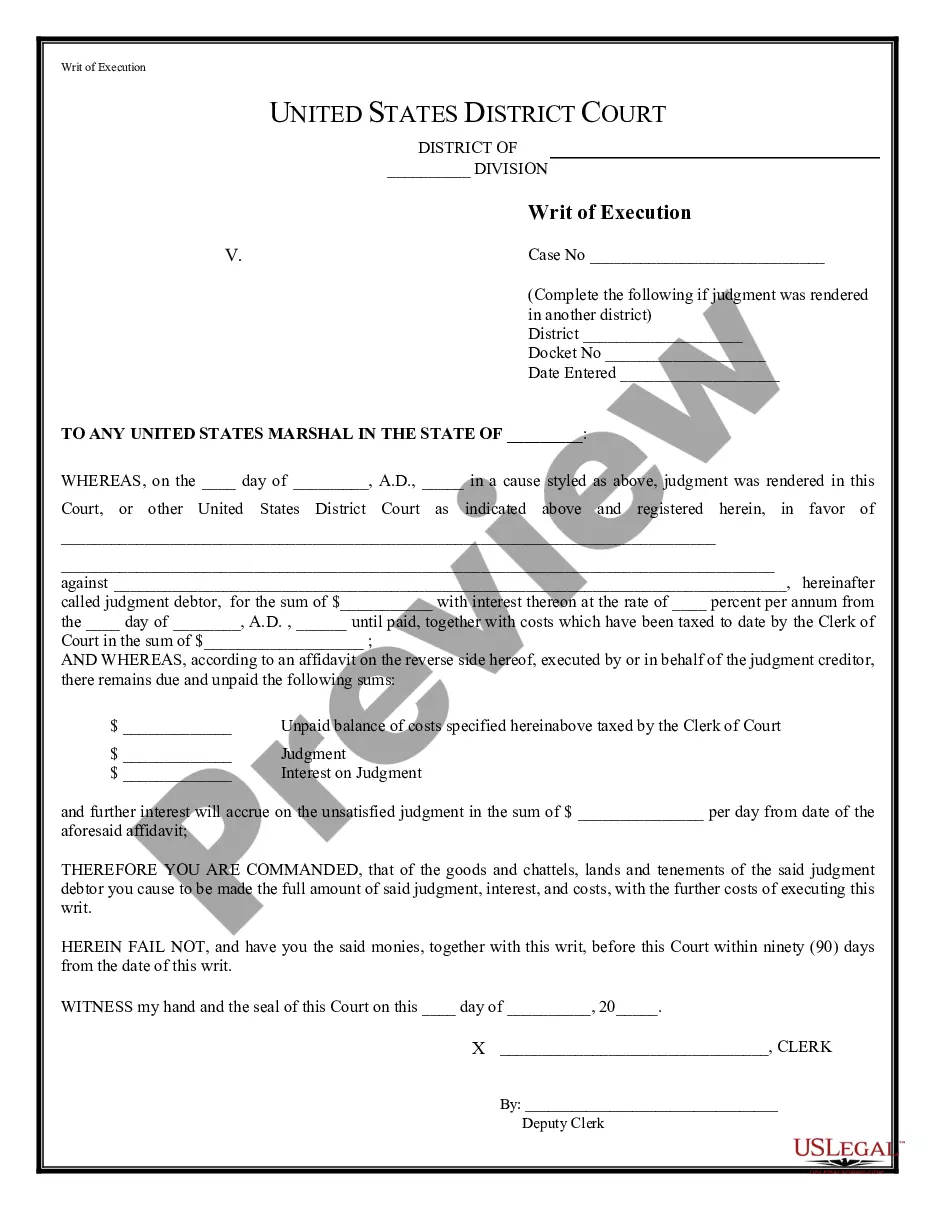
Once a writ of execution is served in Florida, the sheriff takes action to enforce the court's judgment. This process often involves seizing the debtor's property to satisfy the owed amount. The debtor may have limited time to respond or address the judgment before the sheriff executes the writ. Engaging with a service like US Legal Forms can help clarify your rights and responsibilities during these proceedings.
After a Florida writ of possession is issued, the sheriff coordinates with the landlord to enforce the order. The sheriff will schedule a time to serve the writ, which allows the landlord to regain possession of the property. Tenants will receive a notice before eviction, giving them a chance to vacate. It's important to act quickly, as failure to leave can lead to removal by law enforcement.
A Florida Writ of Possession is usually served within several days, although exact timelines can vary. Once the writ is issued, the sheriff or authorized officer takes responsibility for serving it. Factors such as their current workload can affect the speed of service, so it's a good idea to check in with your local sheriff's office for specific details.