Florida Foreclosure Purchaser's Writ of Possession to Evict Tenant
About this form
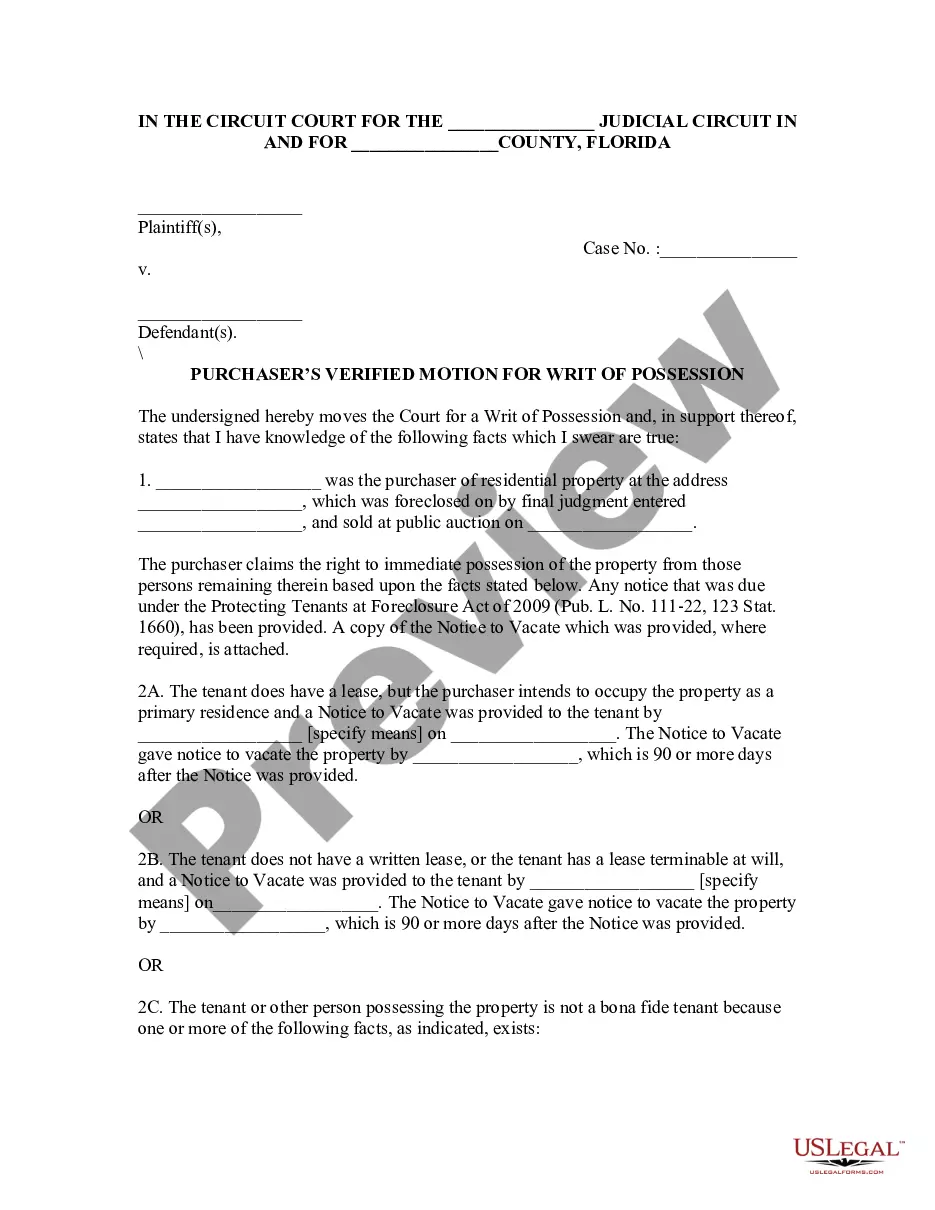
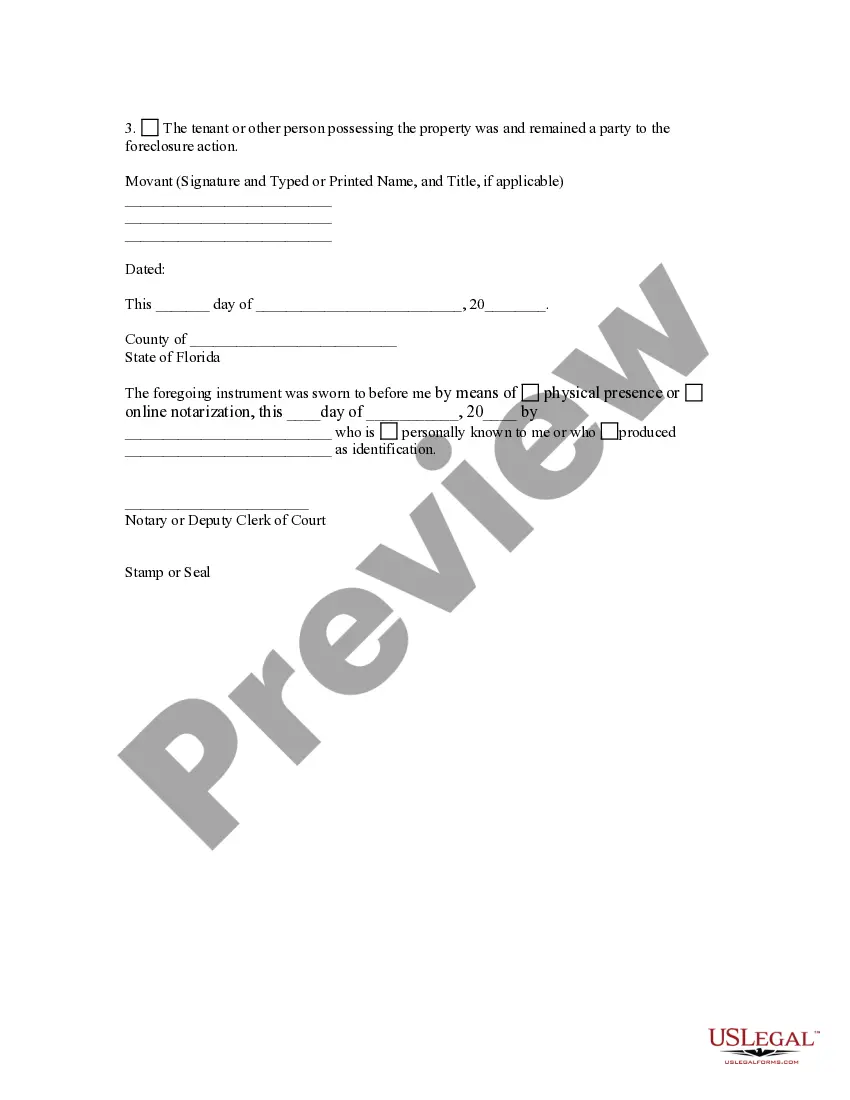
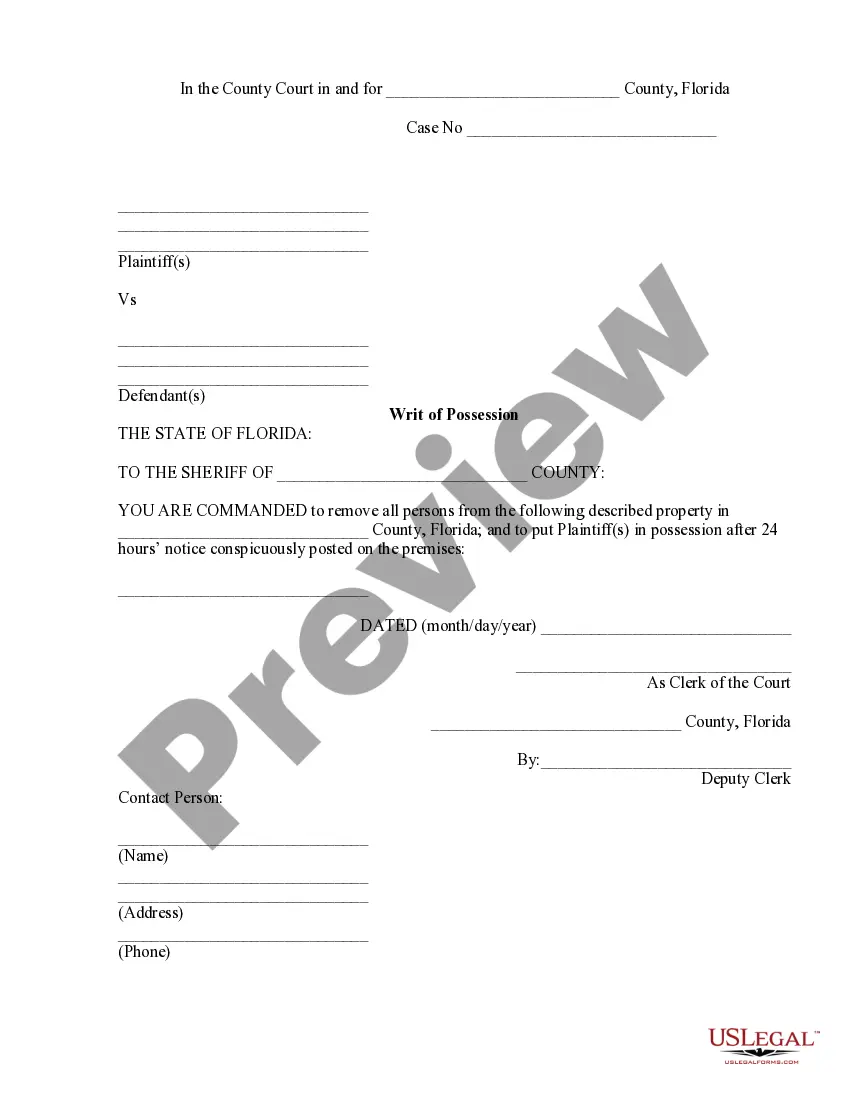
The Foreclosure Purchaser's Writ of Possession to Evict Tenant is a legal document used by individuals or entities who have purchased a foreclosed property. This form allows the new owner to initiate eviction proceedings against an existing tenant residing in the property. Unlike other eviction forms, this writ is specifically tailored for foreclosed properties, addressing unique tenant situations that may arise after foreclosure.
Main sections of this form
- Case information: Includes plaintiff and defendant names, along with case number.
- Details of the foreclosure: Information about the property, foreclosure judgment, and auction details.
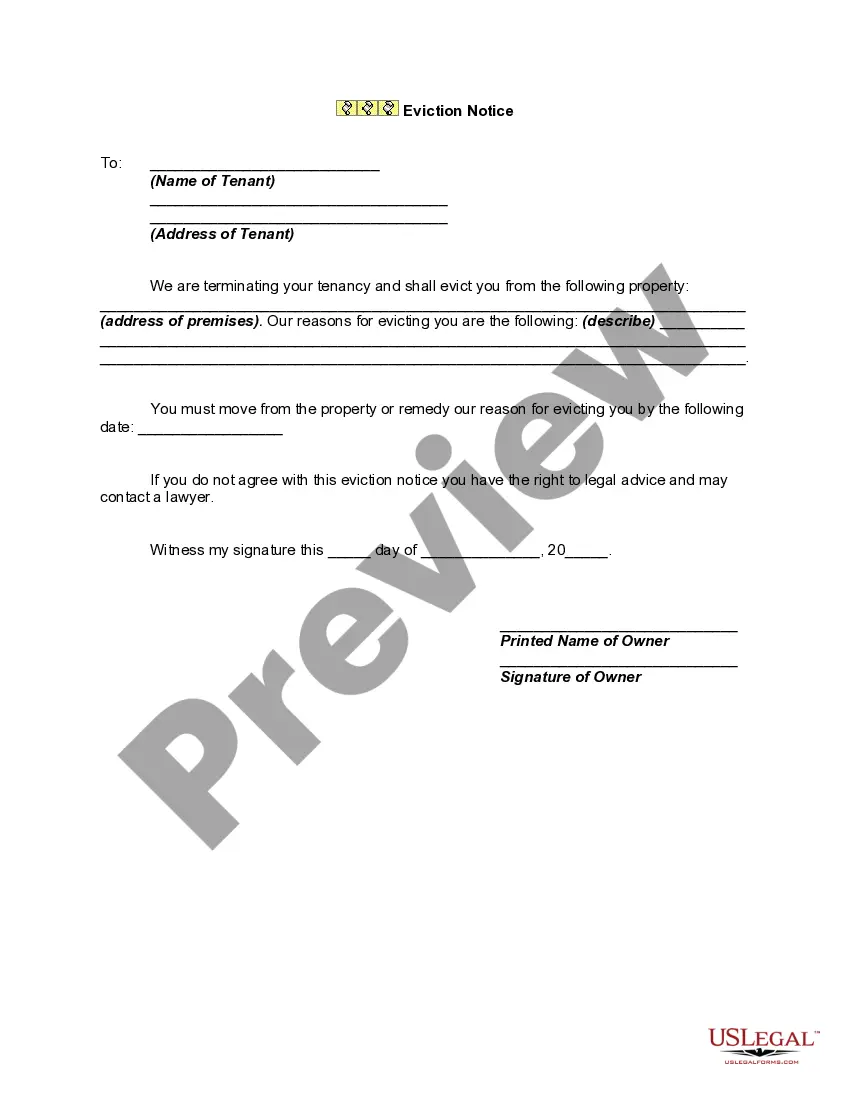
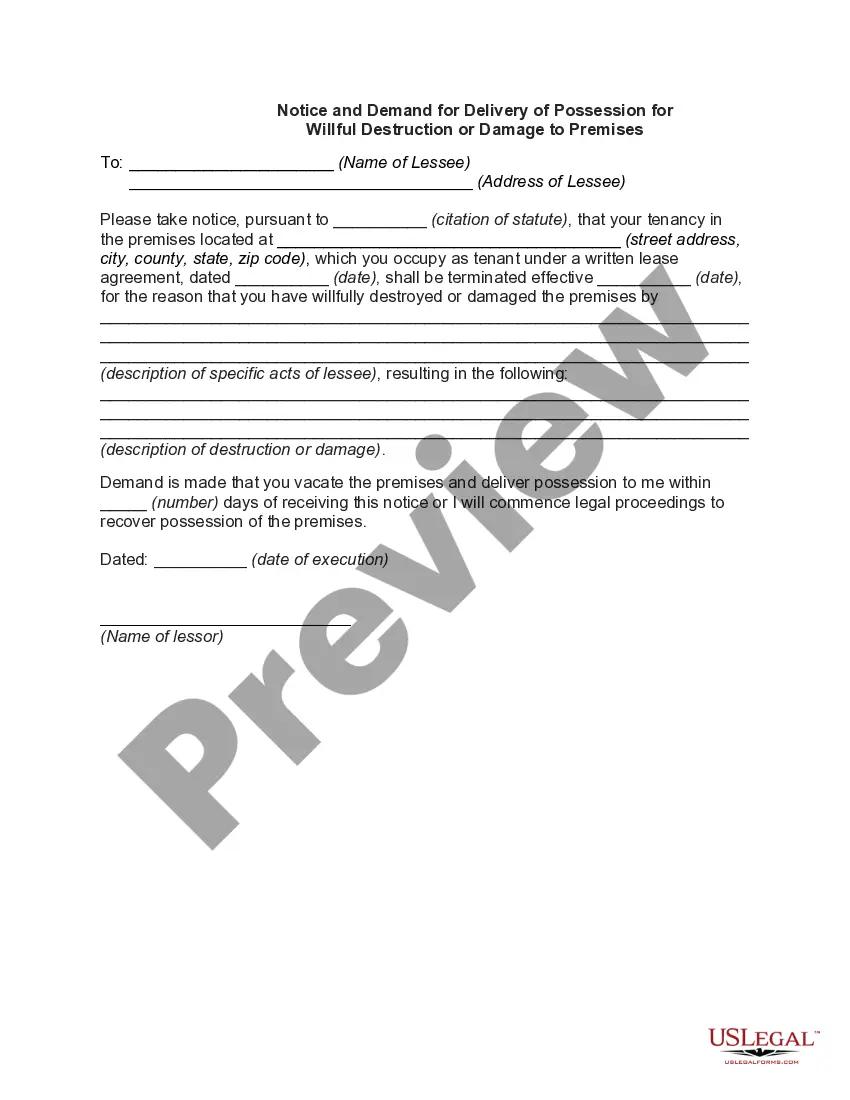
- Notice to vacate: Documentation demonstrating that a notice was served to the tenant.
- Bona fide tenant status: Clauses verifying whether the tenant is a legitimate occupant of the property.
- Movant's details: Signature and identifying information of the purchaser seeking the writ.
- Notarization section: Area for a notary or deputy clerk of court to attest to the document's validity.
When this form is needed
This form should be used in situations where a person has purchased a foreclosed property and needs to evict a tenant. Common scenarios include instances where the tenant has failed to vacate after a notice to leave has been issued or when the tenant does not have a valid lease agreement. This form is essential for legally regaining possession of the property post-foreclosure.
Who can use this document
- Individuals or entities who have purchased foreclosed properties.
- Real estate investors looking to manage their newly acquired properties.
- Landlords needing to evict tenants residing in foreclosed homes.
- Property management companies handling eviction processes.
Completing this form step by step
- Identify the parties involved by entering the names of the plaintiff and defendant.
- Specify the property details, including the address and foreclosure information.
- Document the notice to vacate, including the method of service and date provided.
- Indicate whether the tenant is considered a bona fide tenant based on provided criteria.
- Ensure that the form is signed and dated by the purchaser seeking the writ of possession.
- Have the completed form notarized to ensure its legal validity.
Does this form need to be notarized?
Notarization is required for this form to take effect. Our online notarization service, powered by Notarize, lets you verify and sign documents remotely through an encrypted video session, available 24/7.
Get your form ready online
Our built-in tools help you complete, sign, share, and store your documents in one place.
Make edits, fill in missing information, and update formatting in US Legal Forms—just like you would in MS Word.
Download a copy, print it, send it by email, or mail it via USPS—whatever works best for your next step.
Sign and collect signatures with our SignNow integration. Send to multiple recipients, set reminders, and more. Go Premium to unlock E-Sign.
If this form requires notarization, complete it online through a secure video call—no need to meet a notary in person or wait for an appointment.
We protect your documents and personal data by following strict security and privacy standards.

Make edits, fill in missing information, and update formatting in US Legal Forms—just like you would in MS Word.

Download a copy, print it, send it by email, or mail it via USPS—whatever works best for your next step.

Sign and collect signatures with our SignNow integration. Send to multiple recipients, set reminders, and more. Go Premium to unlock E-Sign.

If this form requires notarization, complete it online through a secure video call—no need to meet a notary in person or wait for an appointment.

We protect your documents and personal data by following strict security and privacy standards.
Common mistakes to avoid
- Failing to provide complete property details, such as the address or final judgment date.
- Not including the date and method of delivering the notice to vacate.
- Omitting necessary signatures or not having the form notarized.
- Assuming all tenants are bona fide without verifying their status.
Why complete this form online
- Convenient access to legal forms that can be downloaded and filled out at your pace.
- Editable templates that allow for customization based on specific circumstances.
- Reliable legal language drafted by licensed attorneys to ensure compliance.
- 24/7 availability, allowing you to complete your legal documents whenever needed.
Legal use & context
- This form is enforceable under Florida law, given that it is completed accurately and notarized.
- Eviction proceedings initiated with this writ are a legal process that must follow state guidelines to avoid complications.
- Ensure that all parties have received appropriate notice to vacate to support the eviction process legally.
Key takeaways
- This writ of possession is essential for foreclosed property purchasers to evict current occupants legally.
- Accurate completion and notarization of the form are critical for its validity.
- Consulting local laws ensures compliance and protects your rights as a property owner.
Looking for another form?

Form popularity
FAQ
If the property you bought is occupied by the former owner (the person who defaulted on the mortgage and lost the house to foreclosure), you must use the "formal" eviction process.The "formal" eviction process can be complicated. Formal evictions are subject to more and stricter rules than "summary" evictions.
An occupied property is as it sounds, one with people living inside it at the point of purchase. The previous owners could be there, or a tenant, who may or may not have a valid lease.
You must file the motion at the clerk of the county court where the case was filed and deliver a copy to the judge that ordered the writ. The judge is the only one who can stop the sheriff from putting you out.
After entry of the judgment, the Clerk will issue a Writ of Possession to the Sheriff describing the premises and directing them to put the landlord in possession after 24 hours. This whole process typically takes between 14 -21 days in FL.
Once the Writ is served by the Sheriff, the tenant(s) are required to vacate the property within a short time frame. In Florida, it is 24 hours. If the property is not vacated within the time frame, the Sherriff can then physically remove all persons and belongings from the property.
In Florida, a renter's right to remain in the property cannot be terminated unless they have been named as a party in the foreclosure lawsuit. Unfortunately, state statutes require no advance notice of impending foreclosure action against the property's landlord be supplied to the tenant.
The notice must be in writing, and must give you 3 days to pay the rent or leave (vacate). The 3-day time frame does not include weekends, holidays, or the day the notice is given. If you offer to pay the full rent within that time, your landlord must take it.
The eviction process can take anywhere from two weeks to several months, depending on where you live. Once the landlord has obtained an eviction order from the court, you typically have around five days to move out.