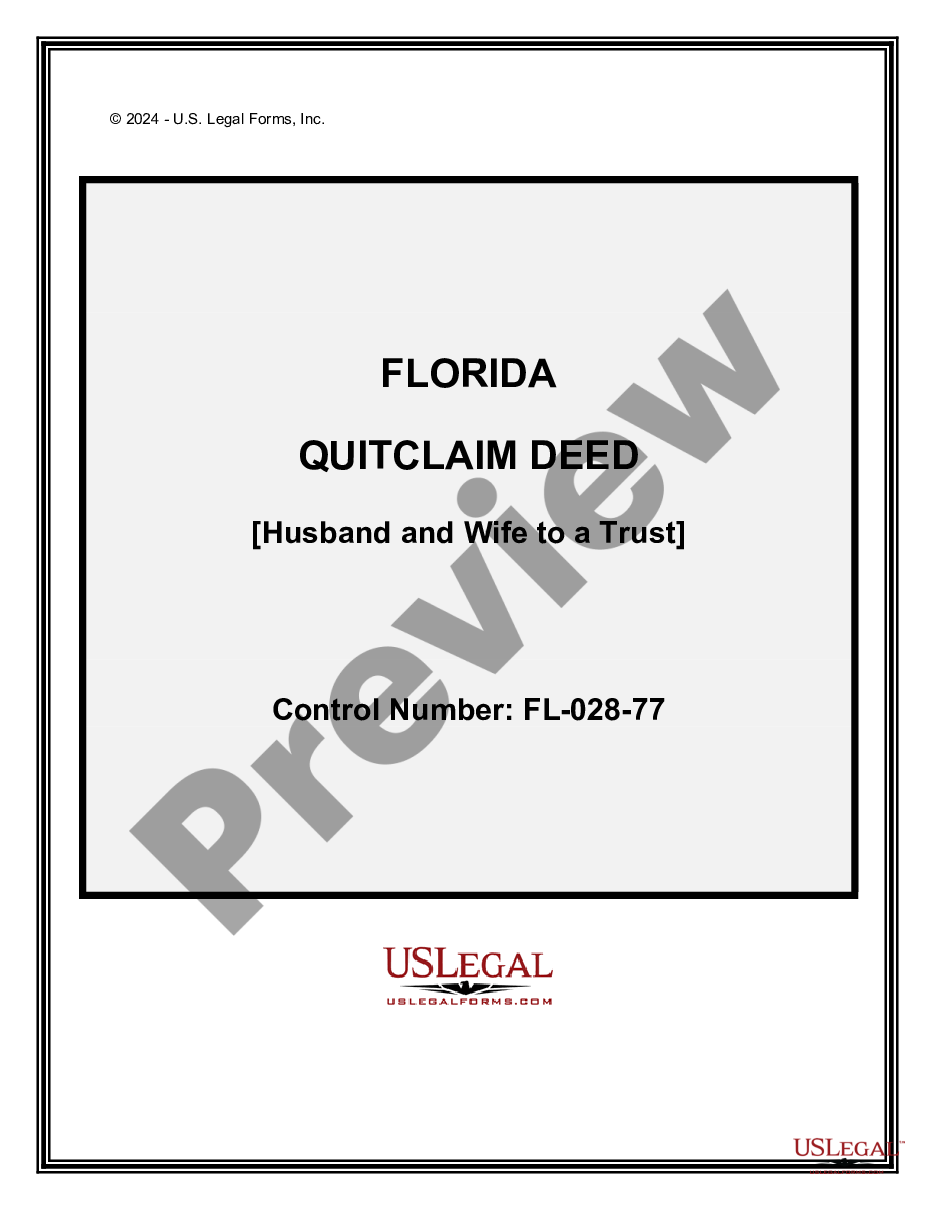
Florida Quitclaim Deed - Husband and Wife to Trust
Overview of this form
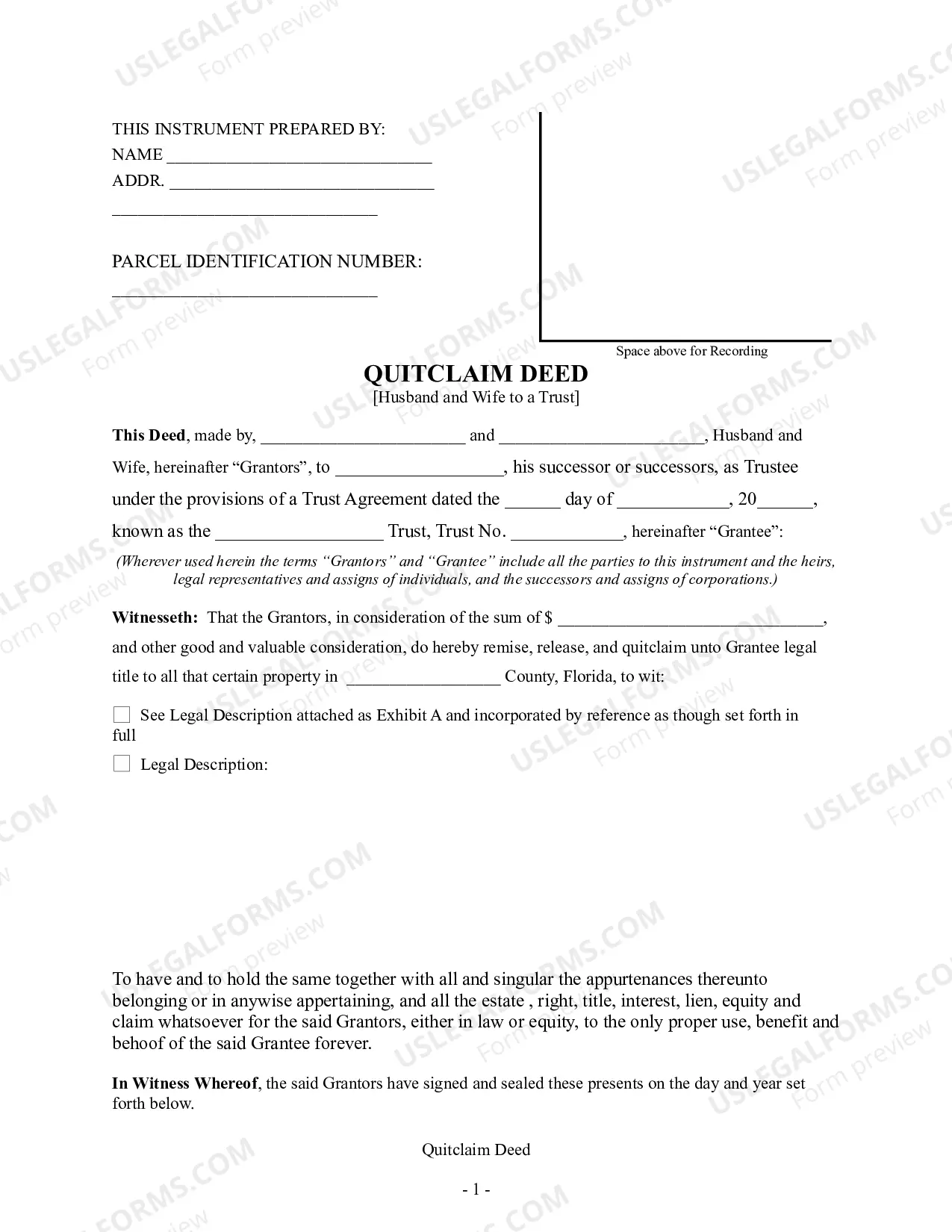
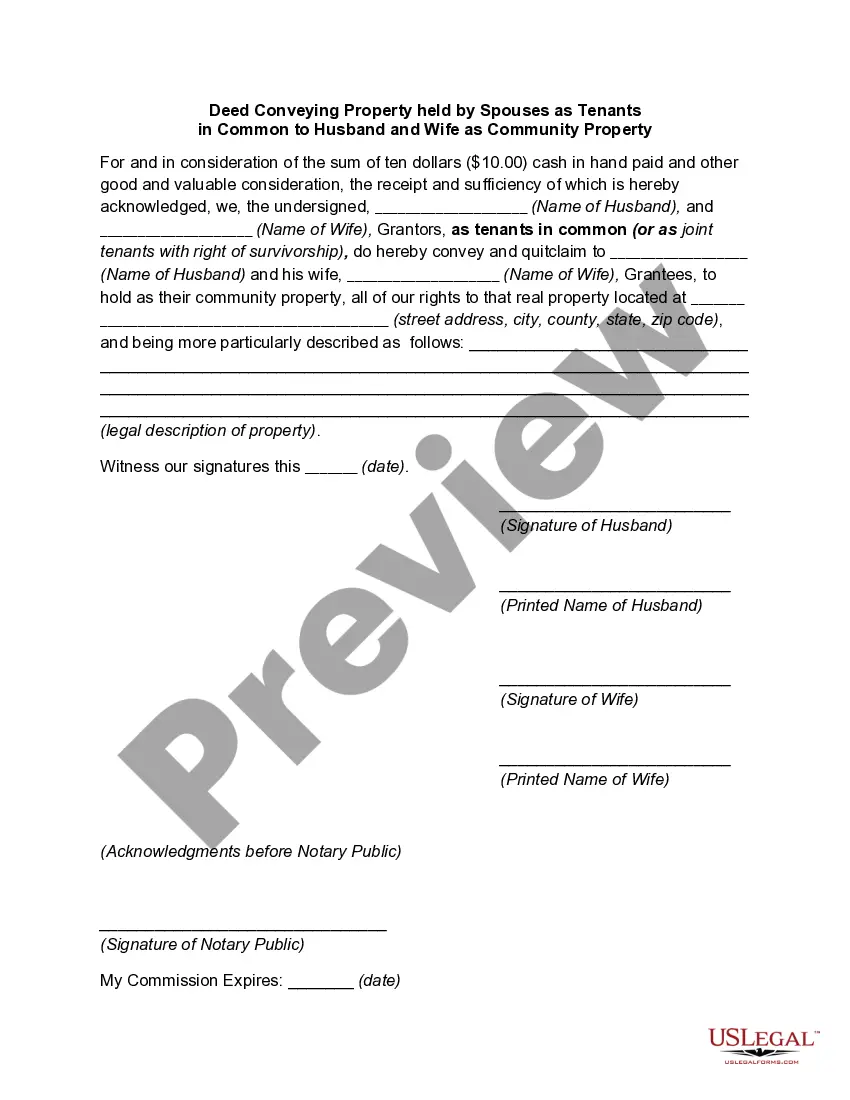
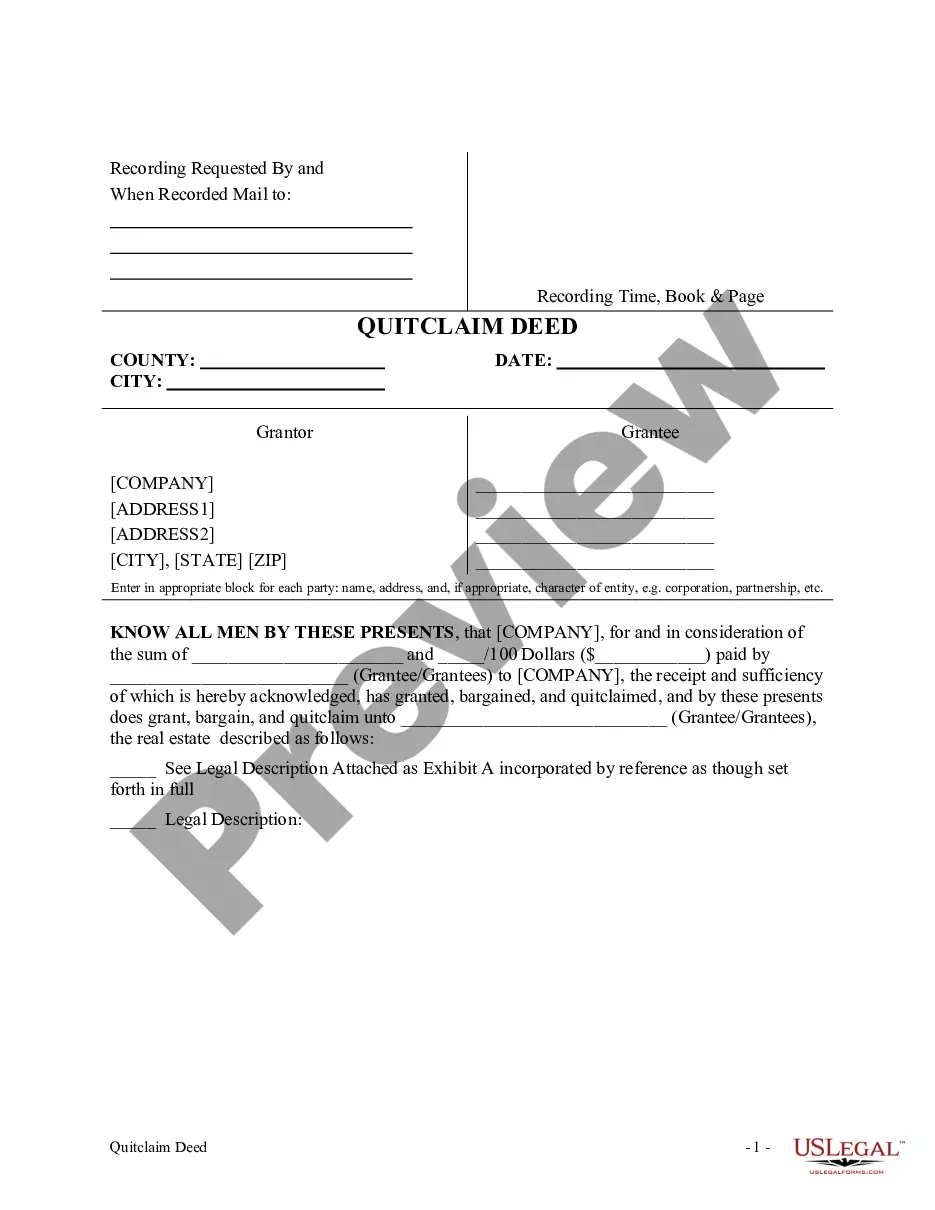
This Quitclaim Deed is a legal document where a husband and wife, as grantors, transfer property to a trust, which serves as the grantee. This form is designed to clearly convey and quitclaim the specified property, ensuring it complies with all state statutory laws. Unlike other deeds, a Quitclaim Deed does not provide warranties about the property title, making it a simpler yet effective option for property transfers among family members or to a trust.
Key components of this form
- Identification of the grantors (husband and wife)
- Details of the grantee (the trust)
- Legal description of the property being transferred
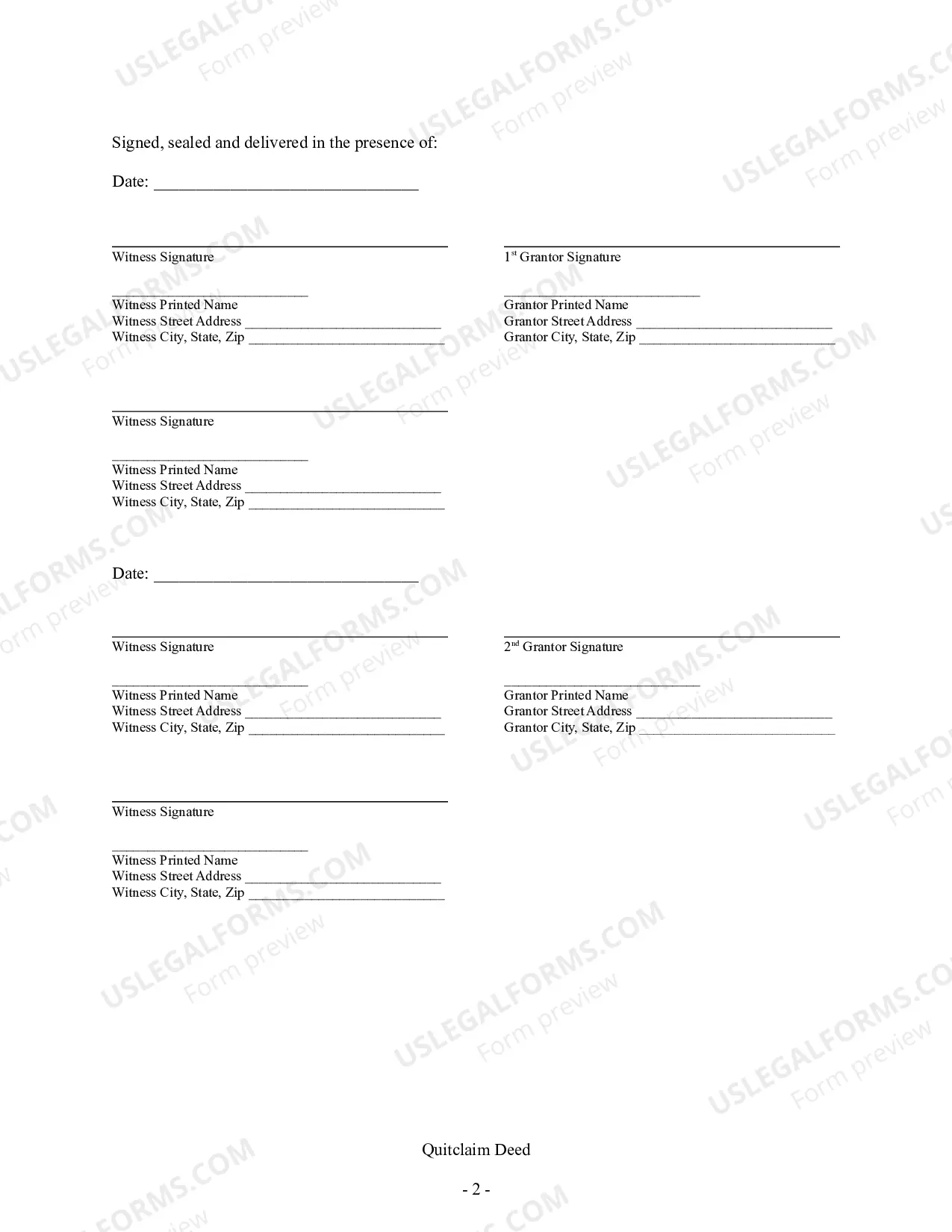
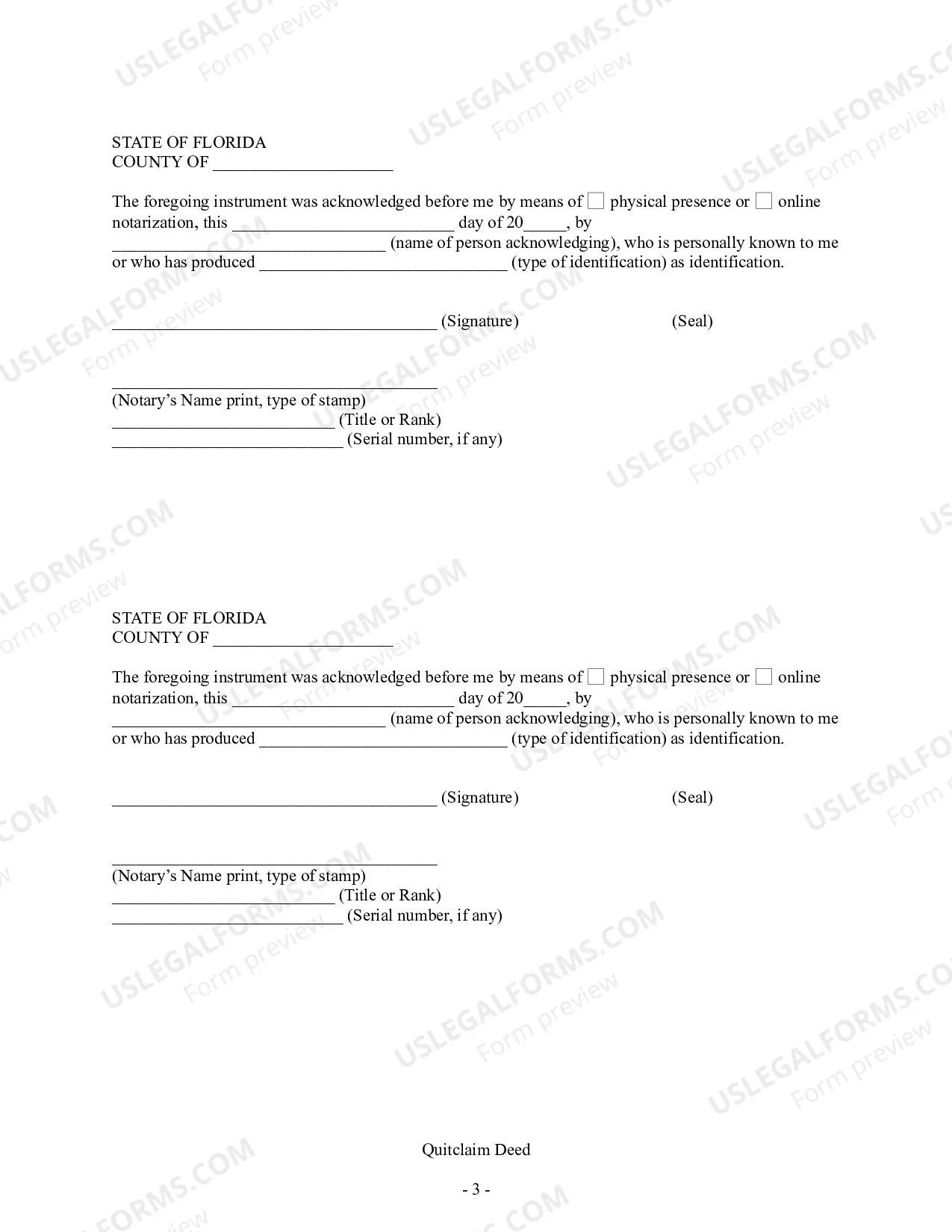
- Signatures and notarization section for authenticity
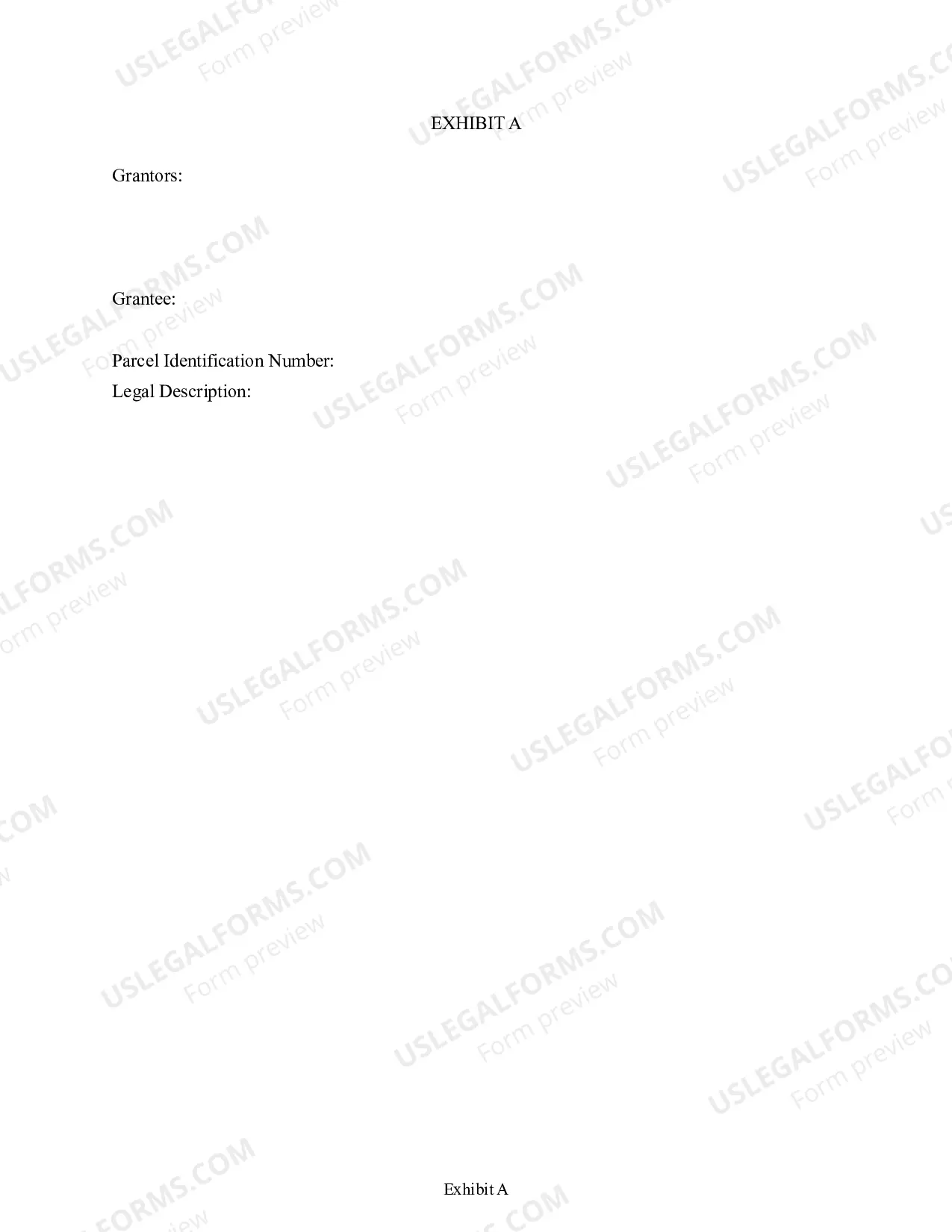
- Exhibit A for additional property details, if necessary
Common use cases
This Quitclaim Deed should be used when a husband and wife wish to transfer ownership of real property to a trust. This is often done for estate planning purposes, to manage assets for beneficiaries, or to ensure a streamlined transfer upon the death of the grantors. It is especially useful when there are no warranties regarding the property's title and the intent is straightforward ownership transfer.
Who this form is for
This form is intended for:
- Married couples who own property together
- Individuals looking to transfer property into a trust for estate planning
- Trustees managing property on behalf of the trust
- Homeowners wanting to change property titles without warranty
Completing this form step by step
- Identify the names of the grantors (husband and wife).
- Specify the name of the trust as the grantee.
- Provide a complete legal description of the property being transferred.
- Sign and date the Quitclaim Deed in front of a notary public.
- Attach Exhibit A if needed, detailing additional property information.
Does this document require notarization?
To make this form legally binding, it must be notarized. Our online notarization service, powered by Notarize, lets you verify and sign documents remotely through an encrypted video session.
Get your form ready online
Our built-in tools help you complete, sign, share, and store your documents in one place.
Make edits, fill in missing information, and update formatting in US Legal Forms—just like you would in MS Word.
Download a copy, print it, send it by email, or mail it via USPS—whatever works best for your next step.
Sign and collect signatures with our SignNow integration. Send to multiple recipients, set reminders, and more. Go Premium to unlock E-Sign.
If this form requires notarization, complete it online through a secure video call—no need to meet a notary in person or wait for an appointment.
We protect your documents and personal data by following strict security and privacy standards.

Make edits, fill in missing information, and update formatting in US Legal Forms—just like you would in MS Word.

Download a copy, print it, send it by email, or mail it via USPS—whatever works best for your next step.

Sign and collect signatures with our SignNow integration. Send to multiple recipients, set reminders, and more. Go Premium to unlock E-Sign.

If this form requires notarization, complete it online through a secure video call—no need to meet a notary in person or wait for an appointment.

We protect your documents and personal data by following strict security and privacy standards.
Common mistakes
- Failing to include a complete legal description of the property.
- Not having the form notarized when required.
- Omitting signatures of both grantors.
- Incorrectly identifying the trust or its representatives.
Advantages of online completion
- Convenient access to legal forms from any location.
- Editable fields allow for easy completion on your computer.
- Ability to print and fill out the form by hand if preferred.
- Forms drafted by licensed attorneys to ensure compliance with state laws.
Looking for another form?

Form popularity
FAQ
In Florida, a quit claim deed must meet certain criteria, such as being in writing, signed by the grantor, and properly notarized. It transfers the interest in the property without guaranteeing clear title, making it crucial to know the implications. Utilizing a Florida Quitclaim Deed - Husband and Wife to Trust can be beneficial in managing property ownership efficiently and legally.
Whether your wife needs to be on the deed depends on your specific circumstances and the nature of the property's ownership. If the property is marital property, including her on the deed is often advisable to avoid potential legal issues. A Florida Quitclaim Deed - Husband and Wife to Trust allows for a streamlined process to ensure both parties have clear ownership.
If a spouse's name is not on the deed, they may face challenges in claiming rights to the property, especially in cases of separation or divorce. This can have significant legal consequences unless there are other arrangements in place, such as a trust. Using a Florida Quitclaim Deed - Husband and Wife to Trust could help establish clear ownership intentions.
In Florida, both spouses do not have to be on the deed for property to be validly transferred; however, it often depends on the type of ownership intended. If property is transferred via a Florida Quitclaim Deed - Husband and Wife to Trust, both must sign the deed if it involves marital property. Ensuring both spouses are on the deed can help in protecting each party's interests.
Yes, a married person can own property separately in Florida, but it must be clear that the property is intended to be separate. The Florida Quitclaim Deed - Husband and Wife to Trust provides a mechanism through which one spouse can transfer property solely to a trust, retaining control over that property. It's essential to document the intention to keep property separate to avoid any disputes later.
If your husband passes away and your name is not on the deed, the property may likely go through probate. In Florida, the handling of this situation depends on whether the property was held in joint tenancy or was solely in his name. Consulting an attorney who understands the implications of a Florida Quitclaim Deed - Husband and Wife to Trust can help clarify your rights and next steps.
In Florida, when a spouse signs a quit claim deed transferring property to a trust, they may still retain certain rights to that property. This deed relinquishes any claim they had over the property, but it does not necessarily remove their rights in the context of marital assets. It's crucial to understand how this deed impacts ownership and rights, especially concerning family trust arrangements.
To transfer your property to a trust in Florida, you typically need to create a Florida Quitclaim Deed - Husband and Wife to Trust. This deed legally moves ownership from you to the trust. After drafting the deed, you must sign it in front of a notary and file it with the local county clerk. This process helps ensure that the trust holds the property and can manage it per your wishes.
One of the biggest mistakes parents often make when establishing a trust fund is not clearly outlining the distribution terms. Without clear guidelines, your intentions might be misunderstood, leading to family disputes. Properly using a Florida Quitclaim Deed - Husband and Wife to Trust can simplify the transition of assets, but clarity in instructions is essential. Engaging with a professional can help ensure that your wishes are effectively communicated.
Putting your house in a trust using a Florida Quitclaim Deed - Husband and Wife to Trust may come with disadvantages. You may face costs related to setting up and maintaining the trust. Additionally, trust assets could be subject to specific legal requirements and tax implications. Before proceeding, it’s wise to consult with a legal expert to understand all potential drawbacks.