Florida Quitclaim Deed - Husband and Wife to Trust
Understanding this form
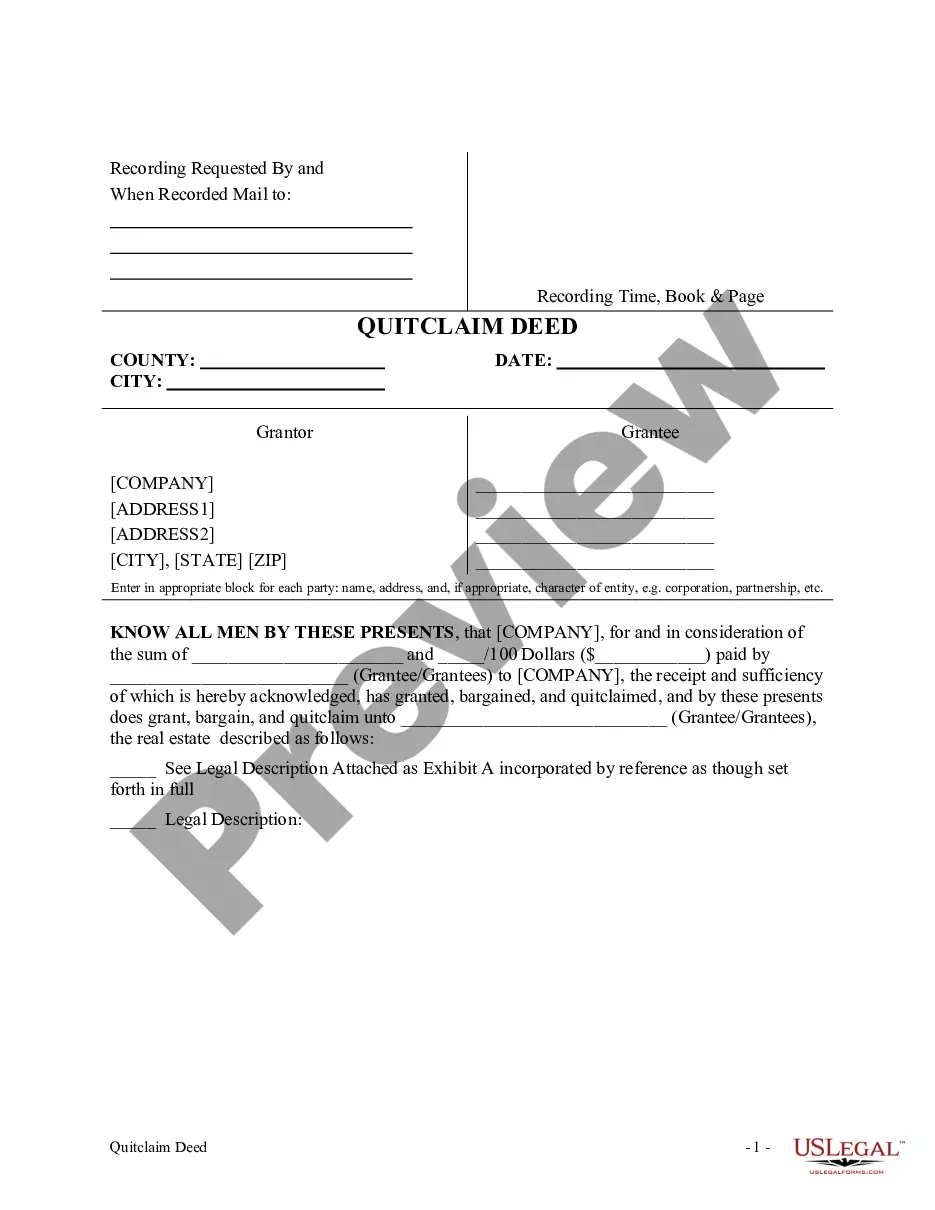
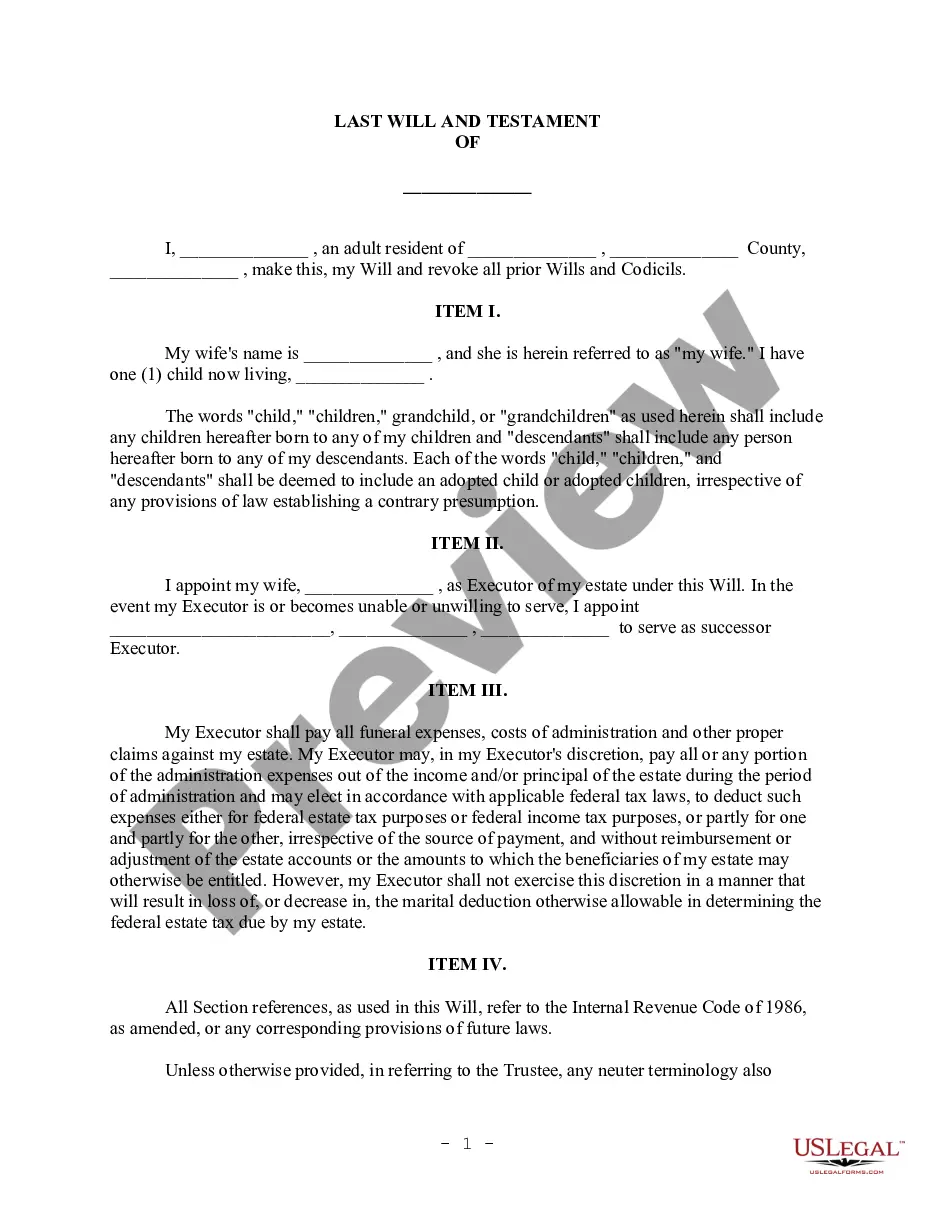
The Quitclaim Deed - Husband and Wife to Trust is a legal document that allows a married couple to transfer their interest in real property to a trust. Unlike other types of deeds, a quitclaim deed does not guarantee that the grantors own the property outright, nor does it offer any warranties; it merely transfers whatever interest the grantors may have. This form is especially useful for estate planning purposes, as it allows the couple to designate a trust as the new owner of their property.
Main sections of this form
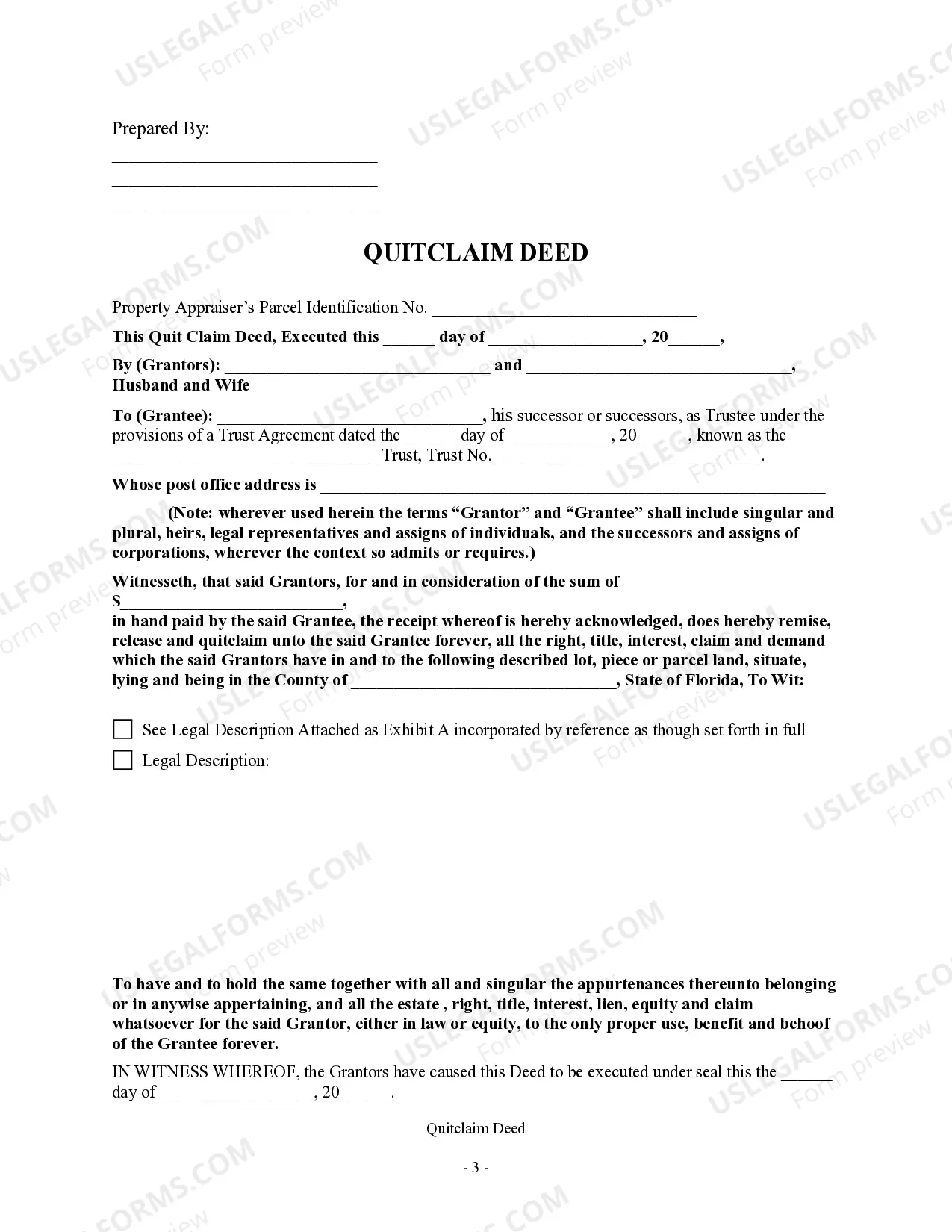
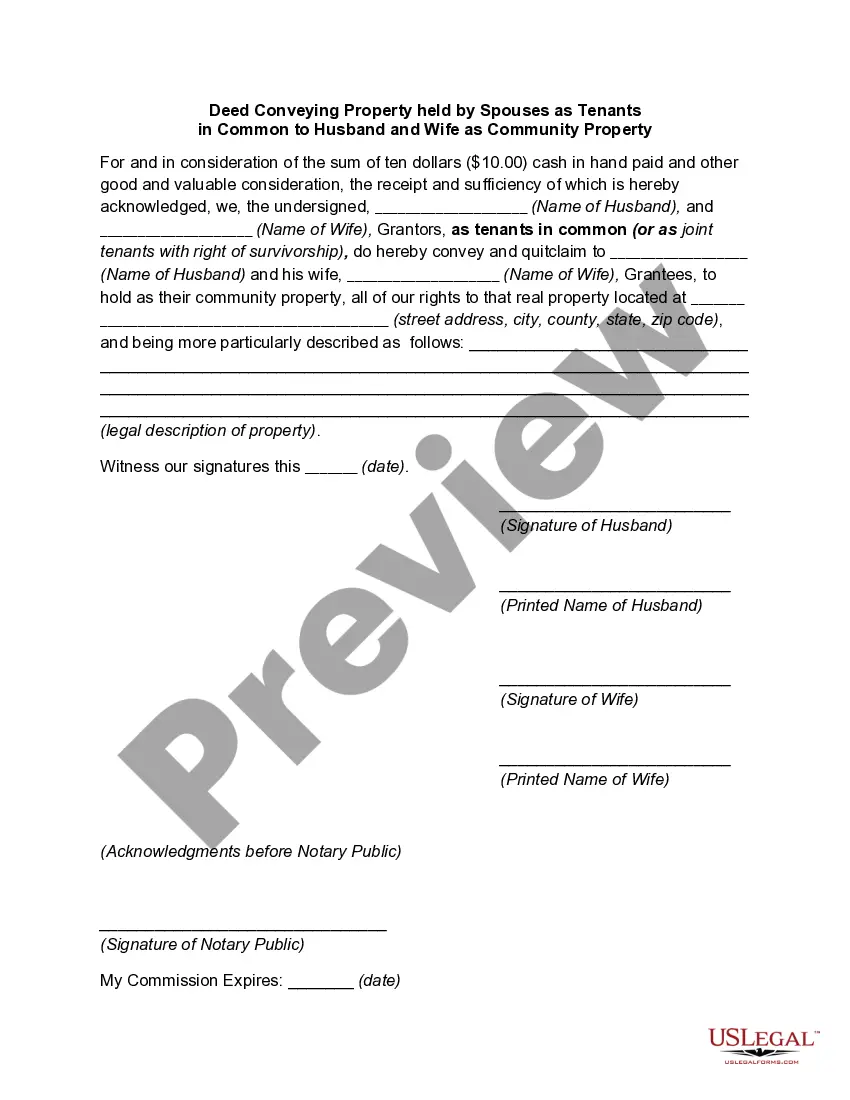
- Grantor names and signatures: Identify the husband and wife as the parties conveying the property.
- Trust name: Specify the name of the trust that will receive the property.
- Property description: Include a detailed description of the property being transferred.
- Date of transfer: Indicate the date when the property transfer takes effect.
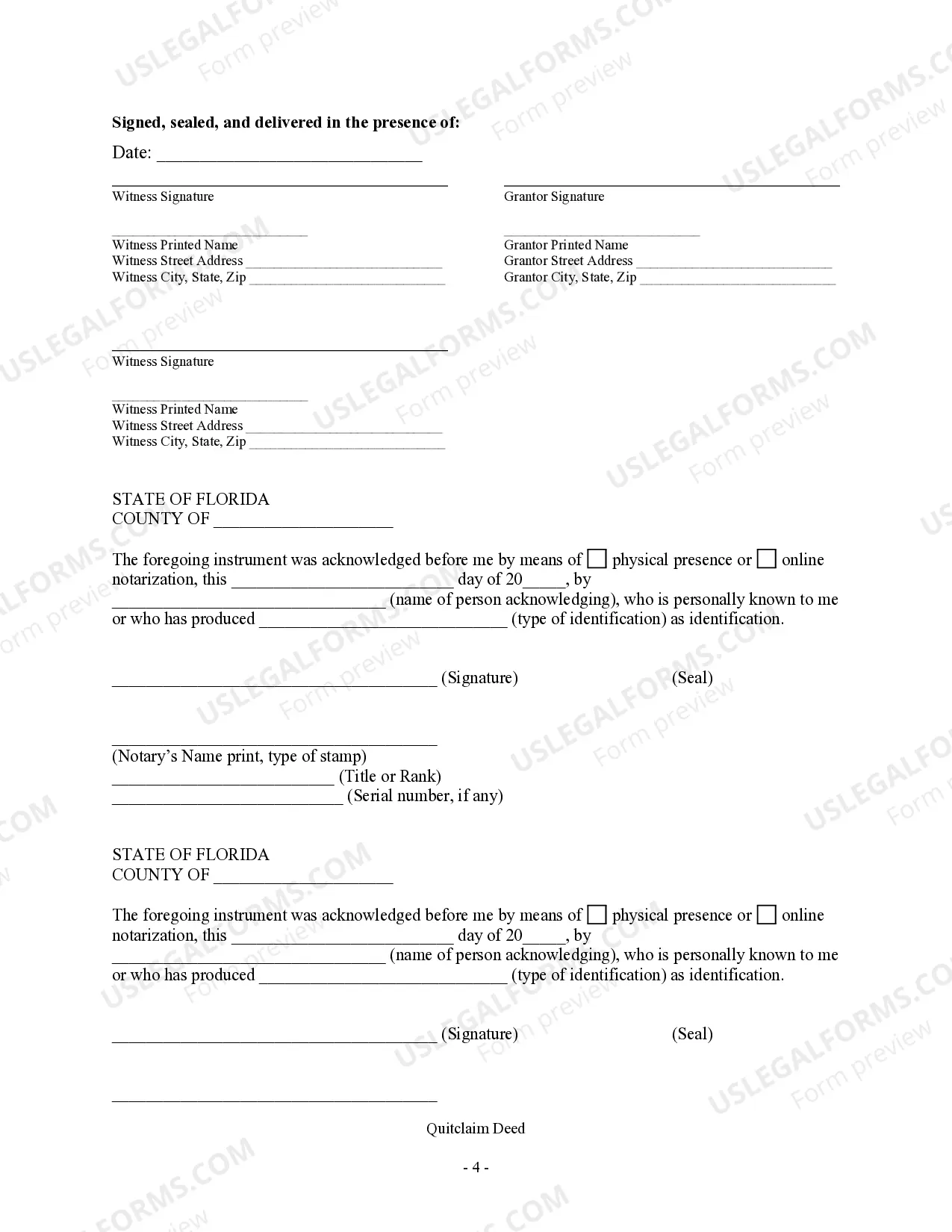
- Notarization section: A space for a notary public to acknowledge the signatures of the grantors.


When this form is needed
This form is typically used when a married couple decides to place their property into a trust for various reasons, such as avoiding probate, managing their assets, or ensuring that their property is managed according to their wishes after their passing. It is ideal for couples who wish to simplify their estate planning and make arrangements for future property management.
Who should use this form
- Married couples looking to transfer property into a trust.
- Individuals seeking to streamline their estate planning process.
- Couples wishing to manage their property jointly through a trust.
- Homeowners who want to ensure their property is handled according to their wishes upon death.
Steps to complete this form
- Identify the parties: Fill in the names of the husband and wife as grantors.
- Specify the trust: Clearly state the name of the trust that will be the grantee.
- Describe the property: Provide a detailed description of the property being conveyed.
- Enter the date: Fill in the date when you are executing the deed.
- Obtain notarization: Have the deed signed in the presence of a notary public for legal validity.
Does this form need to be notarized?
To make this form legally binding, it must be notarized. Our online notarization service, powered by Notarize, lets you verify and sign documents remotely through an encrypted video session.
Get your form ready online
Our built-in tools help you complete, sign, share, and store your documents in one place.
Make edits, fill in missing information, and update formatting in US Legal Forms—just like you would in MS Word.
Download a copy, print it, send it by email, or mail it via USPS—whatever works best for your next step.
Sign and collect signatures with our SignNow integration. Send to multiple recipients, set reminders, and more. Go Premium to unlock E-Sign.
If this form requires notarization, complete it online through a secure video call—no need to meet a notary in person or wait for an appointment.
We protect your documents and personal data by following strict security and privacy standards.

Make edits, fill in missing information, and update formatting in US Legal Forms—just like you would in MS Word.

Download a copy, print it, send it by email, or mail it via USPS—whatever works best for your next step.

Sign and collect signatures with our SignNow integration. Send to multiple recipients, set reminders, and more. Go Premium to unlock E-Sign.

If this form requires notarization, complete it online through a secure video call—no need to meet a notary in person or wait for an appointment.

We protect your documents and personal data by following strict security and privacy standards.
Common mistakes to avoid
- Failing to provide a complete property description, which could lead to legal issues later.
- Not having the deed notarized, which is crucial for it to be legally binding.
- Omitting the trust's name, resulting in an incomplete transfer.
- Incorrectly filling out the grantors' names, which must match legal documents.
Benefits of completing this form online
- Convenience of downloading and completing the form at your own pace.
- Editability to customize the form to fit your specific property situation.
- Accessibility from any device, allowing for easy use and storage.
- Reduces the need for attorney visits, saving time and expense while still providing a legal document.
Looking for another form?


Form popularity
FAQ
If your husband's name is on the deed but yours is not, you might face challenges regarding property ownership once he passes away. Florida law applies to the distribution of assets based on the surviving spouse's rights, but you may need to establish your claim through probate. Consider using a Florida Quitclaim Deed - Husband and Wife to Trust as part of your estate planning to prevent such future complications. Engaging with a legal expert can also provide clarity on your situation.
If a spouse's name is not on the deed in Florida, they may lose their claim to that property. This situation may affect their rights, particularly in matters of inheritance or marital property distribution. Utilizing a Florida Quitclaim Deed - Husband and Wife to Trust clarifies ownership but may also require additional legal steps to protect a spouse’s rights. It is advisable to consult a legal professional to explore options for securing your spouse’s interests.
No, both spouses do not have to be on the deed in Florida. Either spouse can hold the title to property, depending on their individual agreement. However, adding both names can safeguard against future disputes and protect each party’s interests. Using a Florida Quitclaim Deed - Husband and Wife to Trust allows for clear documentation of intentions regarding shared or individual ownership.
Yes, a married person can own property separately in Florida. This ownership can occur through various means, such as a quit claim deed, where the spouse transfers their interest. However, it is important to understand how this may affect your spouse's rights and claims to the property. Utilizing a Florida Quitclaim Deed - Husband and Wife to Trust can help clarify ownership and minimize misunderstandings.
While it is not always necessary for your wife to be on the deed, doing so can protect her interests. If you want to ensure that both spouses have an equal claim to the property, including her on the deed is wise. Particularly in a Florida Quitclaim Deed - Husband and Wife to Trust scenario, this inclusion helps prevent potential disputes later on. Always consider discussing this decision with legal counsel.
Yes, a spouse may retain certain rights to property even after signing a quit claim deed in Florida. By executing this deed, the spouse relinquishes their claim but may still be entitled to rights under Florida's marital property laws. It is important to understand your rights and any implications this action may have. Consulting with a legal expert can help clarify these matters when using a Florida Quitclaim Deed - Husband and Wife to Trust.
In Florida, a quit claim deed allows one party to transfer their interest in property to another without guaranteeing the title. The process does not require a full title search or the same formalities as traditional deeds. However, the transfer should be executed by the property owner and signed in front of a notary public. When using a Florida Quitclaim Deed - Husband and Wife to Trust, proper execution ensures that your intentions are clear.
To add a spouse using a quit claim deed, start by listing both names in the grantee section of the Florida Quitclaim Deed - Husband and Wife to Trust. Include property details and ensure both parties sign in front of a notary. File the completed deed with your local county office to officially add your spouse's name to the property title.
Placing your house in a trust may lead to some disadvantages, such as the initial costs for setting up the trust and potential ongoing management fees. Additionally, while a Florida Quitclaim Deed - Husband and Wife to Trust helps with ease of transfer, it can lead to complications if trust terms are mismanaged or misunderstood. Thus, clear communication and proper legal advice are essential.
To effectively transfer your property to a trust in Florida, use a Florida Quitclaim Deed - Husband and Wife to Trust. This deed should specify both the trust and the property involved. Ensure you sign the deed with a notary, and file it with the appropriate local authorities to complete the process and protect your assets.