Delaware Statutory Uniform Anatomical Gift Act Donation By An Individual
What this document covers
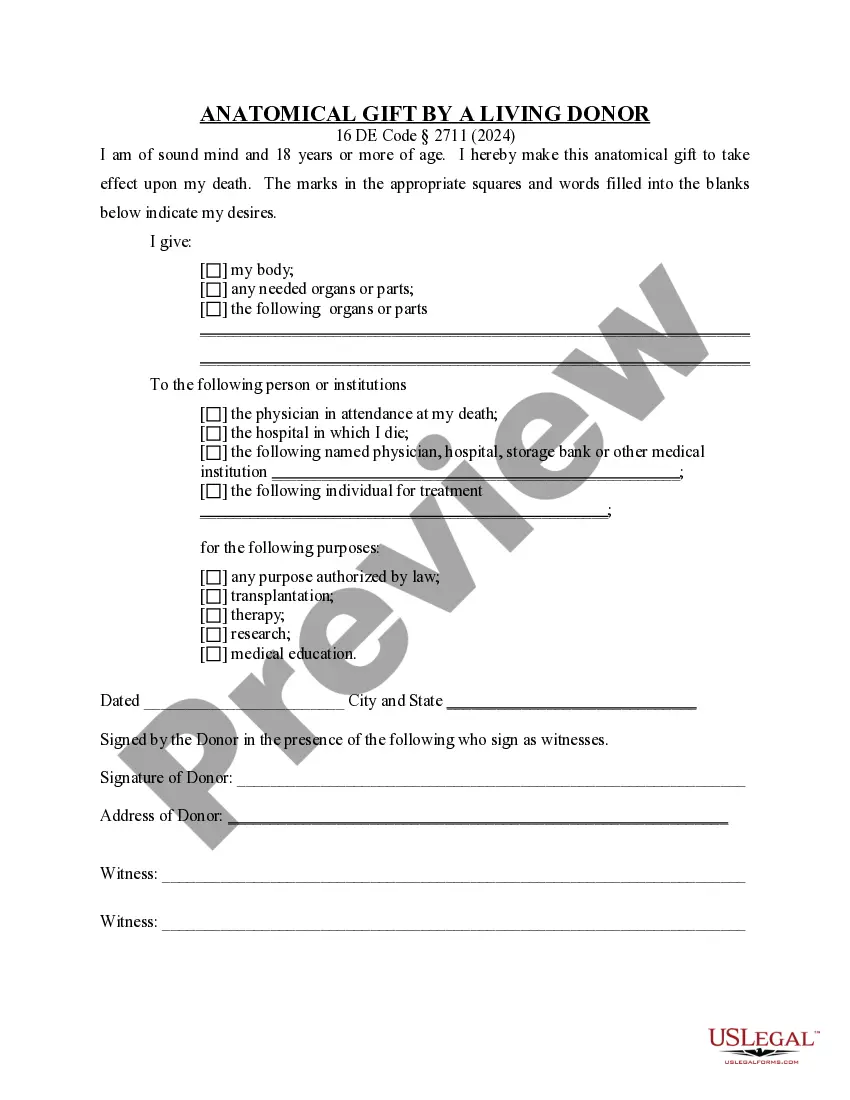
The Statutory Uniform Anatomical Gift Act Donation form allows individuals to specify their wishes regarding organ and tissue donation upon their death. This form is crucial for ensuring that your intentions are honored and provides a legal framework for making anatomical gifts. Unlike standard wills or medical directives, this form specifically addresses organ donation, making it an essential tool for those who wish to contribute to life-saving medical procedures after passing.
Form components explained
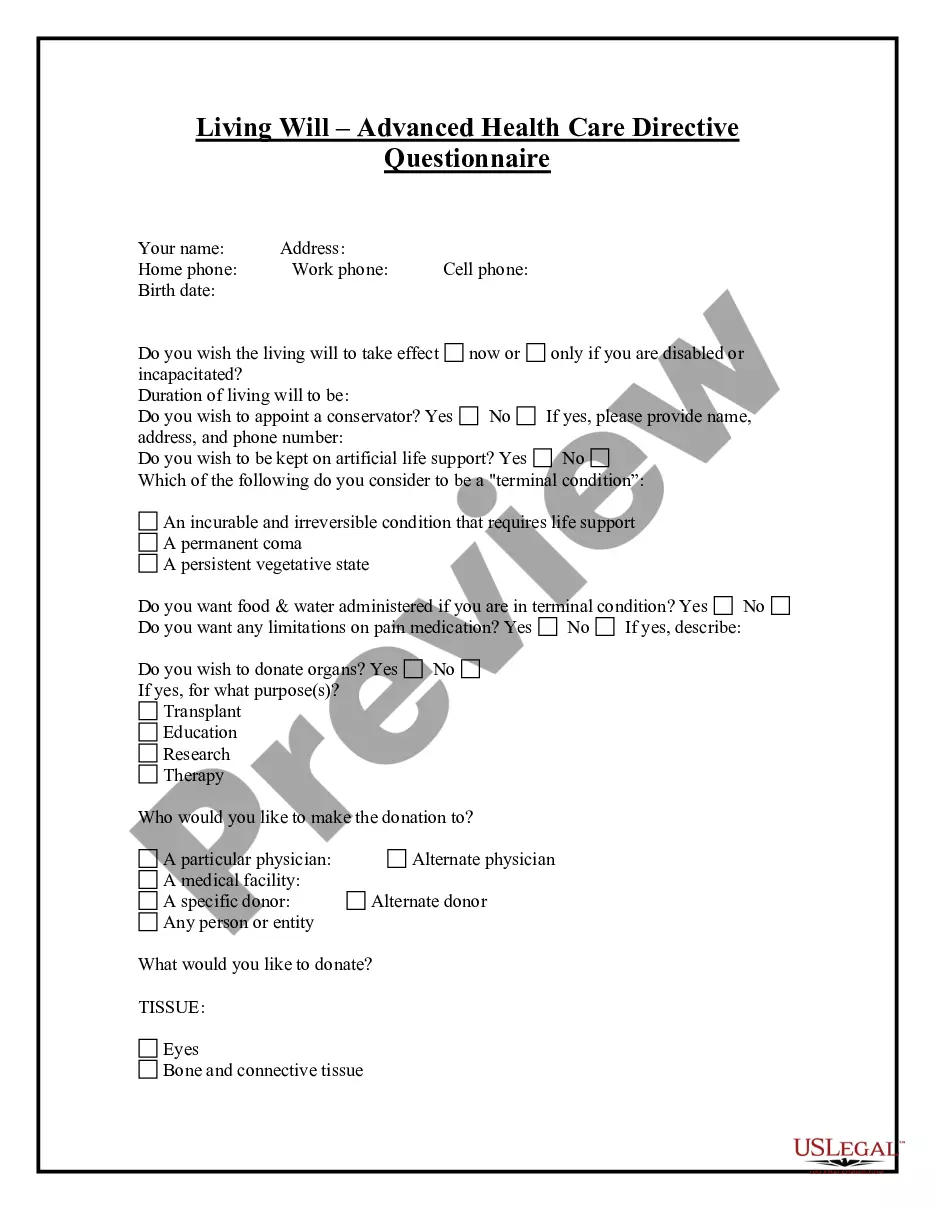
- Identification of the donor and their capacity to make an anatomical gift.
- Selection of specific body parts or organs for donation.
- Designation of the recipient(s) for the anatomical gifts.
- Specification of the intended purposes for the donation, such as transplantation, research, or education.
- Witness signatures, attesting to the donor's intention and consent.
- Notarization section, confirming the authenticity of the signatures.
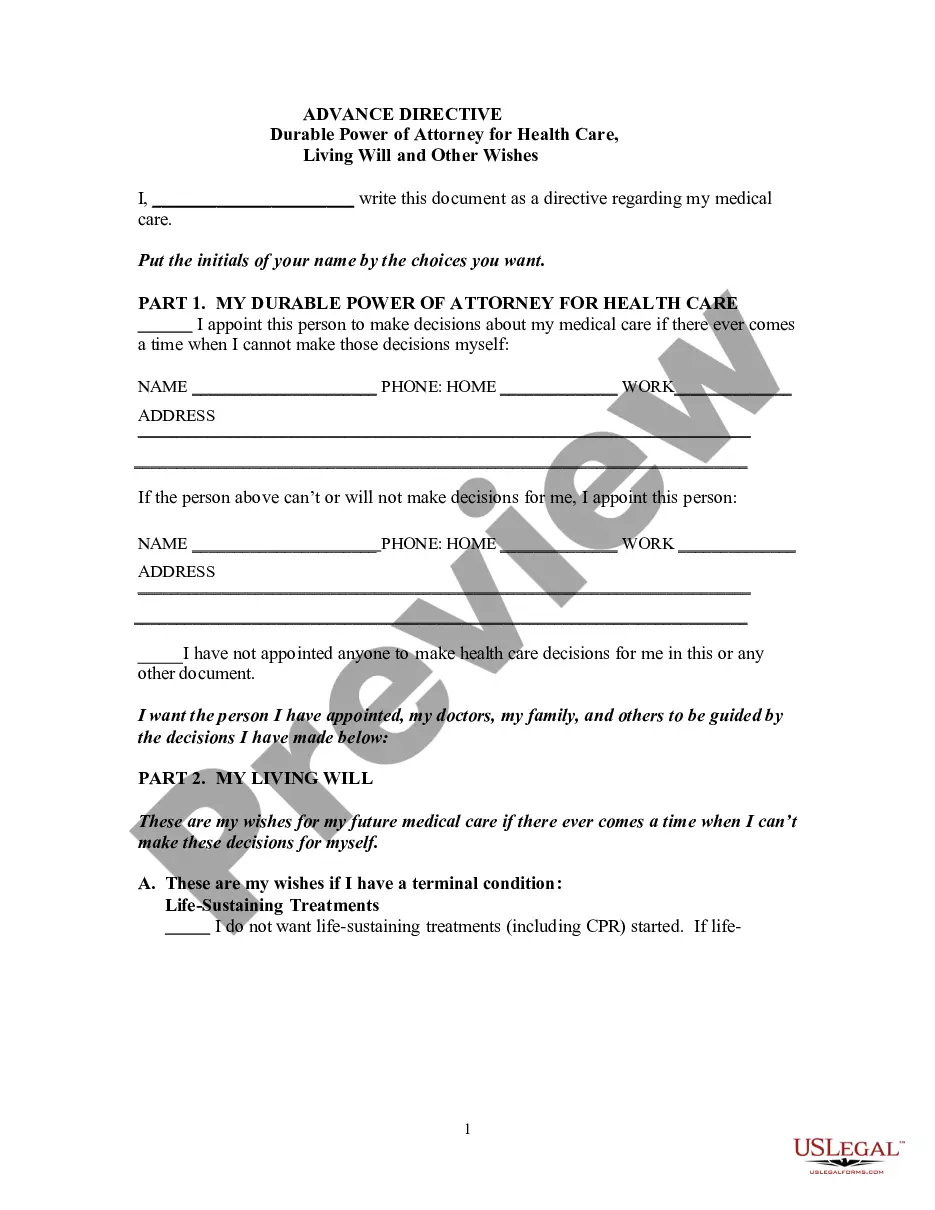
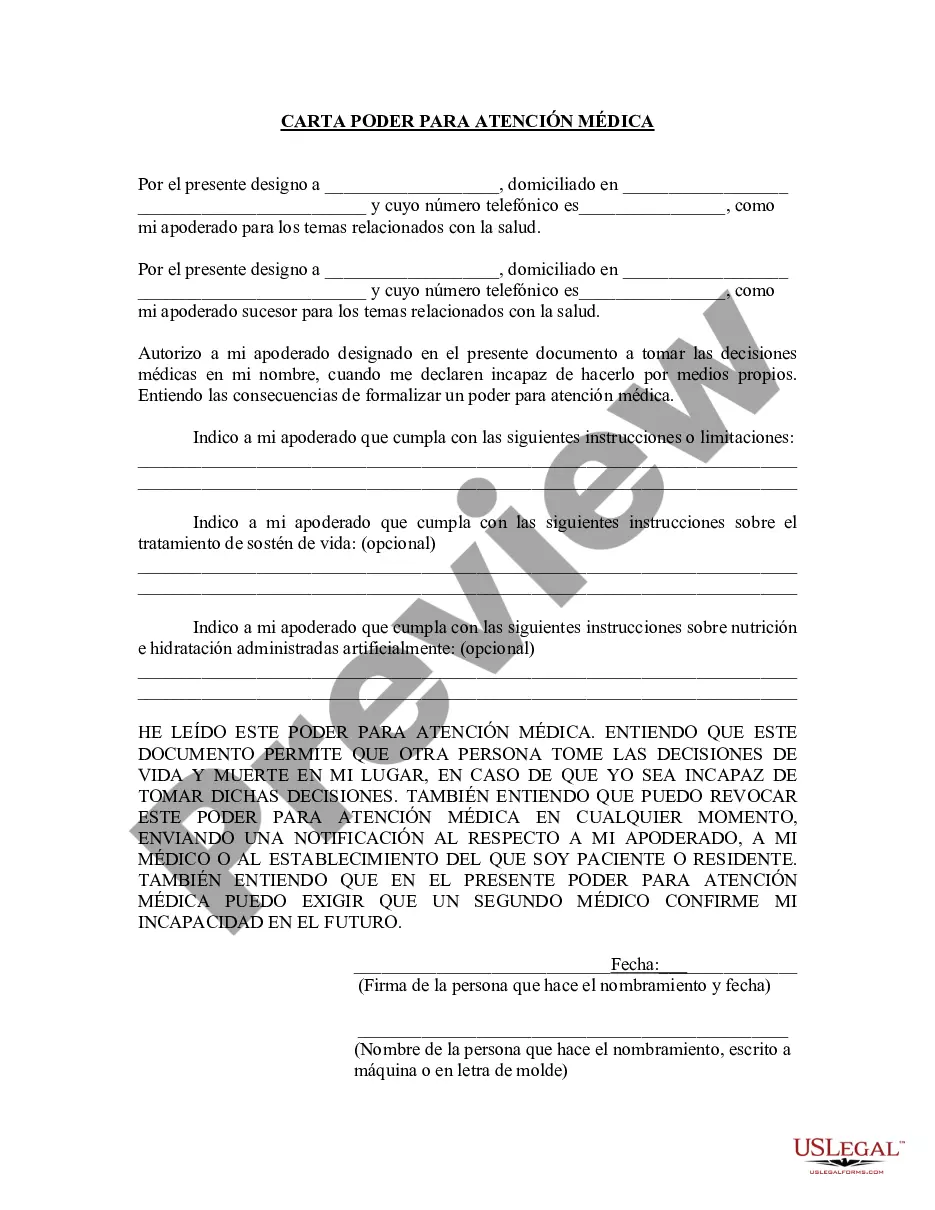
When to use this form
This form should be used when you have decided to donate specific organs or tissues after your death. It's particularly important if you are looking to clarify your wishes by designating organs, specifying recipients, and indicating purposes for donation. Completing this form can help ensure that your preferences are respected by medical professionals and your family during a difficult time.
Who should use this form
- Individuals aged 18 or older who wish to make an anatomical gift.
- Persons wanting to ensure their organ donation wishes are formally documented.
- Those looking to relieve their family from the burden of making donation decisions during a crisis.
How to prepare this document
- Identify yourself as the donor, including your full name and address.
- Clearly indicate which organs or body parts you wish to donate.
- Specify the person or institution that will receive your donation.
- Check the appropriate boxes for the intended purposes of the donation.
- Sign the form in the presence of two witnesses who will also sign the document.
- Have the document notarized for legal validation.
Does this form need to be notarized?
Yes, this form must be notarized to be legally valid. Having the document notarized ensures that your anatomical gift declaration is verified and recognized by legal entities, maintaining the integrity of your wishes. US Legal Forms provides integrated online notarization available 24/7 via secure video call, allowing you to complete this process conveniently and safely.
Get your form ready online
Our built-in tools help you complete, sign, share, and store your documents in one place.
Make edits, fill in missing information, and update formatting in US Legal Forms—just like you would in MS Word.
Download a copy, print it, send it by email, or mail it via USPS—whatever works best for your next step.
Sign and collect signatures with our SignNow integration. Send to multiple recipients, set reminders, and more. Go Premium to unlock E-Sign.
If this form requires notarization, complete it online through a secure video call—no need to meet a notary in person or wait for an appointment.
We protect your documents and personal data by following strict security and privacy standards.

Make edits, fill in missing information, and update formatting in US Legal Forms—just like you would in MS Word.

Download a copy, print it, send it by email, or mail it via USPS—whatever works best for your next step.

Sign and collect signatures with our SignNow integration. Send to multiple recipients, set reminders, and more. Go Premium to unlock E-Sign.

If this form requires notarization, complete it online through a secure video call—no need to meet a notary in person or wait for an appointment.

We protect your documents and personal data by following strict security and privacy standards.
Mistakes to watch out for
- Not signing the form or missing witness signatures.
- Failing to provide complete and clear information about desired donations.
- Not notarizing the form when required.
- Neglecting to discuss your wishes with family members or intended recipients.
Advantages of online completion
- Immediate access to a legally drafted document that meets state requirements.
- Convenient downloading and printing, eliminating the need for physical visits to legal offices.
- Ability to customize the form according to individual preferences and intentions.
Looking for another form?


Form popularity
FAQ
The Uniform Anatomical Gift Act is a law that allows individuals to donate their organs and tissues after death. It provides a consistent legal framework across states, including Delaware, to facilitate donations. Through this act, people can express their wishes about organ donation clearly, ensuring that their intentions are honored. For in-depth understanding, consider exploring resources available on platforms like US Legal Forms that clarify the Delaware Statutory Uniform Anatomical Gift Act Donation By An Individual.
The Uniform Anatomical Gift Act is applicable for the donation of organs, tissues, and various body parts after death. It provides a structured approach to organ donation and clarifies legal rights and responsibilities for donors and medical institutions. By adopting the practices outlined in the Delaware Statutory Uniform Anatomical Gift Act Donation By An Individual, you can ensure your altruistic intentions contribute to helping others in need.
The primary legal document that applies to anatomical gifts is the donor's consent form, which may be a donor card, driver's license designation, or formal written document. This document is crucial because it outlines the individual's wishes regarding organ donation. According to the Delaware Statutory Uniform Anatomical Gift Act Donation By An Individual, having a legally binding document increases the likelihood that those wishes will be honored.
Under the Uniform Anatomical Gifts Act, postmortem donations are managed according to the donor's expressed wishes. Healthcare providers must follow specific protocols to ensure the donor's intentions are honored. The Delaware Statutory Uniform Anatomical Gift Act Donation By An Individual facilitates these processes, ensuring that anatomical gifts are treated with respect and compliance.
'I hereby make an anatomical gift' is a formal declaration made by an individual indicating their intention to donate organs or tissues postmortem. This statement usually appears on donor cards or legal documents related to organ donation. A clear statement of intent is vital under the Delaware Statutory Uniform Anatomical Gift Act Donation By An Individual, as it ensures that healthcare providers act based on the donor's wishes.
DBD refers to Donation After Brain Death, where organs can be procured after the donor has been declared brain dead. On the other hand, DCD stands for Donation After Cardiac Death, which occurs when a patient has a declared death following the cessation of heart function. Understanding these distinctions is essential in the context of the Delaware Statutory Uniform Anatomical Gift Act Donation By An Individual, as it determines the suitability and timing for organ recovery.
The most crucial clause of the Uniform Anatomical Gift Act allows individuals to specify their consent to donate organs and tissues. This includes designating specific organs for donation or making a general donation of all anatomical parts. By doing so, the Delaware Statutory Uniform Anatomical Gift Act Donation By An Individual ensures that the donor's wishes are honored and that the donation process is streamlined.
The Uniform Anatomical Gift Act 1987 establishes guidelines for individuals wishing to donate their organs and tissues after death. This legislation empowers people to make decisions regarding their anatomical gifts and clarifies the legal framework for organ donation. Under the Delaware Statutory Uniform Anatomical Gift Act Donation By An Individual, donors can express their intentions clearly, ensuring their wishes are respected.
An anatomical gift is a donation made by an individual regarding their body or body parts for medical purposes after death. To indicate your wish to donate, you can fill out a donor card, register with a local or national donor registry, or include your desires in a legal document like a will. This can be facilitated through resources like uslegalforms, ensuring you have the right tools to declare your intentions clearly under the Delaware Statutory Uniform Anatomical Gift Act Donation By An Individual.
Postmortem donation of organs is managed according to specific procedures outlined in the Uniform Anatomical Gift Act. It stipulates that once a person passes away, authorized representatives can carry out the donation if prior consent has been established, such as through the Delaware Statutory Uniform Anatomical Gift Act Donation By An Individual. Understanding these processes is essential to ensure that your decision to donate is honored and carried out efficiently.