Delaware Subordination Agreement
Understanding this form
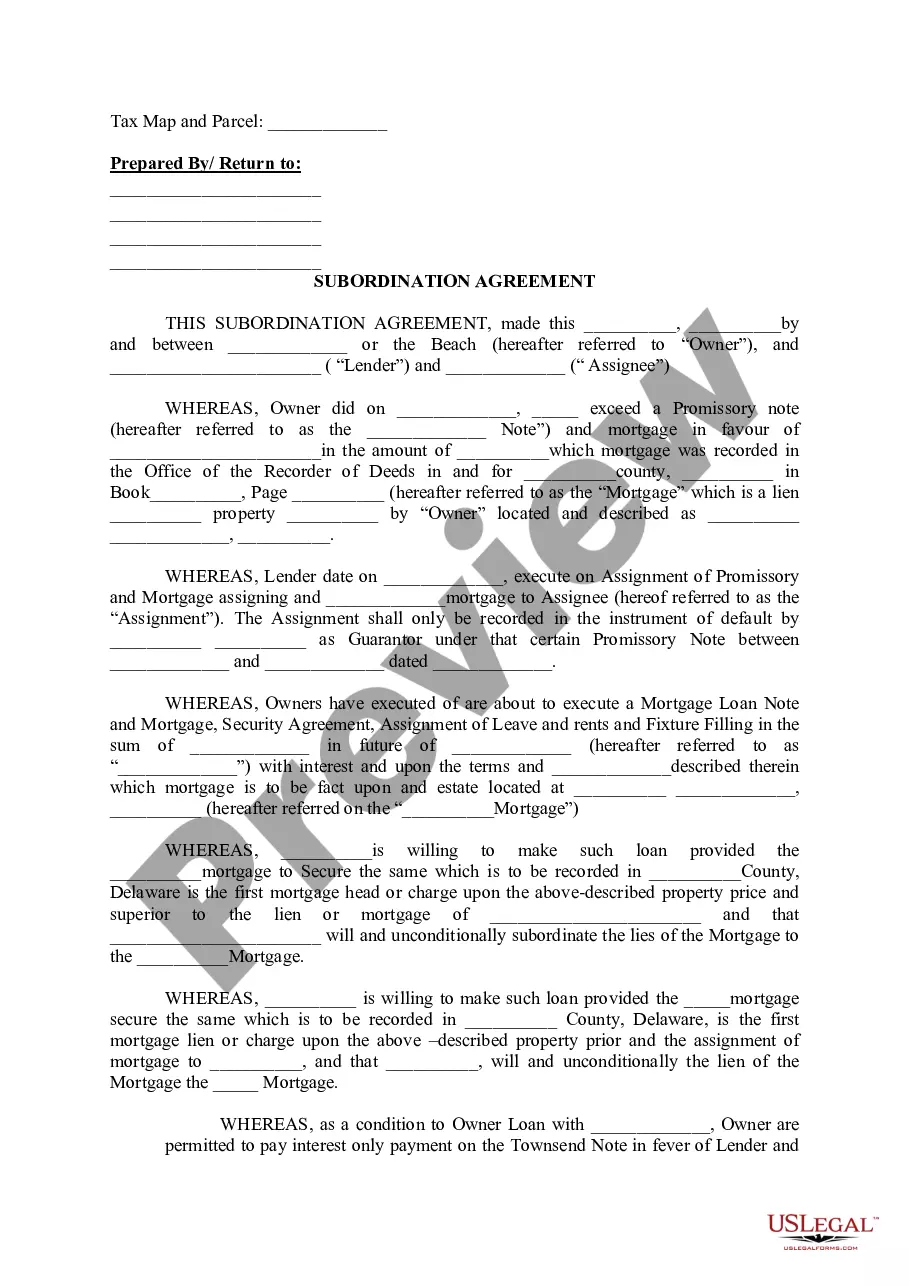
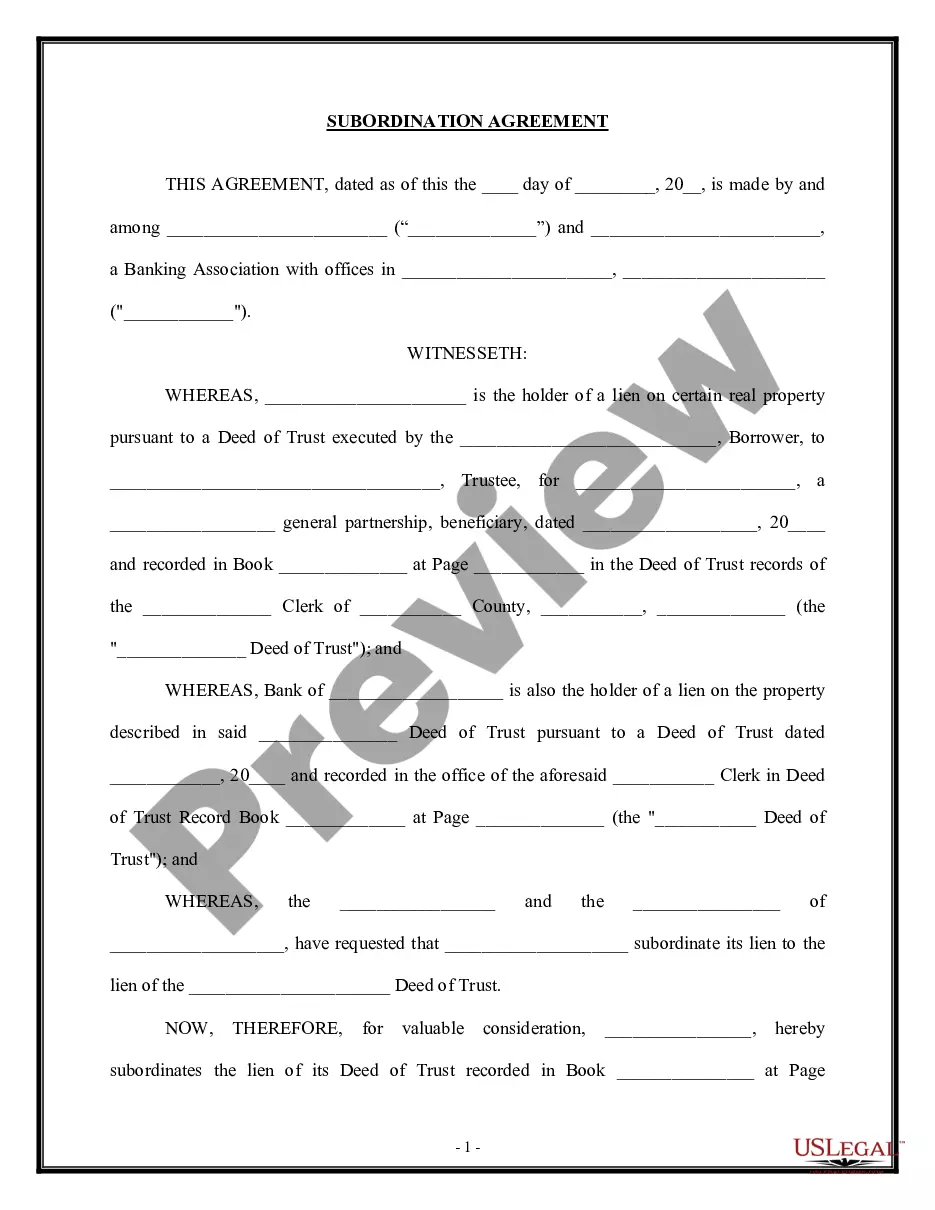
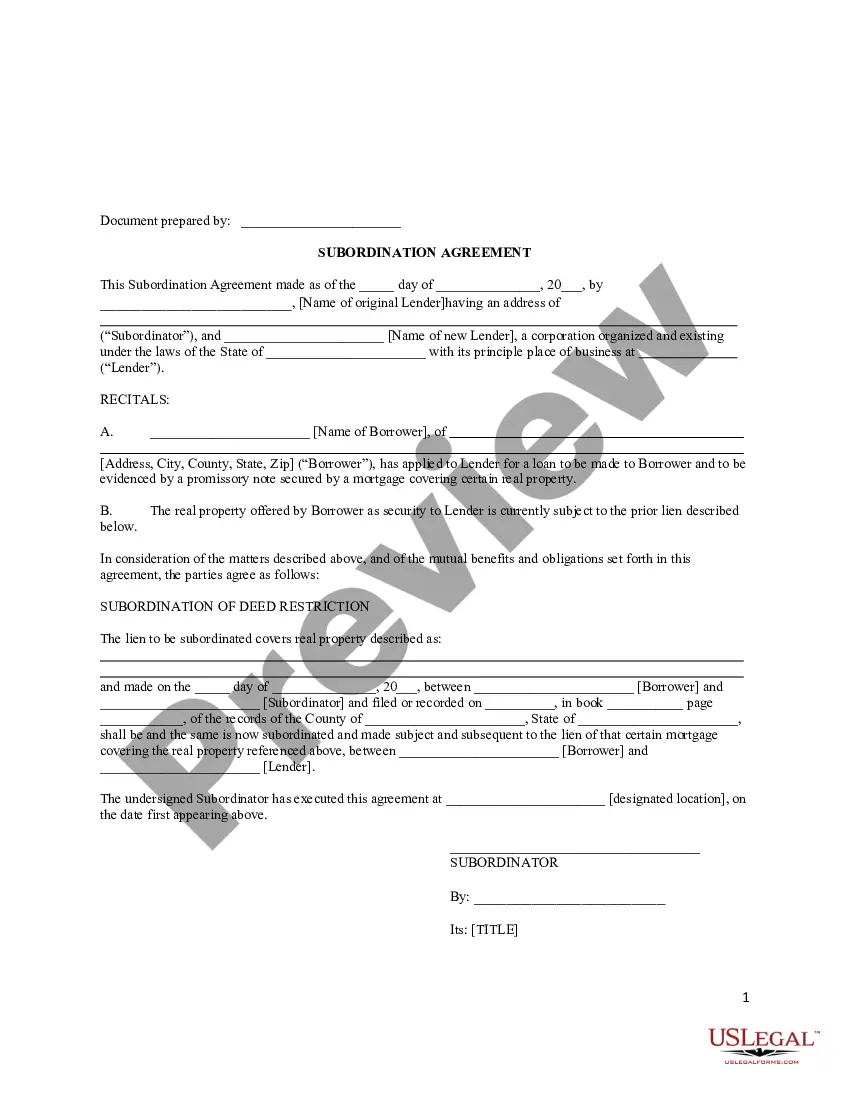
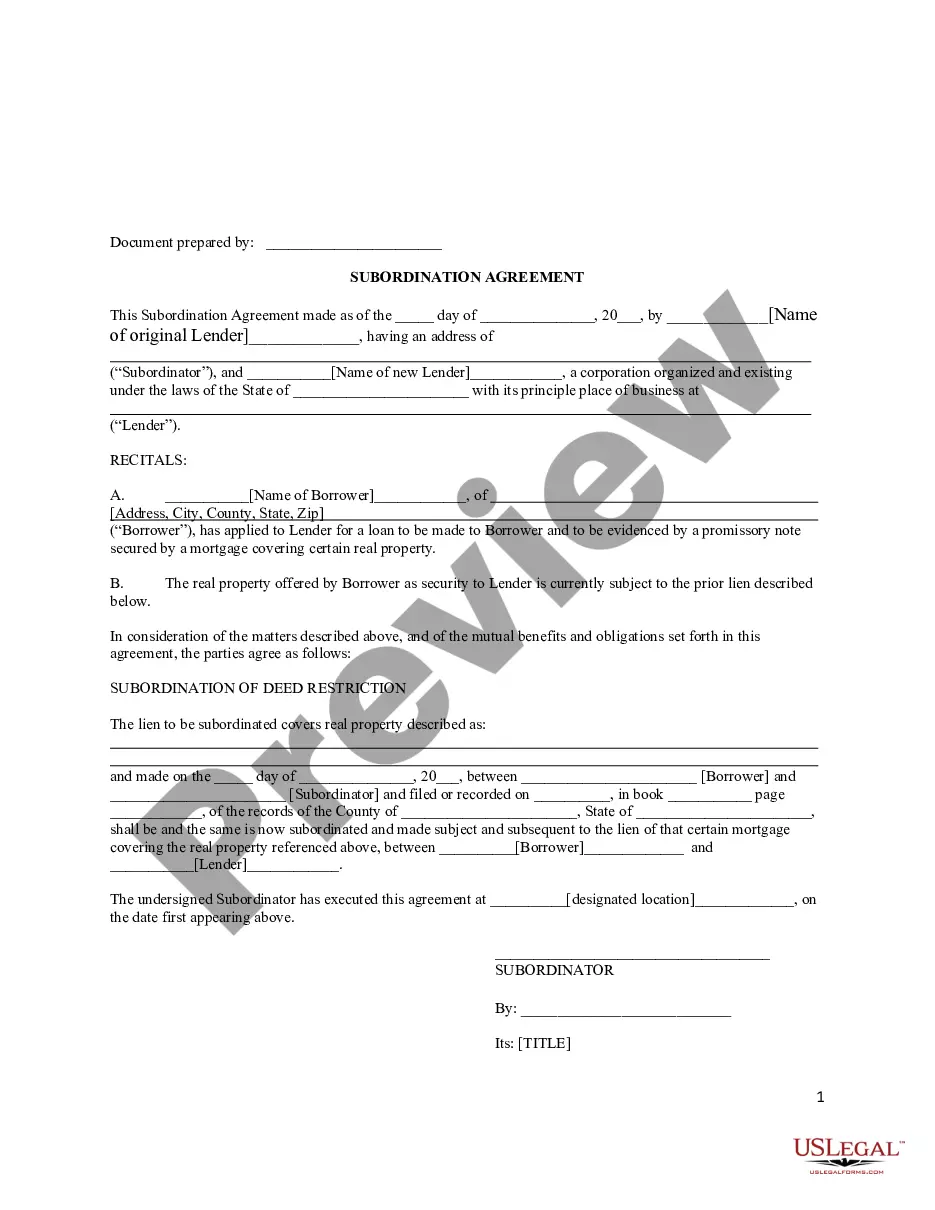
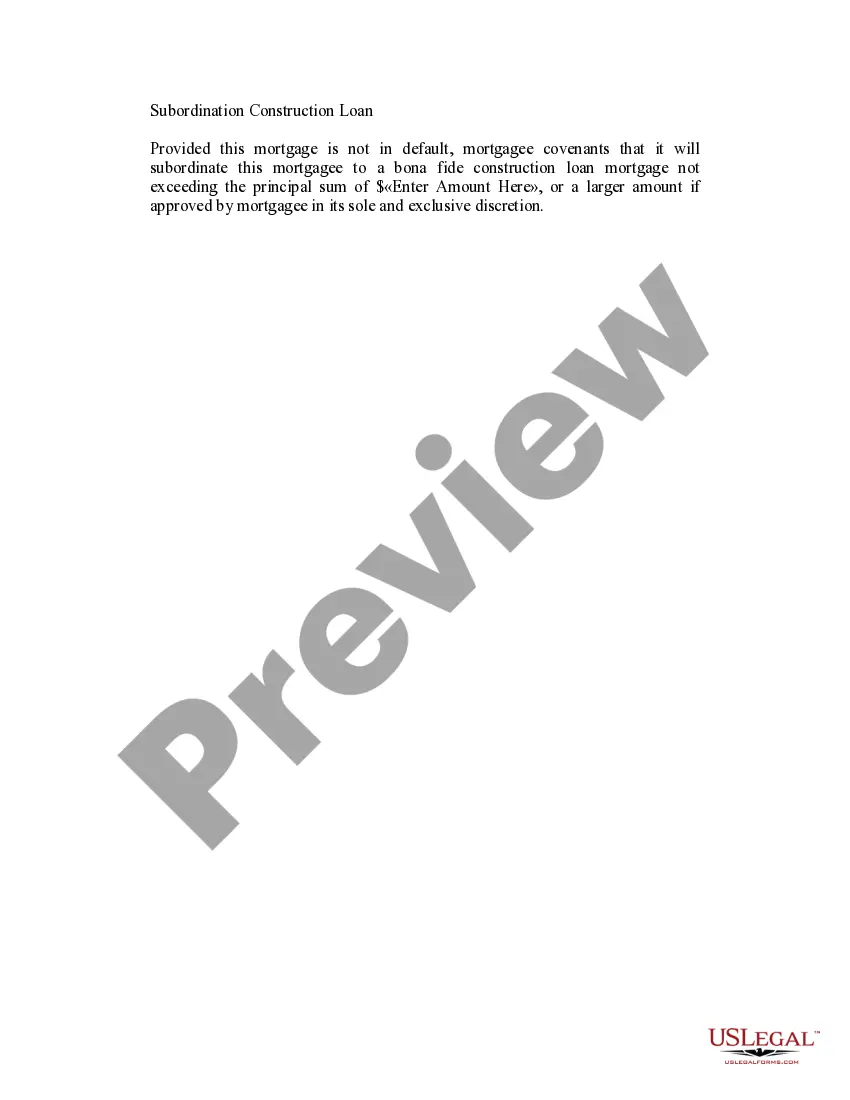
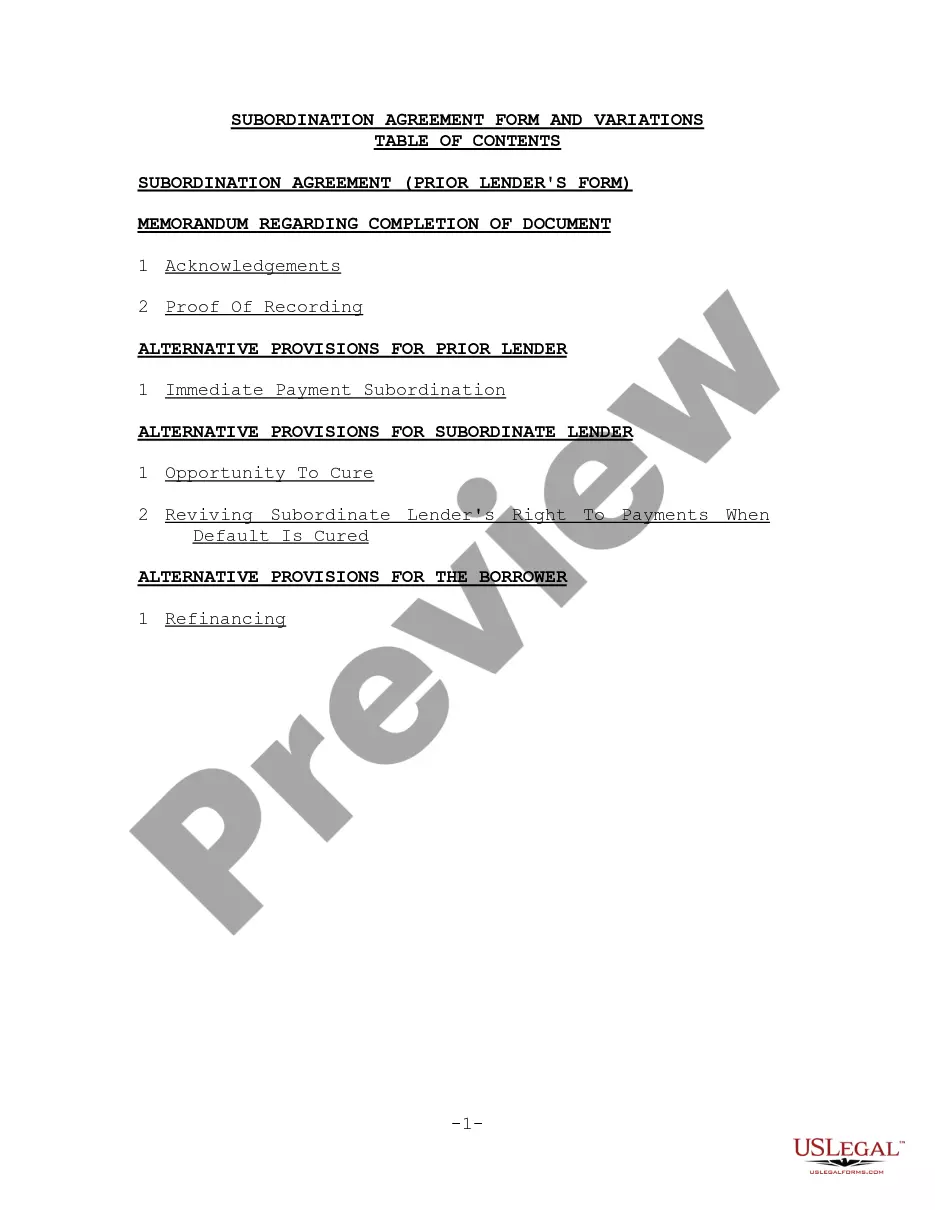
A subordination agreement is a legal contract where a junior creditor agrees that their claims against a debtor will not be settled until all senior debts of the debtor are addressed. This form is essential for prioritizing the order of payments among creditors, ensuring that senior lenders are paid first. This agreement helps clarify the hierarchy of debts and is crucial in situations involving multiple loans or mortgages on a single property.
Key components of this form
- Identification of the parties: Includes details about the Owner, Lender, and Assignee.
- Recitals: Provides context and background information relating to the existing mortgage and notes.
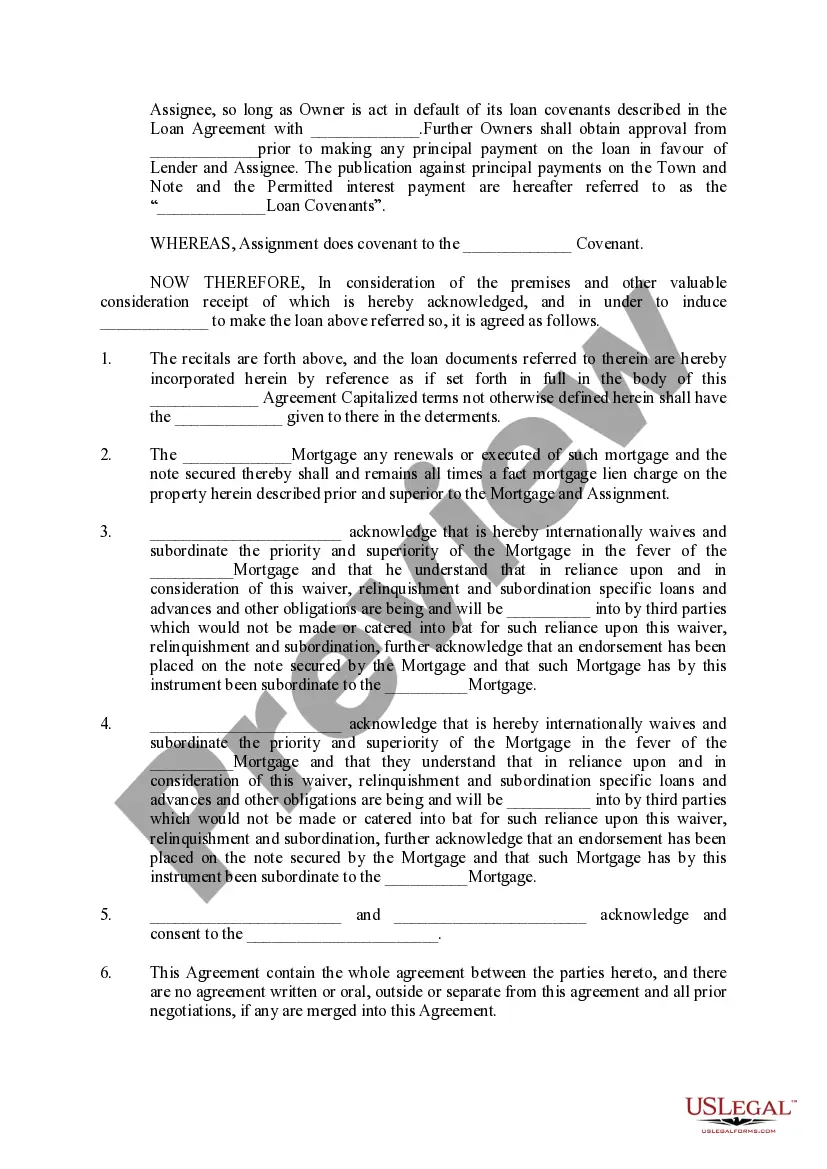
- Subordination clauses: Clearly states the agreement to subordinate the junior lien to the senior loan.
- Approval conditions: Specifies any conditions that must be met before payments can be made towards the junior loan.
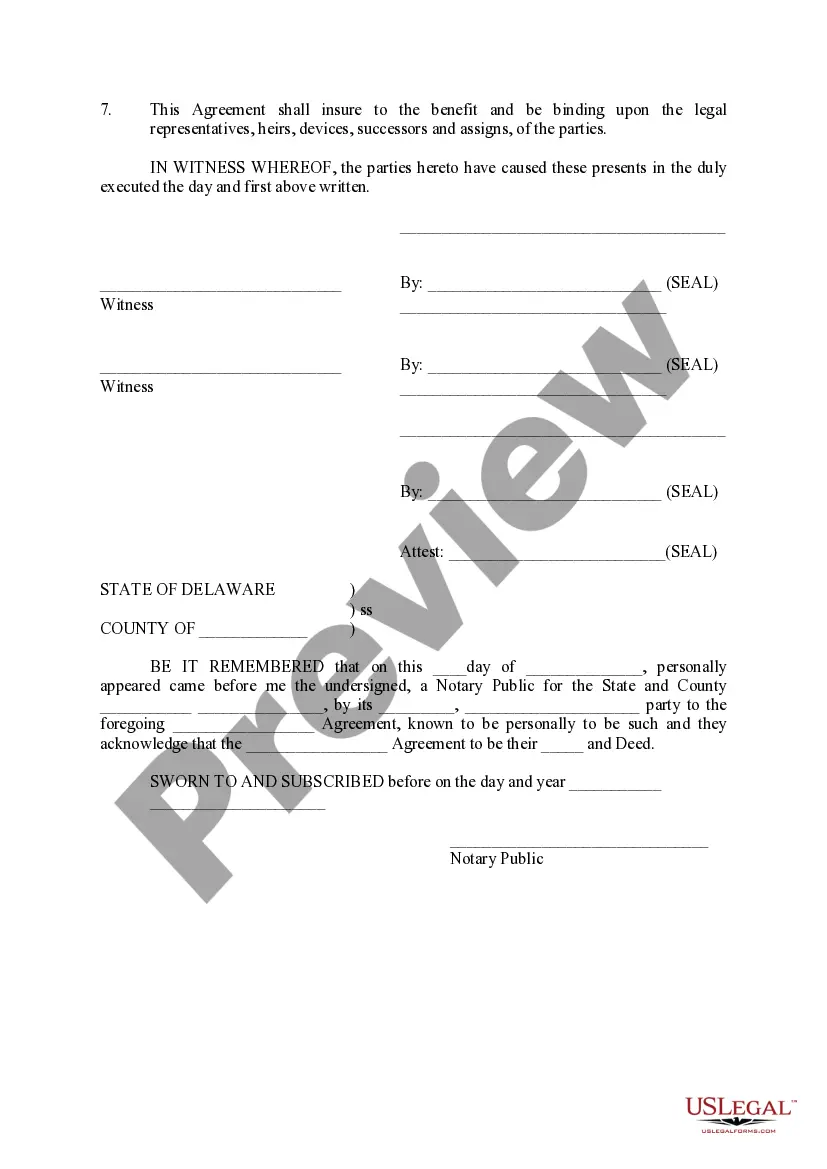
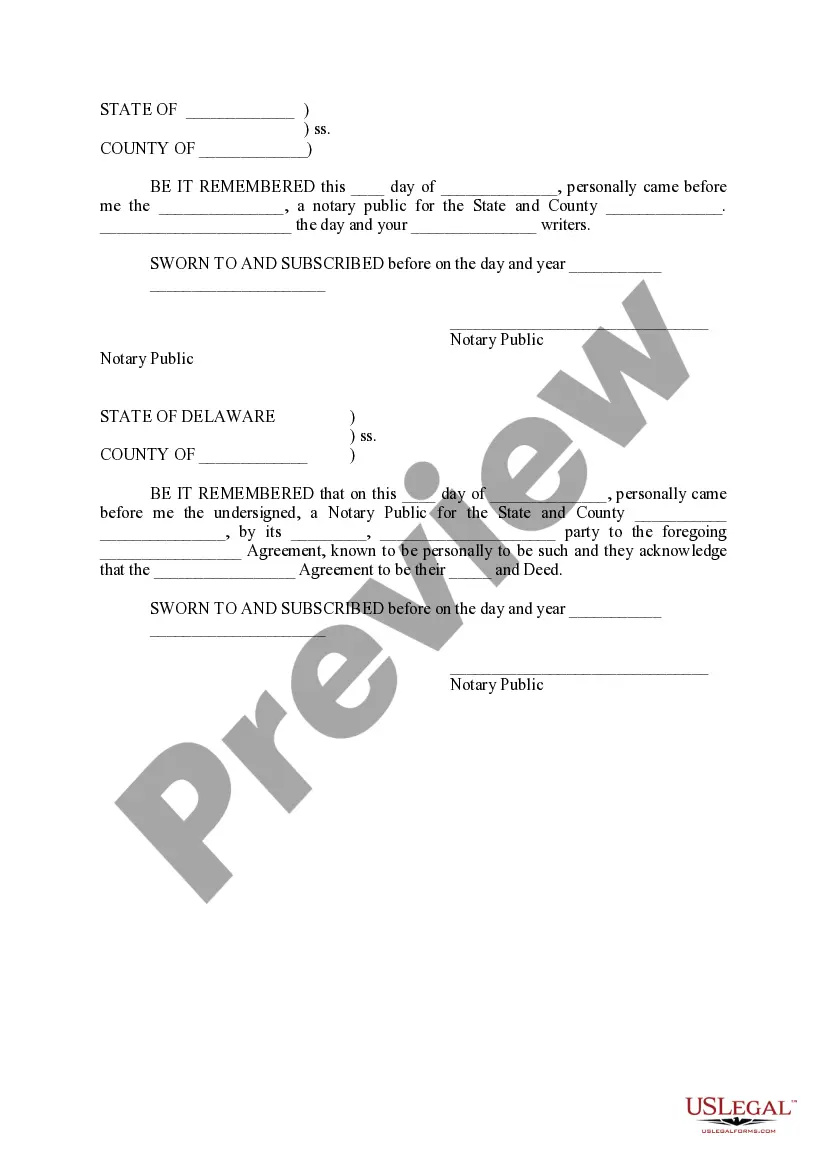
- Execution details: Requires signatures from all parties and notarization to validate the agreement.
When to use this form
This form is typically used when a property owner seeks additional financing but has existing junior loans or mortgages. It is necessary when the new lender wants to ensure their loan is prioritized over previous loans, thus providing them with security that they will be repaid first in the event of a default. This agreement is vital when refinancing loans, acquiring new investment properties, or clarifying debt obligations among creditors.
Who this form is for
- Property owners seeking additional funding for real estate investments.
- Creditors who wish to establish the priority of their claims over existing loans.
- Lenders looking for assurance that their loans have top priority in case of default.
- Assignees acquiring interest in a mortgage and needing to establish their lien position.
Completing this form step by step
- Identify all parties involved, including the Owner, Lender, and Assignee.
- Clearly specify the property involved, including tax map and parcel information.
- Detail the terms of the existing and new loans, including amounts and recording dates.
- Ensure all parties sign the agreement in the presence of a Notary Public.
- Keep a record of the completed form and the notarization for future reference.
Does this form need to be notarized?
Yes, this form must be notarized to be legally valid. A Notary Public needs to witness the signatures of all parties to ensure the authenticity and enforceability of the subordination agreement. US Legal Forms provides integrated online notarization services for your convenience.
Get your form ready online
Our built-in tools help you complete, sign, share, and store your documents in one place.
Make edits, fill in missing information, and update formatting in US Legal Forms—just like you would in MS Word.
Download a copy, print it, send it by email, or mail it via USPS—whatever works best for your next step.
Sign and collect signatures with our SignNow integration. Send to multiple recipients, set reminders, and more. Go Premium to unlock E-Sign.
If this form requires notarization, complete it online through a secure video call—no need to meet a notary in person or wait for an appointment.
We protect your documents and personal data by following strict security and privacy standards.

Make edits, fill in missing information, and update formatting in US Legal Forms—just like you would in MS Word.

Download a copy, print it, send it by email, or mail it via USPS—whatever works best for your next step.

Sign and collect signatures with our SignNow integration. Send to multiple recipients, set reminders, and more. Go Premium to unlock E-Sign.

If this form requires notarization, complete it online through a secure video call—no need to meet a notary in person or wait for an appointment.

We protect your documents and personal data by following strict security and privacy standards.
Mistakes to watch out for
- Not fully identifying all parties involved, which could lead to disputes.
- Failing to attach relevant loan documents referenced in the agreement.
- Missing signatures or not having the document notarized when required.
- Overlooking specific state laws that could affect the enforceability of the agreement.
Benefits of completing this form online
- Convenience: Downloadable and easy to complete at your own pace.
- Editability: Ability to fill in your specific information easily on the form.
- Accessibility: Available anytime without needing to arrange a meeting with a lawyer.
- Reliability: Templates drafted by licensed attorneys to ensure legal compliance.
Looking for another form?









Form popularity
FAQ
To create a subordination agreement, specific elements must be present. First, it must be in writing and signed by all involved parties, including the property owner, lender, and tenants. Clear identification of the lease and mortgage details is essential to avoid future disputes. Understanding the nuances of a Delaware Subordination Agreement can help ensure all parties comply with legal requirements.
A lease subordination agreement is a legal document that establishes the relationship between a lease and a mortgage. This agreement allows a lender to have a priority claim to the property used as collateral. Essentially, if the property owner defaults on their mortgage, the lender can take control of the property, even if a lease is in place. This can affect tenants, so understanding the implications of a Delaware Subordination Agreement is crucial.
Typically, the parties involved in a Delaware Subordination Agreement are the borrower and the lenders. Each lender must sign to acknowledge their understanding of their position in the repayment hierarchy. Having all parties sign ensures that everyone is aware of the terms and agrees to the structure set forth in the agreement.
A Delaware Subordination Agreement is a legal document that establishes the order of priority among creditors regarding the debtor's assets. It clarifies which obligations must be met first in case of liquidation, providing security to primary lenders. This agreement fosters trust and collaboration between lenders while facilitating easier access to additional funding for borrowers.
In legal terms, a subordination sentence might state: 'The borrower agrees that the Delaware Subordination Agreement will prioritize the second lender's claim over the first lender.' This sentence illustrates the essence of subordination in financial agreements, highlighting which claims take precedence in case of default.
To obtain a Delaware Subordination Agreement, you should first consult your lender or mortgage company. They can provide the necessary documentation and guide you through the process. Additionally, platforms like uslegalforms offer simple templates and legal resources to help you draft your agreement efficiently.
While it's not always required, notarizing a written agreement, including a Delaware Subordination Agreement, can provide added legal validity. Notarization helps ensure that all parties involved fully understand and agree to the terms outlined in the agreement. It’s a practice that can protect against future disputes.
The primary purpose of a subordination agreement is to change the order of lien priority among loans. By signing a Delaware Subordination Agreement, borrowers can secure better financing options or make necessary adjustments in their financial structure. This agreement enables smoother management of mortgages and other debts.
Someone might seek a subordinate mortgage to take advantage of lower interest rates or to access additional funds for home improvements. With a Delaware Subordination Agreement, the homeowner can use their equity while ensuring the second mortgage remains in a subordinate position. This strategy can enhance financial flexibility.
A subordination request form is a document that a borrower submits to a lender to formally ask for a change in the priority of their mortgage. This form typically accompanies a Delaware Subordination Agreement, outlining the request details and context. This process helps borrowers manage their financial obligations effectively.