Delaware Landlord Tenant Closing Statement to Reconcile Security Deposit
Understanding this form
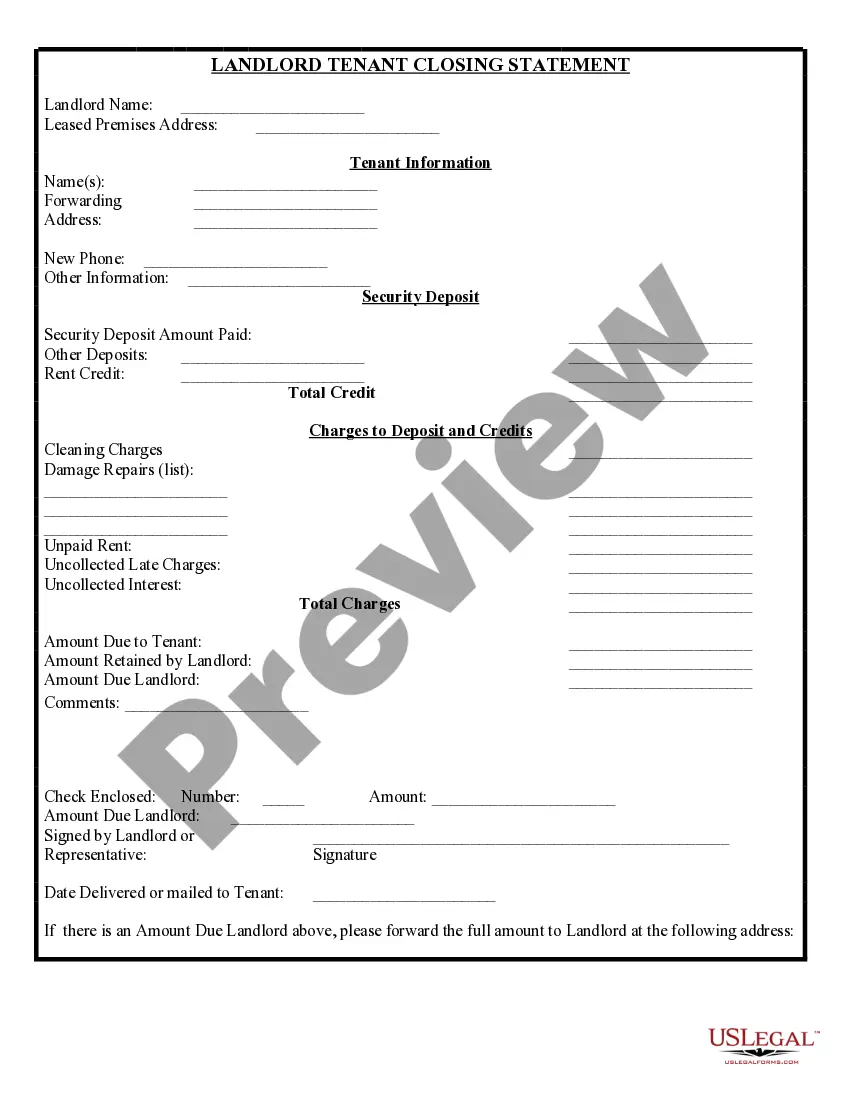
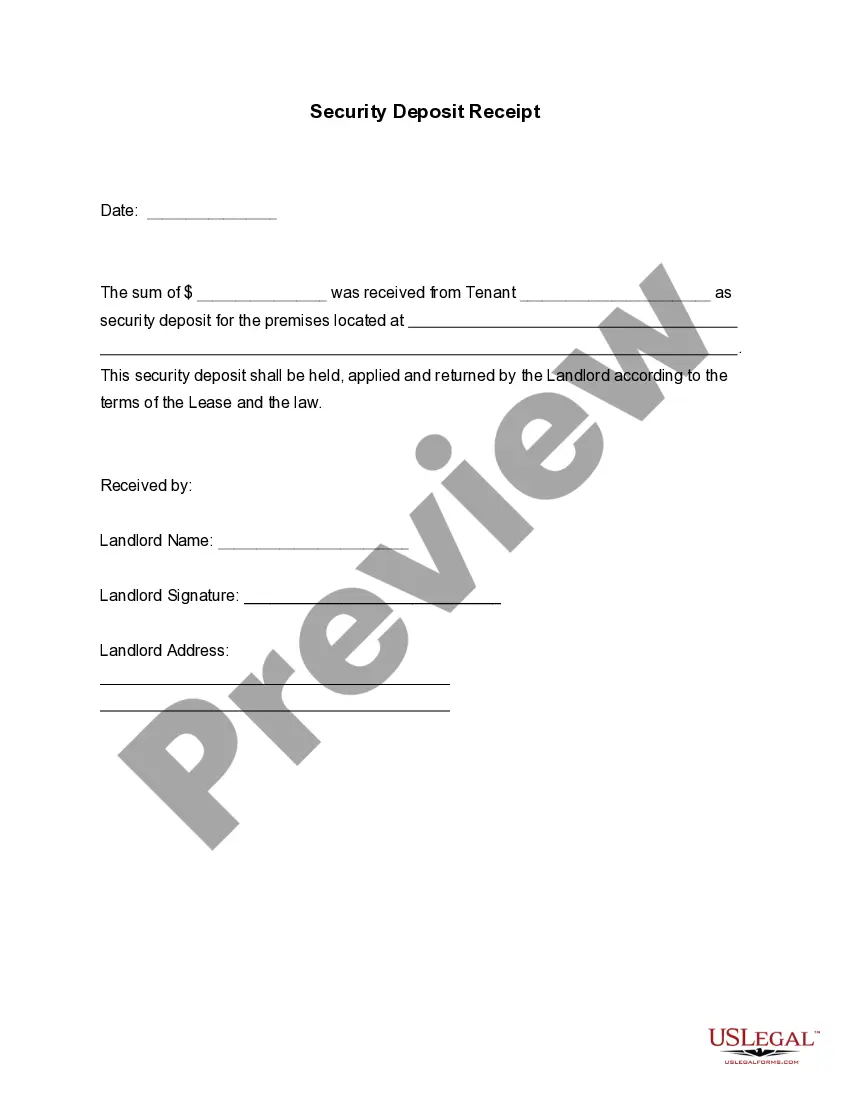
The Landlord Tenant Closing Statement to Reconcile Security Deposit is a document used by landlords to itemize deposits and credits related to a tenant's security deposit. This form ensures transparency between landlords and tenants by clearly outlining the amounts held by the landlord as well as any deductions made for damages beyond normal wear and tear. Unlike a rental agreement, this form specifically focuses on the reconciliation of the security deposit at the end of a tenancy.
Key components of this form
- Identification of parties: Names and contact information of the landlord and tenant.
- Property details: Description of the rental property involved.
- Security deposit amounts: The total security deposit collected and amounts deducted.
- Itemized deductions: A list of reasons for any deductions from the security deposit.
- Final refund calculation: Total amount refunded to the tenant after deductions.
When this form is needed
This form is used at the conclusion of a tenancy to reconcile the security deposit between the landlord and tenant. It should be completed when the tenant moves out to document the condition of the property and any deductions for damages or unpaid rent. This form helps prevent disputes regarding the return of the security deposit.
Who this form is for
- Landlords who are reconciling security deposits with departing tenants.
- Tenants who want to ensure proper documentation of their security deposit deductions.
- Property management companies managing rental properties on behalf of landlords.
How to complete this form
- Identify the parties: Fill in the names and addresses of both the landlord and tenant.
- Specify the property: Provide the address and details of the rental property.
- Document the security deposit: Enter the total amount of the security deposit collected from the tenant.
- Include deductions: List any deductions for damages or other reasons, with corresponding amounts.
- Calculate the final refund: Determine and document the total amount to be refunded to the tenant.
- Sign and date: Have both parties sign and date the form to acknowledge agreement to the closing statement.
Is notarization required?
This form usually doesn’t need to be notarized. However, local laws or specific transactions may require it. Our online notarization service, powered by Notarize, lets you complete it remotely through a secure video session, available 24/7.
Get your form ready online
Our built-in tools help you complete, sign, share, and store your documents in one place.
Make edits, fill in missing information, and update formatting in US Legal Forms—just like you would in MS Word.
Download a copy, print it, send it by email, or mail it via USPS—whatever works best for your next step.
Sign and collect signatures with our SignNow integration. Send to multiple recipients, set reminders, and more. Go Premium to unlock E-Sign.
If this form requires notarization, complete it online through a secure video call—no need to meet a notary in person or wait for an appointment.
We protect your documents and personal data by following strict security and privacy standards.

Make edits, fill in missing information, and update formatting in US Legal Forms—just like you would in MS Word.

Download a copy, print it, send it by email, or mail it via USPS—whatever works best for your next step.

Sign and collect signatures with our SignNow integration. Send to multiple recipients, set reminders, and more. Go Premium to unlock E-Sign.

If this form requires notarization, complete it online through a secure video call—no need to meet a notary in person or wait for an appointment.

We protect your documents and personal data by following strict security and privacy standards.
Mistakes to watch out for
- Failing to document all deductions accurately, which may lead to disputes.
- Not providing a clear breakdown of the final amount refunded.
- Forgetting to sign the form, leaving it invalid.
- Using vague descriptions for damages, which can cause misunderstandings.
Benefits of using this form online
- Convenience: Complete and download the form easily from home at any time.
- Editability: Customize the form to fit specific needs and situations.
- Reliability: Assurance that the form is drafted by licensed attorneys and complies with legal standards.
Legal use & context
- The form provides a legally recognized record of financial exchanges related to the security deposit.
- It helps prevent disputes by clearly outlining deductions and the final balance owed.
- The closing statement may serve as evidence in case of future legal issues regarding the security deposit.
Summary of main points
- The form helps landlords and tenants reconcile security deposits at the end of a lease.
- It is essential for documenting any deductions made from the security deposit.
- Both parties should ensure the form is filled out completely and accurately to avoid disputes.
Looking for another form?
Form popularity
FAQ
In Delaware, landlords have 20 days to return a security deposit after the tenant moves out. This timeframe allows landlords to prepare a Delaware Landlord Tenant Closing Statement to Reconcile Security Deposit, ensuring that all deductions are clearly explained. Adhering to this timeline is crucial for landlords to maintain compliance with the law while helping tenants understand their rights. For a streamlined experience, consider using the US Legal Forms platform to generate documents related to security deposit returns.
Section 5314 of the Delaware Residential Landlord Tenant Code outlines the requirements for returning security deposits to tenants. This section specifies that landlords must provide a detailed Delaware Landlord Tenant Closing Statement to Reconcile Security Deposit, which includes itemized deductions, if any. Understanding this section helps both landlords and tenants know their rights and obligations regarding security deposits, ensuring transparency in the rental process.
Section 5513 of the Delaware landlord-tenant code addresses the specific regulations surrounding security deposits, including how much can be charged and the timeline for returning these funds. This section emphasizes transparency and fair treatment for tenants, ensuring their rights are respected. For landlords, adhering to these regulations when preparing a Delaware Landlord Tenant Closing Statement to Reconcile Security Deposit is crucial to avoid legal complications.
To reconcile a security deposit effectively, gather your invoices, repair estimates, and any notices shared with the tenant regarding potential deductions. Create a detailed account of all expenses and summarize these in a Delaware Landlord Tenant Closing Statement to Reconcile Security Deposit. This practice not only aids in clarity but also fosters transparency between both parties.
Reconciling a security deposit involves reviewing the deposit records against costs incurred or damages during the tenancy. You should document everything thoroughly and prepare a Delaware Landlord Tenant Closing Statement to Reconcile Security Deposit to illustrate the final amount returned or owed to the tenant. Open communication with the tenant throughout this process is vital to ensure mutual understanding.
To write a letter requesting your security deposit back, start by clearly stating your address, the landlord’s details, and the rental period. Clearly explain the reasons for the return request, referencing the Delaware Landlord Tenant Closing Statement to Reconcile Security Deposit to support your claims. Be polite and concise, and provide a deadline for the response to encourage timely action.
Filling out a landlord statement involves providing details about the property, tenants, and financial transactions related to the security deposit. Include the total security deposit amount, itemized deductions, and the remaining balance. Utilizing a template like the Delaware Landlord Tenant Closing Statement to Reconcile Security Deposit simplifies this process, ensuring you don’t miss any important details.
To reconcile a deposit, you need to compare your records with those of the landlord. Start by reviewing all transactions related to the security deposit, including any deductions for repairs or damages. Next, prepare a Delaware Landlord Tenant Closing Statement to Reconcile Security Deposit, summarizing all expenses and ensuring both parties agree on the final amount.
Section 5514 of the Delaware landlord-tenant code addresses the legal obligations landlords have regarding property maintenance and repair. This section ensures that landlords maintain the premises in a safe and habitable condition, which is crucial for tenant well-being. Violations can affect the tenant's ability to recover their security deposit. This knowledge is essential when discussing the Delaware Landlord Tenant Closing Statement to Reconcile Security Deposit.
In Delaware, there are no specific laws that limit how much a landlord can increase rent, but any increase must adhere to the terms of the lease agreement. Typically, landlords will provide written notice of any rent increase, often 30 to 60 days in advance. It's vital for tenants to keep records of their rental agreements and communication regarding rent changes. A clear understanding of these terms enhances the process of creating a Delaware Landlord Tenant Closing Statement to Reconcile Security Deposit.