Delaware Satisfaction of Judgment
What is this form?
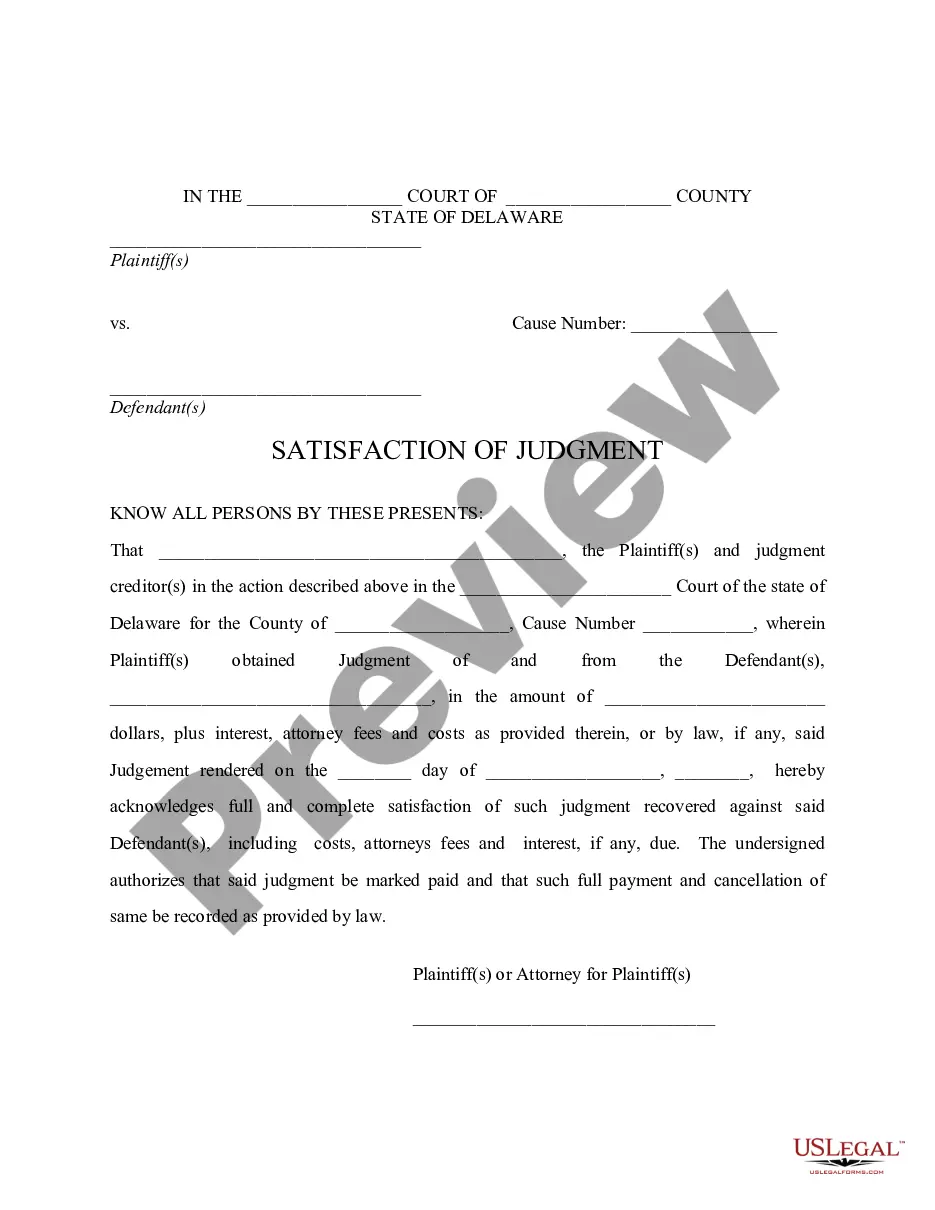
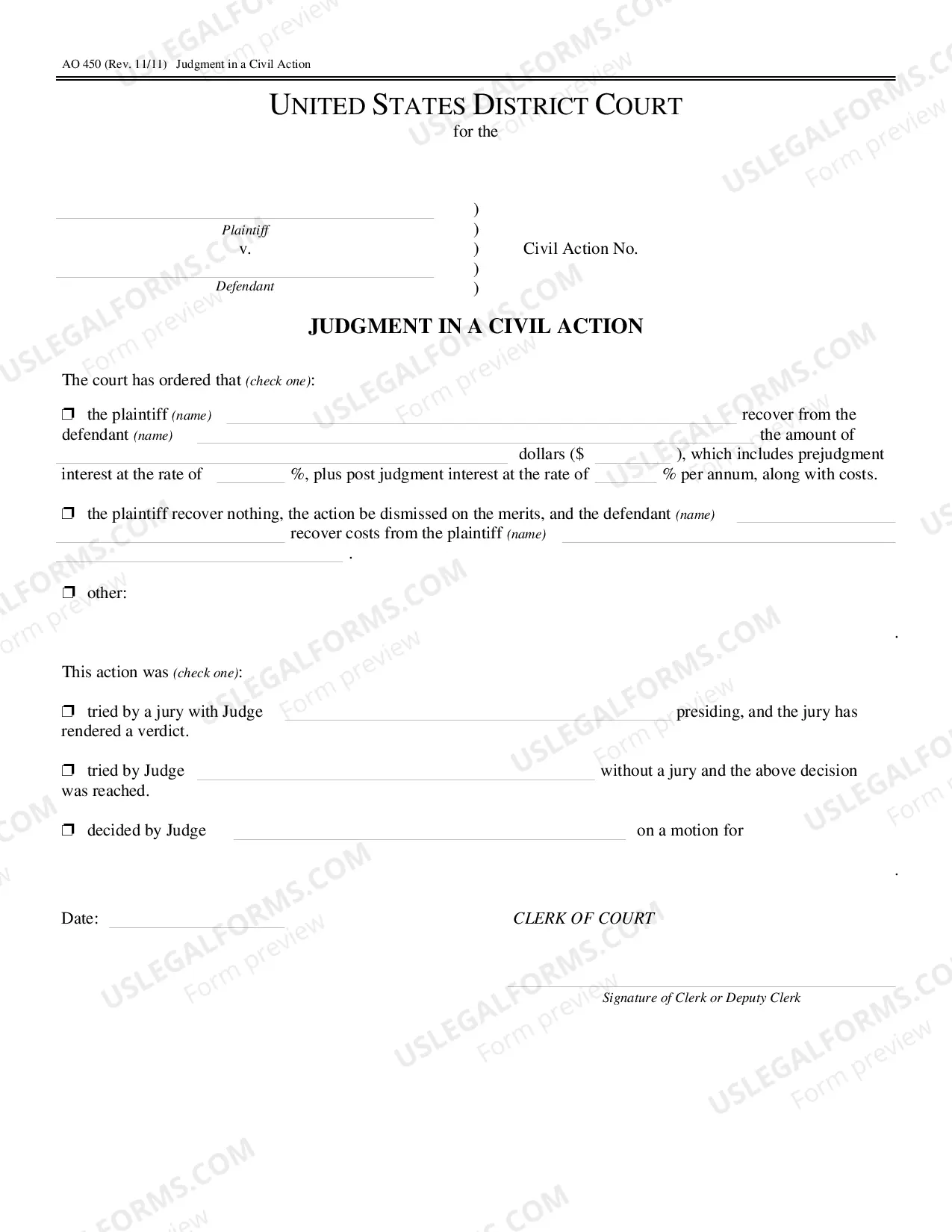
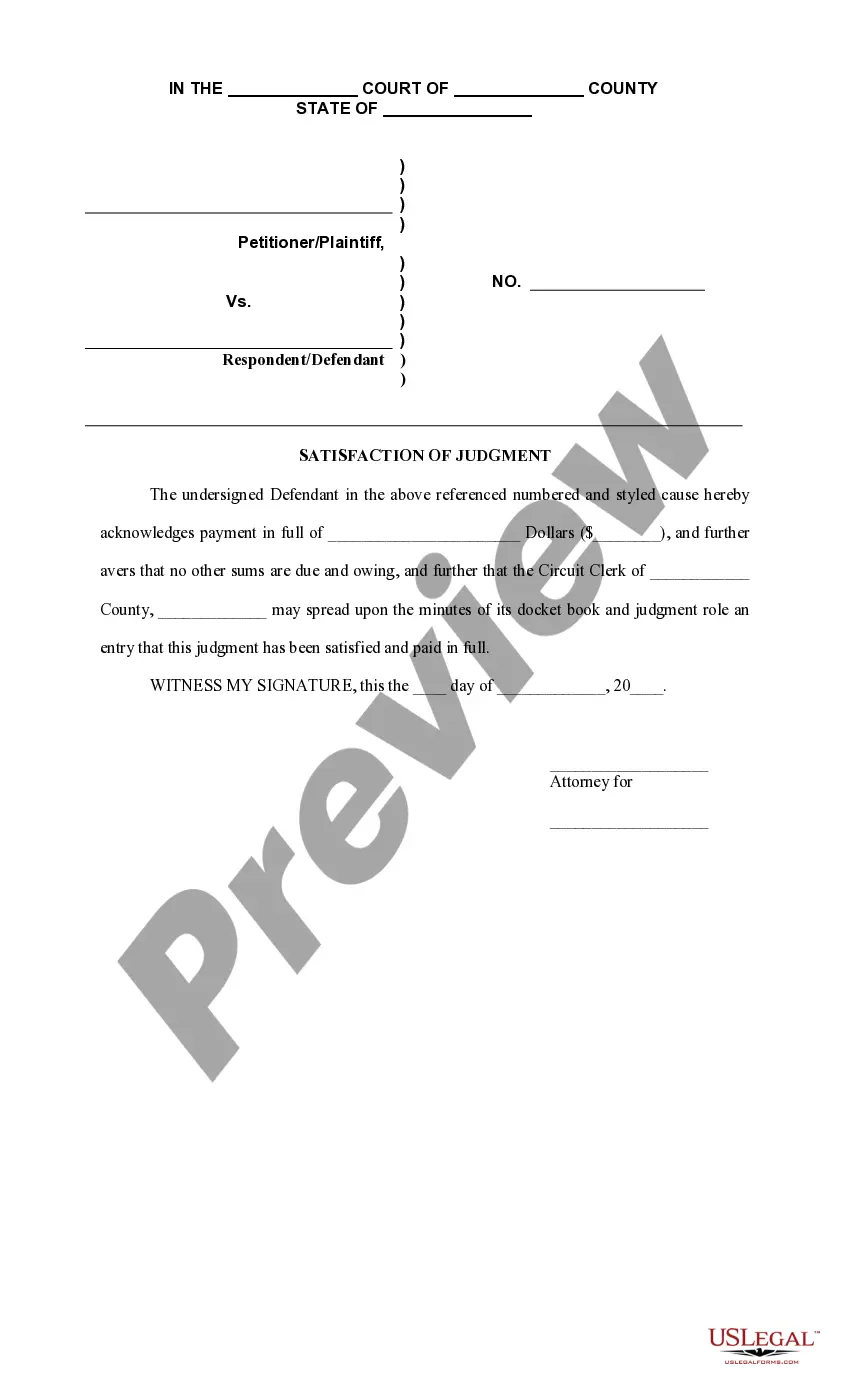
The Delaware Satisfaction of Judgment is a legal document that confirms a judgment has been fully paid, including all fees, costs, and interest associated with it. This form serves to acknowledge that the judgment is satisfied and instructs the court to mark the judgment as paid in full. Unlike other legal documents that may initiate proceedings, this form finalizes and closes the matter entirely.
Main sections of this form
- The court name and location where the judgment was issued.
- The names of the plaintiff(s) and defendant(s) involved in the judgment.
- The cause number associated with the case.
- The amount of the judgment, including any interest and attorney fees.
- Signature lines for the plaintiff or their attorney, certifying the satisfaction.
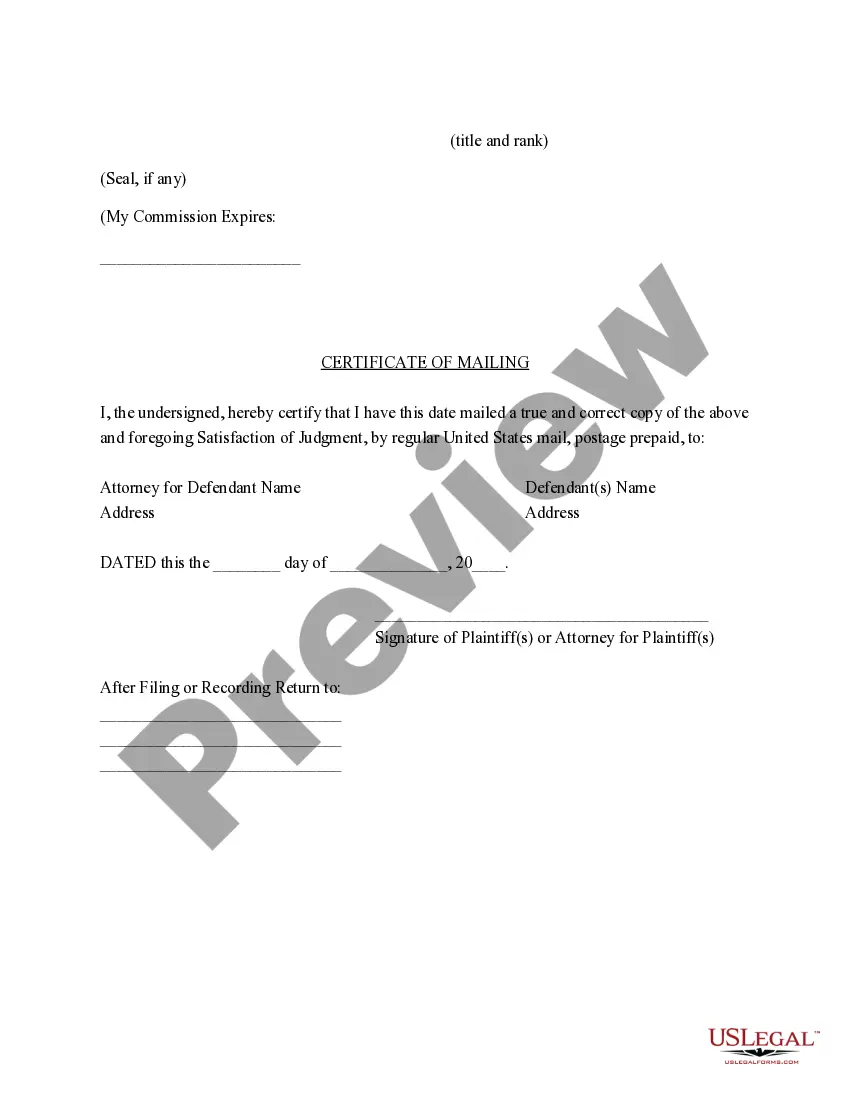
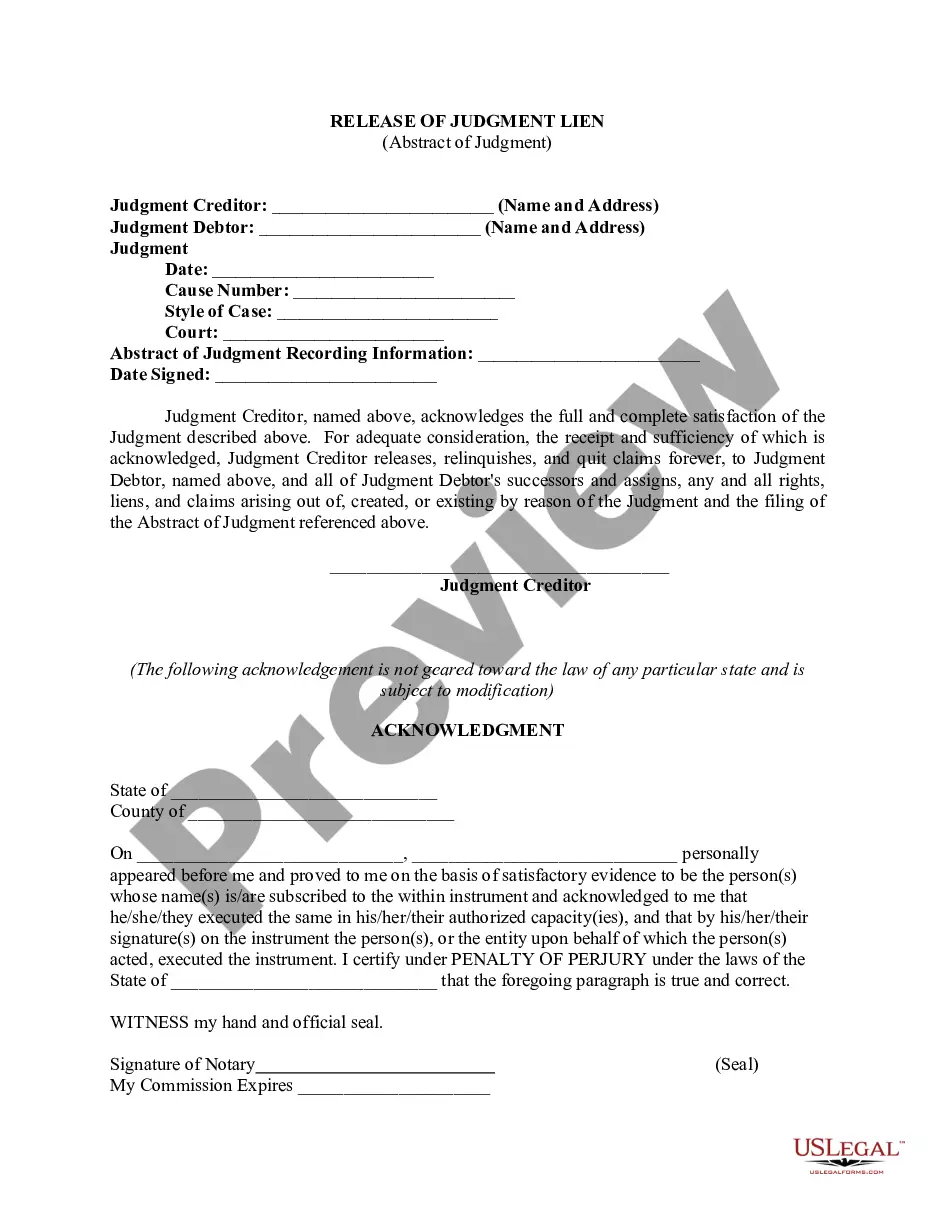
- Notary acknowledgment to confirm the identities of the parties involved.




When this form is needed
You should use the Delaware Satisfaction of Judgment when a court has issued a judgment against a defendant and the judgment has been fully paid. This form is necessary to officially notify the court and other involved parties that the debt has been settled, thereby releasing the defendant from any further obligation regarding that judgment.
Who needs this form
- Plaintiffs who have obtained a judgment in court and want to confirm its satisfaction.
- Attorneys representing plaintiffs who need to file the satisfaction of judgment with the court.
- Defendants who have fully settled their debt and need to ensure their records reflect the payment.
Instructions for completing this form
- Fill in the court name and county where the judgment was issued.
- Enter the names of the plaintiff(s) and defendant(s), along with the cause number.
- Specify the amount of the judgment that has been paid in full.
- Sign the form as the plaintiff or the attorney representing the plaintiff.
- Have the document notarized, ensuring that the notary public certifies the identities of the parties involved.
Is notarization required?
To make this form legally binding, it must be notarized. Our online notarization service, powered by Notarize, lets you verify and sign documents remotely through an encrypted video session.
Get your form ready online
Our built-in tools help you complete, sign, share, and store your documents in one place.
Make edits, fill in missing information, and update formatting in US Legal Forms—just like you would in MS Word.
Download a copy, print it, send it by email, or mail it via USPS—whatever works best for your next step.
Sign and collect signatures with our SignNow integration. Send to multiple recipients, set reminders, and more. Go Premium to unlock E-Sign.
If this form requires notarization, complete it online through a secure video call—no need to meet a notary in person or wait for an appointment.
We protect your documents and personal data by following strict security and privacy standards.

Make edits, fill in missing information, and update formatting in US Legal Forms—just like you would in MS Word.

Download a copy, print it, send it by email, or mail it via USPS—whatever works best for your next step.

Sign and collect signatures with our SignNow integration. Send to multiple recipients, set reminders, and more. Go Premium to unlock E-Sign.

If this form requires notarization, complete it online through a secure video call—no need to meet a notary in person or wait for an appointment.

We protect your documents and personal data by following strict security and privacy standards.
Typical mistakes to avoid
- Failing to include the cause number, which may delay processing.
- Not obtaining notarization, which can invalidate the document.
- Omitting the defendant's name or incorrectly spelling it.
- Not ensuring the correct amount of the judgment is listed as paid.
Why use this form online
- Convenience of filling out and downloading the form from home.
- Edit and customize the form to meet specific case requirements easily.
- Access to templates that comply with Delaware legal standards, ensuring accuracy.
Quick recap
- The Delaware Satisfaction of Judgment is essential for documenting that a judgment has been settled.
- It protects the debtor's credit record by officially marking the judgment as paid.
- Ensure you fill out the form completely, obtain notarization, and notify all involved parties to avoid potential issues.
Looking for another form?
Form popularity
FAQ
To satisfy a judgment, you need to fulfill the requirements set by the court. This often involves paying the amount ordered by the judge or reaching a settlement with the creditor. Once you complete the payment, you should obtain a Satisfaction of Judgment document, which officially confirms that the judgment has been satisfied. Utilizing platforms like US Legal Forms can streamline this process, providing you with the necessary forms and guidance for Delaware Satisfaction of Judgment.
You can confirm if a judgment has been satisfied by checking with the court where the judgment was issued. You can also request a copy of the satisfaction of judgment document from the creditor. Additionally, monitoring your credit report may reveal updates on the status of the judgment.
To file an acknowledgment of satisfaction of judgment, you need to prepare the satisfaction document signed by the creditor. Afterward, file it with the court where the original judgment was issued. Using a service like US Legal Forms can simplify this process by providing templates and guidance tailored to Delaware's requirements.
Rule 37 in the Delaware Chancery court pertains to the duty to make discovery. It outlines the procedures for how parties must share evidence and information before a trial. Understanding this rule is crucial for parties engaged in litigation, as it helps ensure fairness and transparency during the legal process.
Enforcing a judgment in Delaware involves several steps. You may need to file a writ of execution with the court, which allows you to seize the debtor's assets or wages. It is advisable to consult a legal expert, such as those found on the US Legal Forms platform, to navigate this process effectively and ensure that all legal requirements are met.
To remove a satisfied judgment from your credit report, you need to obtain a copy of the satisfaction of judgment document. Once you have this, contact each credit bureau that reports the judgment. You can dispute the entry and provide them with the evidence showing that the judgment has been satisfied, which can help clear your report of this negative mark.
A judgment is satisfied when the debtor pays the amount owed or fulfills the terms set by the court. This process is essential in obtaining a Delaware Satisfaction of Judgment, which serves as proof that the debt has been resolved. Typically, once satisfied, the creditor must file a release or satisfaction of judgment document to officially remove the judgment from the public record. This step is crucial to restore your financial reputation and ensure that your credit report reflects your new standing.
To verify a judgment in Delaware, you can access the Delaware Court's online database, where public records are maintained. This resource allows you to check the status of a judgment to see if it has been satisfied or remains unpaid. For individuals or businesses dealing with judgments, confirming this information is a vital step in understanding your legal standing. By utilizing platforms like USLegalForms, you can also find forms and guidance to assist with your verification process.
In Delaware, a judgment typically remains valid for 5 years from the date it is entered unless it is renewed. This means that the creditor can enforce their claim for that period, but after 5 years, the judgment may become unenforceable unless action is taken to renew it. For those facing a judgment, it is essential to know the timeline for Delaware Satisfaction of Judgment to avoid any long-term impacts on your financial health. Keeping track of these timelines can save you from unwanted complications.