Delaware Subcontractor's Agreement
What is this form?
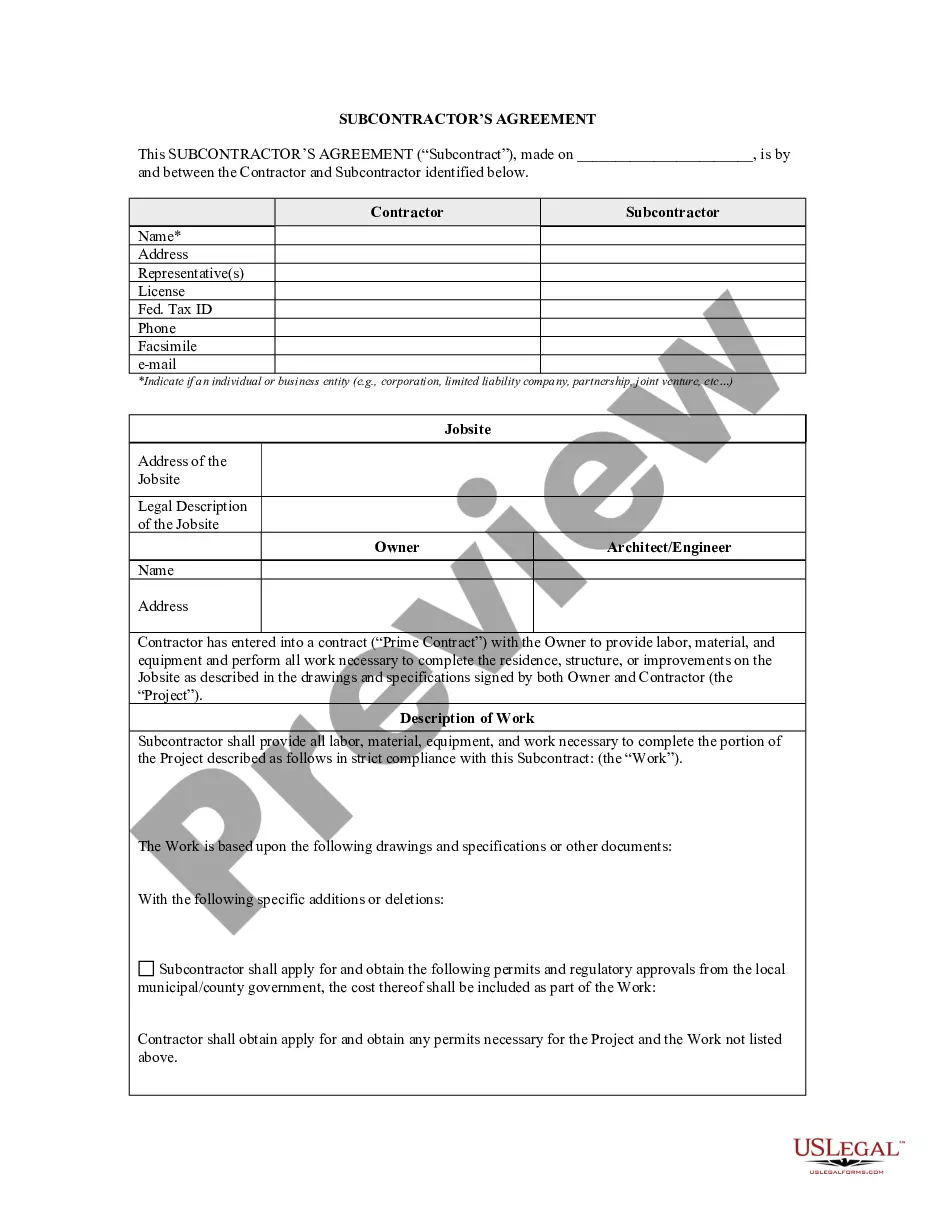
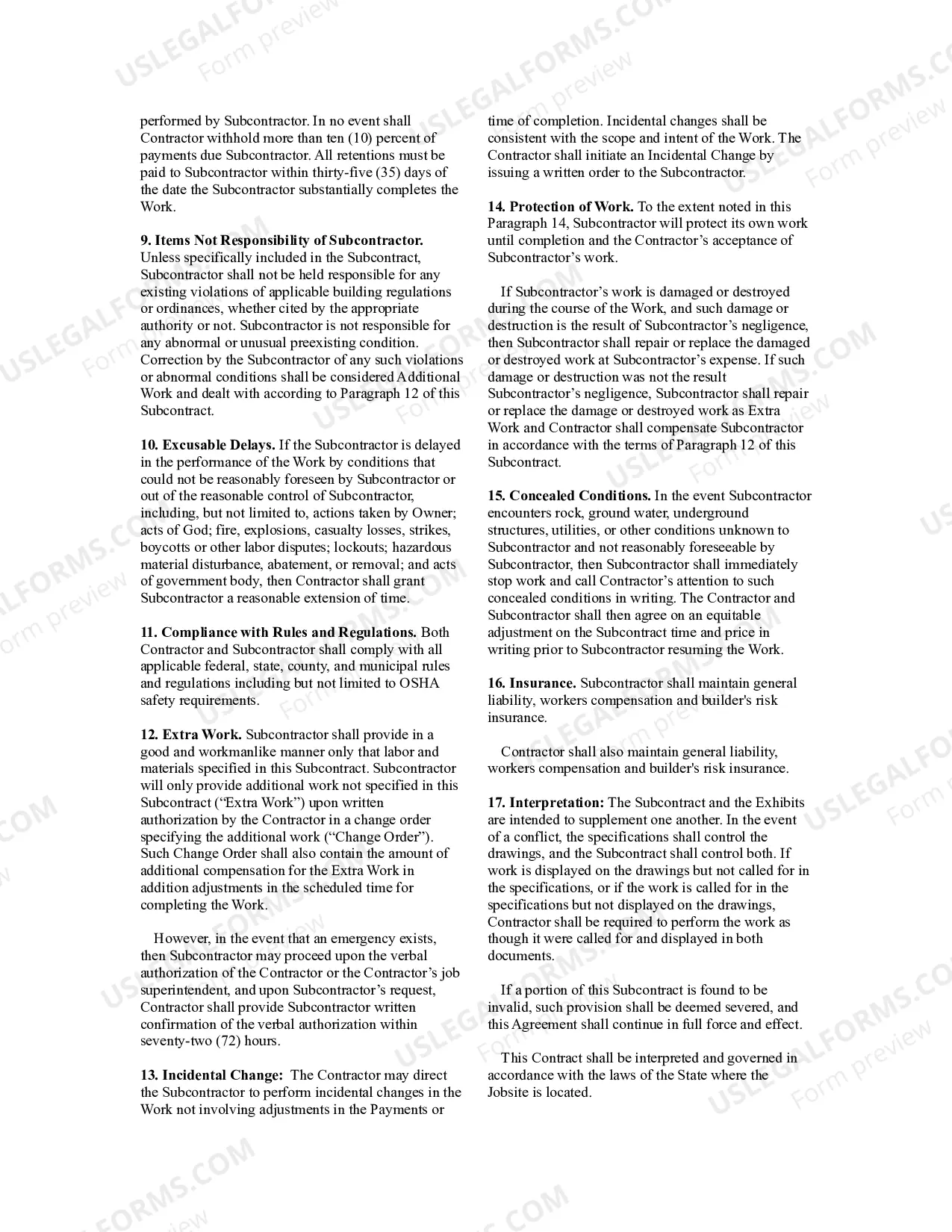
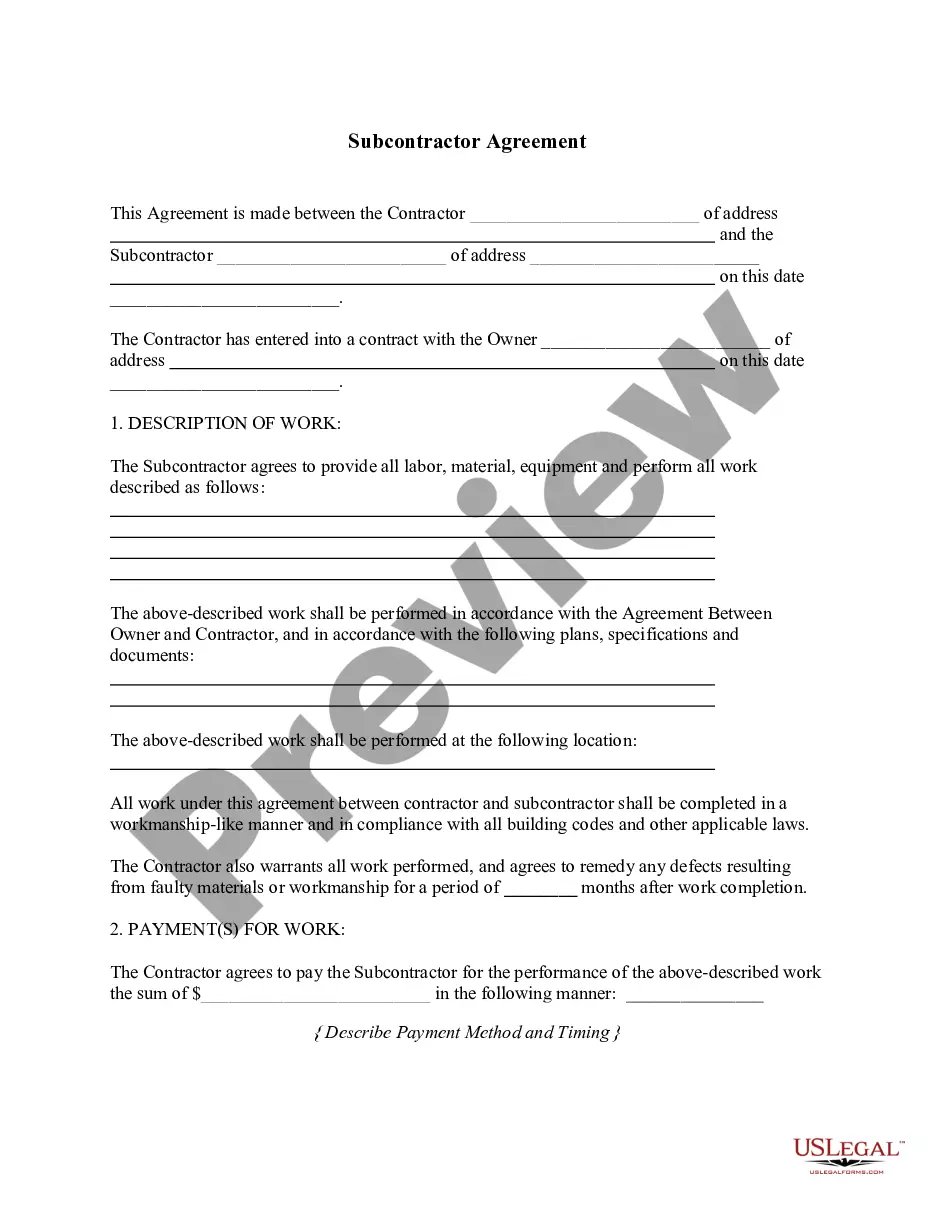
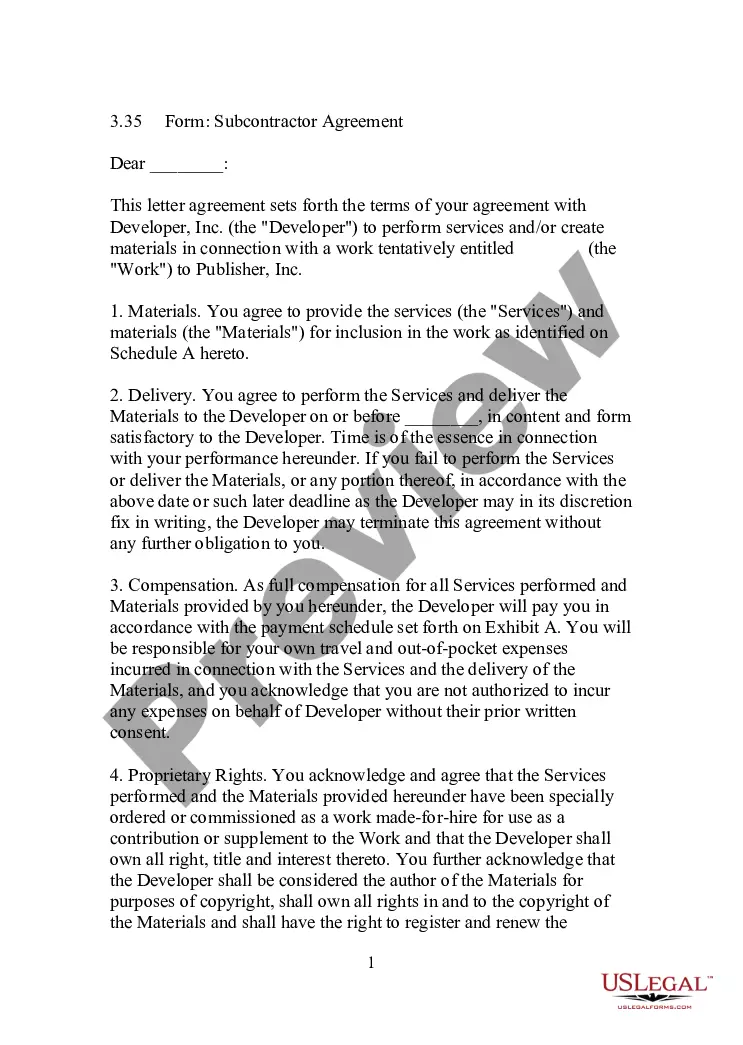
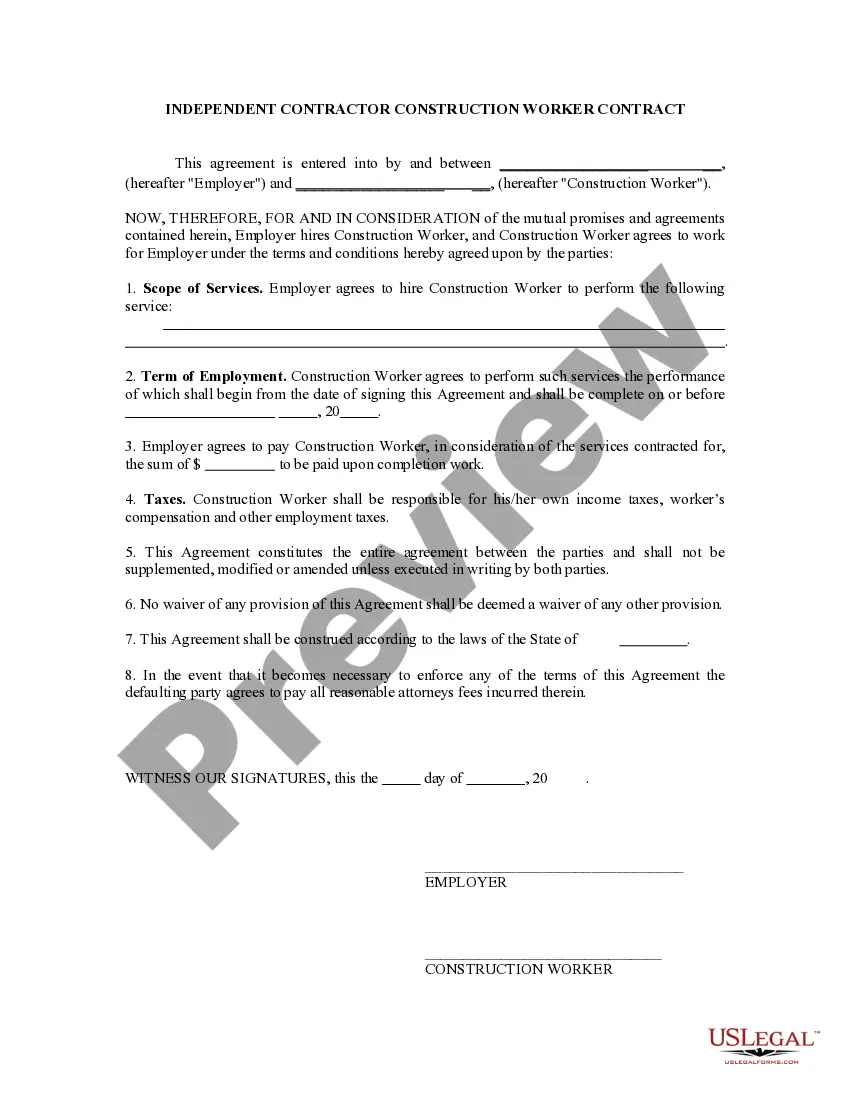
The Subcontractor's Agreement is a legal document that outlines the terms and conditions of the relationship between a contractor and a subcontractor. This form specifically addresses various critical aspects of subcontract work, such as payment terms, scheduling of work, dispute resolution, and responsibilities concerning delays or changes in the project. Unlike general contracts, this agreement is tailored to detail the specific collaboration between the contractor and the subcontractor, defining their rights and obligations comprehensively.
Key parts of this document
- Identification of the parties entering the agreement.
- Specification of the job site and description of work to be performed.
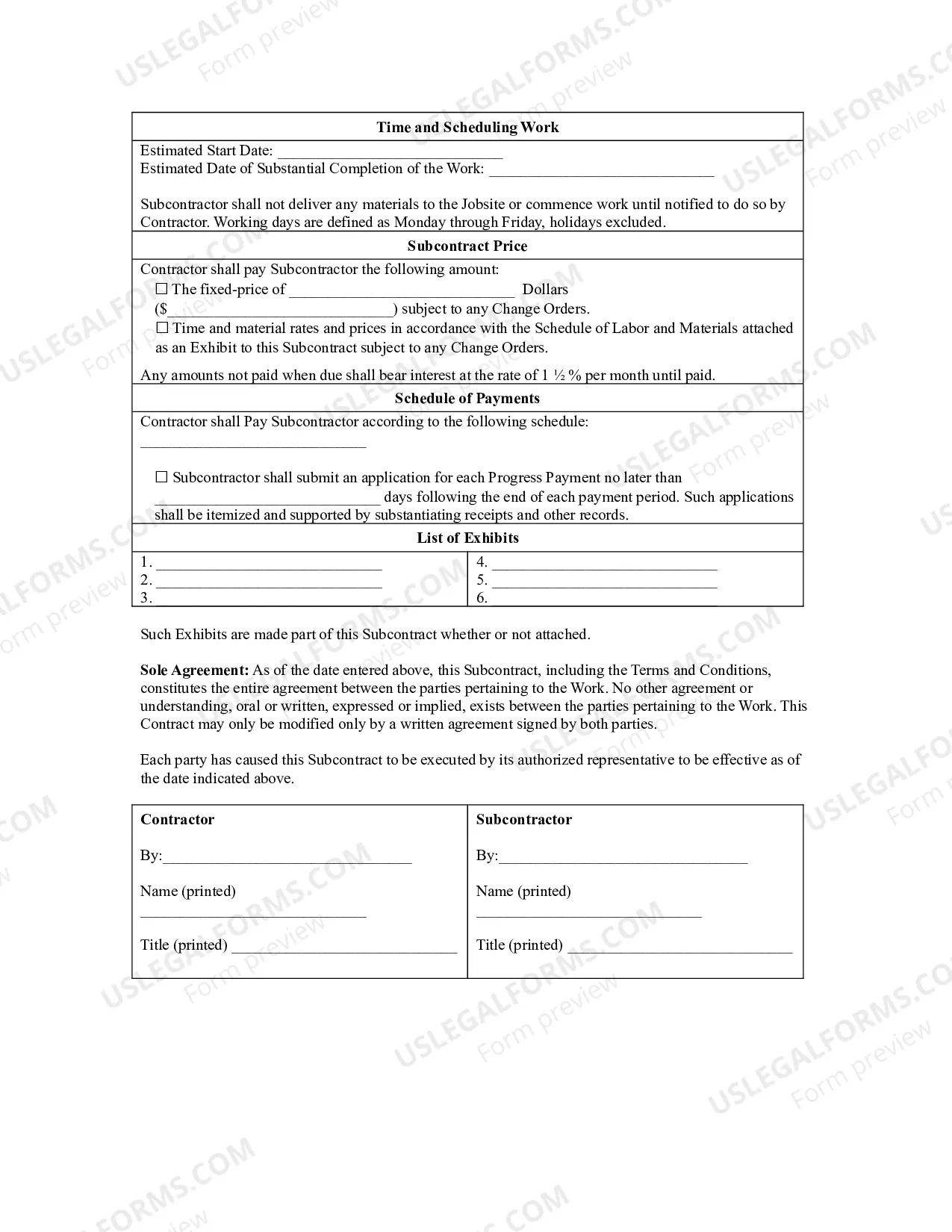
- Detailed payment structure, including fixed-price and material rates.
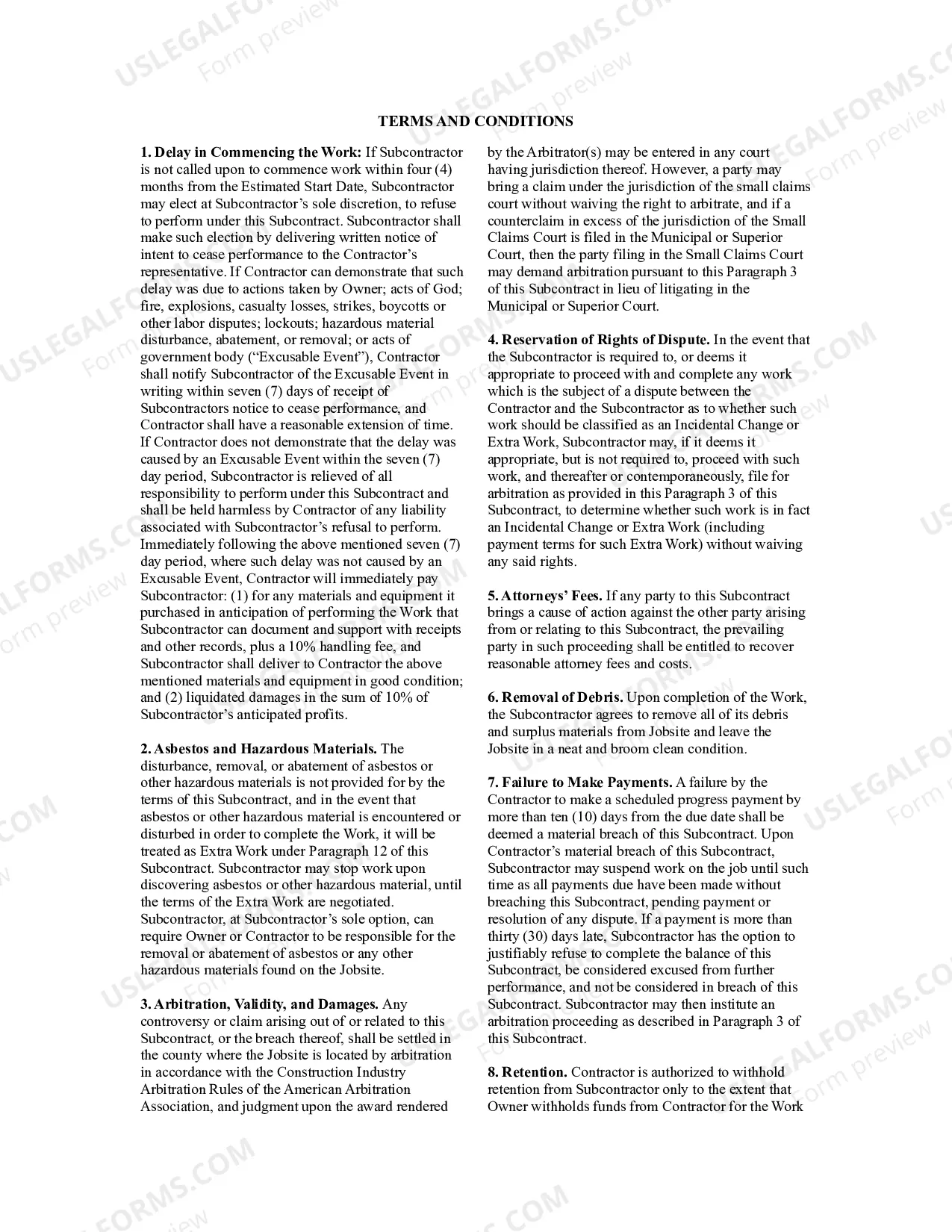
- Terms for change orders and handling disputes.
- Conditions for delays and liquidated damages.
- Insurance requirements and compliance with regulations.

Situations where this form applies
This form is essential when a contractor needs to hire a subcontractor to complete specific tasks or projects. It is used when the contractor requires detailed terms on payment schedules, work descriptions, and how potential disputes will be handled. This agreement is particularly important in construction projects or any situation where specialized labor is needed, helping to ensure clarity and avoid conflicts between the involved parties.
Intended users of this form
- Contractors who hire subcontractors for specific work.
- Subcontractors accepting work and needing a clear understanding of their obligations.
- Businesses in the construction industry or related fields where subcontracting is common.
- Individuals looking to formalize a subcontracting relationship.
How to complete this form
- Identify the parties: Clearly state the names and addresses of the contractor and subcontractor.
- Specify the job site: Provide the address or location where the work will be performed.
- Describe the work: Outline the tasks or services the subcontractor is responsible for completing.
- Enter payment terms: Include the fixed amount, payment schedule, and terms for any change orders.
- Sign and date the agreement: Ensure both parties sign the document, indicating their acceptance of the terms.
Notarization requirements for this form
This form does not typically require notarization to be legally valid. However, some jurisdictions or document types may still require it. US Legal Forms provides secure online notarization powered by Notarize, available 24/7 for added convenience.
Get your form ready online
Our built-in tools help you complete, sign, share, and store your documents in one place.
Make edits, fill in missing information, and update formatting in US Legal Forms—just like you would in MS Word.
Download a copy, print it, send it by email, or mail it via USPS—whatever works best for your next step.
Sign and collect signatures with our SignNow integration. Send to multiple recipients, set reminders, and more. Go Premium to unlock E-Sign.
If this form requires notarization, complete it online through a secure video call—no need to meet a notary in person or wait for an appointment.
We protect your documents and personal data by following strict security and privacy standards.

Make edits, fill in missing information, and update formatting in US Legal Forms—just like you would in MS Word.

Download a copy, print it, send it by email, or mail it via USPS—whatever works best for your next step.

Sign and collect signatures with our SignNow integration. Send to multiple recipients, set reminders, and more. Go Premium to unlock E-Sign.

If this form requires notarization, complete it online through a secure video call—no need to meet a notary in person or wait for an appointment.

We protect your documents and personal data by following strict security and privacy standards.
Avoid these common issues
- Failing to specify all terms of payment and work responsibilities.
- Not including enough detail on what constitutes a change order.
- Overlooking local regulations that might impact the agreement.
- Neglecting to obtain both parties' signatures, rendering the contract unenforceable.
Benefits of completing this form online
- Convenient access to legal documentation without the need for in-person meetings.
- Editable templates that allow customization to meet specific project needs.
- Reliable and professionally drafted forms created by licensed attorneys.
- Secure storage of documents for easy reference and compliance tracking.
Looking for another form?
Form popularity
FAQ
Licensing. Scope of Work and Payment. Timing. Defense and Indemnification.
Register your business with Delaware's Department of Revenue. Obtain proof of unemployment insurance and a Worker's Compensation policy. Provide a Federal Employer Identification Number. Disclose your number of employees and payroll information if applicable.
A subcontractor has a contract with the contractor for the services provided - an employee of the contractor cannot also be a subcontractor.
Start with procurement standards. Execute all subcontracts prior to starting your projects. Help those who help you. Award the job to the lowest fully qualified bidder. Use contract scope checklists. Make sure you have tight clauses. Meet to review the proposed subcontract.
Scope of the Project. Timing for Completion: Duration of Work Clause. Payment and Billing Clause. Independent Contractor Notice. Non-Disclosure Agreement. Non-Complete Clause. Work for Hire Inclusion. Responsibilities for Insurance for Accidental Damages.
A subcontractor will carry out duties on behalf of a contractor - who is responsible for their health, safety, and actions - and might be an individual or an organisation. However, the employees of a contractor are not considered subcontractors, they must be separate altogether.
Each subcontractor should complete Form W-9 before they begin any work. On the form, the subcontractor identifies their business structure type (sole proprietorship, corporation, etc.). Form W-9 also asks for the subcontractor's name and Taxpayer Identification Number (TIN).
A subcontractor agreement is a contract between contractors or project managers and subcontractors. This solidifies any agreement between the two parties and assures work. Subcontractors should read the subcontractor agreement and assure specifics to protect themselves from unfair risk.
Define the needs of the project. Finalize the provisions of the agreement, such as the due dates. Clarify the terms for payment. Write a draft of the contract and send it to the subcontractor for her review. Decide on a method to handle disputes, should one arise between you and the subcontractor.