Parent Contract for Mentorship Program
About this form
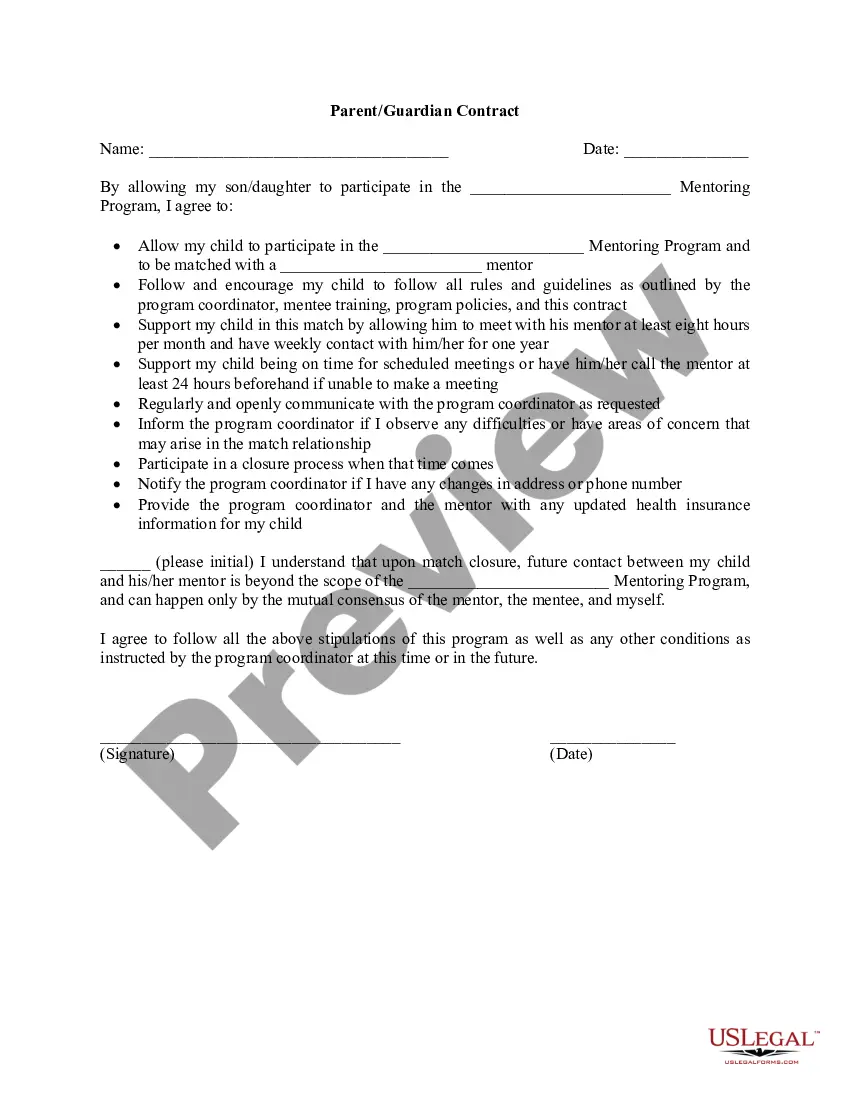
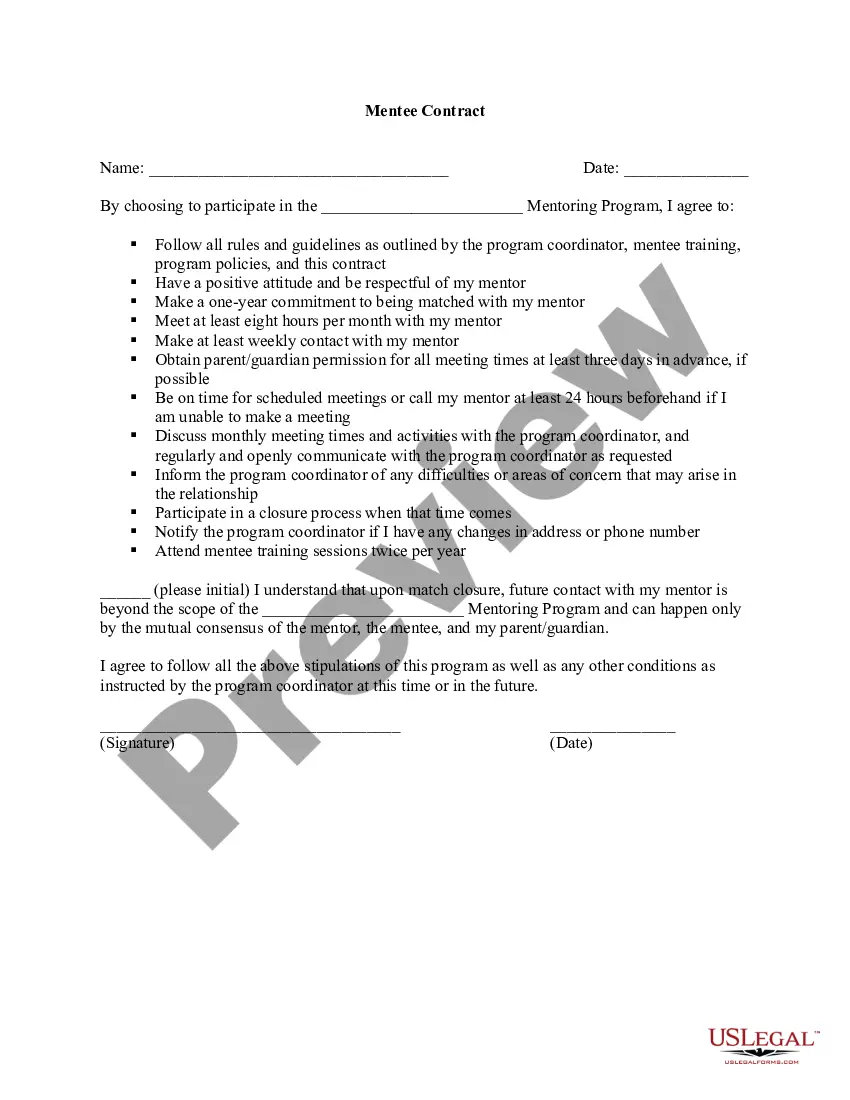
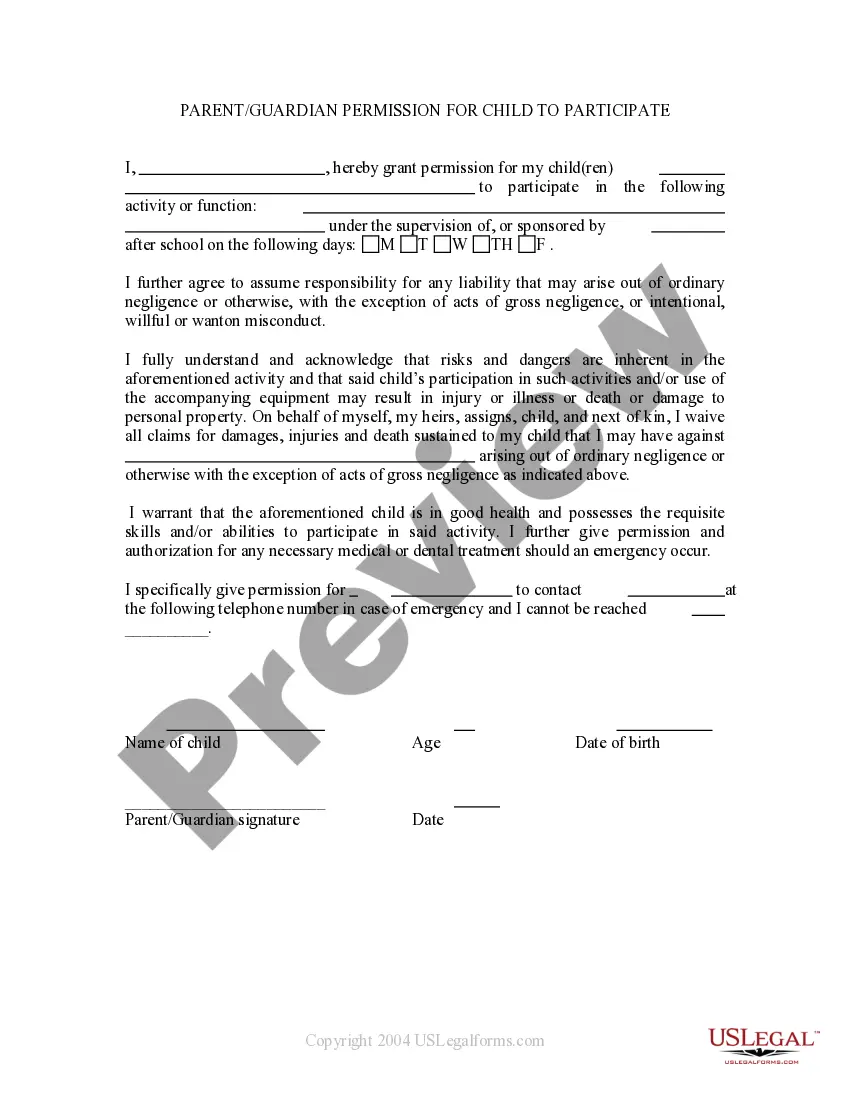
The Parent Contract for Mentorship Program is a legal agreement that allows a parent or guardian to grant permission for their child to participate in a mentorship program. This form outlines the responsibilities of both the parent and the mentoring program, ensuring that all parties understand the commitment involved in the mentorship relationship. It serves as a crucial document differing from general consent forms by specifically detailing guidelines for participation, support, and communication throughout the program's duration.
Key components of this form
- Parent/Guardian's name and signature, affirming their consent.
- Acknowledgment of the mentorship program's rules and guidelines.
- Support for the child's engagement with the mentor, including required contact hours.
- Communication responsibilities with the program coordinator.
- Information update obligations regarding health insurance and contact details.
- Details regarding post-match relationship between the mentor, mentee, and parent.
Situations where this form applies
This form should be used when a parent or guardian wants to allow their child to join a mentorship program. It is essential in scenarios where the program requires formal consent and sets expectations for the relationship between the child, the mentor, and the program administrators. Use this form to ensure a clear understanding of roles and responsibilities, promoting a successful mentorship experience.
Who should use this form
- Parents or guardians of minors participating in a mentorship program.
- Program coordinators seeking formal consent from guardians.
- Mentors who require parental approval for their mentees.
How to prepare this document
- Fill in the name of the parent or guardian and the date at the top of the form.
- Indicate the specific mentoring program name and the mentor's identity.
- Review and agree to the listed rules and commitments outlined in the document.
- Sign and date the form at the bottom to validate the agreement.
- Keep a copy for your records once completed.
Does this document require notarization?
This form does not typically require notarization unless specified by local law. However, having a notarized signature can add an additional layer of authenticity and security to the agreement.
Get your form ready online
Our built-in tools help you complete, sign, share, and store your documents in one place.
Make edits, fill in missing information, and update formatting in US Legal Forms—just like you would in MS Word.
Download a copy, print it, send it by email, or mail it via USPS—whatever works best for your next step.
Sign and collect signatures with our SignNow integration. Send to multiple recipients, set reminders, and more. Go Premium to unlock E-Sign.
If this form requires notarization, complete it online through a secure video call—no need to meet a notary in person or wait for an appointment.
We protect your documents and personal data by following strict security and privacy standards.

Make edits, fill in missing information, and update formatting in US Legal Forms—just like you would in MS Word.

Download a copy, print it, send it by email, or mail it via USPS—whatever works best for your next step.

Sign and collect signatures with our SignNow integration. Send to multiple recipients, set reminders, and more. Go Premium to unlock E-Sign.

If this form requires notarization, complete it online through a secure video call—no need to meet a notary in person or wait for an appointment.

We protect your documents and personal data by following strict security and privacy standards.
Mistakes to watch out for
- Failing to read the entire contract before signing.
- Not providing accurate contact information or health insurance details.
- Neglecting to discuss expectations with the child before signing.
- Forgetting to follow up with the program coordinator on any issues.
Benefits of completing this form online
- Convenience of completing the form from home at any time.
- Instant access to downloadable templates, making it easier to fill in details.
- Guidance provided in completing the form, reducing confusion.
Looking for another form?



Form popularity
FAQ
Ideally they'll be adept at the 'seven Cs' of mentoring: they should be able to coach the mentee; be a confidante; provide career advice; act as a conduit to others, to increase the mentee's visibility; serve as a counsellor; be a critical friend and provide the mentee with choice.
Respect your mentee's time as much as your own. Be explicit about the 'norms' for your meetings and your own needs and limits (e.g., time, style of interfacing, etc.). Always ask if you can make a suggestion or offer feedback. Tell your mentee that you don't expect them to follow all of your suggestions.
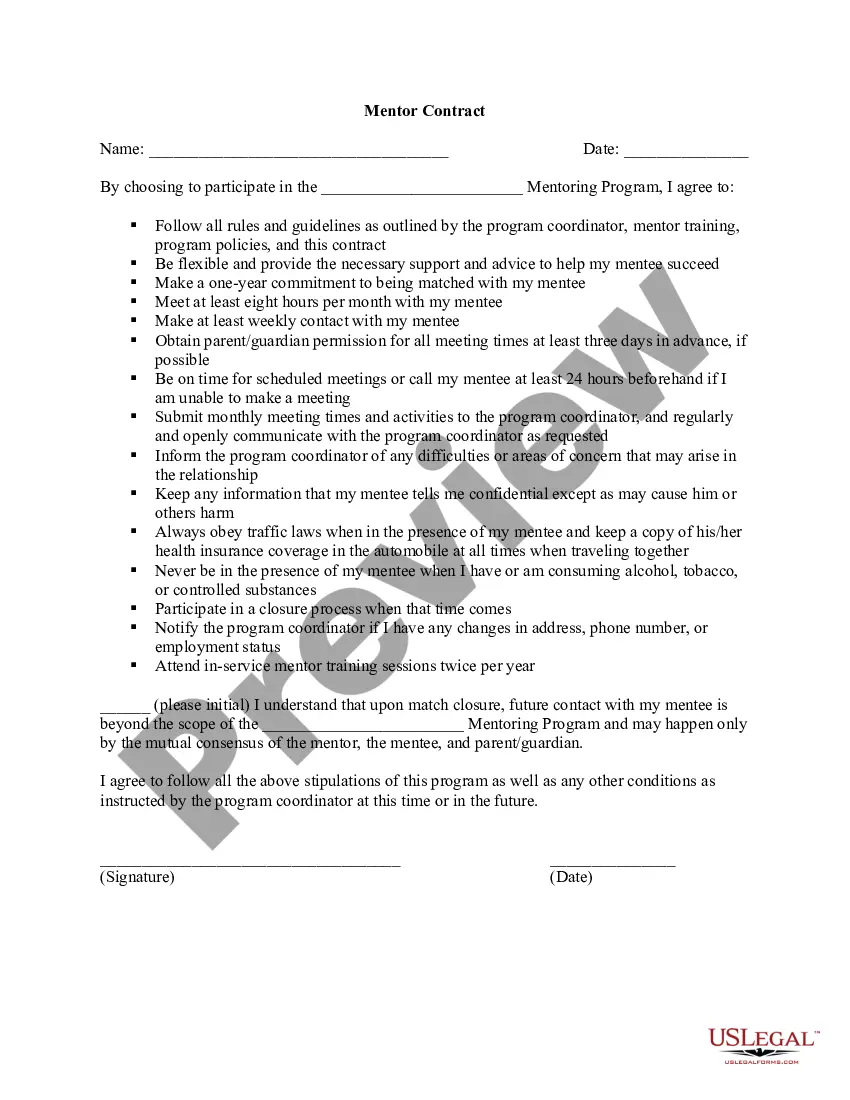
The agreement should include contact information (including preferred methods and time), establish a meeting schedule, iterate objectives and goals of both parties, set progress check dates, and a termination date. After this is negotiated and completed, you are ready to start your mentoring partnership.
For example, many mentors set a boundary that they will not give or loan money to the mentee. If this is your boundary and your mentee asks for money for lunch, you might remind him that you are not comfortable lending money, but offer to pick up a sandwich for lunch if you are worried that she is hungry.
Things to consider before you meet a prospective mentee What is my purpose for mentoring this person? What do I need to know about my mentee? What does my mentee need to know about me? Are there any barriers to me being an effective mentor? If so, what can I do to overcome them?
A parent can be a mentor to his/her child and to other young people. The opportunities may relate to the parent's career or work, interests, or exper- iences. Mentoring others may be on an individual or small group basis. Mentors share their expertise and enthusiam.
A mentoring agreement is a formal document that clearly sets out the structure of the relationship between you and your mentor, and the roles and responsibilities of both parties. Mentoring can fail if there are any misunderstandings between mentor and mentee about their needs or expectations.