District of Columbia Transfer on Death Deed or TOD - Beneficiary Deed for Individual to a Trust
Understanding this form
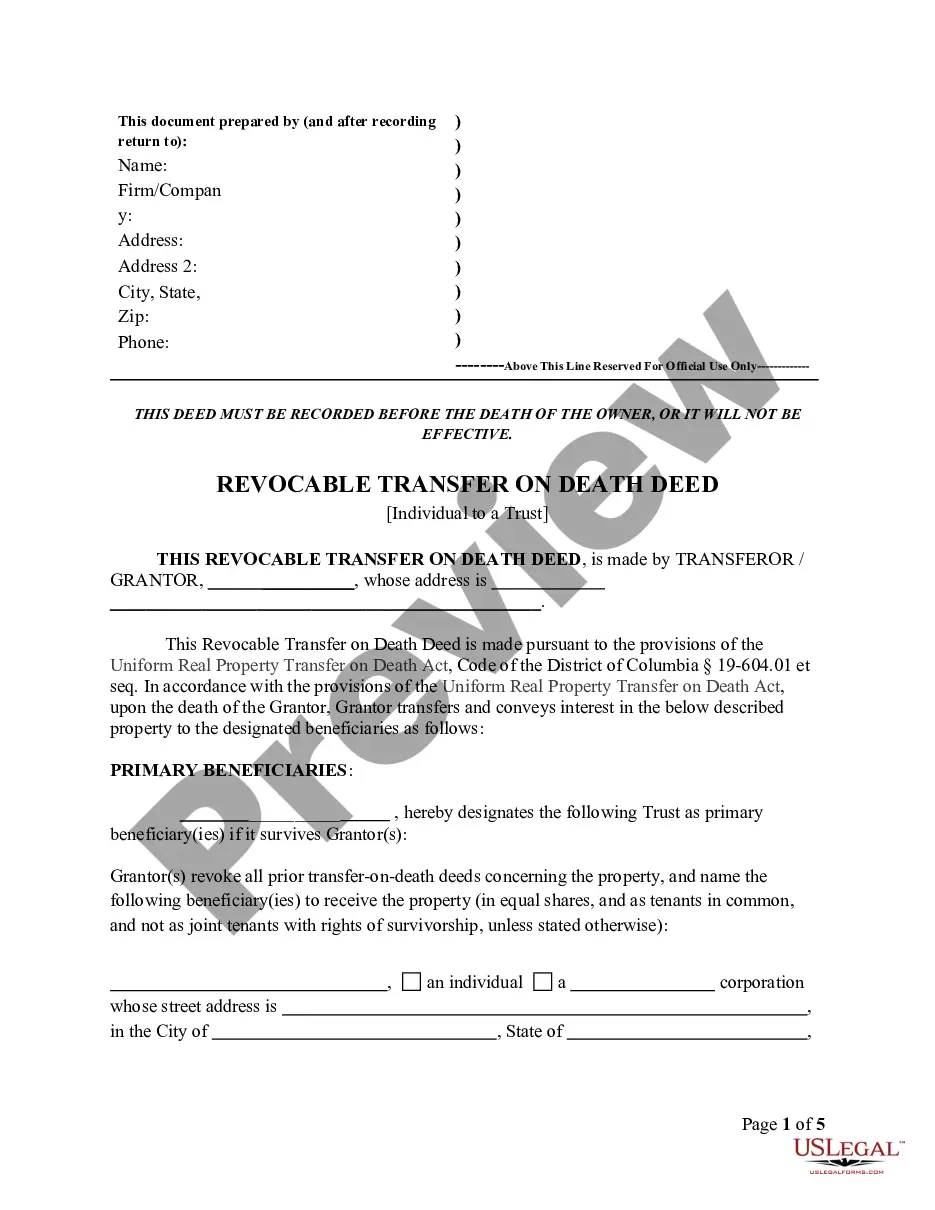
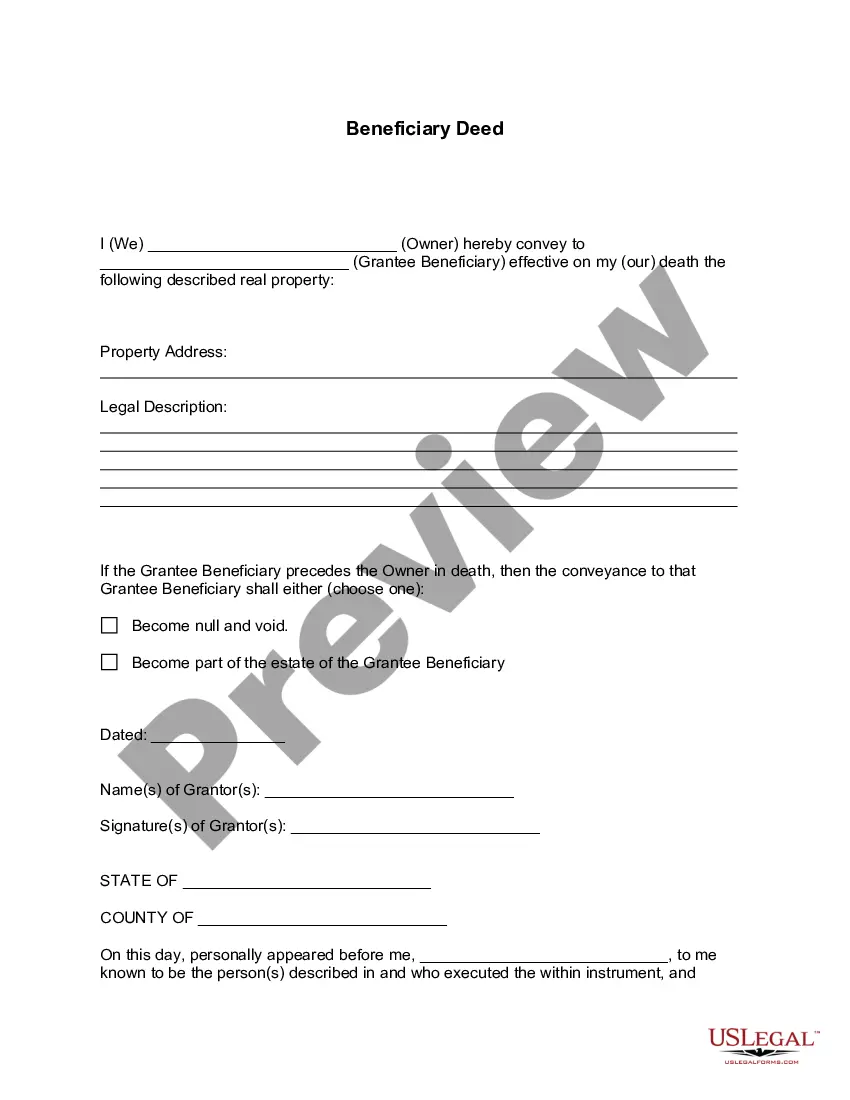
The Transfer on Death Deed, also known as a Beneficiary Deed for Individual to a Trust, allows property owners to transfer ownership of real estate upon their death without going through probate. This deed effectively names a trust as the beneficiary of the property, allowing the property to bypass probate proceedings upon the ownerâs demise. It is important to note that the property owner's rights remain intact during their lifetime, and the deed can be revoked at any time before death, distinguishing it from other estate planning tools like a will.
Form components explained
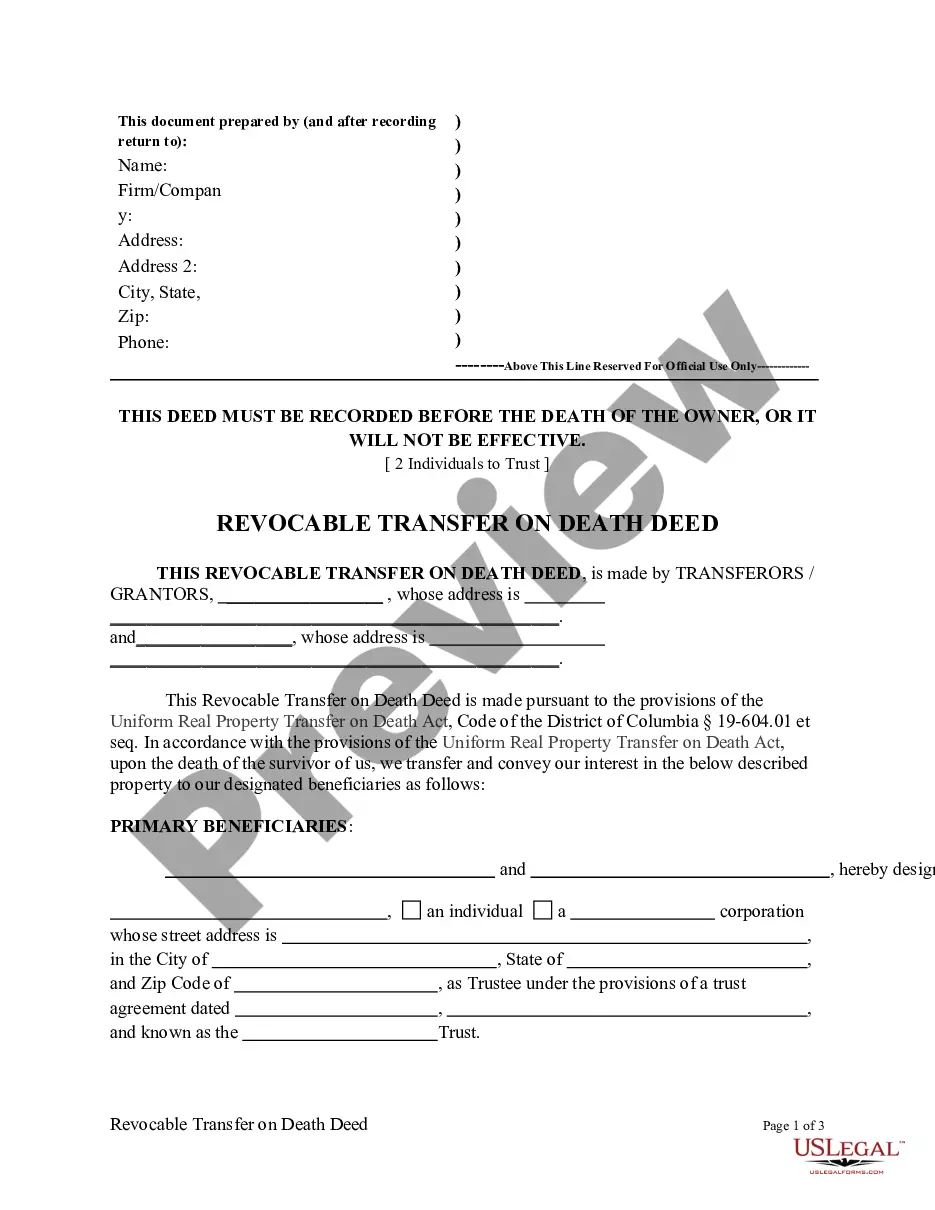
- Transferor/Grantor information: Includes the name and address of the current property owner.
- Primary beneficiaries: Designates the trust or individual beneficiaries to whom the property will transfer upon the grantor's death.
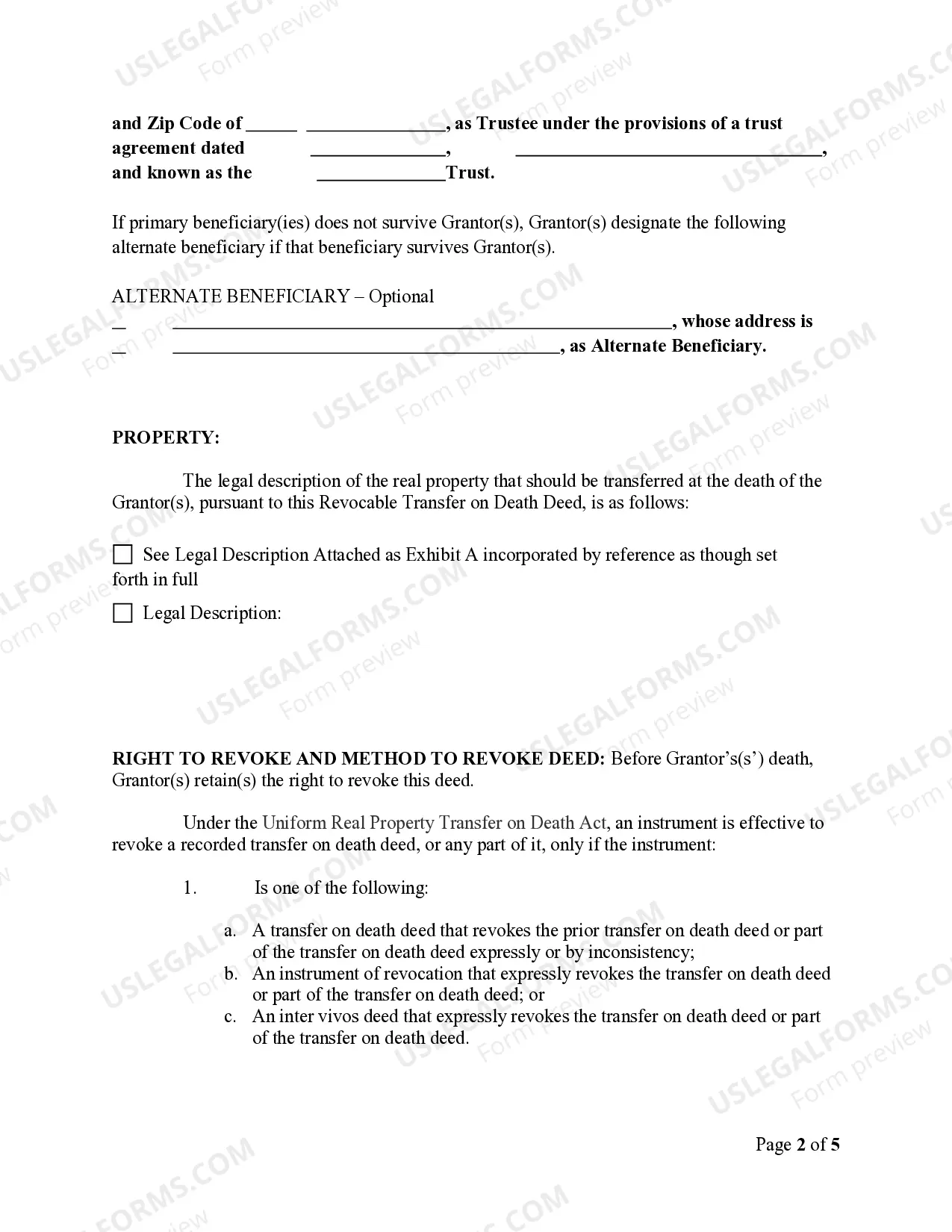
- Alternate beneficiaries: Lists optional beneficiaries if the primary ones do not survive the grantor.
- Property description: Provides a legal description of the property being transferred.
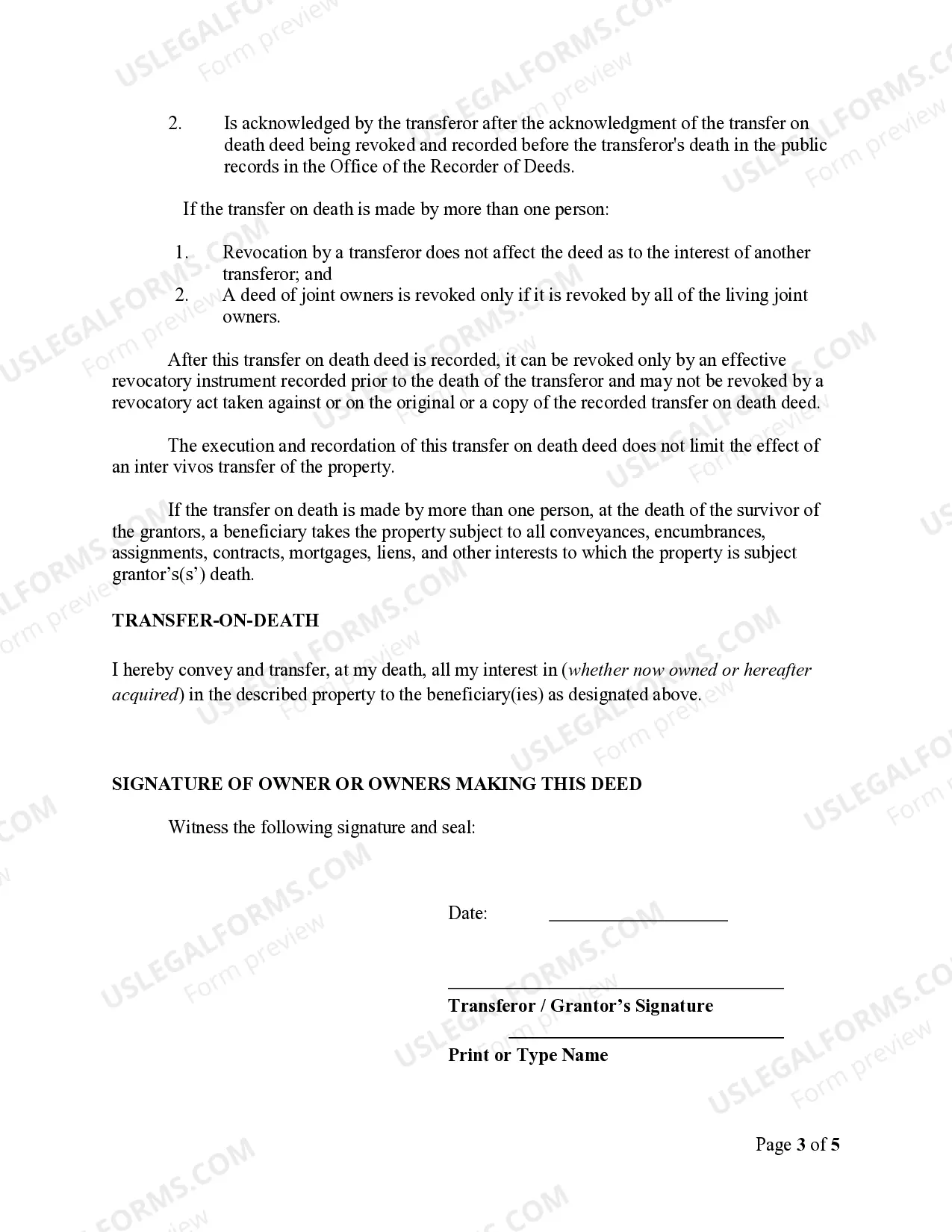
- Revocation clause: Outlines how the grantor can revoke the deed before death.
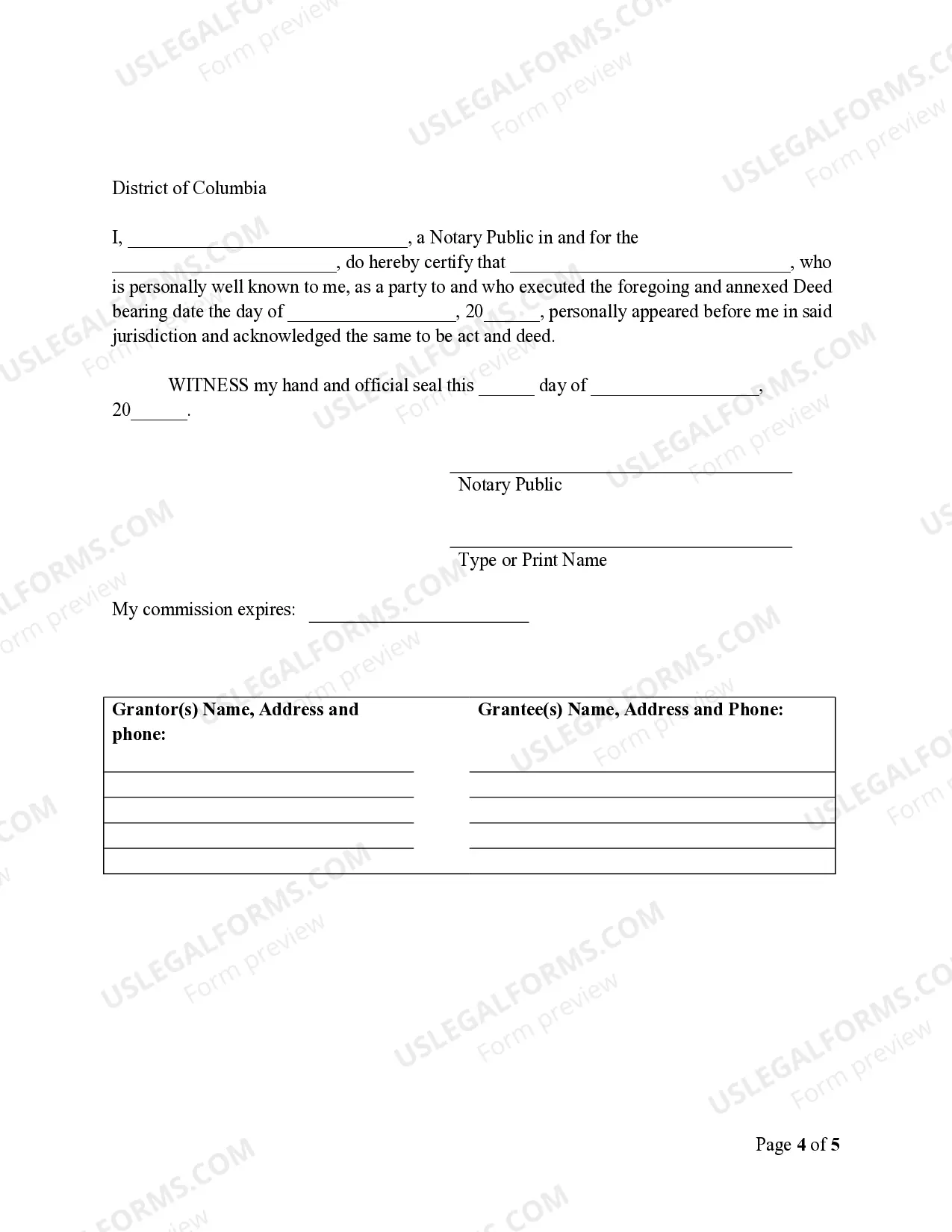
- Signature and notarization: Requires the grantor's signature and may need notarization for validity.


When this form is needed
This form is typically used by property owners who wish to ensure that their real estate is transferred directly to a designated trust upon their death, thus avoiding the probate process. It is beneficial for individuals looking to manage their estate more effectively and securely, ensuring their beneficiaries receive the property as intended without unnecessary legal hurdles.
Who needs this form
- Homeowners who want a straightforward method for transferring property upon death.
- Individuals planning their estate to avoid probate for their real property.
- Those who wish to designate a trust as the beneficiary for their real estate.
- Property owners wanting flexibility to revoke the transfer before death.
Completing this form step by step
- Identify the transferor/grantor and enter their name and address.
- Designate the primary beneficiaries by naming the trust or individuals who will receive the property.
- If applicable, list any alternate beneficiaries who may receive the property if primary beneficiaries do not survive.
- Provide a legal description of the property that is being transferred.
- Have the transferor/grantor sign the deed and ensure it is notarized, if required.
- Record the deed with the appropriate government office before the death of the transferor to ensure its validity.
Notarization guidance
Yes, this form must be notarized to be legally valid. The deed requires the grantor's signature to be witnessed by a notary public, ensuring the identity of the signatory and the voluntary nature of the act. US Legal Forms integrates online notarization services available 24/7, allowing for secure video calls, which eliminate the need for physical travel.
Get your form ready online
Our built-in tools help you complete, sign, share, and store your documents in one place.
Make edits, fill in missing information, and update formatting in US Legal Forms—just like you would in MS Word.
Download a copy, print it, send it by email, or mail it via USPS—whatever works best for your next step.
Sign and collect signatures with our SignNow integration. Send to multiple recipients, set reminders, and more. Go Premium to unlock E-Sign.
If this form requires notarization, complete it online through a secure video call—no need to meet a notary in person or wait for an appointment.
We protect your documents and personal data by following strict security and privacy standards.

Make edits, fill in missing information, and update formatting in US Legal Forms—just like you would in MS Word.

Download a copy, print it, send it by email, or mail it via USPS—whatever works best for your next step.

Sign and collect signatures with our SignNow integration. Send to multiple recipients, set reminders, and more. Go Premium to unlock E-Sign.

If this form requires notarization, complete it online through a secure video call—no need to meet a notary in person or wait for an appointment.

We protect your documents and personal data by following strict security and privacy standards.
Typical mistakes to avoid
- Not recording the deed before the grantor's death, which renders it ineffective.
- Failing to provide a complete and accurate legal description of the property.
- Omitting to revoke any prior transfer-on-death deeds regarding the same property.
- Neglecting to properly notarize the deed if required by state law.
Benefits of using this form online
- Convenient: Downloadable and easily accessible from anywhere.
- Editability: Allows users to fill in personalized information before completing the deed.
- Reliability: Forms drafted by licensed attorneys ensure legal compliance and accuracy.
- Time-saving: Avoids lengthy processes associated with traditional legal consultations.
Looking for another form?
Form popularity
FAQ
Yes, the District of Columbia does allow the use of transfer on death deeds. This legal tool permits property owners to designate transfer of their property to a beneficiary without the need for probate. The District of Columbia Transfer on Death Deed or TOD - Beneficiary Deed for Individual to a Trust simplifies estate planning and provides a straightforward way to pass on property. Be sure to follow local rules and procedures when executing these deeds.
You do not necessarily need a lawyer for creating a District of Columbia Transfer on Death Deed or TOD - Beneficiary Deed for Individual to a Trust. Many individuals successfully draft and file these deeds independently using online legal resources. However, consulting with a legal professional can provide peace of mind and clarity on any complex issues you might face. Ultimately, it's important to understand your own capacity to handle the legalities involved.
Yes, you can transfer a deed without an attorney in the District of Columbia. Using resources like uslegalforms, you can find the necessary forms and guidelines to complete the process yourself. However, understanding the legal ramifications and requirements is crucial to avoid potential issues. Make sure to do your research and proceed with caution to ensure a smooth transfer.
One disadvantage of a District of Columbia Transfer on Death Deed or TOD - Beneficiary Deed for Individual to a Trust is that these deeds cannot provide protections against creditors after your death. Additionally, if the designated beneficiary is unable to manage the property, it could lead to complications. There are also potential tax implications to consider, which might affect the beneficiary. It's important to weigh these factors carefully.
While it is not mandatory to hire an attorney for a District of Columbia Transfer on Death Deed or TOD - Beneficiary Deed for Individual to a Trust, having professional guidance can be beneficial. Attorneys can help you navigate the process and ensure the deed meets all legal requirements. However, many individuals successfully complete the deed using resources like uslegalforms without legal representation. Ultimately, the choice depends on your comfort level and the complexity of your situation.
You can obtain a District of Columbia Transfer on Death Deed or TOD - Beneficiary Deed for Individual to a Trust through various legal resources. Online platforms like uslegalforms provide templates and guidance for creating these deeds. Additionally, local courts and legal aid offices may offer assistance in acquiring the required forms. Always ensure you use the correct documents specific to the District of Columbia.
Yes, the District of Columbia does allow for transfer on death deeds, known as TODs. This beneficial option allows individuals to name beneficiaries to inherit property outside of the probate process, which can save time and reduce costs. The District of Columbia Transfer on Death Deed or TOD - Beneficiary Deed for Individual to a Trust provides an efficient way to manage your property after your passing. If you’re considering this option, visiting US Legal Forms can help you navigate the necessary steps and documentation.
Generally, a transfer on death deed serves as a directive for how your assets will be handled upon your passing. If a property is conveyed through a District of Columbia Transfer on Death Deed or TOD - Beneficiary Deed for Individual to a Trust, it may not override the terms of a trust established beforehand, depending on how each document is drafted. It’s essential to understand how these two estate planning tools interact to ensure your wishes are executed as intended. For clarity, consult with an estate planning professional or legal platform like US Legal Forms.
The concept of transfers on death deeds, or TODs, is recognized by a variety of states across the country. States like Arizona, California, and Missouri allow these deeds, enabling property owners to transfer assets directly to beneficiaries without going through probate. The District of Columbia Transfer on Death Deed or TOD - Beneficiary Deed for Individual to a Trust is also part of this trend, simplifying the process of inheritance. For a complete list of states and their specific regulations, consider exploring resources that focus on estate planning.
Choosing between a District of Columbia Transfer on Death Deed or TOD - Beneficiary Deed for Individual to a Trust and naming a beneficiary after death depends on your estate planning strategy. A TOD deed provides a quicker, more straightforward transfer to your chosen beneficiary, bypassing probate. However, if you prefer more comprehensive control and management of your assets, consider discussing your options with a legal professional.