District of Columbia Transfer on Death Deed or TOD - Beneficiary Deed for Two Individual to a Trust
What is this form?
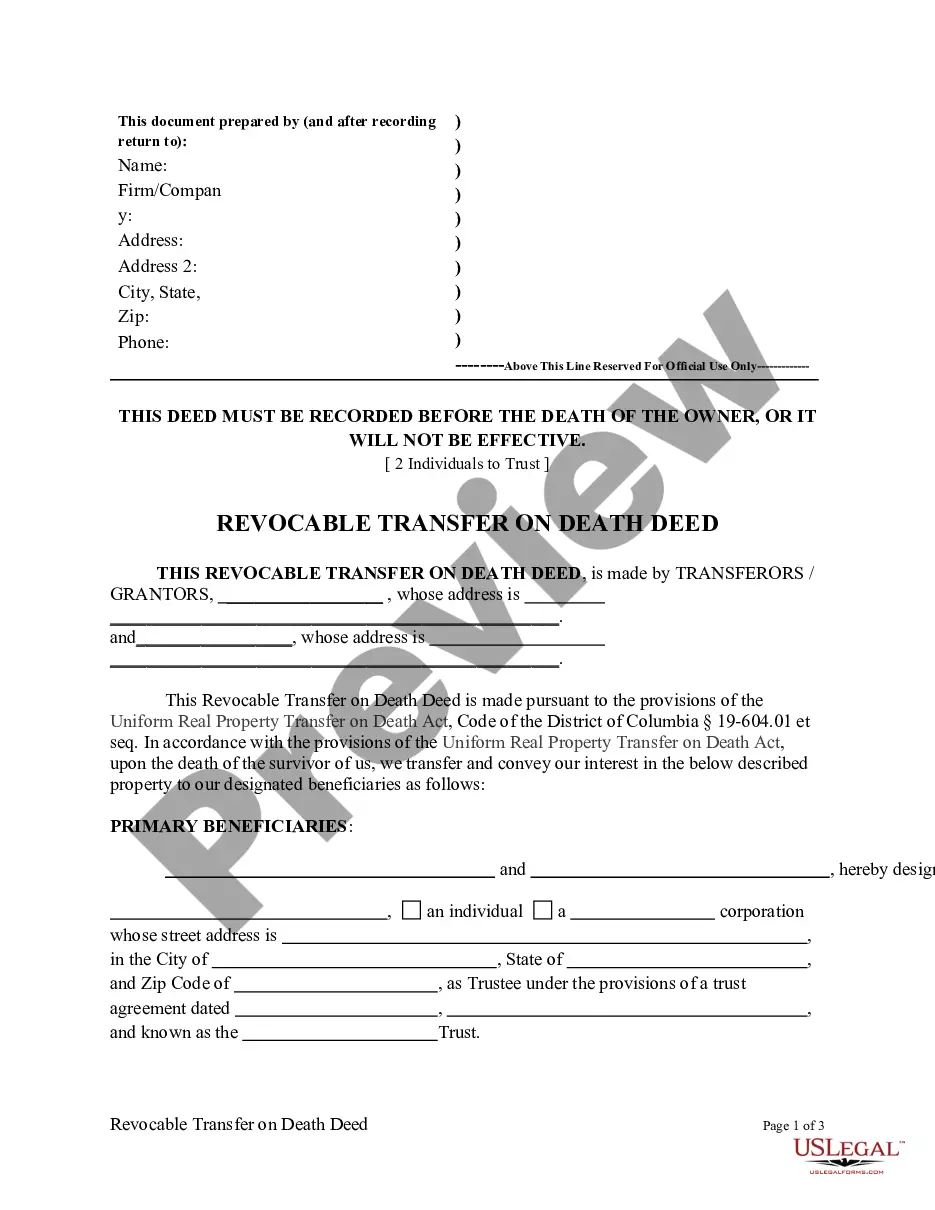
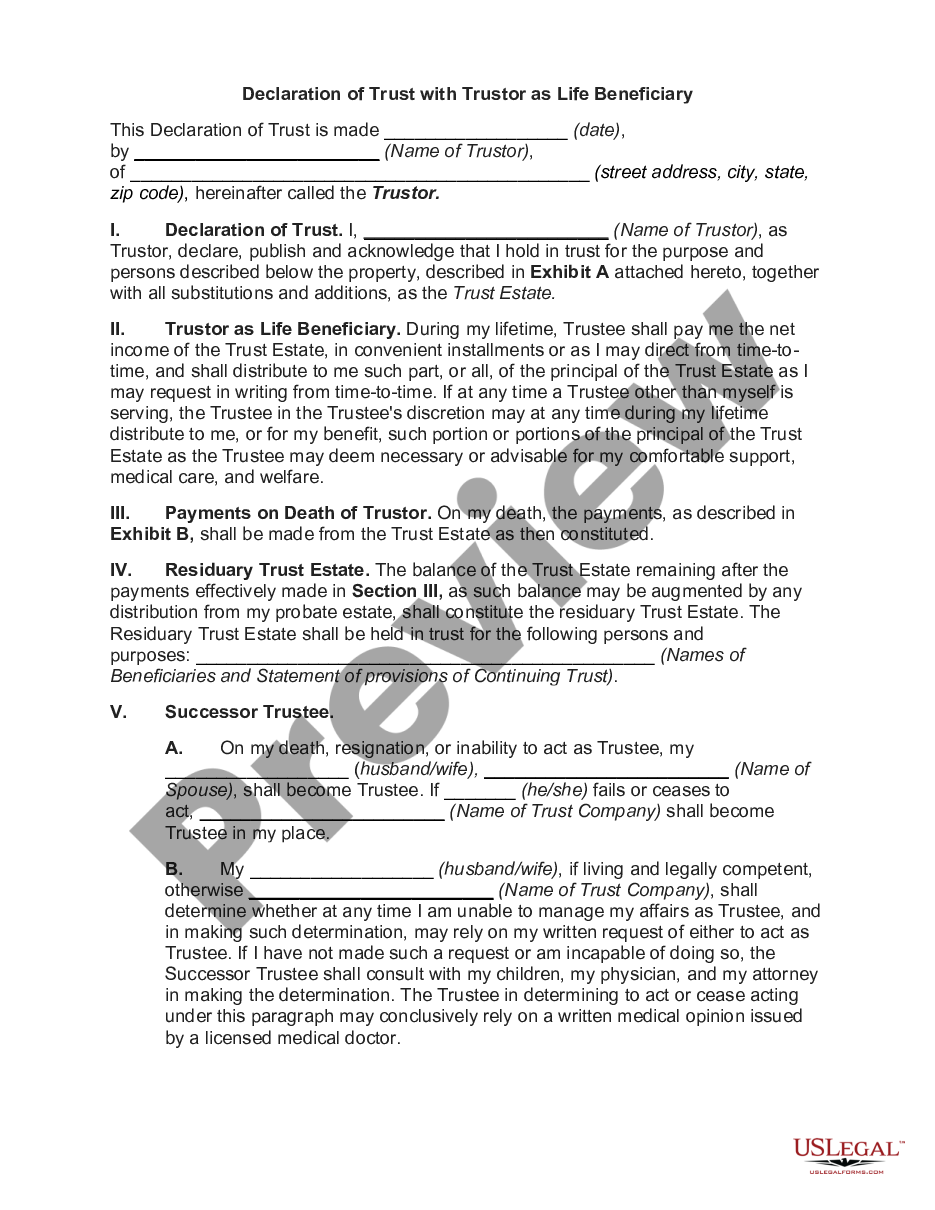
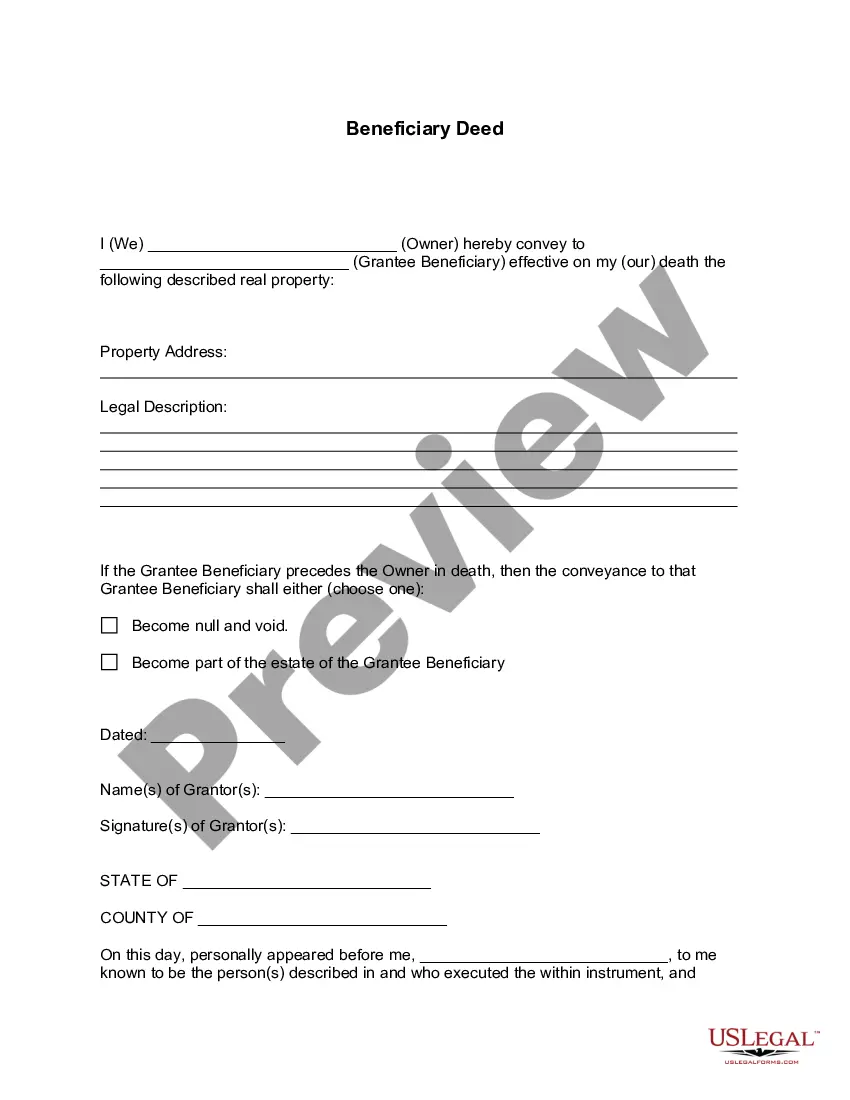
The Transfer on Death Deed (TOD) allows property owners to designate beneficiaries who will receive property upon their death without going through the probate process. This revocable deed ensures that ownership is transferred to the named trust or beneficiaries only after the owner's demise. Unlike other forms of property transfer, it does not impact the current ownership while the owner is alive and can be revoked at any time.
Key components of this form
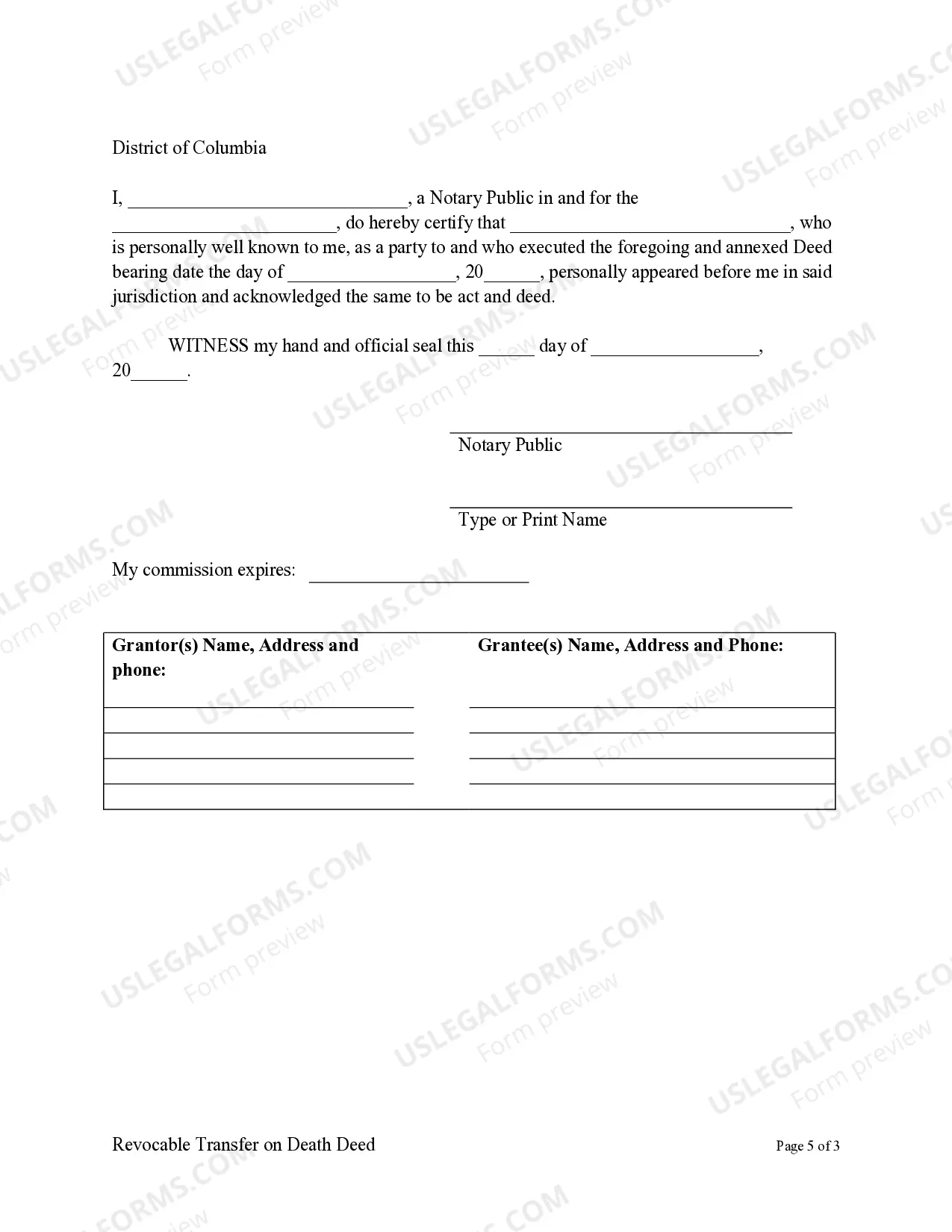
- Names and addresses of the Grantors (owners).
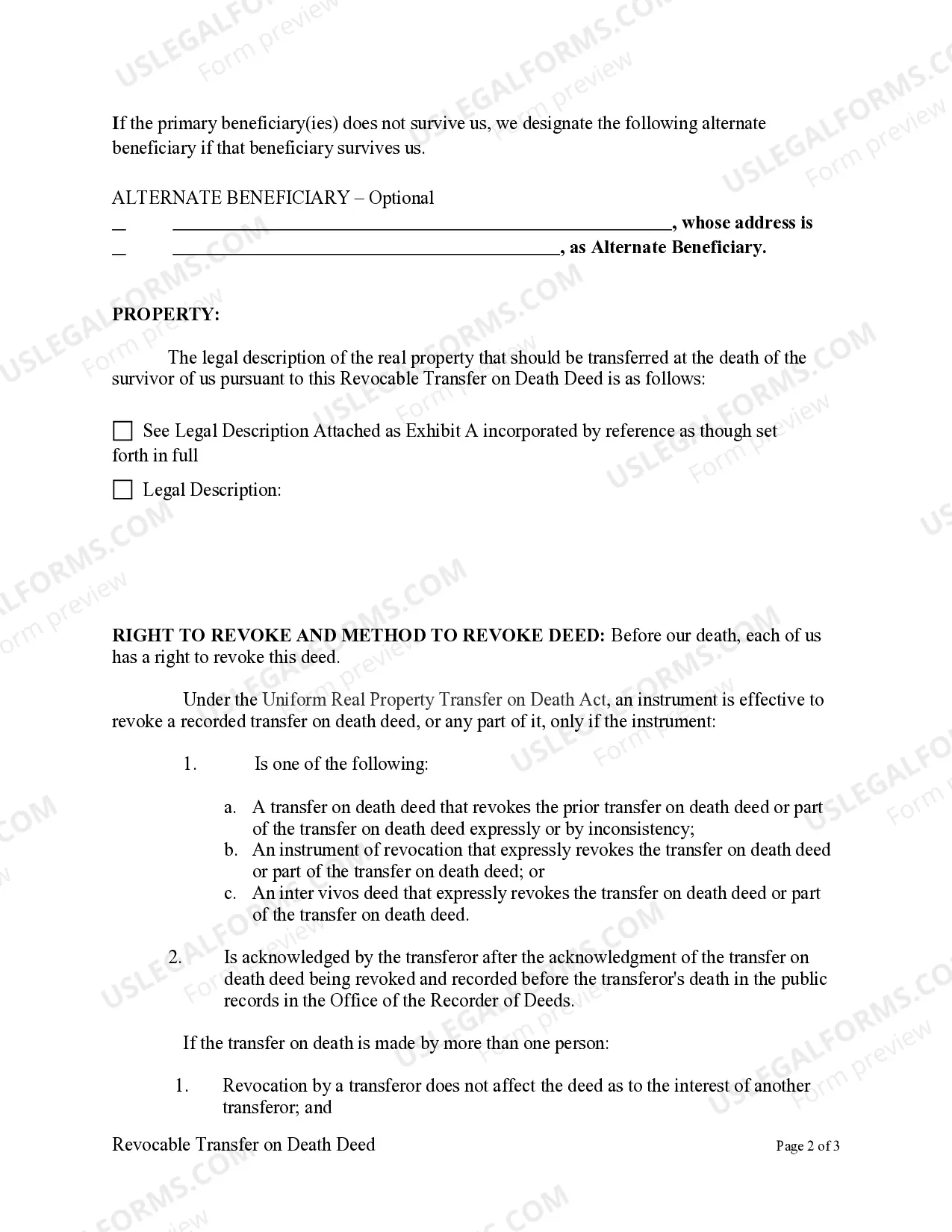
- Designation of primary and alternate beneficiaries.
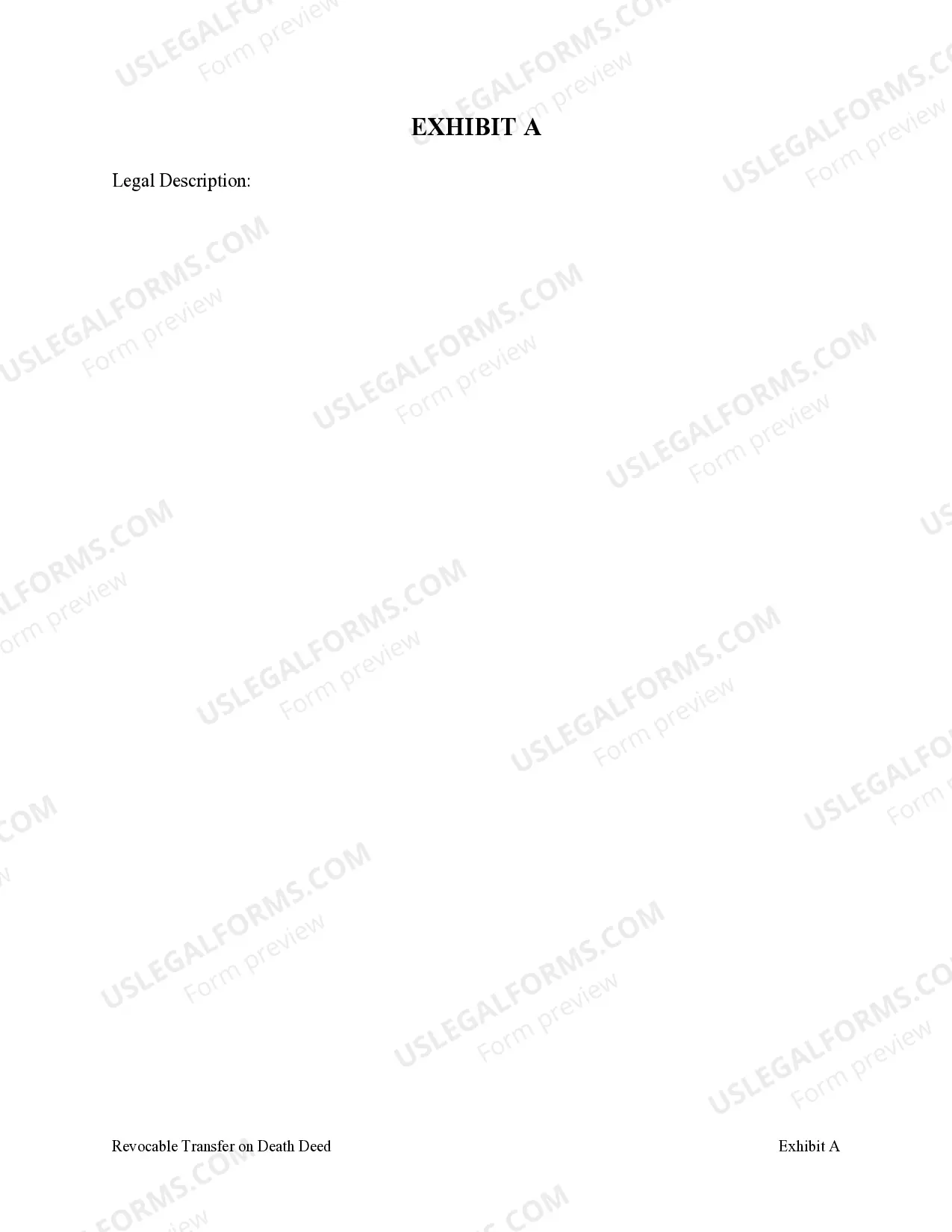
- Legal description of the property to be transferred.
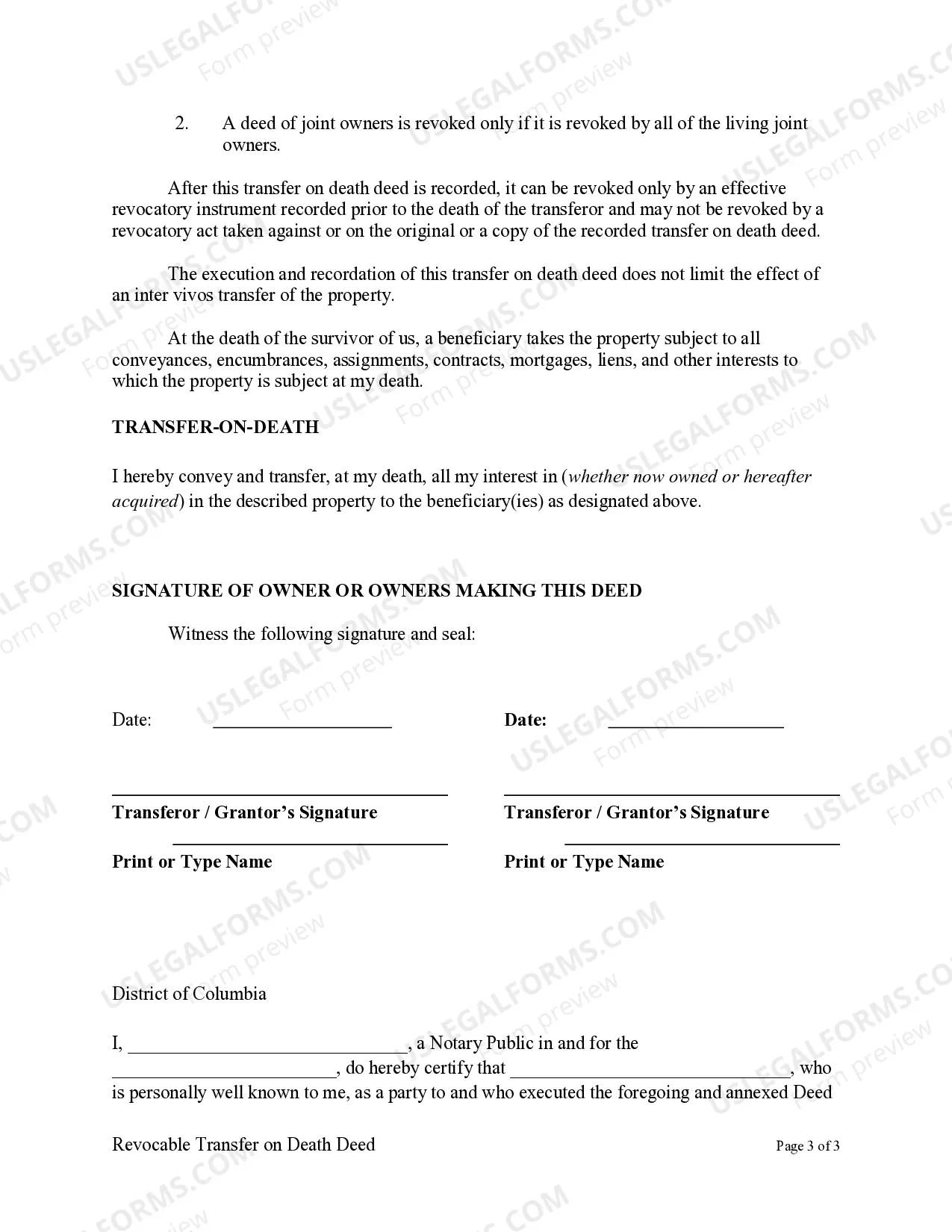
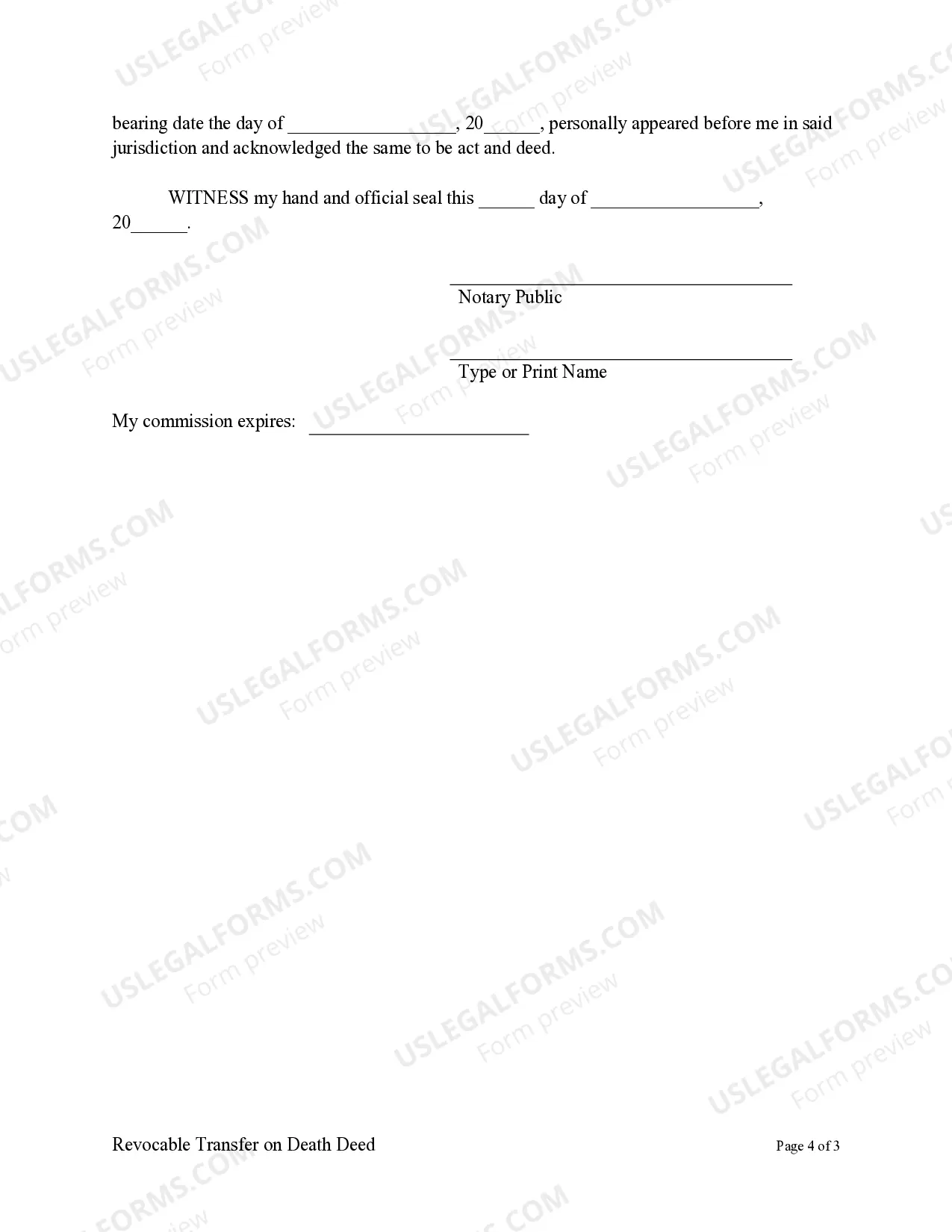
- Signature lines for Grantors and notary acknowledgment.
- Conditions under which the deed can be revoked.


When to use this form
This form is ideal when a property owner wishes to ensure a smooth transfer of their property to a trust or specific beneficiaries upon their death. It is particularly useful for estate planning purposes, offering a way to bypass the probate process and clarify intentions regarding property distribution. Use this form if you want to maintain control of the property during your lifetime and ensure it passes to your chosen beneficiary without complications.
Who should use this form
- Individuals looking to simplify their estate planning.
- Property owners wanting to transfer ownership upon death.
- Individuals seeking to designate a trust as a beneficiary.
- Those who want to avoid probate for their real estate assets.
How to complete this form
- Identify the property owners who will act as Grantors.
- Provide the legal description of the property to be transferred.
- Designate the primary and alternate beneficiaries.
- Sign the form in the presence of a notary public.
- Record the deed with the local Office of the Recorder of Deeds.
Is notarization required?
Yes, this form must be notarized to be legally valid. US Legal Forms offers integrated online notarization, allowing users to complete the process securely via video call without the need for travel.
Get your form ready online
Our built-in tools help you complete, sign, share, and store your documents in one place.
Make edits, fill in missing information, and update formatting in US Legal Forms—just like you would in MS Word.
Download a copy, print it, send it by email, or mail it via USPS—whatever works best for your next step.
Sign and collect signatures with our SignNow integration. Send to multiple recipients, set reminders, and more. Go Premium to unlock E-Sign.
If this form requires notarization, complete it online through a secure video call—no need to meet a notary in person or wait for an appointment.
We protect your documents and personal data by following strict security and privacy standards.

Make edits, fill in missing information, and update formatting in US Legal Forms—just like you would in MS Word.

Download a copy, print it, send it by email, or mail it via USPS—whatever works best for your next step.

Sign and collect signatures with our SignNow integration. Send to multiple recipients, set reminders, and more. Go Premium to unlock E-Sign.

If this form requires notarization, complete it online through a secure video call—no need to meet a notary in person or wait for an appointment.

We protect your documents and personal data by following strict security and privacy standards.
Typical mistakes to avoid
- Failing to record the deed before the death of the owner.
- Not specifying a clear and complete legal description of the property.
- Neglecting to include an alternate beneficiary.
- Forgetting to sign the deed in front of a notary.
Why use this form online
- Convenience of downloading and filling out the form from home.
- Easy editability to customize the deed as needed.
- Access to reliable templates drafted by licensed attorneys.
Looking for another form?
Form popularity
FAQ
To transfer a District of Columbia Transfer on Death Deed or TOD - Beneficiary Deed for Two Individuals to a Trust to two beneficiaries, you need to clearly list both names on the deed. Ensure that both beneficiaries understand their rights and responsibilities regarding the property. It’s also beneficial to consult a legal platform like uslegalforms to ensure the deed is correctly drafted and compliant with state laws.
Yes, you can name two beneficiaries on a District of Columbia Transfer on Death Deed or TOD - Beneficiary Deed for Two Individuals to a Trust. This allows both beneficiaries to inherit the property upon your passing, providing a straightforward transfer without going through probate. Naming multiple beneficiaries can help ensure that your assets are distributed according to your wishes, offering peace of mind.
While you can complete a District of Columbia Transfer on Death Deed or TOD - Beneficiary Deed for Two Individuals to a Trust without an attorney, it is wise to consult one. An attorney can help ensure that the deed meets all legal requirements and effectively addresses your wishes. Even though it's possible to handle it yourself, expert guidance can save you time and prevent potential legal issues in the future.
The main disadvantage of the District of Columbia Transfer on Death Deed or TOD - Beneficiary Deed for Two Individuals to a Trust is that it can complicate matters if you have multiple beneficiaries. In some cases, the deed may not override existing legal obligations such as debt or other claims against the property. Additionally, if ownership needs to be changed because of unforeseen circumstances, a TOD may not provide the flexibility you need.
Choosing between a TOD and a beneficiary designation depends on your specific circumstances. The District of Columbia Transfer on Death Deed or TOD - Beneficiary Deed for Two Individual to a Trust is often preferred for real estate, as it allows for direct transfer and avoids probate. In contrast, for financial accounts, a beneficiary designation may be more appropriate since it directly applies to those types of assets and can offer additional benefits for your heirs.
TOD accounts can be a good idea for many individuals, as they streamline the transfer process of assets upon death. They eliminate the need for probate, enabling beneficiaries to access assets more quickly. However, it is important to consider your overall estate plan and whether a District of Columbia Transfer on Death Deed or TOD - Beneficiary Deed for Two Individual to a Trust fits within your specific needs and goals.
The main difference lies in their function within estate planning. A District of Columbia Transfer on Death Deed or TOD - Beneficiary Deed for Two Individual to a Trust allows for direct transfer of property upon death, while a beneficiary designation typically applies to accounts or policies like life insurance. Essentially, TODs are specific to real estate, providing a seamless way to transfer ownership to named beneficiaries.
One disadvantage of the District of Columbia Transfer on Death Deed or TOD - Beneficiary Deed for Two Individual to a Trust is that it may not address all estate planning needs. For example, it does not provide protections against creditors or taxes that might arise after death. Additionally, a TOD may create complications if there are disputes among beneficiaries, which can lead to legal challenges.
Filling out a Transfer on Death designation affidavit involves several critical steps. First, you need to accurately identify the property and the beneficiaries in the District of Columbia Transfer on Death Deed or TOD - Beneficiary Deed for Two Individuals to a Trust. USLegalForms offers easy-to-understand templates and instructions that simplify this process, ensuring you complete the affidavit correctly and efficiently.
While it is not mandatory to have an attorney for a Transfer on Death deed, consulting a legal expert ensures that you comply with all regulations. This is particularly important for the District of Columbia Transfer on Death Deed or TOD - Beneficiary Deed for Two Individuals to a Trust, as every jurisdiction may have unique requirements. USLegalForms provides guidance and templates that can aid you if you choose to manage the process independently.