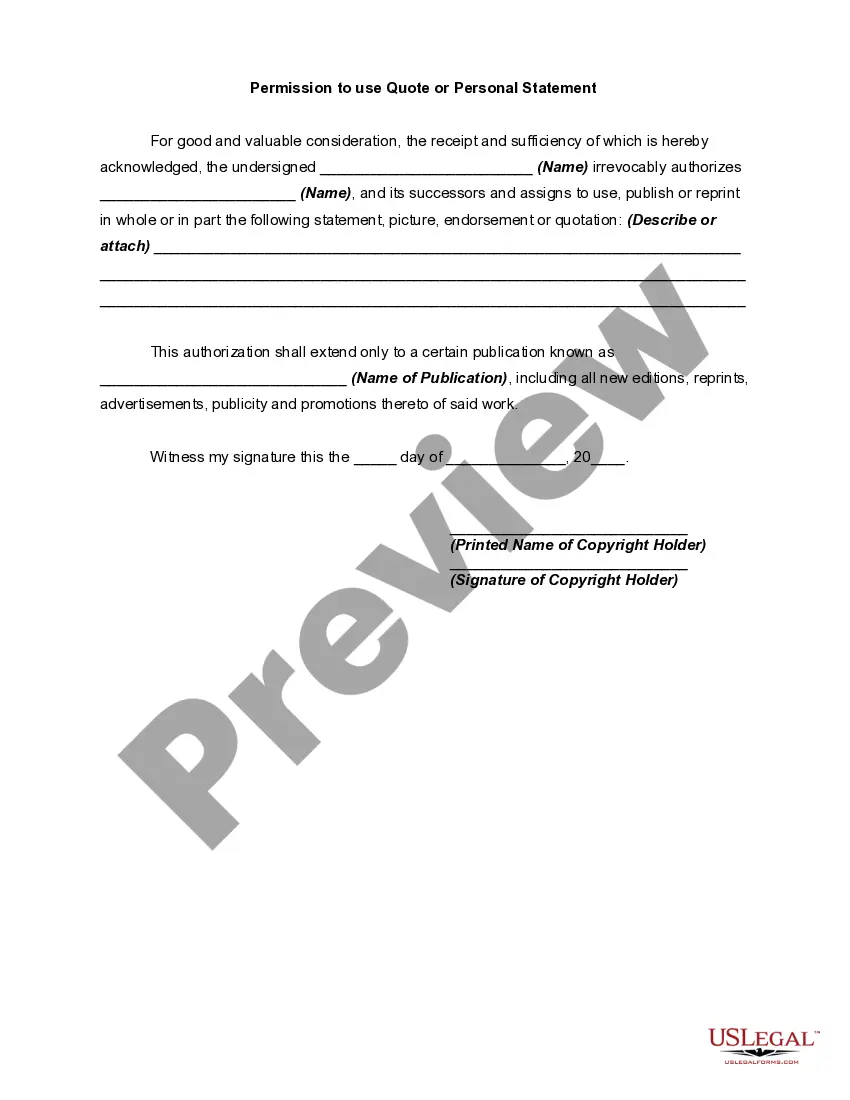
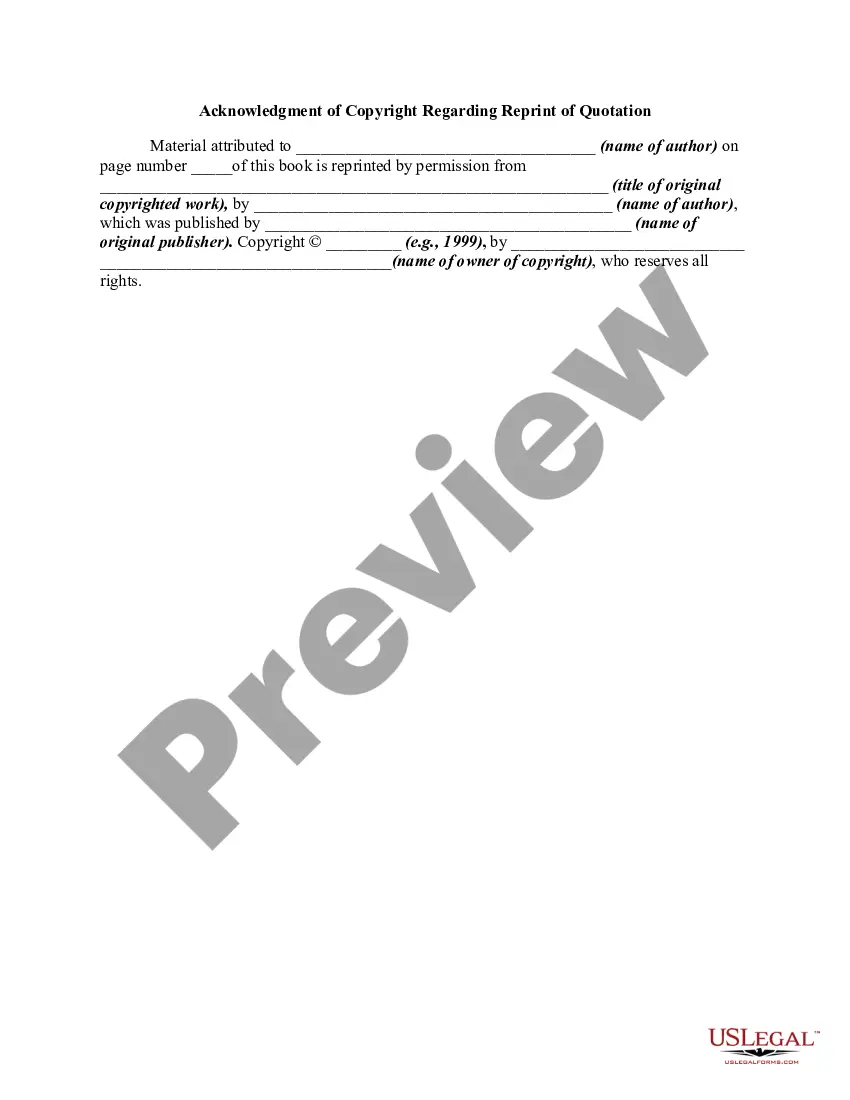
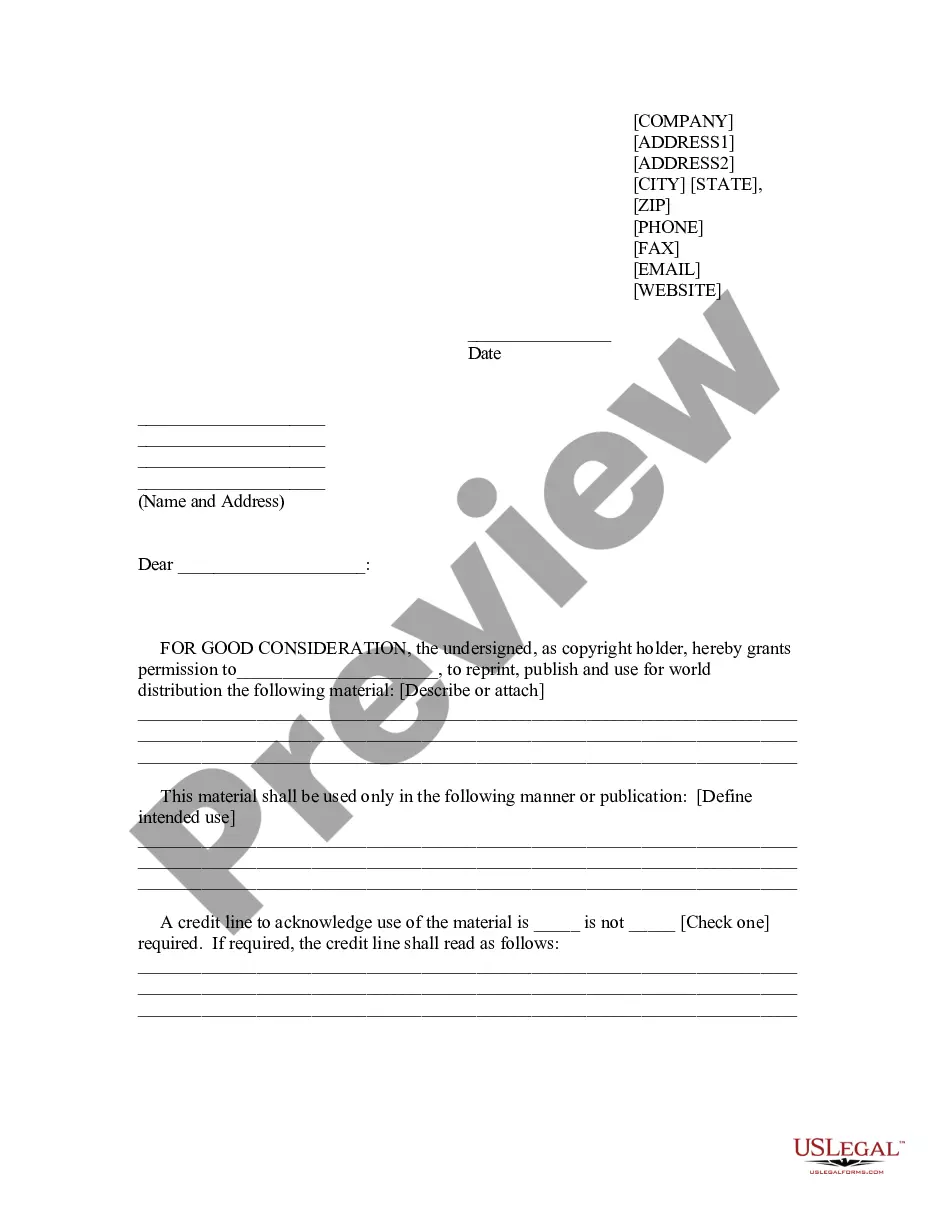
District of Columbia Permission to use Quote or Personal Statement
Description
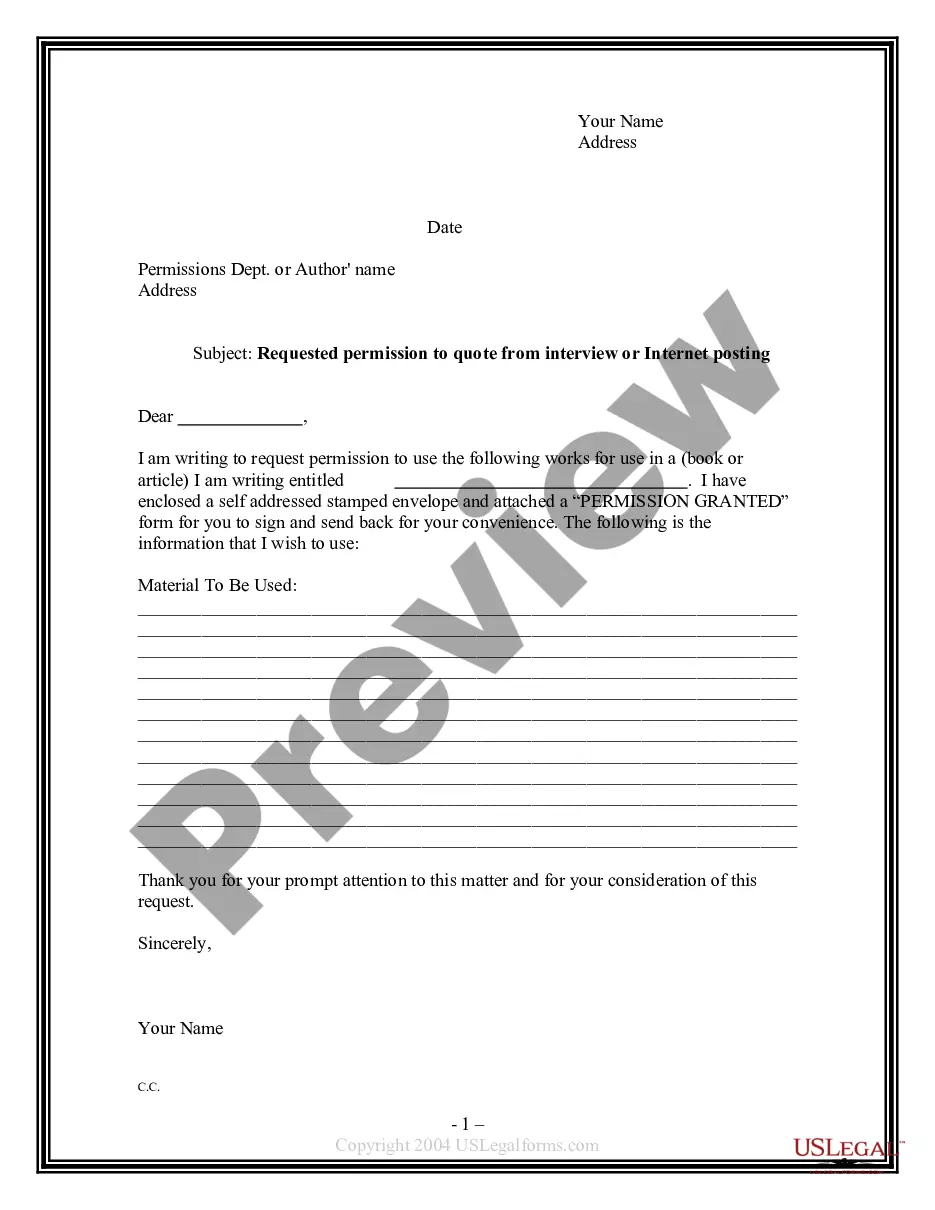
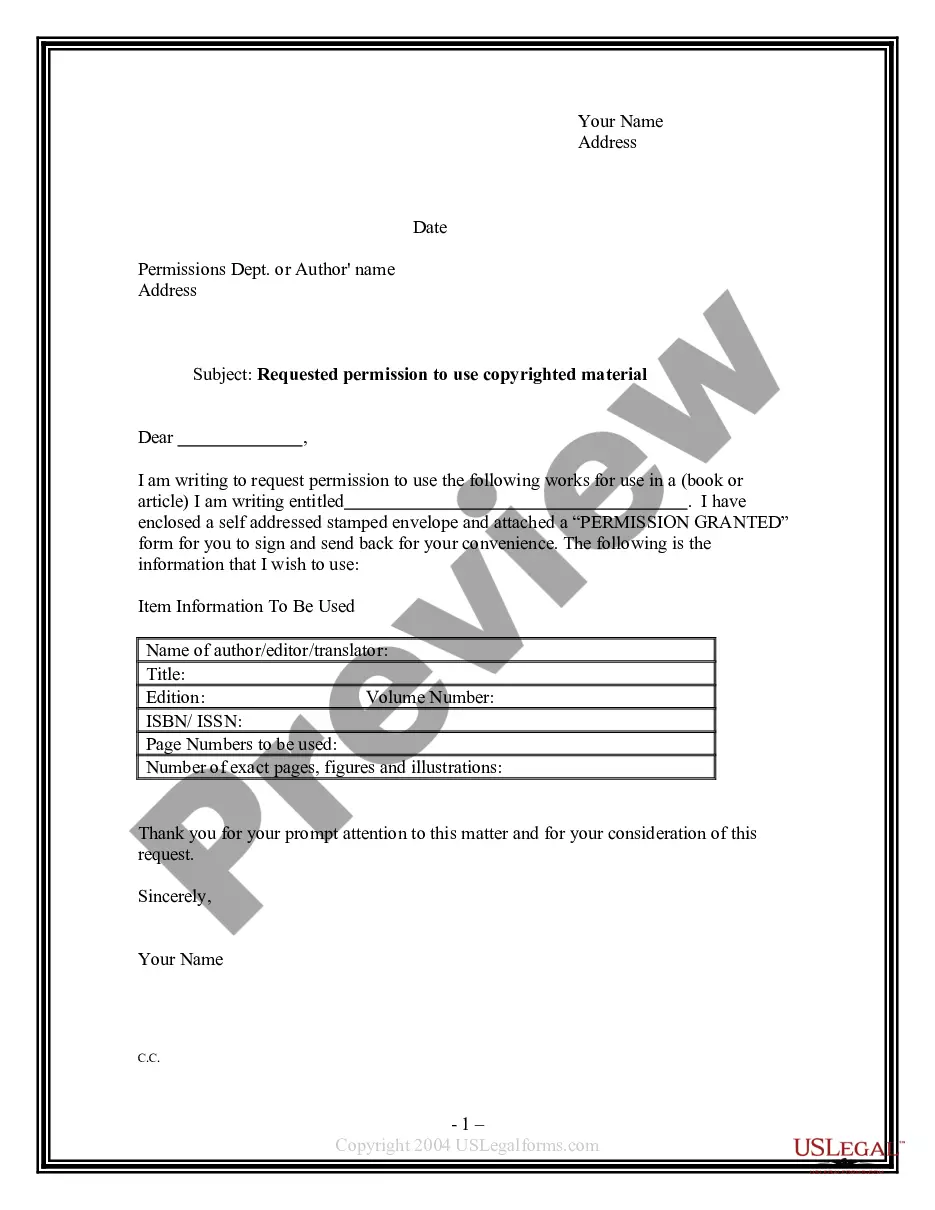
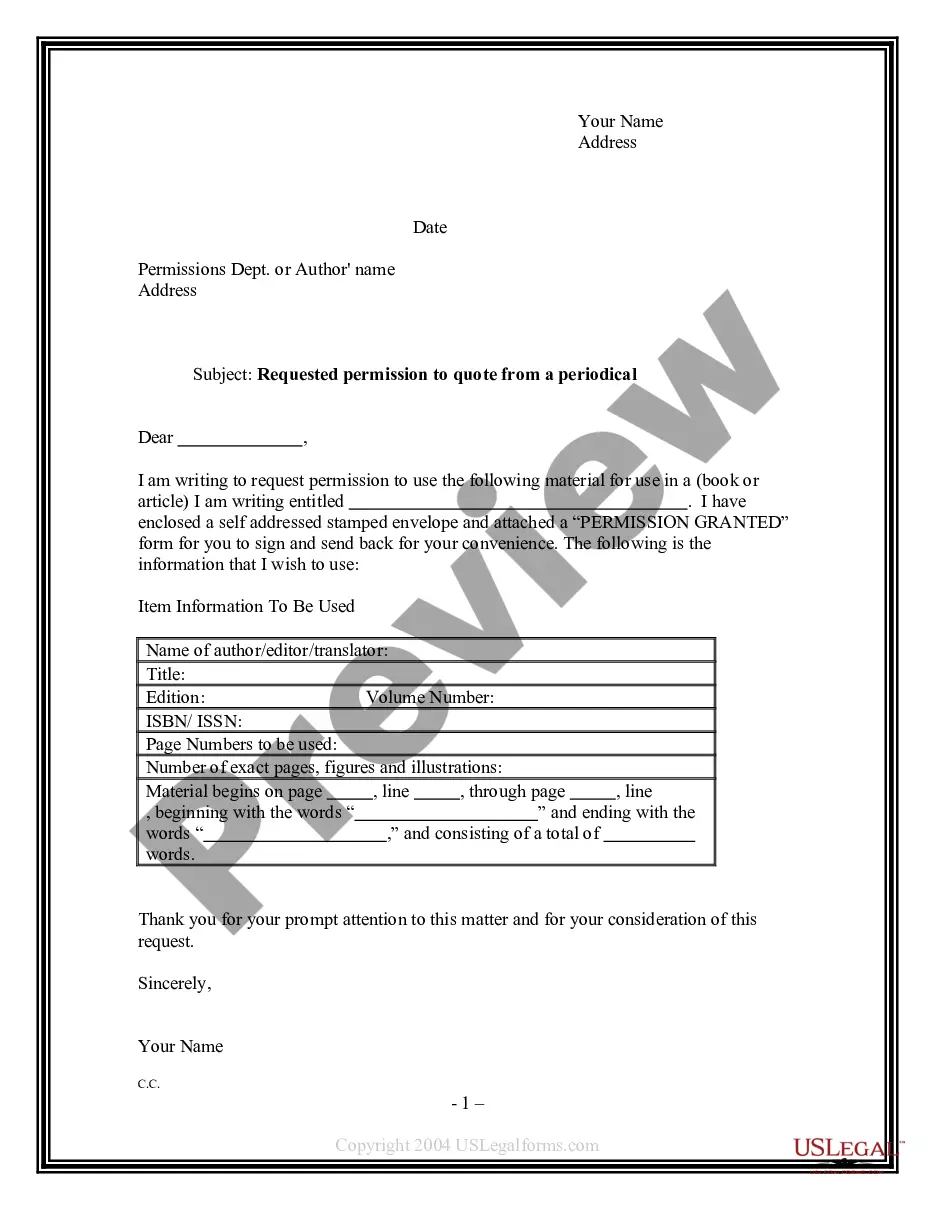
Get your form ready online
Our built-in tools help you complete, sign, share, and store your documents in one place.
Make edits, fill in missing information, and update formatting in US Legal Forms—just like you would in MS Word.
Download a copy, print it, send it by email, or mail it via USPS—whatever works best for your next step.
Sign and collect signatures with our SignNow integration. Send to multiple recipients, set reminders, and more. Go Premium to unlock E-Sign.
If this form requires notarization, complete it online through a secure video call—no need to meet a notary in person or wait for an appointment.
We protect your documents and personal data by following strict security and privacy standards.

Make edits, fill in missing information, and update formatting in US Legal Forms—just like you would in MS Word.

Download a copy, print it, send it by email, or mail it via USPS—whatever works best for your next step.

Sign and collect signatures with our SignNow integration. Send to multiple recipients, set reminders, and more. Go Premium to unlock E-Sign.

If this form requires notarization, complete it online through a secure video call—no need to meet a notary in person or wait for an appointment.

We protect your documents and personal data by following strict security and privacy standards.
Looking for another form?


How to fill out Permission To Use Quote Or Personal Statement?
If you need to obtain, download, or print authorized document templates, utilize US Legal Forms, the largest collection of legal forms available online.
Take advantage of the site's simple and convenient search feature to find the documents you require. Various templates for business and personal use are organized by categories and states, or keywords.
Use US Legal Forms to locate the District of Columbia Permission to use Quote or Personal Statement with just a few clicks.
Every legal document template you acquire is yours indefinitely. You can access every form you purchased in your account. Click on the My documents section and select a form to print or download again.
Complete, download, and print the District of Columbia Permission to use Quote or Personal Statement with US Legal Forms. There are countless professional and state-specific forms available for your personal or business needs.
- If you are already a US Legal Forms user, Log In to your account and click the Download button to obtain the District of Columbia Permission to use Quote or Personal Statement.
- You can also access forms you previously acquired under the My documents tab in your account.
- If this is your first time using US Legal Forms, follow the instructions below.
- Step 1. Make sure you have selected the form for your specific city/region.
- Step 2. Use the Preview option to review the form's content. Be sure to examine the details.
- Step 3. If you are not satisfied with the form, use the Search area at the top of the screen to find other versions of the legal form template.
- Step 4. Once you've found the form you need, click the Purchase Now button. Choose the payment plan you prefer and enter your information to register for an account.
- Step 5. Process the payment. You can use your credit card or PayPal account to complete the transaction.
- Step 6. Choose the format of the legal form and download it to your device.
- Step 7. Complete, modify, and print or sign the District of Columbia Permission to use Quote or Personal Statement.
Form popularity
FAQ
A comma should always separate Washington and D.C. as in Washington, D.C. with a comma after D.C. if the sentence continues. Example: In Washington, D.C., students visited the Smithsonian museum. When referring to a major city, there is no need for the state abbreviation.
"Do not use D.C. standing alone," a new AP style tip read, saying "Washington" is preferred in most references because it's recognized globally. When needed, use "District of Columbia," not "D.C.", said the AP which sets the standard for how most news articles are written.
District: Always capitalize District when referring to the District of Columbia.
Washington, DC, isn't a state; it's a district. DC stands for District of Columbia. Its creation comes directly from the US Constitution, which provides that the district, "not exceeding 10 Miles square," would "become the Seat of the Government of the United States."
Washington, D.C.: Spelling, Punctuation, and Capitalization1 The letters D.C. each get a period, since they are abbreviations for the term District of Columbia.2 Capital, with an a, refers to a city that serves as the seat of a government.3 Capitol, with an o, refers to a building that houses a legislature.More items...
Therefore, be careful to only say DC to refer to the District of Columbia and not the entire region. When talking about the region, use the terms Washington region, Greater Washington, or the region. Avoid DC region. If there might be confusion with Washington State, use Washington, DC region.
Washington, DC, isn't a state; it's a district. DC stands for District of Columbia.
District of Columbia (D.C.) Law.
Include the coma.You can. I think more people say "DC" than "Washington" casually though.Either is fine, but choose one and be consistent.End sentences with "D.C." Never use an extra period.Either - the context doesn't matter, just use the same one throughout.D.C. is the more formal one, but DC is also fine.
It is written Washington, D.C. with comma and periods. Except when it's used as a postal address. Although the U.S. Postal Service is very good about making things work, the "official" recommendation is that no periods, commas or other punctuation marks are used in postal addresses.