District of Columbia Interrogatories to Plaintiff for Motor Vehicle Occurrence
About this form
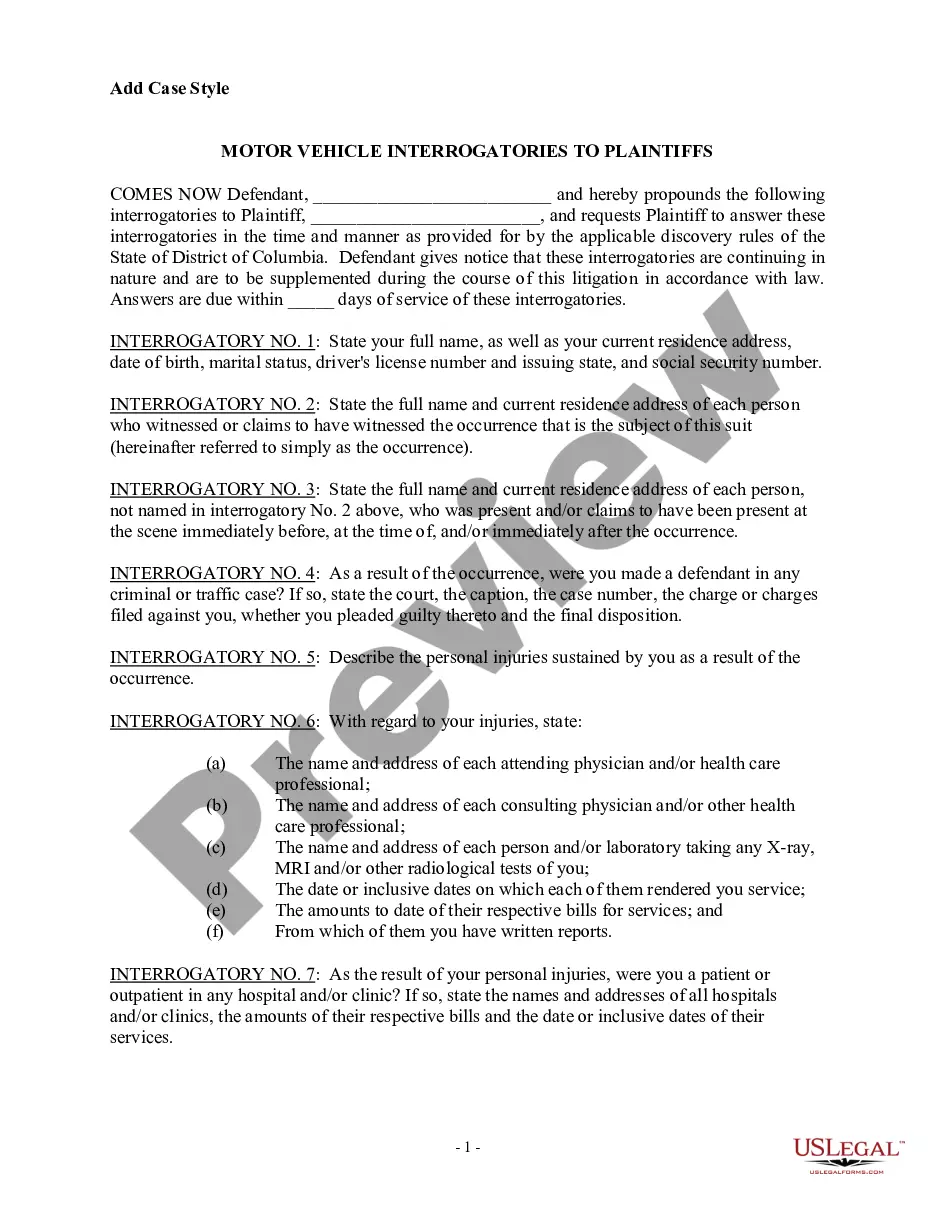
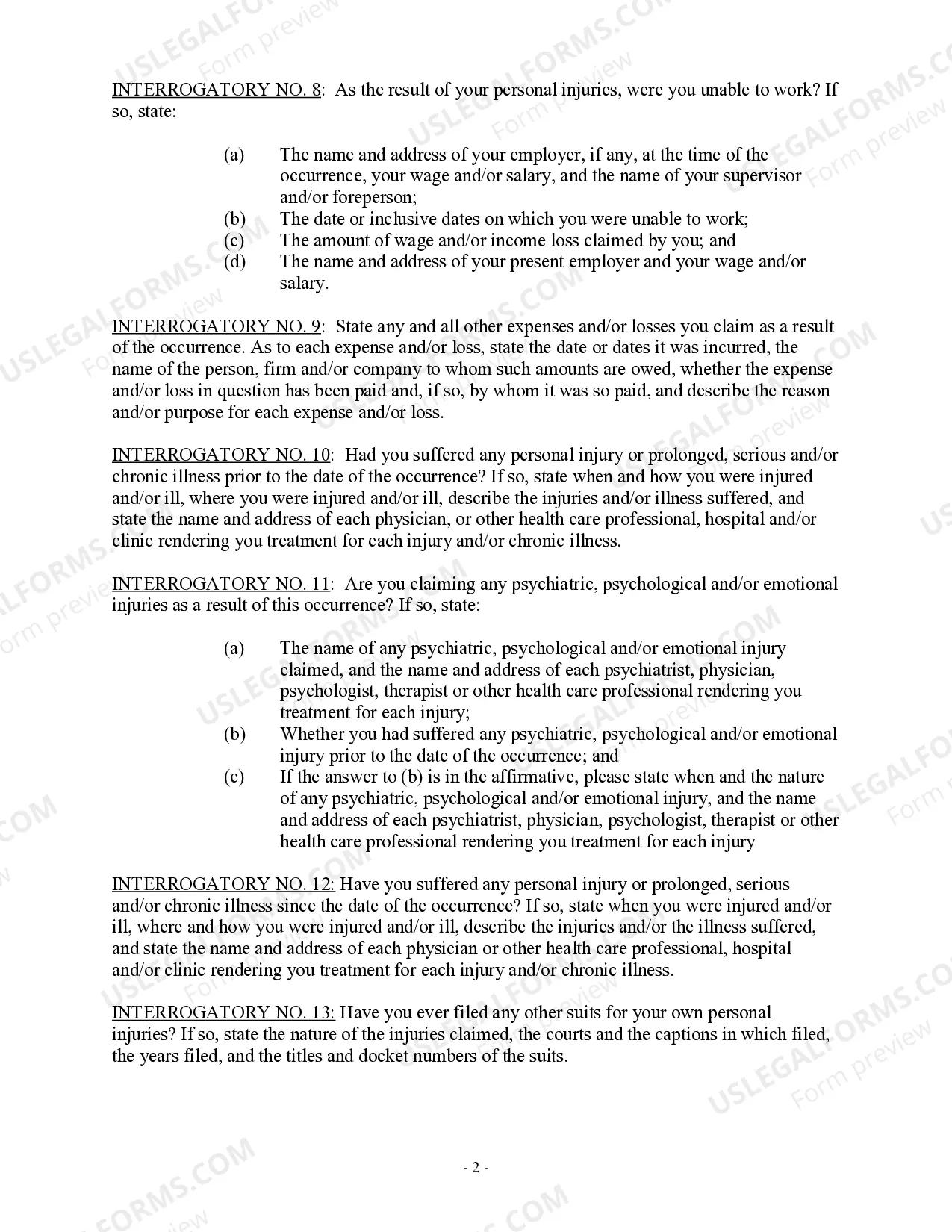
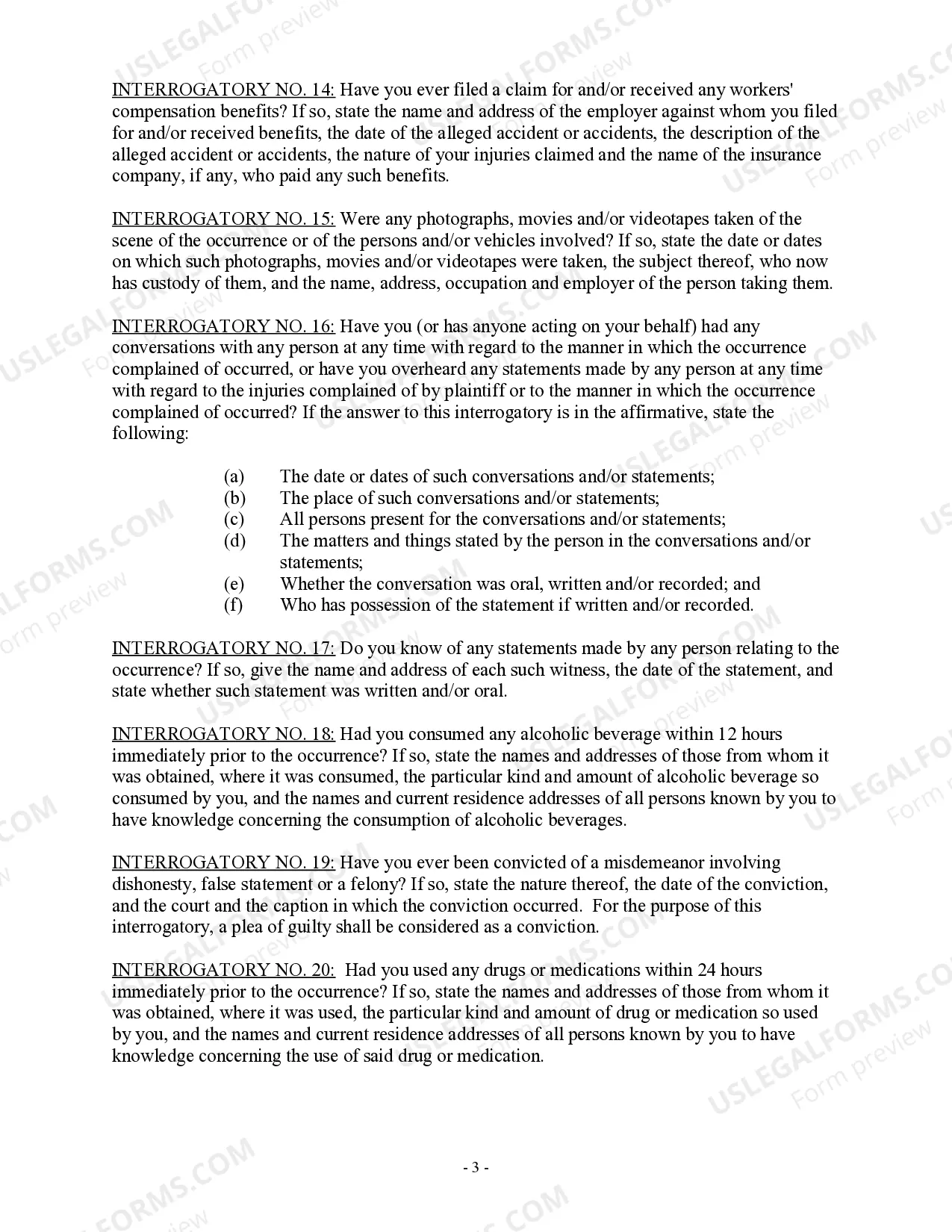
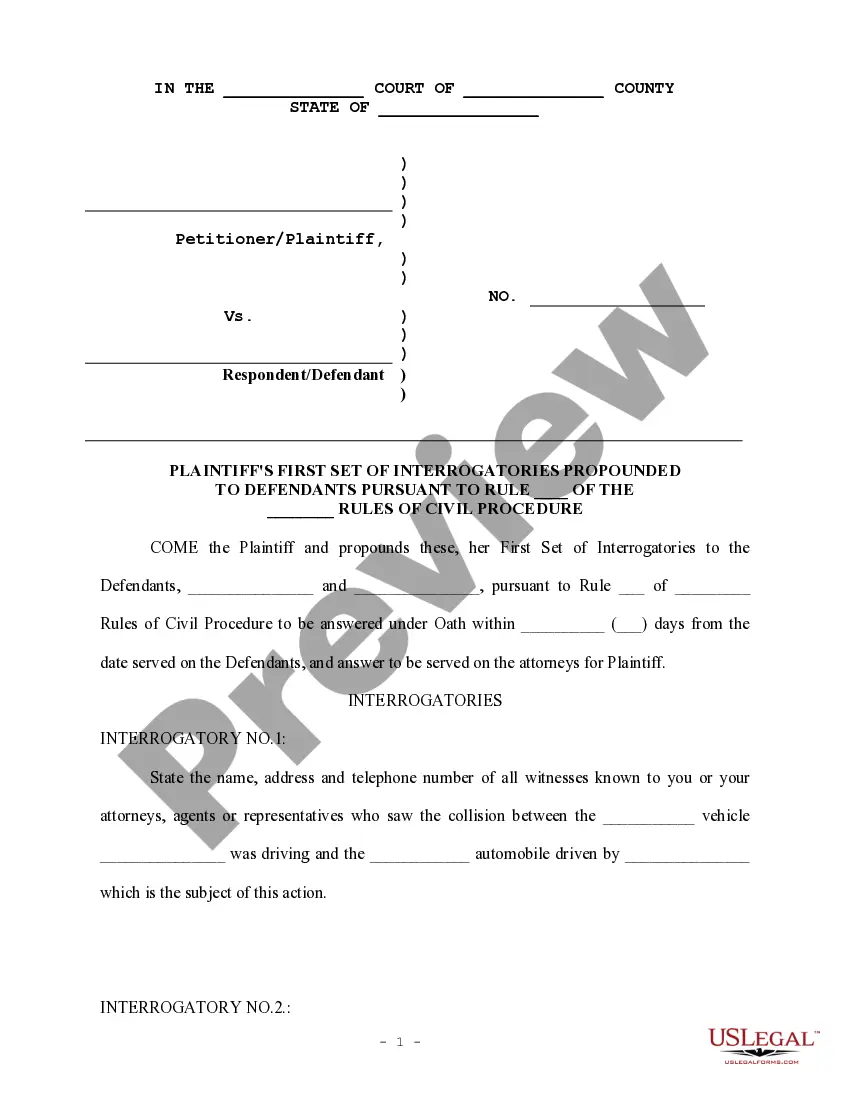
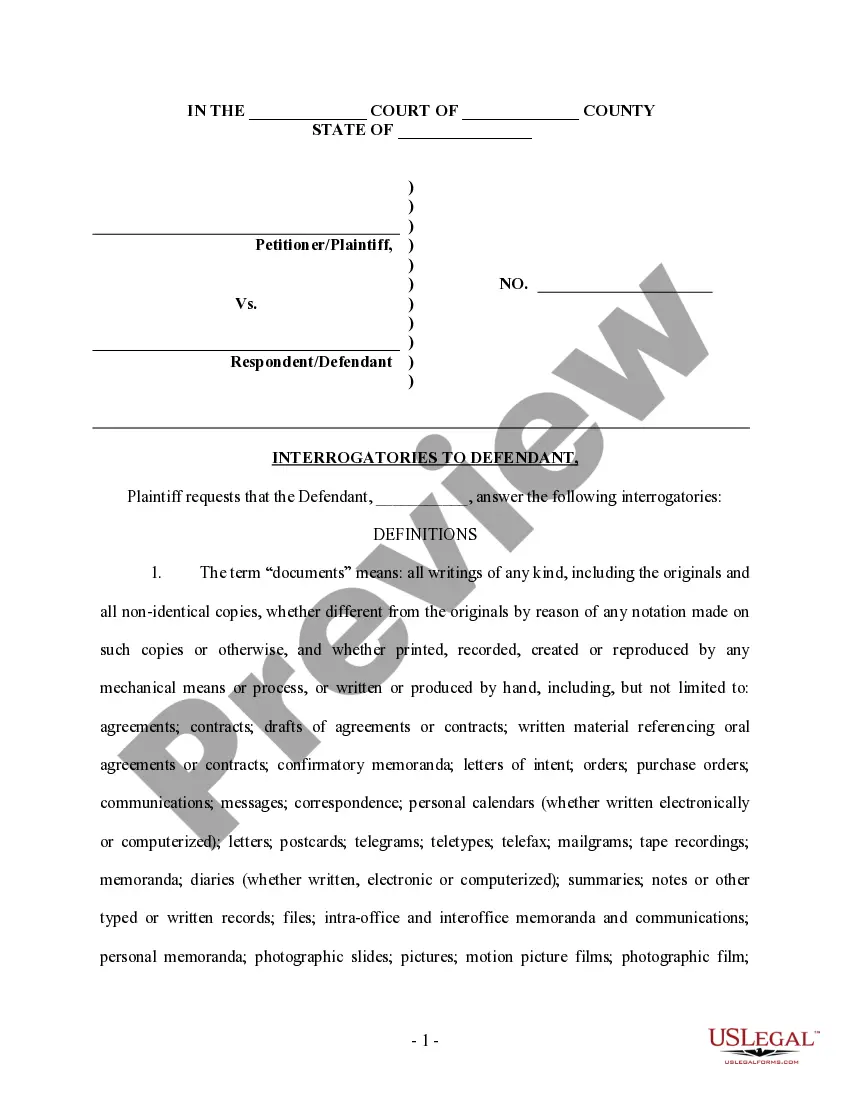
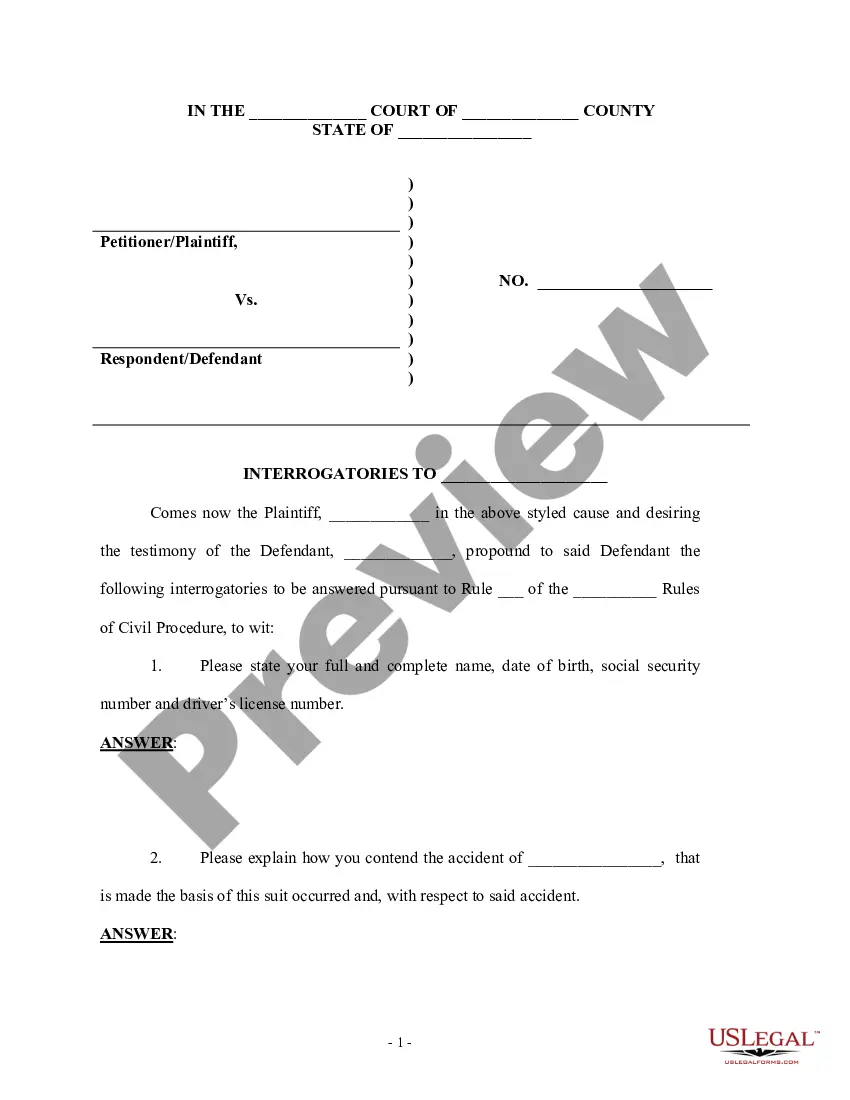
The Interrogatories to Plaintiff for Motor Vehicle Occurrence is a legal document used by defendants in vehicle incident cases, such as automobile accidents. This form allows the defendant to request detailed information from the plaintiff about the incident and any resulting injuries. It differs from other legal documents by focusing specifically on interrogatories, which are questions that the plaintiff must answer under oath, helping to clarify the facts of the case and gather evidence for litigation.
Form components explained
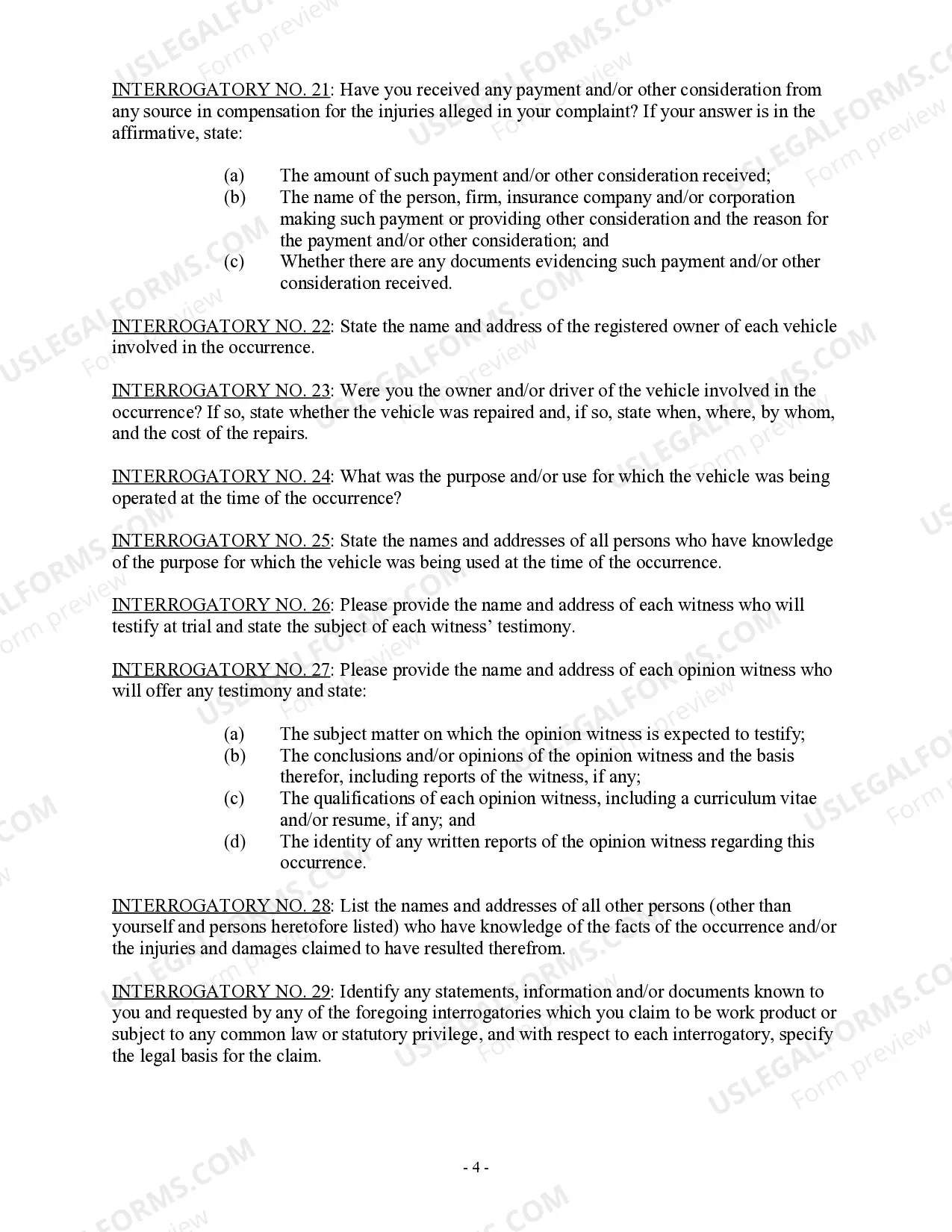
- Basic information about the plaintiff, including name, address, and Social Security number.
- Details of witnesses and individuals present during the vehicle occurrence.
- Information about any personal injuries sustained due to the incident.
- Health care provider details, including treatment received and medical expenses incurred.
- Factors affecting work, including lost wages due to injury.
- Documentation requests for any additional expenses related to the occurrence.
When to use this form
This form should be used when a defendant needs to gather information from the plaintiff following a motor vehicle incident. It is commonly used in personal injury cases, where the plaintiff alleges injuries due to the defendant's actions, enabling the defendant to understand the claims and prepare for legal proceedings.
Who should use this form
- Defendants in a personal injury lawsuit stemming from a motor vehicle accident.
- Legal representatives seeking to gather essential information from the plaintiff.
- Insurance companies managing claims related to automobile incidents.
Steps to complete this form
- Identify the parties involved by entering the names and addresses of the defendant and plaintiff.
- Answer all interrogatories thoroughly, providing the requested information about the incident, injuries, and witnesses.
- Collect and attach any necessary documentation that supports claims made within the interrogatories.
- Review the completed form for clarity and accuracy before submission.
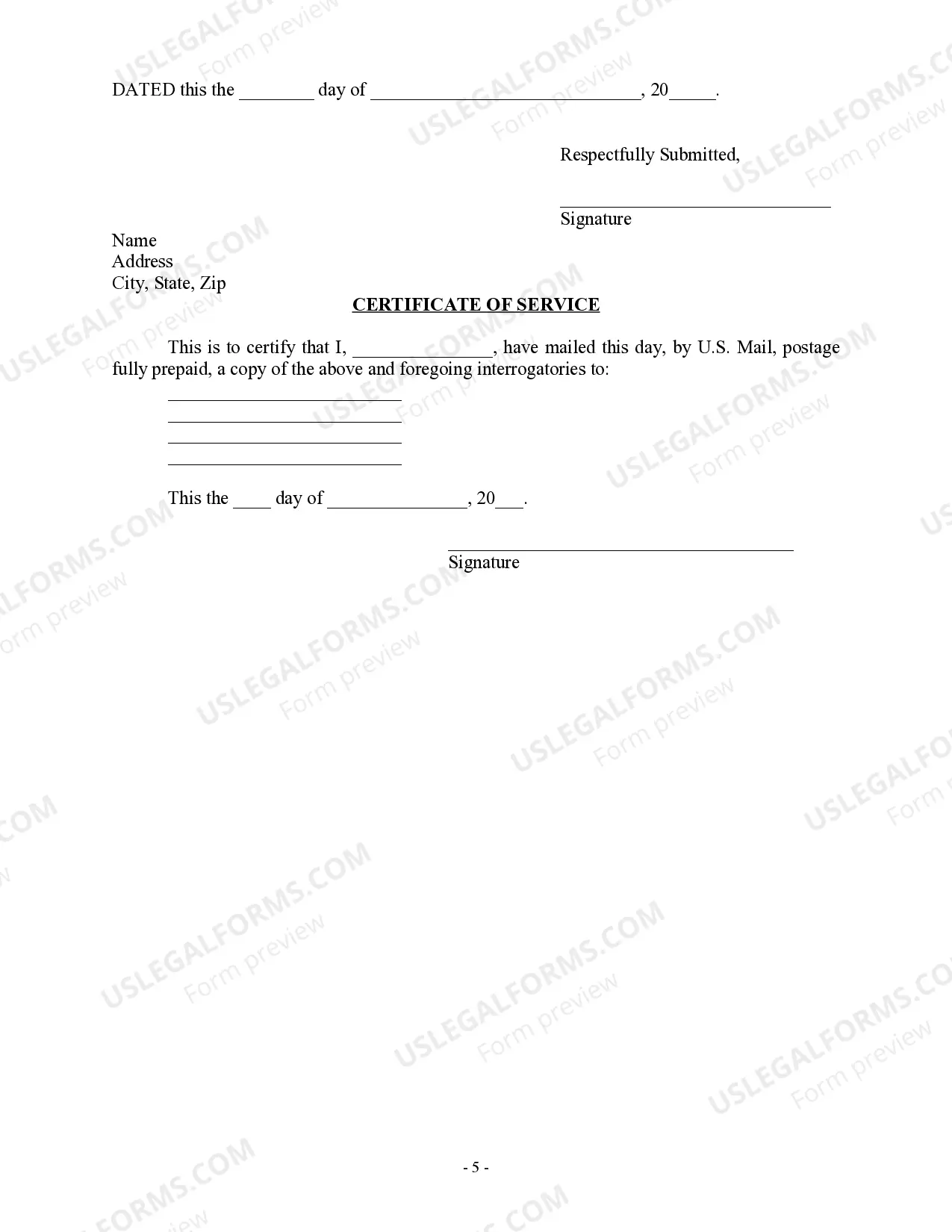
- Submit the form to the plaintiff and ensure proper service is documented.
Notarization guidance
This form does not typically require notarization unless specified by local law. However, it is advised to check the specific requirements for the District of Columbia to ensure compliance.
Get your form ready online
Our built-in tools help you complete, sign, share, and store your documents in one place.
Make edits, fill in missing information, and update formatting in US Legal Forms—just like you would in MS Word.
Download a copy, print it, send it by email, or mail it via USPS—whatever works best for your next step.
Sign and collect signatures with our SignNow integration. Send to multiple recipients, set reminders, and more. Go Premium to unlock E-Sign.
If this form requires notarization, complete it online through a secure video call—no need to meet a notary in person or wait for an appointment.
We protect your documents and personal data by following strict security and privacy standards.

Make edits, fill in missing information, and update formatting in US Legal Forms—just like you would in MS Word.

Download a copy, print it, send it by email, or mail it via USPS—whatever works best for your next step.

Sign and collect signatures with our SignNow integration. Send to multiple recipients, set reminders, and more. Go Premium to unlock E-Sign.

If this form requires notarization, complete it online through a secure video call—no need to meet a notary in person or wait for an appointment.

We protect your documents and personal data by following strict security and privacy standards.
Typical mistakes to avoid
- Failing to answer all questions completely or accurately.
- Neglecting to attach supporting documents when required.
- Missing deadlines for responding to interrogatories.
- Using legal jargon that may confuse the recipient.
Benefits of completing this form online
- Convenience of downloading and completing the form at your own pace.
- Editability allows for modifications to better suit your specific case needs.
- Access to forms prepared by licensed attorneys, ensuring reliability and compliance.
- Easy navigation through legal requirements without the need for a lawyer consultation for basic forms.
Legal use & context
- Interrogatories are an essential tool in the discovery process of civil litigation.
- Responses can be used as evidence during trials or negotiations.
- Failure to answer interrogatories can result in legal penalties, including dismissal of the case.
Key takeaways
- The Interrogatories to Plaintiff for Motor Vehicle Occurrence is specifically designed for vehicle accident-related lawsuits.
- This form allows defendants to obtain critical information to support their legal defense.
- Compliance with state-specific rules is essential for effective use of the form.
Looking for another form?

Form popularity
FAQ
There are specific boundaries when crafting interrogatories. For instance, you cannot ask questions that invade a person’s privacy or request privileged information, such as attorney-client communications. In the context of District of Columbia Interrogatories to Plaintiff for Motor Vehicle Occurrence, avoid vague or ambiguous inquiries that could confuse the plaintiff. Leveraging USLegalForms can ensure your interrogatories are well-structured and comply with legal standards.
If a plaintiff does not answer interrogatories, several consequences may arise. The defendant can file a motion to compel the plaintiff to respond, which can lead to court intervention. Additionally, failure to provide answers may result in sanctions, including the dismissal of the case or limitations on evidence. Therefore, it is crucial for plaintiffs involved in District of Columbia Interrogatories to Plaintiff for Motor Vehicle Occurrence to address these questions promptly.
Interrogatories to the plaintiff are written questions that one party sends to another during the discovery phase of a lawsuit. In the context of District of Columbia Interrogatories to Plaintiff for Motor Vehicle Occurrence, these questions aim to gather relevant information about the incident. The plaintiff must respond to these questions, providing details that may clarify the case and impact its outcome. Utilizing a platform like USLegalForms can help simplify the process of drafting and managing these interrogatories.
You must respond to interrogatories within the specified timeframe. Depending on the context, responding means providing truthful and complete answers or indicating objections where applicable. The clarity of your response plays a vital role in the litigation surrounding District of Columbia Interrogatories to Plaintiff for Motor Vehicle Occurrence.
Writing good interrogatories involves crafting clear, direct questions geared towards uncovering the facts you need. Consider what information will help your case the most, and avoid vague or compound questions. Strong interrogatories are essential for navigating District of Columbia Interrogatories to Plaintiff for Motor Vehicle Occurrence.
Filling out an interrogatories form involves providing your answers in the designated sections of the document. Each question will typically have space for your answer, so be detailed and accurate. Using reputable resources like USLegalForms can guide you through the process of District of Columbia Interrogatories to Plaintiff for Motor Vehicle Occurrence effectively.
In interrogatories, you should ask questions that clarify facts, gather information about the case, and probe the opposition's claims. Focus on questions that are relevant to the legal issues at hand, particularly those crucial to District of Columbia Interrogatories to Plaintiff for Motor Vehicle Occurrence. Ensure that your questions are clear and concise.
To write effective answers to interrogatories, first read each question thoroughly. Respond in a straightforward manner, ensuring that each answer aligns with the fact pattern of your case, especially in the context of District of Columbia Interrogatories to Plaintiff for Motor Vehicle Occurrence. Always maintain a professional tone.
Writing answers to interrogatories requires clarity and precision. Start by addressing each question directly, providing complete and truthful answers. If needed, you can reference specific documents or evidence related to the District of Columbia Interrogatories to Plaintiff for Motor Vehicle Occurrence to support your answers.
When objecting to interrogatories, you should clearly state the specific objection. Reference any relevant laws or rules that support your objection, and ensure you communicate your stance within the designated response time. This method effectively protects your rights in the realm of District of Columbia Interrogatories to Plaintiff for Motor Vehicle Occurrence.