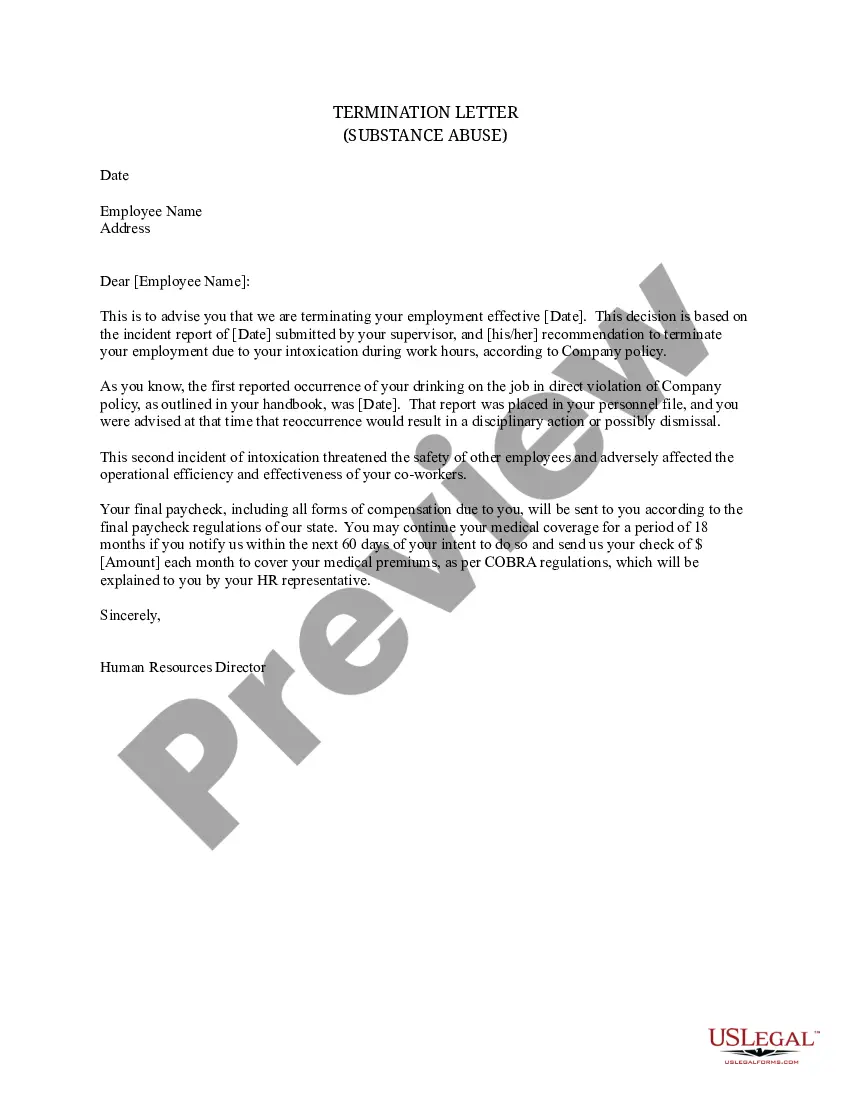
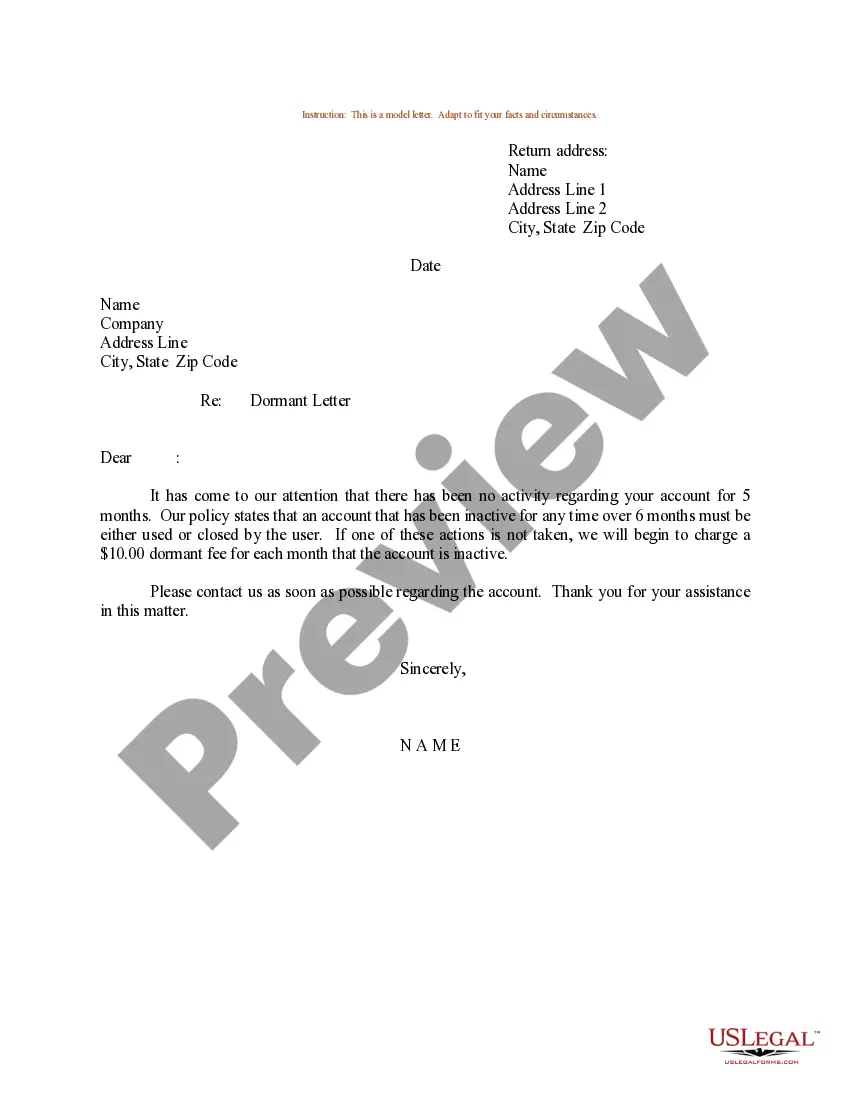
Connecticut Termination Letter (Substance Abuse)
Description
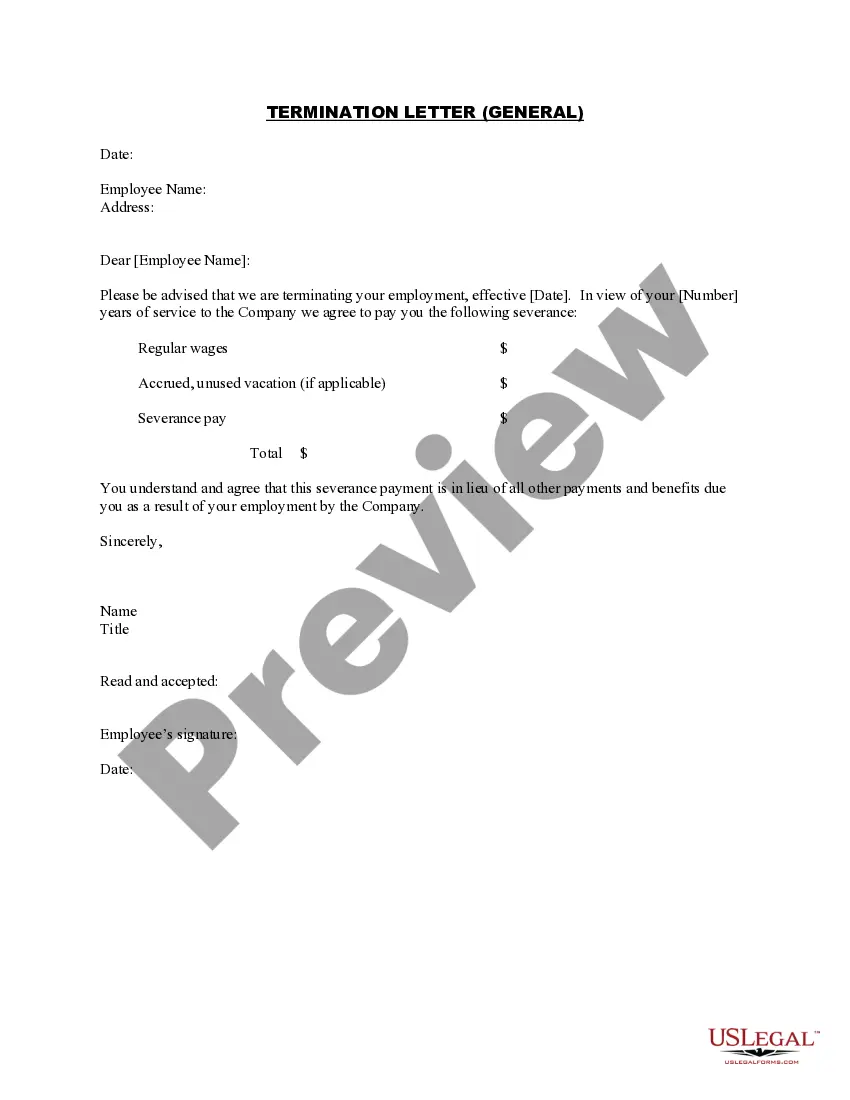
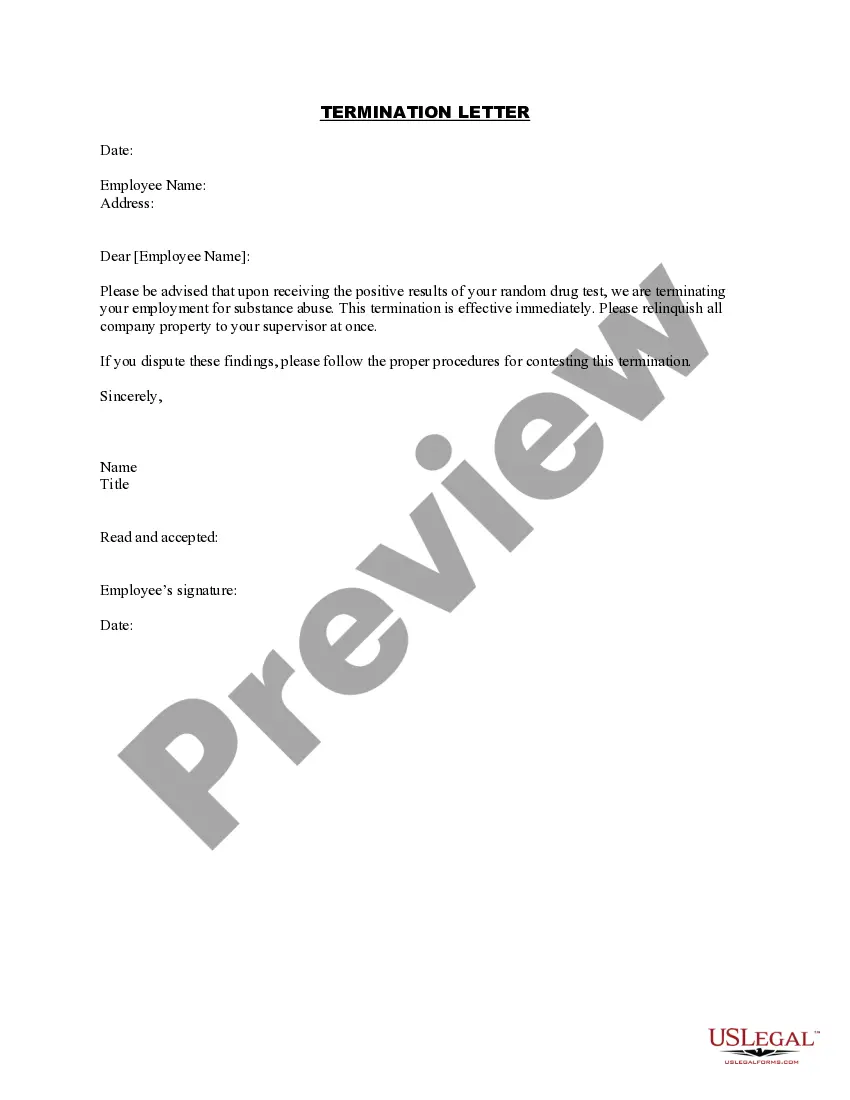
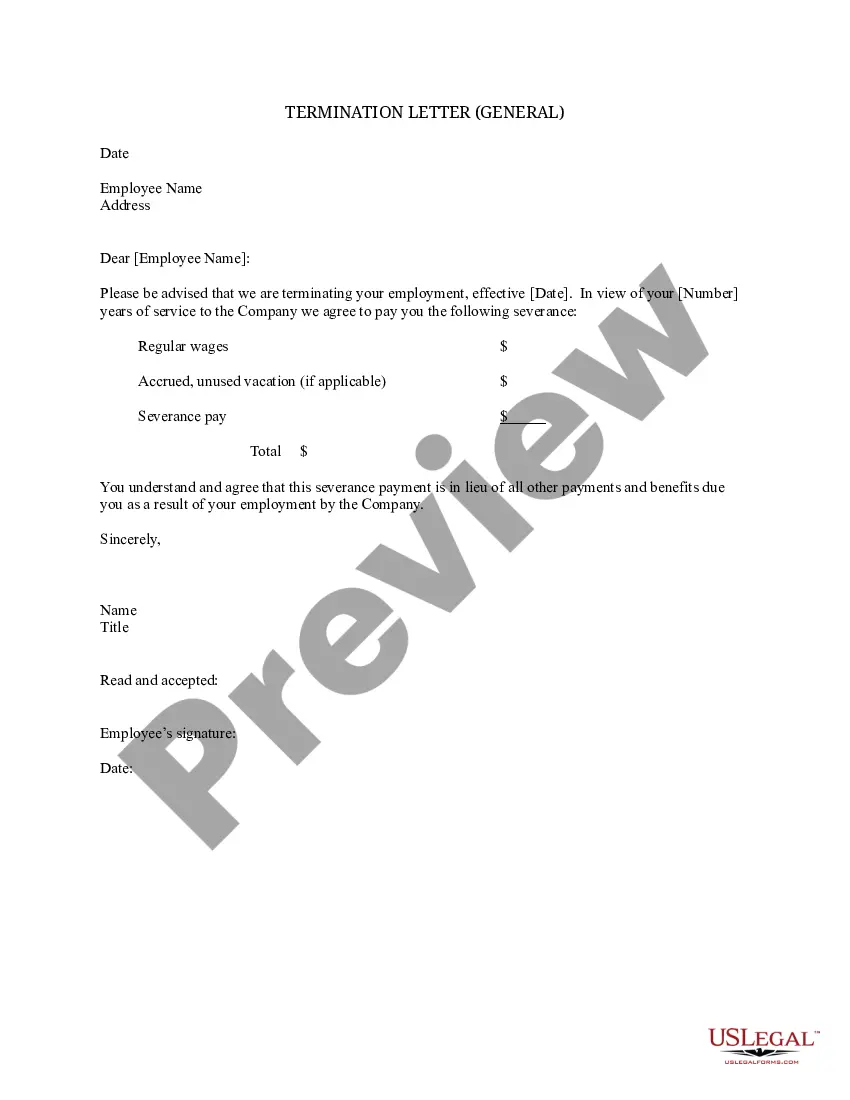
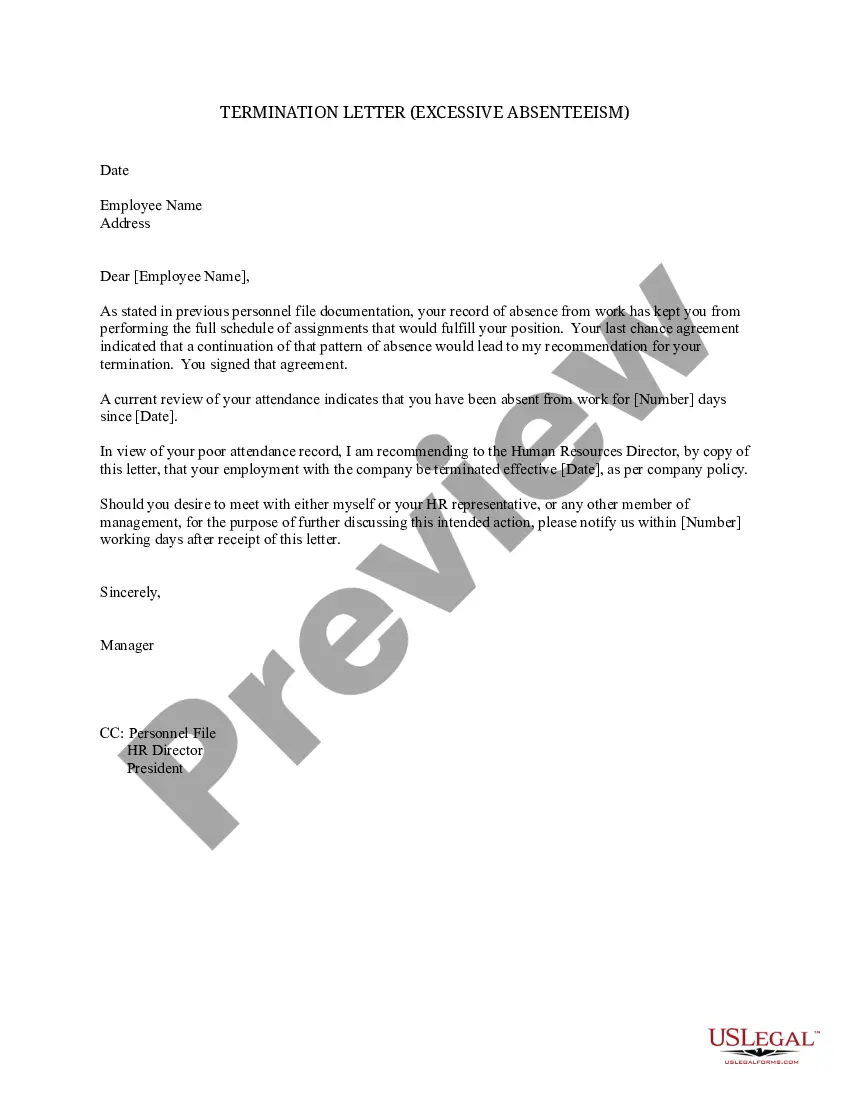
Get your form ready online
Our built-in tools help you complete, sign, share, and store your documents in one place.
Make edits, fill in missing information, and update formatting in US Legal Forms—just like you would in MS Word.
Download a copy, print it, send it by email, or mail it via USPS—whatever works best for your next step.
Sign and collect signatures with our SignNow integration. Send to multiple recipients, set reminders, and more. Go Premium to unlock E-Sign.
If this form requires notarization, complete it online through a secure video call—no need to meet a notary in person or wait for an appointment.
We protect your documents and personal data by following strict security and privacy standards.

Make edits, fill in missing information, and update formatting in US Legal Forms—just like you would in MS Word.

Download a copy, print it, send it by email, or mail it via USPS—whatever works best for your next step.

Sign and collect signatures with our SignNow integration. Send to multiple recipients, set reminders, and more. Go Premium to unlock E-Sign.

If this form requires notarization, complete it online through a secure video call—no need to meet a notary in person or wait for an appointment.

We protect your documents and personal data by following strict security and privacy standards.
Looking for another form?



How to fill out Termination Letter (Substance Abuse)?
US Legal Forms - one of the largest collections of legal documents in the USA - offers a diverse selection of legal document templates that you can download or print.
By utilizing the site, you can access thousands of forms for both business and personal purposes, categorized by types, states, or keywords. You can find the latest versions of forms like the Connecticut Termination Letter (Substance Abuse) within seconds.
If you hold a subscription, Log In and download the Connecticut Termination Letter (Substance Abuse) from the US Legal Forms library. The Download button will appear on every form you view. You can retrieve all previously saved forms from the My documents tab in your account.
Proceed with the transaction. Use a credit card or PayPal account to complete the payment.
Select the format and download the form to your device. Edit. Fill in, modify, and print and sign the saved Connecticut Termination Letter (Substance Abuse). Each template you added to your account has no expiration date and is yours permanently. Therefore, if you wish to download or print another copy, simply go to the My documents section and click on the form you want. Access the Connecticut Termination Letter (Substance Abuse) with US Legal Forms, the largest collection of legal document templates. Utilize thousands of professional and state-specific templates that meet your business or personal requirements.
- Ensure you have selected the correct form for your area/state.
- Click the Preview button to review the form's details.
- Check the form description to ensure you have chosen the correct one.
- If the form doesn't fit your requirements, use the Search field at the top of the screen to find the suitable one.
- Once satisfied with the form, confirm your choice by clicking the Purchase now button.
- Then, choose your preferred pricing plan and provide your information to register for an account.
Form popularity
FAQ
Are Substance Use Disorders Considered Disabilities? In short, yes. Diagnosable drug and alcohol addictions, or substance use disorders (SUDs), are considered disabilities under Section 504 of the Rehabilitation Act, the Americans with Disabilities Act (ADA), and Section 1557 of the Affordable Care Act.
Connecticut labor laws do not require employers to provide employees with severance pay. If an employer chooses to provide severance benefits, it must comply with the terms of its established policy or employment contract.
Connecticut law prohibits drug testing of current employees unless the employer has reasonable suspicion that the employee is under the influence of drugs or alcohol which adversely affects or could adversely affect such employee's job performance.
Connecticut Final Pay Rule Ann. § 31-71c, an employer must issue a final paycheck to a terminated employee no later than the following business day. However, an employee who quits his or her job is not entitled to a final paycheck until the next regularly scheduled pay date.
Connecticut is an "at will" state. This means that employers have the right to fire or terminate an employee at anytime without providing a reason, as long as it is not illegal.
Individuals under the influence are substantially more likely to suffer serious injury that can cause disability, such as from a fall or a car accident. Substance abuse also worsens the symptoms of many mental and intellectual disorders, leading to more severe episodes and greater disability.
DOLE now mandates that in order to effectively harmonize the management prerogative of the employer and the right of the employee, the final pay shall be released within thirty (30) days from the date of separation or termination of employment, unless there is a more favorable company policy, individual or collective
For over five years, Connecticut law has required employers to let employees respond, in writing, to write-ups, performance evaluations and/or notices of termination. Not only must employees be given the opportunity, but they must be advised of this right by their employer, in writing!
Payout of vacation at termination.Connecticut employers are required to pay earned vacation and/or sick days upon separation if they have a policy or collective bargaining agreement requiring such pay (CT Gen. Stat. Sec. 31-76k).
According to the National Institute on Drug Abuse (NIDA) drug addiction is classified as a mental illness because addiction changes the brain in fundamental ways, disturbing a person's normal hierarchy of needs and desires, and substituting new priorities connected with procuring and using drugs.