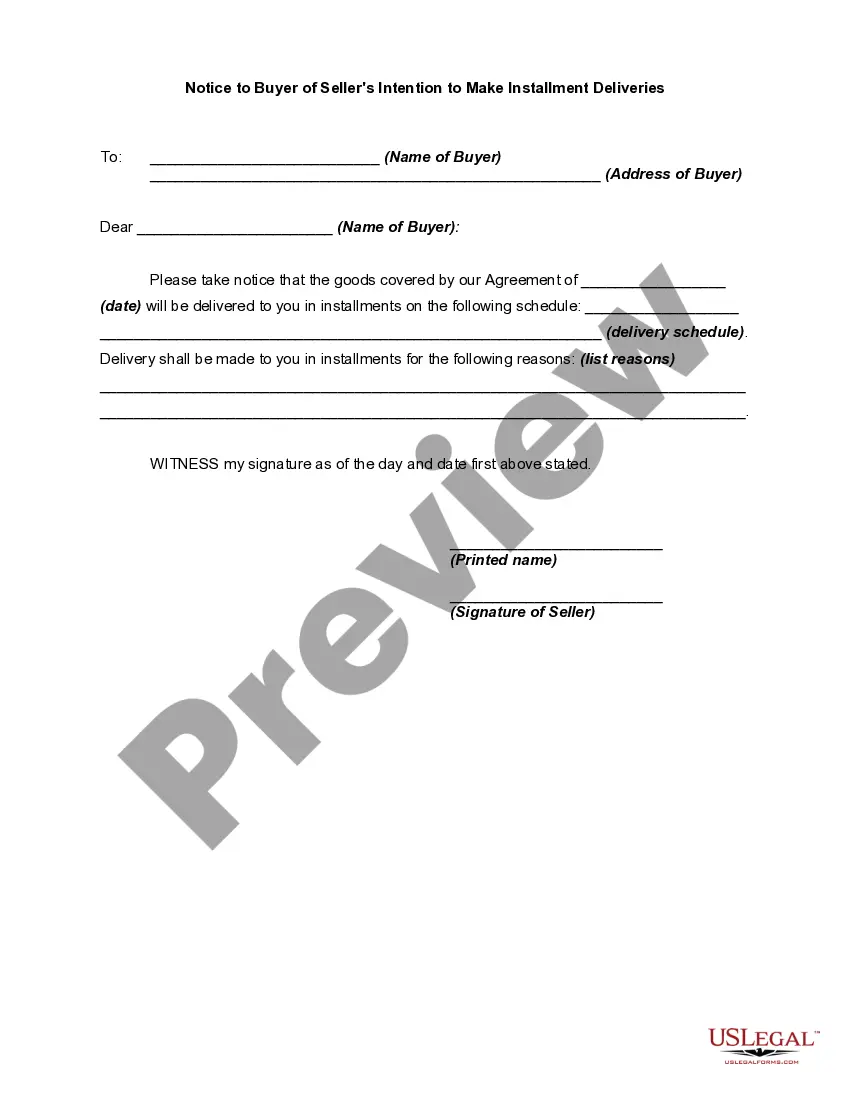
Connecticut Notice to Buyer of Seller's Intention to Make Installment Deliveries
Description
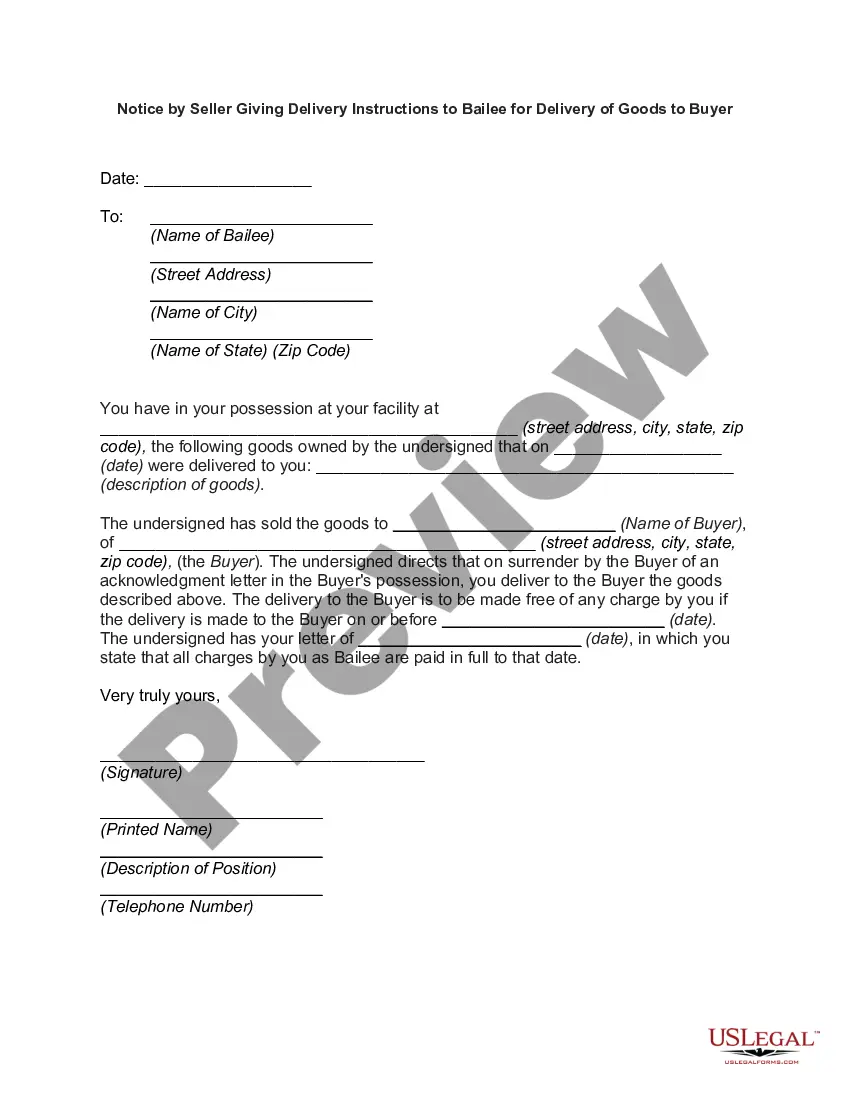
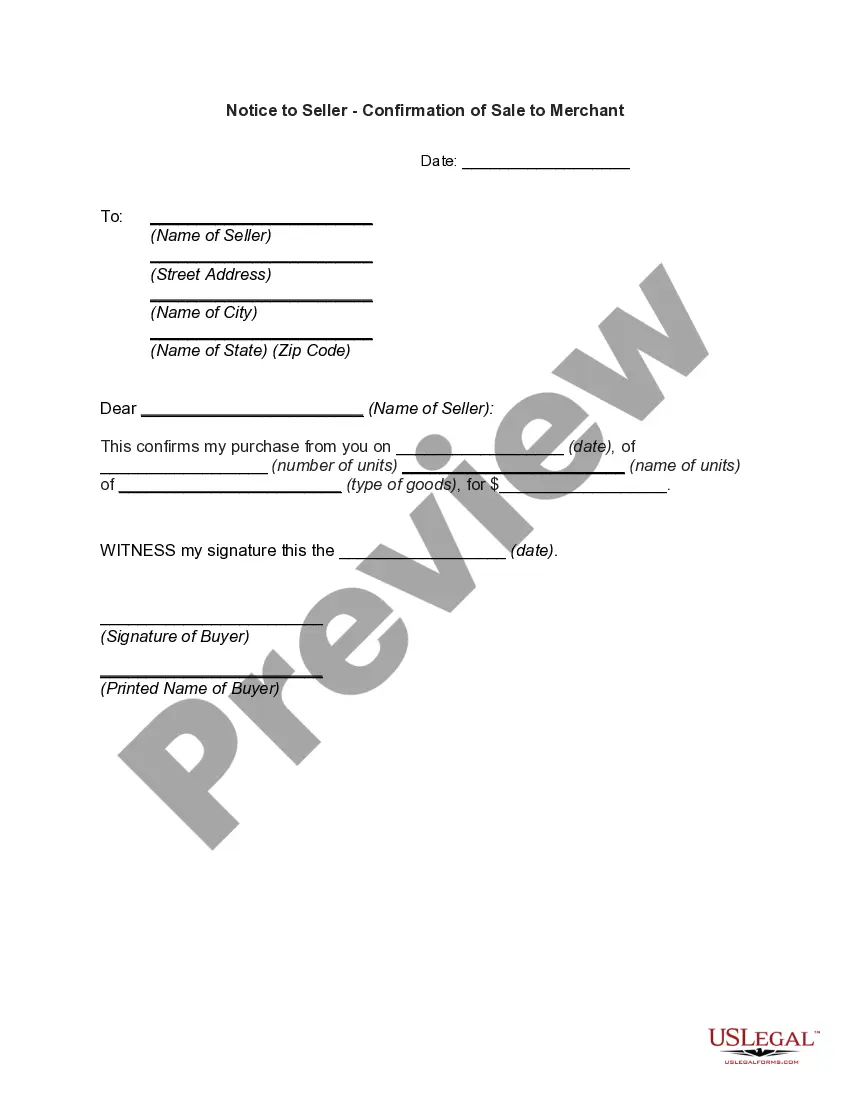
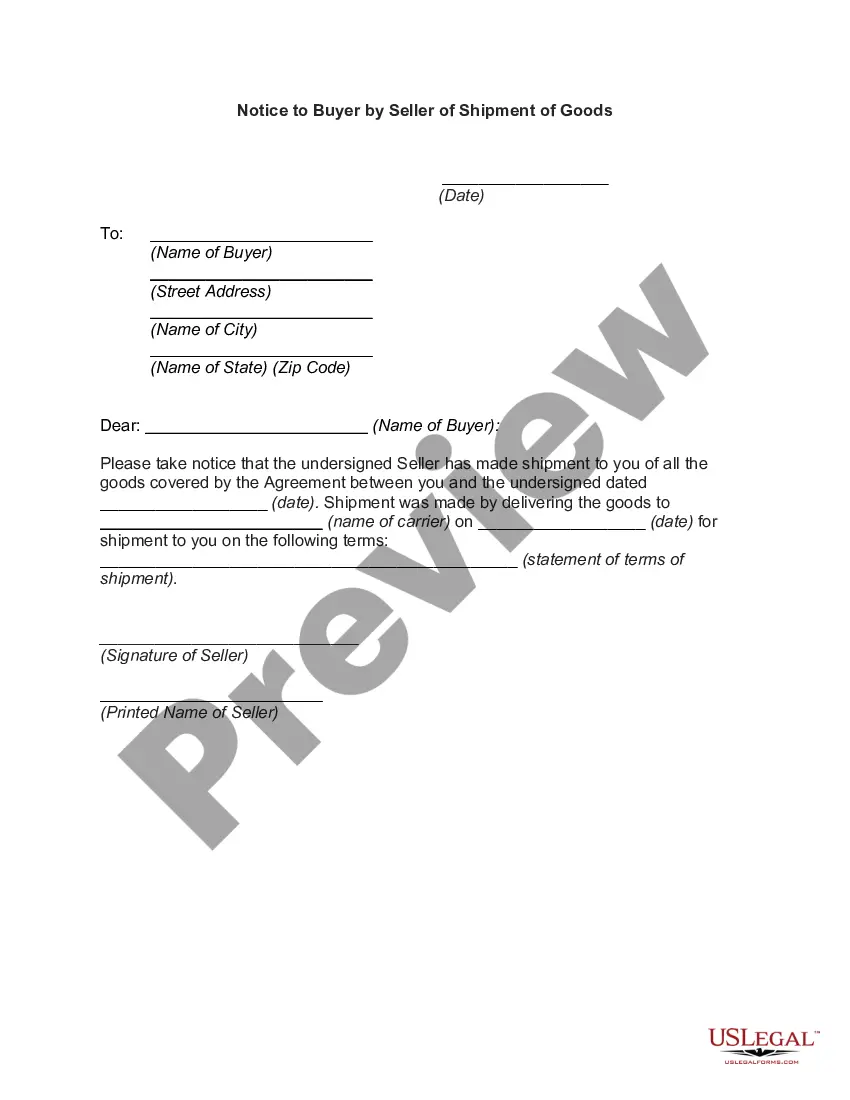




How to fill out Notice To Buyer Of Seller's Intention To Make Installment Deliveries?
Locating the appropriate legal document format can be quite challenging. Clearly, there are numerous templates accessible online, but how will you find the specific legal type you require.
Utilize the US Legal Forms website. The platform offers a wide array of templates, including the Connecticut Notice to Buyer of Seller's Intention to Make Installment Deliveries, suitable for business and personal needs.
All of the forms are reviewed by experts and comply with state and federal regulations.
Once you are sure that the form is suitable, click the Buy now button to purchase the form. Choose the pricing plan you prefer and provide the necessary information. Create your account and pay for the order with your PayPal account or credit card. Select the file format and download the legal document template to your device. Complete, modify, print, and sign the acquired Connecticut Notice to Buyer of Seller's Intention to Make Installment Deliveries. US Legal Forms is the largest collection of legal forms where you can find various document templates. Utilize the service to download properly crafted papers that meet state requirements.
- If you are currently registered, Log In to your account and click on the Download button to obtain the Connecticut Notice to Buyer of Seller's Intention to Make Installment Deliveries.
- Use your account to view the legal forms you have previously purchased.
- Visit the My documents section of your account and download another copy of the document you desire.
- If you're a new user of US Legal Forms, here are simple instructions to follow.
- First, ensure you have selected the correct form for your specific city/region. You can preview the form using the Review button and check the form description to confirm it is the right one for you.
- If the form does not meet your needs, utilize the Search field to find the appropriate form.
Form popularity
FAQ
With a shipment contract, the buyer bears the risk of loss for the goods prior to actually receiving them. Here, the seller's only duty is to get the goods to a common carrier and make proper delivery arrangements for the goods to get to the seller.
The contract becomes a shipment contract when a common carrier, not the seller's agent, is used for delivery.
THE PERFECT TENDER RULE: UCC requires that sellers and lessors tender conforming goods to the buyer or lessee.
Rejection and a Buyer's Duties after Rejection Under UCC, Section 2-601(a), rejection is allowed if the seller fails to make a perfect tender. The rejection must be made within a reasonable time after delivery or tender. Once it is made, the buyer may not act as the owner of the goods.
Under the perfect tender rule, the seller must supply the buyer with goods that conform perfectly to the buyer's demands in order to trigger the buyer's obligation to accept the goods and pay for them.
A present contract to sell future goods (those which are not both existing and identified) is considered a contract to sell, not a contract for the sale of goods. Article 2 does not apply to the transfer of property resulting from gifts, security interests in property, leases or bailments because these are not sales.
Common-carrier delivery contracts include origin and destination contracts, but not transfer contracts.
(3) Recover Damages for Accepted Goods: A buyer who accepts nonconforming goods may keep the goods and, after reasonable notice to the seller of the defects in the goods and/or the manner of tender, sue for the difference between the value of the goods as accepted and their value as promised in the contract.
(6) Recover Damages: If the seller repudiates a contract or wrongfully refuses to deliver conforming goods, the buyer can sue to recover the difference between the contract price and the fair market price of the goods (at the time that the buyer learned of the breach), plus incidental and consequential damages, less
If an owner entrusts the possession of goods to a merchant who deals in goods of that kind, the merchant has no authority to transfer any rights in the goods to a buyer in the ordinary course of business.