Connecticut Marital Legal Separation and Property Settlement Agreement where No Children and parties may have Joint Property and / or Debts and Divorce Action Filed
Overview of this form
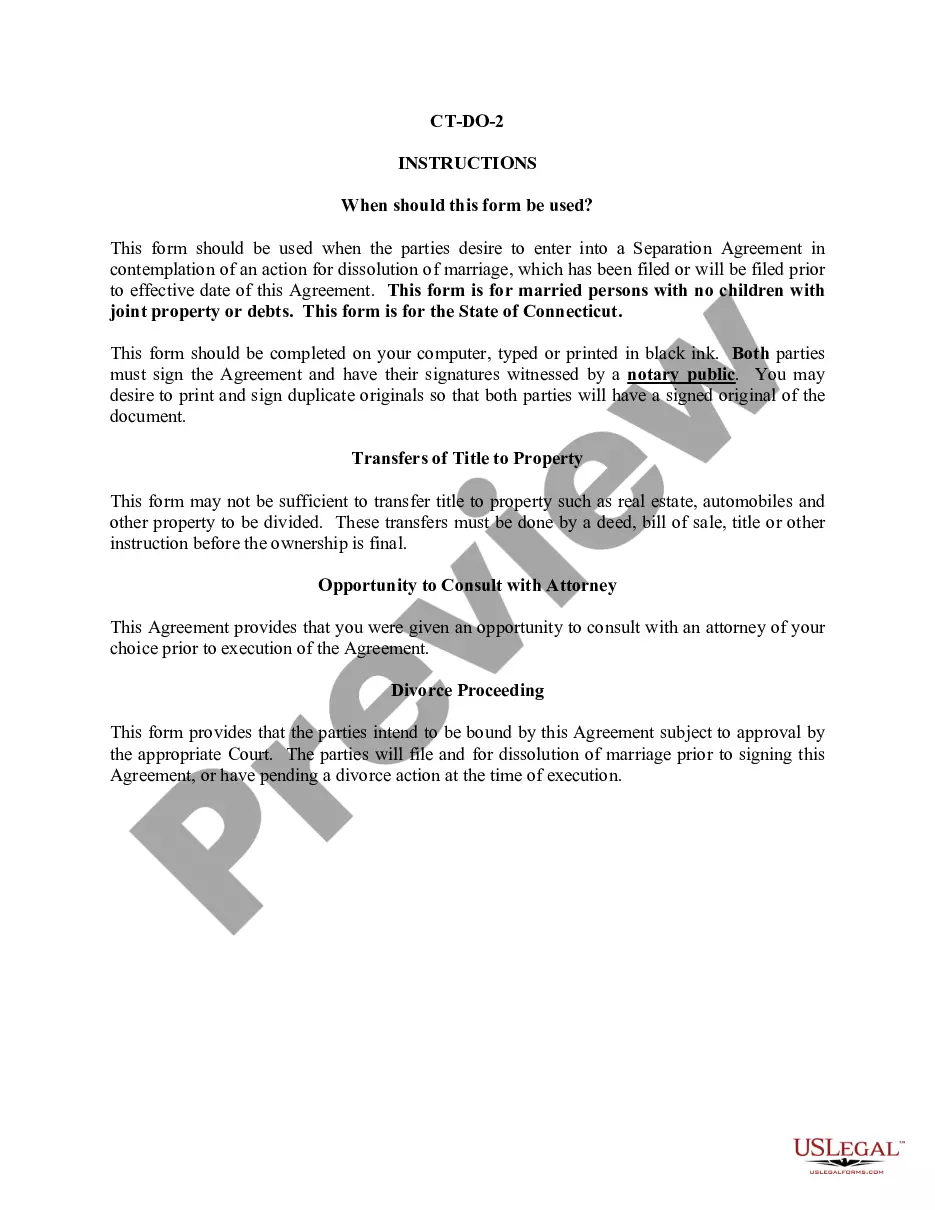
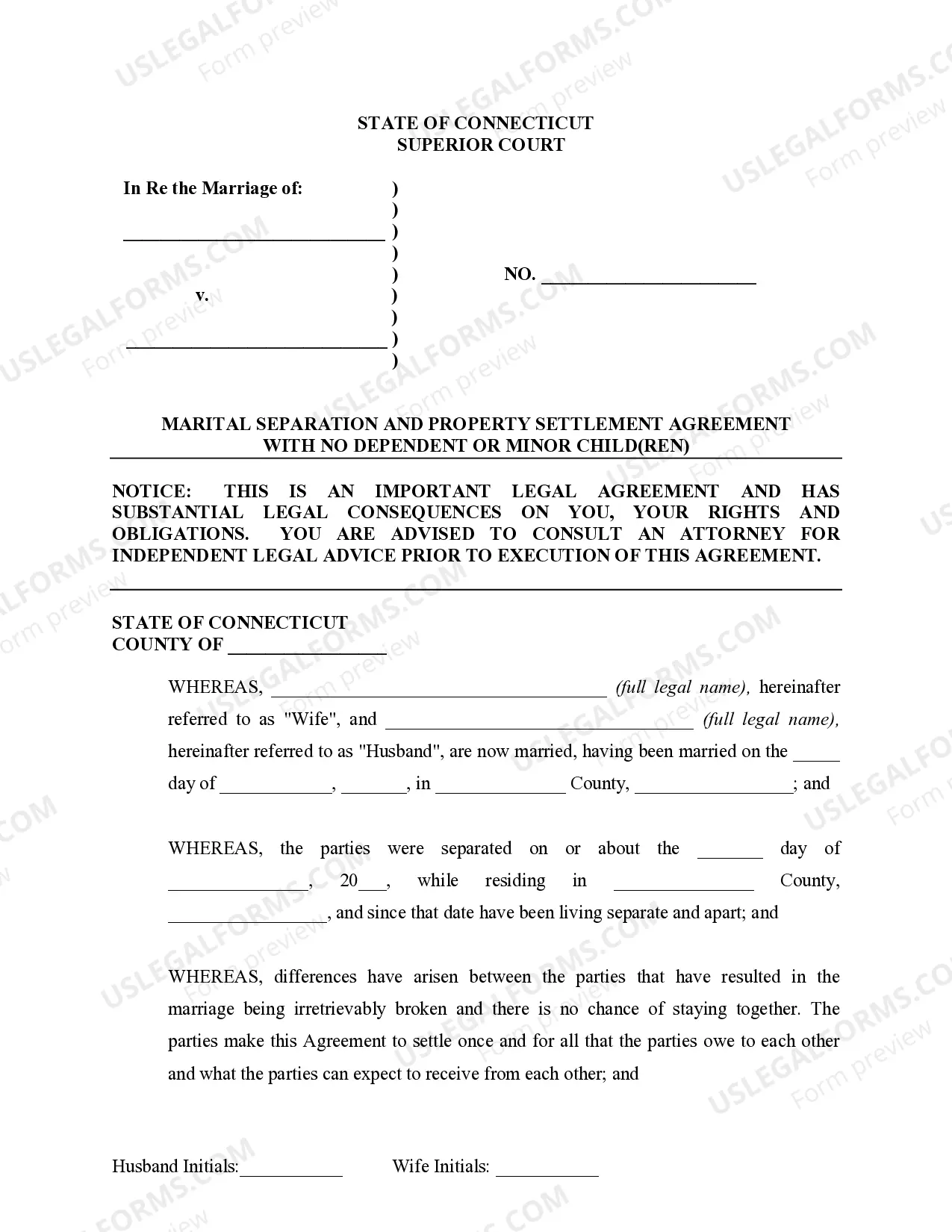
The Marital Legal Separation and Property Settlement Agreement is a legal document designed for married couples without children who are undergoing a separation while having joint property and debts. This agreement assists parties in resolving financial issues and dividing assets and liabilities before or during a divorce action. This form is specific to Connecticut and ensures that both parties have a clear understanding of their rights and obligations regarding shared property and debts, distinguishing it from forms aimed at couples with children or no shared finances.
Form components explained
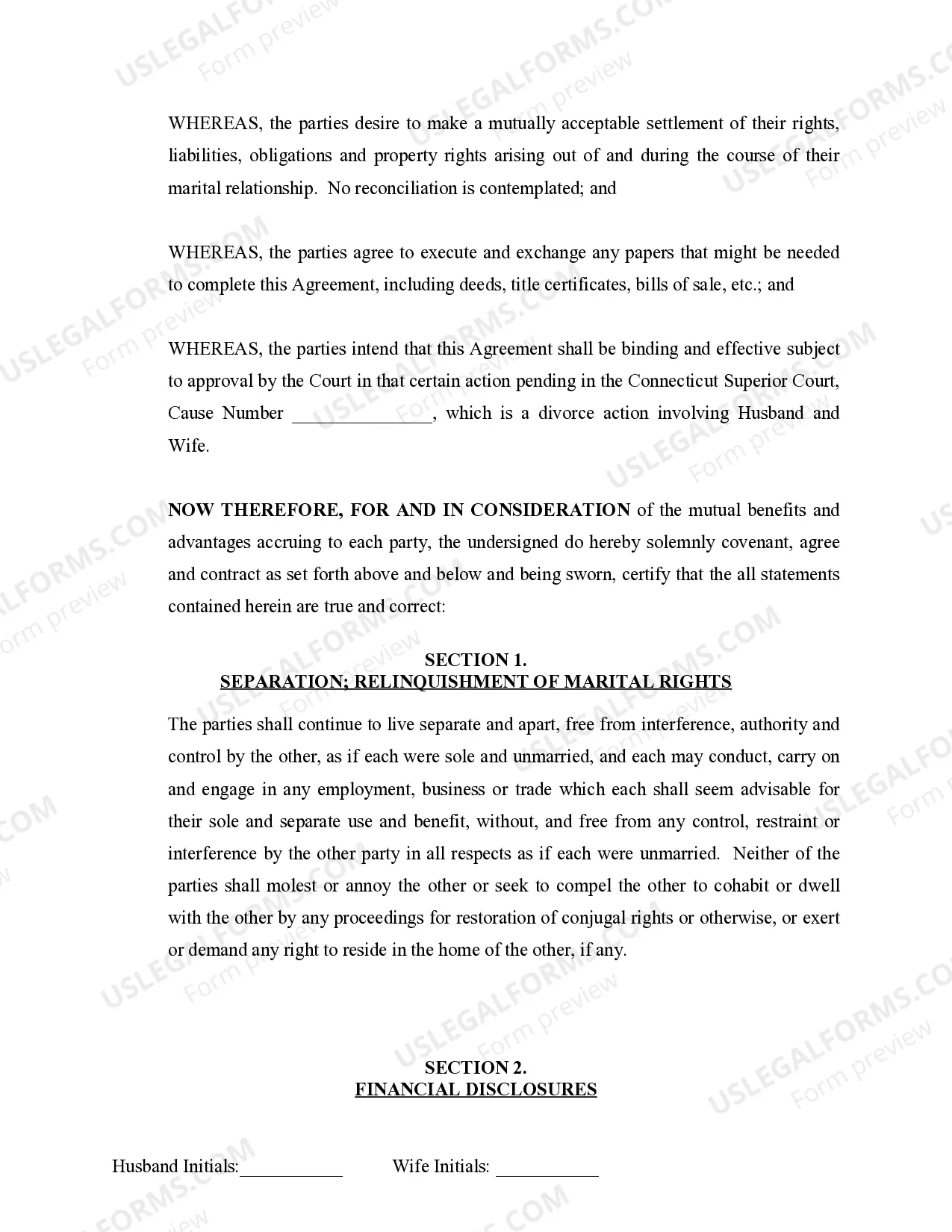
- Separation clauses delineating the parties' rights and responsibilities during separation.
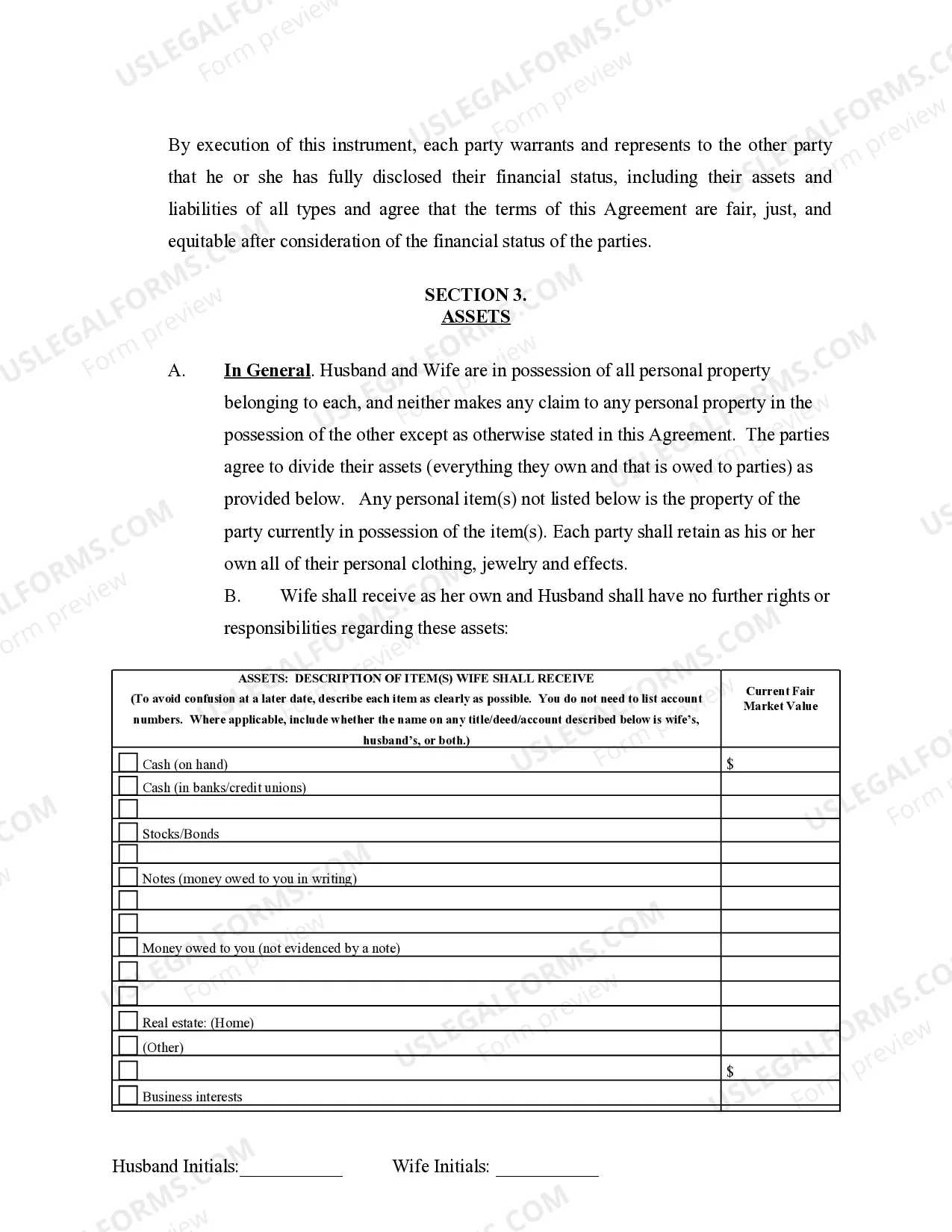
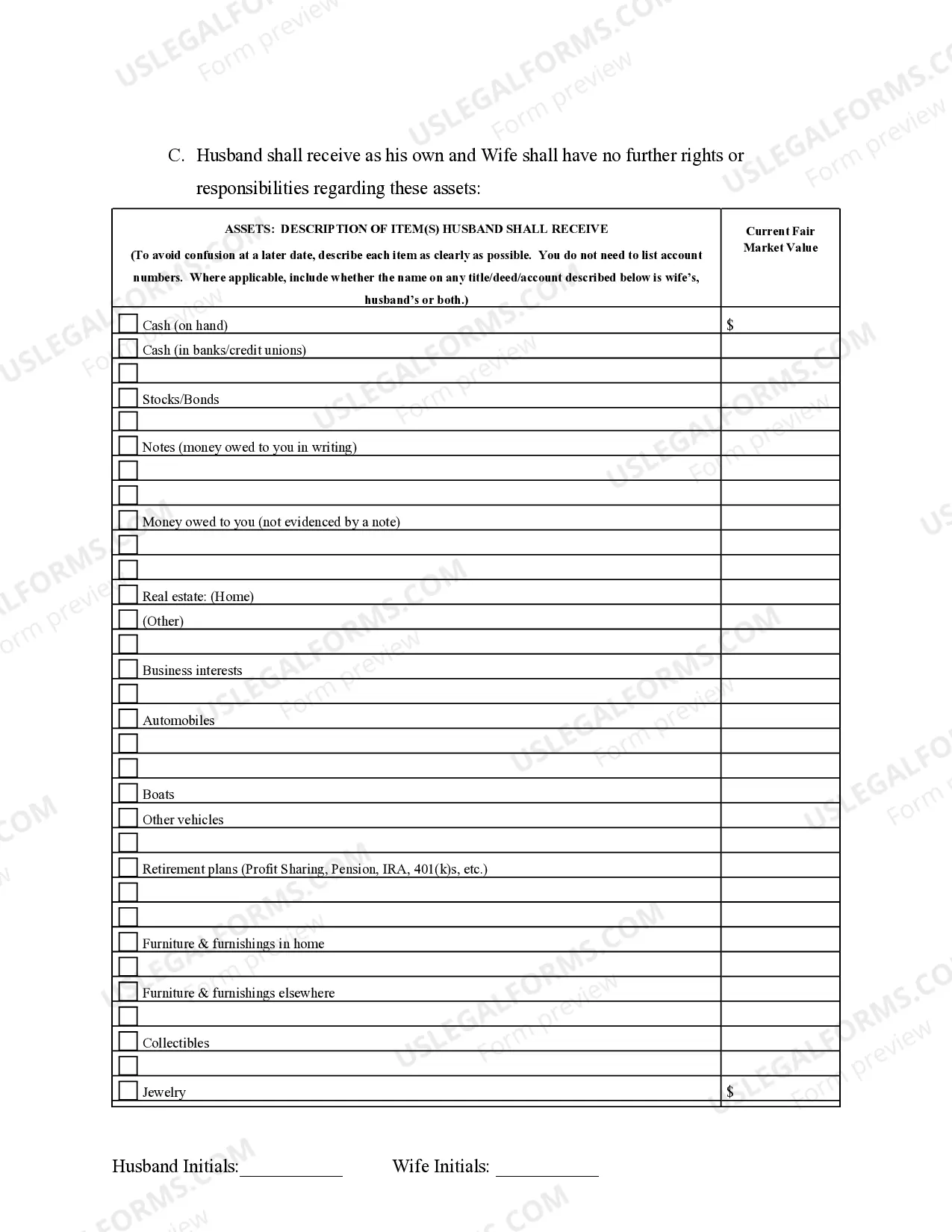
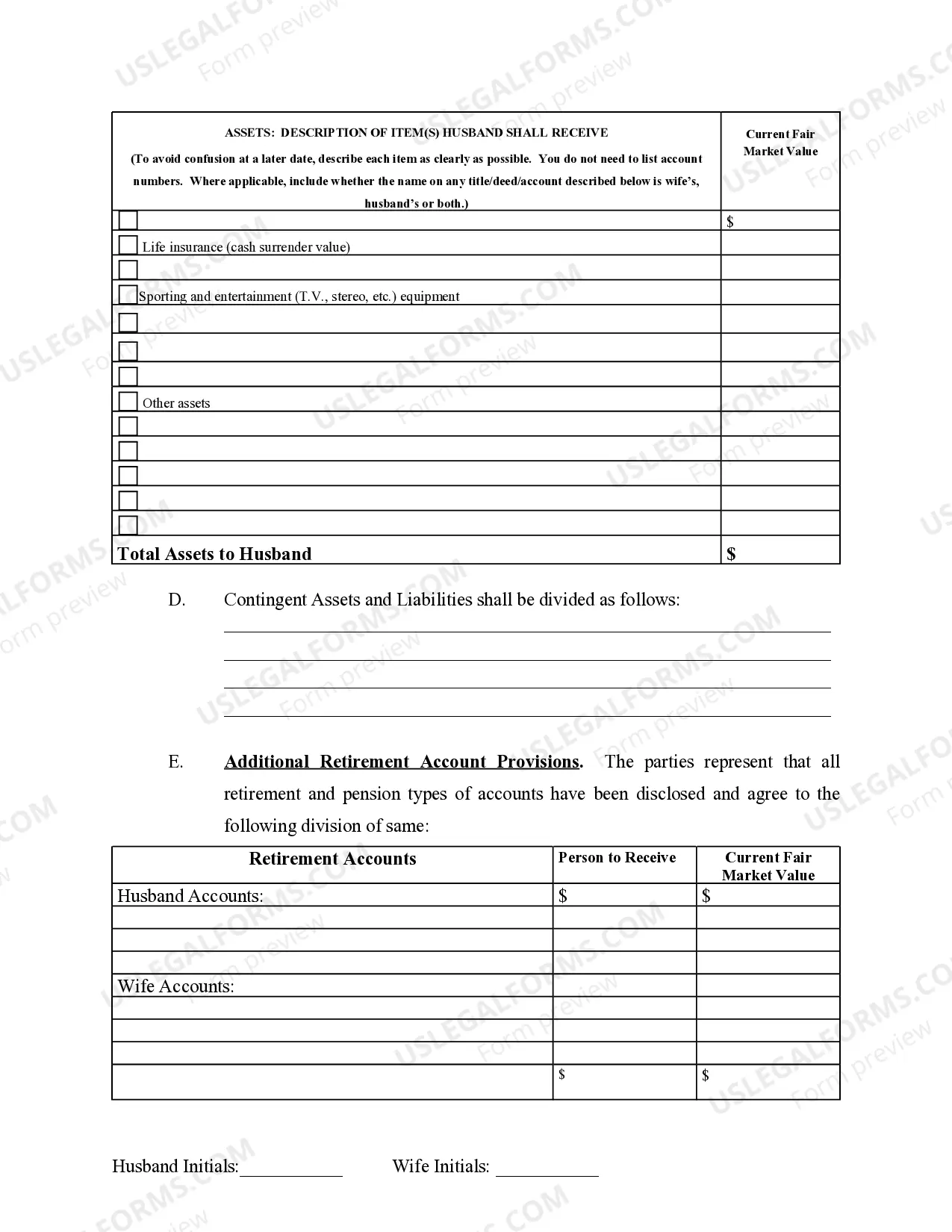
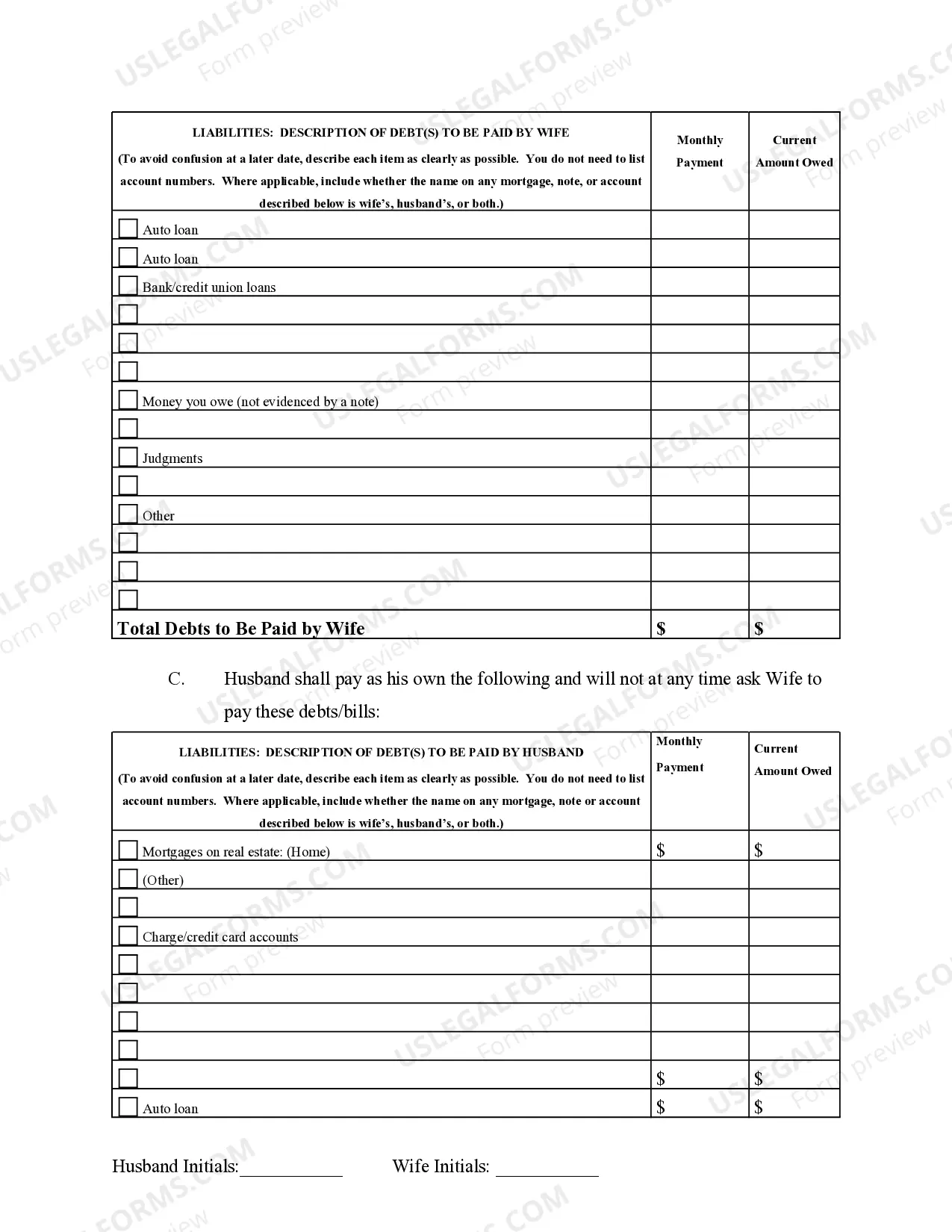
- Financial disclosures outlining each party's assets and debts.
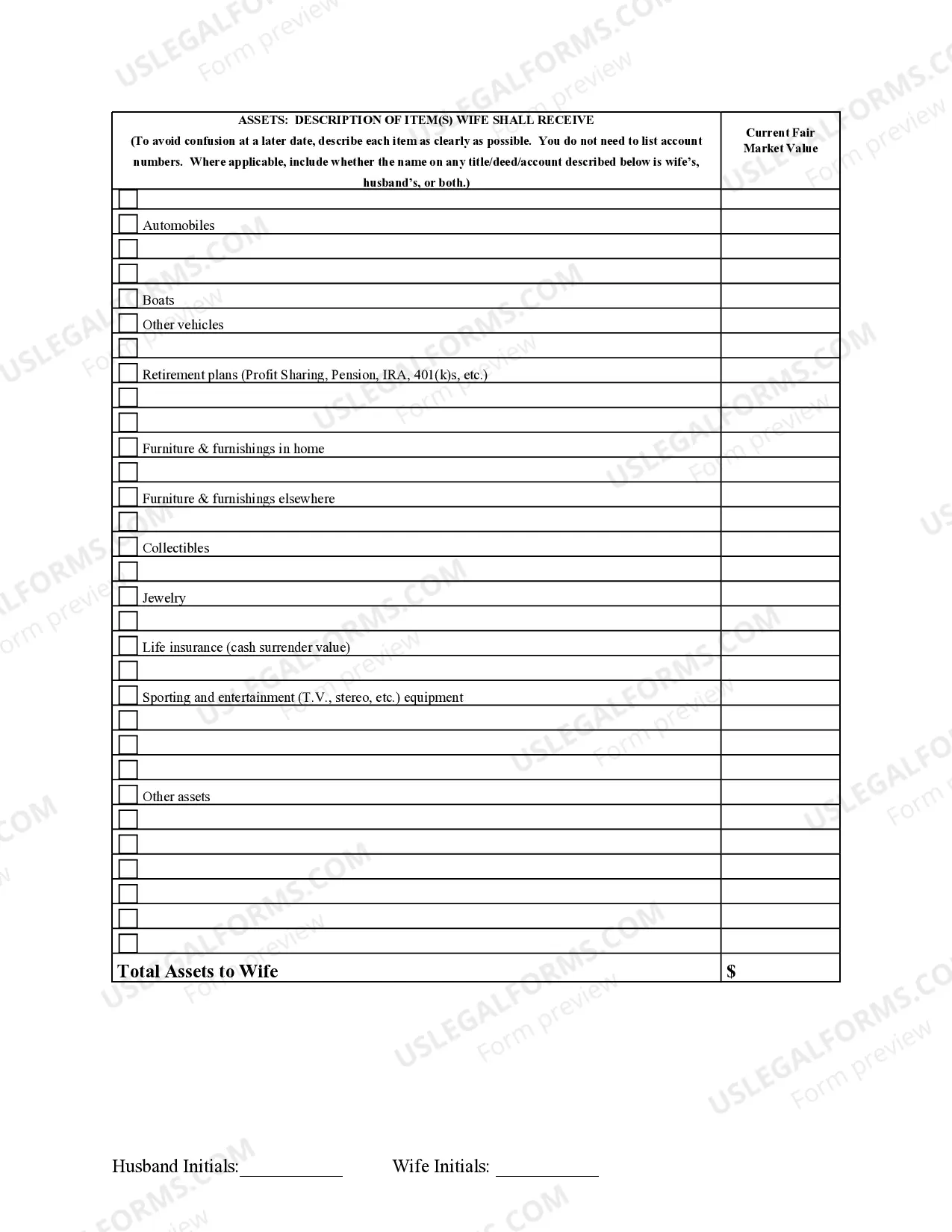
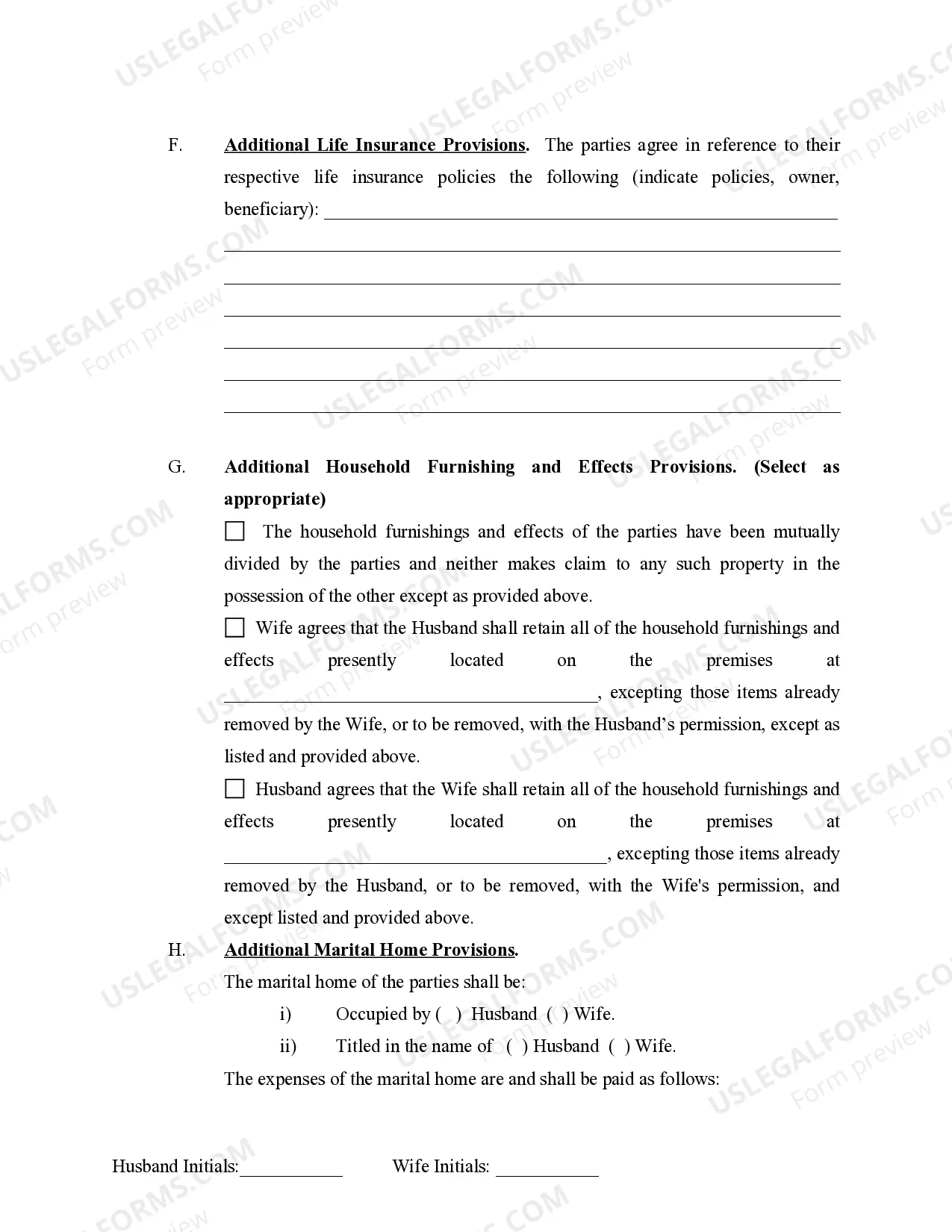
- Specific provisions for the division of property, including personal belongings and financial accounts.
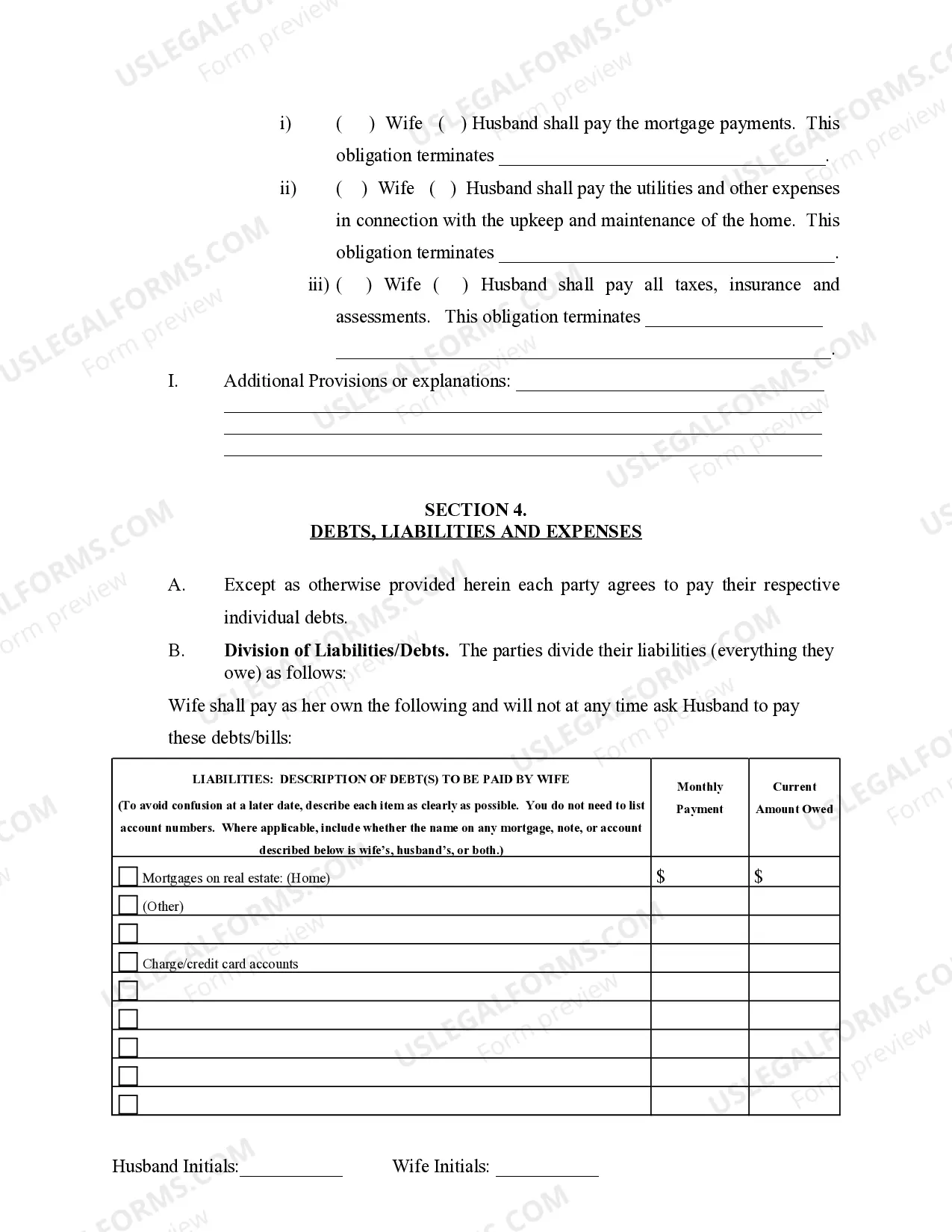
- Agreements on handling debts and liabilities post-separation.
- Clauses for spousal support, if applicable.
- Legal requirements for notarization and court approval.


When this form is needed
This form should be utilized when both spouses wish to formalize their separation and need to settle financial matters associated with their marriage. It is specifically applicable in situations where a divorce is pending or will be filed soon. This agreement helps clarify the division of joint property and debts, making the process smoother for both parties.
Intended users of this form
- Married couples in Connecticut without dependent children.
- Parties with joint property and debts seeking to formalize a separation.
- Individuals planning to file for divorce and needing to settle financial matters beforehand.
How to prepare this document
- Identify and include the full legal names of both parties involved in the agreement.
- Detail the assets and debts, specifying which party receives which items and liabilities.
- Include any provisions for spousal support, if applicable.
- Ensure both parties sign the document in the presence of a notary public.
- Make copies of the signed agreement for both parties' records.
Is notarization required?
To make this form legally binding, it must be notarized. Our online notarization service, powered by Notarize, lets you verify and sign documents remotely through an encrypted video session.
Get your form ready online
Our built-in tools help you complete, sign, share, and store your documents in one place.
Make edits, fill in missing information, and update formatting in US Legal Forms—just like you would in MS Word.
Download a copy, print it, send it by email, or mail it via USPS—whatever works best for your next step.
Sign and collect signatures with our SignNow integration. Send to multiple recipients, set reminders, and more. Go Premium to unlock E-Sign.
If this form requires notarization, complete it online through a secure video call—no need to meet a notary in person or wait for an appointment.
We protect your documents and personal data by following strict security and privacy standards.

Make edits, fill in missing information, and update formatting in US Legal Forms—just like you would in MS Word.

Download a copy, print it, send it by email, or mail it via USPS—whatever works best for your next step.

Sign and collect signatures with our SignNow integration. Send to multiple recipients, set reminders, and more. Go Premium to unlock E-Sign.

If this form requires notarization, complete it online through a secure video call—no need to meet a notary in person or wait for an appointment.

We protect your documents and personal data by following strict security and privacy standards.
Typical mistakes to avoid
- Failing to fully disclose all assets and debts, which can lead to future disputes.
- Not having the agreement notarized, which may affect its legal enforceability.
- Neglecting to include specific provisions for spousal support, if relevant.
Why complete this form online
- Convenient access to the form allows for timely completion and filing.
- Editable templates facilitate customization to meet specific needs.
- Document reliability is ensured with attorney-reviewed templates.
Looking for another form?

Form popularity
FAQ
Yes, you can write your own separation agreement in Connecticut, but it is crucial to ensure that it meets legal standards. A well-crafted Connecticut Marital Legal Separation and Property Settlement Agreement where No Children and parties may have Joint Property and/or Debts and Divorce Action Filed should clearly outline how property and debt will be handled. To avoid common pitfalls, consider using uslegalforms as a resource to guide you through the process and ensure your agreement is comprehensive and legally enforceable.
Separation can provide some couples in Connecticut with the space needed to evaluate their marriage and feelings. However, it is not a guaranteed solution to save a marriage, as some couples may find unresolved issues persist. During a Connecticut Marital Legal Separation and Property Settlement Agreement where No Children and parties may have Joint Property and/or Debts and Divorce Action Filed, take this time to communicate openly about your future. Working with a mediator or counselor might help address underlying issues more effectively.
The negatives of separation often include prolonged emotional distress and financial uncertainty. Couples may struggle with issues surrounding joint property and debts without the clarity of a divorce. Additionally, legal separation does not sever ties completely, which can lead to lingering conflicts. Evaluating these factors can help you make informed decisions moving forward.
One disadvantage of a Connecticut Marital Legal Separation and Property Settlement Agreement where No Children and parties may have Joint Property and/or Debts and Divorce Action Filed is that it does not completely dissolve the marital bond. This can lead to complexities in financial obligations or property rights. Furthermore, without a final divorce, the legal status may hinder new relationships or affect inheritance rights, so it is essential to consider these aspects.
Legal separation in Connecticut is sometimes discouraged because it may prolong the emotional and financial strain of marital disputes. Couples may find it leads to a false sense of security, delaying necessary legal actions, such as divorce. Additionally, both parties remain legally married, which can complicate future relationships or financial decisions. Understanding these implications will help you navigate your circumstances better.
To file for a Connecticut Marital Legal Separation and Property Settlement Agreement where No Children and parties may have Joint Property and/or Debts and Divorce Action Filed, you must complete and submit specific court forms. Firstly, gather relevant information about your joint property and debts. You will then file the separation agreement with your local court, where both parties typically sign the document. Consider using uslegalforms for assistance in preparing your forms correctly.
A separation usually involves a formal agreement outlining the rights and responsibilities of each spouse, whereas a trial separation is more informal, allowing couples to assess their relationship without legal documentation. In the context of a Connecticut Marital Legal Separation and Property Settlement Agreement where No Children and parties may have Joint Property and/or Debts and Divorce Action Filed, a separation provides legal clarity and structure otherwise lacking in a trial separation.
People often choose trial separation to evaluate their marriage and determine whether they wish to reconcile or proceed toward divorce. It offers space to reflect on the relationship without the binding legal obligations of a separation. However, for parties with joint property and debts, exploring a Connecticut Marital Legal Separation and Property Settlement Agreement where No Children is a more manageable solution.
Individuals may opt for legal separation for various reasons, including wanting to live apart without divorcing for religious or personal beliefs. A legal separation allows couples to establish clear guidelines around property and financial matters, providing a structured approach while maintaining the marital relationship. A Connecticut Marital Legal Separation and Property Settlement Agreement where No Children and parties may have Joint Property and/or Debts and Divorce Action Filed serves this purpose effectively.
To file for legal separation in Connecticut, you initiate the process by submitting a petition to the court outlining your reasons and desired agreements. This document can include provisions for property settlement and debt allocation. By utilizing a Connecticut Marital Legal Separation and Property Settlement Agreement where No Children and parties may have Joint Property and/or Debts and Divorce Action Filed, you ensure that all aspects are handled correctly and legally.