Colorado Easement for Communication Facilities
Understanding this form
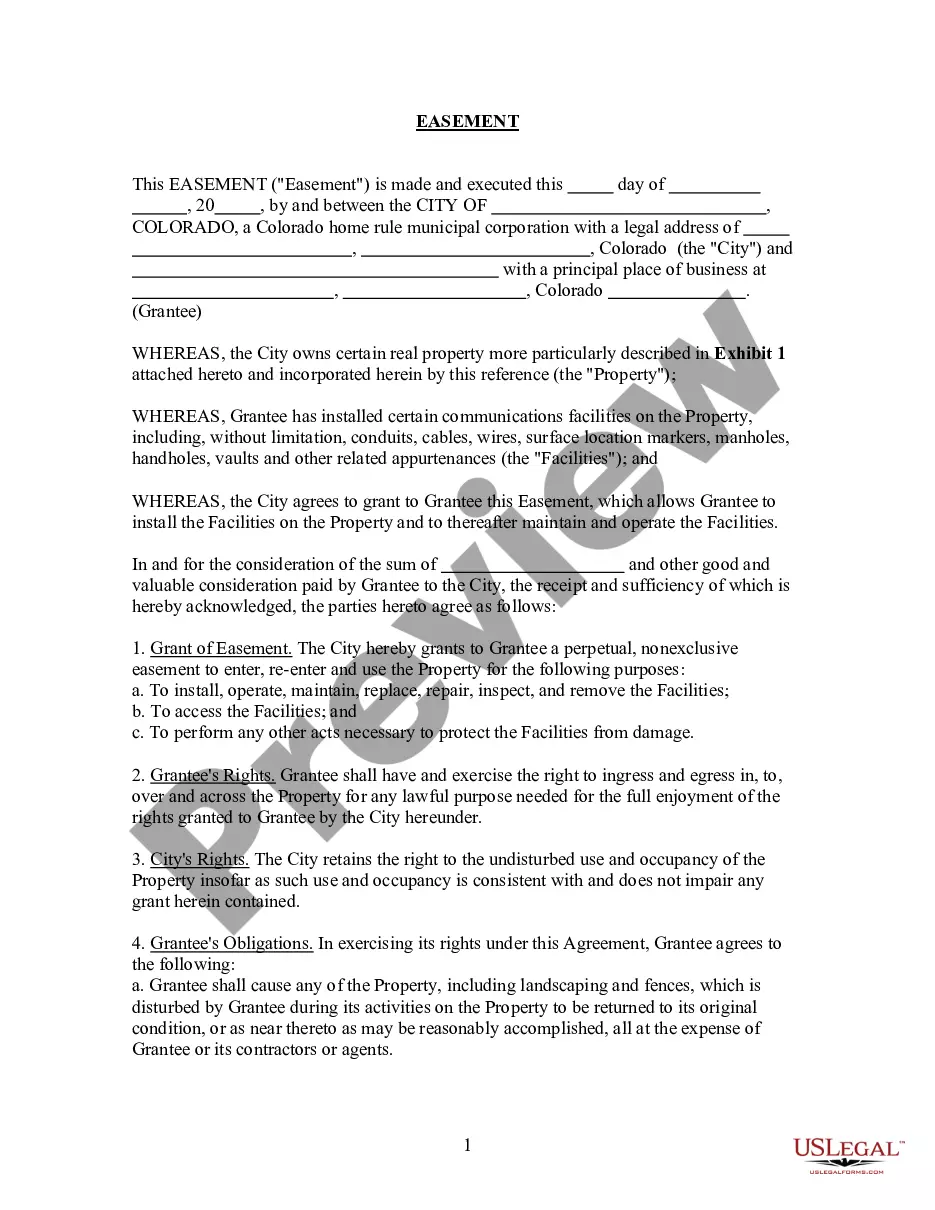
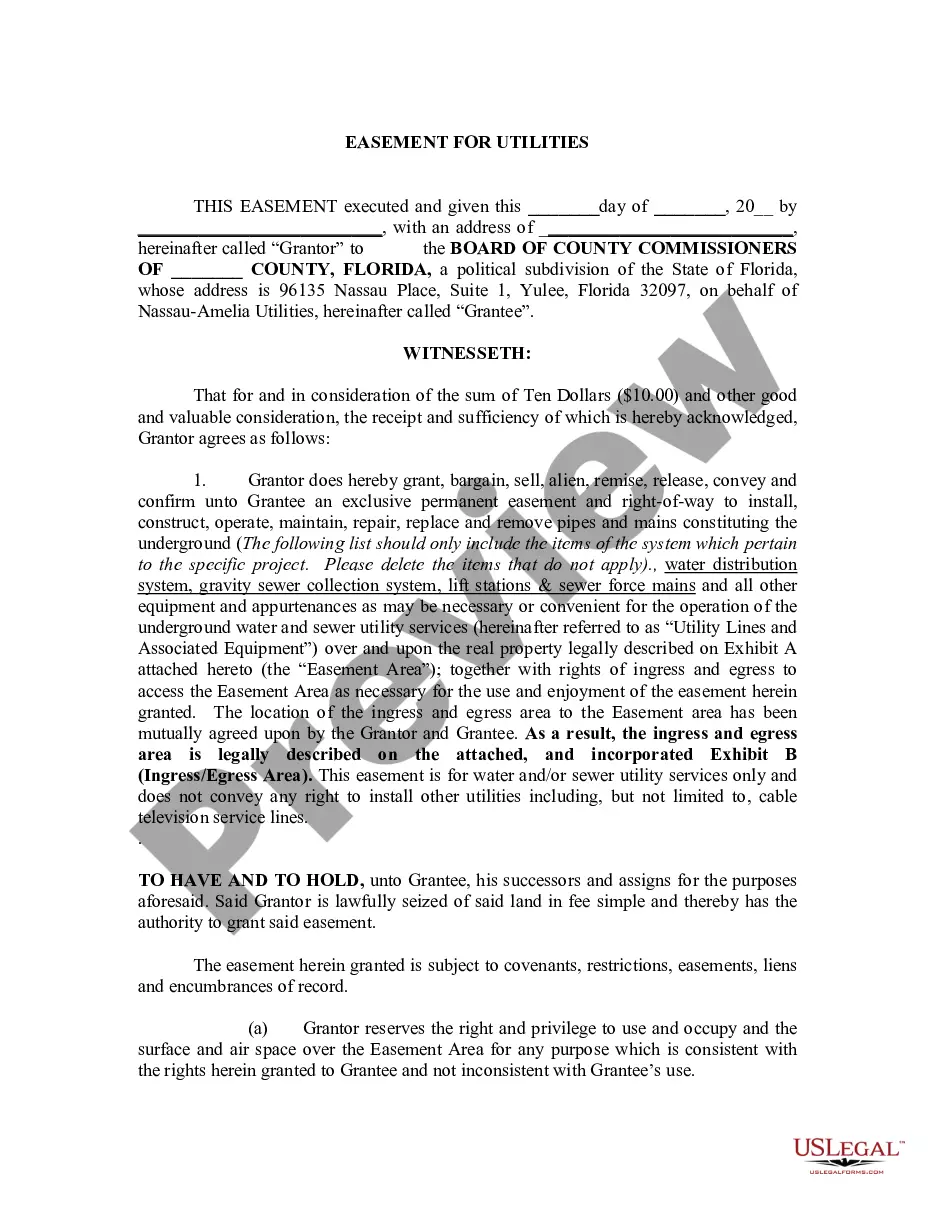
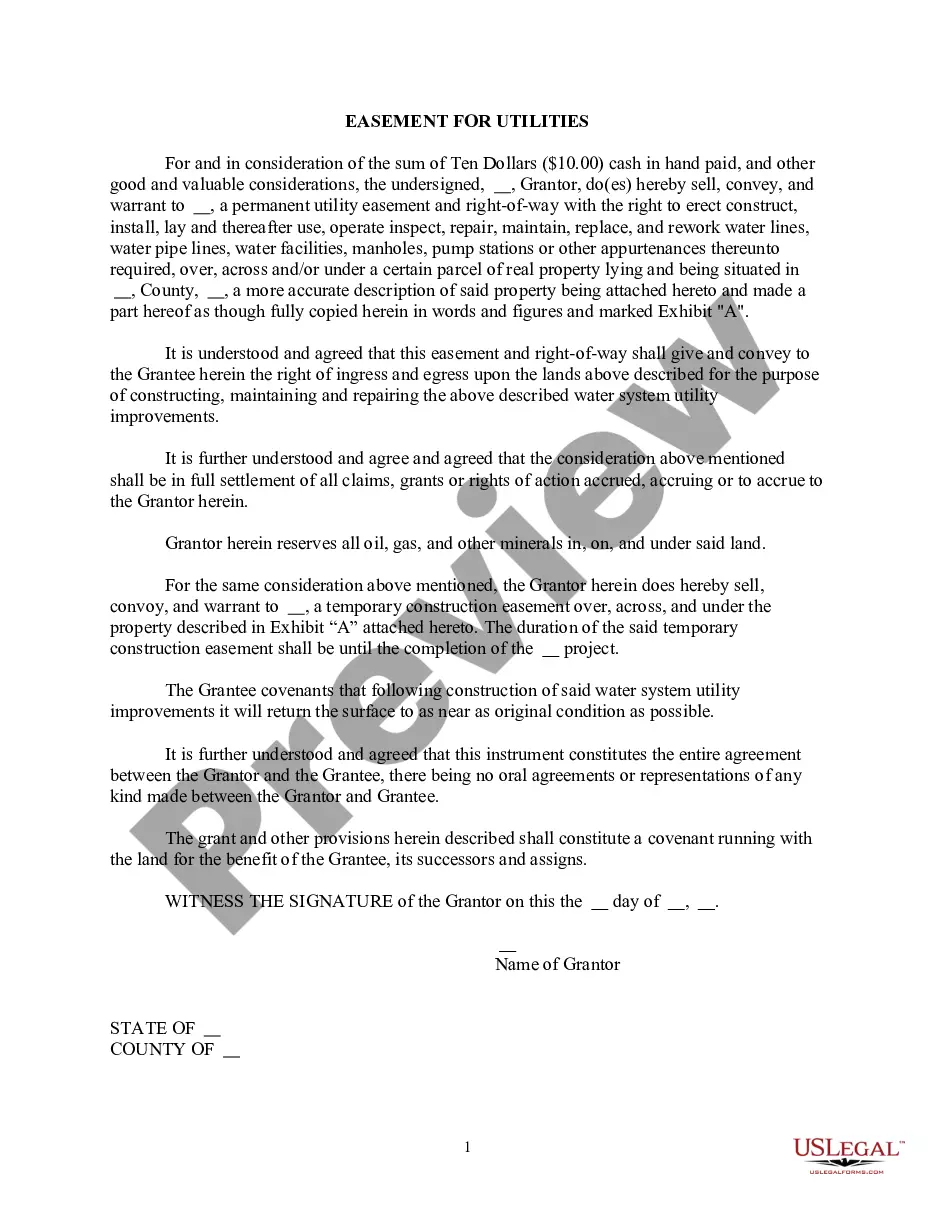
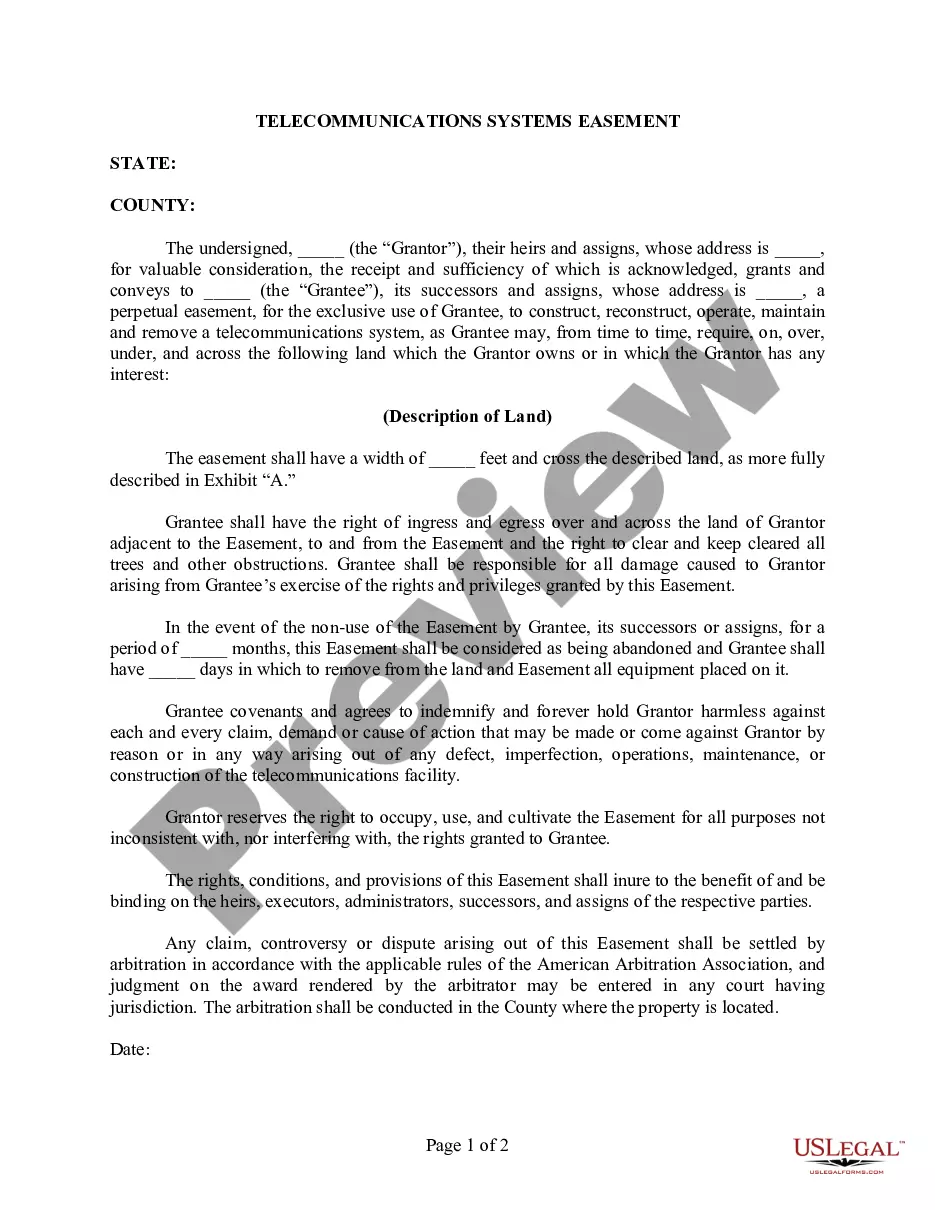
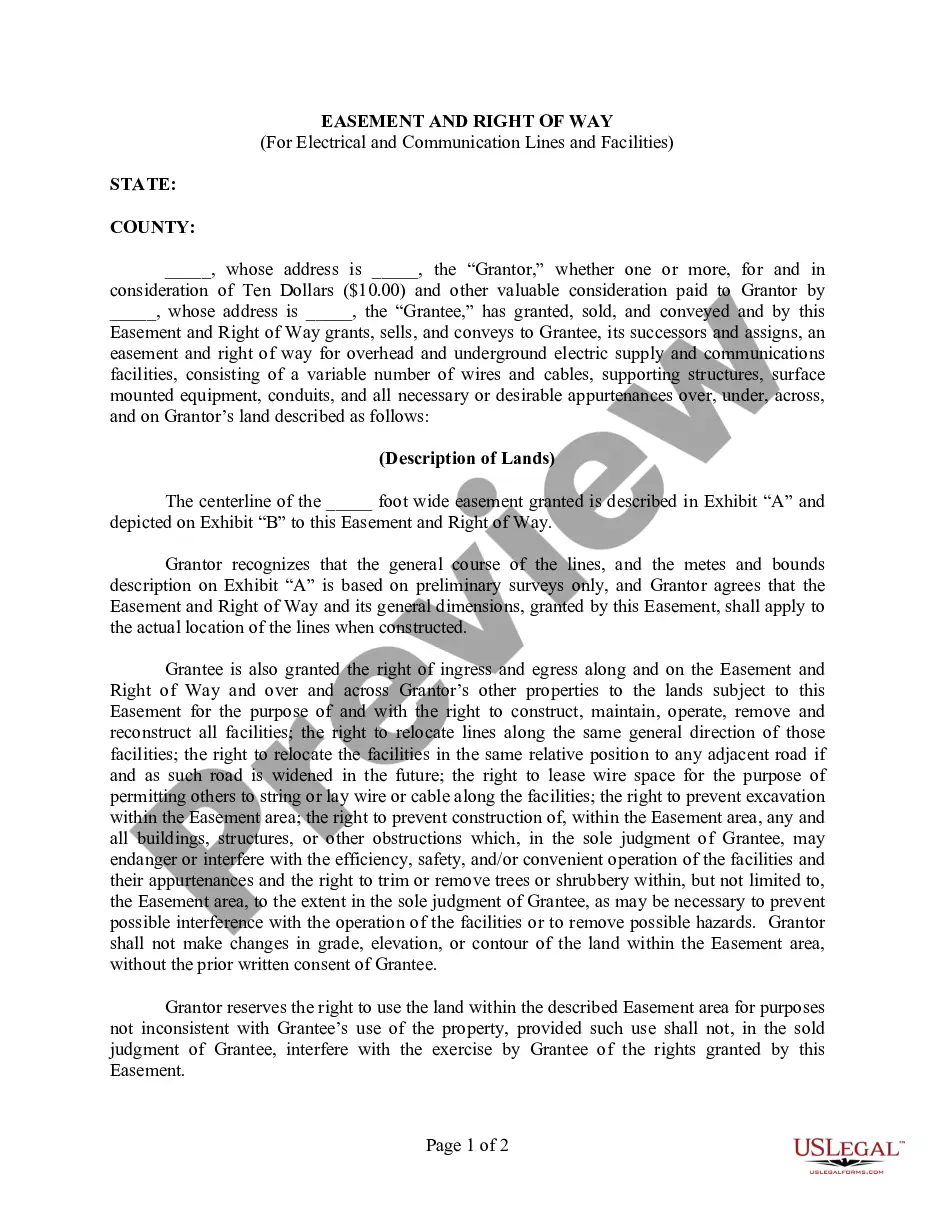
The Easement for Communication Facilities is a legal document that grants a city the right to allow a third party, known as the Grantee, to install and maintain communication facilities on city-owned property. This easement enables Grantees to access the property for necessary operations while ensuring the City's use of the property is not impeded. Unlike other easements that may grant broader access or use rights, this specific form focuses on communication-related facilities, making it distinct and purpose-driven.
Key parts of this document
- Grant of Easement: Outlines the right granted to the Grantee for installation and maintenance of facilities on the property.
- Grantee's Rights: Describes the Grantee's access rights, including ingress and egress to perform necessary activities.
- City's Rights: Specifies the City retains the right to use the property without interfering with the Grantee's rights.
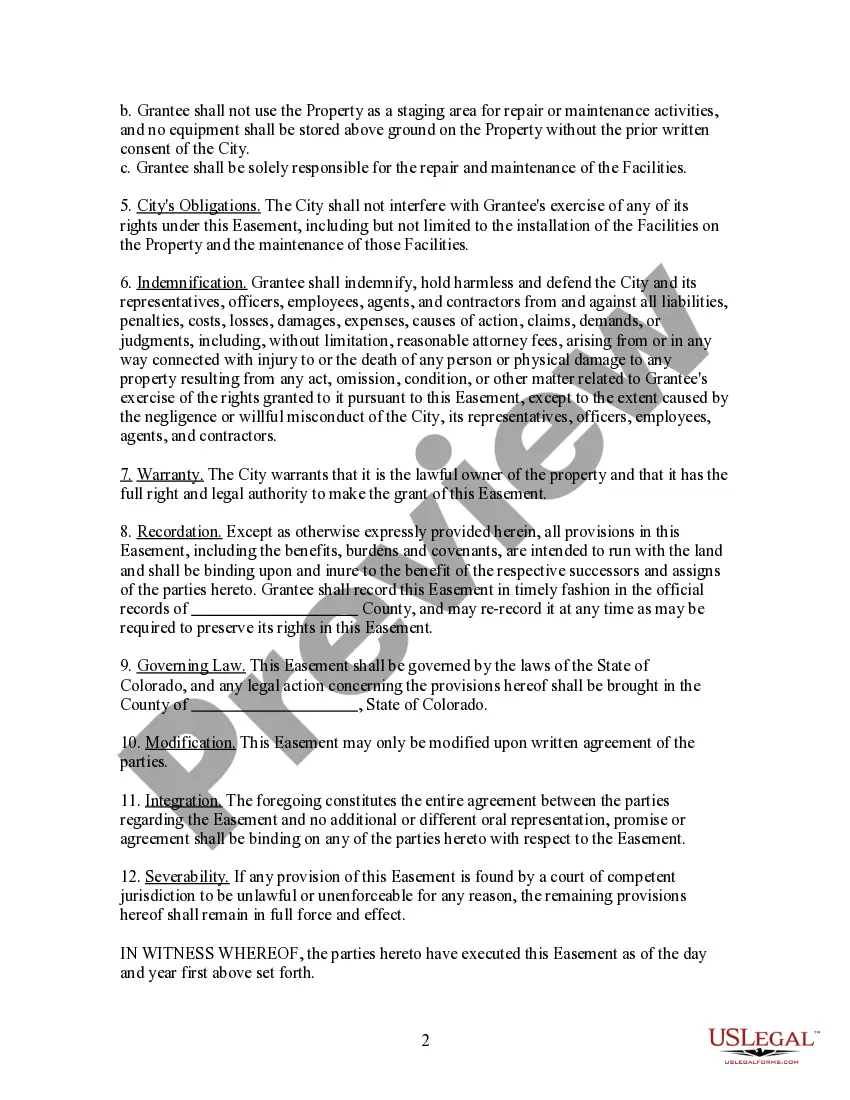
- Grantee's Obligations: Details responsibilities for restoring property conditions and managing equipment.
- Indemnification Clause: Protects the City from liabilities related to the Grantee's use of the easement.
- Warranty: Affirms that the City has the authority to grant the easement.
When to use this document
This form is used when a city needs to permit a communication company to install and maintain facilities like cables, antennas, or other necessary equipment on city-owned land. Real-world scenarios include expanding telecommunication networks, upgrading infrastructure for better communication services, or allowing utilities to manage communication lines more effectively.
Intended users of this form
- City governments seeking to grant easements for communication infrastructure.
- Telecommunication companies or service providers needing access to city-owned properties.
- Legal representatives involved in structuring agreements between municipalities and service providers.
Instructions for completing this form
- Identify the parties involved: Clearly state the City and the Grantee's details.
- Specify the property: Provide a description of the property where the easement will be granted.
- Outline the rights granted: Detail the specific rights being conferred to the Grantee regarding installation and maintenance.
- Define obligations: Include any responsibilities the Grantee will have in terms of property restoration and maintenance of the facilities.
- Include signatures and dates: Ensure that both parties sign and date the document for validation.
Does this form need to be notarized?
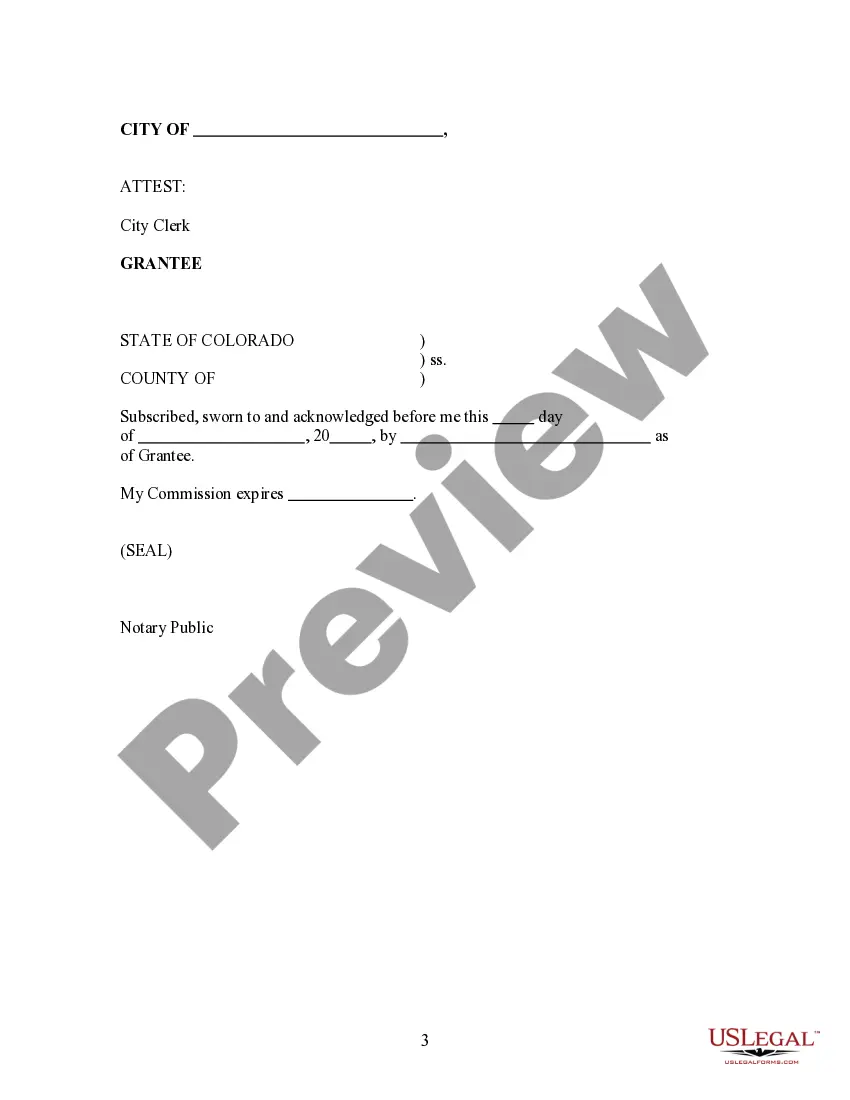
This document requires notarization to meet legal standards. US Legal Forms provides secure online notarization powered by Notarize, allowing you to complete the process through a verified video call, available 24/7.
Get your form ready online
Our built-in tools help you complete, sign, share, and store your documents in one place.
Make edits, fill in missing information, and update formatting in US Legal Forms—just like you would in MS Word.
Download a copy, print it, send it by email, or mail it via USPS—whatever works best for your next step.
Sign and collect signatures with our SignNow integration. Send to multiple recipients, set reminders, and more. Go Premium to unlock E-Sign.
If this form requires notarization, complete it online through a secure video call—no need to meet a notary in person or wait for an appointment.
We protect your documents and personal data by following strict security and privacy standards.

Make edits, fill in missing information, and update formatting in US Legal Forms—just like you would in MS Word.

Download a copy, print it, send it by email, or mail it via USPS—whatever works best for your next step.

Sign and collect signatures with our SignNow integration. Send to multiple recipients, set reminders, and more. Go Premium to unlock E-Sign.

If this form requires notarization, complete it online through a secure video call—no need to meet a notary in person or wait for an appointment.

We protect your documents and personal data by following strict security and privacy standards.
Common mistakes to avoid
- Failing to provide a clear description of the property involved.
- Neglecting to specify the rights and obligations of both parties.
- Forgetting to include the signatures of the authorized representatives.
Advantages of online completion
- Convenience of downloading and filling out the form at any time.
- Editability allows you to personalize the form to fit specific needs.
- Reliability of professionally drafted templates ensures compliance with legal standards.
Looking for another form?
Form popularity
FAQ
In Colorado, a right of way grants access to a specific path across a property, often for travel or utility lines. In contrast, a Colorado Easement for Communication Facilities allows for the installation and maintenance of communication equipment on the property. While both involve land use rights, the scope and purpose vary significantly. Understanding these differences ensures that you choose the correct option for your needs.
To write a Colorado Easement for Communication Facilities, start by clearly defining the property involved and the rights granted. Specify the purpose of the easement, ensuring it aligns with communication facility needs. Both parties must sign the document to enforce the easement legally. Using a platform like USLegalForms can streamline this process and provide accurate templates to tailor your easement.
Easements in Colorado allow certain rights to use land owned by someone else for a specific purpose. A Colorado easement for communication facilities enables utilities or companies to install and maintain equipment necessary for communication services. Understanding easement rights and responsibilities can help property owners make informed decisions, and resources like uslegalforms can provide clarity on these legal agreements.
A property owner has limited rights when it comes to blocking a utility easement. These easements typically serve a public need, such as in a Colorado easement for communication facilities. If you believe an easement poses issues, reaching out to local authorities or legal experts is advisable to discuss potential actions.
In Colorado, a property owner cannot arbitrarily block an easement that is legally established, including a Colorado easement for communication facilities. If the easement benefits another property, the owner must allow reasonable access. However, if the easement significantly impairs your property use, legal advice can help explore options for negotiation or modification.
You can refuse a utility easement, but it may limit access to essential services. A Colorado Easement for Communication Facilities often enables companies to provide connectivity to communities. It's important to weigh the benefits against your rights as a property owner. For guidance, consider using platforms like US Legal Forms to understand your rights and the implications of refusing an easement.
Yes, a cable company may install a box in your yard if they hold a valid easement. A Colorado Easement for Communication Facilities may authorize them to place infrastructure necessary for service delivery. However, you have the right to be informed about its installation. If you have concerns, reviewing the details of the easement can clarify their rights.
Spectrum typically cannot enter your property without your consent. A Colorado Easement for Communication Facilities may grant certain rights to companies for specific uses. However, if an easement exists, they must follow the terms. If you're unsure about the easement status on your property, consider consulting a legal professional.
Easement laws in Colorado govern how easements are created, used, and enforced. They provide guidelines on rights, obligations, and the types of easements allowed. To navigate these laws effectively, especially for a Colorado Easement for Communication Facilities, consult a legal expert or utilize platforms like US Legal Forms for accurate documentation.
Express easements are created through a written agreement between the involved parties, detailing the easement's purpose and extent. This agreement must be signed and typically recorded with the local government to ensure recognition. Utilizing resources like US Legal Forms can simplify the process of creating a Colorado Easement for Communication Facilities.