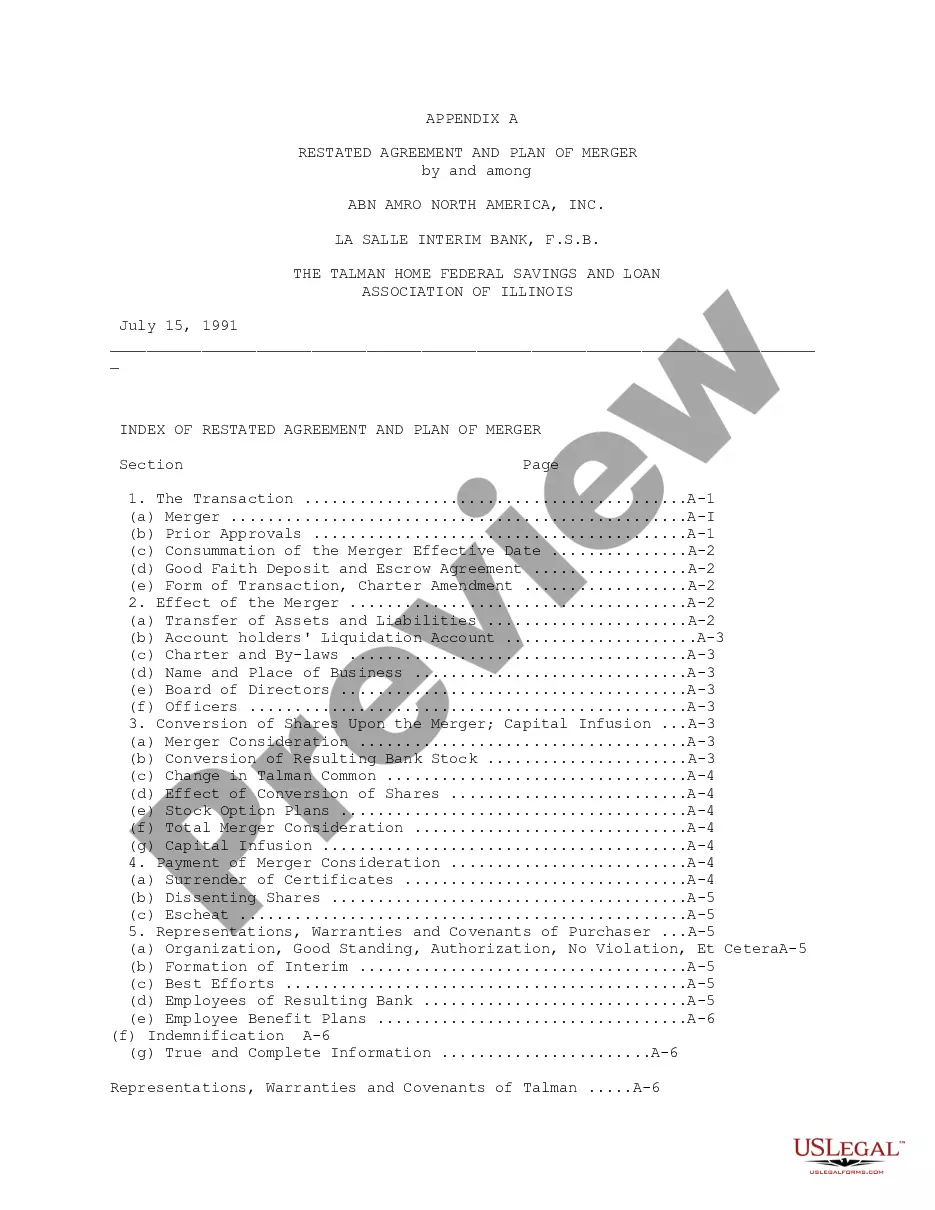
California Indemnification Provisions
Description
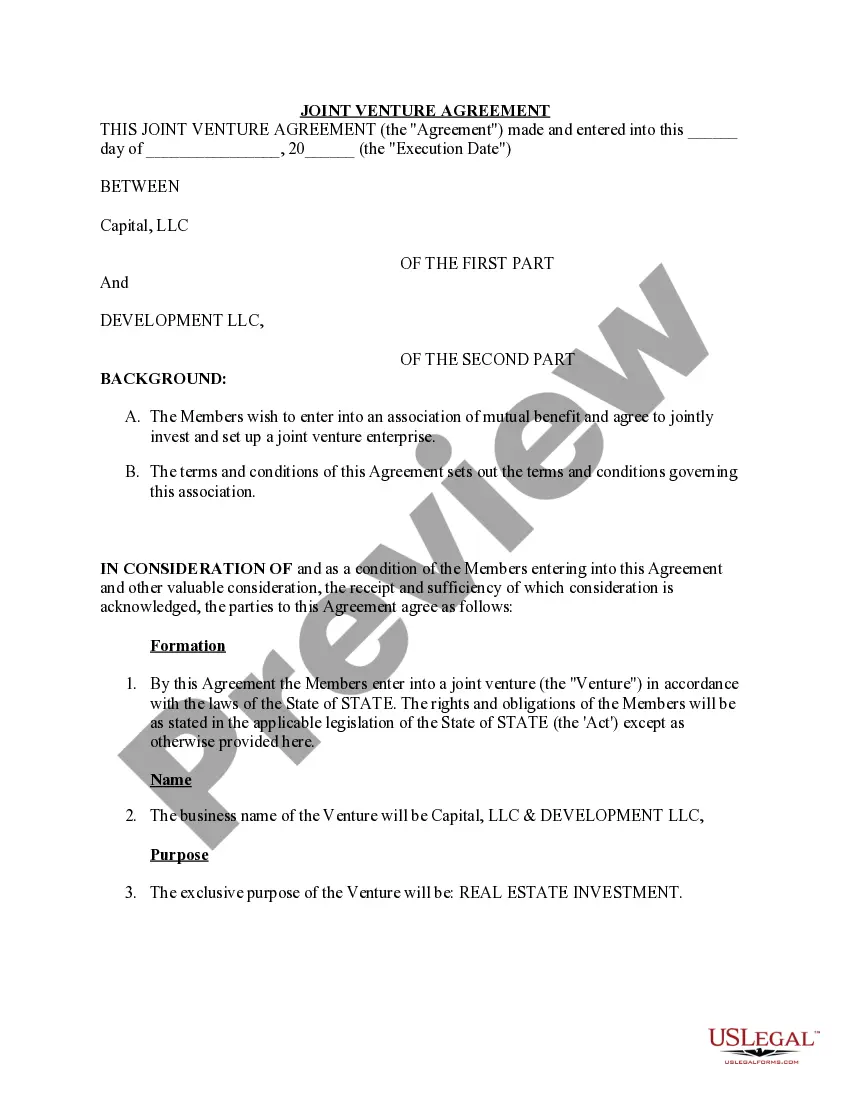
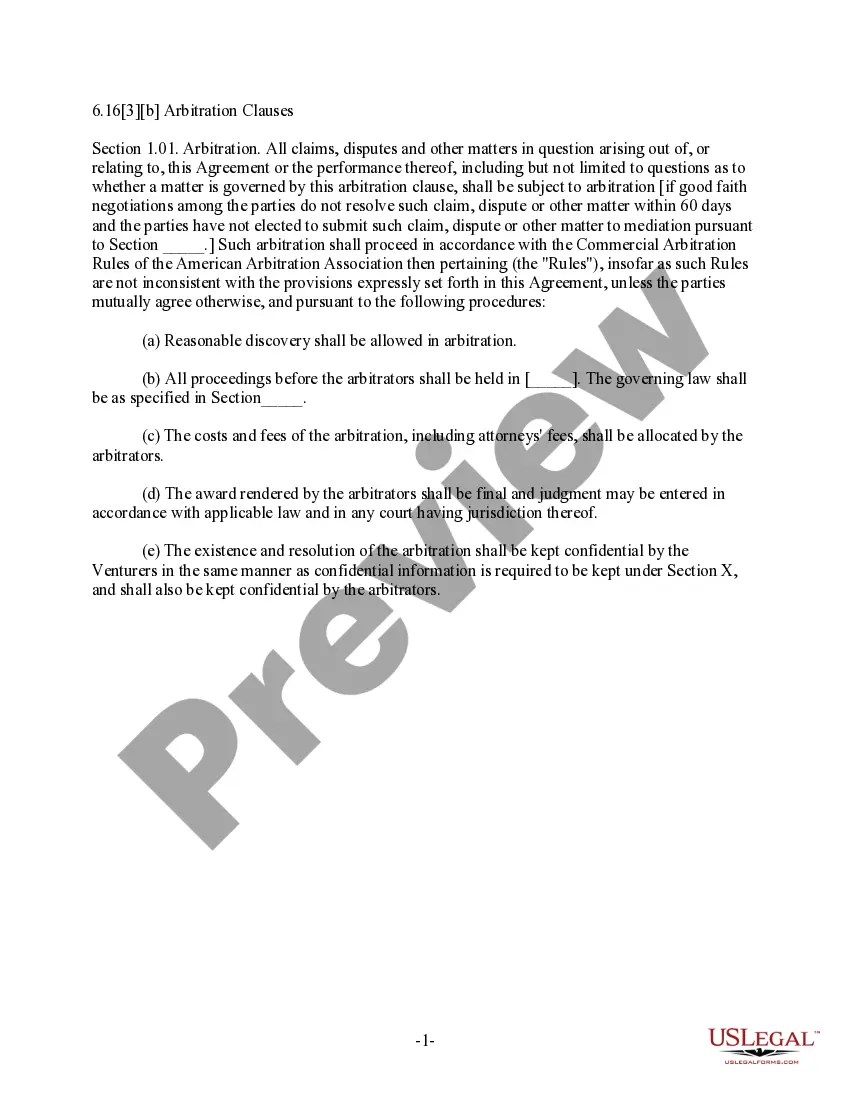
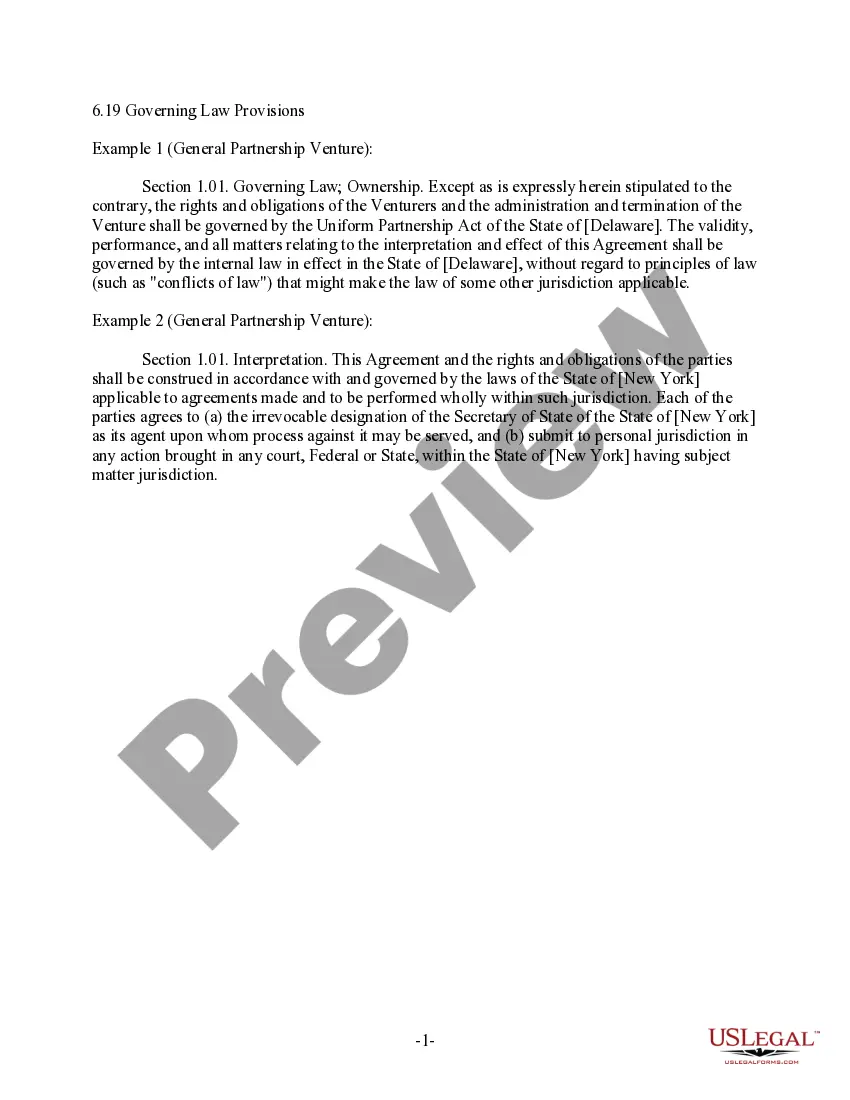
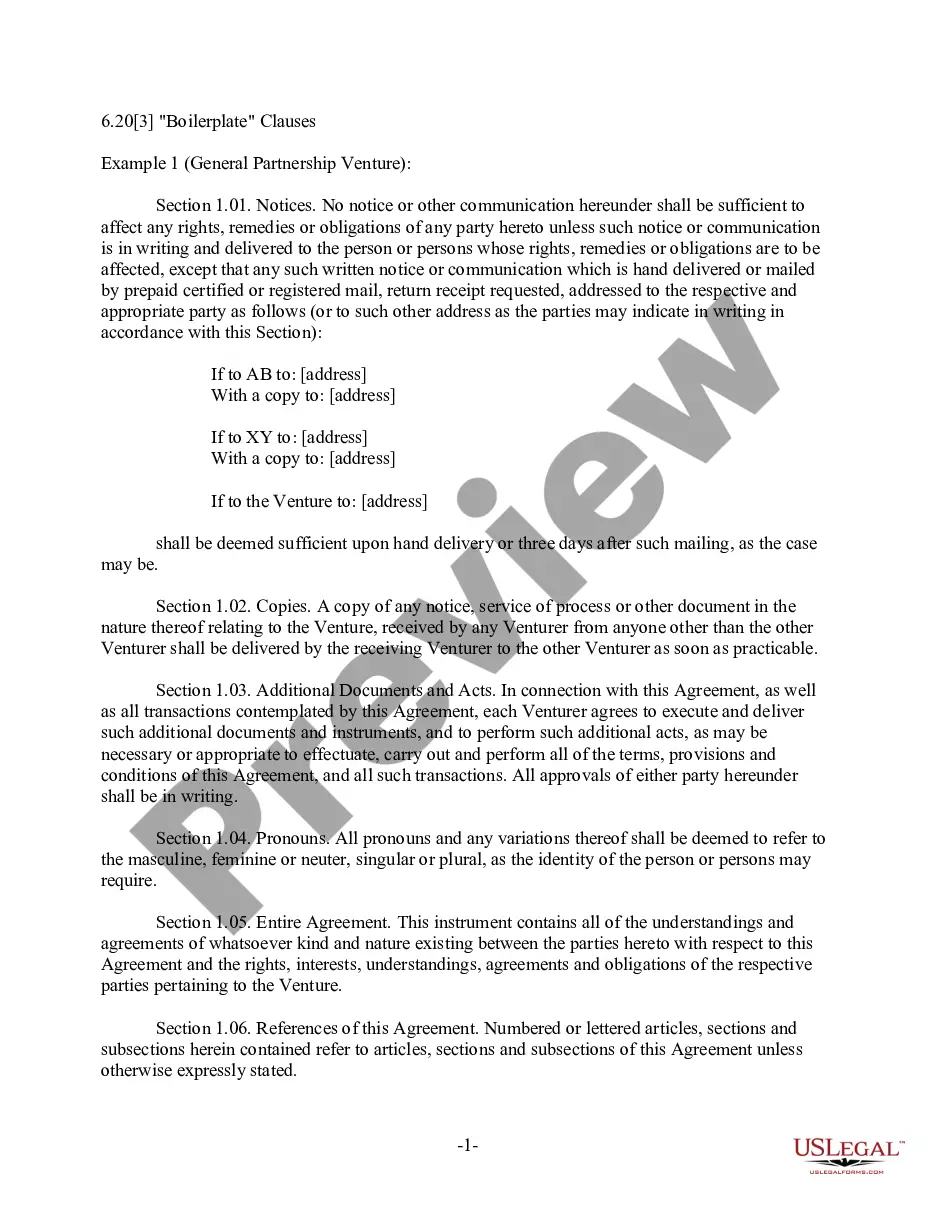
Get your form ready online
Our built-in tools help you complete, sign, share, and store your documents in one place.
Make edits, fill in missing information, and update formatting in US Legal Forms—just like you would in MS Word.
Download a copy, print it, send it by email, or mail it via USPS—whatever works best for your next step.
Sign and collect signatures with our SignNow integration. Send to multiple recipients, set reminders, and more. Go Premium to unlock E-Sign.
If this form requires notarization, complete it online through a secure video call—no need to meet a notary in person or wait for an appointment.
We protect your documents and personal data by following strict security and privacy standards.

Make edits, fill in missing information, and update formatting in US Legal Forms—just like you would in MS Word.

Download a copy, print it, send it by email, or mail it via USPS—whatever works best for your next step.

Sign and collect signatures with our SignNow integration. Send to multiple recipients, set reminders, and more. Go Premium to unlock E-Sign.

If this form requires notarization, complete it online through a secure video call—no need to meet a notary in person or wait for an appointment.

We protect your documents and personal data by following strict security and privacy standards.
Looking for another form?


How to fill out Indemnification Provisions?
You are able to commit hours on the web searching for the lawful record design which fits the federal and state specifications you require. US Legal Forms gives a large number of lawful kinds which can be reviewed by professionals. It is possible to acquire or print the California Indemnification Provisions from the services.
If you currently have a US Legal Forms accounts, you may log in and then click the Download key. Next, you may full, edit, print, or sign the California Indemnification Provisions. Each and every lawful record design you get is your own for a long time. To get one more backup associated with a acquired form, go to the My Forms tab and then click the related key.
If you use the US Legal Forms internet site for the first time, adhere to the simple instructions beneath:
- Initial, be sure that you have chosen the right record design to the area/town of your choosing. Browse the form explanation to make sure you have picked the right form. If accessible, utilize the Review key to check from the record design also.
- In order to get one more model from the form, utilize the Search industry to find the design that meets your needs and specifications.
- Upon having identified the design you need, simply click Get now to move forward.
- Pick the costs prepare you need, type in your accreditations, and register for your account on US Legal Forms.
- Comprehensive the transaction. You can use your charge card or PayPal accounts to fund the lawful form.
- Pick the file format from the record and acquire it to the gadget.
- Make alterations to the record if necessary. You are able to full, edit and sign and print California Indemnification Provisions.
Download and print a large number of record templates making use of the US Legal Forms Internet site, which provides the largest assortment of lawful kinds. Use skilled and state-particular templates to take on your company or individual demands.
Form popularity
FAQ
Example 1: A service provider asking their customer to indemnify them to protect against misuse of their work product. Example 2: A rental car company, as the rightful owner of the car, having their customer indemnify them from any damage caused by the customer during the course of the retnal.
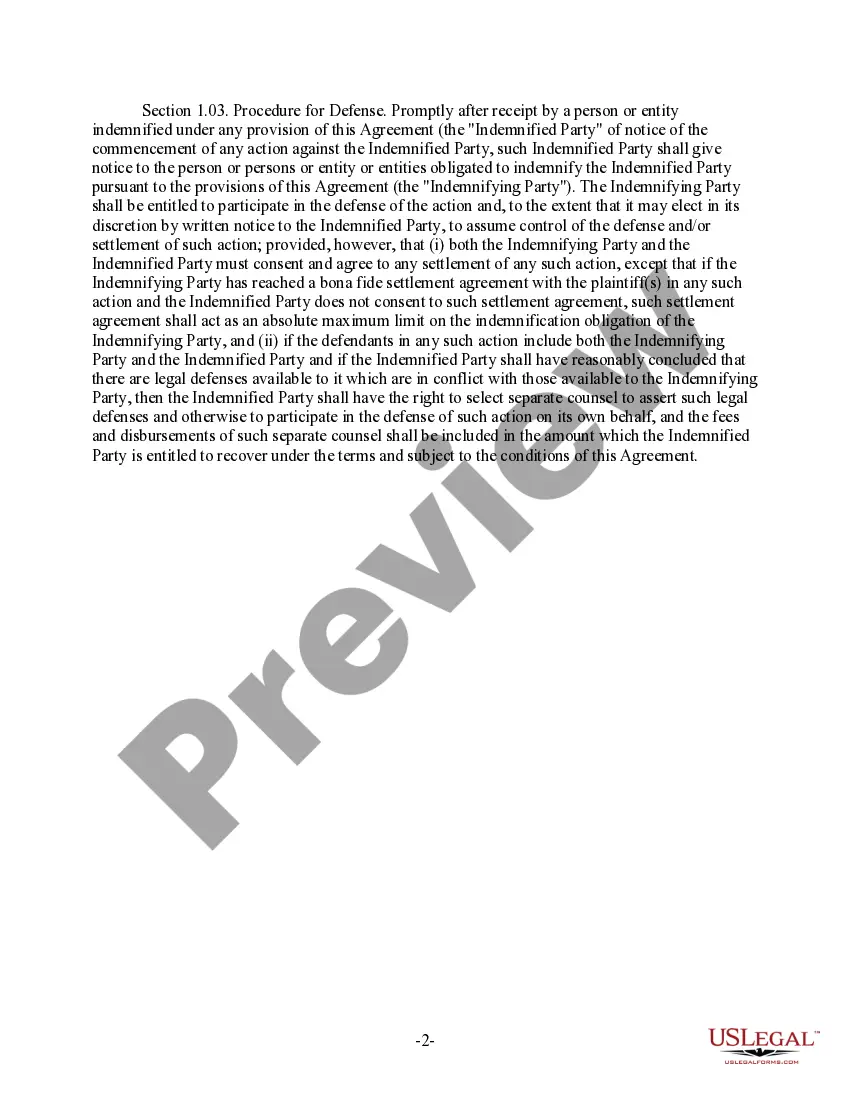
Indemnifications, or ?hold harmless? provisions, shift risks or potential costs from one party to another. One party to the contract promises to defend and pay costs and expenses of the other if specific circumstances arise (often a claim or dispute with a third party to the contract).
Most indemnification provisions require the indemnifying party to "indemnify and hold harmless" the indemnified party for specified liabilities. In practice, these terms are typically paired and interpreted as a unit to mean "indemnity."
In most contracts, an indemnification clause serves to compensate a party for harm or loss arising in connection with the other party's actions or failure to act. The intent is to shift liability away from one party, and on to the indemnifying party.
The buyer and seller will then negotiate the 'caps' to these representations; that is, the maximum amount of money the buyer can recoup from the seller if it turns out that these representations are not accurate. Indemnification Caps: Typically, small market transactions have caps equal to 50% of the purchase price.
?The elements of a cause of action for indemnity are (1) a showing of fault on the part of the indemnitor and (2) resulting damages to the indemnitee for which the indemnitor is contractually or equitably responsible.? Expressions, supra, 86 Cal. App.
Type 1 indemnity provisions require a party to indemnify and defend another from any claim arising out of or related to the indemnitor's scope of work, including the active negligence or misconduct of the indemnified party. Only sole negligence or willful misconduct of the indemnitee could not be indemnified.
Indemnifications, or ?hold harmless? provisions, shift risks or potential costs from one party to another. One party to the contract promises to defend and pay costs and expenses of the other if specific circumstances arise (often a claim or dispute with a third party to the contract).