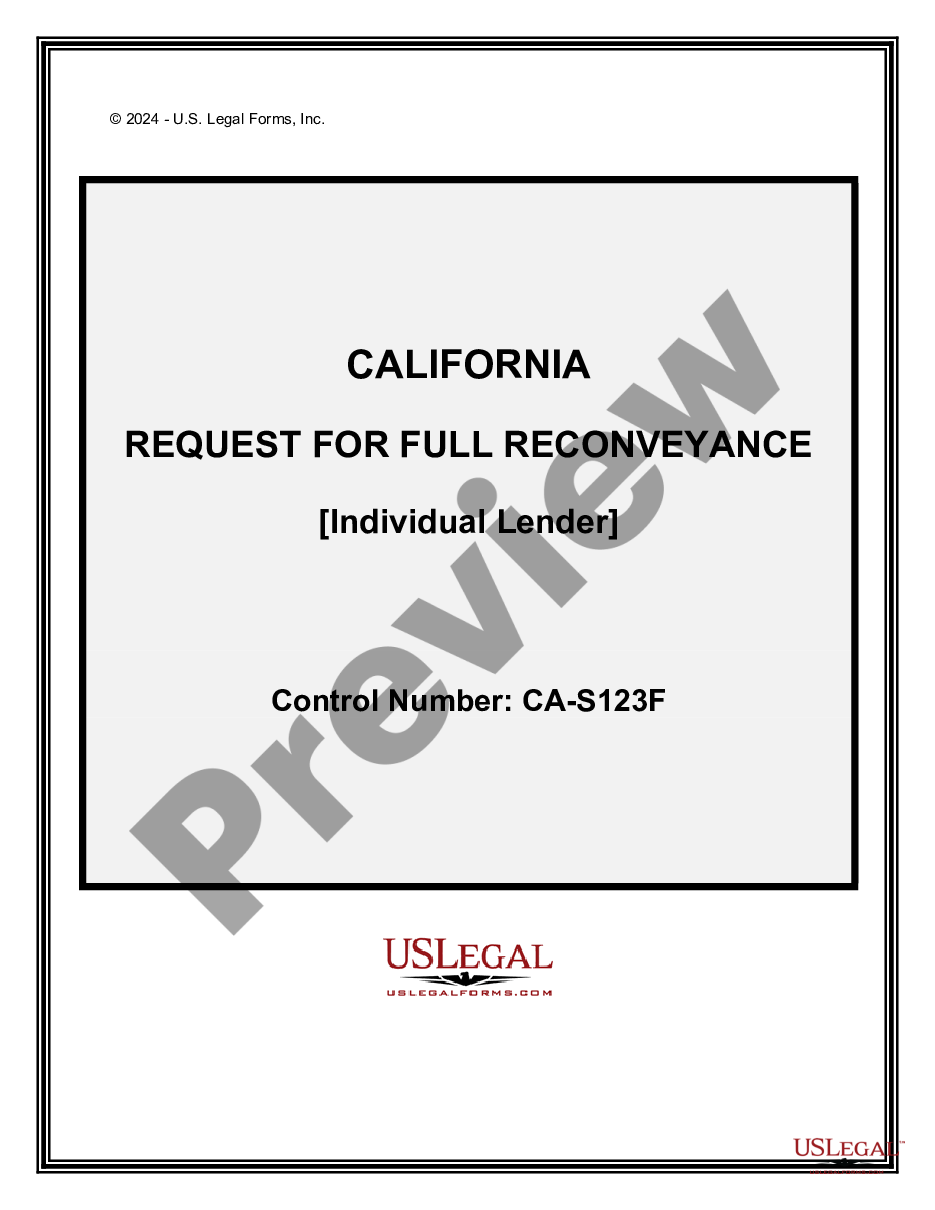
California Request for Full Reconveyance
What is this form?
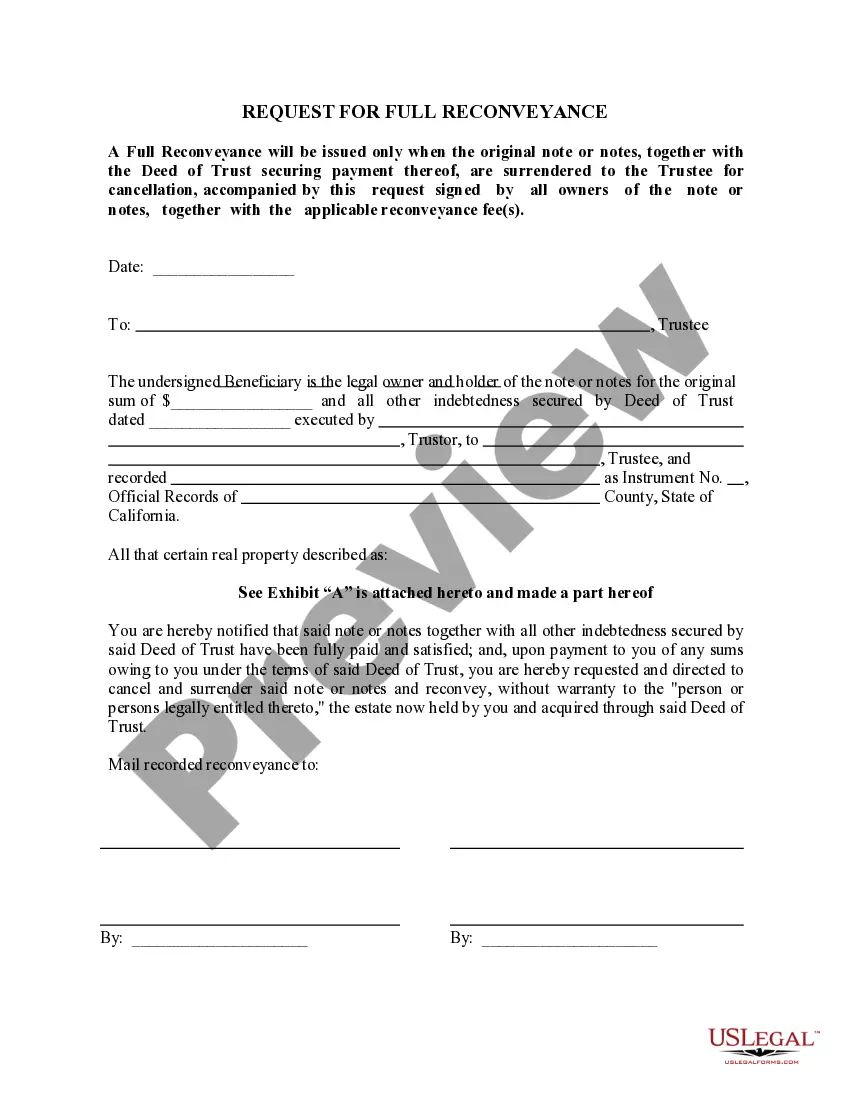
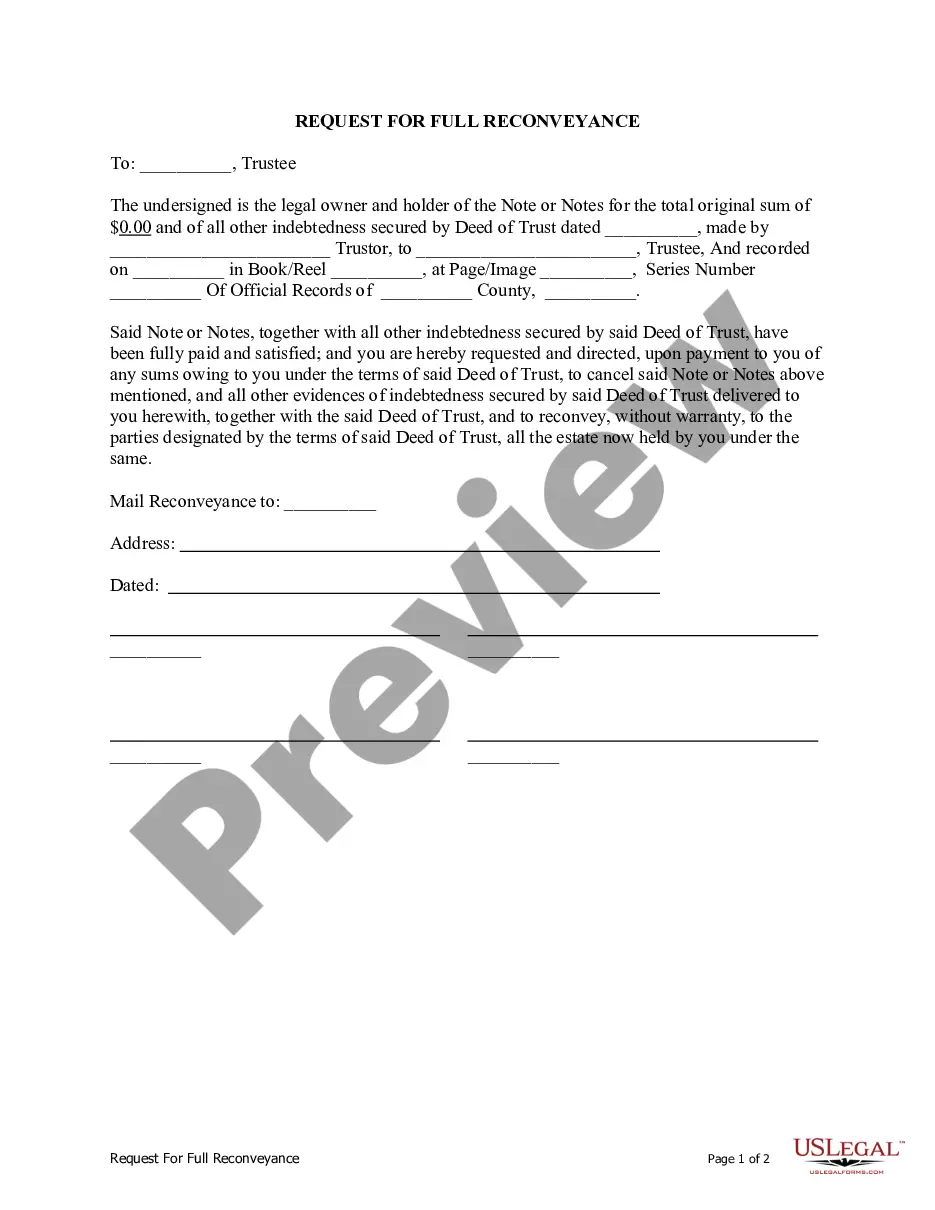
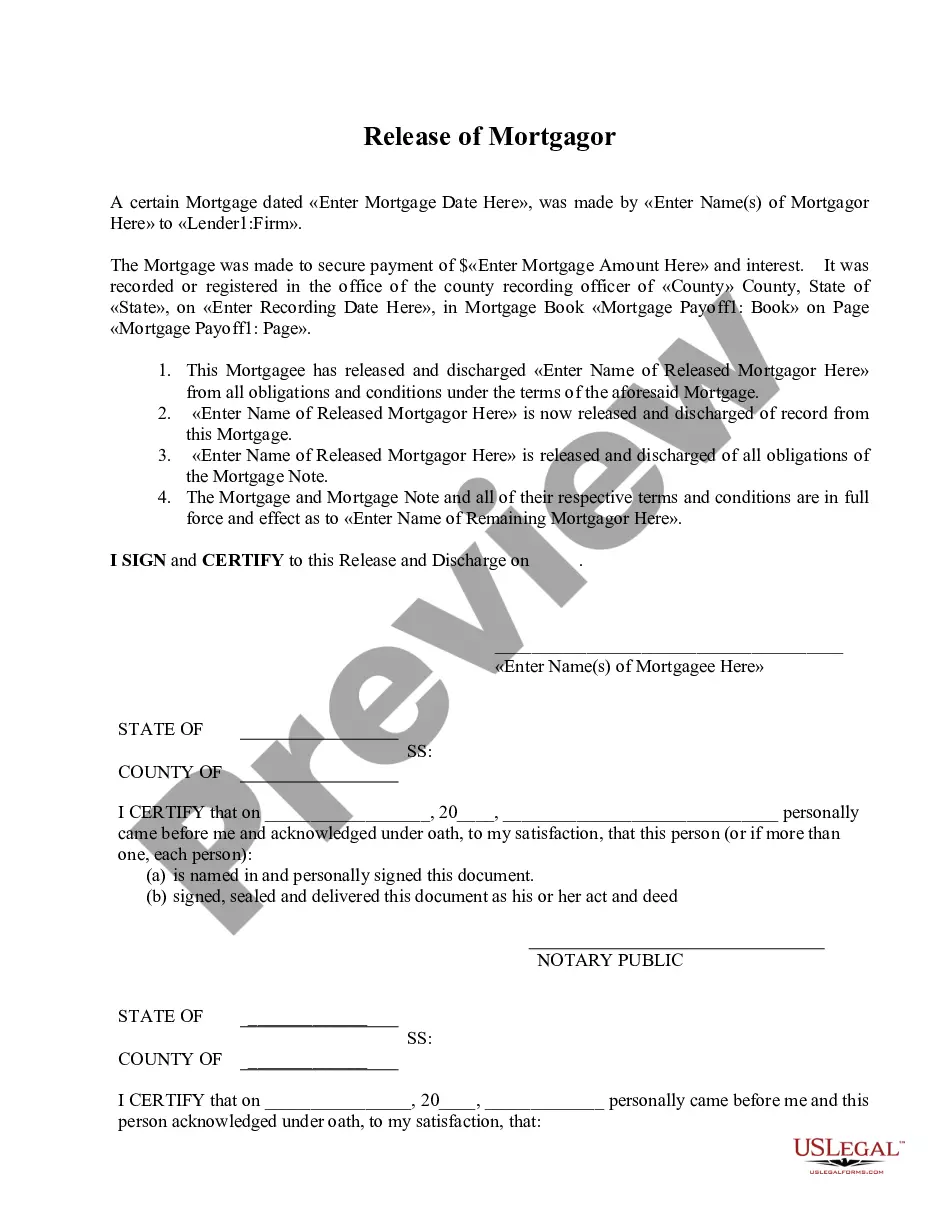
The Request for Full Reconveyance is a legal document used to formally notify the trustee that a deed of trust or mortgage has been fully paid. This form differs from other related documents as it specifically serves to request the cancellation of the deed of trust, publicly confirming that the loan obligations have been satisfied. This ensures that the property title is clear and free of any liens associated with the mortgage.
Key components of this form
- Date: Specifies when the request is submitted.
- Trustee Information: Includes the name and details of the trustee responsible for the deed of trust.
- Beneficiary Declaration: Confirms legal ownership of the note and a statement that the debt has been paid in full.
- Property Description: Detailed reference to the real property related to the deed of trust.
- Signatures: Requires signatures from all note owners and potentially a notarization.
When to use this document
This form should be used when you have fully paid off your mortgage or deed of trust and want to clear the title on your property. It is crucial in scenarios where the property owner aims to eliminate any recorded liens, especially before selling the property or acquiring additional financing.
Who should use this form
- Property owners who have paid off their mortgage or deed of trust.
- Beneficiaries of the mortgage who want to ensure their property title is clear.
- Trustees responsible for executing the reconveyance process on behalf of the beneficiary.
Completing this form step by step
- Identify the parties involved: Provide the names of the trustee and beneficiaries.
- Fill in the relevant details: Include the original loan amount, property description, and document reference numbers.
- Sign the form: Ensure all owners of the mortgage sign the document in the designated areas.
- Notarize the signatures: Have the document notarized if required for legal confirmation.
- Submit the request: Send the completed form along with any applicable fees to the trustee for processing.
Notarization guidance
Yes, this form must be notarized to be legally valid. Notarization provides assurance that the signer's identity has been verified, adding an important layer of credibility. US Legal Forms offers integrated online notarization options for your convenience, available 24/7 through secure video calls, ensuring legal equivalence without the need for travel.
Get your form ready online
Our built-in tools help you complete, sign, share, and store your documents in one place.
Make edits, fill in missing information, and update formatting in US Legal Forms—just like you would in MS Word.
Download a copy, print it, send it by email, or mail it via USPS—whatever works best for your next step.
Sign and collect signatures with our SignNow integration. Send to multiple recipients, set reminders, and more. Go Premium to unlock E-Sign.
If this form requires notarization, complete it online through a secure video call—no need to meet a notary in person or wait for an appointment.
We protect your documents and personal data by following strict security and privacy standards.

Make edits, fill in missing information, and update formatting in US Legal Forms—just like you would in MS Word.

Download a copy, print it, send it by email, or mail it via USPS—whatever works best for your next step.

Sign and collect signatures with our SignNow integration. Send to multiple recipients, set reminders, and more. Go Premium to unlock E-Sign.

If this form requires notarization, complete it online through a secure video call—no need to meet a notary in person or wait for an appointment.

We protect your documents and personal data by following strict security and privacy standards.
Mistakes to watch out for
- Failing to include all required signatures from note owners.
- Not notarizing the document when necessary.
- Omitting or incorrectly filling out property description details.
- Submitting the form without checking for local filing requirements or fees.
Why complete this form online
- Convenience: Download and complete your form at your own pace.
- Editability: Easily modify the form to suit your specific circumstances.
- Reliability: Ensure you have the most current and legally compliant form.
Main things to remember
- The Request for Full Reconveyance confirms that a loan has been satisfied and clearing any liens on the property.
- Proper completion and notarization of this form are essential for legal validity.
- Ensure compliance with California's legal standards for a smooth reconveyance process.
Looking for another form?

Form popularity
FAQ
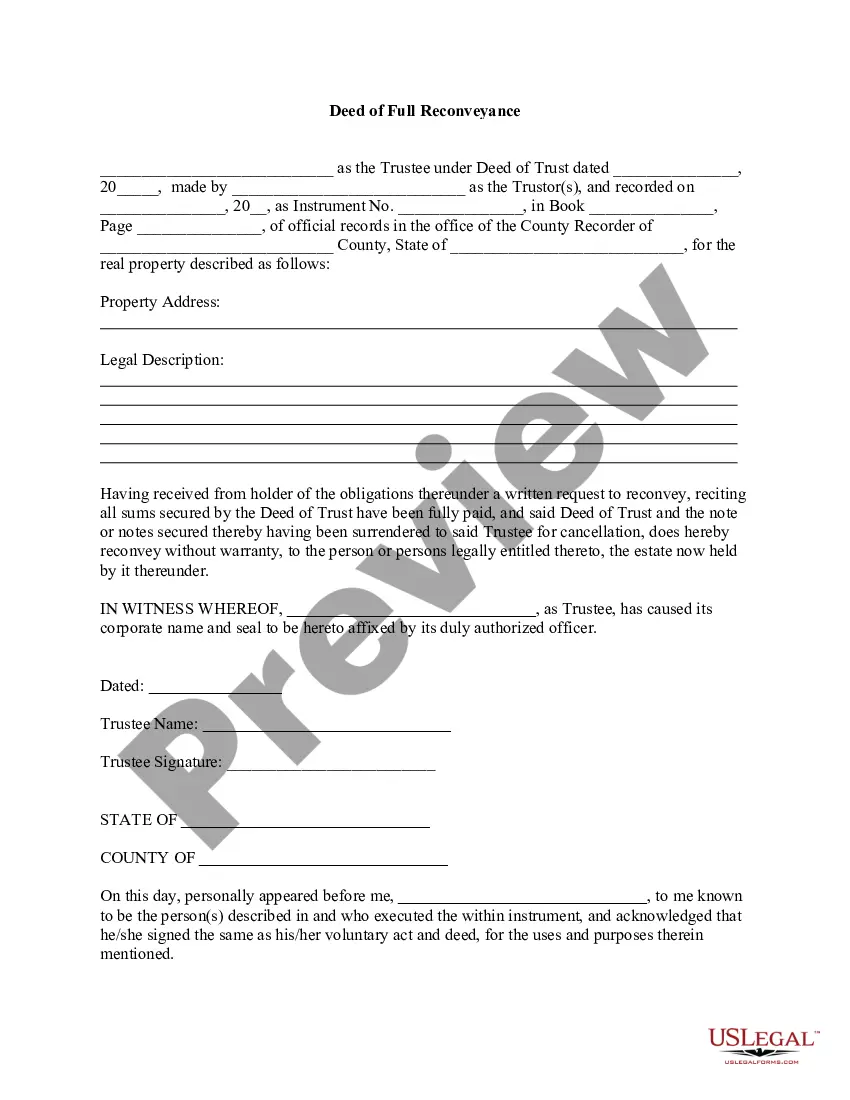
When a deed of trust/mortgage is paid in full, you can record a Full Reconveyance from the trustee stating publicly that the loan has been paid. The Full Reconveyance Form is completed and signed by the trustee, whose signature must be notarized.
When a deed of trust/mortgage is paid in full, you can record a Full Reconveyance from the trustee stating publicly that the loan has been paid. The Full Reconveyance Form is completed and signed by the trustee, whose signature must be notarized.
Legal Definition: The Trustee or Substitute Trustee is the authorized individual, acting as an agent of the court, who oversees the sale process and makes certain the property is sold in a fair and equitable manner.
In a nutshell, the Substitution of Trustee and Deed of Reconveyance is a legal document that evidences security interest is being release by a lender. In most cases, the document shows that a loan has been paid off. Property owners may even receive this document if they have refinanced a loan.
A document known as a substitution of trustee and full reconveyance identifies the person who has the authority to reconvey the property and remove the lien. Most importantly, a deed of full reconveyance, known as a satisfaction of mortgage in some states, transfers title back to the borrower.
Whether you get a deed of reconveyance, a full reconveyance or a satisfaction of mortgage document, it means the same thing: your loan has been repaid in full and the lender no longer has an interest in your property. In short, your home is finally all yours!
Once a loan has been paid off, and at the express direction of the lender (called the beneficiary), the trustee executes and delivers the deed of reconveyance to the trustor along with the original note (marked ?canceled? or ?paid in full?) and deed of trust.
Whether you get a deed of reconveyance, a full reconveyance or a satisfaction of mortgage document, it means the same thing: your loan has been repaid in full and the lender no longer has an interest in your property. In short, your home is finally all yours!