California Complaint for Conspiracy
Understanding this form
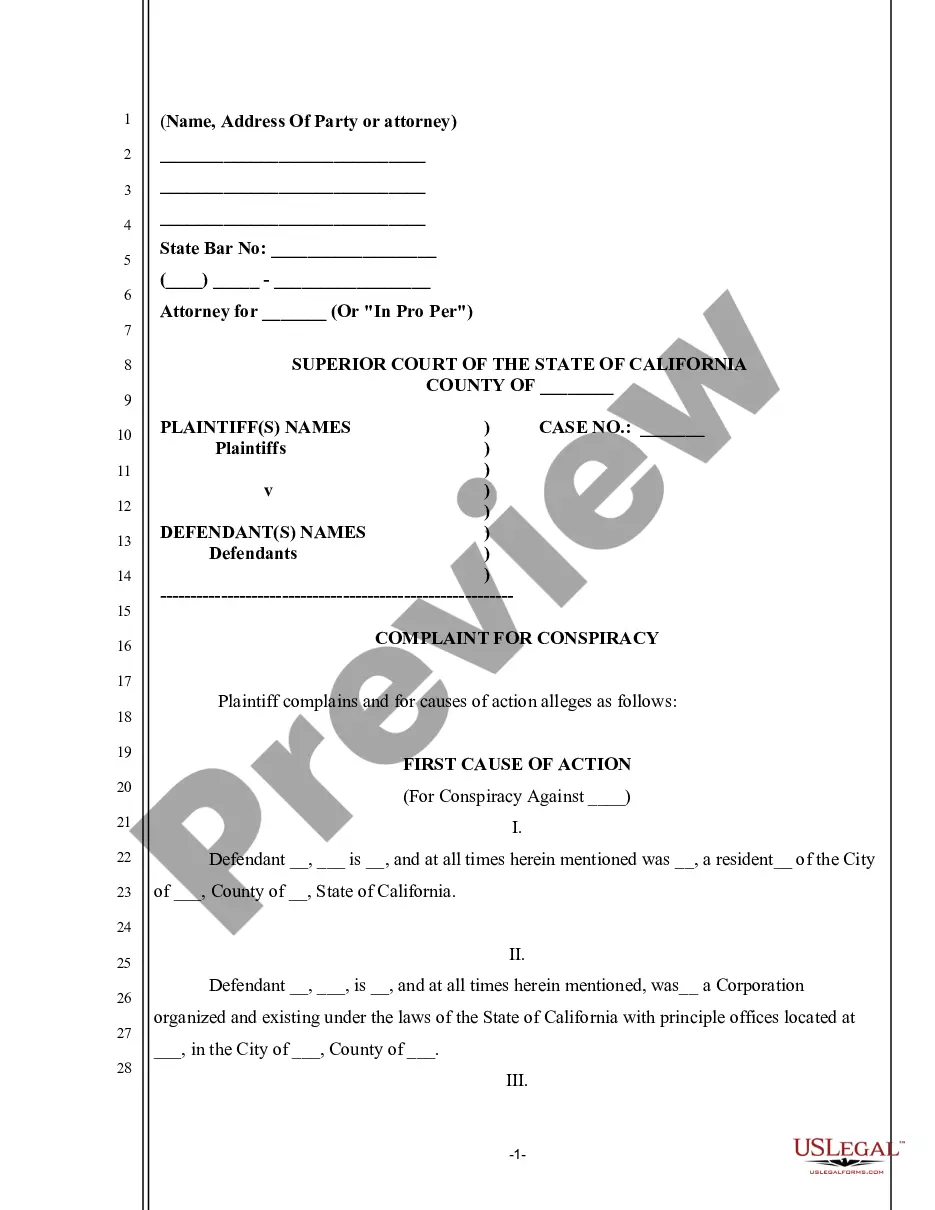
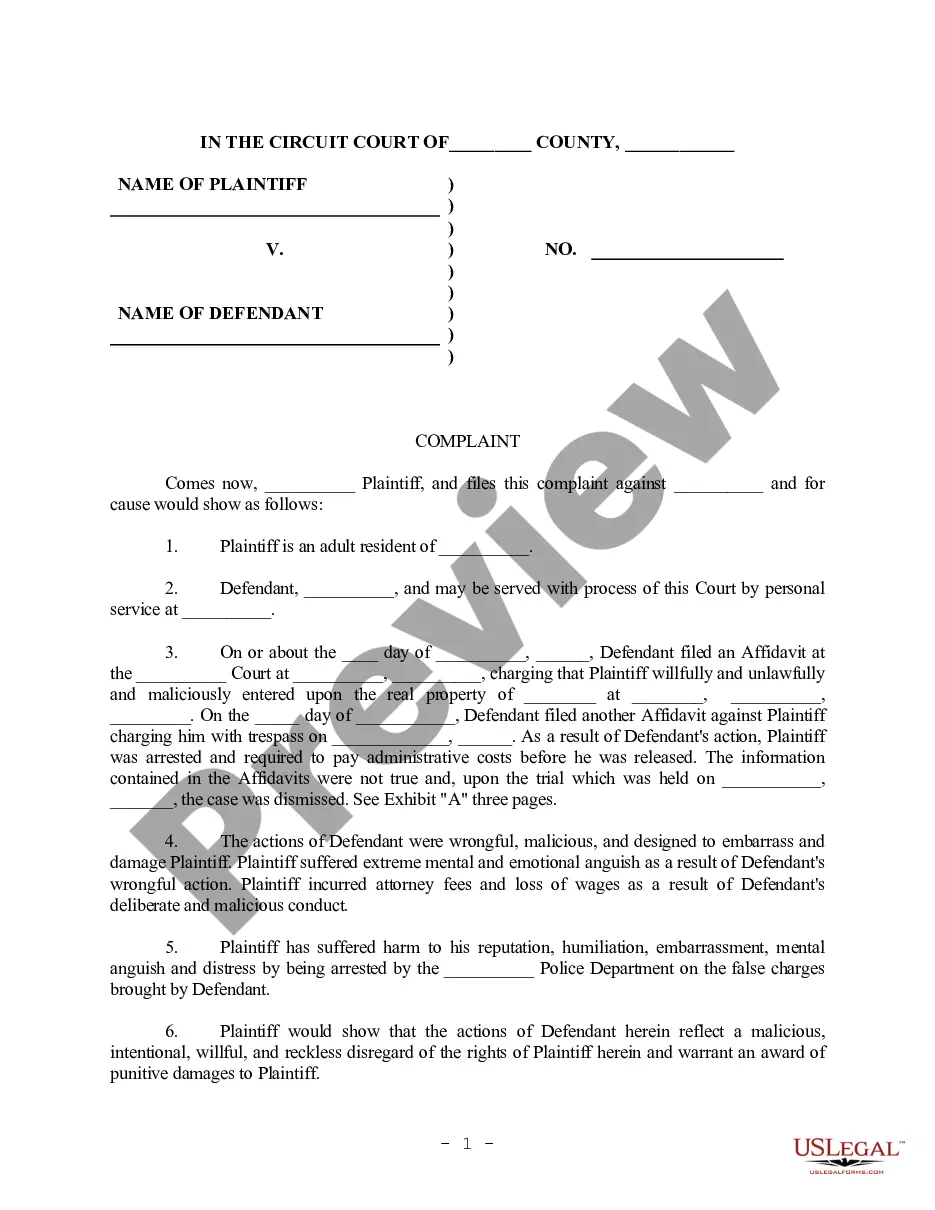
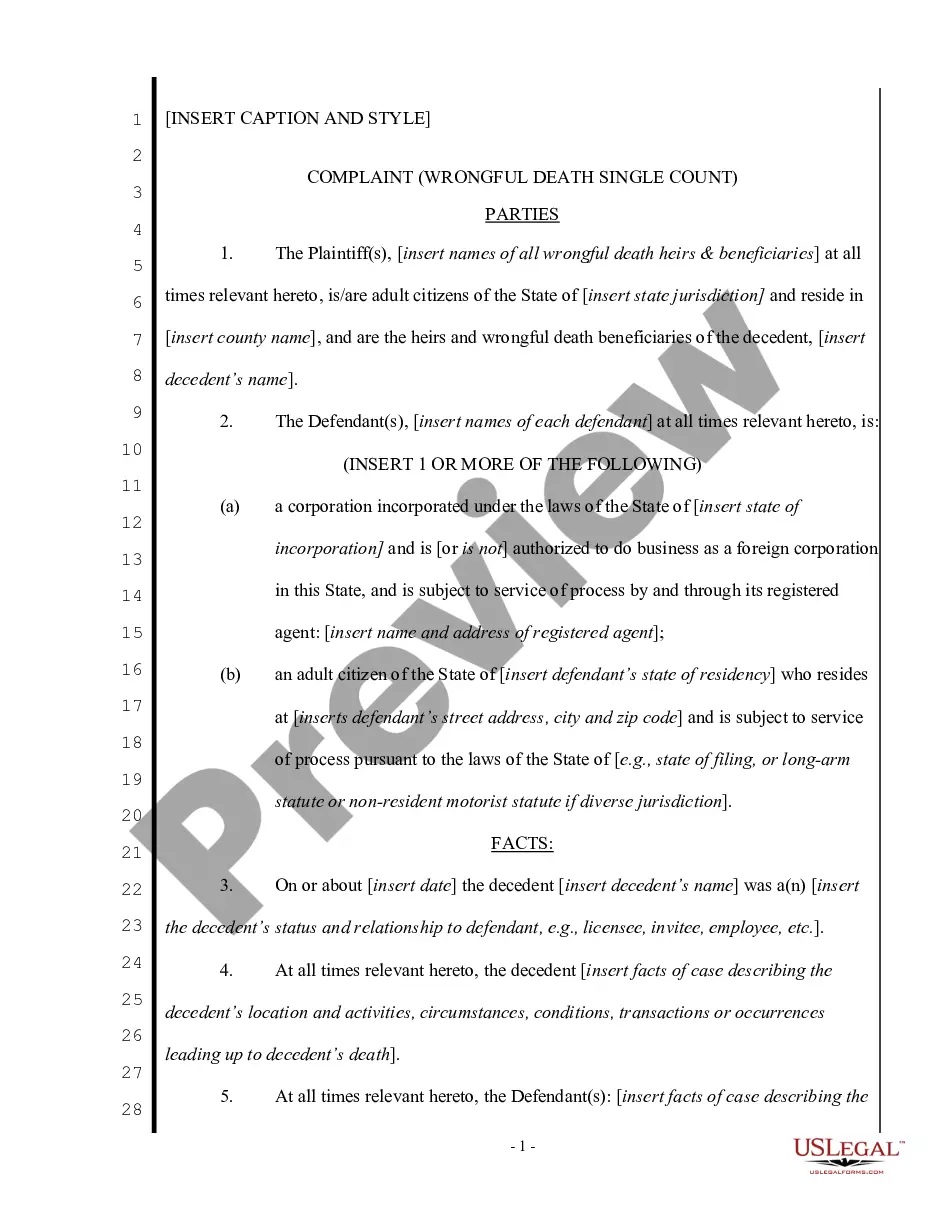
A Complaint for Conspiracy is a legal document used by plaintiffs to assert that defendants conspired to commit an unlawful act that resulted in harm. This form allows the plaintiff to seek compensatory and punitive damages from those involved in the conspiracy. It serves to differentiate from other forms by specifically addressing the collaboration of multiple parties in carrying out an injurious action against the plaintiff.
Key components of this form
- Identification of plaintiffs and defendants, including their names and capacities.
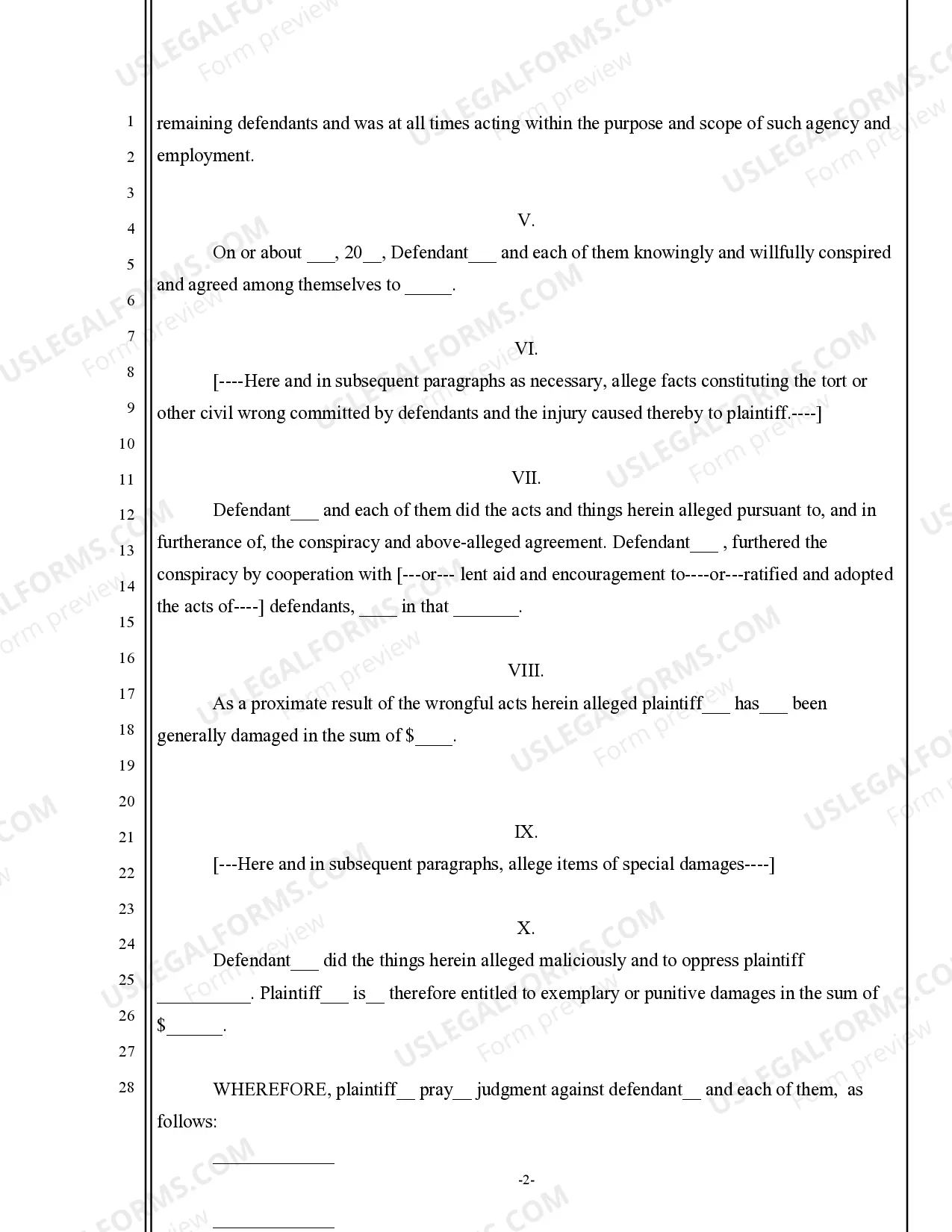
- Statement of conspiracy, detailing the agreement between defendants to commit harmful acts.
- Allegations of civil wrongs and the resulting damages claimed by the plaintiff.
- Request for compensatory and punitive damages.
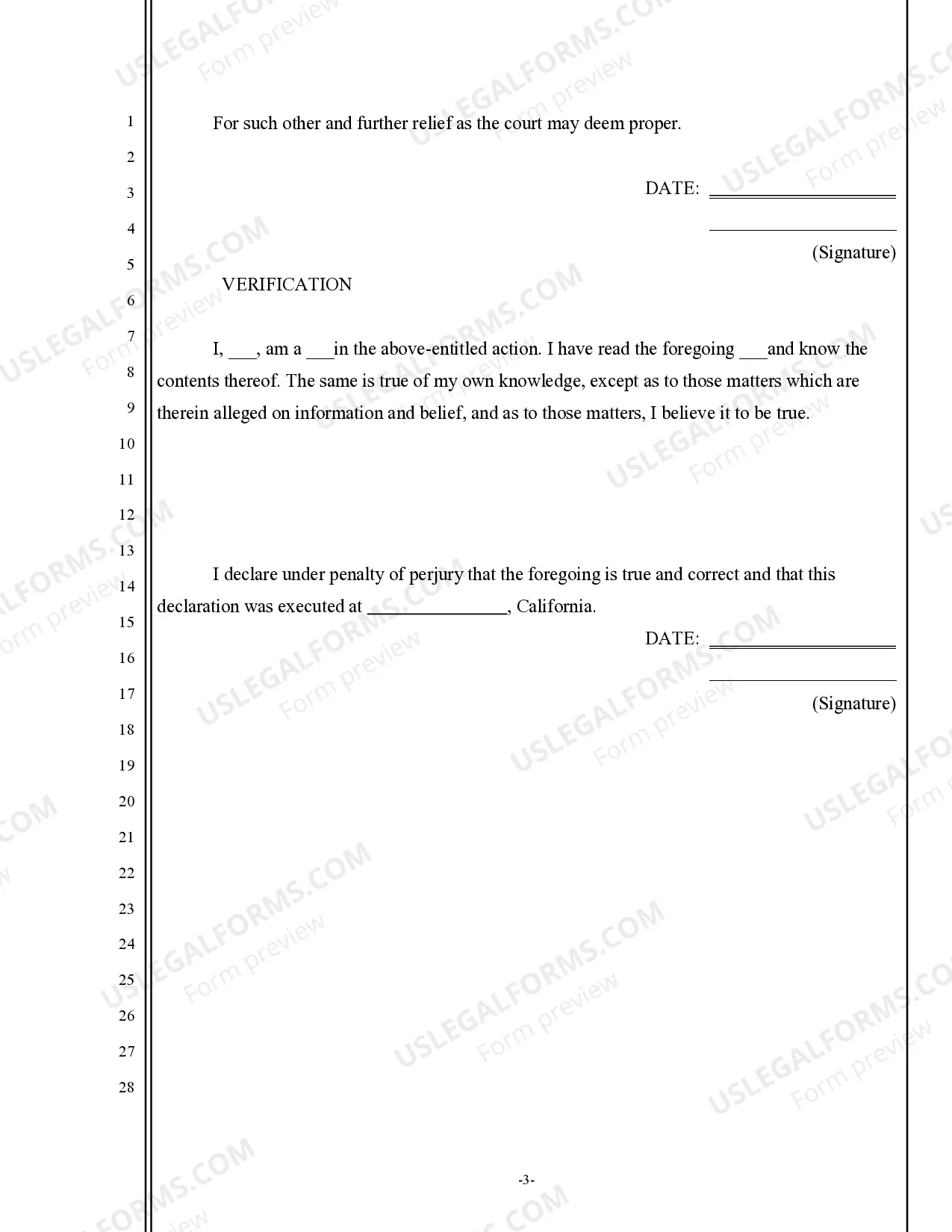
- Verification section to affirm the truthfulness of the claims made in the complaint.
When to use this document
This form should be used when an individual or entity believes they have been harmed due to a conspiratorial agreement involving two or more parties. It is appropriate in cases where evidence supports that the defendants acted together in a way that caused injury to the plaintiff, such as fraud, trespass, or other unlawful conspiracies.
Who should use this form
- Individuals who have suffered harm due to conspiratorial actions of others.
- Business entities seeking to hold other businesses accountable for collusion that results in damages.
- Representatives of plaintiffs, including attorneys, who are filing on behalf of a client.
Instructions for completing this form
- Identify and list all parties involved, including plaintiffs and defendants.
- Clearly state the facts surrounding the conspiracy and the actions taken by the defendants.
- Detail the harm caused to the plaintiff and specify the damages sought.
- Complete the verification section to confirm the truthfulness of the document.
- Sign and date the form to finalize the complaint.
Notarization requirements for this form
This form usually doesn’t need to be notarized. However, local laws or specific transactions may require it. Our online notarization service, powered by Notarize, lets you complete it remotely through a secure video session, available 24/7.
Get your form ready online
Our built-in tools help you complete, sign, share, and store your documents in one place.
Make edits, fill in missing information, and update formatting in US Legal Forms—just like you would in MS Word.
Download a copy, print it, send it by email, or mail it via USPS—whatever works best for your next step.
Sign and collect signatures with our SignNow integration. Send to multiple recipients, set reminders, and more. Go Premium to unlock E-Sign.
If this form requires notarization, complete it online through a secure video call—no need to meet a notary in person or wait for an appointment.
We protect your documents and personal data by following strict security and privacy standards.

Make edits, fill in missing information, and update formatting in US Legal Forms—just like you would in MS Word.

Download a copy, print it, send it by email, or mail it via USPS—whatever works best for your next step.

Sign and collect signatures with our SignNow integration. Send to multiple recipients, set reminders, and more. Go Premium to unlock E-Sign.

If this form requires notarization, complete it online through a secure video call—no need to meet a notary in person or wait for an appointment.

We protect your documents and personal data by following strict security and privacy standards.
Typical mistakes to avoid
- Failing to include all relevant defendants, which can hinder the case.
- Insufficiently detailing the facts of the conspiracy and the specific harm caused.
- Not properly verifying the complaint which could lead to legal challenges.
Advantages of online completion
- Convenience of downloading and completing the form at your own pace.
- Editable format allows for easy customization to fit specific case details.
- Access to professionally drafted legal language crafted by licensed attorneys.
Legal use & context
- This form can support claims in civil court for damages stemming from conspiratorial actions.
- Proper use of this form can aid in enforcing rights and seeking justice in the face of harmful conspiracy.
Key takeaways
- A Complaint for Conspiracy is vital for individuals harmed by unlawful agreements.
- Ensure all parties are accurately identified in the complaint.
- Detailed, factual allegations are essential for a strong case.
Looking for another form?
Form popularity
FAQ
The California Complaint for Conspiracy is a civil pleading used to allege that two or more defendants conspired to commit an unlawful act that caused harm. It provides for identifying the parties, pleading the conspiracy, asserting civil wrongs and damages, and including a verification, plus requests for compensatory and punitive damages. Use this form when you believe a conspiratorial agreement harmed you.
In California civil practice, a civil conspiracy claim requires showing an agreement between two or more parties to commit a wrongful act that results in harm to the plaintiff. The California Complaint for Conspiracy supports this by requiring identification of the parties, a clear statement of the conspiracy, allegations of civil wrongs and damages, and a request for compensatory and punitive damages, with verification.
There is no criminal penalty in civil conspiracy claims, but California allows punitive damages where the conduct warrants it. The California Complaint for Conspiracy permits requesting compensatory damages and punitive damages if the conduct supports such penalties. A plaintiff should also verify the claims.
In California, there is a distinction between civil conspiracy and criminal conspiracy. The California Complaint for Conspiracy is used to plead a civil conspiracy among two or more parties and seek damages for injuries caused by the conspiracy. This form focuses on the civil claim and includes identification, the conspiracy, civil wrongs and damages, and verification.
The seriousness depends on damages and conduct; this form allows requesting both compensatory and punitive damages, so a claim can be substantial if the conspirators caused significant harm or engaged in especially egregious conduct. The claim must be verified and supported with factual allegations.
It is tailored for California civil practice and requires specific elements found in this form: identifying plaintiffs and defendants, a statement of the conspiracy, allegations of civil wrongs and damages, a request for compensatory and punitive damages, and a verification. It targets conspiratorial injuries in California and aligns with the state's civil pleading standards.