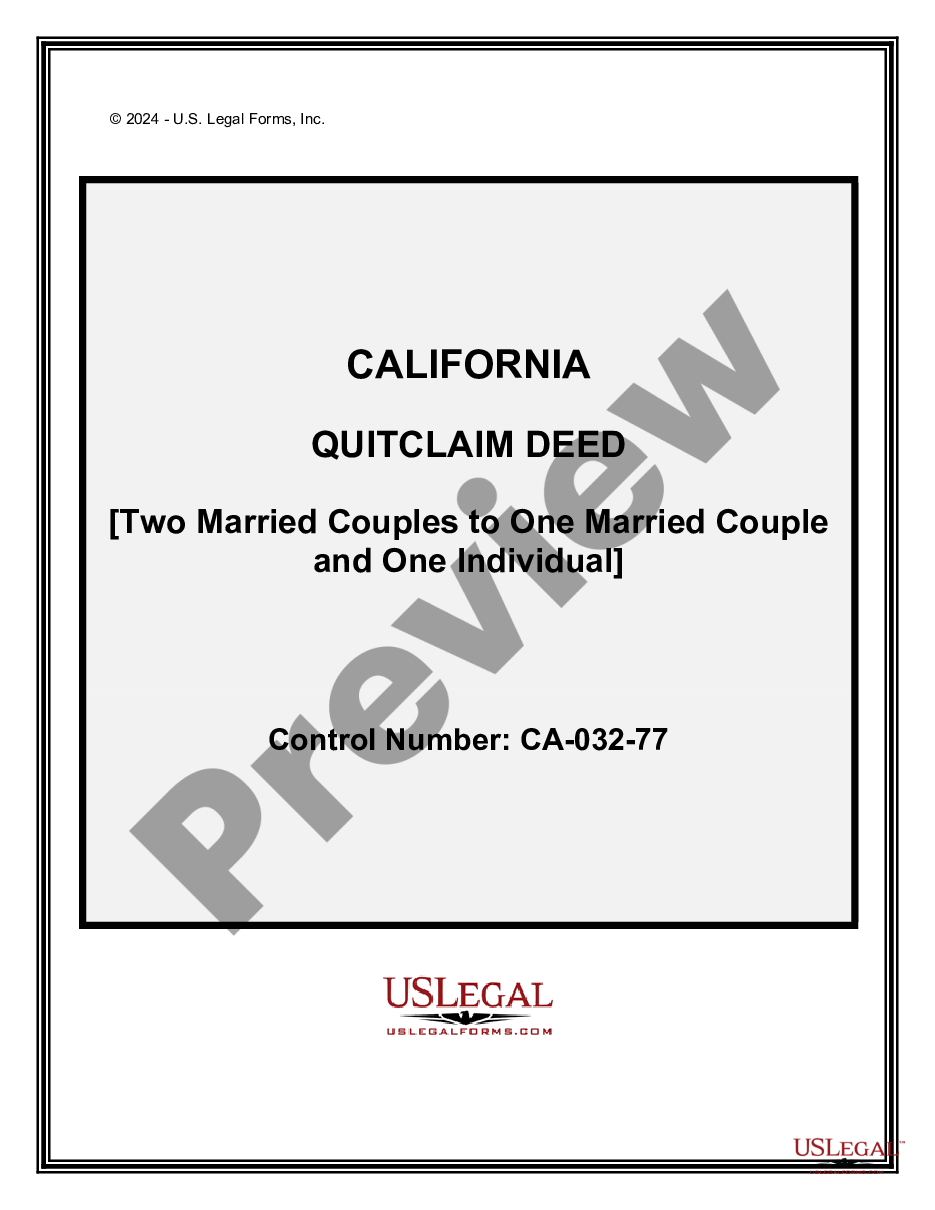
California Quitclaim Deed From Two Married Couples to One Married Couple and One Individual
What is this form?
This form is a Quitclaim Deed specifically designed for the transfer of property from two married couples to one married couple and one individual. The grantors relinquish their interests in the property, allowing the grantees to hold it as either tenants in common or joint tenants with the right of survivorship. This quitclaim deed is compliant with all state statutory laws, differentiating it from other property transfer forms that may require more formalities or conditions.
Form components explained
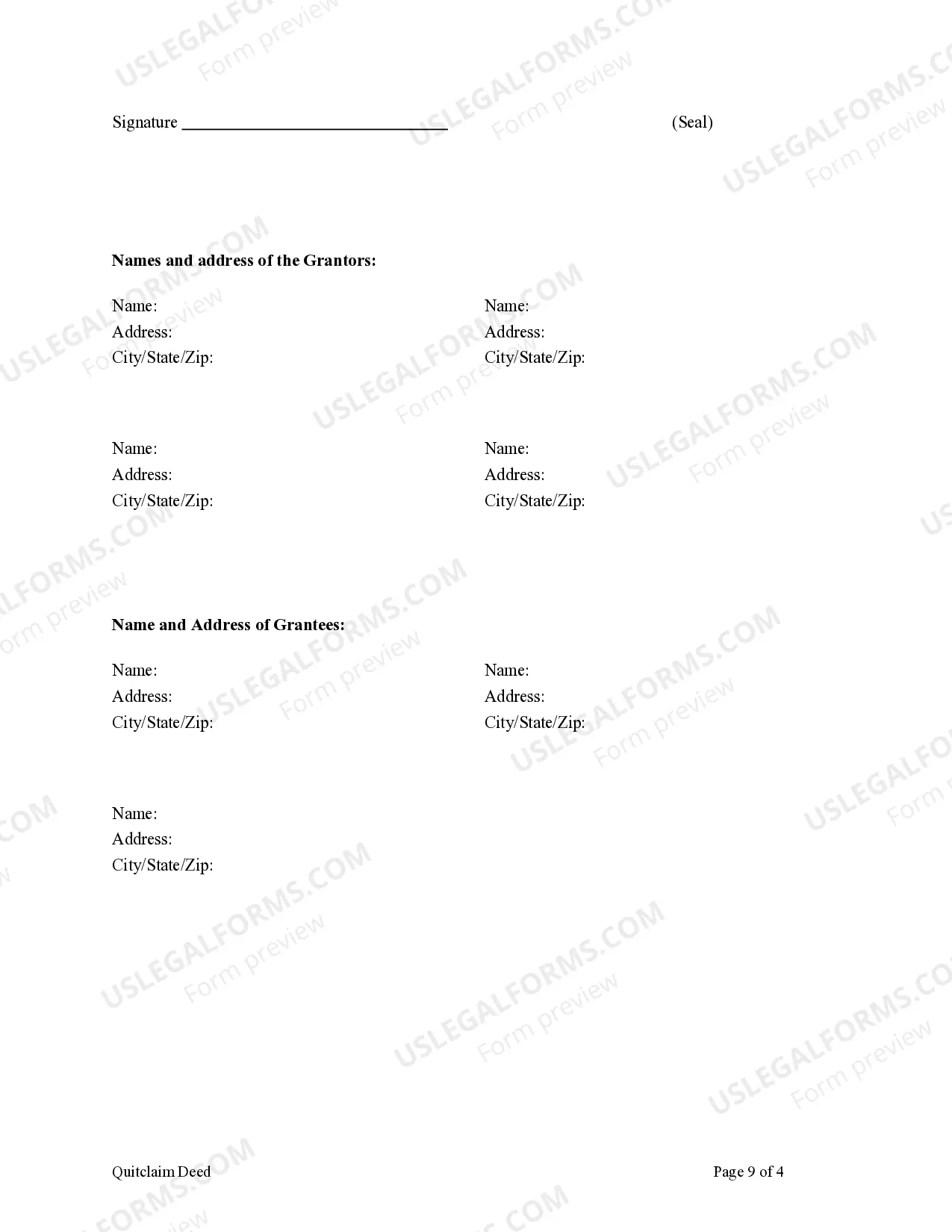
- Identification of the grantors and grantees involved in the property transfer.
- Legal description of the property being conveyed.
- Designation of how the grantees will hold the property (tenants in common or joint tenants with the right of survivorship).
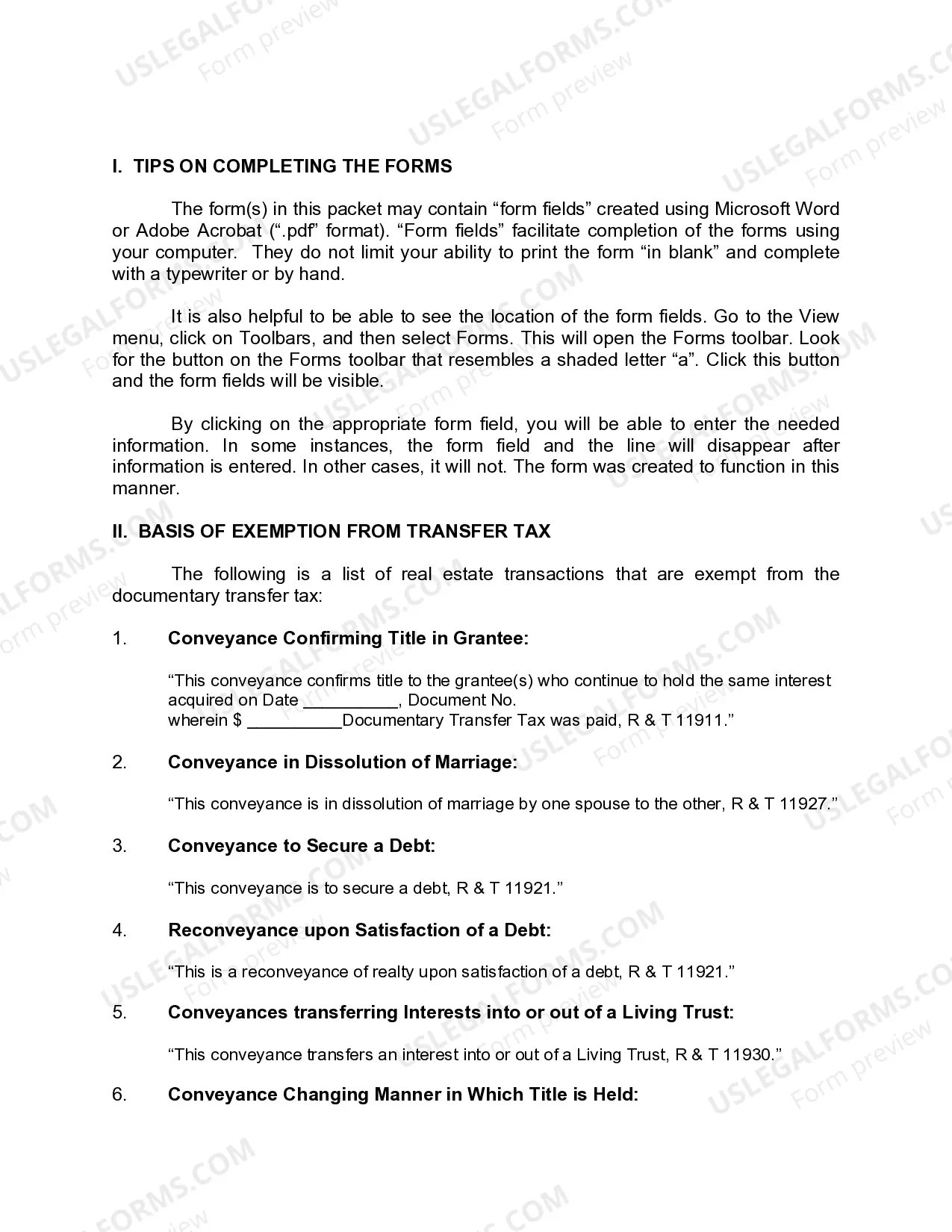
- Space to indicate any exemptions from transfer tax, if applicable.
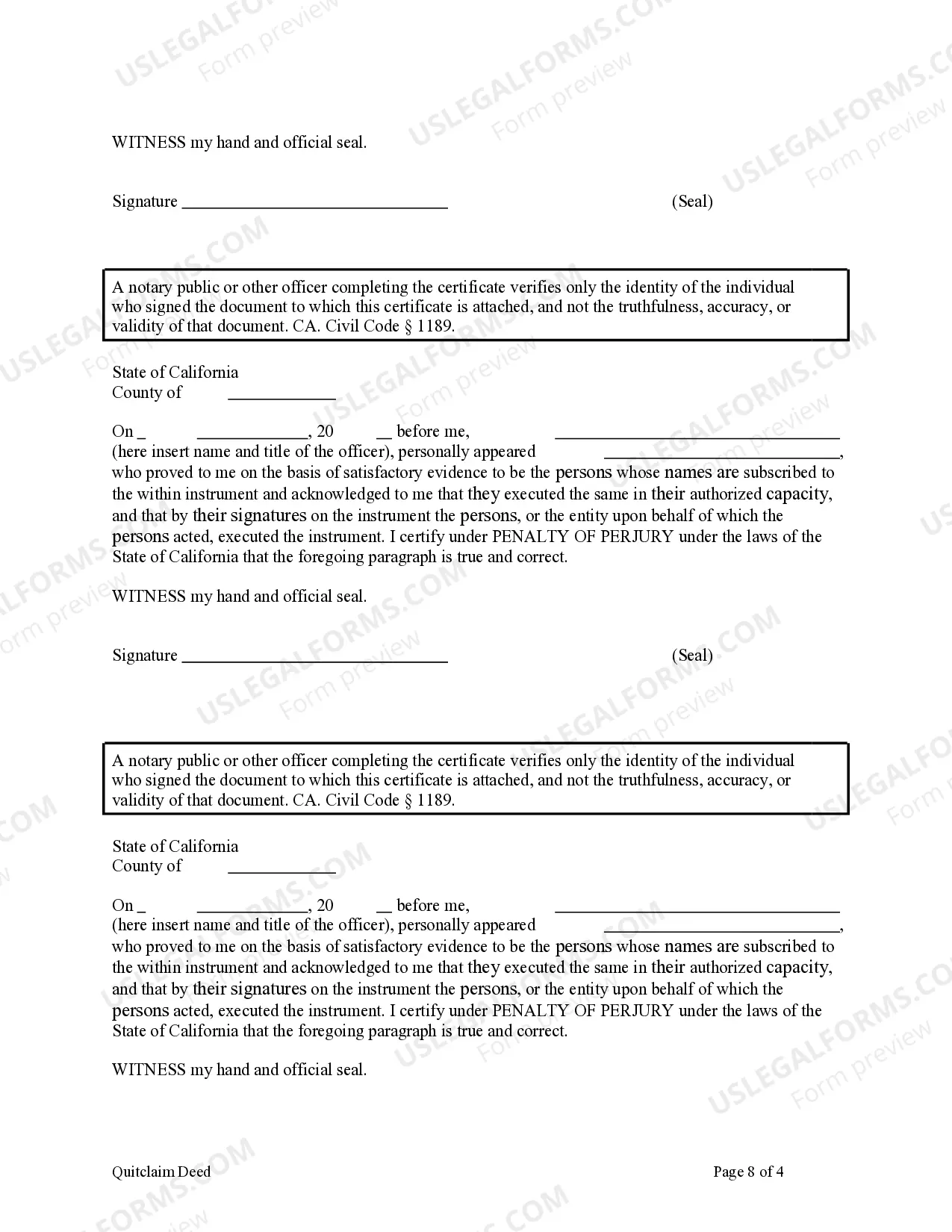
- Signature lines for the grantors and any required witnesses or notary.






When this form is needed
You should use this quitclaim deed when two married couples wish to transfer property ownership to another married couple and an individual. This is often necessary in situations of property division, inheritance, or when couples decide to change how they hold the property. It's vital for ensuring a clear title and protecting the interests of all parties involved.
Who this form is for
This form is intended for:
- Married couples acting as grantors transferring property to other married couples and individuals.
- Individuals or couples involved in family property arrangements or settlements.
- Attorneys or real estate professionals aiding clients in real estate transactions.
Instructions for completing this form
- Identify the grantors (the couples conveying the property) and the grantees (the couple and individual receiving the property).
- Provide a detailed legal description of the property being transferred.
- Specify how the grantees will hold the property (e.g., tenants in common or joint tenants with right of survivorship).
- Note any exemptions from transfer tax in the designated area if applicable.
- Have all grantors sign the deed before a notary or appropriate witness, if required.
Does this form need to be notarized?
Notarization is required for this form to take effect. Our online notarization service, powered by Notarize, lets you verify and sign documents remotely through an encrypted video session, available 24/7.
Get your form ready online
Our built-in tools help you complete, sign, share, and store your documents in one place.
Make edits, fill in missing information, and update formatting in US Legal Forms—just like you would in MS Word.
Download a copy, print it, send it by email, or mail it via USPS—whatever works best for your next step.
Sign and collect signatures with our SignNow integration. Send to multiple recipients, set reminders, and more. Go Premium to unlock E-Sign.
If this form requires notarization, complete it online through a secure video call—no need to meet a notary in person or wait for an appointment.
We protect your documents and personal data by following strict security and privacy standards.

Make edits, fill in missing information, and update formatting in US Legal Forms—just like you would in MS Word.

Download a copy, print it, send it by email, or mail it via USPS—whatever works best for your next step.

Sign and collect signatures with our SignNow integration. Send to multiple recipients, set reminders, and more. Go Premium to unlock E-Sign.

If this form requires notarization, complete it online through a secure video call—no need to meet a notary in person or wait for an appointment.

We protect your documents and personal data by following strict security and privacy standards.
Mistakes to watch out for
- Failing to include a complete and accurate legal description of the property.
- Not properly signing the document in front of a notary, if required.
- Overlooking to indicate how the grantees will hold the property.
- Forgetting to mention any exemptions from transfer tax that may apply.
Benefits of using this form online
- Convenient access to the form at any time without needing to visit a legal office.
- Edit and complete the form easily using computer software.
- Reliable templates are drafted by licensed attorneys ensuring compliance with applicable laws.
Looking for another form?
Form popularity
FAQ
An interspousal transfer deed is a special instrument used in California to transfer property between spouses without a change in ownership. This deed can be beneficial for tax reasons, especially during a marriage dissolution or property division. If you need to understand how this applies to a California quitclaim deed from two married couples to one married couple and one individual, US Legal Forms offers detailed guidance on the various deed types available.
A quitclaim deed cannot be used to sell property that is under a lien, nor can it be employed when the grantor has no ownership interest to transfer. Additionally, if two married couples wish to convey property to an entity, a quitclaim deed might not suffice. When in doubt, consulting with a legal expert or utilizing US Legal Forms can clarify the appropriate deed for various situations.
Yes, you can add a spouse to a deed without refinancing the property. A quitclaim deed allows for the transfer of ownership interest without altering your mortgage. However, you must ensure that the lender is not opposed to the change. Platforms like US Legal provide guidance and templates specifically tailored to the California Quitclaim Deed From Two Married Couples to One Married Couple and One Individual, making the process easier.
To add a spouse to a quit claim deed, first locate the original deed for the property. Next, prepare a new quit claim deed that includes both spouses as grantors. After signing the document, file it with the appropriate county office. Using US Legal resources ensures that you meet all legal requirements for the California Quitclaim Deed From Two Married Couples to One Married Couple and One Individual.
Adding a spouse to a deed can be a straightforward process. It typically involves preparing a Quitclaim deed that names both spouses and filing it with your county’s recorder office. While the legal requirements can vary, using a resource like US Legal can simplify the process, especially when dealing with a California Quitclaim Deed From Two Married Couples to One Married Couple and One Individual.
Filling out an Interspousal transfer deed requires careful attention to detail. Start by entering the names of both spouses as grantors and list the property being transferred. You must indicate the nature of the transfer clearly, ensuring it complies with state laws. For best results, consider using the US Legal platform, which provides templates specifically designed for the California Quitclaim Deed From Two Married Couples to One Married Couple and One Individual.
Individuals who seek to simplify the transfer of property often find that a quitclaim deed serves their needs well. For instance, when transferring property among family members or simplifying ownership, a California Quitclaim Deed From Two Married Couples to One Married Couple and One Individual can effectively achieve this goal. However, it is crucial to understand the implications and ensure all parties feel secure during the process.
A quitclaim deed transfers ownership without guaranteeing any rights or claims to the property being transferred. In contrast, an interspousal transfer deed is specifically designed for property transfers between spouses and ensures certain protections and the maintenance of marital interests. When considering a California Quitclaim Deed From Two Married Couples to One Married Couple and One Individual, it’s essential to understand which option best suits your situation.
One significant disadvantage of a quitclaim deed is the potential for losing rights without adequate safeguards. This document does not guarantee that the person transferring the property has the legal right to do so, nor does it protect the interests of the other parties. Therefore, if you're thinking about a California Quitclaim Deed From Two Married Couples to One Married Couple and One Individual, you should weigh these risks carefully.
In California, a spouse may lose certain rights to property after signing a quitclaim deed. Once you transfer an interest in the property, you relinquish ownership rights, which may include future claims to that property. Therefore, it is wise for couples to carefully consider their options and seek legal advice before executing a California Quitclaim Deed From Two Married Couples to One Married Couple and One Individual.