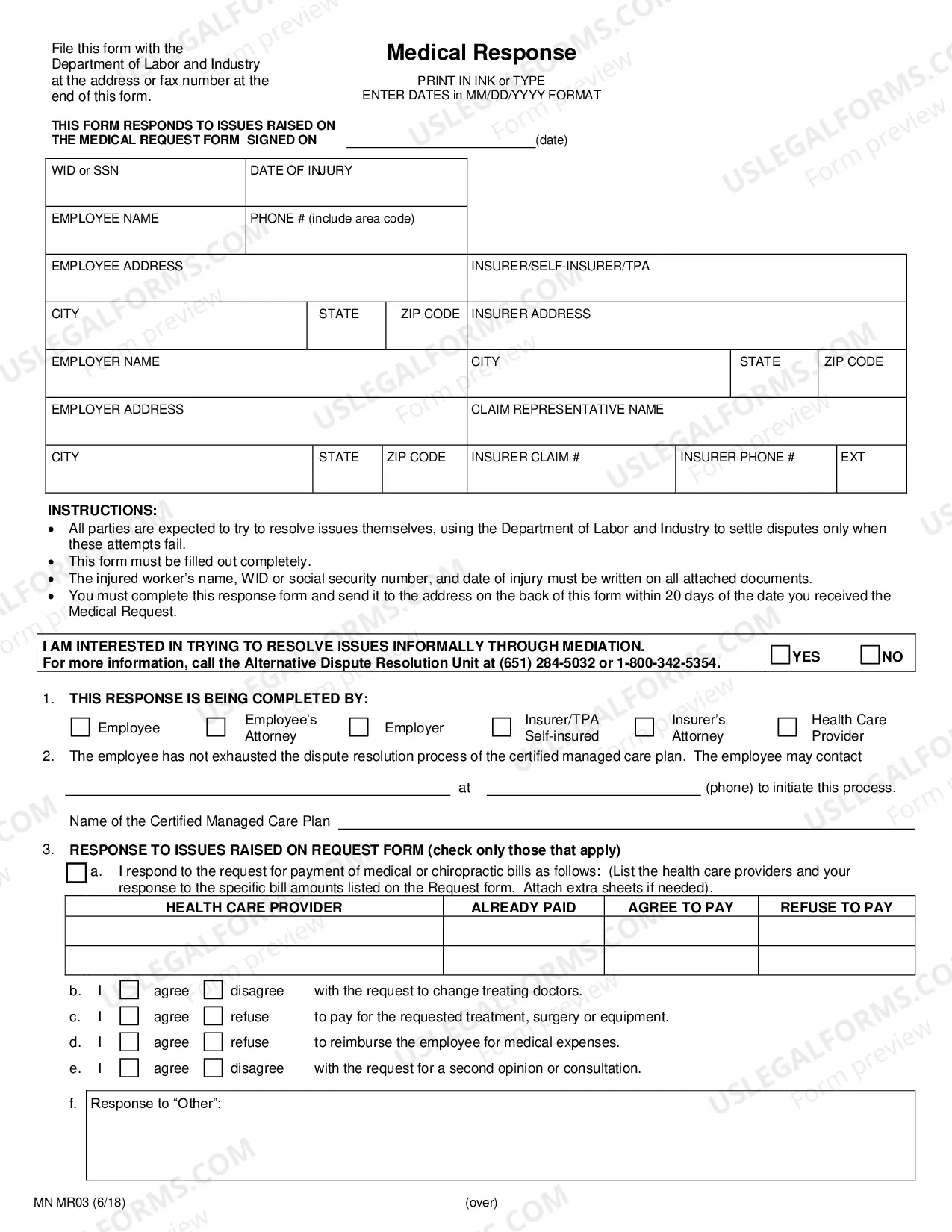
California Grant Deed - Two Individuals to Two Individuals
What is this form?
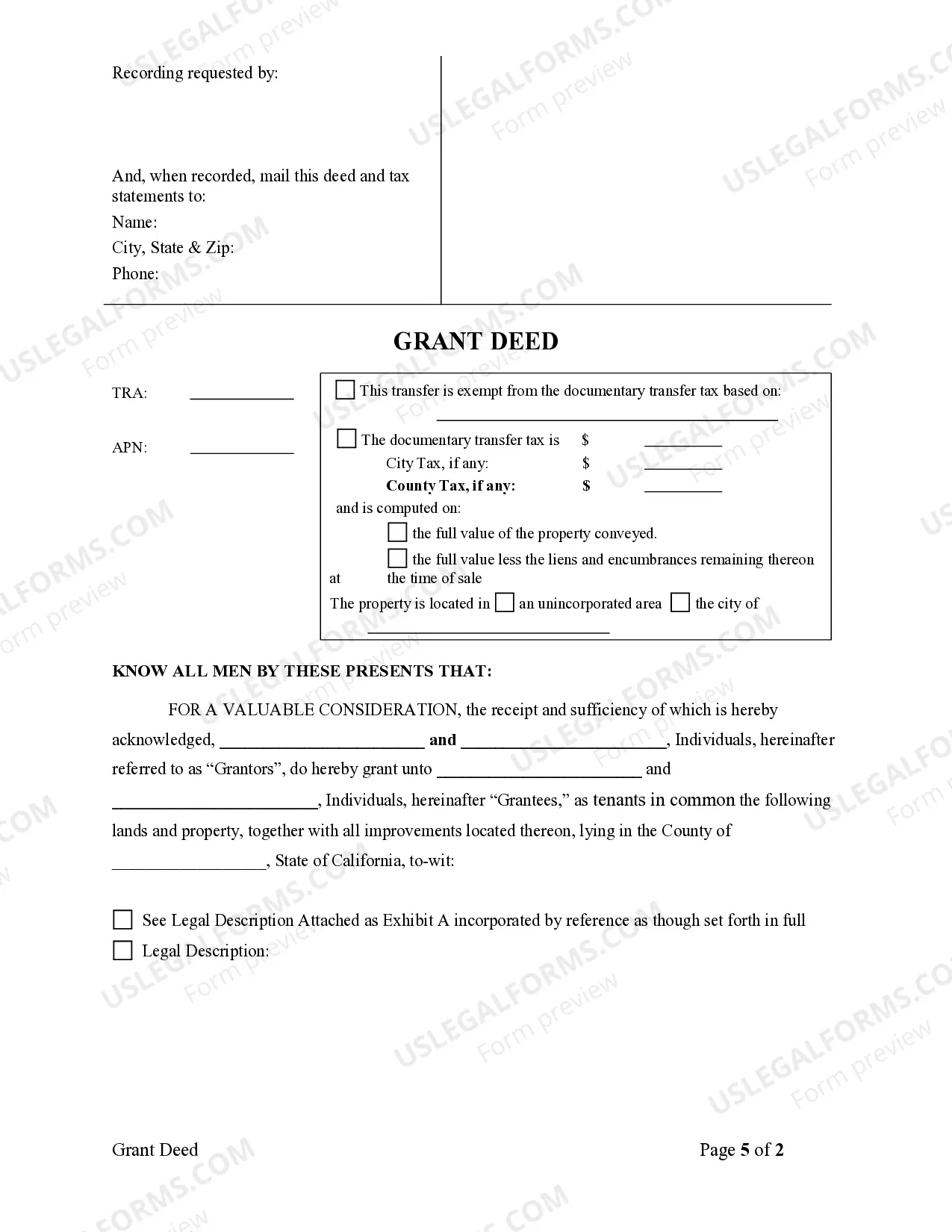
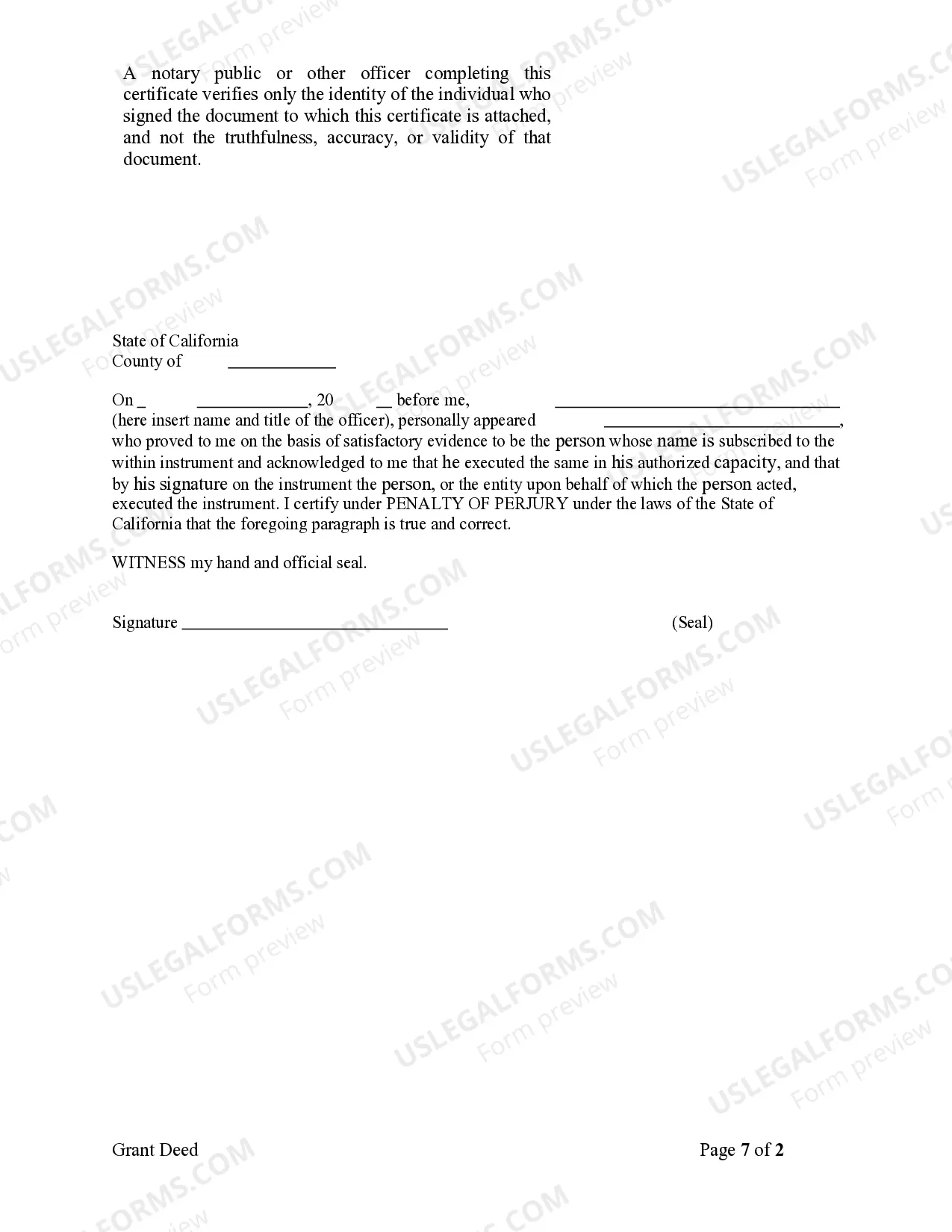
This Grant Deed is a legal document used to transfer ownership of property from two individuals (grantors) to two other individuals (grantees). The grantees may hold the property either as tenants in common or as joint tenants with the right of survivorship. This form is essential for documenting such transactions and complies with relevant state laws, making it distinct from similar deeds like warranty or quitclaim deeds.
Key parts of this document
- Identification of the grantors and grantees.
- Description of the property being conveyed.
- Choice between tenancy in common or joint tenancy.
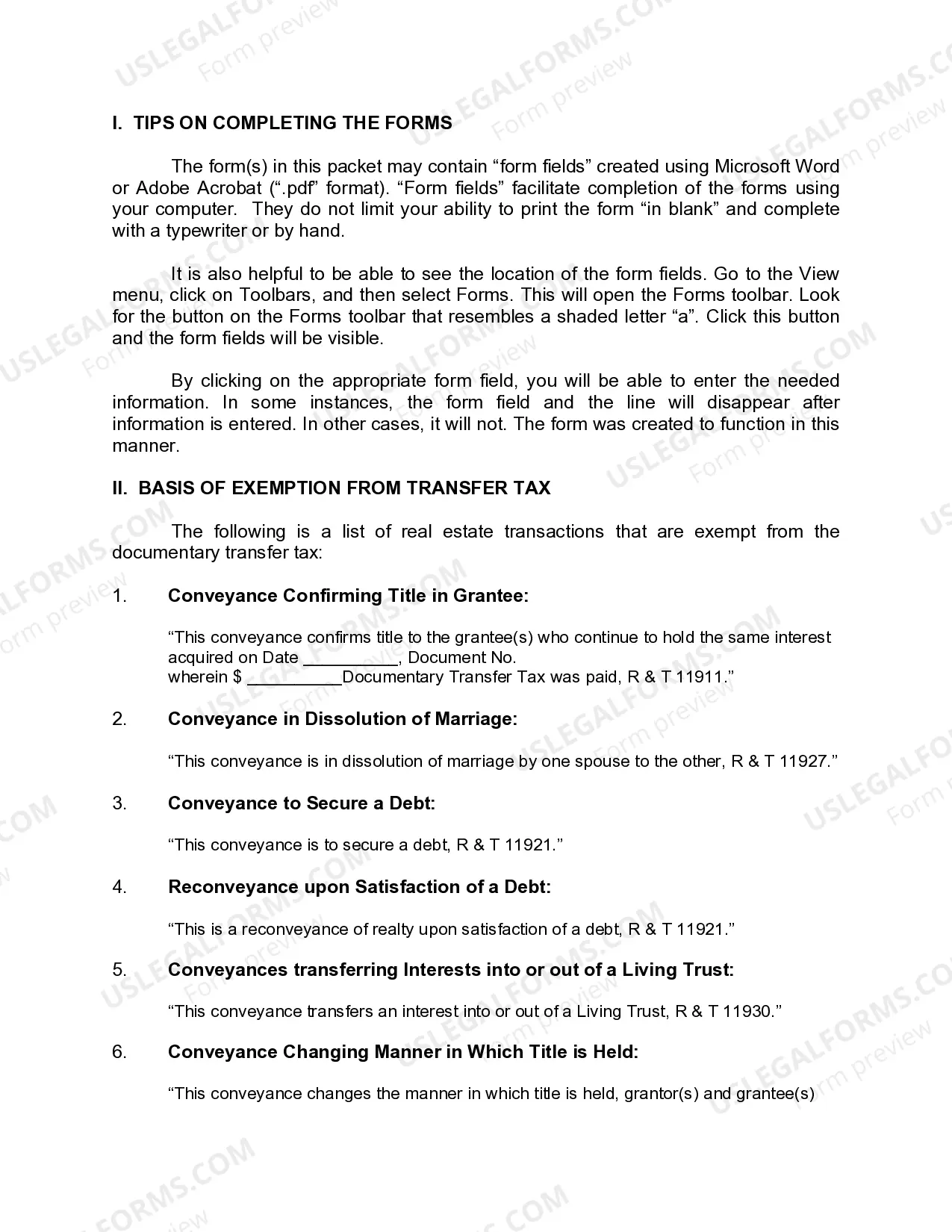
- Exemptions from transfer tax, if applicable.
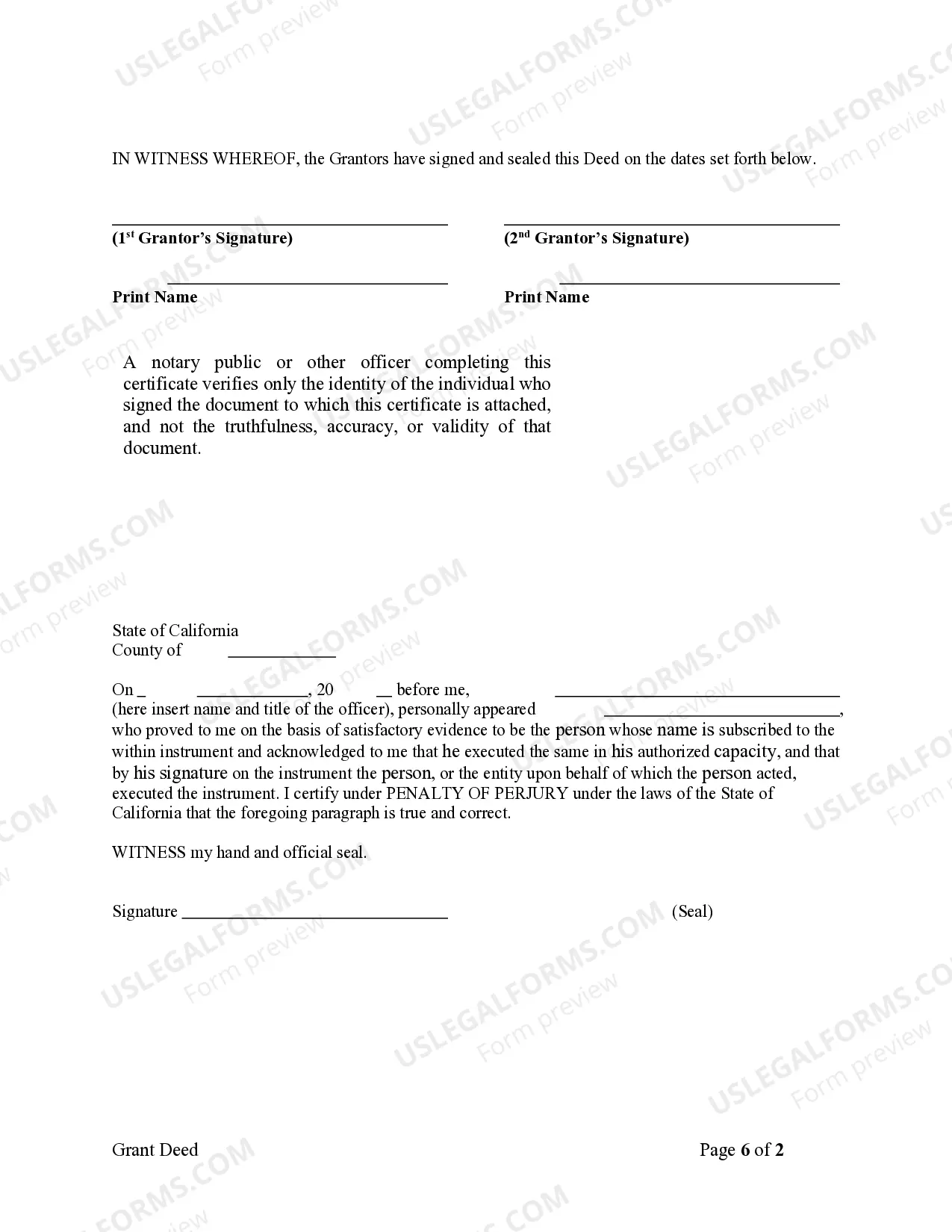
- Signatures of the parties involved.




When to use this form
This form should be used when two individuals wish to officially transfer property ownership to another set of two individuals. It is particularly useful in situations like joint purchases, transferring family property, or changes in ownership structures for financial or estate planning.
Who should use this form
This form is intended for:
- Property owners who are transferring their interest to others.
- Family members needing to execute a property transfer.
- Individuals involved in joint real estate ventures.
- Persons wishing to designate property ownership in a survivorship arrangement.
How to prepare this document
- Identify the grantors (transferors) by entering their full names.
- Enter the full names of the grantees (recipients) to whom the property is being conveyed.
- Provide a detailed description of the property being transferred, including any relevant identifiers (e.g., parcel number).
- Select whether the property will be held as tenants in common or joint tenants with the right of survivorship.
- Both grantors and grantees must sign the document to validate the transaction.
Notarization guidance
This document requires notarization to meet legal standards. US Legal Forms provides secure online notarization powered by Notarize, allowing you to complete the process through a verified video call, available 24/7.
Get your form ready online
Our built-in tools help you complete, sign, share, and store your documents in one place.
Make edits, fill in missing information, and update formatting in US Legal Forms—just like you would in MS Word.
Download a copy, print it, send it by email, or mail it via USPS—whatever works best for your next step.
Sign and collect signatures with our SignNow integration. Send to multiple recipients, set reminders, and more. Go Premium to unlock E-Sign.
If this form requires notarization, complete it online through a secure video call—no need to meet a notary in person or wait for an appointment.
We protect your documents and personal data by following strict security and privacy standards.

Make edits, fill in missing information, and update formatting in US Legal Forms—just like you would in MS Word.

Download a copy, print it, send it by email, or mail it via USPS—whatever works best for your next step.

Sign and collect signatures with our SignNow integration. Send to multiple recipients, set reminders, and more. Go Premium to unlock E-Sign.

If this form requires notarization, complete it online through a secure video call—no need to meet a notary in person or wait for an appointment.

We protect your documents and personal data by following strict security and privacy standards.
Mistakes to watch out for
- Not including a complete property description.
- Failing to specify the form of co-ownership (tenants in common vs. joint tenants).
- Neglecting to include all signatures of grantors and grantees.
- Overlooking local tax exemptions that may apply.
Why use this form online
- Instant access to legal documents tailored for your needs.
- Easy to edit and fill out at your convenience.
- Complies with state-specific legal requirements automatically.
- Available for immediate download and printing.
Looking for another form?
Form popularity
FAQ
You can include multiple names on a house deed in California, with no strict limit set. However, it is common practice to have up to four names to maintain clarity and avoid potential complications. A California Grant Deed - Two Individuals to Two Individuals is ideal for two owners, but if more individuals are involved, consider how this may affect management of the property. Having a well-structured agreement can help ensure that all owners have a clear understanding of their rights and responsibilities.
A house can indeed be in more than one name. Multiple individuals can hold title under a California Grant Deed - Two Individuals to Two Individuals, sharing ownership of the property. This arrangement provides flexibility in property management and facilitates the division of costs and responsibilities. It's a popular choice for couples, family members, or business partners entering a real estate venture together.
Yes, you can put multiple names on a deed in California. When you create a California Grant Deed - Two Individuals to Two Individuals, you include both owners' names to legally recognize them. This can simplify decision-making regarding the property and ensure clarity in ownership rights. It's important to clearly outline each owner's stake in the property to avoid future disputes.
When there are multiple owners of a property, it is often referred to as joint ownership or co-ownership. In the context of a California Grant Deed - Two Individuals to Two Individuals, this means that both individuals have equal rights to the property. This arrangement can help facilitate shared responsibilities and benefits related to the property. Understanding this concept is essential when navigating property ownership in California.
Adding someone to a deed can have potential disadvantages, such as exposing your property to the new owner’s creditors or legal issues. When using a California Grant Deed - Two Individuals to Two Individuals, you share ownership rights, which may complicate decision-making in the future. It is advisable to assess all implications before proceeding.
To add someone to a home deed, you can create a California Grant Deed - Two Individuals to Two Individuals. You will first need to draft the deed, which includes the current owner's details and the new co-owner's information. After both parties sign the deed, you must submit it to the county recorder to ensure the change is legally recognized.
Yes, you can add someone to the deed of your house through a California Grant Deed - Two Individuals to Two Individuals. This process typically involves preparing a new deed and having it signed by all parties involved. You will also need to file the new deed with your local county recorder's office to make it official.
To add someone to your deed in California, start by obtaining the appropriate California Grant Deed - Two Individuals to Two Individuals form. After filling in the necessary details, have all parties sign the document in front of a notary public. Ensure that you file the signed deed with the county recorder’s office so that the addition is legally recognized.
Yes, you can add someone to your house deed in California using a California Grant Deed - Two Individuals to Two Individuals. This process involves transferring a portion of your ownership to another person, effectively making them a co-owner. Be aware that adding someone may have tax implications and could affect your liability, so it is wise to seek legal advice before proceeding.
To add a name to a grant deed in California, begin by obtaining a California Grant Deed - Two Individuals to Two Individuals form. Fill in the required information, including the names of both individuals, and then have the deed signed in front of a notary public. Finally, file the completed deed with your local county recorder’s office to finalize the addition.