California Grant Deed from two individuals as Grantors to two individuals as Grantees
What this document covers
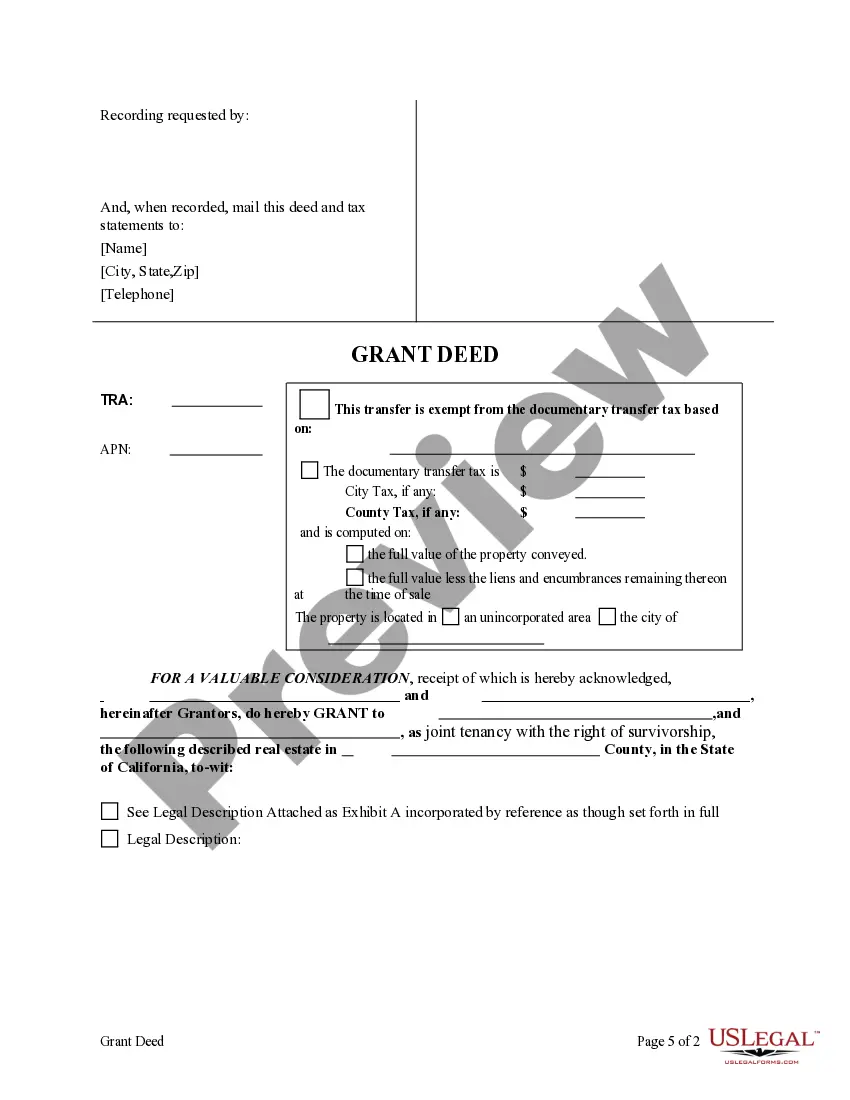
The Grant Deed from two individuals as Grantors to two individuals as Grantees is a legal document that facilitates the transfer of property ownership between specified parties. Unlike other deeds, this form specifically identifies two grantors and two grantees, ensuring clarity in ownership. The deed allows the grantees to hold the property as tenants in common or joint tenants with the right of survivorship, making it an essential document for anyone looking to formalize property transactions with multiple parties involved.
Form components explained
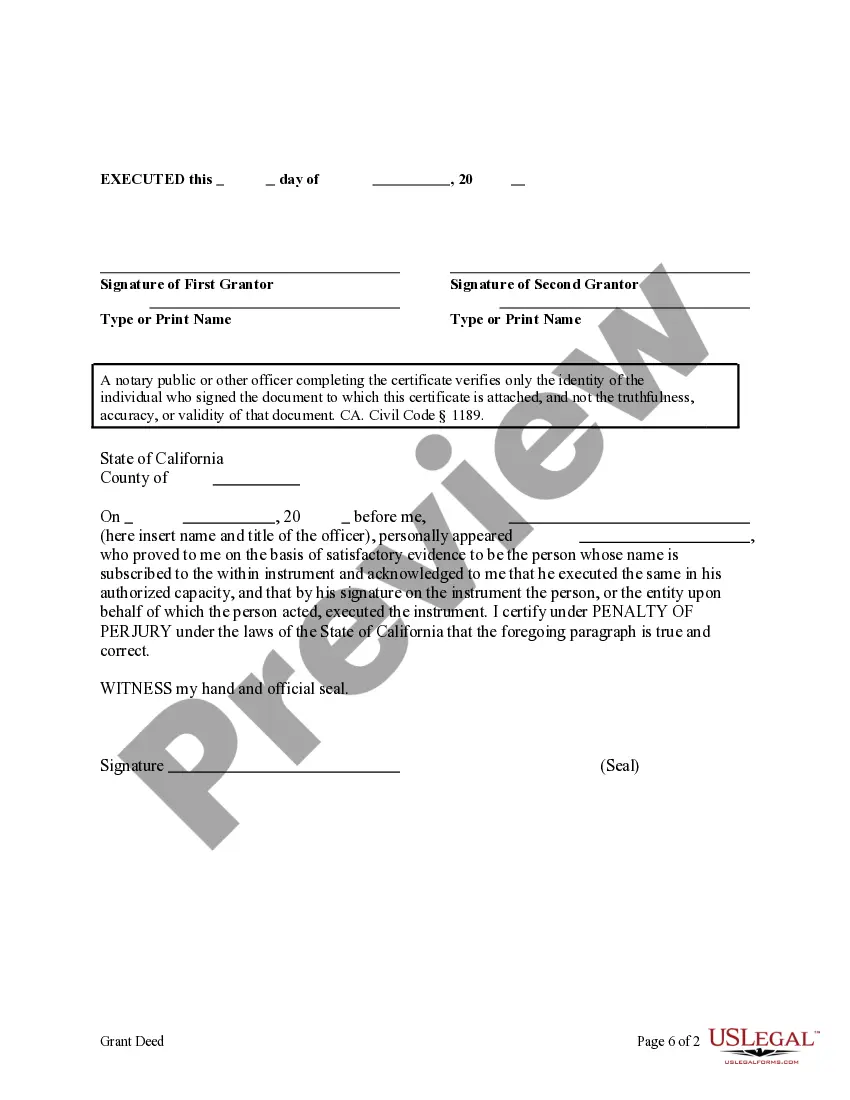
- Identification of Grantors: Names and signatures of the two individuals transferring property.
- Identification of Grantees: Names of the two individuals receiving the property.
- Property Description: A detailed description of the property being transferred.
- Tenancy Type: Specification of whether the grantees will hold the property as tenants in common or joint tenants with the right of survivorship.
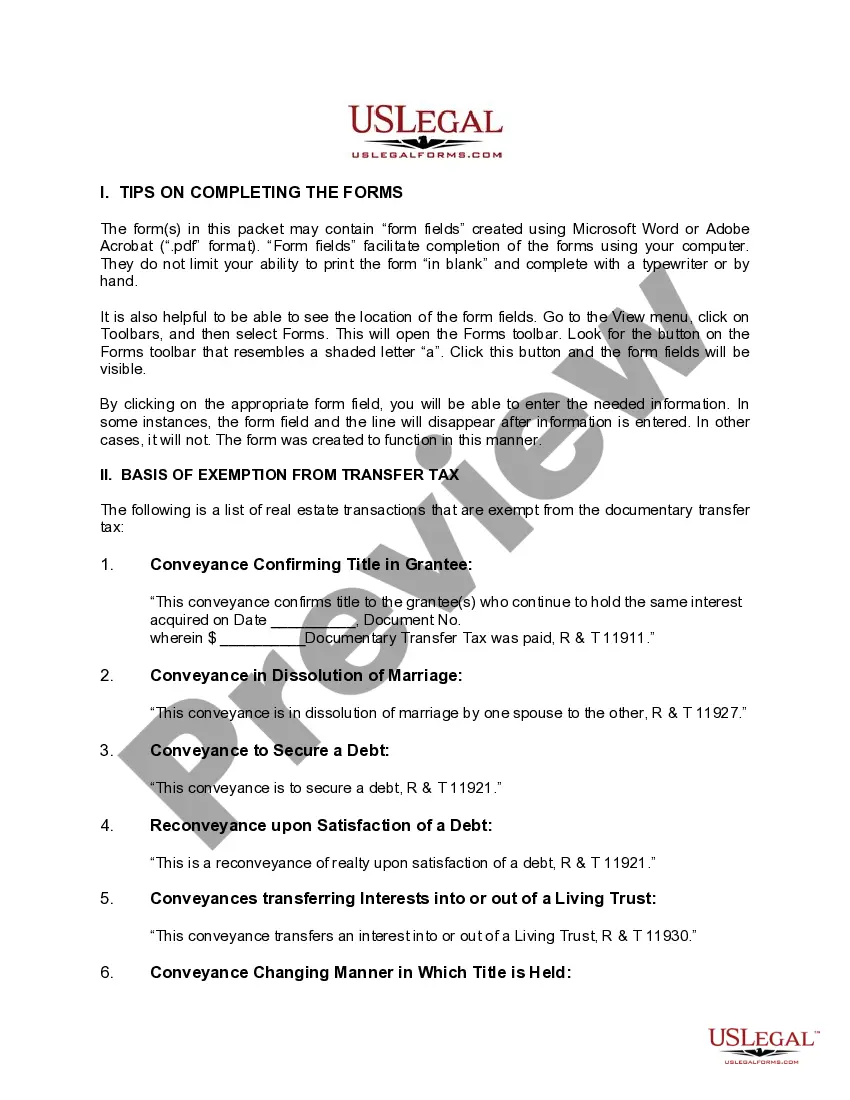
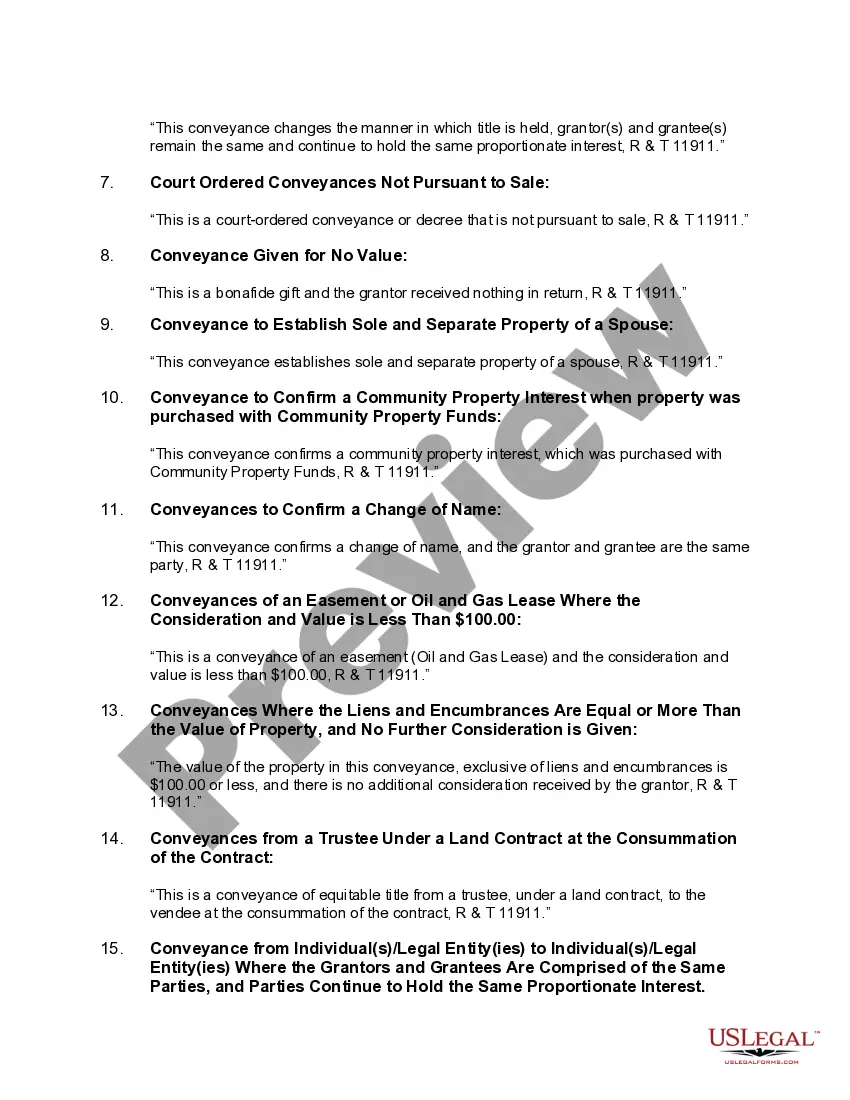
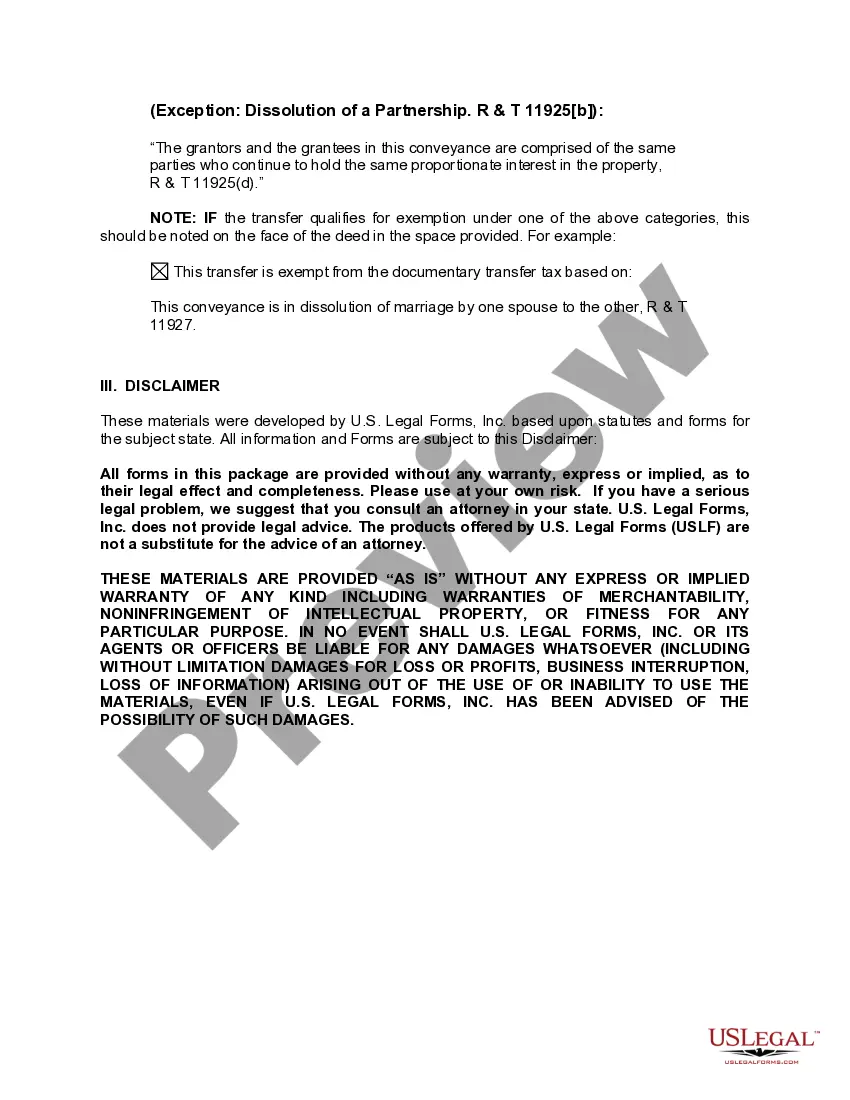
- Exemption from Transfer Tax: Space to indicate if the transfer qualifies for tax exemptions.





When to use this document
This Grant Deed should be used in situations where two individuals wish to transfer property ownership to another two individuals. Common scenarios include transactions between family members, co-owners of a property, or partners in a venture. It is particularly useful when the grantees intend to retain the property jointly, ensuring both parties have equal rights to the property.
Who should use this form
This form is intended for:
- Individuals involved in real estate transfers between multiple parties.
- Couples or co-owners who need to confirm joint ownership of property.
- Real estate professionals facilitating property transfers between clients.
Instructions for completing this form
- Identify the parties: Enter the names of the grantors and grantees clearly.
- Specify the property: Accurately describe the property being transferred, including any relevant details.
- Select the tenancy type: Choose whether the grantees will hold property as tenants in common or joint tenants with the right of survivorship.
- Complete exemption details: If applicable, note any exemption from the documentary transfer tax.
- Sign and date: Ensure that all parties sign and date the document to validate the transfer.
Does this document require notarization?
Notarization is required for this form to take effect. Our online notarization service, powered by Notarize, lets you verify and sign documents remotely through an encrypted video session, available 24/7.
Get your form ready online
Our built-in tools help you complete, sign, share, and store your documents in one place.
Make edits, fill in missing information, and update formatting in US Legal Forms—just like you would in MS Word.
Download a copy, print it, send it by email, or mail it via USPS—whatever works best for your next step.
Sign and collect signatures with our SignNow integration. Send to multiple recipients, set reminders, and more. Go Premium to unlock E-Sign.
If this form requires notarization, complete it online through a secure video call—no need to meet a notary in person or wait for an appointment.
We protect your documents and personal data by following strict security and privacy standards.

Make edits, fill in missing information, and update formatting in US Legal Forms—just like you would in MS Word.

Download a copy, print it, send it by email, or mail it via USPS—whatever works best for your next step.

Sign and collect signatures with our SignNow integration. Send to multiple recipients, set reminders, and more. Go Premium to unlock E-Sign.

If this form requires notarization, complete it online through a secure video call—no need to meet a notary in person or wait for an appointment.

We protect your documents and personal data by following strict security and privacy standards.
Common mistakes to avoid
- Failing to accurately describe the property being transferred.
- Not specifying the type of tenancy, leading to future disputes.
- Omitting the signatures of all parties involved.
Advantages of online completion
- Convenience: Access and complete the form at any time from anywhere.
- Editability: Make changes easily before finalizing the document.
- Reliable: Ensure compliance with state laws with professionally drafted templates.
Looking for another form?
Form popularity
FAQ
Filling out a California Grant Deed requires careful attention to detail. You need to accurately list the names of the Grantors and Grantees, along with a clear legal description of the property. Utilizing resources like US Legal Forms can simplify the process, providing templates that guide you through each step. A correctly filled-out grant deed ensures smooth property transfer and legal recognition of ownership.
Yes, a house can certainly be in more than one name, indicating shared ownership. In a California Grant Deed from two individuals as Grantors to two individuals as Grantees, the details of each owner must be specified. This arrangement typically allows for shared rights and responsibilities regarding the property. Ensuring all names are correctly documented secures each owner's legal claims.
When there are multiple owners of a property, it is often referred to as joint ownership. In the context of a California Grant Deed from two individuals as Grantors to two individuals as Grantees, it clearly outlines the rights and responsibilities of each party. This arrangement provides flexibility for co-owners in managing the property. Understanding joint ownership helps in making informed decisions about your investment.
There is no strict limit on the number of names you can place on a house's title. In a California Grant Deed from two individuals as Grantors to two individuals as Grantees, it's crucial to include all owners’ names clearly. Each name added to the deed indicates ownership rights. However, it’s wise to consult with a legal expert to ensure proper ownership arrangements.
Yes, you can definitely include multiple names on a deed. When creating a California Grant Deed from two individuals as Grantors to two individuals as Grantees, you must accurately reflect the names of all parties involved. This ensures that each person has legal ownership rights to the property. A well-structured deed helps prevent future disputes between owners.
You can obtain a copy of your property deed in California from your local county recorder's office, where the original deed was filed. Most counties offer online access to property records, making it convenient to find and print your deed. If you prefer, services like USLegalForms can assist you in requesting the document, ensuring you receive the correct version of the California Grant Deed from two individuals as Grantors to two individuals as Grantees.
Yes, grant deeds are public records in California. This means anyone can access and review these documents, which are filed with the county recorder's office. Understanding how the California Grant Deed from two individuals as Grantors to two individuals as Grantees functions as part of public records can be important for buyers, sellers, or anyone interested in verifying property ownership.
If you lost your grant deed in California, the first step is to contact your local county recorder's office. They can provide you with information on how to obtain a certified copy of your deed. Additionally, you might consider using resources like USLegalForms to help you navigate the necessary paperwork for a replacement, especially if the property is involved in any legal matters.
An interspousal transfer grant deed in California allows one spouse to transfer ownership of a property to the other spouse without any consideration. This type of deed is often used during marriage or divorce to facilitate property transfer between spouses. If you are considering transferring property ownership, the California Grant Deed from two individuals as Grantors to two individuals as Grantees can help simplify the process and ensure legal compliance.
In a California Grant Deed from two individuals as Grantors to two individuals as Grantees, the Grantor is the person or entity transferring ownership of the property. In contrast, the Grantee is the individual or group receiving the property. Understanding these roles is essential to ensuring a smooth property transaction. Using a reliable platform like USLegalForms can assist you in accurately preparing your Grant Deed, making the process easier for both Grantors and Grantees.