California Discovery Interrogatories from Plaintiff to Defendant with Production Requests
About this form
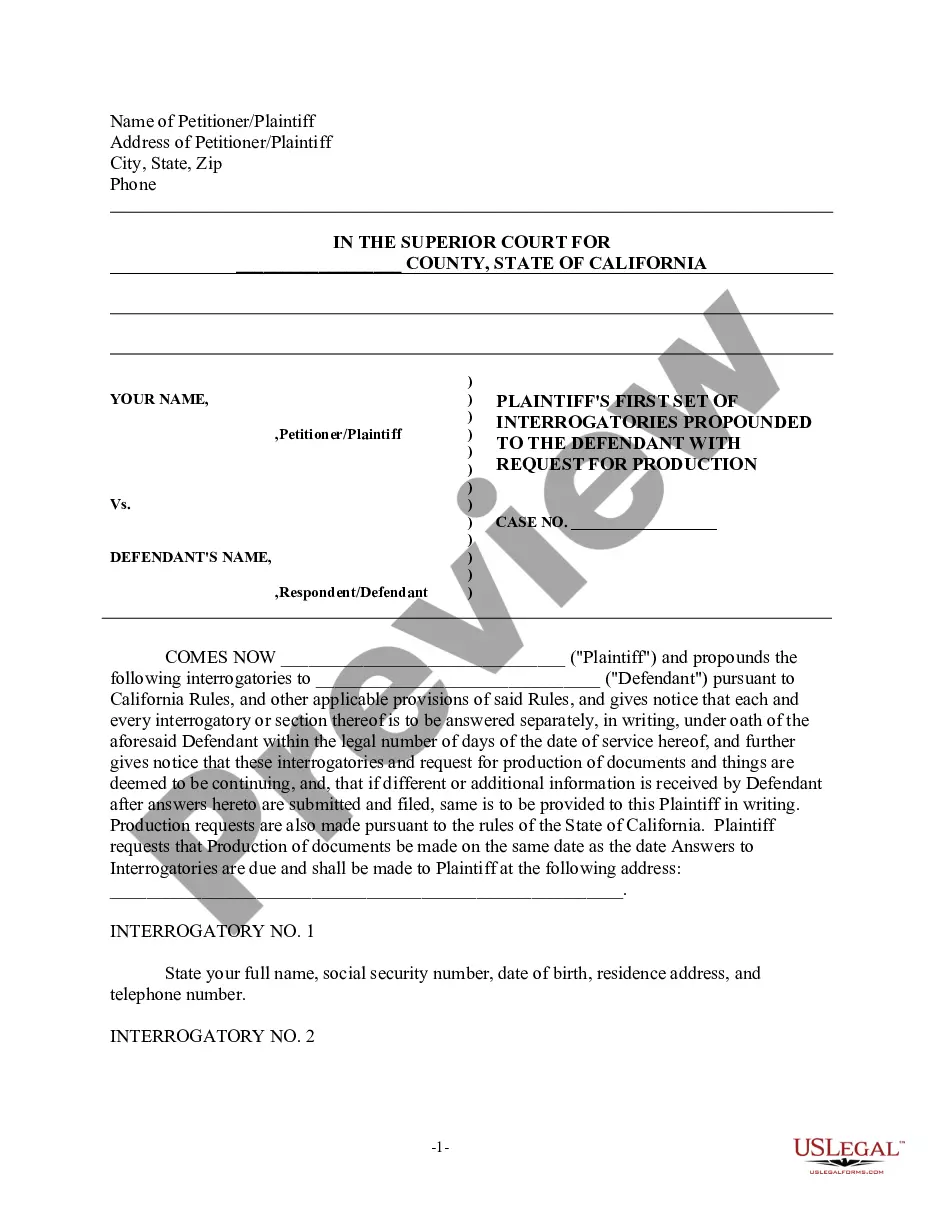
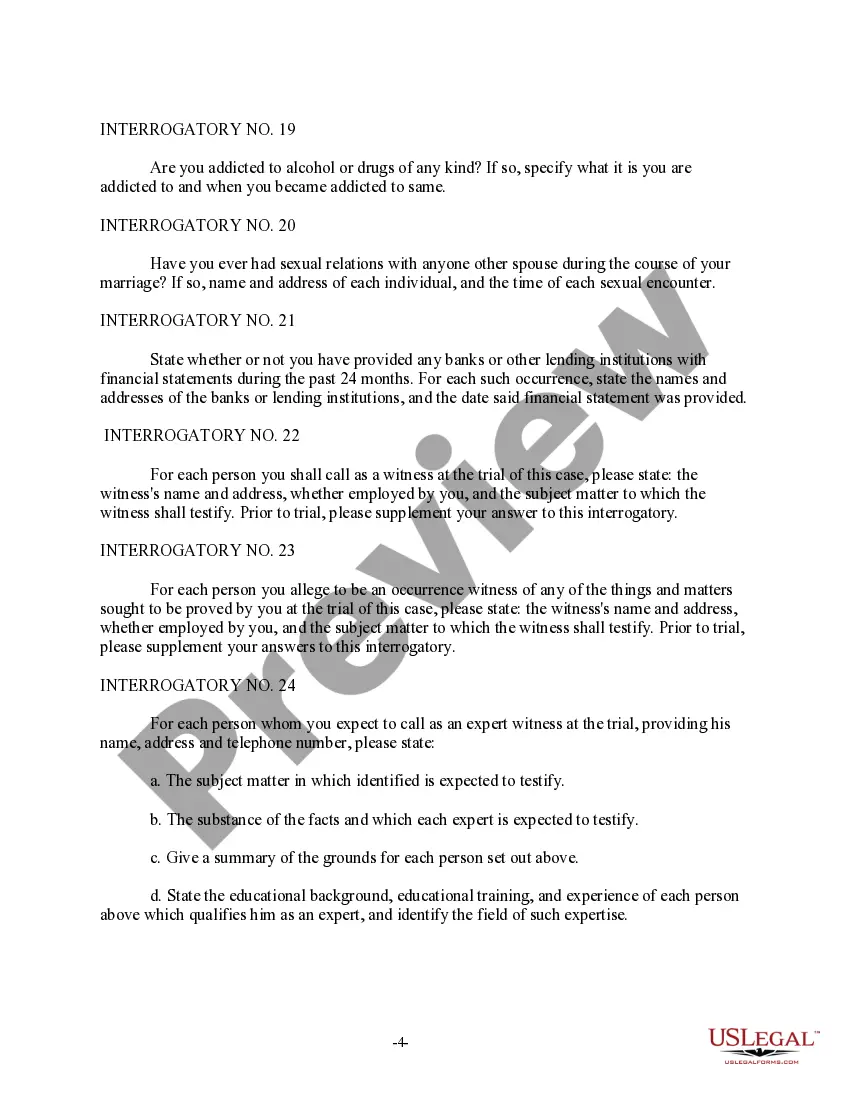
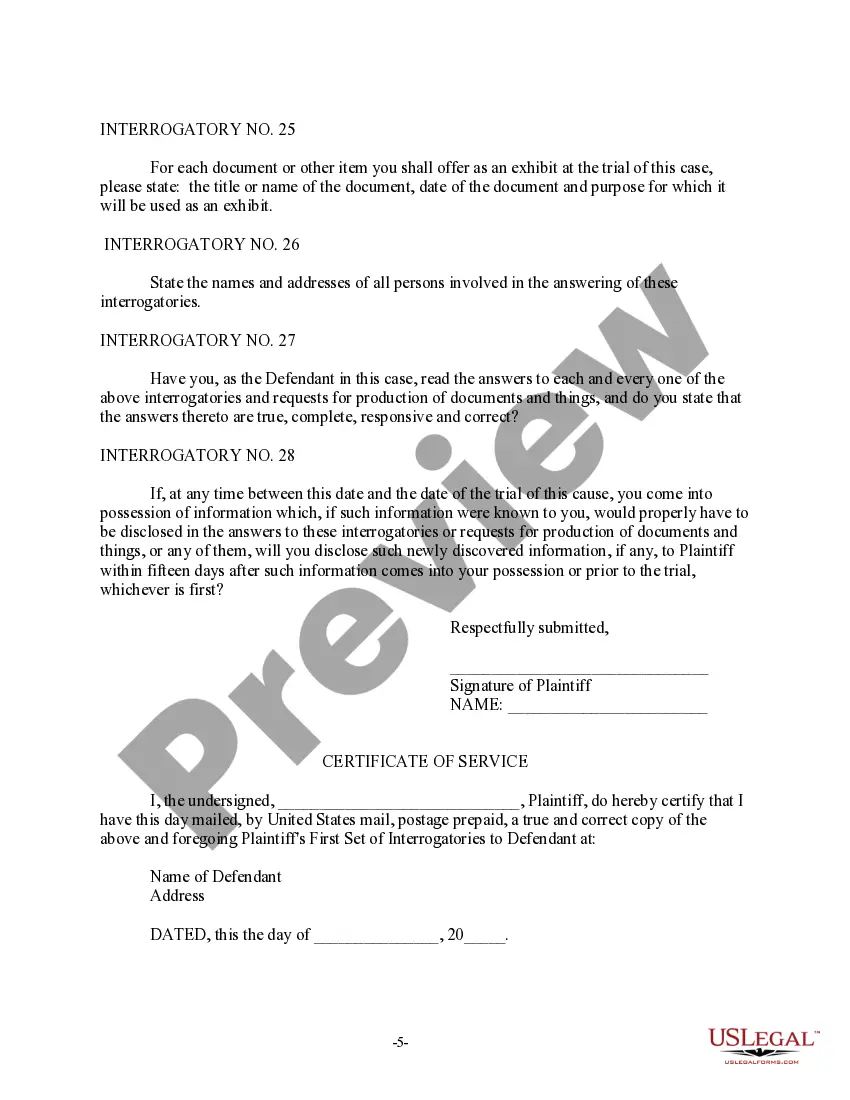
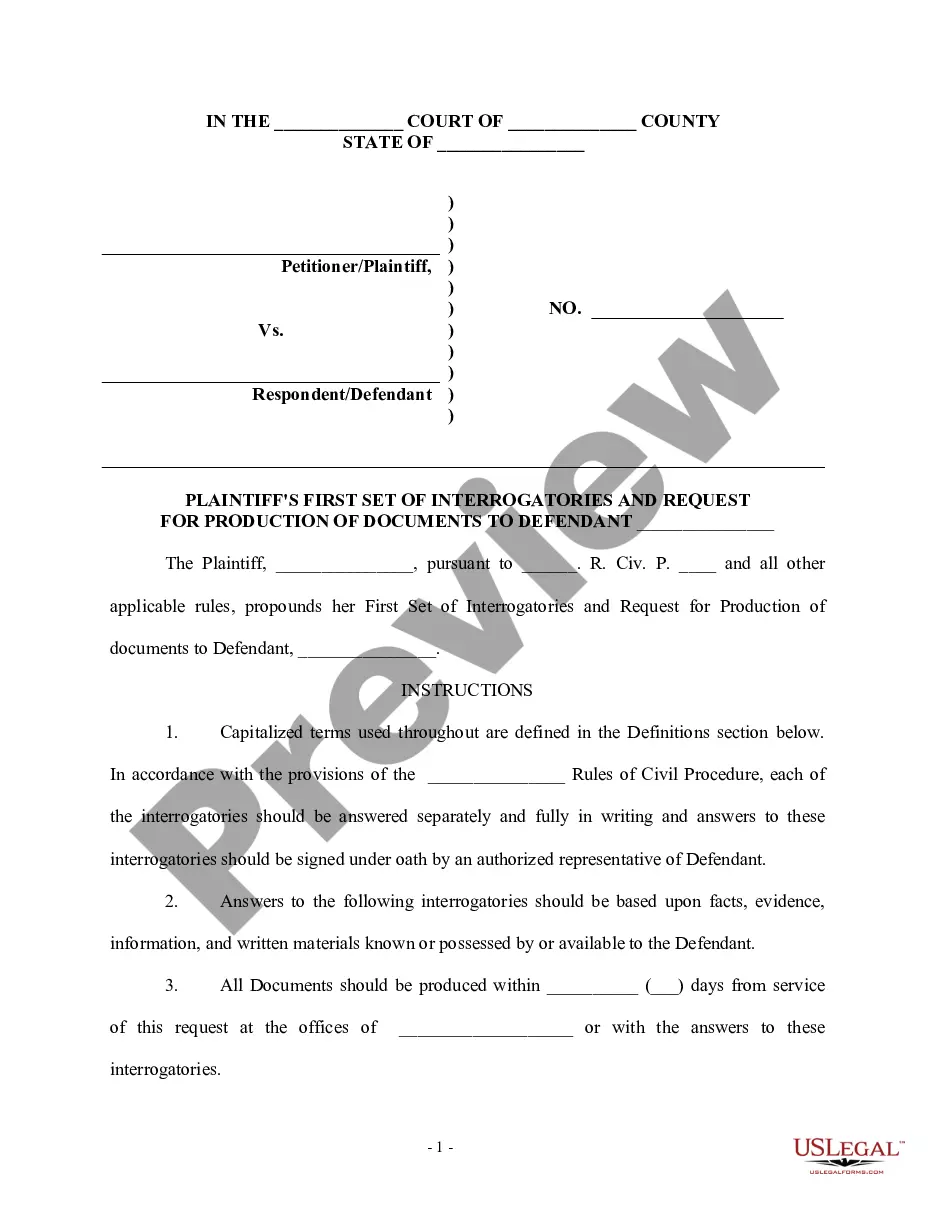
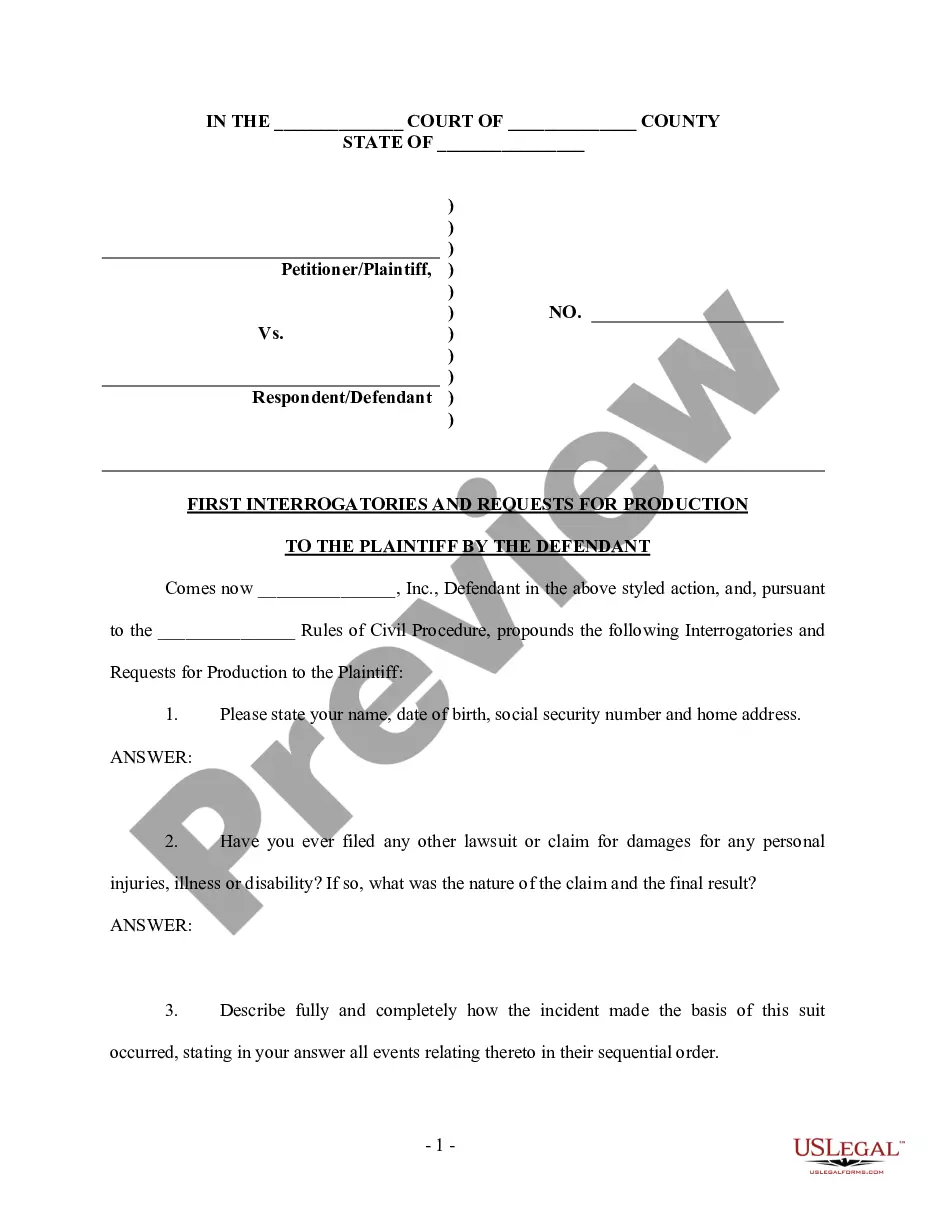
This form, known as Discovery Interrogatories from Plaintiff to Defendant with Production Requests, is designed for use in divorce proceedings. It allows the Plaintiff to formally request written answers to specific questions from the Defendant, along with documents that pertain to the case. This form is essential in gathering relevant information and evidence needed during divorce proceedings, distinguishing it from simpler forms that may not include document requests.
Key components of this form
- Petitioner's and Respondent's details, including names and addresses.
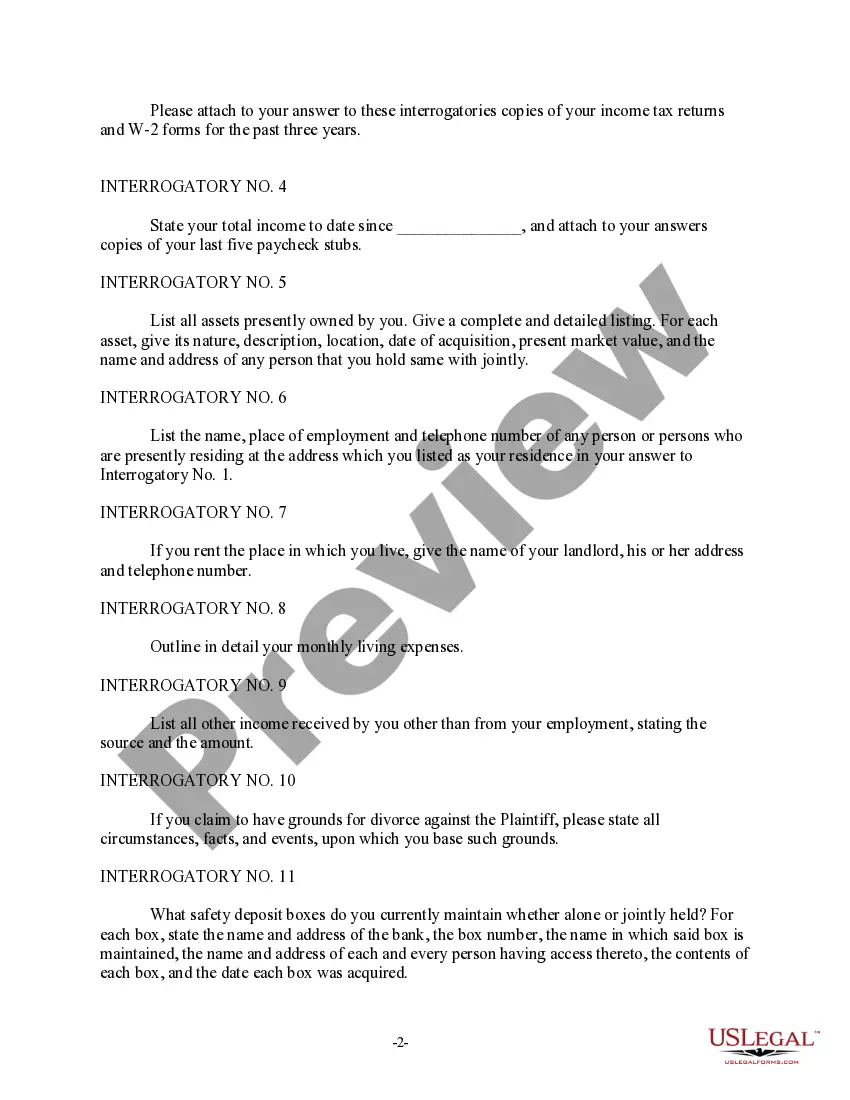
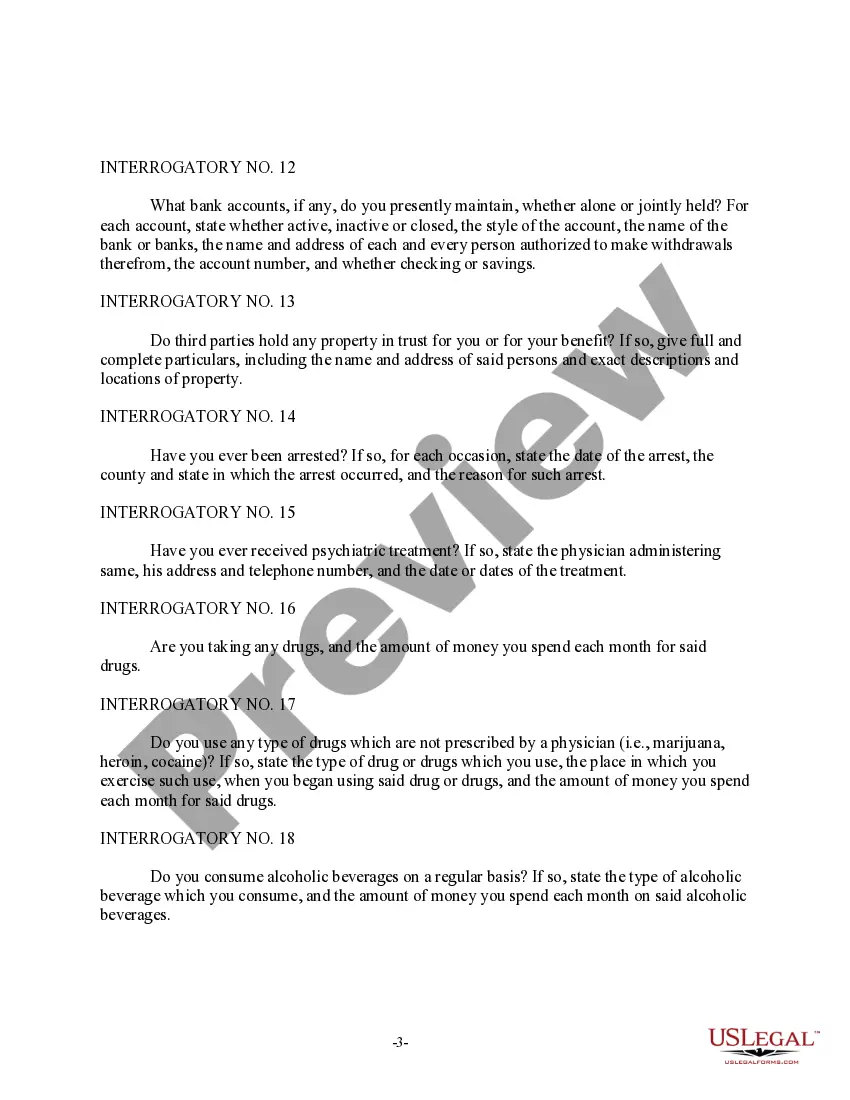
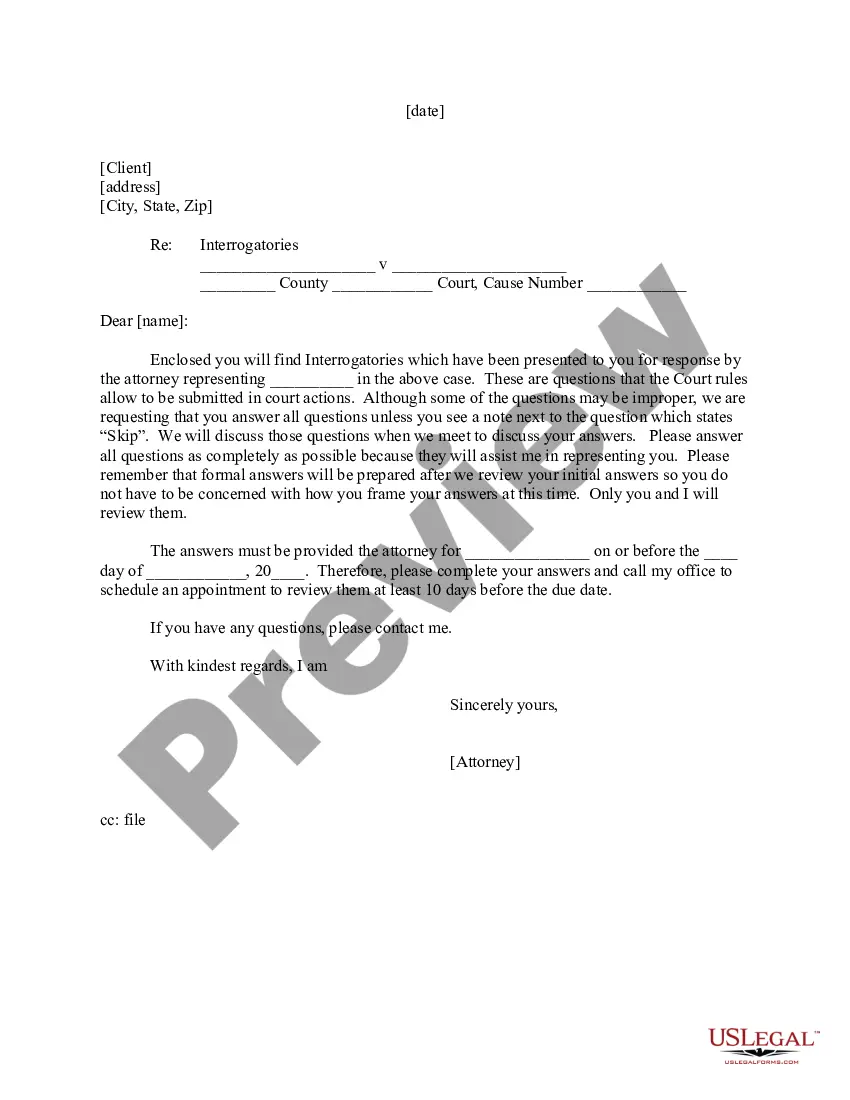
- A series of interrogatories requiring the Defendant to provide detailed answers.
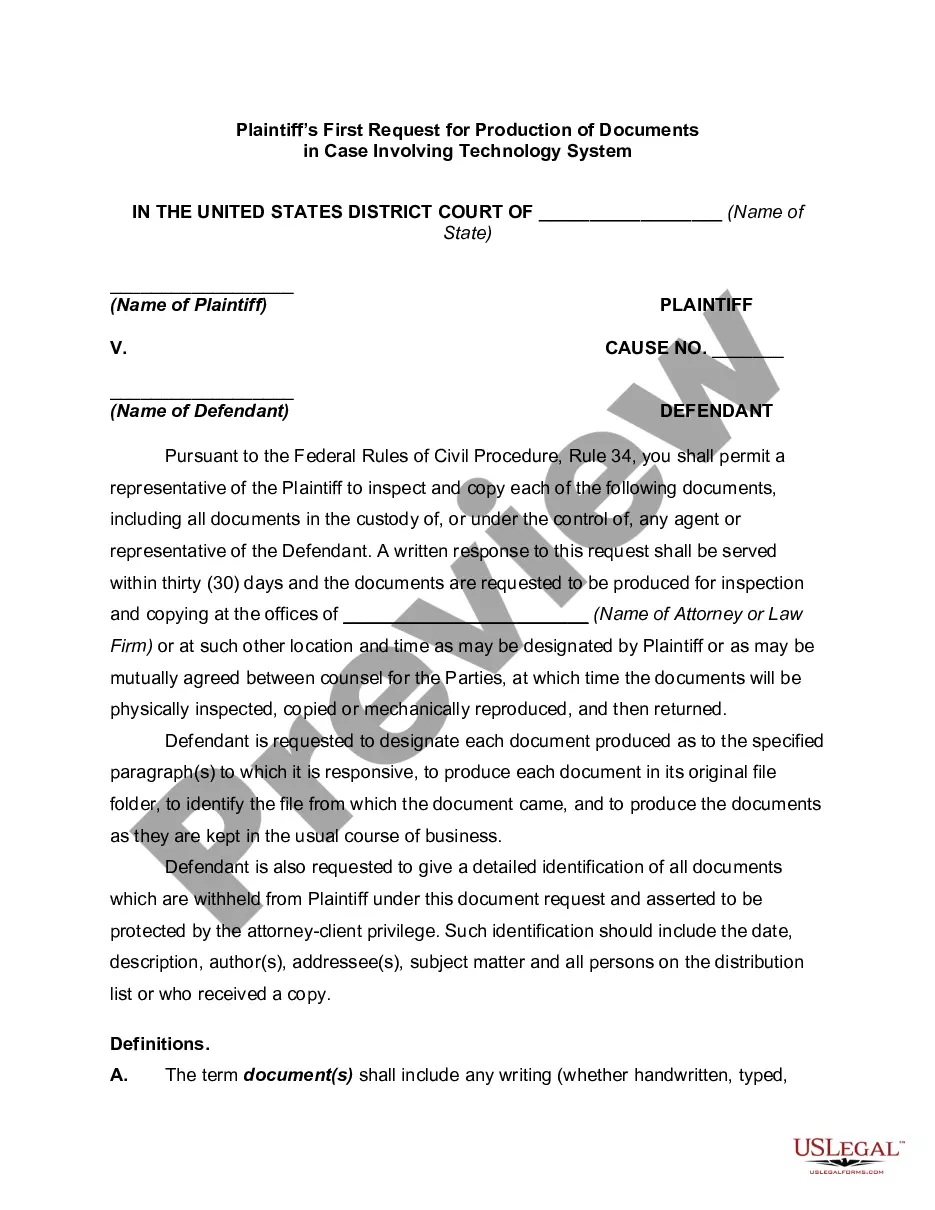
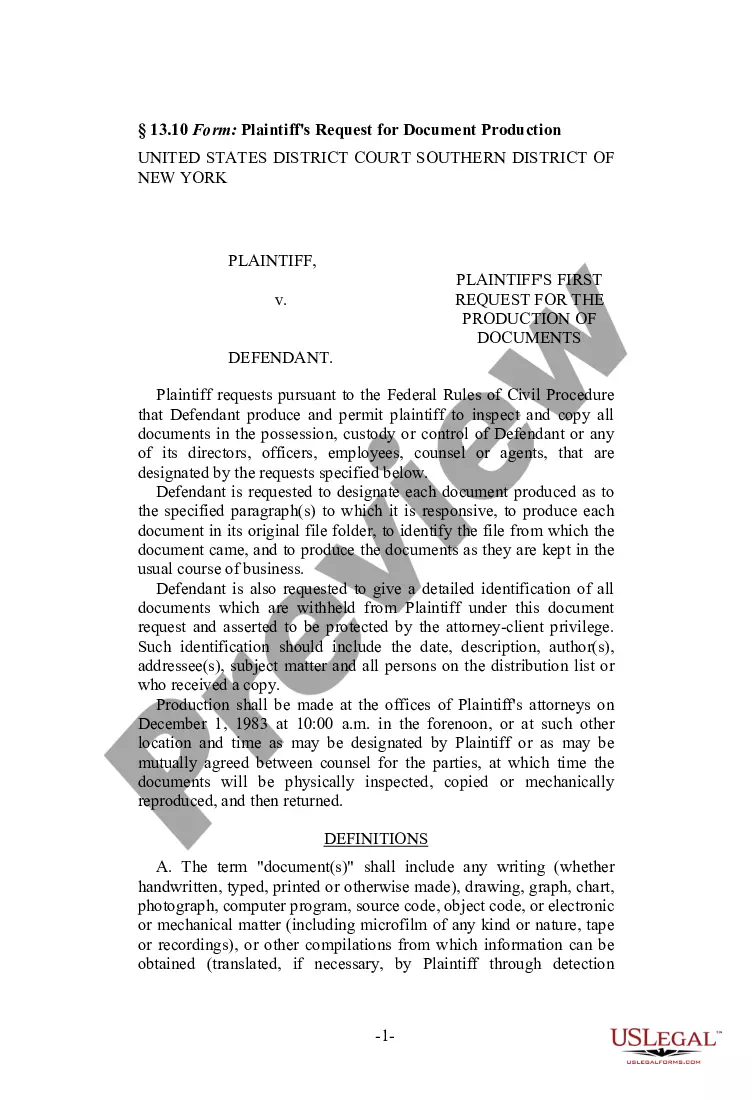
- Requests for the production of documents related to financial status and living conditions.
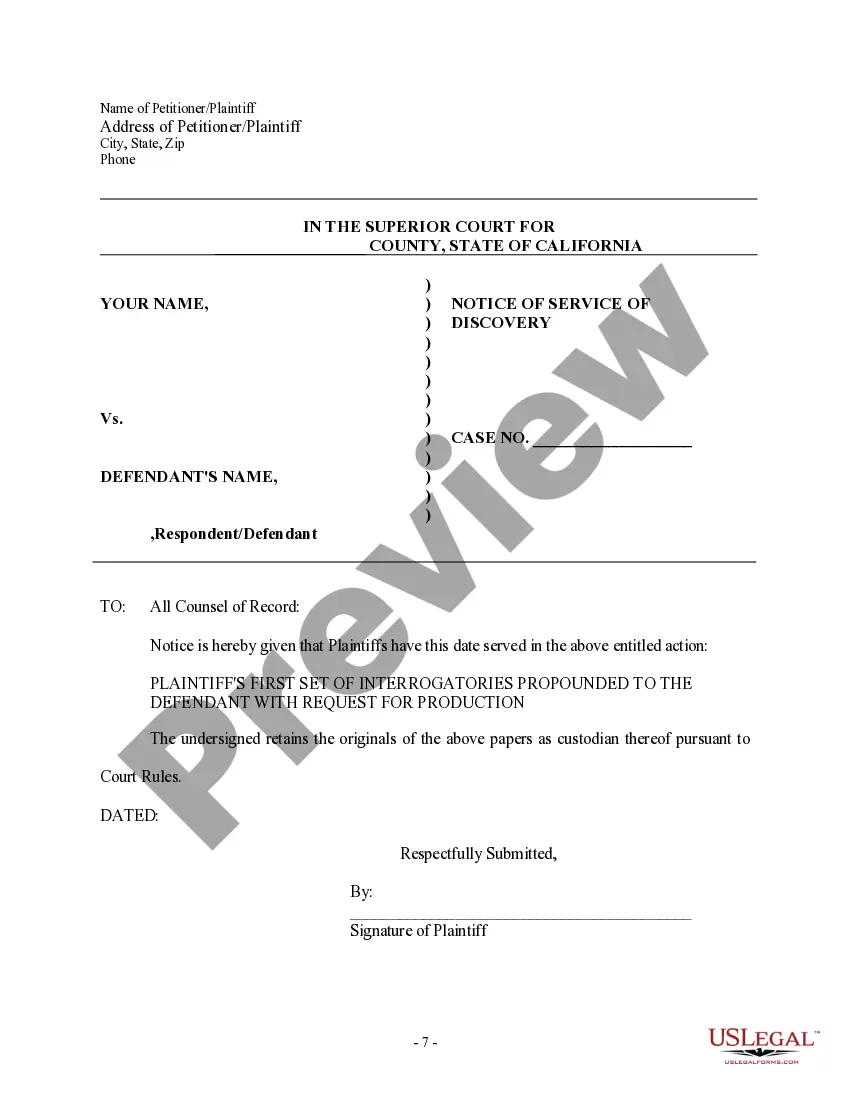
- Notices regarding the time frame for responses and service of documents.
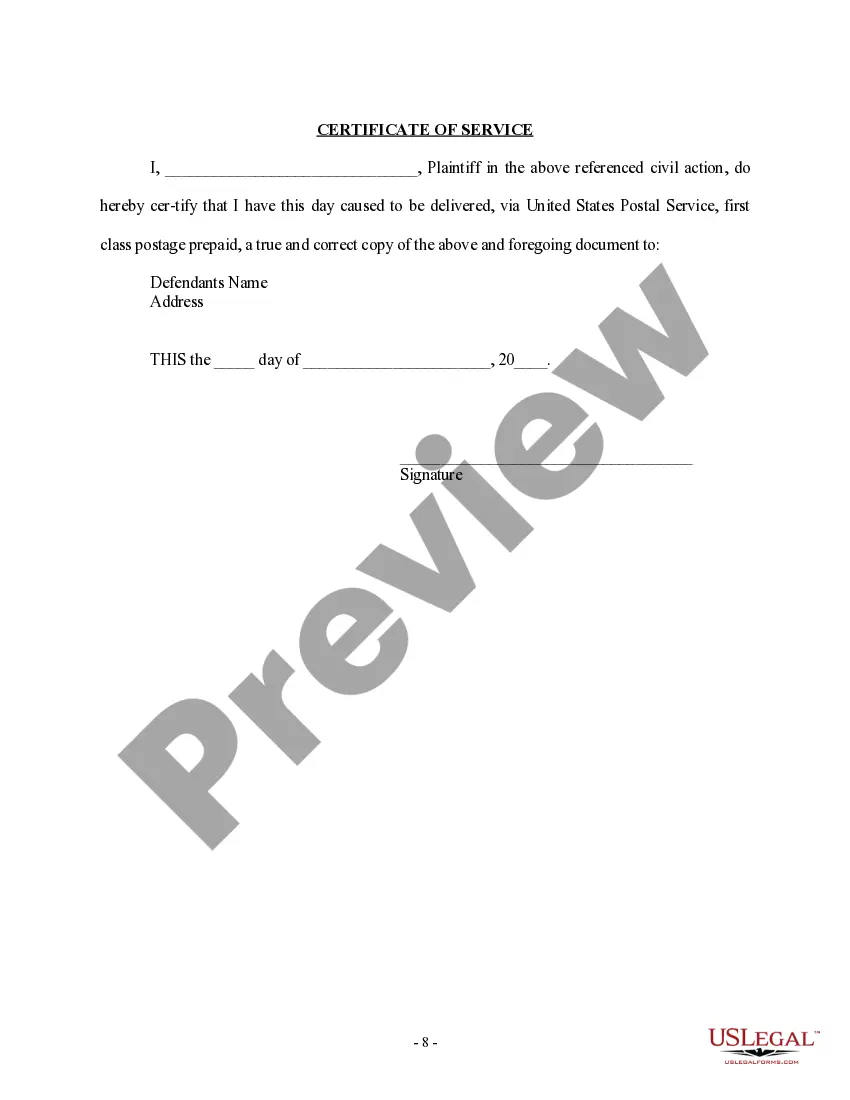
- Signature lines for the Plaintiff and a certificate of service to confirm delivery to the Defendant.
When to use this form
This form should be used when a Plaintiff in a divorce case needs to obtain specific information from the Defendant. Situations may include financial disclosure, clarification of living arrangements, or information regarding assets and debts. It is particularly useful if disputes arise concerning these issues during divorce proceedings.
Who needs this form
This form is intended for:
- Divorce plaintiffs seeking to compel responses from defendants.
- Individuals with limited legal experience who need to gather information systematically.
- Legal professionals assisting clients through the discovery phase of divorce litigation.
Completing this form step by step
- Enter the names and contact details of the parties involved in the case.
- Fill out the interrogatories with clear and concise questions directed to the Defendant.
- Specify the documents you are requesting from the Defendant that are relevant to your case.
- Review the form for completeness and sign where indicated.
- Prepare copies for service and maintain a copy for your records.
Notarization guidance
This form usually doesn’t need to be notarized. However, local laws or specific transactions may require it. Our online notarization service, powered by Notarize, lets you complete it remotely through a secure video session, available 24/7.
Get your form ready online
Our built-in tools help you complete, sign, share, and store your documents in one place.
Make edits, fill in missing information, and update formatting in US Legal Forms—just like you would in MS Word.
Download a copy, print it, send it by email, or mail it via USPS—whatever works best for your next step.
Sign and collect signatures with our SignNow integration. Send to multiple recipients, set reminders, and more. Go Premium to unlock E-Sign.
If this form requires notarization, complete it online through a secure video call—no need to meet a notary in person or wait for an appointment.
We protect your documents and personal data by following strict security and privacy standards.

Make edits, fill in missing information, and update formatting in US Legal Forms—just like you would in MS Word.

Download a copy, print it, send it by email, or mail it via USPS—whatever works best for your next step.

Sign and collect signatures with our SignNow integration. Send to multiple recipients, set reminders, and more. Go Premium to unlock E-Sign.

If this form requires notarization, complete it online through a secure video call—no need to meet a notary in person or wait for an appointment.

We protect your documents and personal data by following strict security and privacy standards.
Avoid these common issues
- Failing to include all necessary parties' information.
- Not tailoring the interrogatories to fit the specifics of the case.
- Overlooking the required response time frame.
- Neglecting to sign the document before submission.
Benefits of completing this form online
- Convenient access to legal forms from anywhere with internet connectivity.
- Immediate download options ensure you can start the process without delay.
- Editability allows you to customize the form to suit your specific case needs.
- Reliability, with forms drafted by licensed attorneys to ensure legal compliance.
Legal use & context
This form is a legally recognized document used during the discovery phase in divorce proceedings. It facilitates the exchange of information and can be critical for preparing for court. Non-compliance by the Defendant may result in legal repercussions.
Main things to remember
- Discovery interrogatories are a vital tool in divorce proceedings to obtain necessary information.
- Complete and accurate responses are essential for the legal process.
- Understanding local court requirements can significantly affect the case's success.
Looking for another form?
Form popularity
FAQ
In California, you cannot ask interrogatories that are privileged, irrelevant, or those that seek to harass or annoy the other party. Specifically, you should avoid questions that delve into protected attorney-client communications or matter not related to the case. It’s critical to ensure that your interrogatories comply with legal standards. By using California Discovery Interrogatories from Plaintiff to Defendant with Production Requests, you can formulate effective questions that adhere to legal guidelines while maximizing the information gathered.
California law allows parties to serve a maximum of 35 special interrogatories per case. This is outlined in California Code of Civil Procedure Section 2030.030. If your case involves complex issues, you may seek permission from the court to exceed this limit. California Discovery Interrogatories from Plaintiff to Defendant with Production Requests can effectively assist you in obtaining the information you need without exceeding the allowable number.
In California, you can generally request up to 35 requests for production in a single case. This rule applies under California Civil Procedure Section 2031.030. It's essential to ensure your requests are relevant to your case, as overly burdensome requests may be challenged. Utilizing California Discovery Interrogatories from Plaintiff to Defendant with Production Requests can help streamline the process and ensure all necessary documents are effectively gathered.
Answering interrogatories and requests for production of documents requires a structured approach. Start by carefully reviewing each interrogatory and request to ensure you understand what is being asked. Use clear, concise language when drafting your responses. You may find uslegalforms a valuable resource for templates and guidance to effectively manage your California Discovery Interrogatories from Plaintiff to Defendant with Production Requests.
Yes, there are limits to the number of requests for production of documents you can make in California. The rules allow for a maximum of 35 requests, but you can increase this limit with the court's permission if you can show good cause. Understanding these limitations is vital, especially in California Discovery Interrogatories from Plaintiff to Defendant with Production Requests, to ensure you don't overstep.
The best way to answer interrogatories is to be thorough, honest, and direct. Provide complete answers and support them with relevant documents if necessary while staying within the scope of the questions. When dealing with California Discovery Interrogatories from Plaintiff to Defendant with Production Requests, it is important to avoid evasive answers and to stay focused on providing the information requested.
Interrogatories are effective for obtaining factual information, clarifying details of the case, and uncovering the opposing party's evidence. Through California Discovery Interrogatories from Plaintiff to Defendant with Production Requests, you can gather admissions, denials, and other critical information that may shape your legal strategy. This helps to establish a solid foundation before proceeding further.
Filling out a California interrogatories form involves clearly stating your questions and ensuring they are relevant to the case. First, make sure to follow the required format, which includes listing the interrogatories sequentially. You can use the resources provided by uslegalforms to guide you through the process and ensure accuracy, particularly when dealing with California Discovery Interrogatories from Plaintiff to Defendant with Production Requests.
Yes, a request for production is indeed part of the discovery process in California. It allows one party to request specific documents or materials from the other party to gather relevant information. This is crucial for building your case, especially in California Discovery Interrogatories from Plaintiff to Defendant with Production Requests.
In California, a plaintiff may typically serve interrogatories on a defendant as soon as the defendant has been served with the complaint. This means that once the defendant is officially notified of the legal action, the plaintiff can begin to seek relevant information through California Discovery Interrogatories from Plaintiff to Defendant with Production Requests. Additionally, it's important to remember that the timing should align with the court's rules and deadlines. For efficient management of legal processes, using platforms like US Legal Forms can simplify the preparation and service of these interrogatories.