California Assignment of Lease Agreement
What is this form?
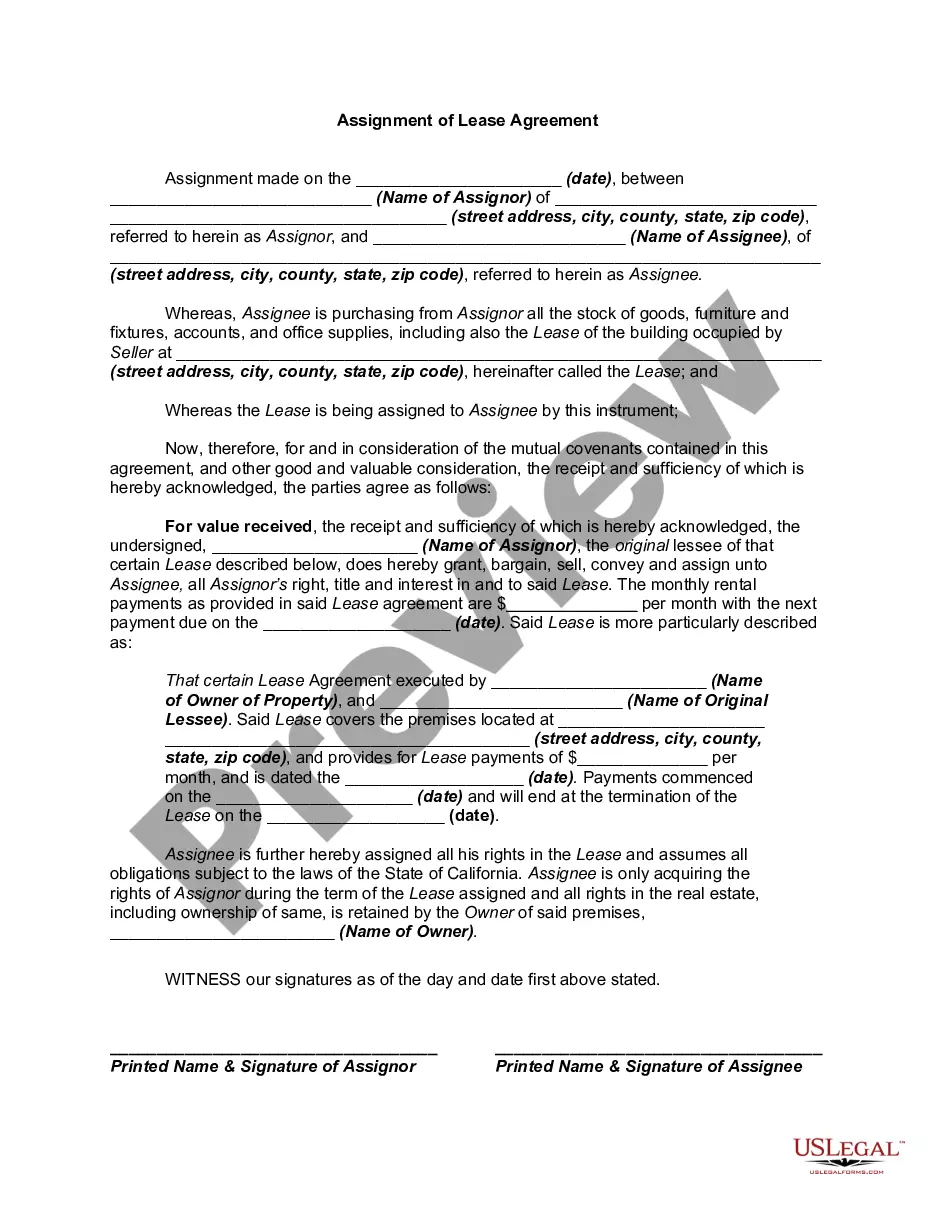
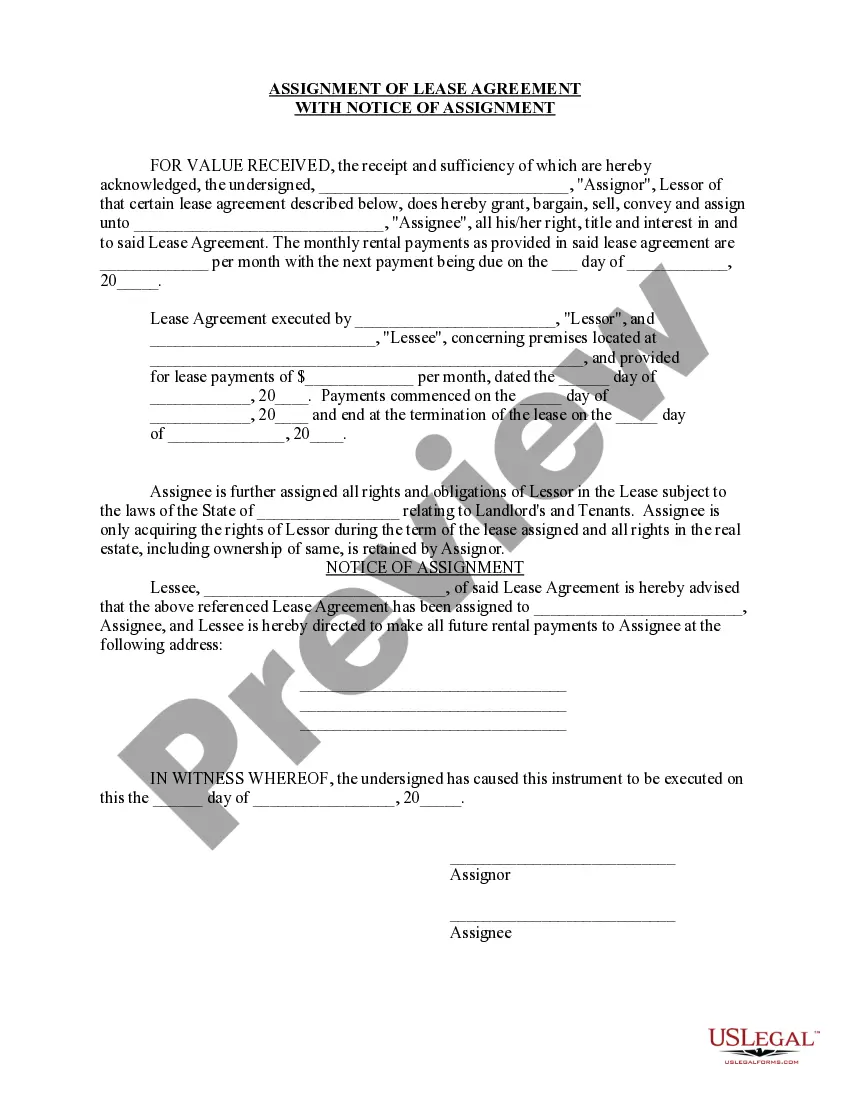
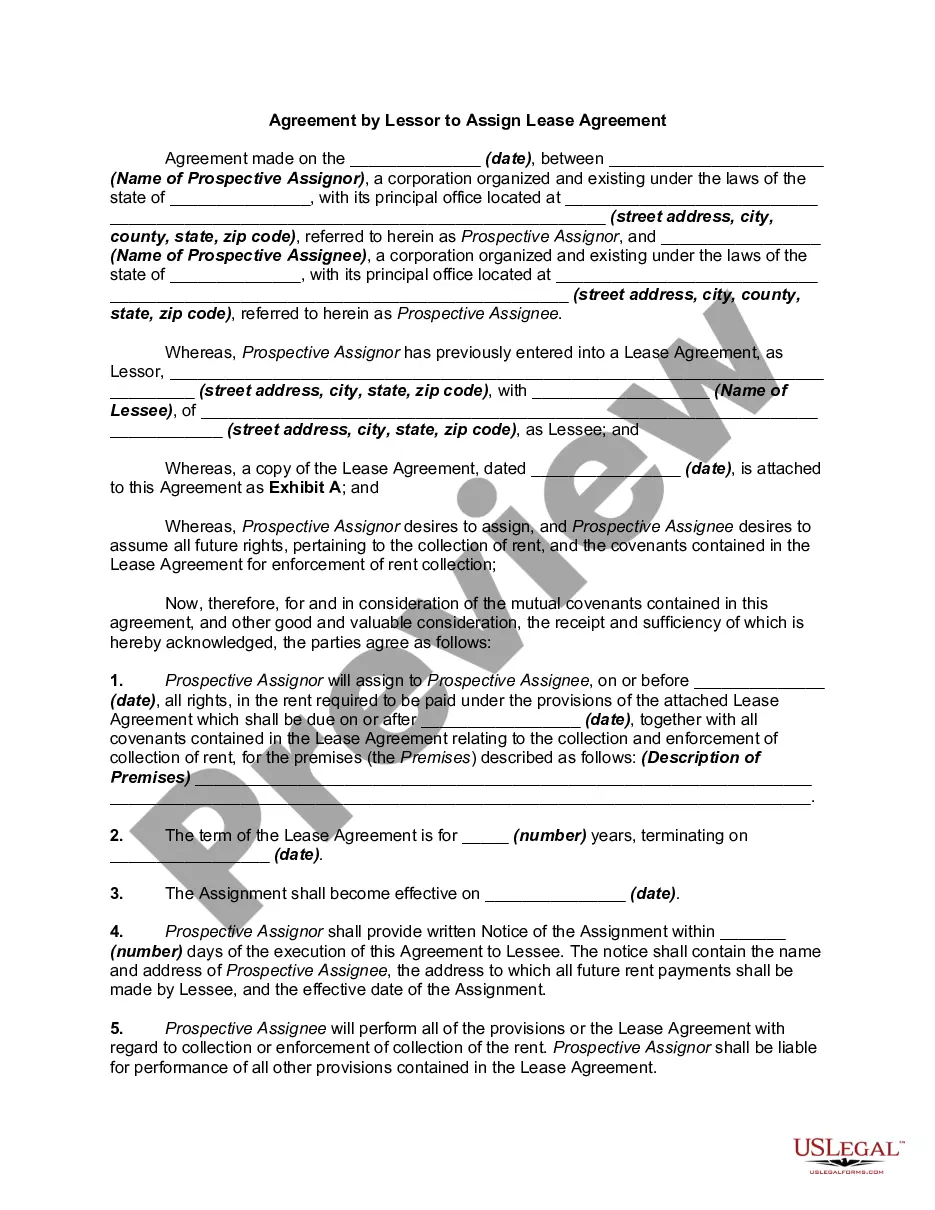
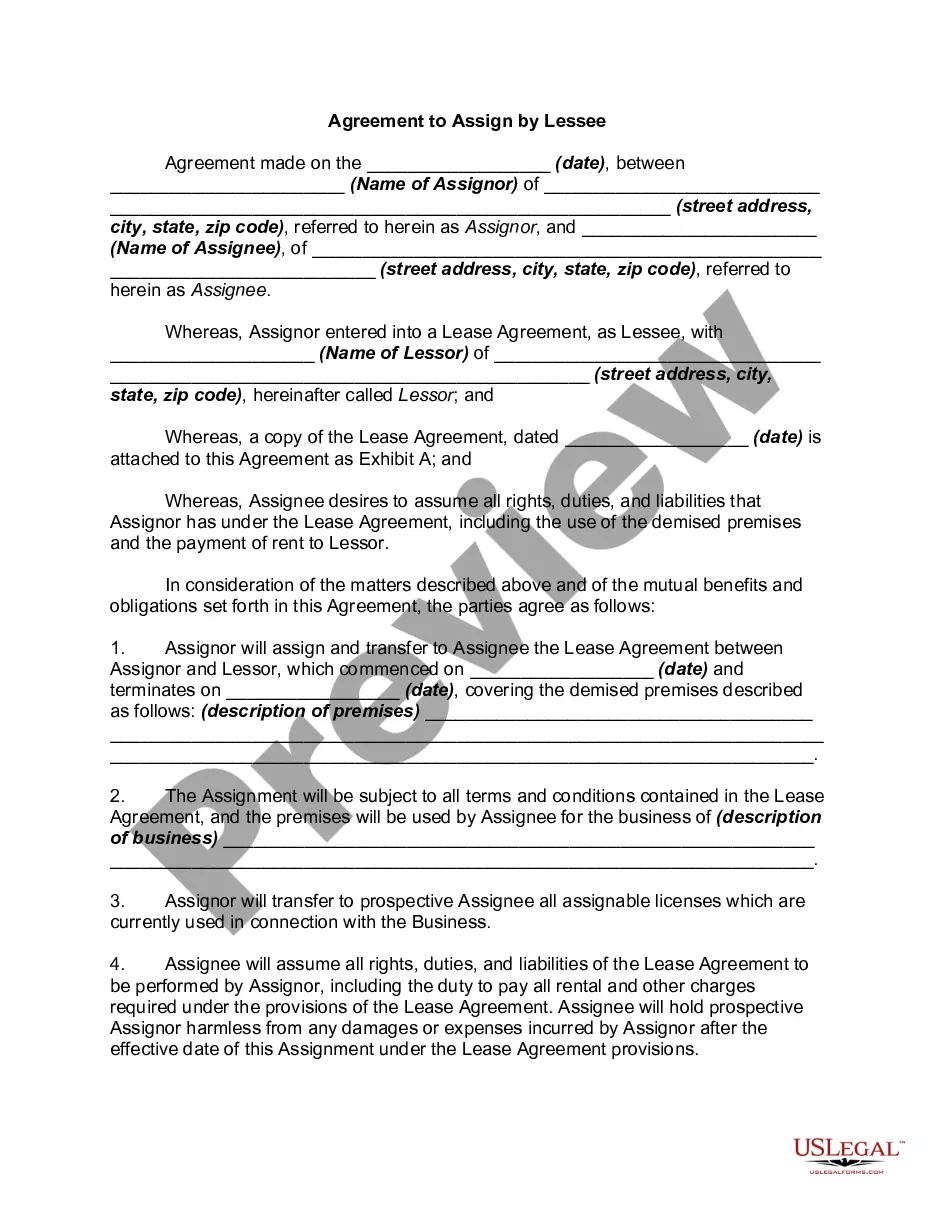
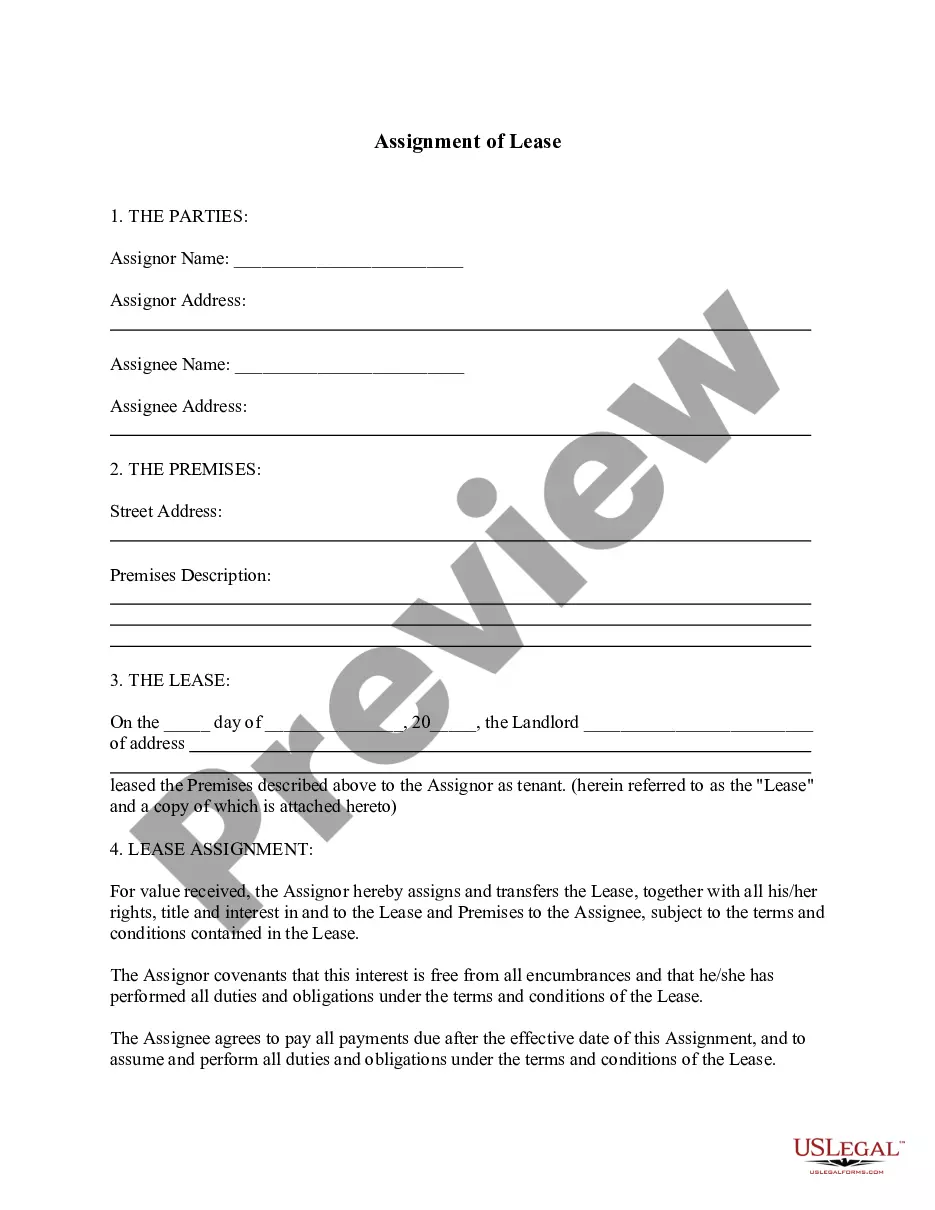
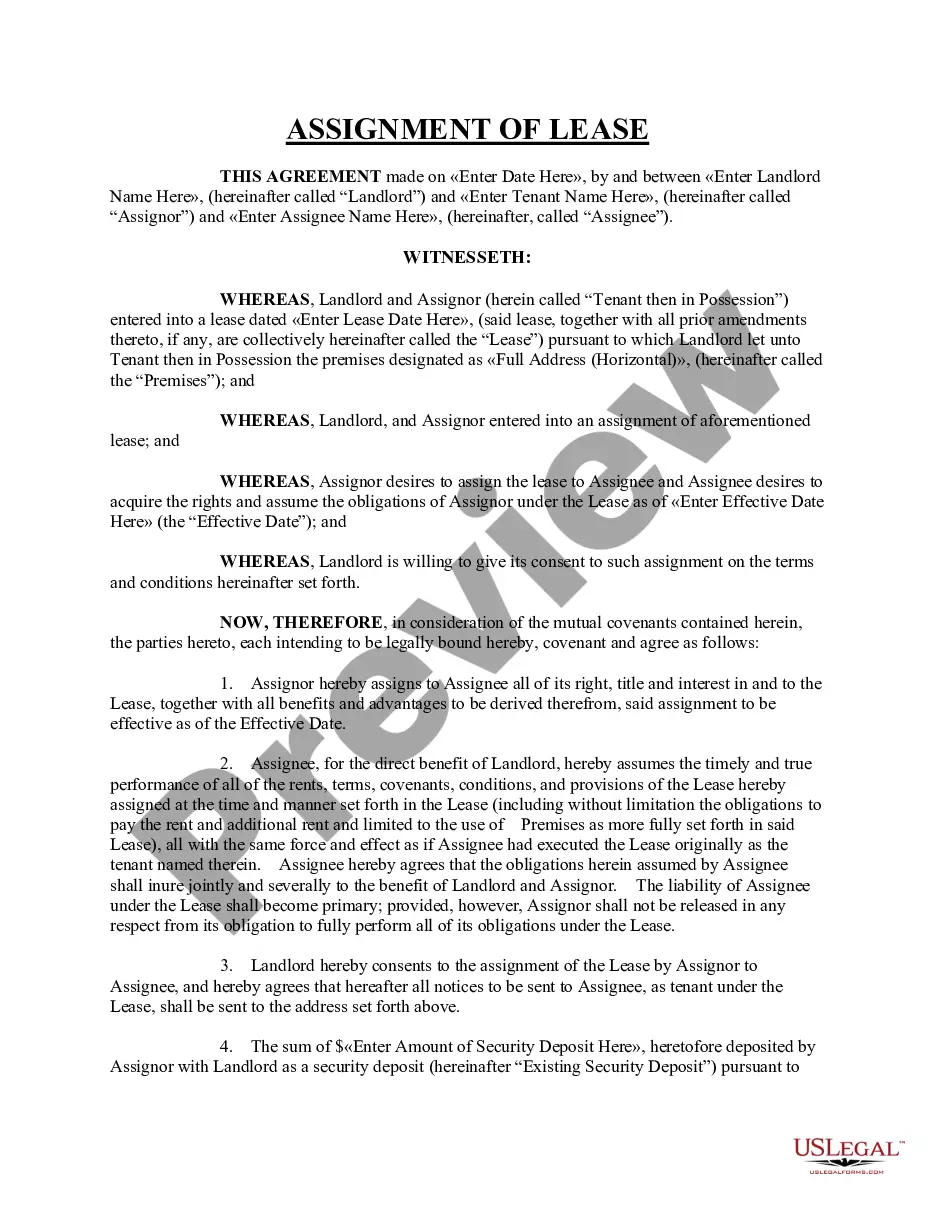
An Assignment of Lease Agreement allows a lessee to transfer their lease rights and obligations to a third party. This legal document formalizes the transfer, enabling the assignee to occupy the leased property under the original lease terms. The original lessee remains responsible for the lease unless released by the landlord, distinguishing this agreement from a lease termination or sublease arrangement.
Key components of this form
- Date of the assignment.
- Names and addresses of the assignor (original lessee) and assignee (new tenant).
- Description of the property being leased.
- Monthly rental payments and payment due dates.
- Consent section for the property owner.

Situations where this form applies
This form is necessary when a lessee wishes to assign their lease to another individual or entity. Common scenarios include situations where the original tenant needs to relocate or no longer requires the leased space but wants to avoid penalties associated with breaking the lease.
Who needs this form
- Current lessees looking to assign their lease to another party.
- Assignees who are interested in taking over a lease.
- Landlords who want to formalize the assignment process.
Steps to complete this form
- Identify the date of the assignment at the top of the form.
- Clearly list the names and addresses of both the assignor and the assignee.
- Provide a detailed description of the leased property.
- Specify the monthly rent amount and the due date for the next payment.
- Obtain consent from the property owner, if required.
- Ensure all parties sign and date the document to finalize the assignment.
Is notarization required?
This form does not typically require notarization unless specified by local law. However, having it notarized may add an extra layer of authenticity and can be beneficial in disputes.
Get your form ready online
Our built-in tools help you complete, sign, share, and store your documents in one place.
Make edits, fill in missing information, and update formatting in US Legal Forms—just like you would in MS Word.
Download a copy, print it, send it by email, or mail it via USPS—whatever works best for your next step.
Sign and collect signatures with our SignNow integration. Send to multiple recipients, set reminders, and more. Go Premium to unlock E-Sign.
If this form requires notarization, complete it online through a secure video call—no need to meet a notary in person or wait for an appointment.
We protect your documents and personal data by following strict security and privacy standards.

Make edits, fill in missing information, and update formatting in US Legal Forms—just like you would in MS Word.

Download a copy, print it, send it by email, or mail it via USPS—whatever works best for your next step.

Sign and collect signatures with our SignNow integration. Send to multiple recipients, set reminders, and more. Go Premium to unlock E-Sign.

If this form requires notarization, complete it online through a secure video call—no need to meet a notary in person or wait for an appointment.

We protect your documents and personal data by following strict security and privacy standards.
Mistakes to watch out for
- Failing to obtain the property owner's consent, if necessary.
- Leaving out critical information, such as rental amounts or dates.
- Not having all parties sign the document.
Advantages of online completion
- Immediate access to a legally drafted form by licensed attorneys.
- Convenience of completing and downloading the form at your own pace.
- Editability for specific personal information and lease details.
Looking for another form?


Form popularity
FAQ
If you lose your lease agreement, don't worry; it’s possible to obtain another copy. Contact your landlord or property management to request a duplicate. If you have a California Assignment of Lease Agreement involved, it’s crucial to replace it to protect your rights and ensure proper compliance with rental laws.
Yes, a lease agreement can often be assigned, allowing another party to take over the lease obligations. However, this process must adhere to the terms outlined in your lease, particularly with a California Assignment of Lease Agreement. It's wise to consult legal advice or resources like USLegalForms to ensure the assignment is executed properly.
You can absolutely ask your apartment management for a copy of your lease agreement. It's best to do this in writing for a formal record. If your lease includes a California Assignment of Lease Agreement, ensure you ask for that copy as well, so you fully understand your rights and responsibilities.
Certainly, you can request a copy of your lease agreement from your landlord or property manager. This is your right as a tenant, ensuring you have all necessary documentation, including any California Assignment of Lease Agreement and amendments. Keeping a copy helps you stay organized and informed about your rental terms.
Yes, you can ask for a copy of your lease in California. Under state law, landlords must provide tenants with copies of all lease agreements upon request. If you have a California Assignment of Lease Agreement, you may also want a copy of any related documents for your records.
Typically, the landlord retains the original copy of the lease agreement. However, tenants should always request their own signed copy for their records. In the case of a California Assignment of Lease Agreement, it is essential to ensure all parties involved have copies of the updated lease.
Yes, you can easily print a lease agreement online. Many platforms, including USLegalForms, provide templates for a California Assignment of Lease Agreement. Once you customize the document to suit your needs, you can download and print it directly from your device.
Yes, the assignment of a contract, including leases, is legal in California as long as it is conducted in accordance with the terms set forth in the contract. Both parties must agree to the assignment for it to be valid, and any restrictions should be clearly detailed in the original lease. Implementing a California Assignment of Lease Agreement simplifies this process and ensures legal compliance.
The assignment and assumption of a lease is a process where the original tenant transfers both their rights and responsibilities to a new tenant. This ensures that the new tenant will uphold the terms of the lease, granting them the use of the property while relieving the original tenant of future obligations. Utilizing a California Assignment of Lease Agreement formalizes this transition and protects all parties involved.
Yes, a landlord can refuse a lease assignment, but only under specific circumstances outlined in the lease agreement. Common reasons for refusal include doubts about the financial stability of the new tenant or if the proposed assignment violates lease terms. Tenants should consult a California Assignment of Lease Agreement to understand their rights and the landlord's obligations regarding lease assignments.