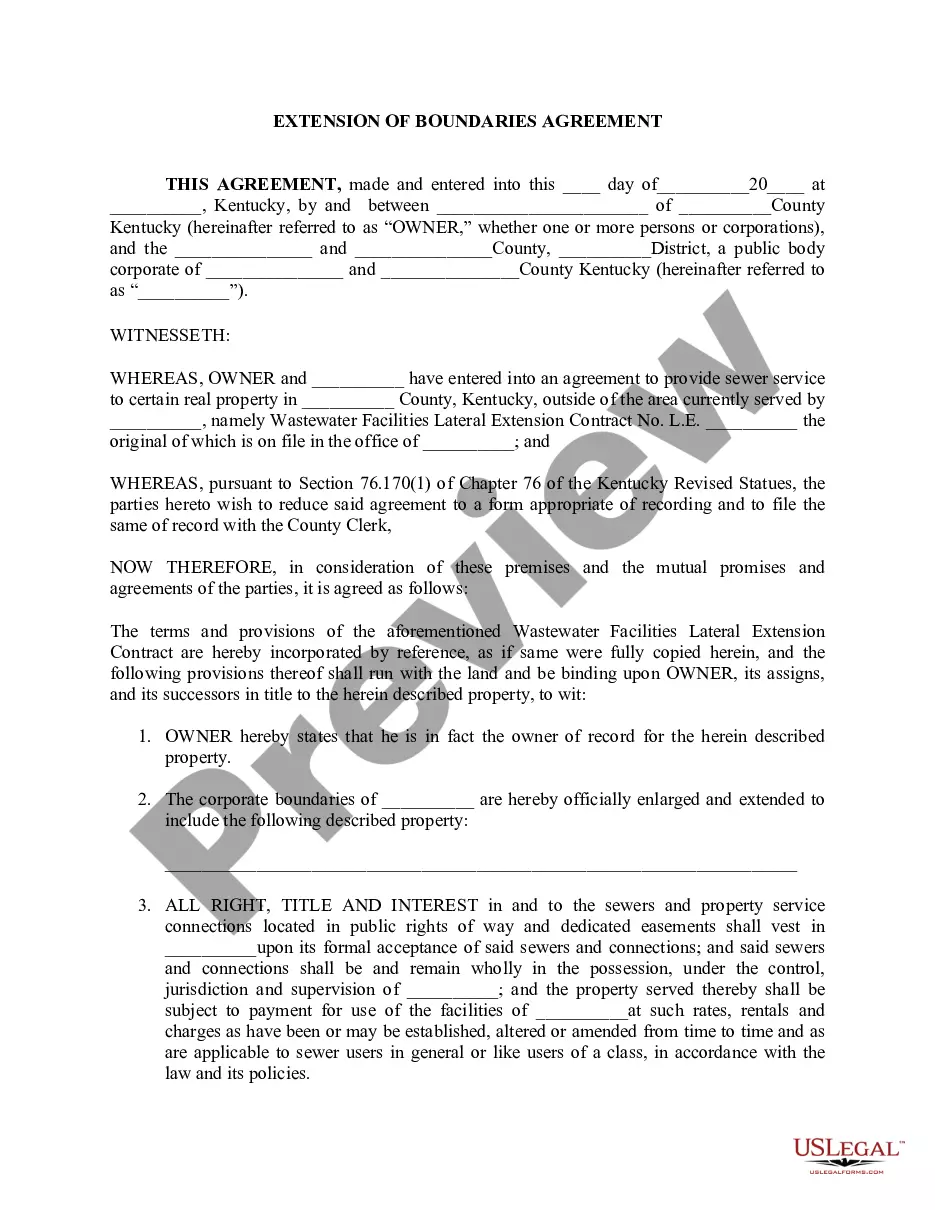
Arizona Agreement with Creditor - Debt Not Related to Real Estate
What is this form?
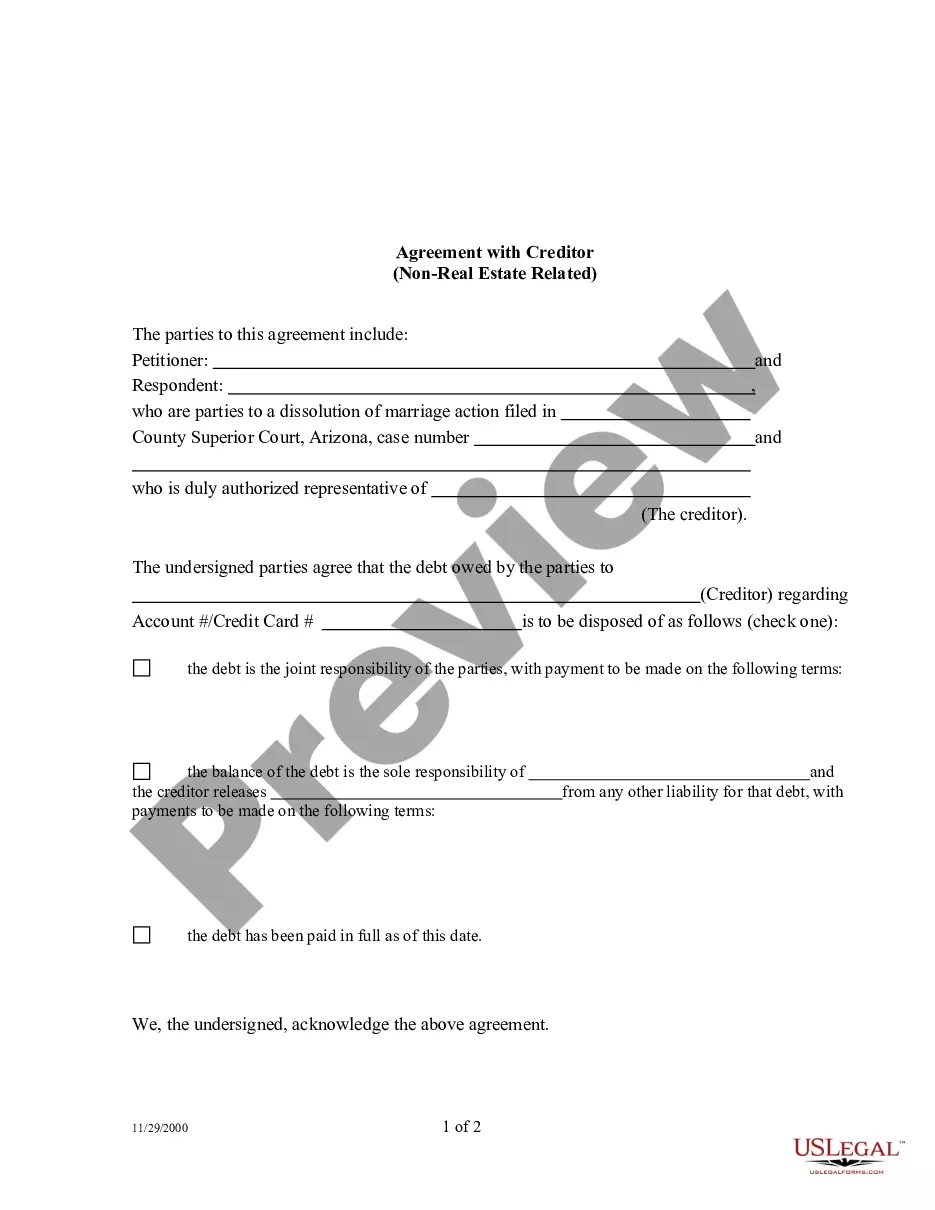
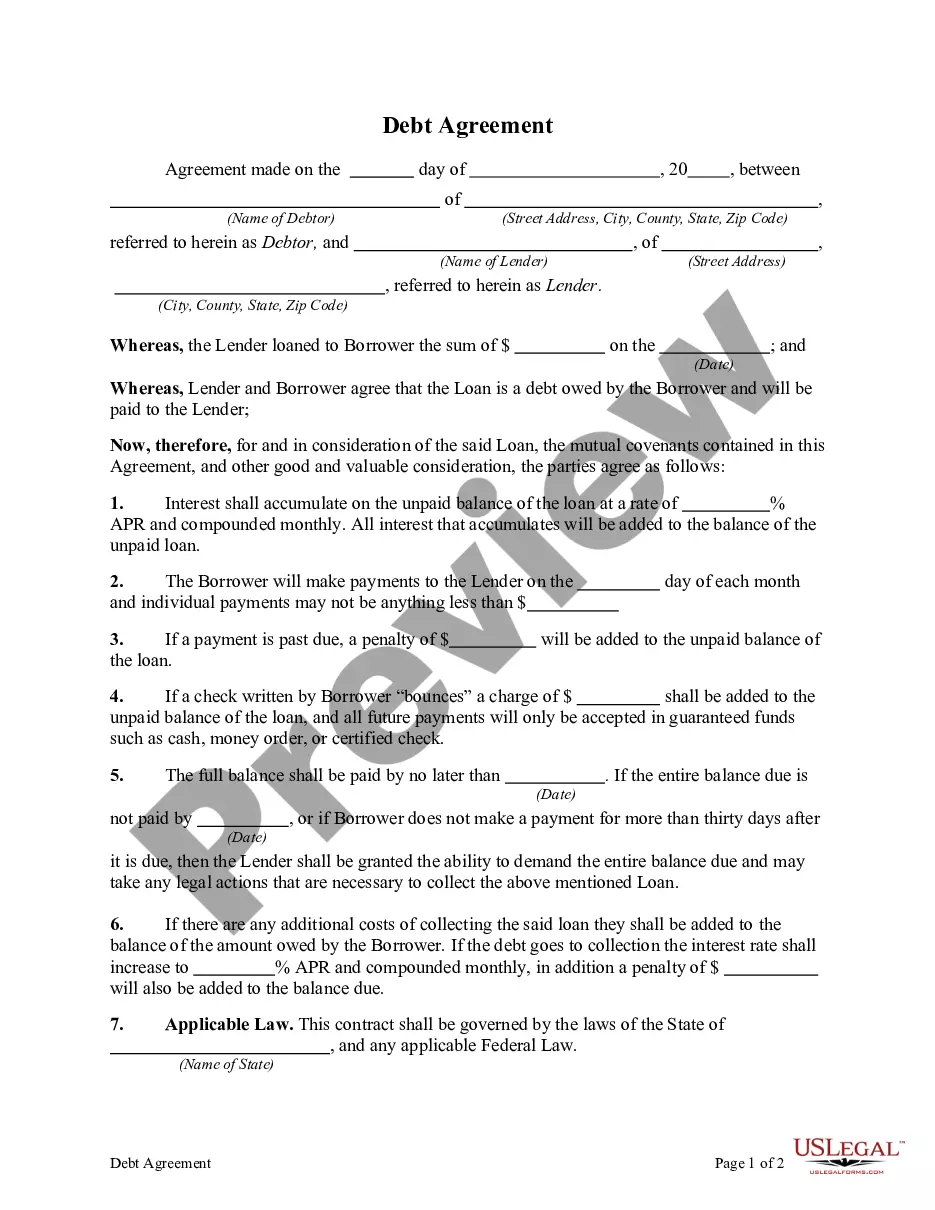
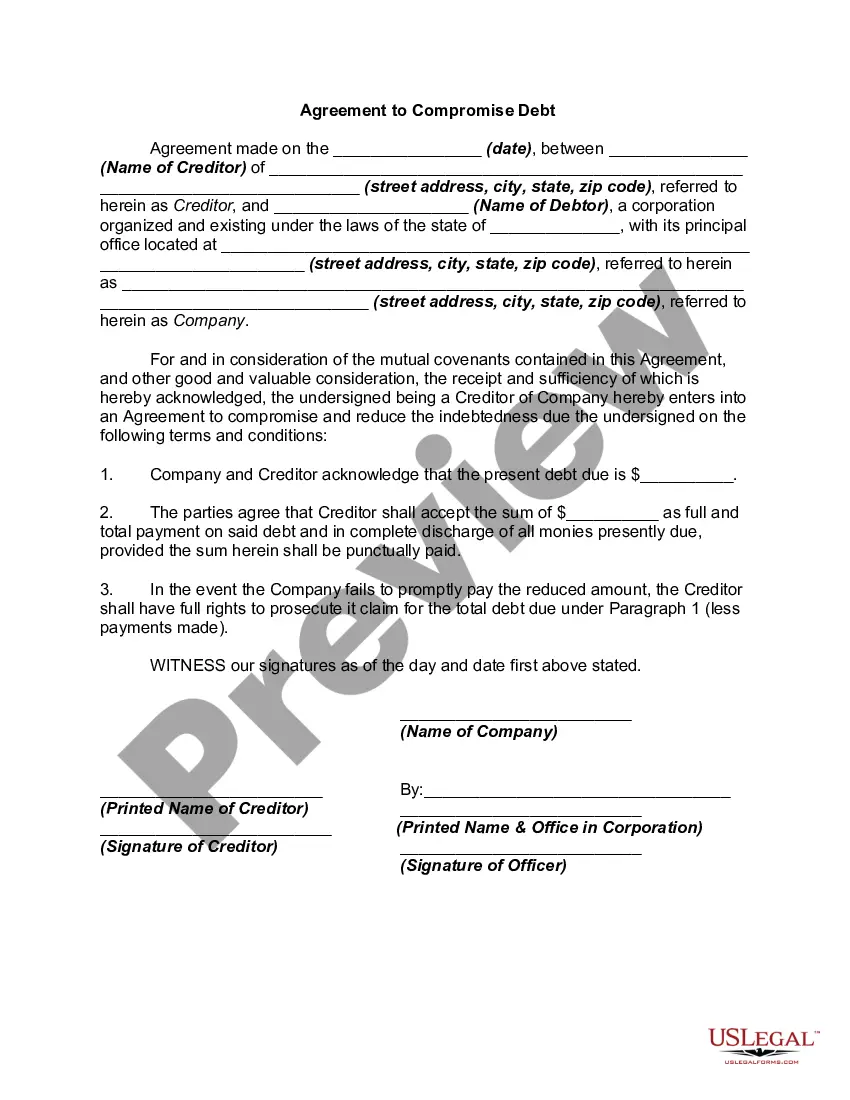
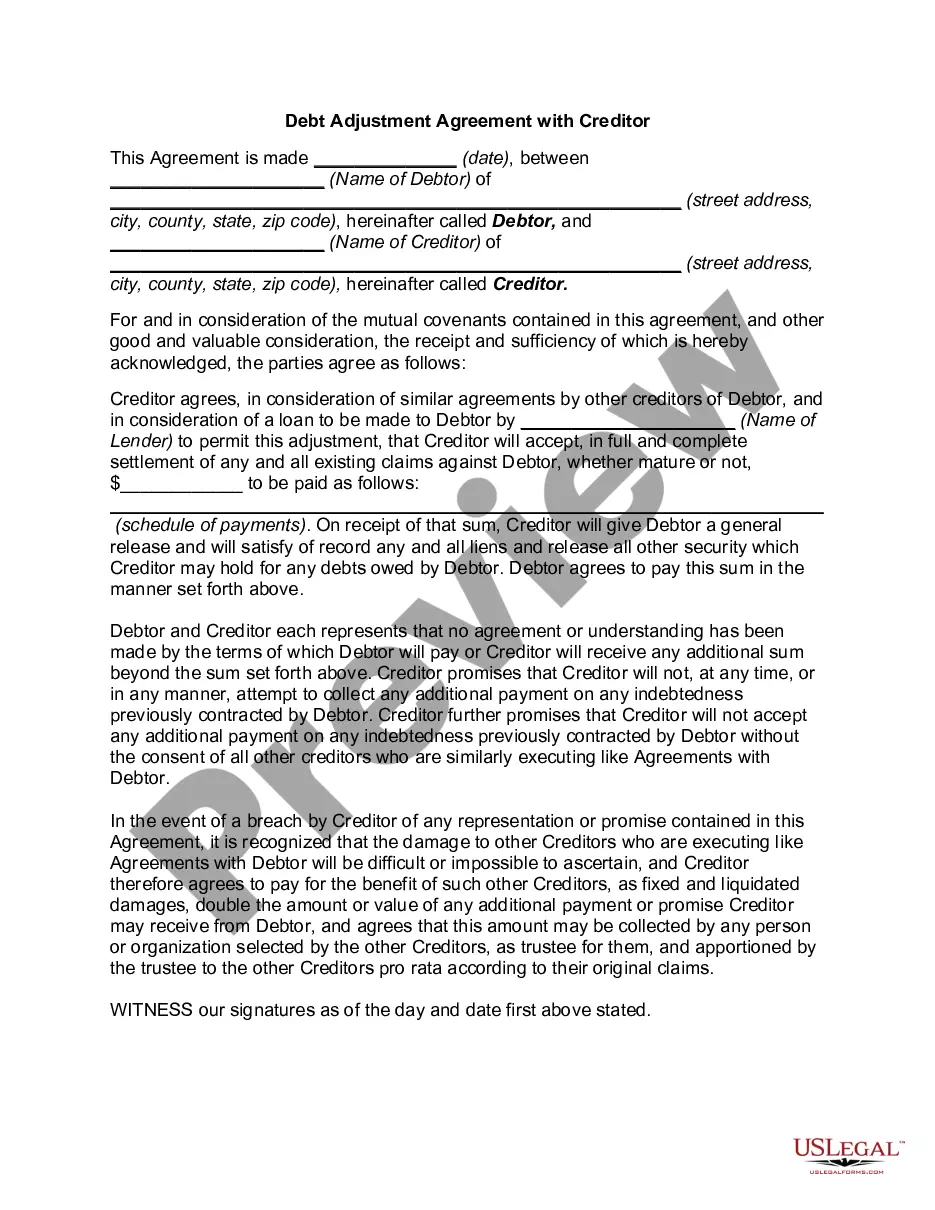
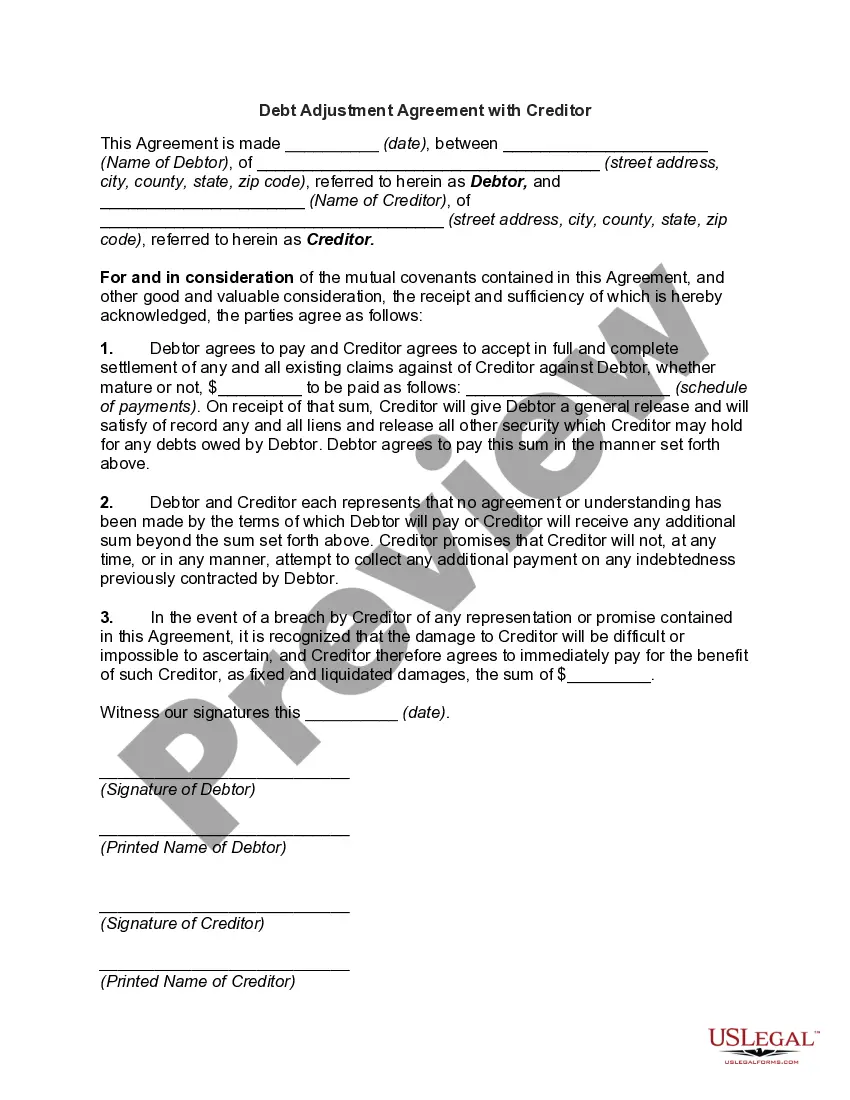
An Agreement with Creditor for debt not related to real estate is a legal document that enables individuals to formalize an agreement with their creditors regarding non-real estate debts. This form specifically addresses debt obligations that have arisen outside of real estate transactions and modifies or reaffirms these debts. Unlike other agreements, this one focuses solely on personal debts, making it essential for individuals dealing with financial obligations after events like divorce or insolvency.
Key components of this form
- Identification of the parties involved in the agreement.
- Description of the debts being modified or reaffirmed.
- Terms of the agreement, including payment schedules or modifications.
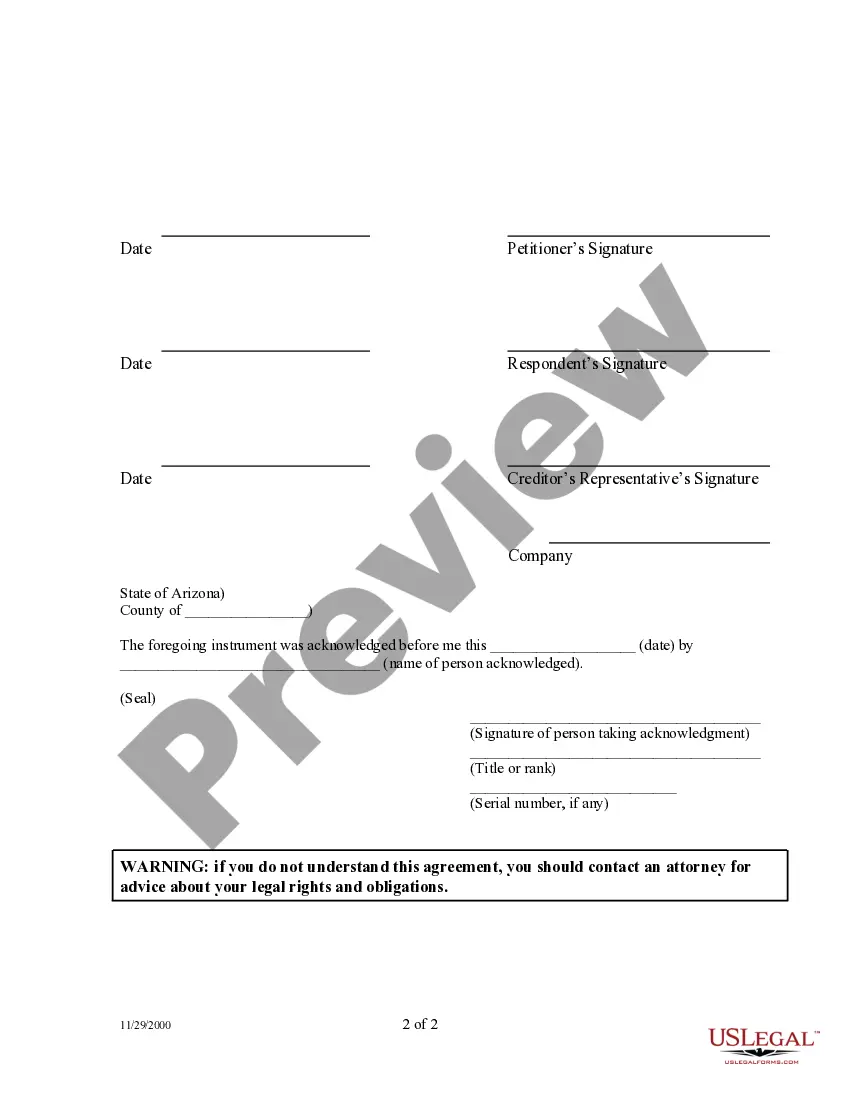
- Signatures of both parties to indicate consent and agreement.
- Date of the agreement execution.
Situations where this form applies
This form is commonly used when individuals wish to negotiate or clarify the terms of their debts following financial hardships, such as insolvency or divorce. It is particularly useful in scenarios where debtors want to establish a clear agreement with creditors to avoid misunderstandings or disputes about what is owed.
Intended users of this form
- Individuals looking to negotiate their debt obligations with creditors.
- Debtors who want to clarify their financial responsibilities outside of real estate matters.
- Anyone involved in a dissolution of marriage where debts need to be addressed.
Instructions for completing this form
- Identify all parties involved, including their full names and contact information.
- Clearly list the debts that are the subject of the agreement.
- Outline the specific terms of the agreement, including any modifications or repayment schedules.
- Ensure both parties sign the document to signify their agreement.
- Record the date of the agreement at the end of the document.
Notarization guidance
This form does not typically require notarization unless specified by local law. It is recommended to verify local regulations that may require notarization for such agreements.
Get your form ready online
Our built-in tools help you complete, sign, share, and store your documents in one place.
Make edits, fill in missing information, and update formatting in US Legal Forms—just like you would in MS Word.
Download a copy, print it, send it by email, or mail it via USPS—whatever works best for your next step.
Sign and collect signatures with our SignNow integration. Send to multiple recipients, set reminders, and more. Go Premium to unlock E-Sign.
If this form requires notarization, complete it online through a secure video call—no need to meet a notary in person or wait for an appointment.
We protect your documents and personal data by following strict security and privacy standards.

Make edits, fill in missing information, and update formatting in US Legal Forms—just like you would in MS Word.

Download a copy, print it, send it by email, or mail it via USPS—whatever works best for your next step.

Sign and collect signatures with our SignNow integration. Send to multiple recipients, set reminders, and more. Go Premium to unlock E-Sign.

If this form requires notarization, complete it online through a secure video call—no need to meet a notary in person or wait for an appointment.

We protect your documents and personal data by following strict security and privacy standards.
Common mistakes to avoid
- Failing to include all parties involved in the debt.
- Not detailing the specific debts or terms of the agreement.
- Neglecting to have both parties sign the document.
- Inaccurate or missing dates on the agreement.
Why complete this form online
- Convenience of downloading and filling out the form at your own pace.
- Editability allows for customization to fit specific needs and situations.
- Access to reliable legal language drafted by licensed attorneys.
Looking for another form?
Form popularity
FAQ
To answer a summons for debt collection in Arizona, review the document carefully and prepare a response. Make sure to address each claim made by the creditor, especially regarding any Arizona Agreement with Creditor - Debt Not Related to Real Estate. It’s often wise to consult with a legal expert, as they can provide guidance specific to your situation.
Writing a letter to a creditor for proof of debt is straightforward. Start by including your personal information, the date, and the creditor's details. Clearly state your request for validation of the debt, mention the Arizona Agreement with Creditor - Debt Not Related to Real Estate, and include any account numbers to facilitate their response.
A creditor must provide specific documentation to validate a debt. This includes the original contract, account statements, and a record of payment history. If you are dealing with an Arizona Agreement with Creditor - Debt Not Related to Real Estate, make sure all documents reference the agreement.
You can make a creditor prove a debt by sending them a formal request for validation. Under the Fair Debt Collection Practices Act, you have the right to ask them to provide evidence of the debt, including the original agreement. This is particularly important if the debt relates to an Arizona Agreement with Creditor - Debt Not Related to Real Estate.
When you need proof of a debt, you should reach out to the creditor directly. Write a clear and polite request that specifies you want validation of the debt, especially if it involves an Arizona Agreement with Creditor - Debt Not Related to Real Estate. Providing your account number and any relevant details can help expedite the process.
To prove you owe a debt, you need to gather documentation that supports your claim. This might include contracts, statements, and account records that show your debt balance. If the debt involves an Arizona Agreement with Creditor - Debt Not Related to Real Estate, make sure to keep any communication related to the agreement as evidence.
Debt in Arizona generally becomes uncollectible after six years due to the statute of limitations governing most types of debt. This timeframe allows creditors to pursue their claims against debtors legally. However, the implications of an uncollected debt can linger, impacting financial well-being. Utilizing tools like the Arizona Agreement with Creditor - Debt Not Related to Real Estate can help in negotiating terms and resolving debts before they reach this endpoint.
Creditors in Arizona have a specific timeframe of four months to file a claim against an estate after receiving notice of the probate proceedings. This period is crucial for ensuring all debts, including those stemming from an Arizona Agreement with Creditor - Debt Not Related to Real Estate, are duly addressed. If creditors miss this deadline, they may not be able to enforce their claims against the estate. Executors should remain vigilant about notifying creditors promptly.
In Arizona, an executor typically has a maximum of one year to distribute assets to beneficiaries after a person passes away. However, the executor may finish the process sooner if all debts are settled and the estate administration is straightforward. If challenges arise, such as disputes or complex assets, the timeline might extend. Thus, it is vital for executors to effectively manage the estate, especially in cases involving an Arizona Agreement with Creditor - Debt Not Related to Real Estate.
Debt collectors in Arizona can generally pursue old debts for up to six years, depending on the nature of the debt. Collectors may not take legal action after this timeframe, but they can still attempt to collect the debt through other means. Being informed about your rights is vital, and an Arizona Agreement with Creditor - Debt Not Related to Real Estate can provide essential guidance in such scenarios.