Arizona Agreement with Creditor - Real Estate Related
About this form
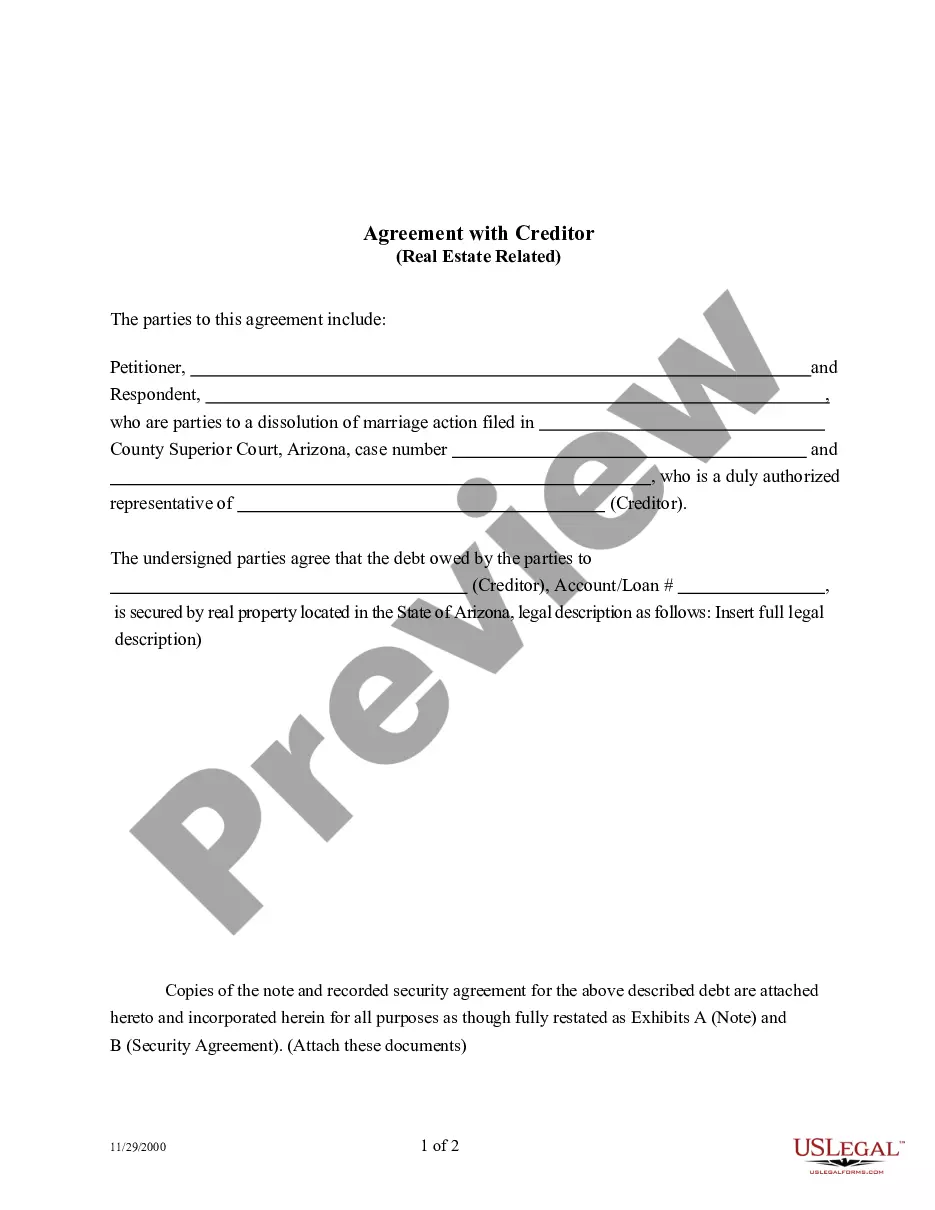
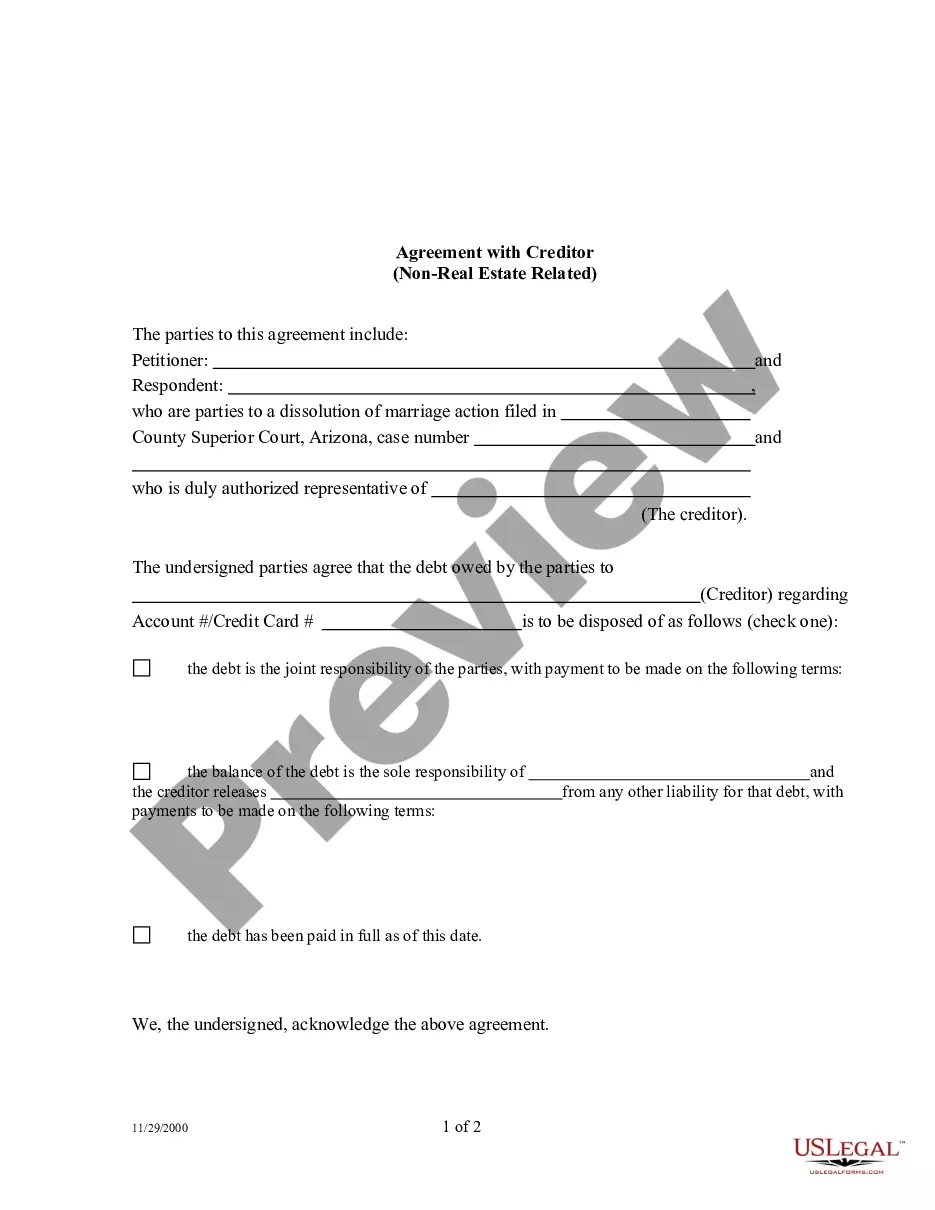
An Agreement with Creditor for Real Estate is a legal document used during the dissolution of a marriage to modify or reaffirm obligations related to real estate debts incurred during the marriage. This form addresses how debts will be handled between the parties and is essential for parties looking to clarify their financial responsibilities following a separation.
What’s included in this form
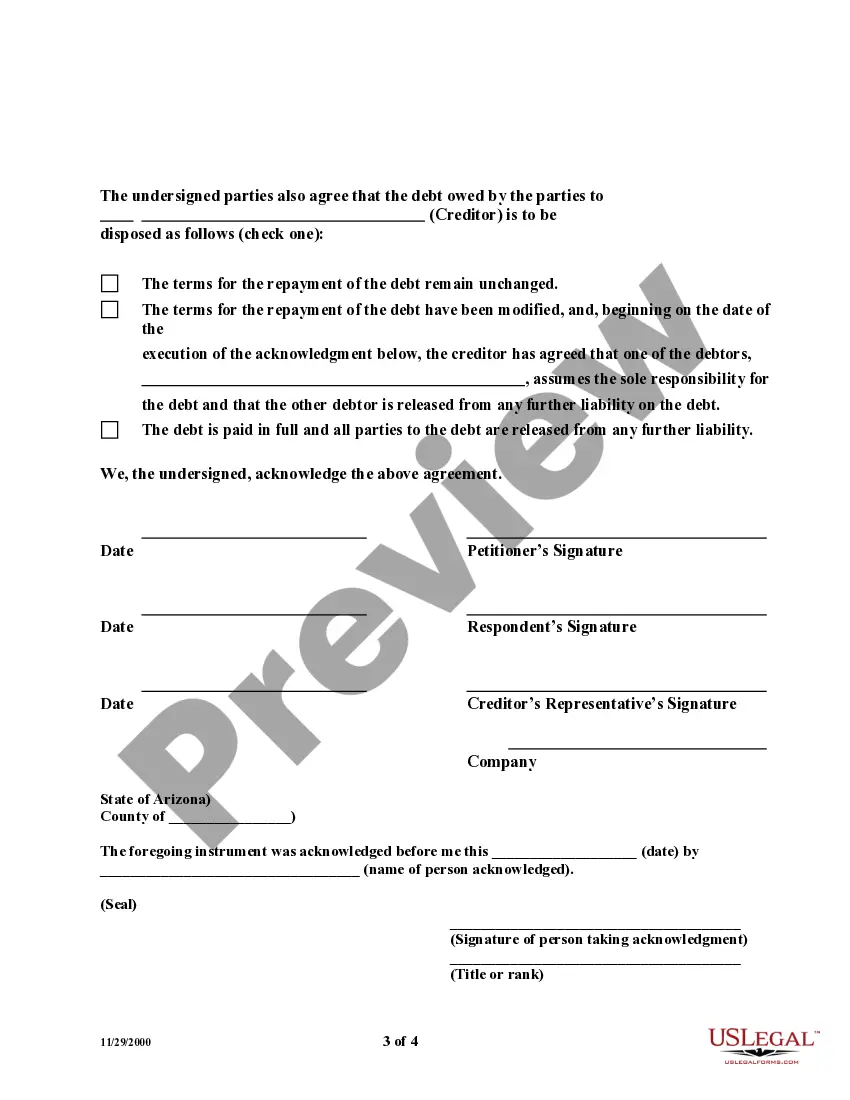
- Selection of debt repayment terms, whether they remain unchanged or are modified.
- Identification of the parties involved in the agreement.
- Details regarding the properties associated with the debts.
- Signatures of the debtors acknowledging the terms of the agreement.

When to use this form
This form is typically used when a couple is undergoing a divorce and needs to address outstanding real estate debts. It is useful in scenarios where one party wishes to retain a property but needs to renegotiate the terms of the mortgage or other debts associated with it.
Who this form is for
- Couples undergoing a divorce who hold real estate debts jointly.
- Individuals looking to reaffirm or modify real estate obligations with creditors.
- Parties wanting to clarify their financial responsibilities regarding shared assets.
How to complete this form
- Identify the parties involved in the agreement.
- Select whether the repayment terms will remain unchanged or will be modified.
- Specify the properties that are associated with the debts.
- Have all parties sign the document to acknowledge their agreement.
Is notarization required?
To make this form legally binding, it must be notarized. Our online notarization service, powered by Notarize, lets you verify and sign documents remotely through an encrypted video session.
Get your form ready online
Our built-in tools help you complete, sign, share, and store your documents in one place.
Make edits, fill in missing information, and update formatting in US Legal Forms—just like you would in MS Word.
Download a copy, print it, send it by email, or mail it via USPS—whatever works best for your next step.
Sign and collect signatures with our SignNow integration. Send to multiple recipients, set reminders, and more. Go Premium to unlock E-Sign.
If this form requires notarization, complete it online through a secure video call—no need to meet a notary in person or wait for an appointment.
We protect your documents and personal data by following strict security and privacy standards.

Make edits, fill in missing information, and update formatting in US Legal Forms—just like you would in MS Word.

Download a copy, print it, send it by email, or mail it via USPS—whatever works best for your next step.

Sign and collect signatures with our SignNow integration. Send to multiple recipients, set reminders, and more. Go Premium to unlock E-Sign.

If this form requires notarization, complete it online through a secure video call—no need to meet a notary in person or wait for an appointment.

We protect your documents and personal data by following strict security and privacy standards.
Mistakes to watch out for
- Failing to accurately identify all parties involved.
- Not specifying all properties that are related to the debts.
- Overlooking the need for signatures from all debtors.
Benefits of using this form online
- Convenient access to legal documents from anywhere at any time.
- Ability to customize the form to fit your specific needs.
- Reliable templates drafted by licensed attorneys to ensure legal compliance.
Looking for another form?
Form popularity
FAQ
The six key features of a legally valid real estate contract in Arizona include mutual consent, a lawful object, consideration, capacity, a definite term, and specific terms about the property. These elements ensure that the agreement is enforceable under state law. When engaging with the Arizona Agreement with Creditor - Real Estate Related, knowing these features helps you enter into sound contracts that protect your rights.
Yes, Arizona permits dual agency, where one agent represents both the buyer and seller in a transaction. While this can streamline communication and reduce costs, it also requires full disclosure and consent from both parties. If you are involved in the Arizona Agreement with Creditor - Real Estate Related, be sure to understand how dual agency works to protect your interests.
In Arizona, for a contract to be valid, it must include offer, acceptance, consideration, capacity, and a lawful object. Each party must have the ability to enter into a contract and must agree to its terms willingly. When dealing with the Arizona Agreement with Creditor - Real Estate Related, ensuring these elements are present can safeguard against disputes and enhance legal enforceability.
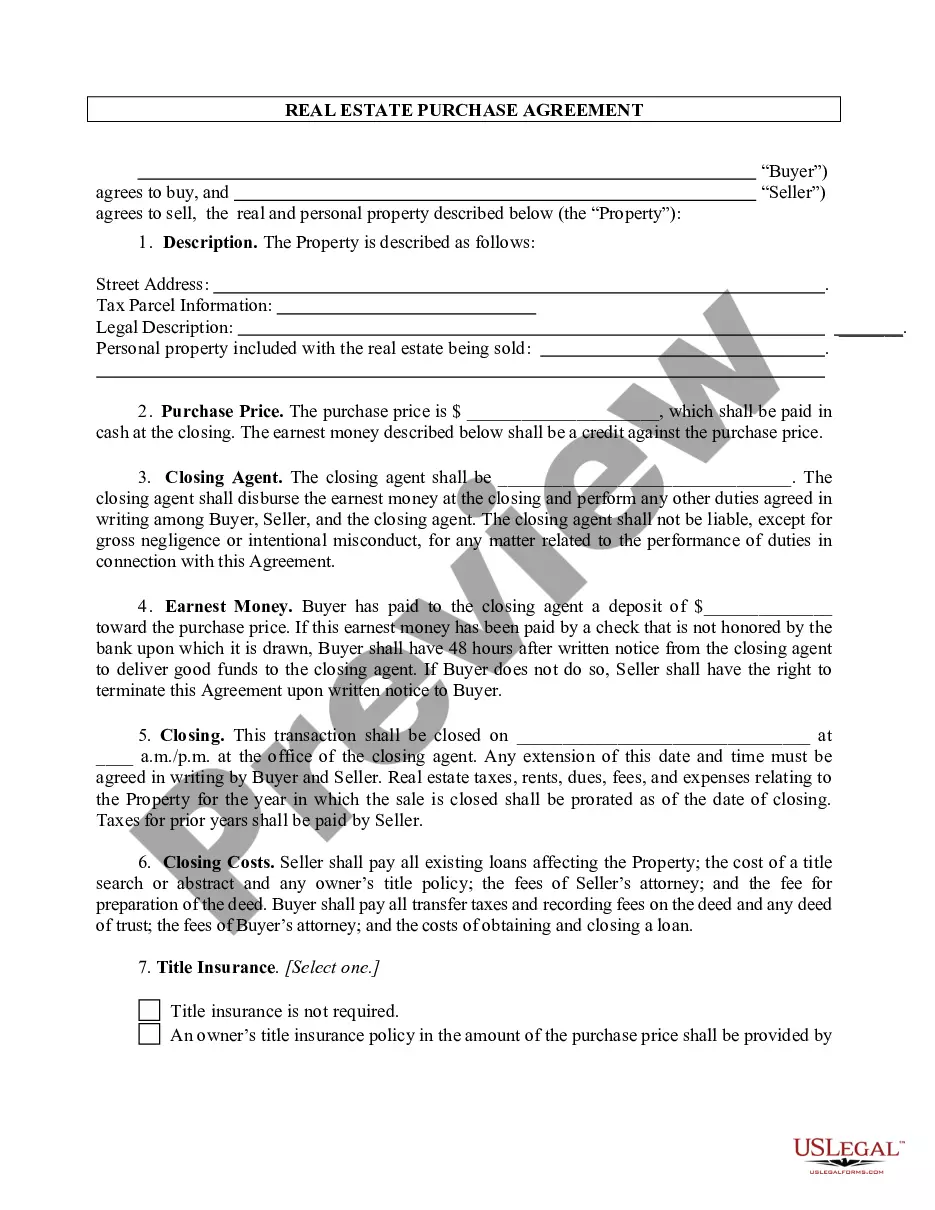
The AAR contract refers to the Arizona Association of Realtors standard contract used for buying and selling real estate. This document simplifies transactions by providing a clear framework that covers crucial details, including financing and contingencies. For those navigating the complexities of the Arizona Agreement with Creditor - Real Estate Related, recognizing the AAR contract can be a significant advantage.
A real estate employment agreement in Arizona is a contract that defines the relationship between a real estate agent and their employer, usually a brokerage. This document outlines expectations, compensation, and the specific duties of the agent. When dealing with properties and the Arizona Agreement with Creditor - Real Estate Related, understanding this agreement can be vital for both parties.
In Arizona, a buyer broker agreement is not legally required but is often recommended. It establishes a formal relationship between the buyer and the broker, ensuring you receive dedicated support throughout the real estate process. Utilizing such an agreement can clarify responsibilities and protect your interests, which is especially important in transactions involving the Arizona Agreement with Creditor - Real Estate Related.
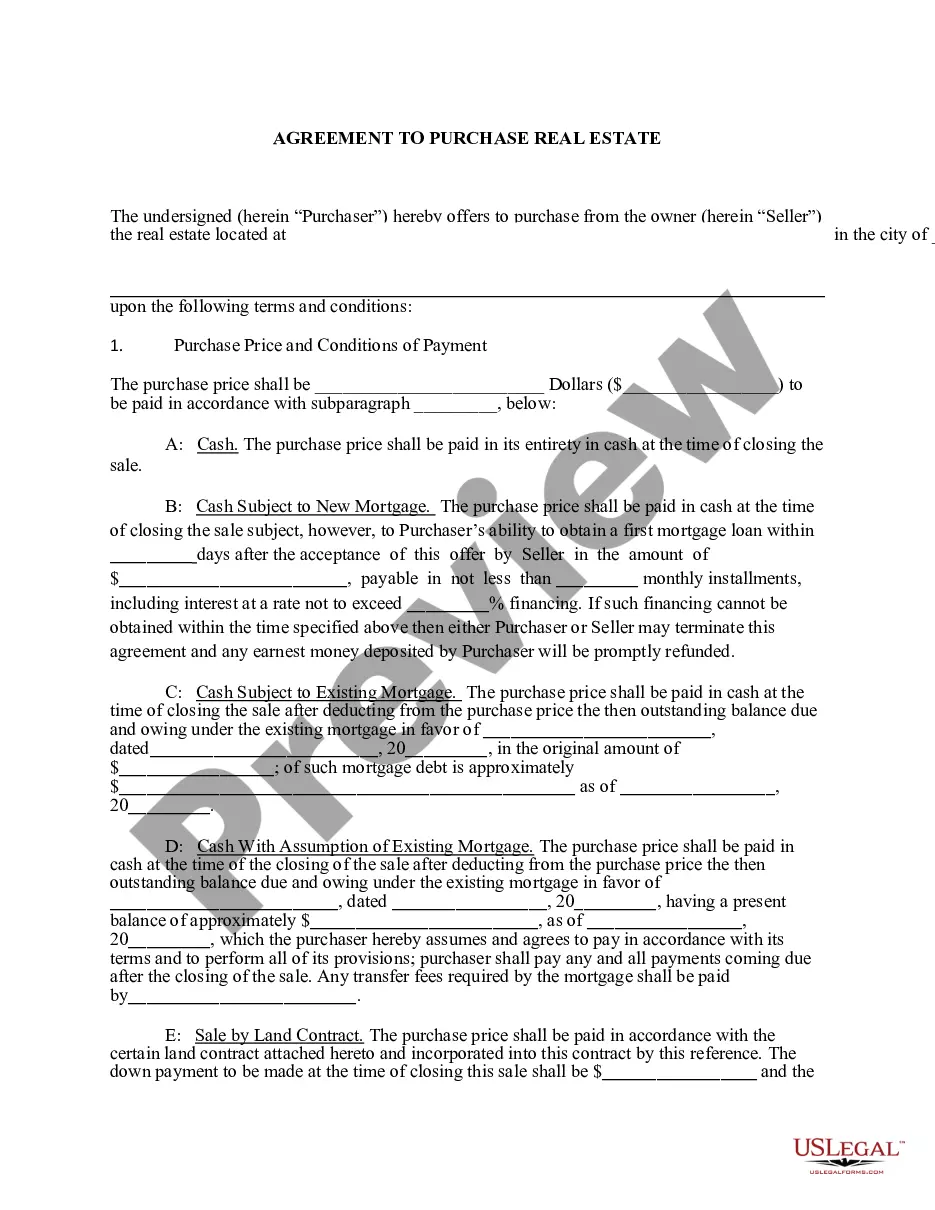
In Arizona, real estate contracts can often be assigned, allowing the original party to transfer their rights and obligations to another party. However, the specific terms of the contract play a crucial role in determining whether assignment is permissible. It's essential to review your Arizona Agreement with Creditor - Real Estate Related closely to see if it includes any clauses regarding assignment. Consider consulting a legal professional or utilizing uslegalforms, which can provide templates and guidance on drafting or navigating assignments in Arizona real estate contracts.
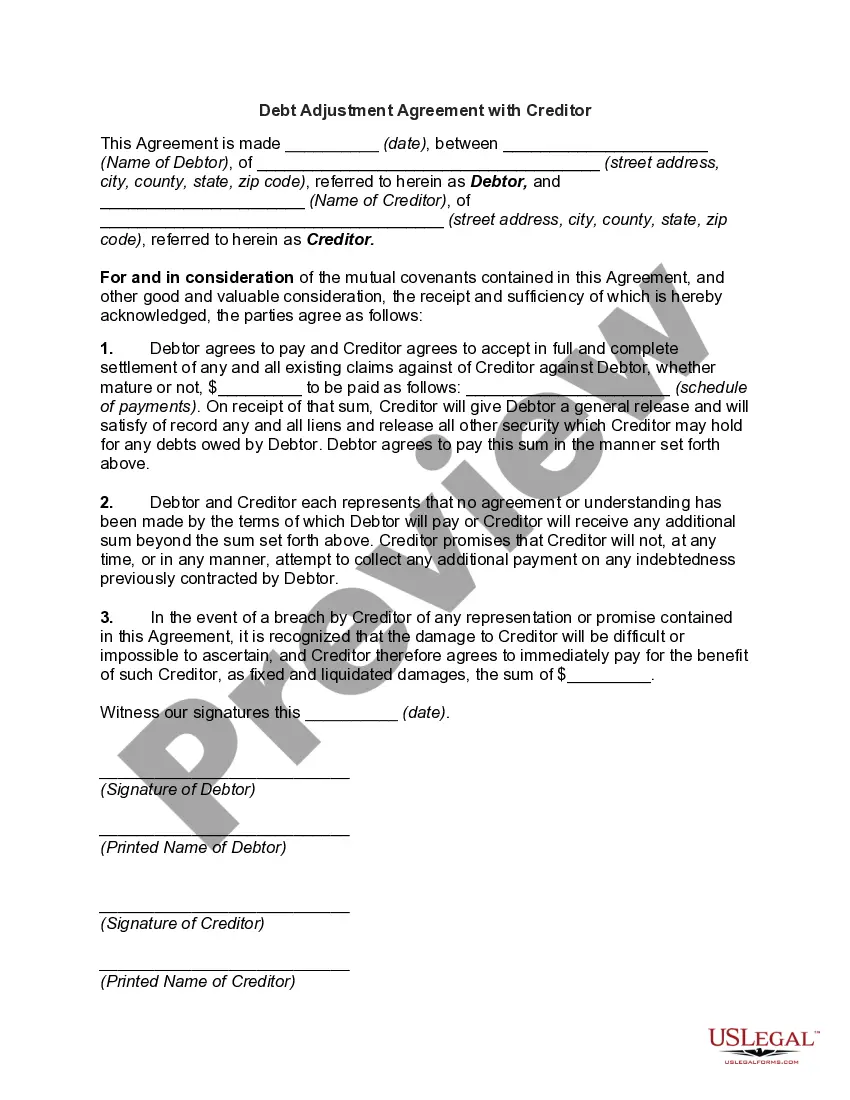
An arrangement with creditors is a legal provision where debtors negotiate terms for repaying outstanding debts. These arrangements aim to create a fair plan that satisfies both parties, often allowing debtors to keep real estate assets. Utilizing an Arizona Agreement with Creditor - Real Estate Related can simplify this process and help protect your property while working towards financial stability.
An agreement with creditors refers to a negotiated settlement that outlines how debts will be repaid. This can involve reduced payment amounts or altered terms that make repayment more manageable for the debtor. In the context of real estate, such agreements are critical to ensure your property remains protected while resolving your debts through an Arizona Agreement with Creditor - Real Estate Related.
In Arizona, creditors generally have a specific time frame to collect debts from an estate, typically set at 6 months. This period starts upon the appointment of a personal representative for the estate. Knowing this timeframe is useful, especially when evaluating your real estate assets in the context of an Arizona Agreement with Creditor - Real Estate Related.