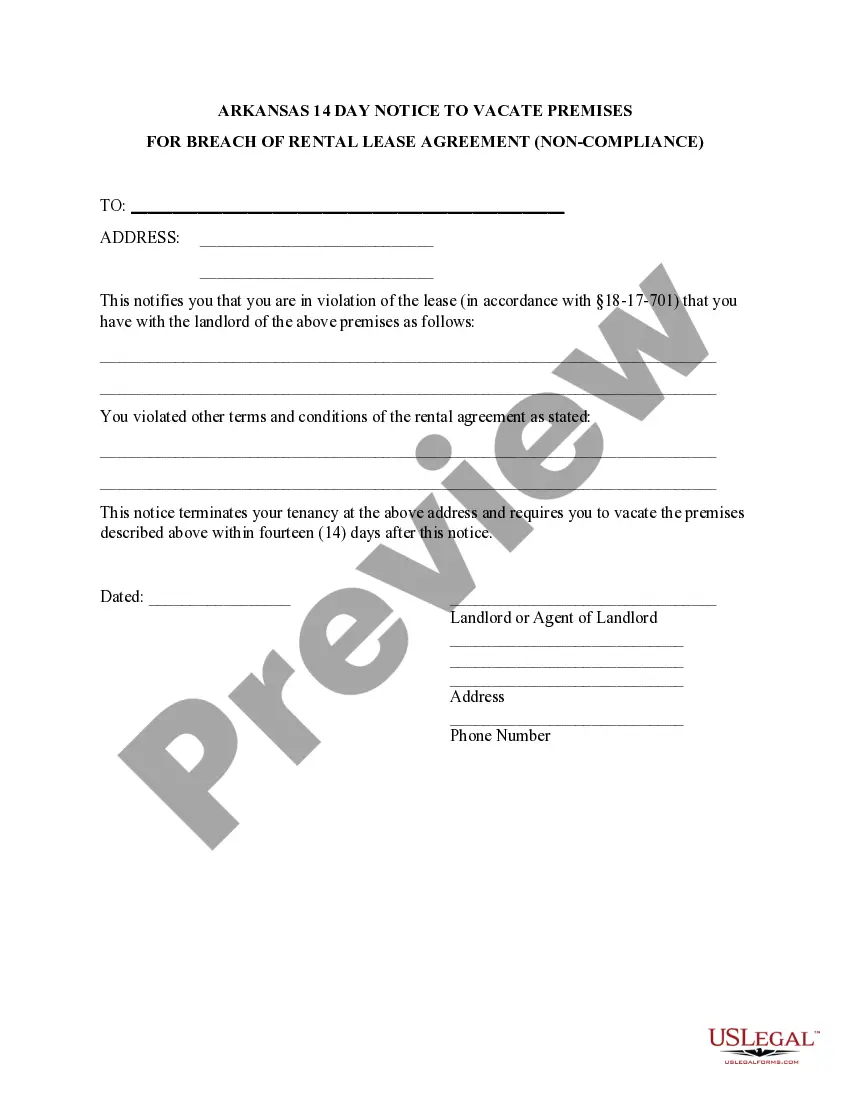
Arkansas 14 Day Notice to Vacate Premises for Non-Compliance
Overview of this form
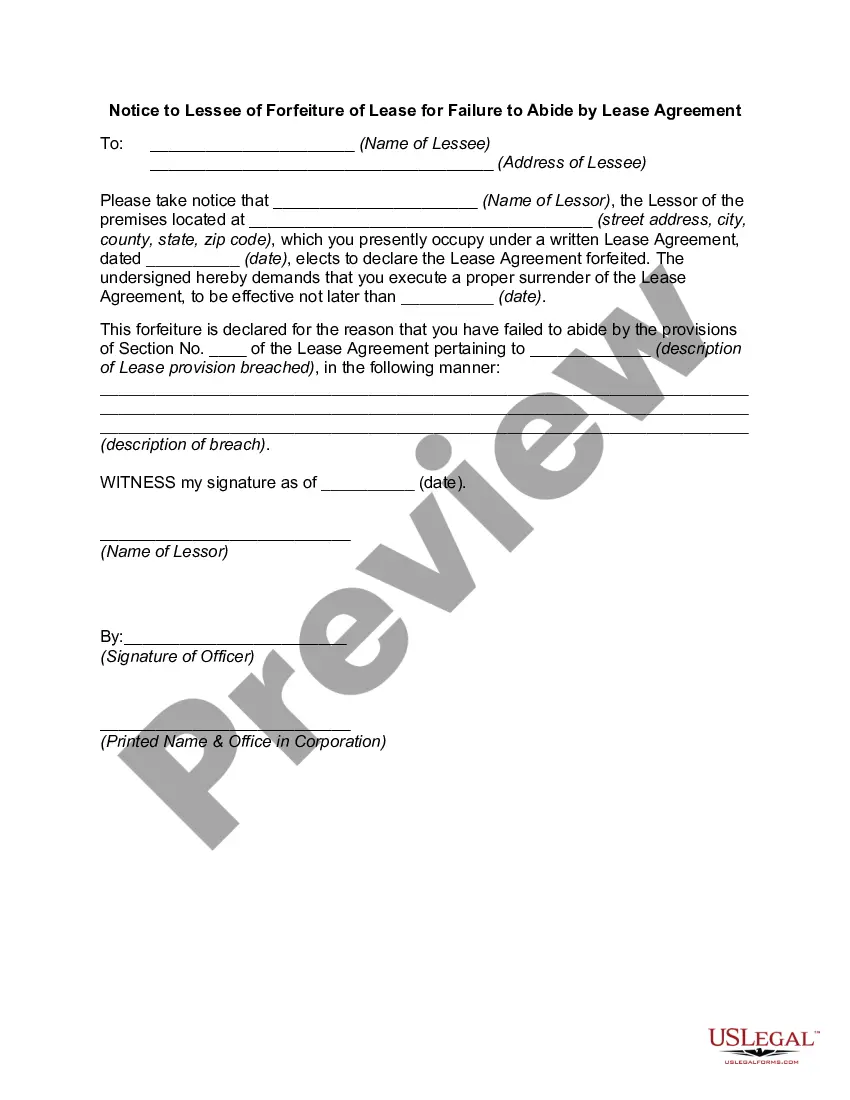
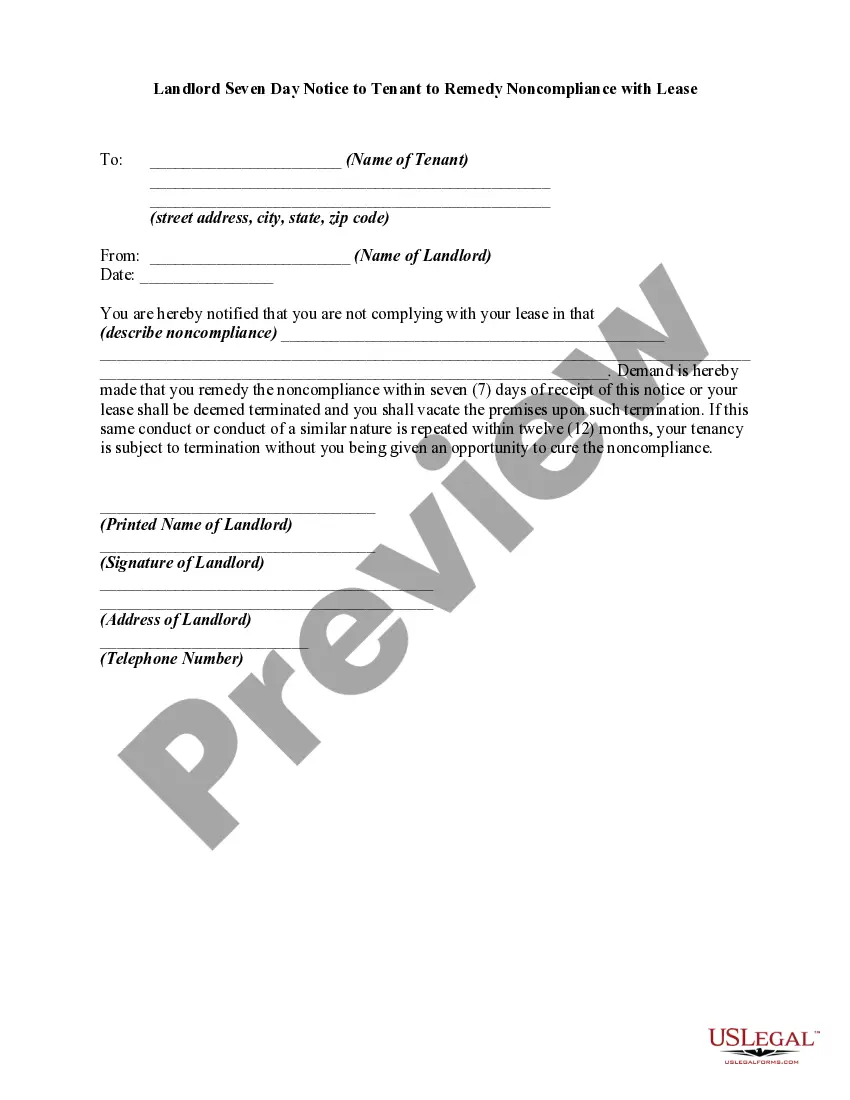
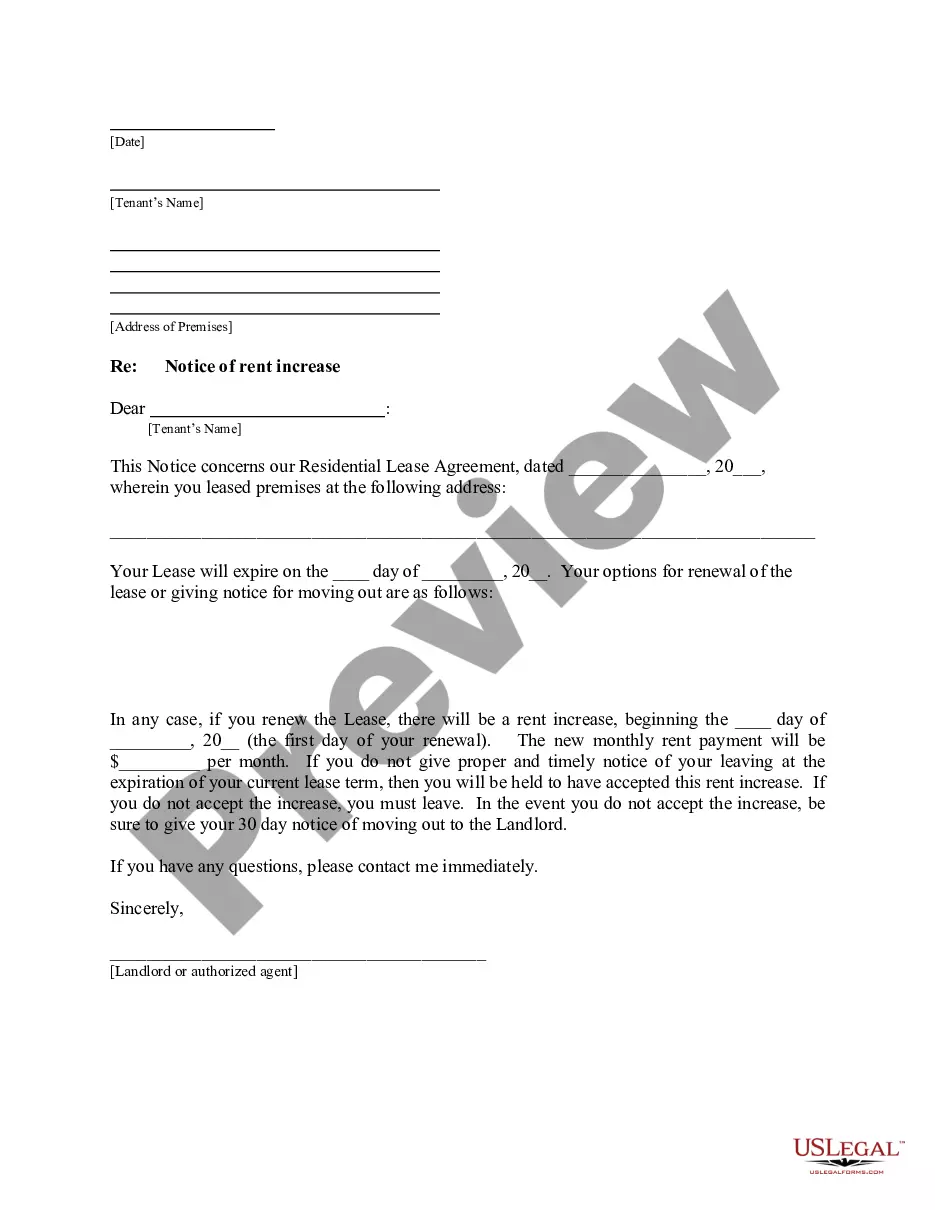
The 14 Day Notice to Vacate Premises for Non-Compliance is a legal document that landlords use to notify tenants of specific lease violations. This form serves an essential purpose in the eviction process, as it provides tenants with a clear indication of their non-compliance issues and a deadline to correct them or vacate the rental property. Unlike other notices, this form specifically addresses lease violations, making it a crucial step before pursuing eviction actions.
Key parts of this document
- Tenant's name and address: Clearly states who is being notified.
- Details of lease violations: Specifies the exact non-compliance issues that need to be addressed.
- Notice of termination: Informs the tenant that their lease is being terminated because of these violations.
- Timeframe: Provides a clear deadline of fourteen (14) days to either comply or vacate the premises.
- Landlord's signature: Requires the landlord or their agent to sign and date the notice, making it a legal record.
Common use cases
This form is typically used when a tenant has violated specific terms of their lease agreement. Examples include failure to pay rent, keeping unauthorized pets, or causing property damage. Landlords must provide this notice prior to filing for eviction, ensuring that the tenant has an opportunity to remedy the violation within the specified fourteen-day period.
Who this form is for
- Landlords seeking to terminate a lease agreement due to tenant non-compliance.
- Property managers who manage rental properties on behalf of landlords.
- Tenants who want to understand their rights and obligations regarding lease violations.
Instructions for completing this form
- Identify the parties: Fill in the tenantâs full name and address at the top of the form.
- Specify the violation: Clearly describe the specific lease violations the tenant has committed.
- State additional violations: Include any other breaches of the rental agreement as needed.
- Set the deadline: Ensure the form states the fourteen-day timeframe for compliance or vacating.
- Sign the notice: The landlord or their agent must sign and date the document to validate it.
Does this form need to be notarized?
This form does not typically require notarization unless specified by local law. It is recommended to keep a copy for your records after delivering the notice.
Get your form ready online
Our built-in tools help you complete, sign, share, and store your documents in one place.
Make edits, fill in missing information, and update formatting in US Legal Forms—just like you would in MS Word.
Download a copy, print it, send it by email, or mail it via USPS—whatever works best for your next step.
Sign and collect signatures with our SignNow integration. Send to multiple recipients, set reminders, and more. Go Premium to unlock E-Sign.
If this form requires notarization, complete it online through a secure video call—no need to meet a notary in person or wait for an appointment.
We protect your documents and personal data by following strict security and privacy standards.

Make edits, fill in missing information, and update formatting in US Legal Forms—just like you would in MS Word.

Download a copy, print it, send it by email, or mail it via USPS—whatever works best for your next step.

Sign and collect signatures with our SignNow integration. Send to multiple recipients, set reminders, and more. Go Premium to unlock E-Sign.

If this form requires notarization, complete it online through a secure video call—no need to meet a notary in person or wait for an appointment.

We protect your documents and personal data by following strict security and privacy standards.
Typical mistakes to avoid
- Failing to provide clear details about the lease violation.
- Not including the correct tenant name or address.
- Omitting the signature or date from the notice.
- Assuming that verbal communication is enough without issuing the formal notice.
Advantages of online completion
- Convenience: Access and download the form instantly without the need for physical paperwork.
- Editability: Customize the template to reflect your specific situation quickly.
- Reliability: Forms are created by licensed attorneys, ensuring legal accuracy.
Looking for another form?



Form popularity
FAQ
An intent to vacate letter in Arkansas is a formal notification from a tenant indicating their intention to leave the rental property. This document is particularly important in the context of an Arkansas 14 Day Notice to Vacate Premises for Non-Compliance, as it sets a clear timeline for both parties. Tenants often use this letter to communicate with their landlord and ensure they meet any lease obligations. Utilizing services like US Legal Forms can streamline this process and provide templates that meet state regulations.
In Arkansas, an eviction notice, including the 14 Day Notice to Vacate Premises for Non-Compliance, does not need to be notarized. The law simply requires that the notice is delivered to the tenant. However, providing proof of delivery can be beneficial should any disputes arise later. Using a formal platform like US Legal Forms can help ensure that you follow all necessary legal requirements correctly.
The 14 Day Notice to Vacate Premises is a legal document used in Arkansas to inform a tenant of non-compliance with lease terms. It gives the tenant 14 days to remedy the situation or vacate the premises altogether. Understanding this process is crucial for both landlords and tenants to ensure compliance with state laws and maintain a smooth rental relationship.
Handling a dishonest tenant requires careful consideration and documentation of any suspicious behaviors or actions. Gather evidence to support your claims and communicate your concerns directly with them. If needed, you can escalate the situation by issuing the Arkansas 14 Day Notice to Vacate Premises for Non-Compliance to legally address any breaches of agreement.
Dealing with noncompliance requires a structured approach. First, communicate with the tenant about the specific issues, then offer a formal notice, like the Arkansas 14 Day Notice to Vacate Premises for Non-Compliance if necessary. This strategy not only protects your rights as a landlord but also gives the tenant a fair chance to correct their behavior.
When dealing with tenant noncompliance, start by clearly identifying the issue and documenting incidents. Provide the tenant with the Arkansas 14 Day Notice to Vacate Premises for Non-Compliance to formally address the violation and create a path toward resolution. Encouraging open dialogue can sometimes lead to a satisfactory outcome without further escalation.
Effective tenant management involves clear communication and prompt responses to concerns or issues. Set expectations early, provide regular updates, and address any violations promptly, such as issuing the Arkansas 14 Day Notice to Vacate Premises for Non-Compliance when appropriate. Building a positive relationship promotes cooperation and reduces conflict.
Saying no to a potential tenant can feel challenging, but it’s crucial to maintain professionalism and clarity. You could explain that their application did not meet the requirements or that you have chosen another applicant. Providing a brief, respectful reason helps maintain goodwill and can prevent misunderstandings later.
Yes, you can write your own notice to vacate in Arkansas, but it’s important to ensure it contains all necessary information and follows the state laws. Utilizing the Arkansas 14 Day Notice to Vacate Premises for Non-Compliance form can help guarantee you include essential details, such as the reason for the notice and the deadline for departure. This reduces the risk of miscommunication and potential legal issues.
In Arkansas, a landlord cannot immediately evict a tenant without following the proper legal procedures. Instead, they must serve a notice to vacate, such as the Arkansas 14 Day Notice to Vacate Premises for Non-Compliance, which allows tenants time to address any issues. Only after the notice period has passed can the landlord begin eviction proceedings in court.