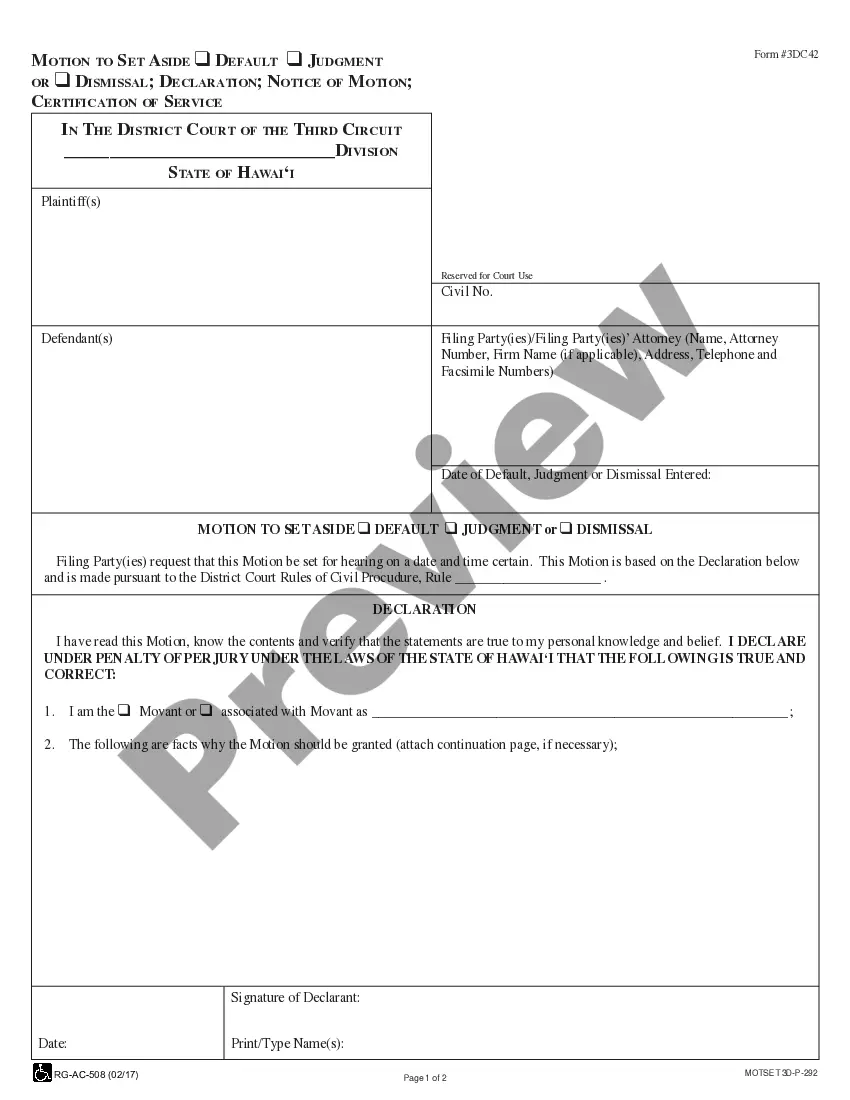
Arkansas Siding Contract for Contractor
What this document covers
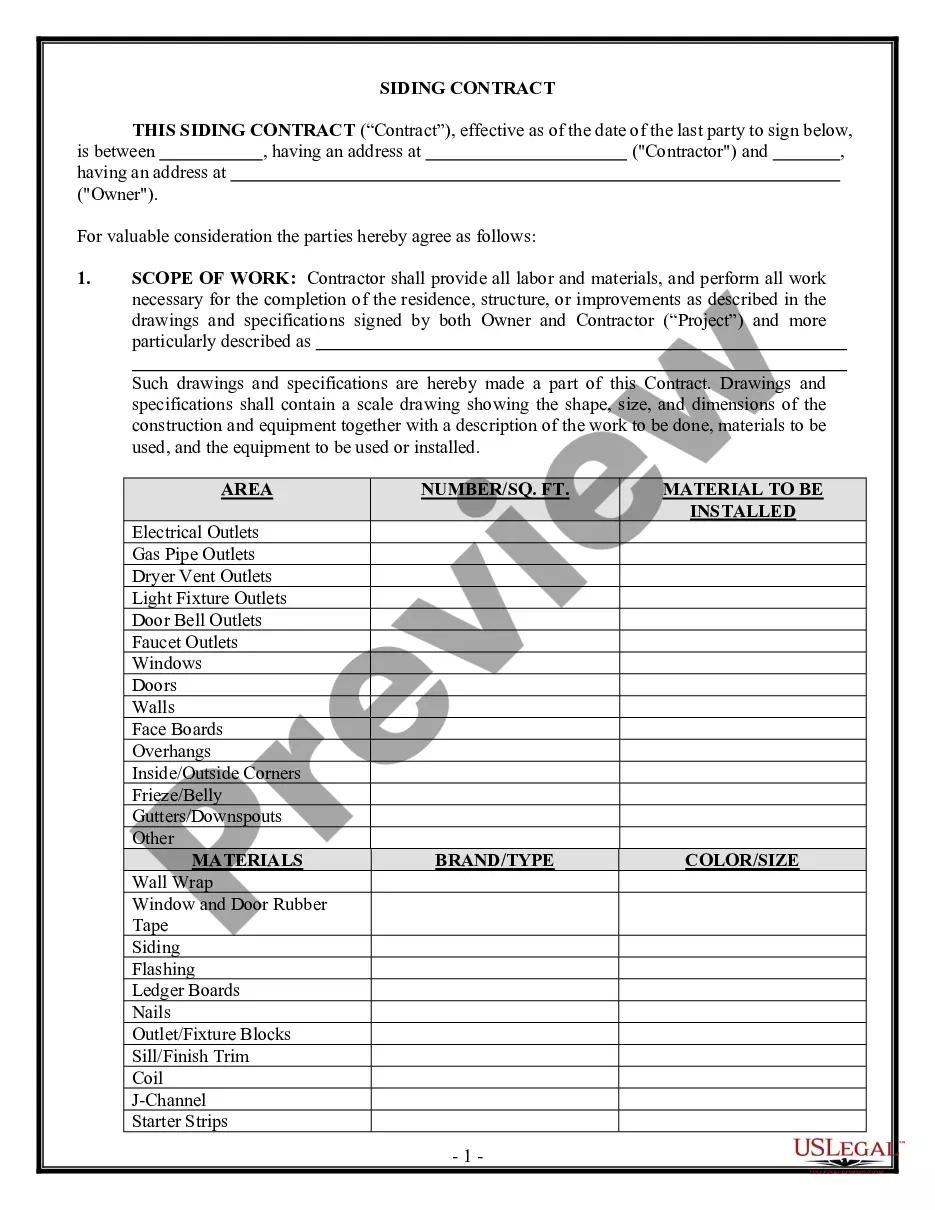
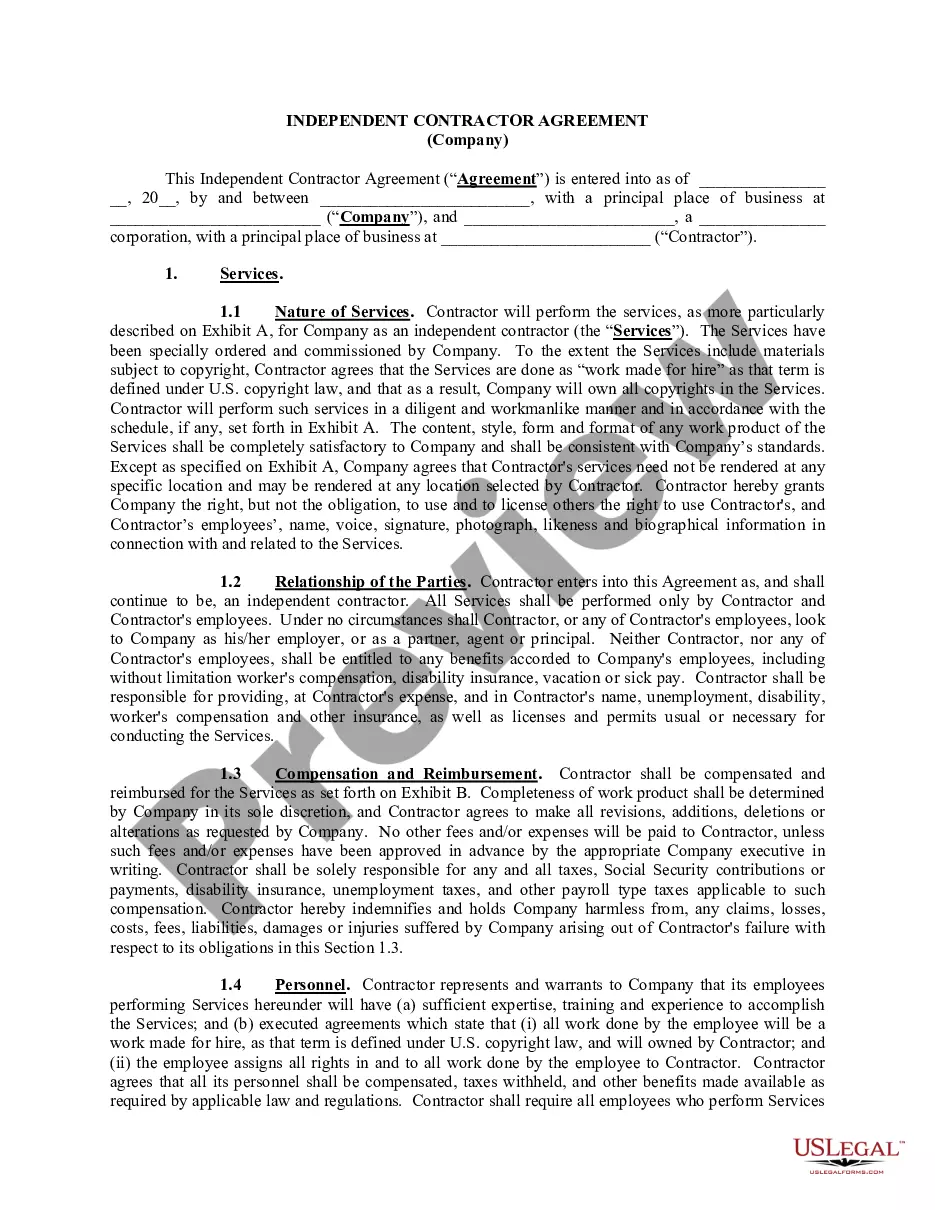
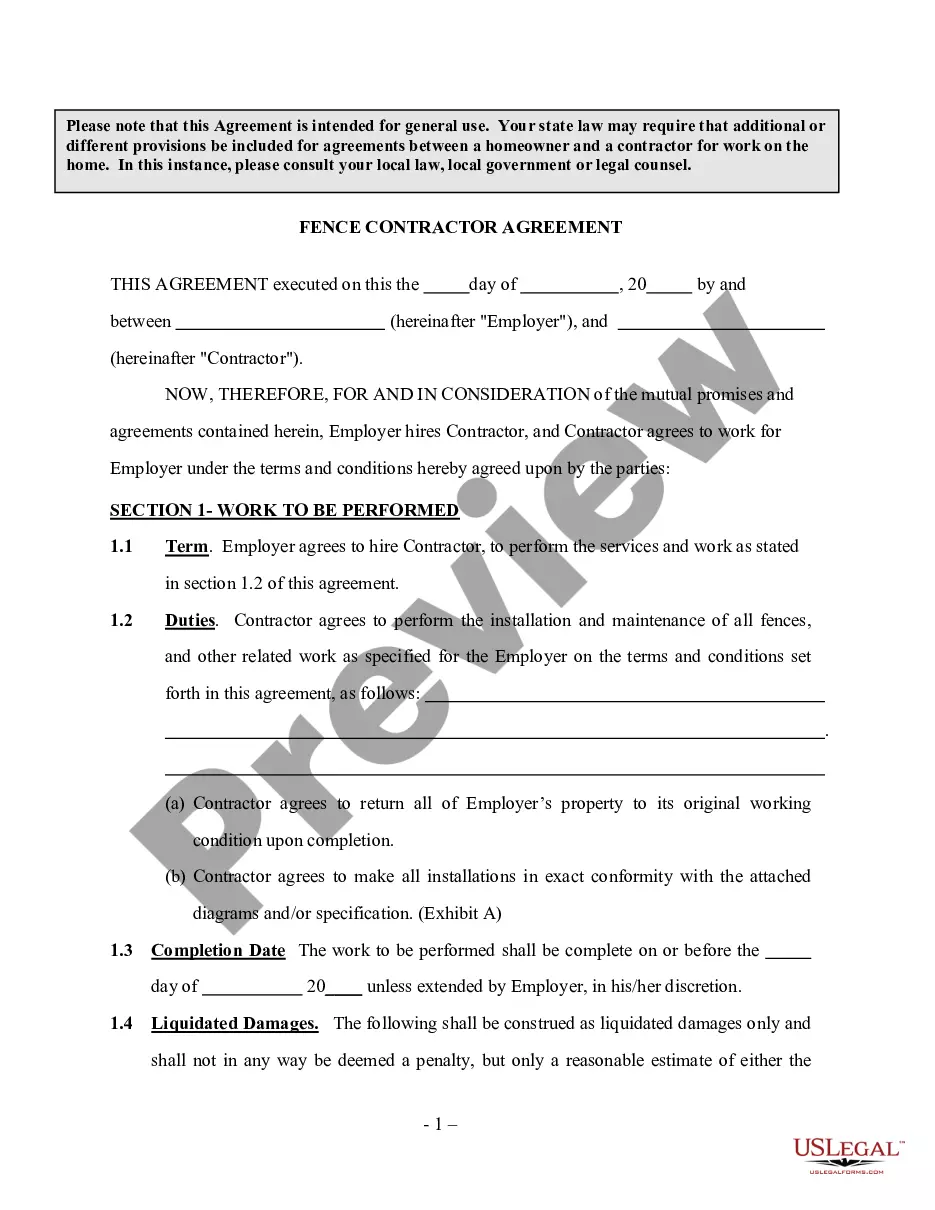
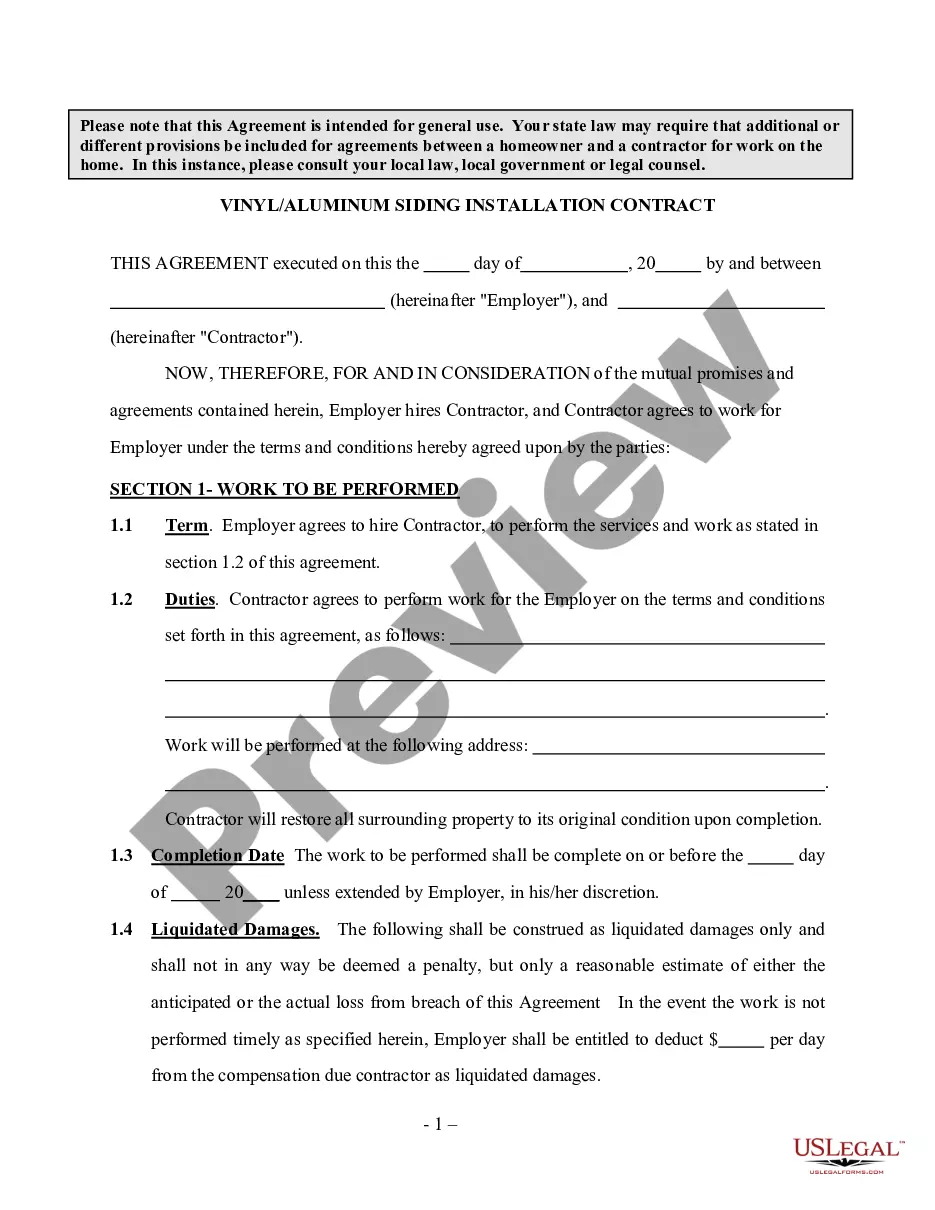
The Siding Contract for Contractor is a legal document that formalizes the agreement between siding contractors and property owners. This contract establishes the terms of the project, including payment structures, work specifications, and responsibilities regarding permits and insurance. Unlike informal agreements, this contract is specially crafted to comply with the laws of the State of Arkansas, ensuring legal clarity and protection for both parties involved in the siding project.
Main sections of this form
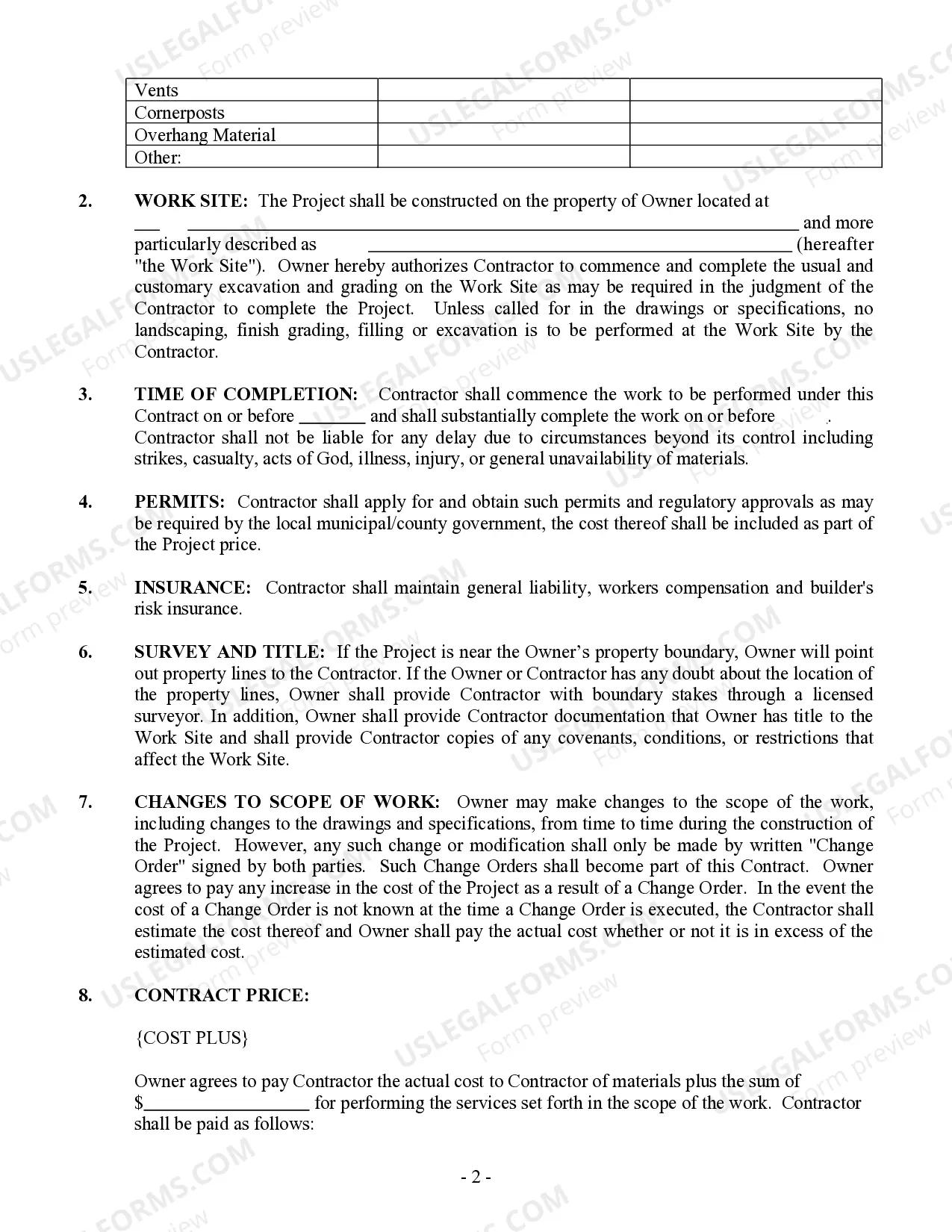
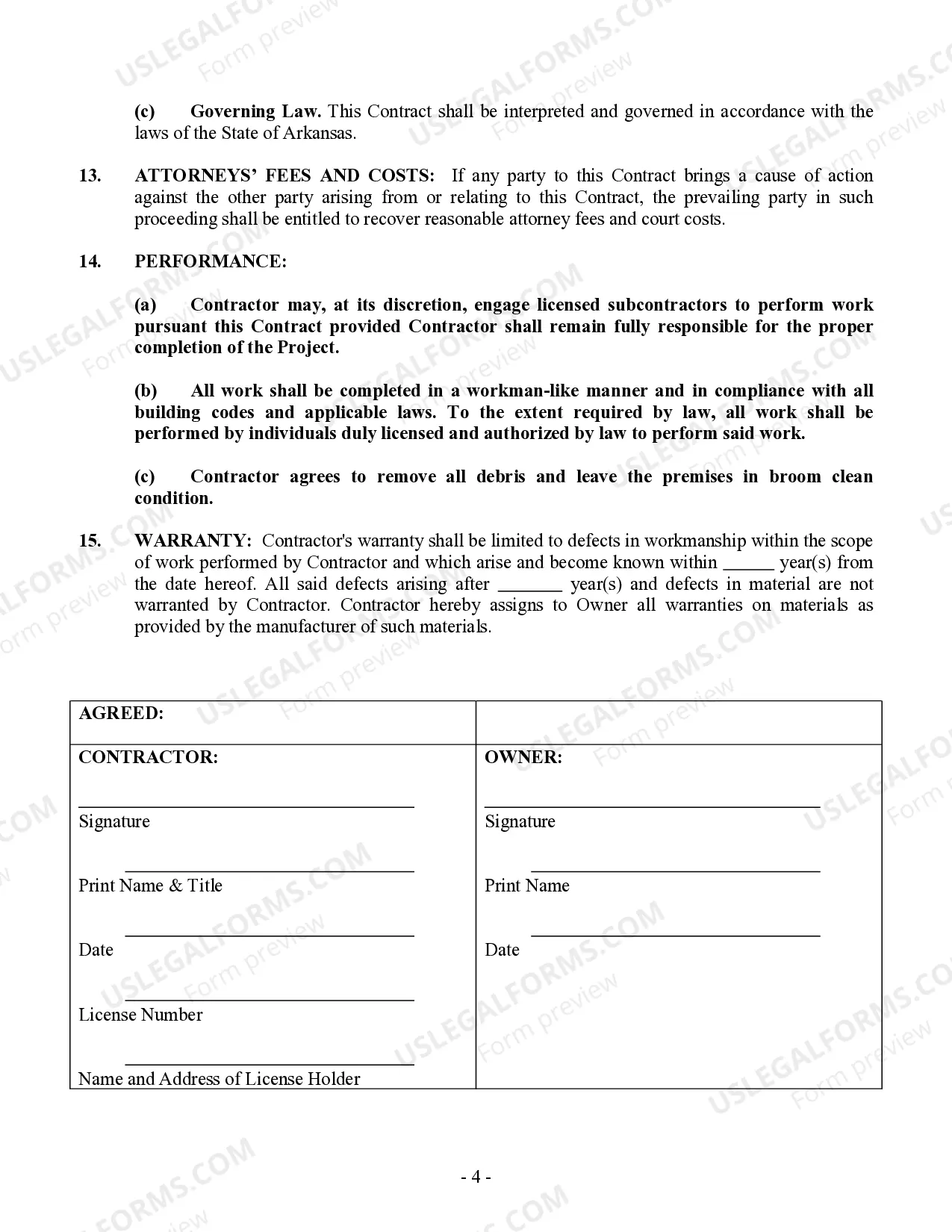
- Permits: Obligates the contractor to secure necessary permits and approvals.
- Insurance: Requires the contractor to maintain various types of insurance coverage.
- Survey and Title: Addresses property boundary verification and documentation of property ownership.
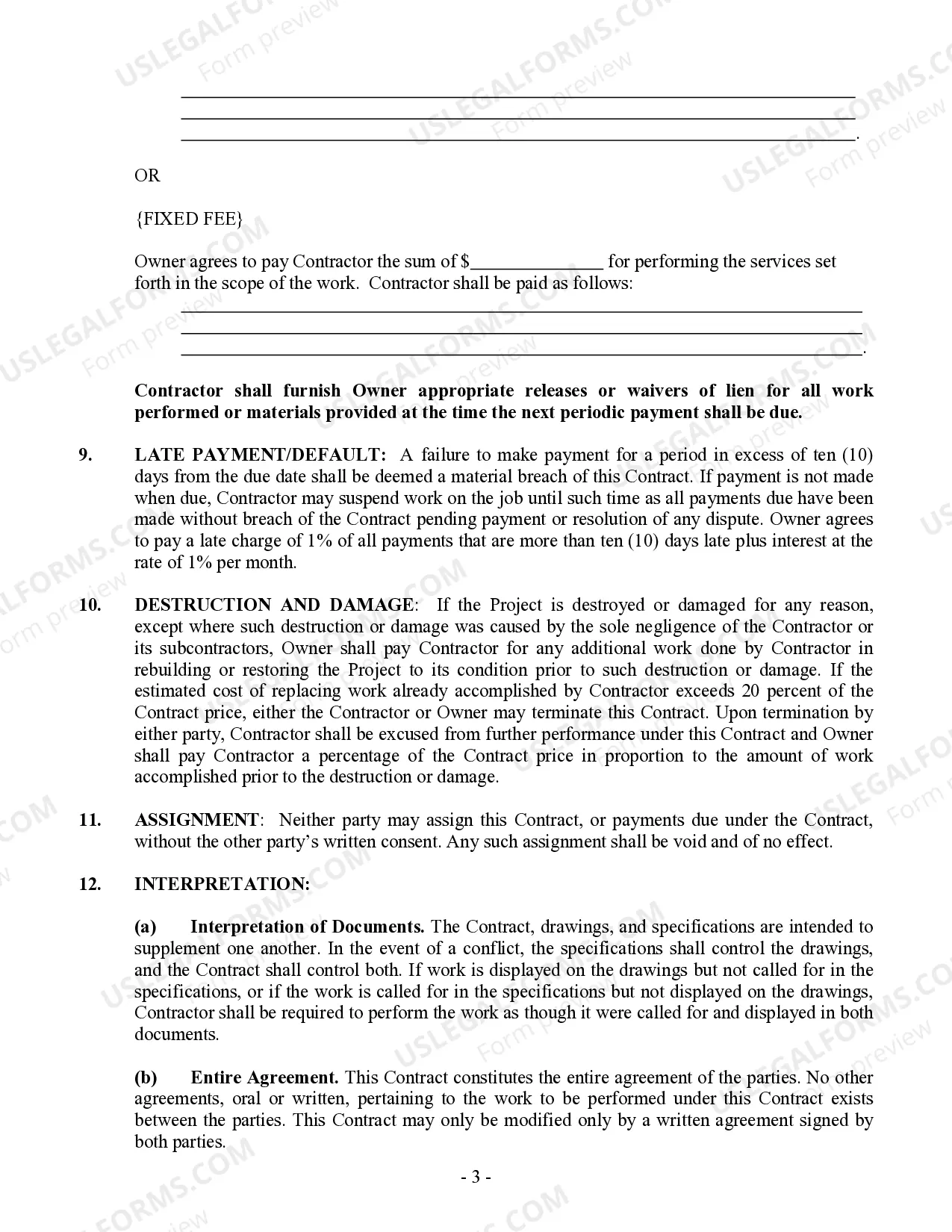
- Changes to Scope of Work: Establishes the procedure for making adjustments to the project.
- Destruction and Damage: Outlines responsibilities in the event of project damage.
- Assignment: Prohibits assignment of the contract without consent.
- Governing Law: Specifies that the contract is governed by Arkansas law.


When to use this document
This form should be used when a property owner hires a siding contractor to perform siding installation or repairs. It is suitable for cost-plus or fixed-fee payment arrangements and helps clarify roles, responsibilities, and expectations throughout the project, ensuring that both parties are on the same page before work begins.
Who should use this form
- Property owners looking to enter into a contract with a siding contractor.
- Siding contractors who need a formal agreement template to outline project terms.
- Individuals or businesses in the State of Arkansas engaging in siding projects.
Instructions for completing this form
- Identify the parties involved: Clearly state the names and addresses of the property owner and the contractor.
- Specify the project details: Outline the scope of work, including materials and specifications for the siding project.
- Enter payment terms: Define whether the arrangement is a fixed fee or cost-plus, along with any relevant payment timelines.
- Include permit and insurance information: Confirm that the contractor will secure all necessary permits and maintain proper insurance throughout the project.
- Sign and date the contract: Ensure both parties sign and date the document to make it legally binding.
Does this form need to be notarized?
This form does not typically require notarization unless specified by local law. However, it is advisable to check local regulations to ensure compliance with any specific requirements for the validity of the contract.
Get your form ready online
Our built-in tools help you complete, sign, share, and store your documents in one place.
Make edits, fill in missing information, and update formatting in US Legal Forms—just like you would in MS Word.
Download a copy, print it, send it by email, or mail it via USPS—whatever works best for your next step.
Sign and collect signatures with our SignNow integration. Send to multiple recipients, set reminders, and more. Go Premium to unlock E-Sign.
If this form requires notarization, complete it online through a secure video call—no need to meet a notary in person or wait for an appointment.
We protect your documents and personal data by following strict security and privacy standards.

Make edits, fill in missing information, and update formatting in US Legal Forms—just like you would in MS Word.

Download a copy, print it, send it by email, or mail it via USPS—whatever works best for your next step.

Sign and collect signatures with our SignNow integration. Send to multiple recipients, set reminders, and more. Go Premium to unlock E-Sign.

If this form requires notarization, complete it online through a secure video call—no need to meet a notary in person or wait for an appointment.

We protect your documents and personal data by following strict security and privacy standards.
Typical mistakes to avoid
- Failing to clearly define the scope of work, leading to misunderstandings.
- Not obtaining necessary permits before commencing work.
- Neglecting to verify property boundaries, which can lead to disputes.
- Overlooking the insurance requirements, risking liability issues.
- Forgetting to document any changes through written Change Orders.
Benefits of using this form online
- Convenient access to legal templates that can be downloaded and customized.
- Editable fields allow you to tailor the contract to your specific project needs.
- Streamlined process for ensuring all legal requirements are met.
- Instant delivery of the document saves time compared to traditional methods.
- Reliability of forms prepared by licensed attorneys with knowledge of local laws.
Looking for another form?
Form popularity
FAQ
To get licensed and bonded in Arkansas, you need to complete specific steps that include passing an examination and submitting a detailed application. Additionally, obtaining bonds is essential to provide financial security to your clients. If you are looking to engage in an Arkansas Siding Contract for Contractor, starting this process will help establish your credibility and expand your business opportunities.
Without a contractor's license in Arkansas, homeowners can handle small repairs, DIY projects, or minimal home improvements. However, tasks that involve structural changes, electrical work, or large remodels typically require a licensed contractor. For major undertakings like an Arkansas Siding Contract for Contractor, opting for a licensed professional is the best route to ensure compliance and safety.
Yes, Arkansas generally requires contractors to be licensed for most work over a specified dollar amount. This requirement helps to protect homeowners and ensures that contractors meet professional standards. When undertaking an Arkansas Siding Contract for Contractor, it is critical to verify the contractor's credentials and ensure they are properly licensed to operate in the state.
Yes, you can sue an unlicensed contractor in Arkansas. However, winning the case may depend on the details surrounding your agreement and the work performed. If you enter into an Arkansas Siding Contract for Contractor without proper licensing, it can complicate your claim. Using a licensed contractor can offer better protection and ensure you have legal standing in disputes.
In Arkansas, homeowners can perform several tasks without a contractor license, but there are limits. You can complete minor repairs and maintenance without a license, but anything beyond certain monetary thresholds typically requires you to obtain a license. For larger projects, especially those involving an Arkansas Siding Contract for Contractor, hiring a licensed professional is advisable to ensure quality and adherence to regulations.
Yes, Arkansas requires contractors, including those working on siding projects, to hold a valid license. The licensing process ensures that contractors adhere to safety standards and building codes. When pursuing an Arkansas Siding Contract for Contractor, ensure your chosen professional has the appropriate licensing for a successful project.
Yes, Illinois does require a general contractor to have a license to operate legally in the state. While regulations vary, states typically enforce license requirements to ensure quality and safety in construction projects. If you’re exploring an Arkansas Siding Contract for Contractor but also have interests in Illinois, checking the local regulations is advisable.
To verify a contractor's license in Arkansas, visit the Arkansas Contractors Licensing Board website. They provide an online tool where you can enter the contractor's name or license number. Having an Arkansas Siding Contract for Contractor often necessitates working with licensed professionals, so this verification process is essential.
No, a home improvement contractor specializes in specific renovations, such as siding, while a general contractor manages various construction projects from start to finish. If you specifically seek expertise in siding work, an Arkansas Siding Contract for Contractor would typically require a home improvement contractor skilled in that area. Understanding these distinctions helps ensure you hire the right professional.
A general contractor's license allows a contractor to undertake large projects, including new constructions. In contrast, a home improvement license permits contractors to handle smaller renovation tasks and repairs. If you are considering an Arkansas Siding Contract for Contractor, it’s important to know the required licenses for the scope of work needed.