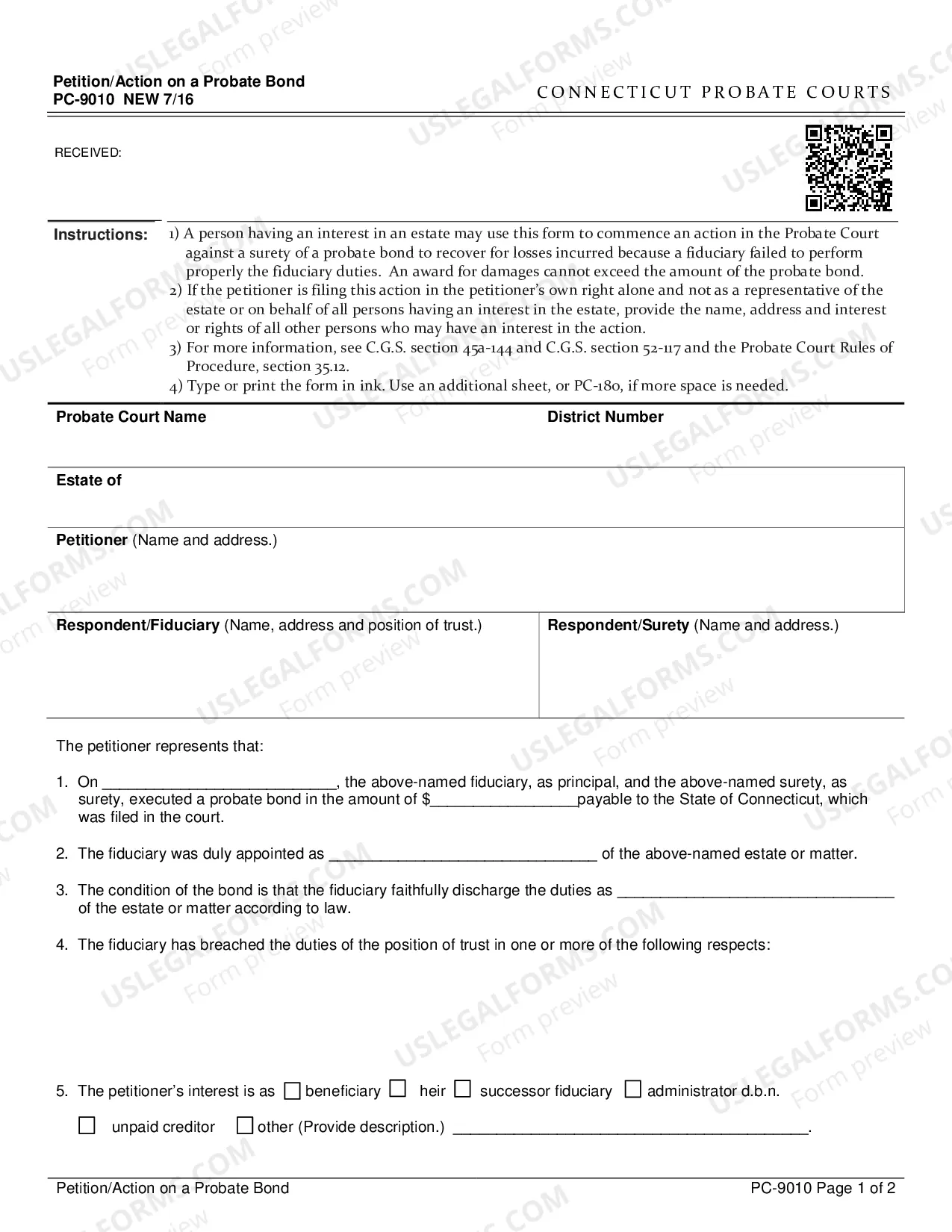
Alabama Workers Compensation Application to Employ Attorney
What this document covers
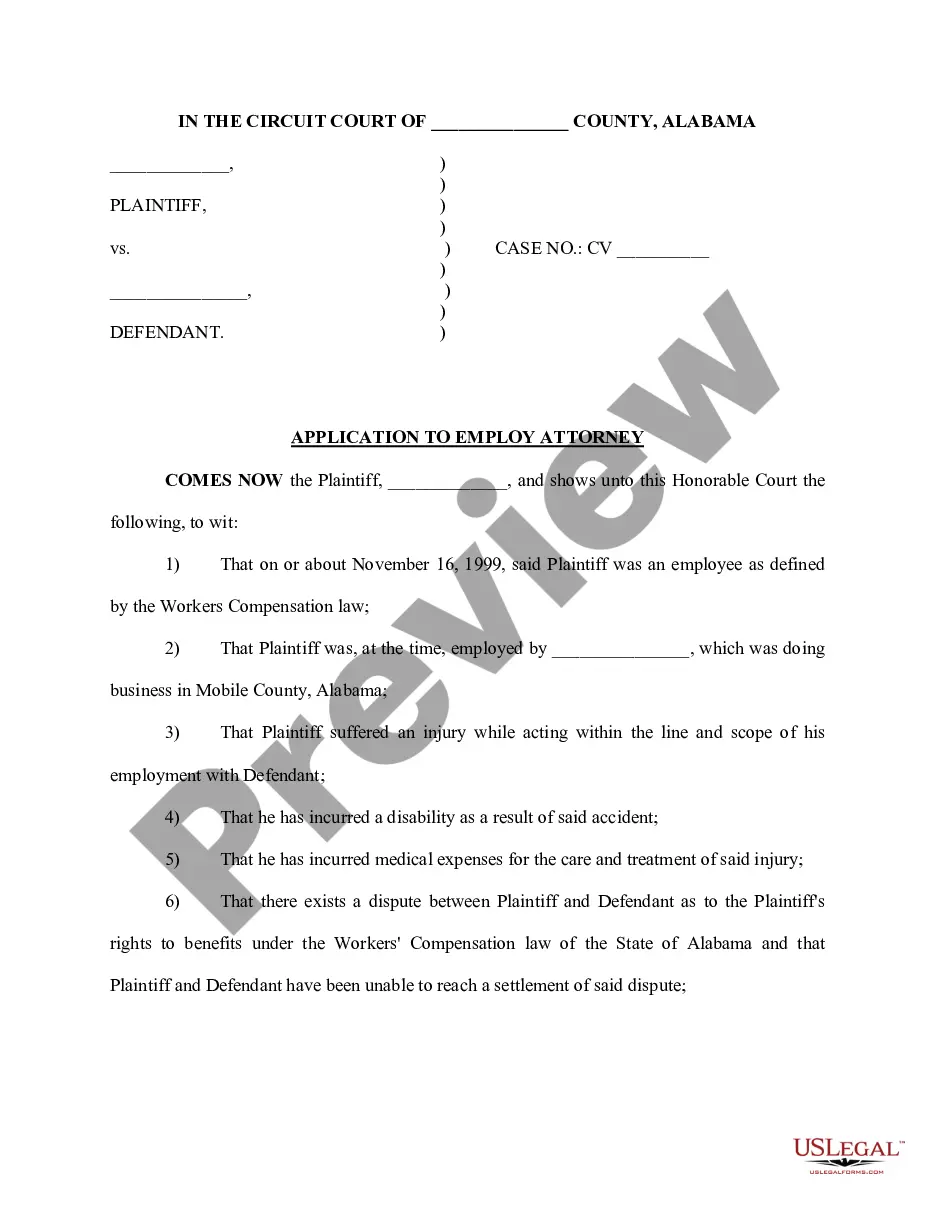
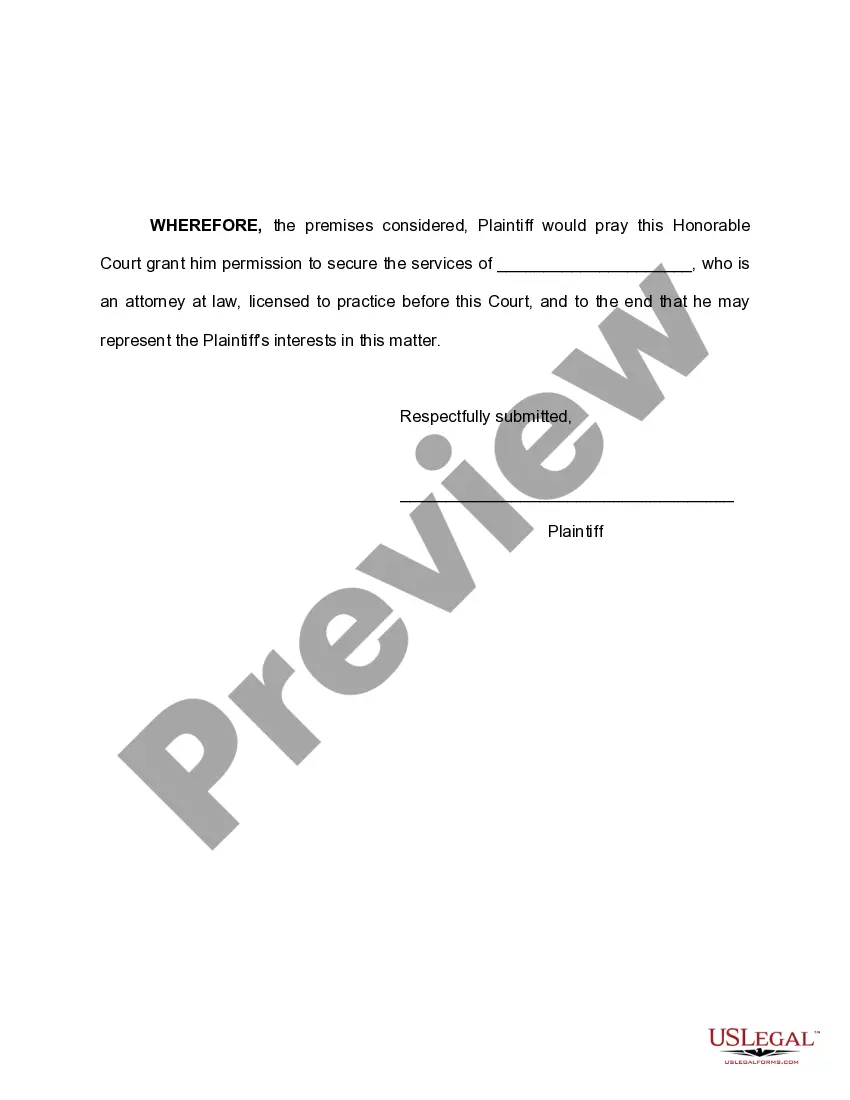
The Workers Compensation Application to Employ Attorney is a legal document that allows a plaintiff to request court approval for hiring an attorney to represent them in a workers' compensation claim. This form is essential for ensuring that the legal representation meets the jurisdiction's requirements and that the plaintiffâs rights are effectively managed during the compensation process.
Form components explained
- Identification of the plaintiff and defendant, including case number.
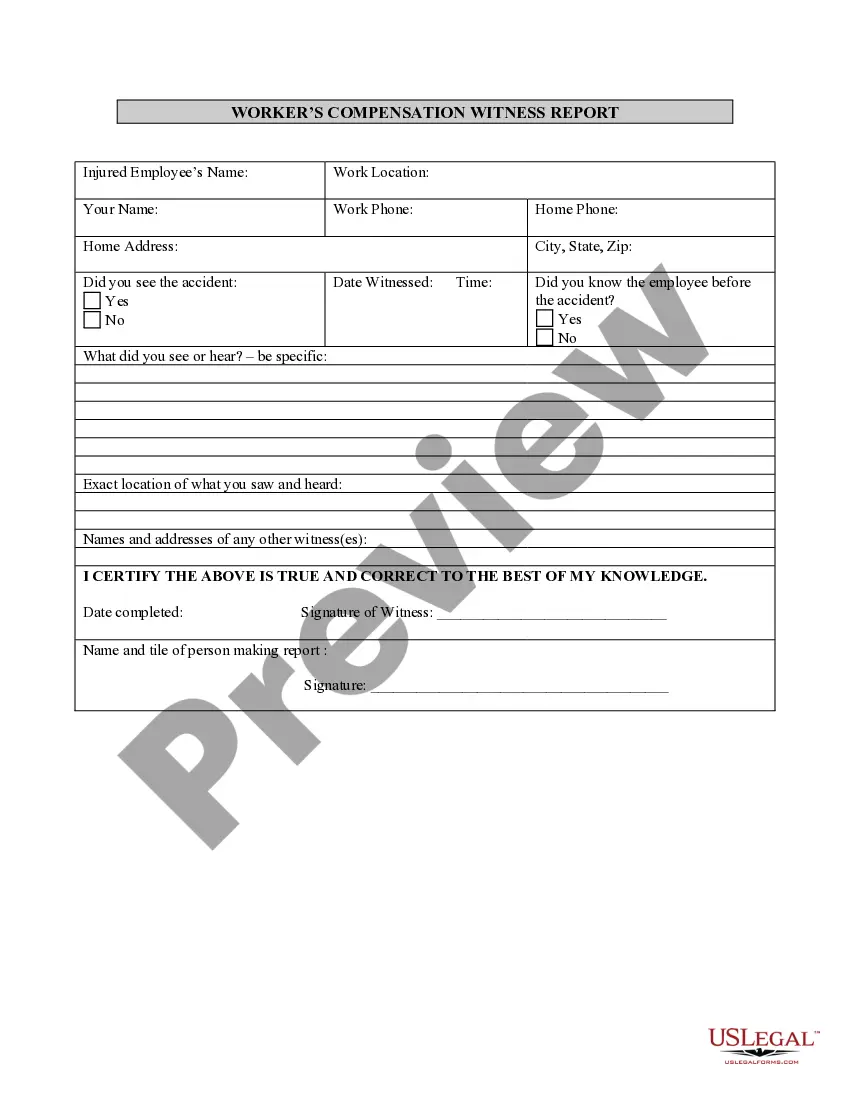
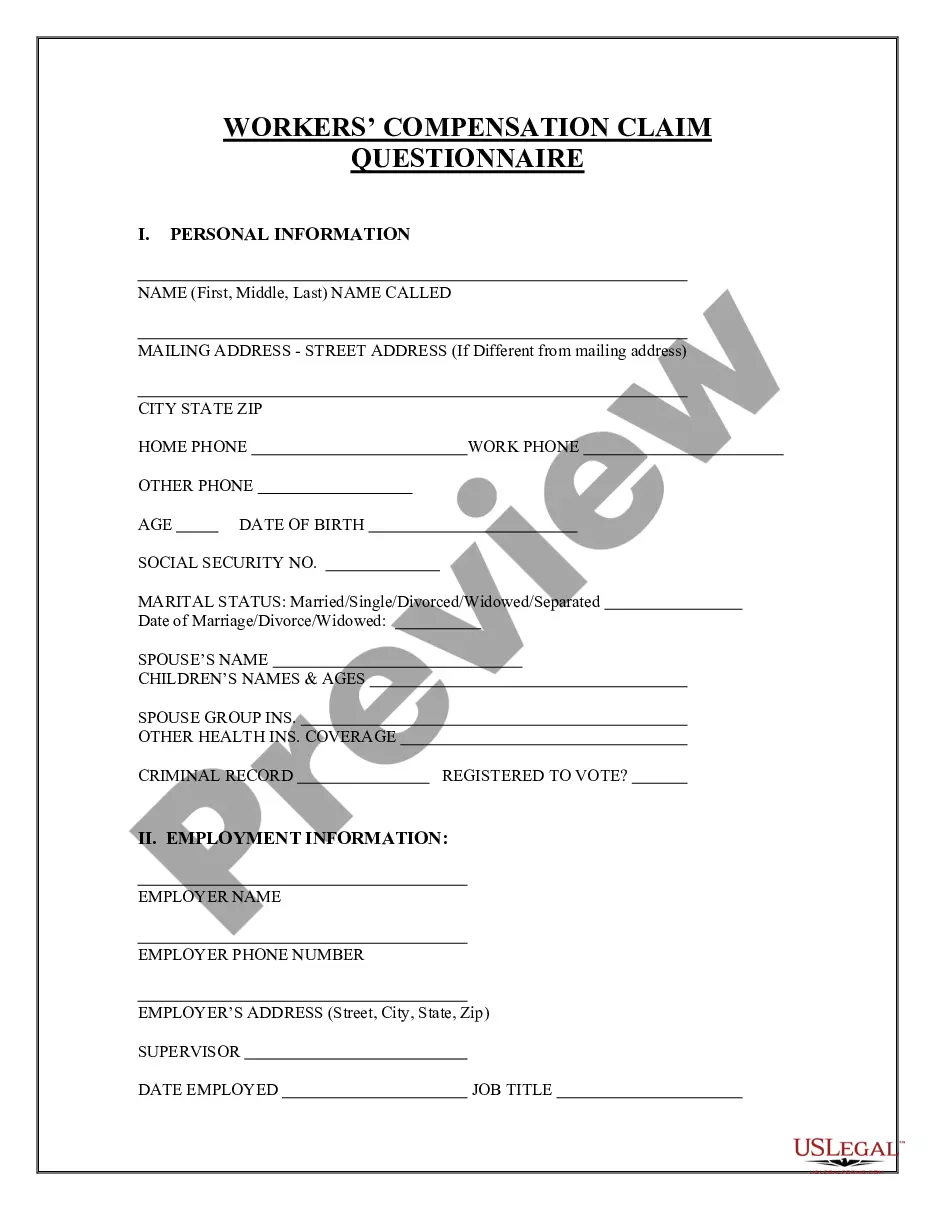
- Details of employment history and injury occurrence.
- Summary of incurred medical expenses and disability resulting from the injury.
- Statement of dispute regarding rights to benefits under the Workersâ Compensation law.
- Request for permission to hire a specific attorney for legal representation.
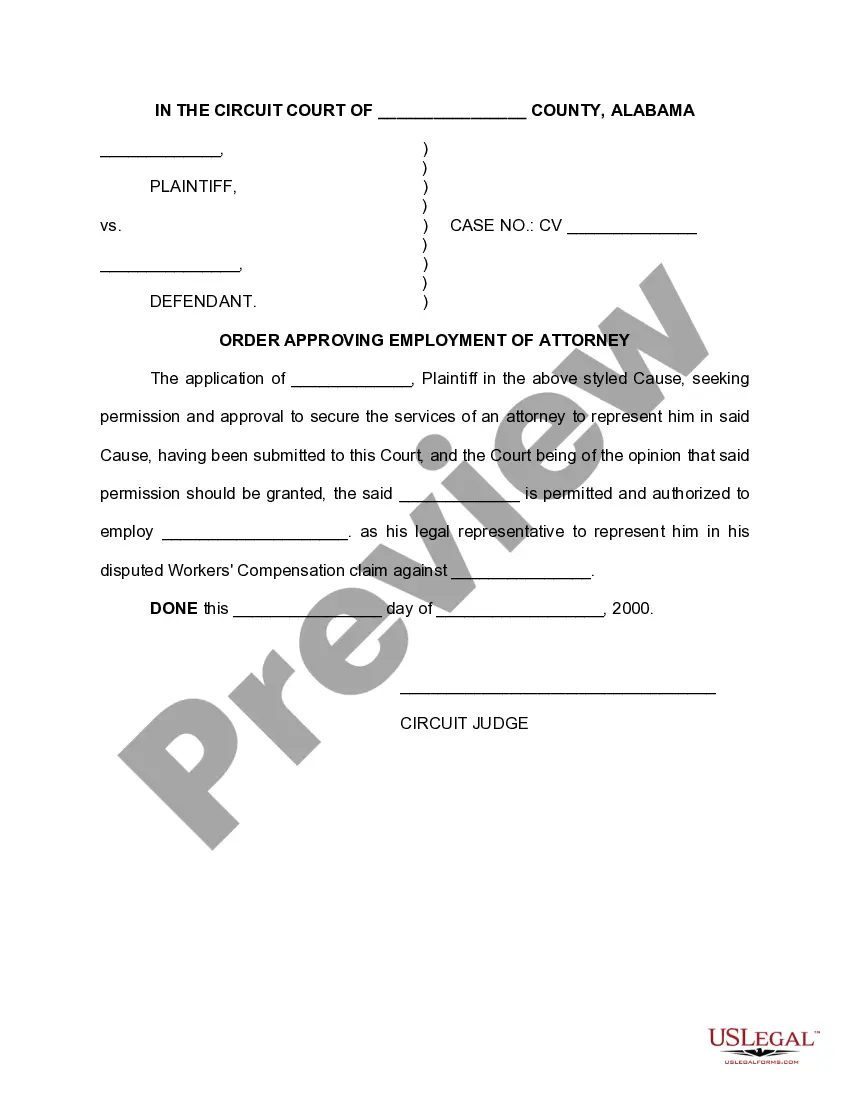
- Order section granting approval for attorney employment.
When to use this document
This form should be used when a plaintiff has suffered an injury while working and wishes to employ an attorney to navigate their workers' compensation case. It is particularly relevant when the plaintiff cannot reach a settlement agreement with the employer regarding benefits or when the legal aspects of the case become complex and require professional representation.
Who this form is for
- Individuals who have been injured on the job and need to file a workers' compensation claim.
- Claimants who are facing disputes regarding their rights to benefits.
- Those seeking legal representation to ensure their interests are protected in negotiations or court proceedings.
Instructions for completing this form
- Fill in the names of the plaintiff and defendant, along with the case number.
- Provide details about the employment situation, including where the plaintiff was employed.
- Describe the nature of the injury and any resulting disability.
- List any medical expenses incurred due to the injury.
- Specify the name of the attorney the plaintiff wishes to hire.
- Submit the completed application to the appropriate court for approval.
Does this document require notarization?
Notarization is generally not required for this form. However, certain states or situations might demand it. You can complete notarization online through US Legal Forms, powered by Notarize, using a verified video call available anytime.
Get your form ready online
Our built-in tools help you complete, sign, share, and store your documents in one place.
Make edits, fill in missing information, and update formatting in US Legal Forms—just like you would in MS Word.
Download a copy, print it, send it by email, or mail it via USPS—whatever works best for your next step.
Sign and collect signatures with our SignNow integration. Send to multiple recipients, set reminders, and more. Go Premium to unlock E-Sign.
If this form requires notarization, complete it online through a secure video call—no need to meet a notary in person or wait for an appointment.
We protect your documents and personal data by following strict security and privacy standards.

Make edits, fill in missing information, and update formatting in US Legal Forms—just like you would in MS Word.

Download a copy, print it, send it by email, or mail it via USPS—whatever works best for your next step.

Sign and collect signatures with our SignNow integration. Send to multiple recipients, set reminders, and more. Go Premium to unlock E-Sign.

If this form requires notarization, complete it online through a secure video call—no need to meet a notary in person or wait for an appointment.

We protect your documents and personal data by following strict security and privacy standards.
Avoid these common issues
- Failing to include all required details about the injury and employment.
- Omitting the correct case number or names of the parties involved.
- Not signing the application before submission.
- Ignoring specific state requirements that could affect the application's approval.
Why use this form online
- Convenient access to legal forms from anywhere, at any time.
- Editable templates that allow users to tailor the document to their specific situation.
- Reliable resources drafted by licensed attorneys ensuring compliance with legal standards.
Looking for another form?



Form popularity
FAQ
If you sue your employer, it won't be enough for you to prove that your employer made the wrong decision, or even that your employer was a no-goodnik. If you don't have a valid legal claim against your employer, then you will ultimately lose your case. One big reason to think twice before you sue.
Poor Treatment. You may not feel like every employee needs to be treated like royalty, but they should be treated with respect. Retaliation for Protected Activities. Terrible Managers. Not Following Your Own Policies. Mismatched Performance and Performance Reviews. Not Responding Properly to an EEOC Charge.
In almost every workplace injury case, you cannot sue your employer in Alabama. In fact, the workers' compensation system was developed in part to prevent injured employees from taking legal action against their company. This is even the case when your employer is at fault for your accident.
Contact the HR department. If the salary is not paid by your employer, you must first contact the HR department of your company to know why you have not received salaries. Send legal notice to your employer. Go for Arbitration. Approach the labour commissioner. File your complaint in a labour court:
No, in general you cannot sue your employer if you already accepted workers' compensation.While weeding through a legal case in order to sue their employer, an injured employee could still not work, did not have any income, and had to pay his/her own medical bills.
While you may feel you have a case for wrongful termination, unfortunately many cases do not qualify as wrongful termination. Alabama, like many other U.S. states, is an at-will employment state. This means that either you or your employer can end the employment relationship at any time and for any reason.
You may be able to sue your employer for your injuries In addition to your Workers Compensation rights, you may be able to pursue your employer in a claim for negligence. This is if your injury at work has been caused or made worse by the consequences of: Your employer.
File a Workers' Compensation Claim Benefit Form: If your employer agrees to accept liability for the accident, a First Report of Injury or Occupational Disease Form must be completed. This form should be filled out by your employer, your employer's insurer, or a third-party administrator.
Poor Treatment. You may not feel like every employee needs to be treated like royalty, but they should be treated with respect.Retaliation for Protected Activities.Terrible Managers.Not Following Your Own Policies.Mismatched Performance and Performance Reviews.Not Responding Properly to an EEOC Charge.