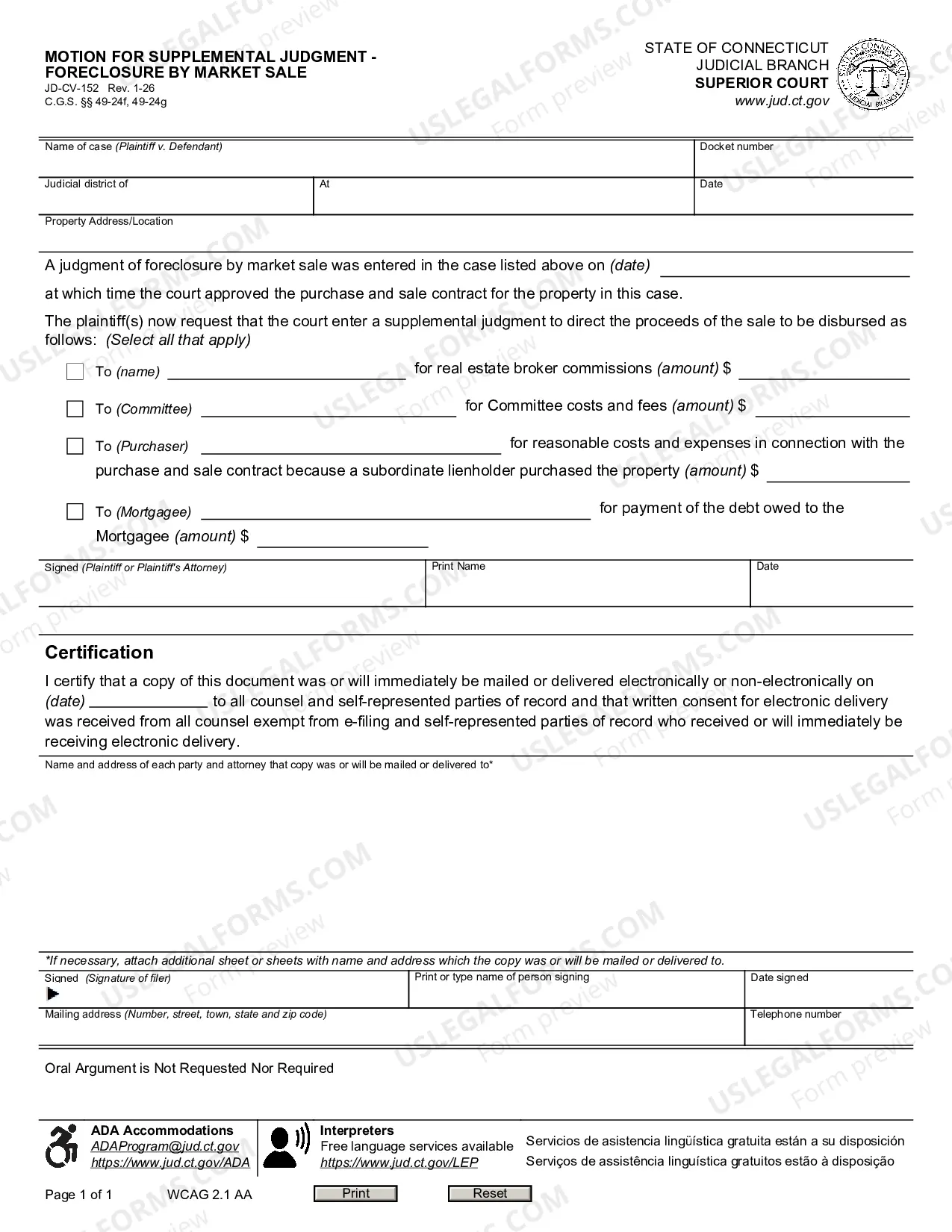
Alabama Motion to Dismiss
What is this form?
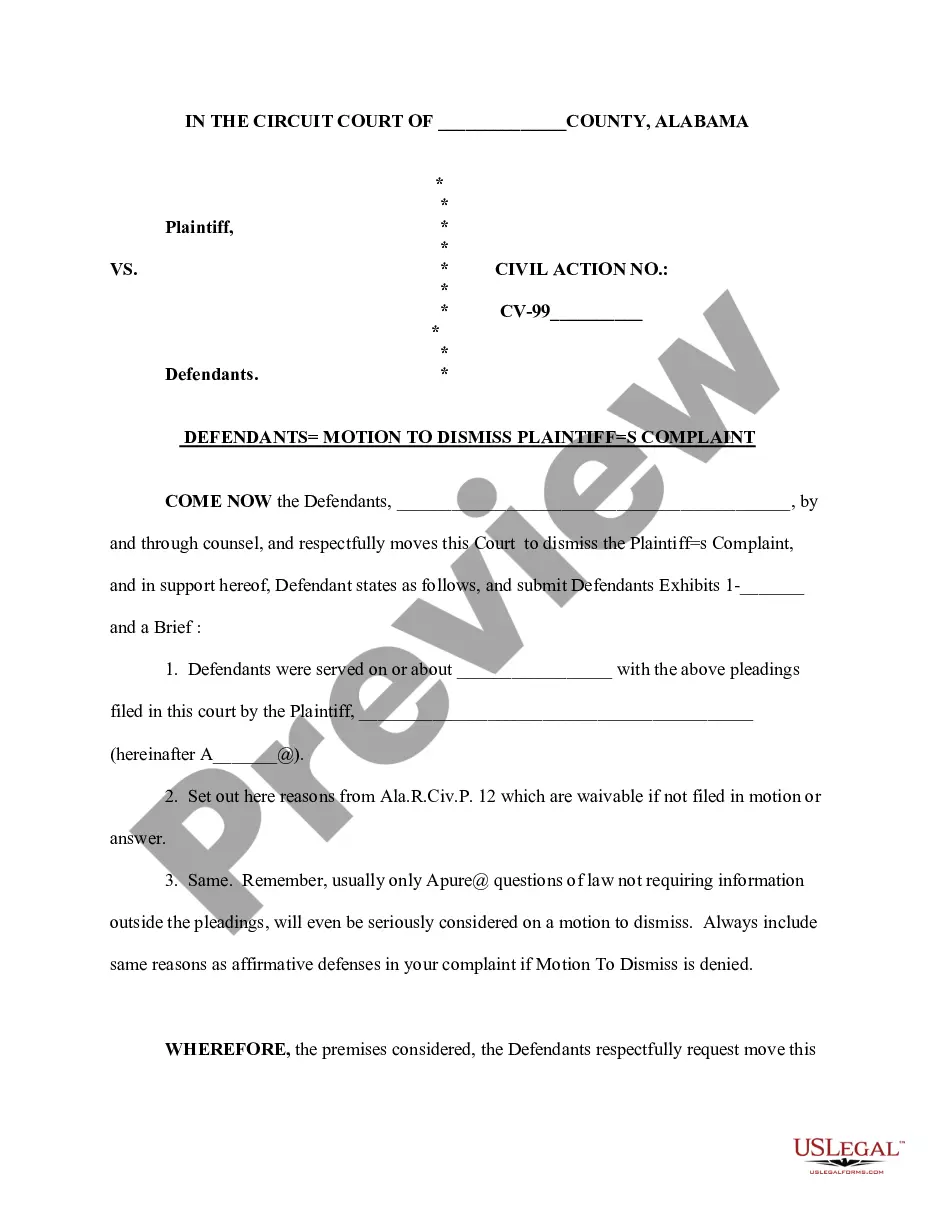
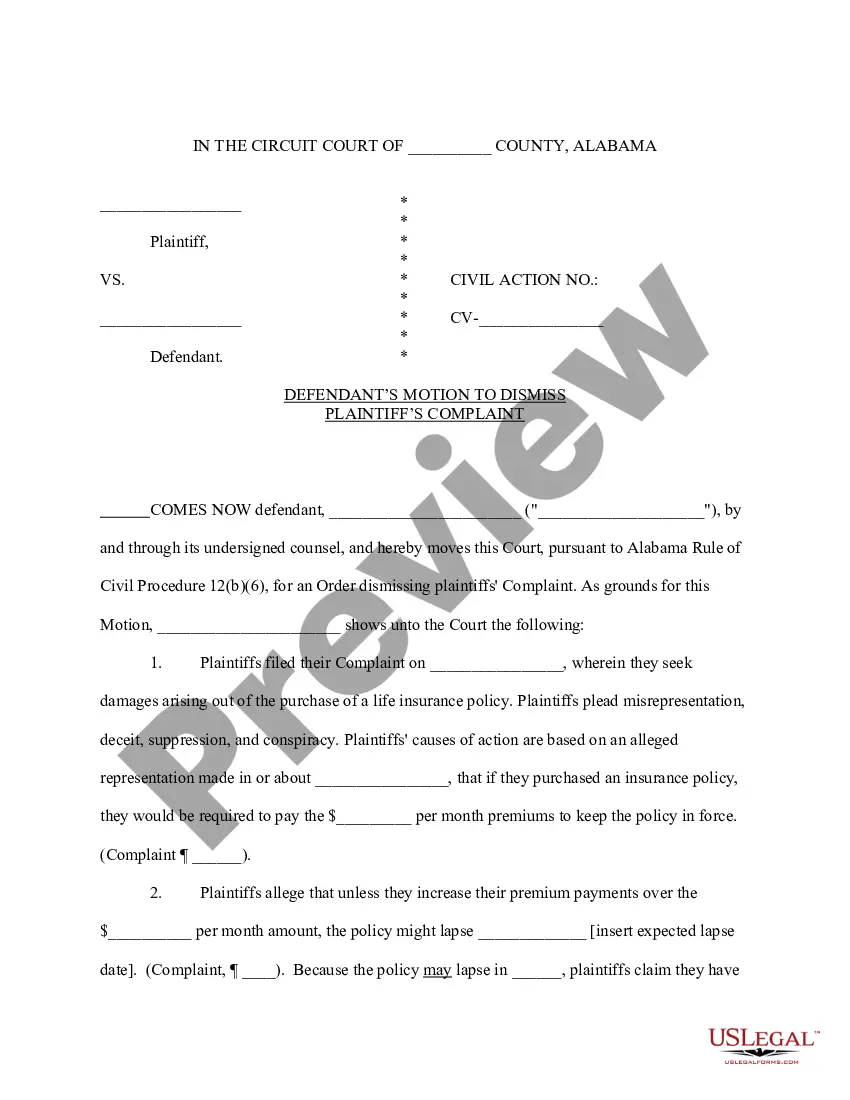
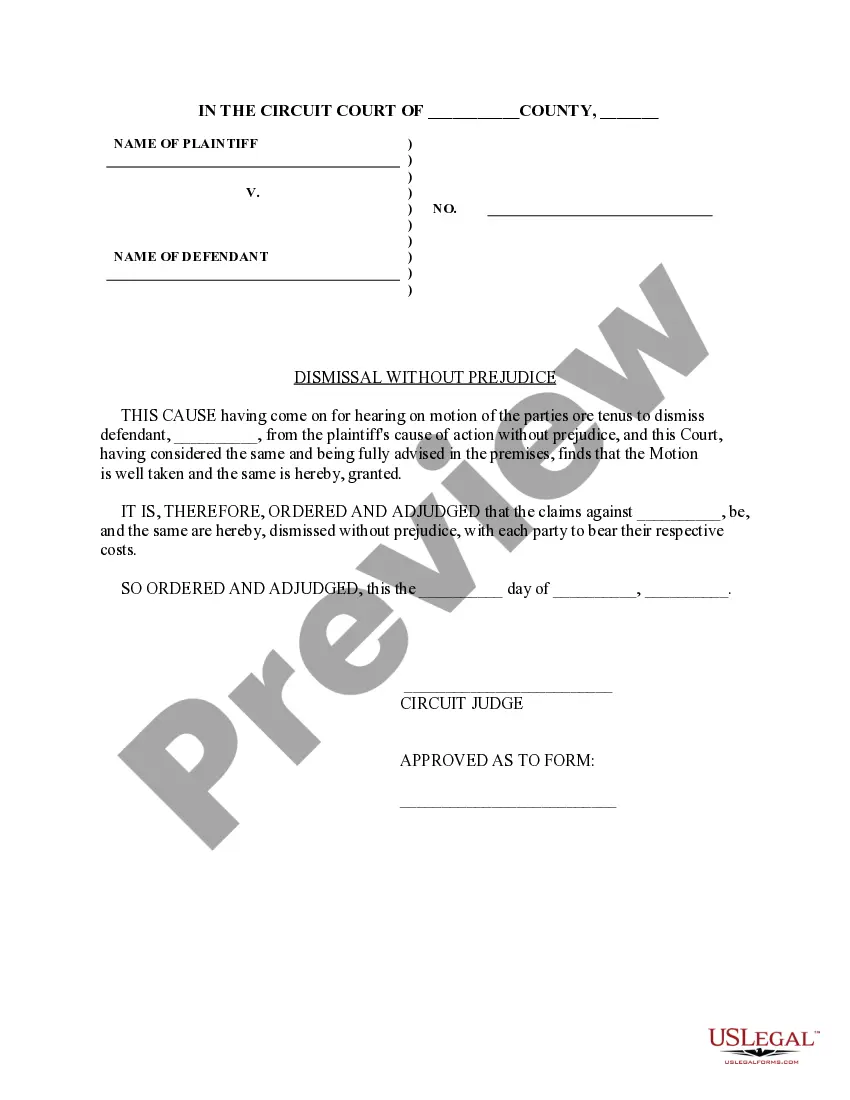
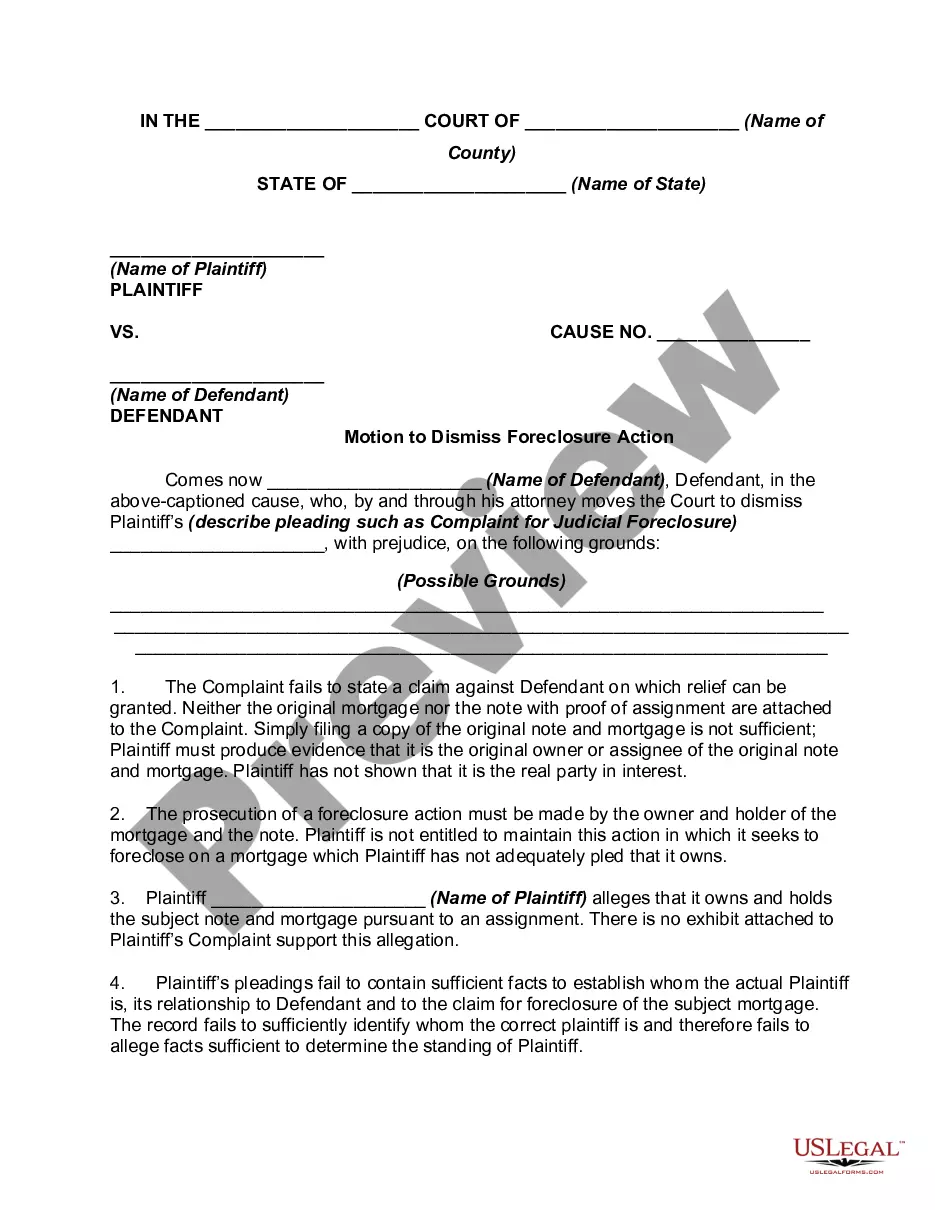
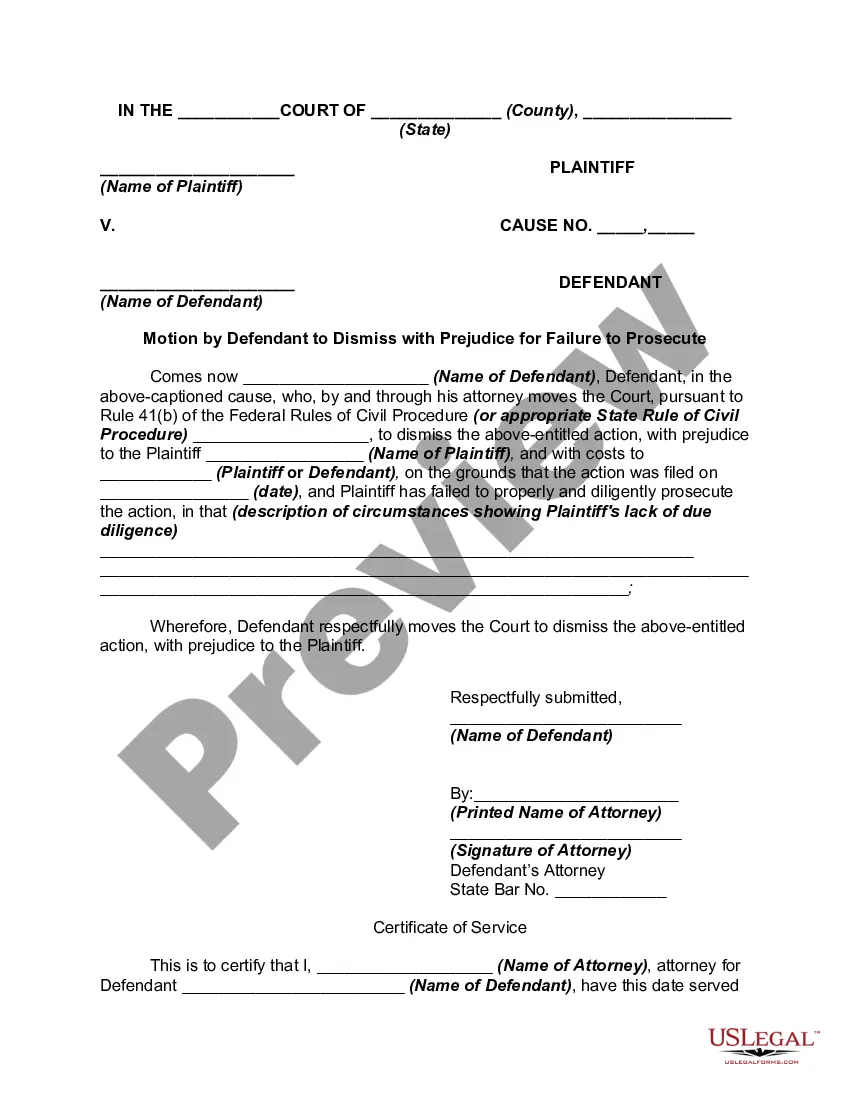
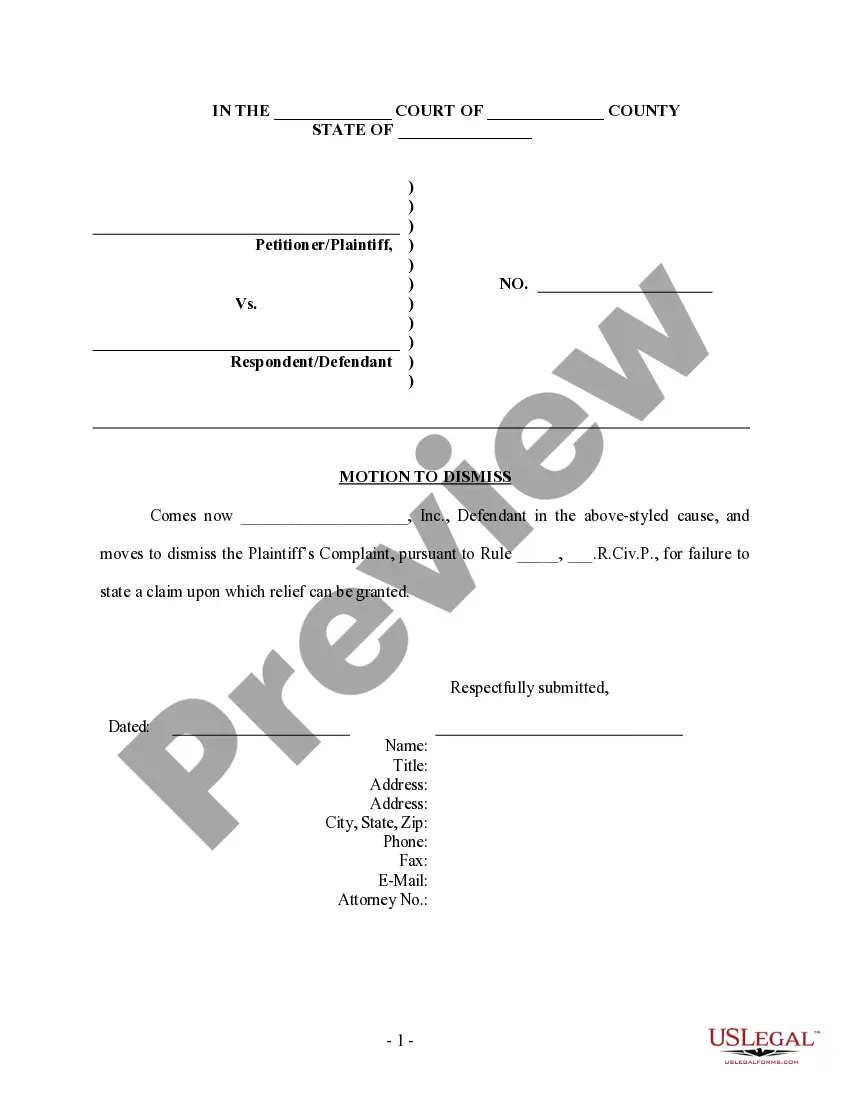
The Motion to Dismiss is a legal document filed by a defendant in a civil lawsuit, requesting the court to dismiss the plaintiff's complaint. This form outlines the specific legal grounds for dismissal, differentiating it from answers or other motions because it focuses on the legal sufficiency of the complaint itself, rather than the merits of the case.
What’s included in this form
- Parties' names: Identifies the plaintiff and defendant.
- Civil action number: Provides the case number assigned by the court.
- Reasons for dismissal: Outlines the legal basis for the request, typically citing relevant rules and statutes.
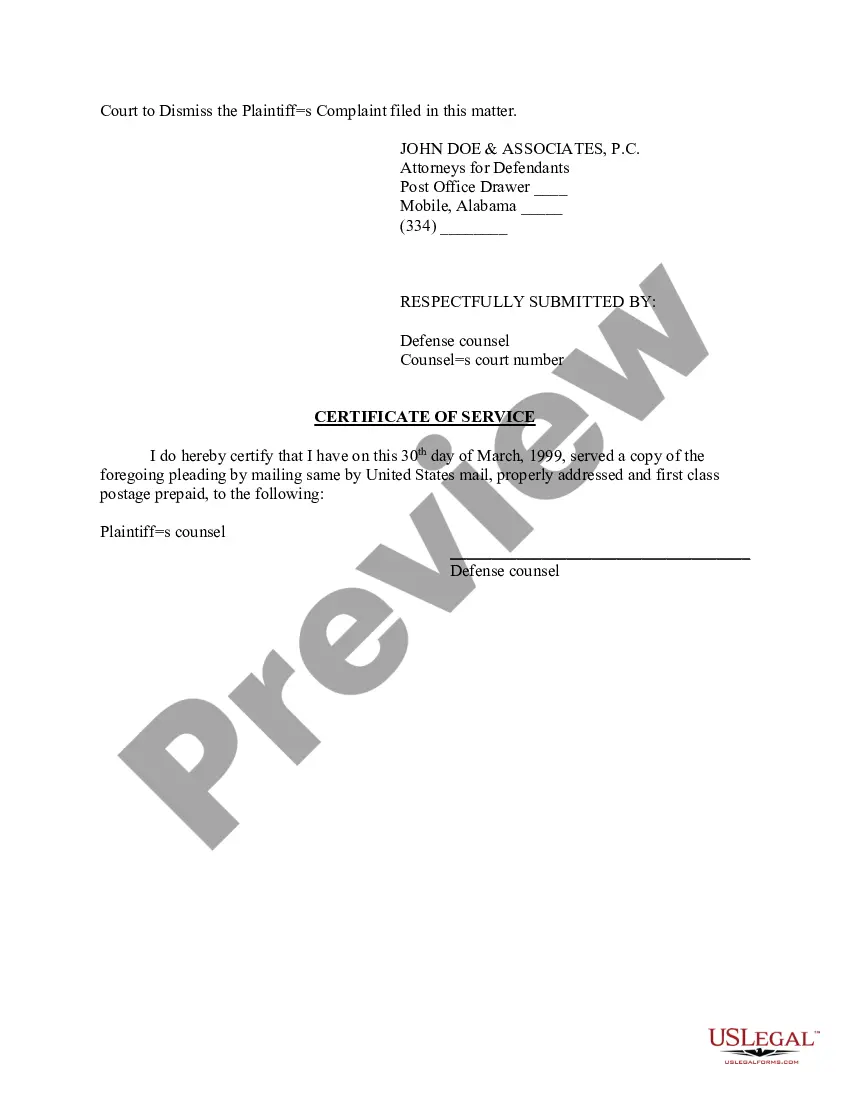
- Certificate of service: Confirms that all parties have been properly notified of the filing.
- Signature: The signature of the defendantâs attorney or the defendant if unrepresented.
When to use this document
This form should be used when a defendant wishes to challenge the legal sufficiency of a plaintiff's complaint before answering it. Common scenarios include cases where the complaint fails to state a claim upon which relief can be granted or where jurisdiction issues exist. This motion is an important step for defendants who want to prevent unnecessary litigation.
Who should use this form
- Defendants in civil cases who believe the plaintiff's complaint lacks legal merit.
- Individuals or businesses facing lawsuits and seeking to protect their interests.
- Attorneys representing clients in dismissing unfounded claims.
Completing this form step by step
- Identify the parties: Fill in the names of the plaintiff and defendant.
- Enter the civil action number: Include the number assigned by the court.
- State the reasons for dismissal: Clearly outline the legal grounds for the motion based on the relevant rules.
- Sign the document: Have the motion signed by the defendant's attorney or the defendant themselves.
- Prepare the certificate of service: Ensure that it is filled out to confirm that all parties have been notified.
Notarization guidance
This form does not typically require notarization unless specified by local law. Ensure to check your jurisdiction's requirements before filing.
Get your form ready online
Our built-in tools help you complete, sign, share, and store your documents in one place.
Make edits, fill in missing information, and update formatting in US Legal Forms—just like you would in MS Word.
Download a copy, print it, send it by email, or mail it via USPS—whatever works best for your next step.
Sign and collect signatures with our SignNow integration. Send to multiple recipients, set reminders, and more. Go Premium to unlock E-Sign.
If this form requires notarization, complete it online through a secure video call—no need to meet a notary in person or wait for an appointment.
We protect your documents and personal data by following strict security and privacy standards.

Make edits, fill in missing information, and update formatting in US Legal Forms—just like you would in MS Word.

Download a copy, print it, send it by email, or mail it via USPS—whatever works best for your next step.

Sign and collect signatures with our SignNow integration. Send to multiple recipients, set reminders, and more. Go Premium to unlock E-Sign.

If this form requires notarization, complete it online through a secure video call—no need to meet a notary in person or wait for an appointment.

We protect your documents and personal data by following strict security and privacy standards.
Typical mistakes to avoid
- Failing to cite specific legal grounds for dismissal.
- Missing the filing deadlines, which may waive the right to challenge the complaint.
- Not including a certificate of service.
- Forgetting to sign the motion.
Why complete this form online
- Convenience: Download forms from anywhere at any time.
- Editability: Easily customize the template to fit your specific situation.
- Availability: Access forms as often as needed without additional costs.
- Reliability: Forms are drafted by licensed attorneys, ensuring legal compliance.
- The Motion to Dismiss is a common pre-trial motion in civil lawsuits.
- Not all grounds for dismissal will succeed; some may require further legal arguments.
- Filing this motion does not preclude the defendant from responding with an answer if it is ultimately denied.
What to keep in mind
- The Motion to Dismiss is an important procedural step in civil litigation.
- Understanding the specific grounds for dismissal can significantly impact the case outcome.
- Timely filing and proper service are critical to the effectiveness of this motion.
Looking for another form?
Form popularity
FAQ
The Alabama Motion to Dismiss is a civil-procedure document filed by a defendant asking the court to dismiss the plaintiff’s complaint. It targets the legal sufficiency of the complaint rather than the case’s merits and is used before an answer is filed. Typical grounds include failure to state a claim and jurisdiction issues, with the form outlining the specific basis and procedural steps. Consult a licensed attorney if you need legal advice.
To make a motion to dismiss, complete the form by entering the parties’ names and the civil action number, state the reasons for dismissal with the relevant rules or statutes, attach any supporting references as needed, include a certificate of service, and sign. Then file the document with the court and serve all parties. Consult a licensed attorney if you need legal advice.
Common grounds include that the complaint fails to state a claim upon which relief can be granted, or there are jurisdiction issues preventing the court from hearing the case. Use the form’s 'Reasons for dismissal' to specify these bases and cite the applicable Alabama rules or statutes. Consult a licensed attorney if you need legal advice.
Yes. The form is designed for a defendant to file the motion to dismiss, either through counsel or personally if unrepresented. The form requires the signature of the defendant or the defendant’s attorney, as applicable, and a certificate of service to show proper notice to all parties. Consult a licensed attorney if you need legal advice.
Yes. A motion to dismiss can be filed before an answer to challenge the complaint’s legal sufficiency. This approach uses the motion to dismiss to address grounds for dismissal, such as failure to state a claim or jurisdiction issues, and the form includes the parties, case number, reasons, service certificate, and signature. Consult a licensed attorney if you need legal advice.
The Motion to Dismiss concentrates on the legal sufficiency of the plaintiff’s complaint, not the case merits, and is often filed before an answer. It requires listing the grounds for dismissal in the 'Reasons for dismissal' section and may be used to challenge jurisdiction or failure to state a claim, unlike an answer which responds to the claims after a complaint is properly filed. Consult a licensed attorney if you need legal advice.