Jury Instruction - False Statement To Firearms Dealer
Understanding this form
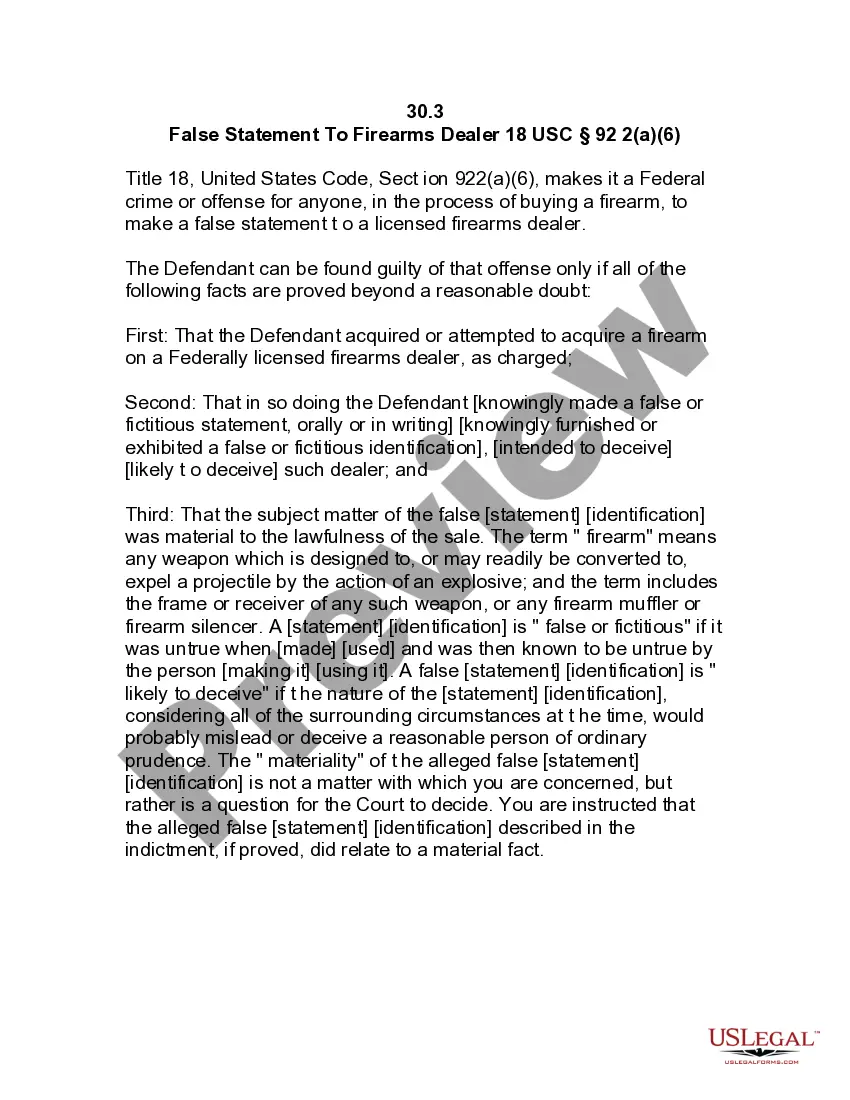
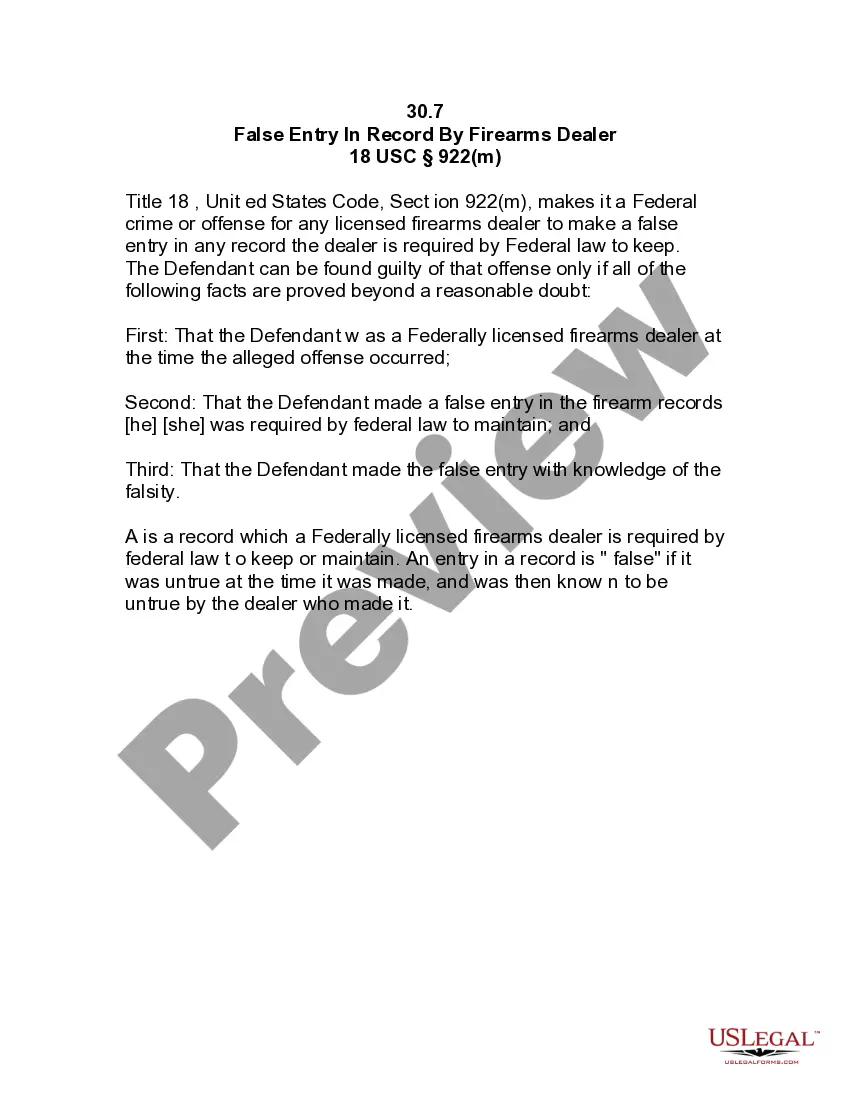
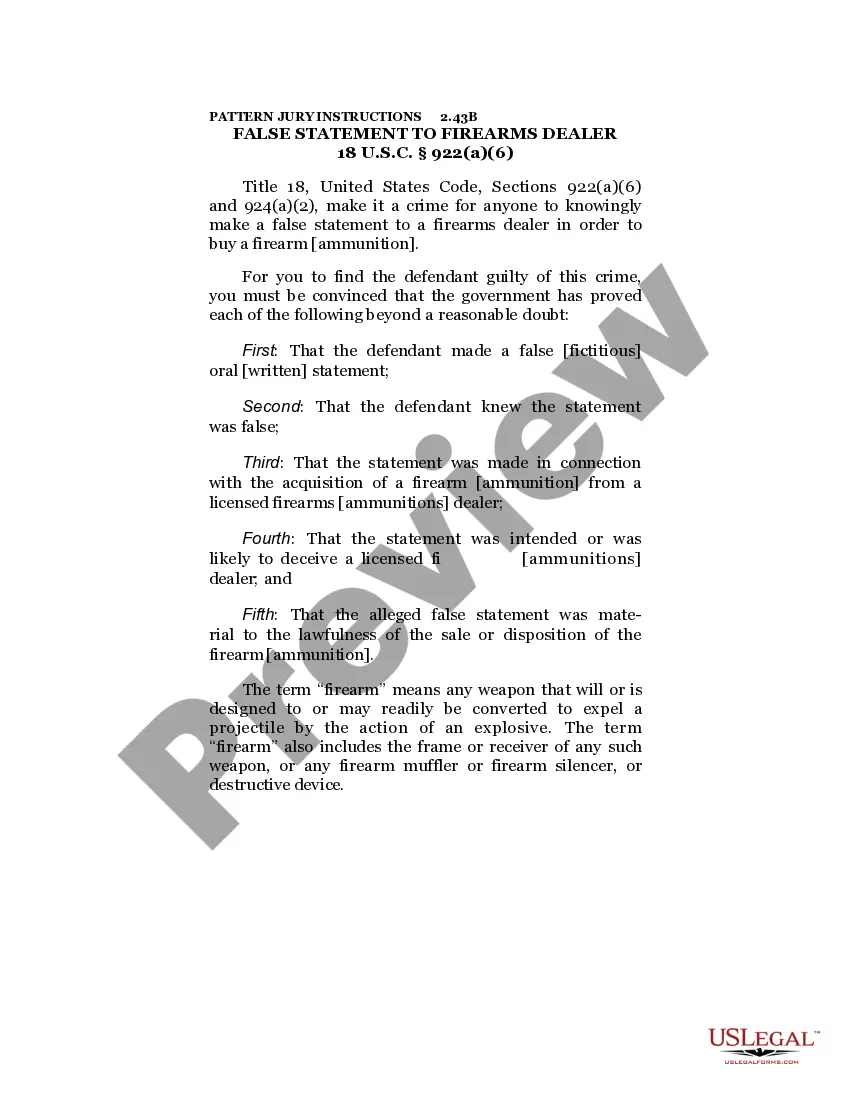
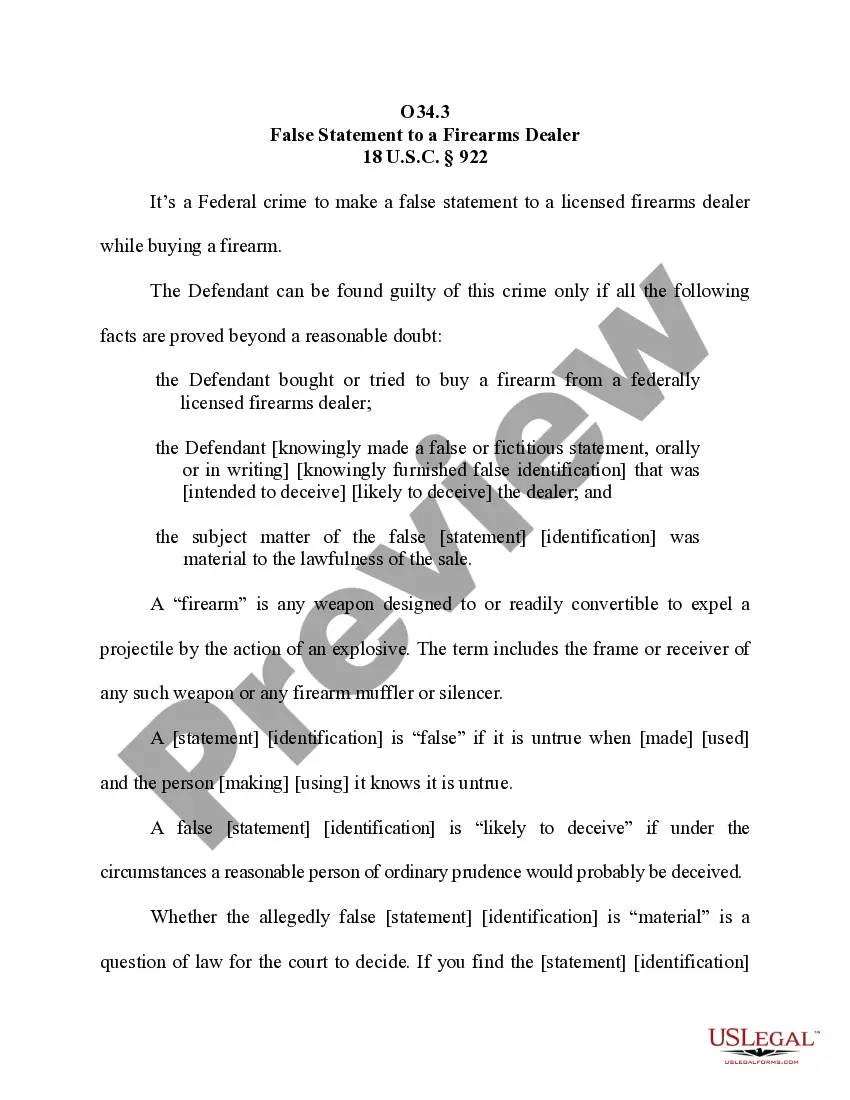
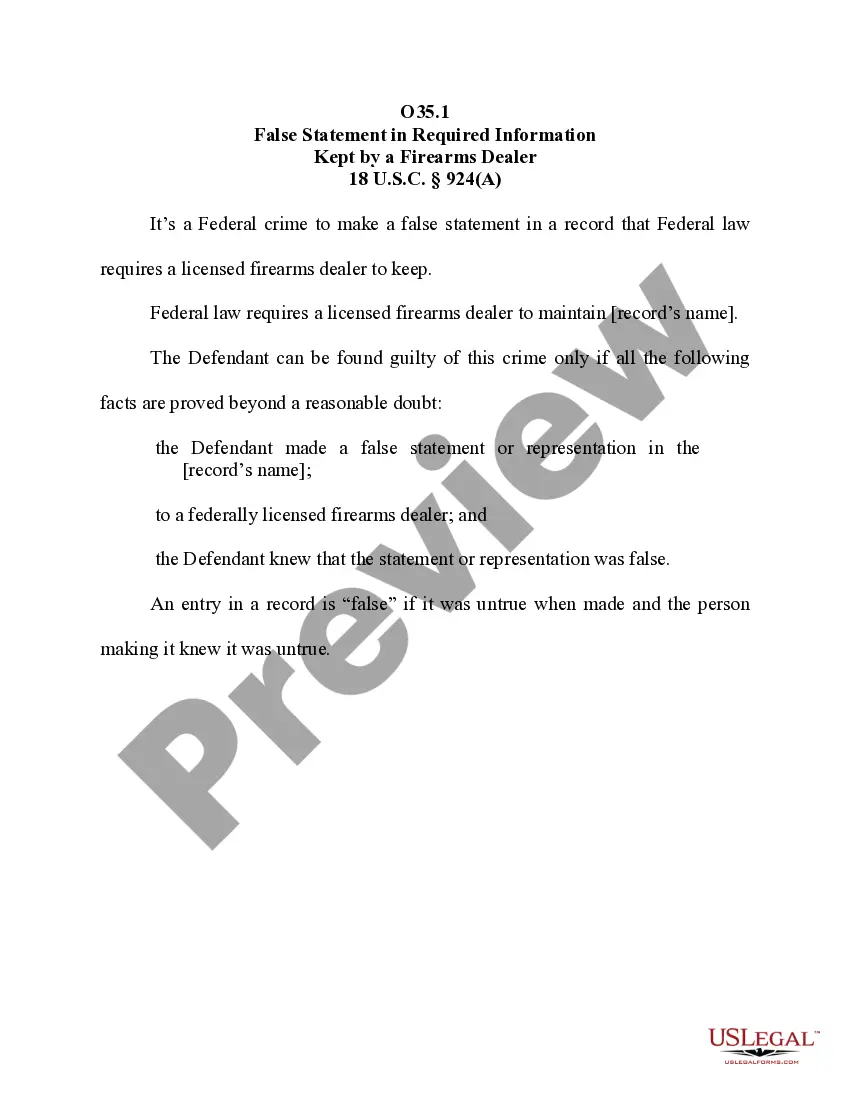
The Jury Instruction - False Statement To Firearms Dealer is a legal document widely used in federal court cases dealing with false statements made during the acquisition of firearms. This form serves as a template for jury instructions that assess the elements of the crime defined under Title 18, United States Code, Section 922(a)(6). It outlines the necessary conditions for a defendant's guilt while ensuring clarity in the legal proceedings. Unlike other jury instructions, this one specifically addresses false statements in the context of firearms transactions.
Key parts of this document
- Definition of a firearm and its components.
- Criteria for proving a false statement beyond a reasonable doubt.
- Details on what constitutes a false or fictitious statement or identification.
- Instructions on the materiality of false statements as determined by the court.
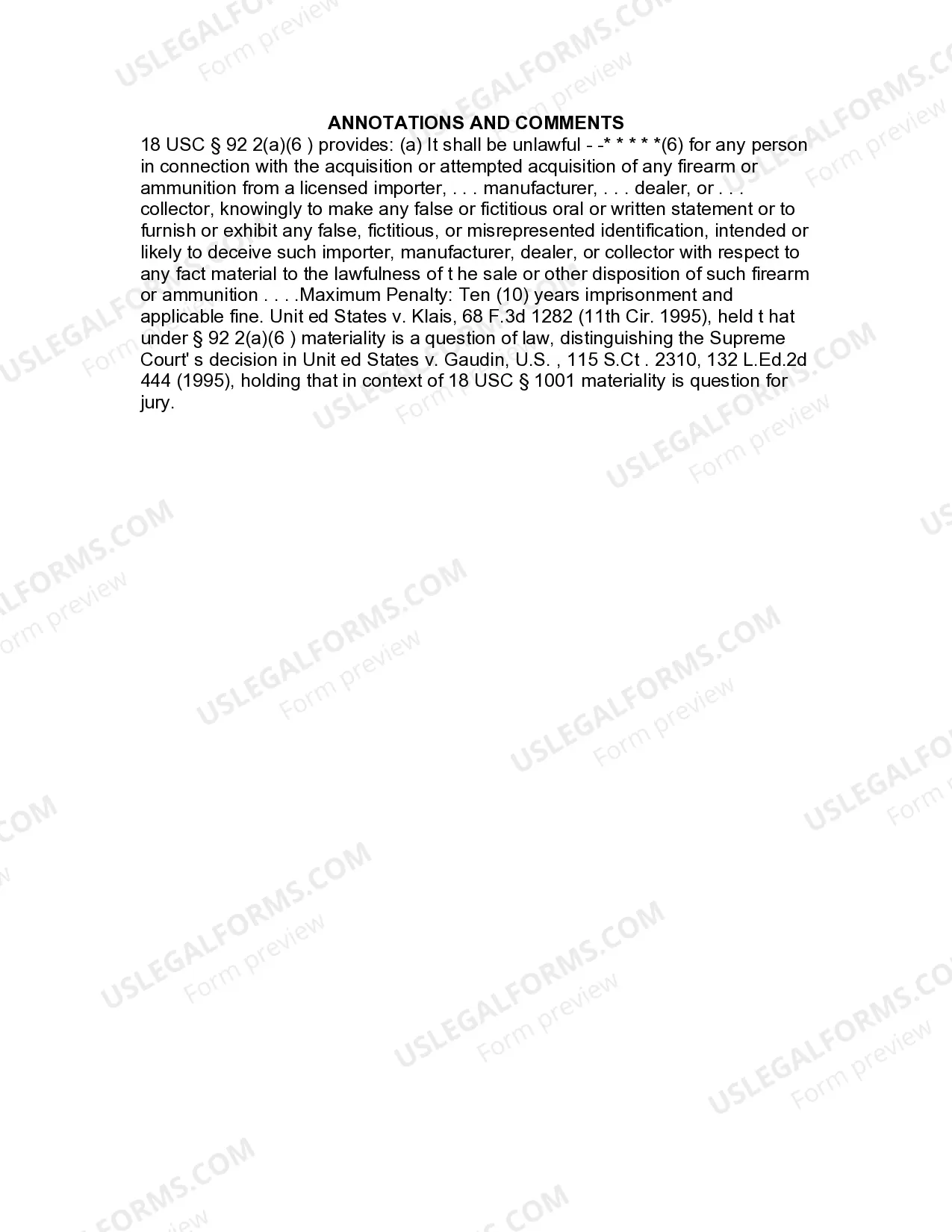
- Potential penalties for making false statements during a firearms transaction.
Common use cases
This form is essential when a case involves a defendant accused of making false statements to a licensed firearms dealer. Use this jury instruction when preparing for a trial involving allegations under federal law, particularly in situations where the legality of a firearm purchase is questioned. It helps establish the guidelines for jury deliberations regarding the accused's statements and identification during the transaction process.
Who should use this form
This form is intended for the following audiences:
- Legal professionals handling cases related to firearms transactions.
- Judges presiding over criminal cases involving false statement charges.
- Juries tasked with deciding the outcome of such cases.
- Defendants facing allegations of making false statements during a firearm purchase.
Completing this form step by step
- Review the provided jury instructions for clarity on the charges against the defendant.
- Customize the instructions to align with the specific case and context.
- Ensure all legal definitions and terms are accurately defined for the jury's understanding.
- Incorporate any relevant case law that may impact the jury's decisions.
- Finalize the document for presentation in court, ensuring all parties have access to the instructions.
Is notarization required?
This form does not typically require notarization to be legally valid. However, some jurisdictions or document types may still require it. US Legal Forms provides secure online notarization powered by Notarize, available 24/7 for added convenience.
Get your form ready online
Our built-in tools help you complete, sign, share, and store your documents in one place.
Make edits, fill in missing information, and update formatting in US Legal Forms—just like you would in MS Word.
Download a copy, print it, send it by email, or mail it via USPS—whatever works best for your next step.
Sign and collect signatures with our SignNow integration. Send to multiple recipients, set reminders, and more. Go Premium to unlock E-Sign.
If this form requires notarization, complete it online through a secure video call—no need to meet a notary in person or wait for an appointment.
We protect your documents and personal data by following strict security and privacy standards.

Make edits, fill in missing information, and update formatting in US Legal Forms—just like you would in MS Word.

Download a copy, print it, send it by email, or mail it via USPS—whatever works best for your next step.

Sign and collect signatures with our SignNow integration. Send to multiple recipients, set reminders, and more. Go Premium to unlock E-Sign.

If this form requires notarization, complete it online through a secure video call—no need to meet a notary in person or wait for an appointment.

We protect your documents and personal data by following strict security and privacy standards.
Avoid these common issues
- Failing to accurately state the elements required to prove false statements.
- Using outdated legal definitions or terminology that may mislead the jury.
- Neglecting to highlight the importance of materiality in the accused's statements.
- Inconsistencies between jury instructions and case evidence presented.
Why use this form online
- Immediate access to up-to-date legal templates drafted by licensed attorneys.
- Convenience of downloading and editing the form as needed for specific cases.
- Reliable resources ensure proper legal standards are maintained.
Looking for another form?

Form popularity
FAQ
A jury instruction is a guideline given by the judge to the jury about the law they will have to apply to the facts they have found to be true. The purpose of the instructions is to help the jury arrive at a verdict that follows the law of that jurisdiction.
The judge can direct a jury, but cannot oblige it to go along with his interpretation.The jury is there to guard against bias or vindictiveness on the the part of the prosecution and judiciary.
Nullification is not an official part of criminal procedure, but is the logical consequence of two rules governing the systems in which it exists: Jurors cannot be punished for reaching a "wrong" decision (such as acquitting a defendant despite their guilt being proven beyond a reasonable doubt).
A curative instruction is given to a jury by the judge in a case to negate the prejudicial effect of an erroneous instruction or tainted evidence.
Jury instructions are given to the jury by the judge, who usually reads them aloud to the jury. The judge issues a judge's charge to inform the jury how to act in deciding a case.