Alabama Motion to Exclude
Overview of this form
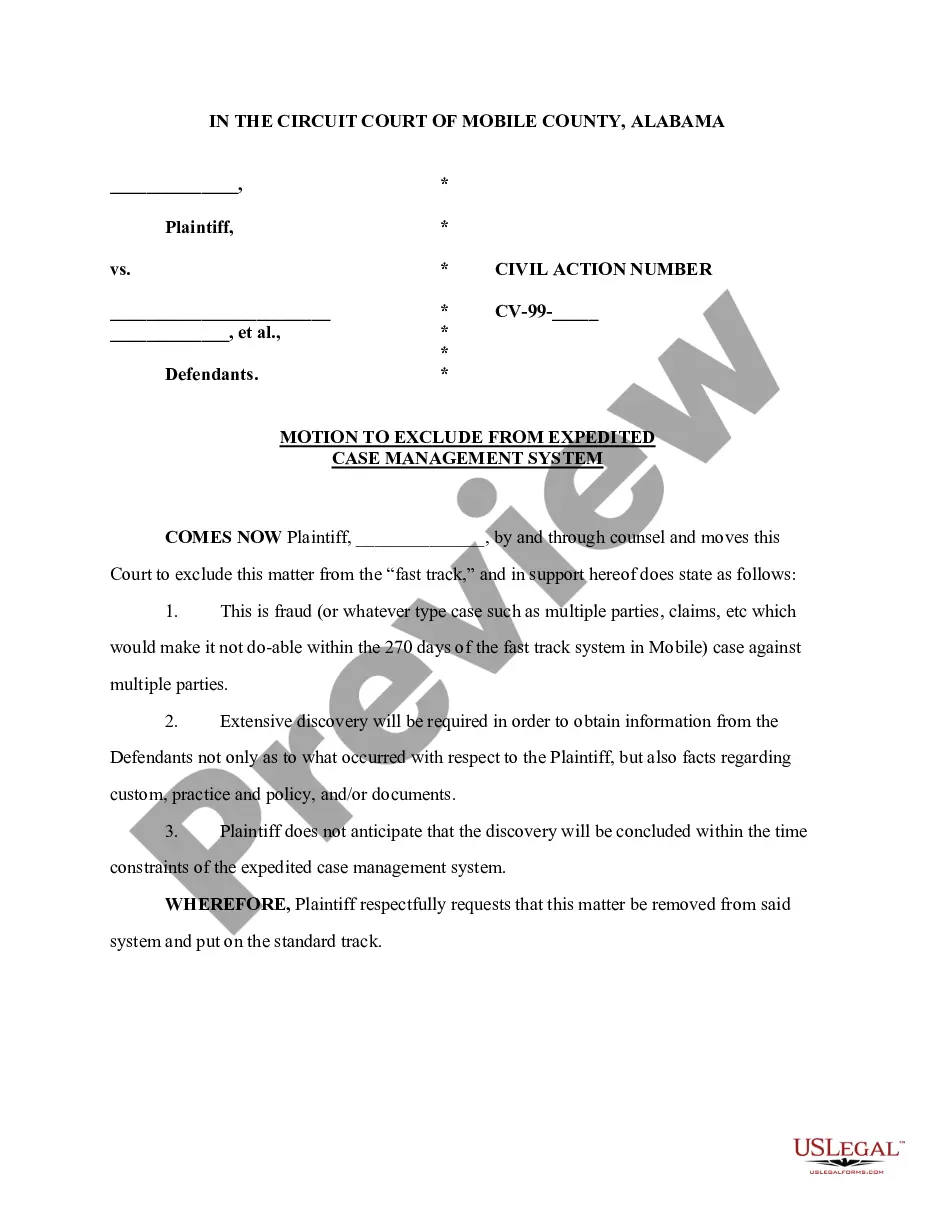
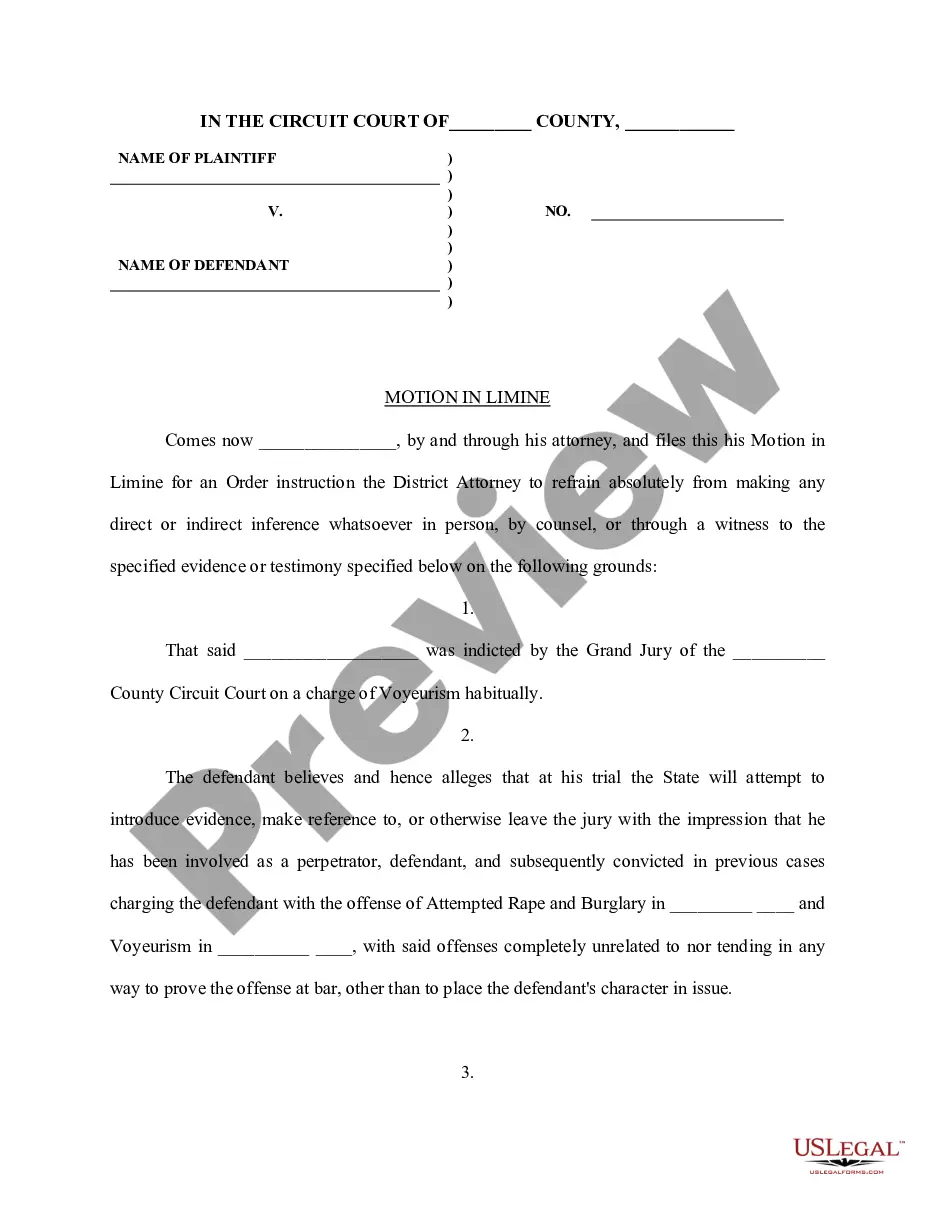
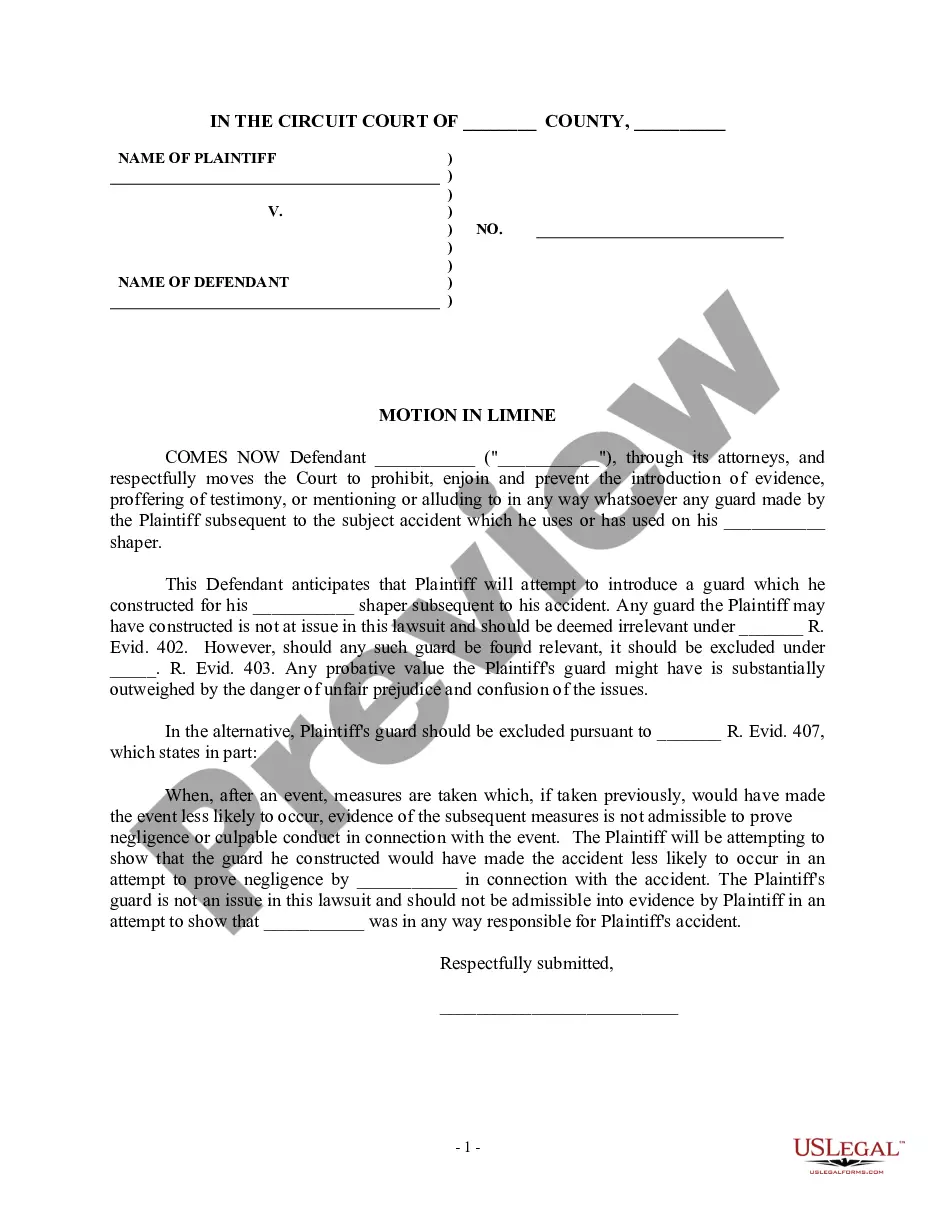
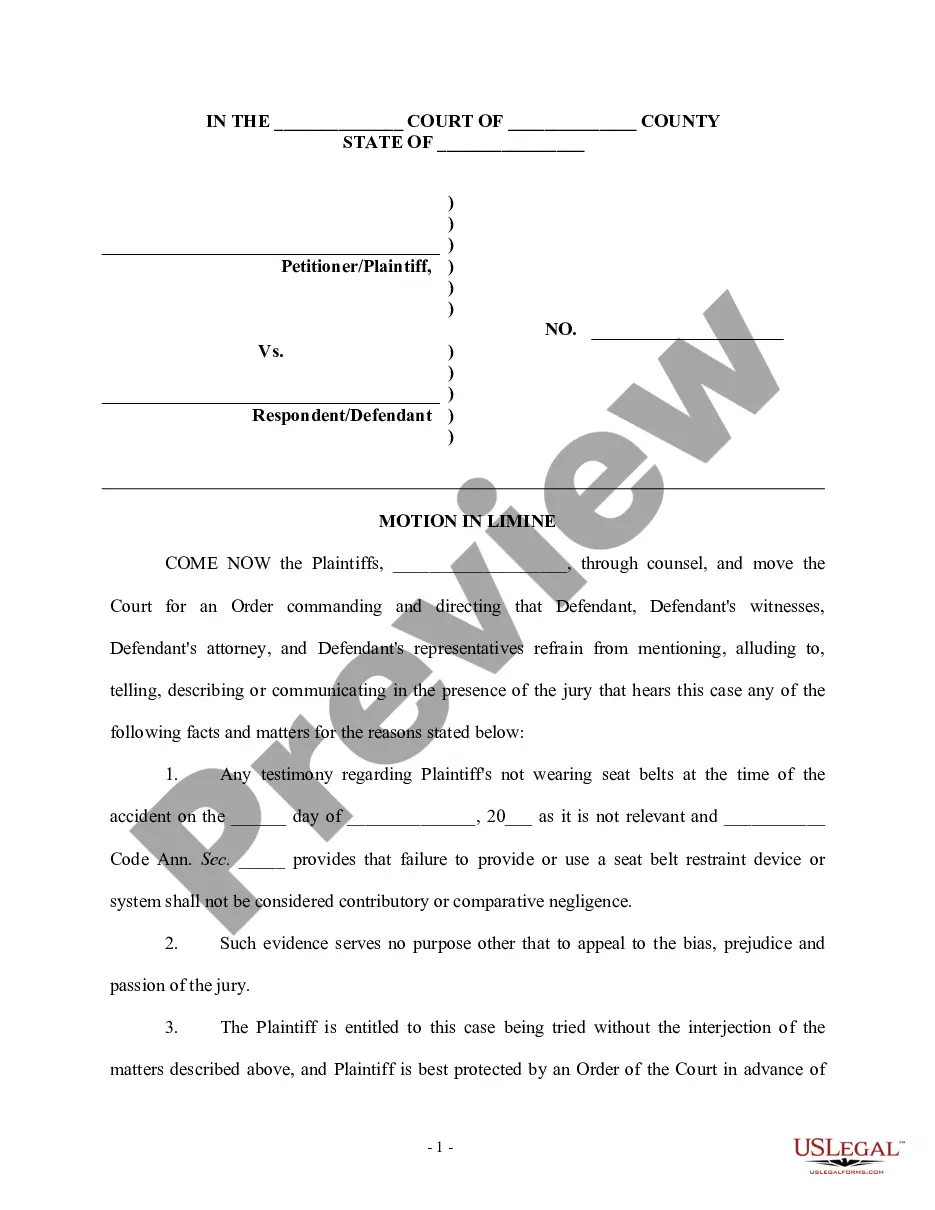
The Motion to Exclude is a legal document filed in a circuit court requesting that a case be removed from the expedited case management system. This form allows plaintiffs to argue that their case requires more time and attention than what is provided in fast-track processing, particularly in complex cases involving multiple parties or claims. It serves a vital role in ensuring that the legal process adequately addresses the intricacies of certain cases, differentiating it from other motions that may not consider such nuances.
Key parts of this document
- Plaintiff information: Identification of the party initiating the motion.
- Civil action number: Required for case tracking and reference.
- Statement of grounds: Explanation of why the case cannot be expedited.
- Prayer for relief: Request to move the case to the standard track.
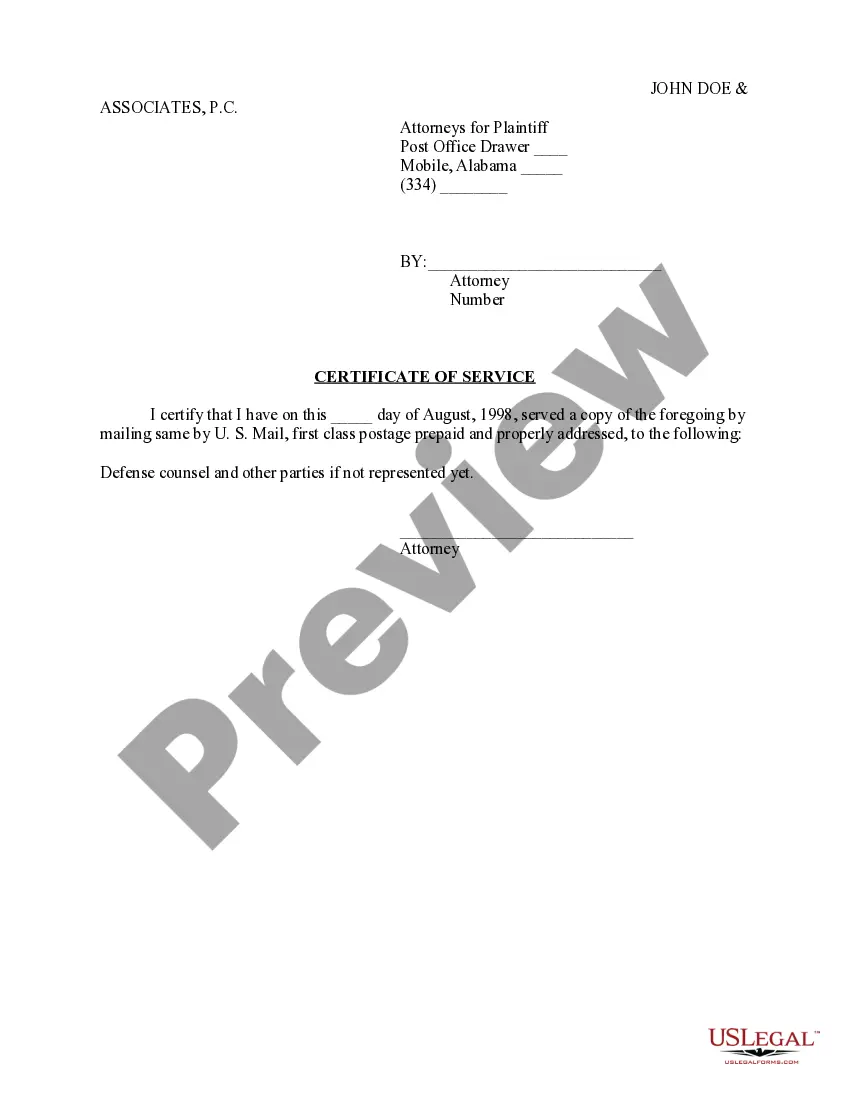
- Attorney information: Contact details of the plaintiff's attorney.
When this form is needed
This form is typically used when the plaintiff believes that their case presents significant complexity, such as fraud or cases involving multiple defendants. It is appropriate when the plaintiff anticipates that extensive discovery is necessary to gather relevant information from the defendants, which would not be feasible within the constraints of the expedited case management system.
Who this form is for
- Plaintiffs involved in complex civil litigation.
- Individuals or entities facing cases with multiple claims or parties.
- Attorneys representing plaintiffs seeking more time for case preparation.
Steps to complete this form
- Identify the plaintiff and defendants by filling in their names and contact information.
- Enter the civil action number assigned to the case for reference.
- Clearly state the reasons for the exclusion from the expedited system in the grounds section.
- Complete the attorney information section with accurate contact details.
- Sign the motion, ensuring all required signatures are included.
Notarization requirements for this form
This form usually doesn’t need to be notarized. However, local laws or specific transactions may require it. Our online notarization service, powered by Notarize, lets you complete it remotely through a secure video session, available 24/7.
Get your form ready online
Our built-in tools help you complete, sign, share, and store your documents in one place.
Make edits, fill in missing information, and update formatting in US Legal Forms—just like you would in MS Word.
Download a copy, print it, send it by email, or mail it via USPS—whatever works best for your next step.
Sign and collect signatures with our SignNow integration. Send to multiple recipients, set reminders, and more. Go Premium to unlock E-Sign.
If this form requires notarization, complete it online through a secure video call—no need to meet a notary in person or wait for an appointment.
We protect your documents and personal data by following strict security and privacy standards.

Make edits, fill in missing information, and update formatting in US Legal Forms—just like you would in MS Word.

Download a copy, print it, send it by email, or mail it via USPS—whatever works best for your next step.

Sign and collect signatures with our SignNow integration. Send to multiple recipients, set reminders, and more. Go Premium to unlock E-Sign.

If this form requires notarization, complete it online through a secure video call—no need to meet a notary in person or wait for an appointment.

We protect your documents and personal data by following strict security and privacy standards.
Common mistakes
- Failing to provide complete plaintiff and defendant information.
- Neglecting to include the civil action number.
- Insufficiently explaining the reasons for exclusion from expedited processing.
- Not signing the motion or including necessary attorney signatures.
Benefits of completing this form online
- Convenience of accessing and completing the form at any time.
- Editability allows users to personalize the content accurately.
- Reliable templates drafted by licensed attorneys ensure legal compliance.
Looking for another form?





Form popularity
FAQ
You simply need to request that the court deny the defendant's motion to dismiss. For example, you could write the following: For the foregoing reasons and all the others discussed in Plaintiff's Complaint, the present Motion to Dismiss should be denied.
You simply need to request that the court deny the defendant's motion to dismiss. For example, you could write the following: For the foregoing reasons and all the others discussed in Plaintiff's Complaint, the present Motion to Dismiss should be denied.
A motion to dismiss can be filed at any time. They are usually filed by defendants early on in the lawsuit, before they have filed an answer. Often a motion to dismiss is alleging that the claim should not proceed because of an issue unrelated to the facts.
Effect of a Rule 12 Motion - Absent a court order setting a different time, a Rule 12 motion extends the time to file a responsive pleading until 14 days after the court's denial of the motion or deferral to trial or, if more definite statement ordered, 14 days after service of the more definite statement. FED.
To survive a motion to dismiss, a lawsuit must contain sufficient factual matter to state a claim to relief that is plausible on its face.
Fill out the forms. You have to fill out at least 2 forms, maybe more, to file your opposition. File the forms. Turn in your completed forms by mail or efiling. Serve the other party. Get ready for the hearing. Prepare an order.
What happens during a motion for summary judgment hearing?At the hearing, each party will be given a certain amount of time to reiterate their argument in front of the judge. The judge may ask some questions and at the end of the hearing the judge will grant or deny the motion.
A motion to dismiss can be filed at any time. They are usually filed by defendants early on in the lawsuit, before they have filed an answer. Often a motion to dismiss is alleging that the claim should not proceed because of an issue unrelated to the facts.
You do not have to file a response. However, you would be wise to do so as a motion to dsmiss , if granted, could end your suit. Motions to dimiss for failure to state a claim are rarely granted.