Performance Requirements
What is this form?
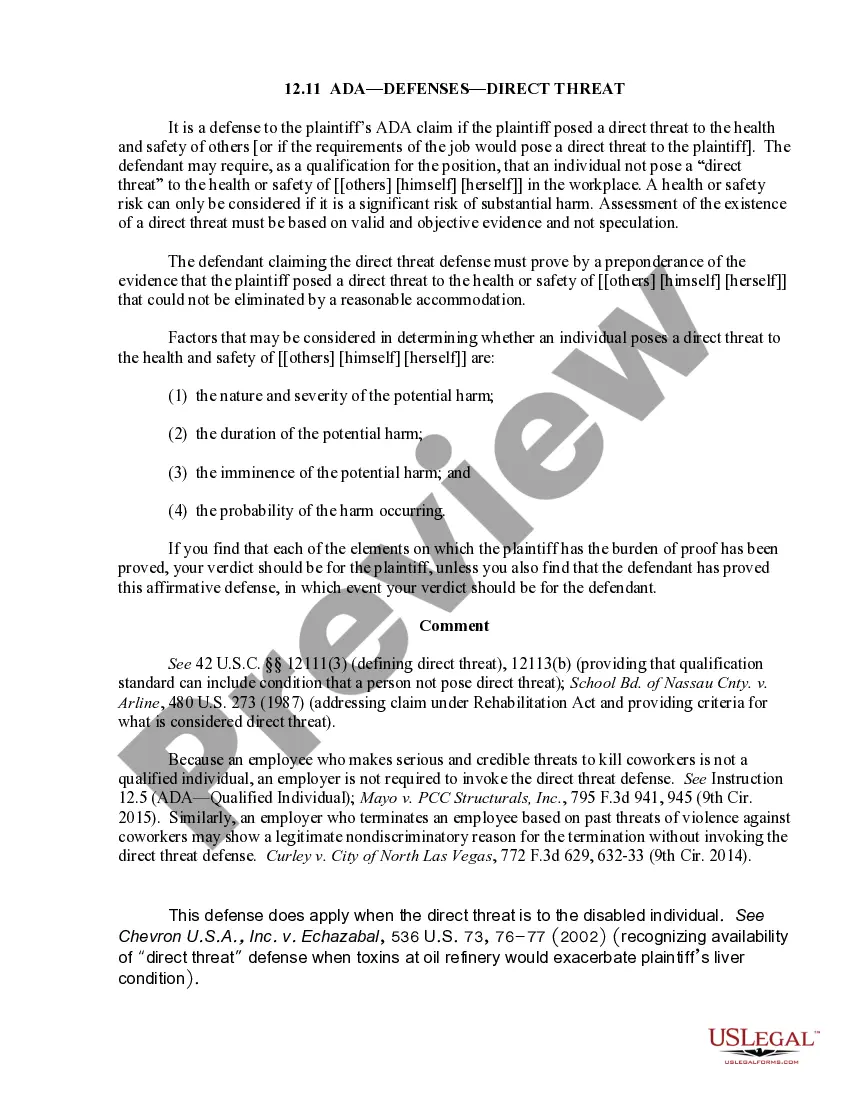
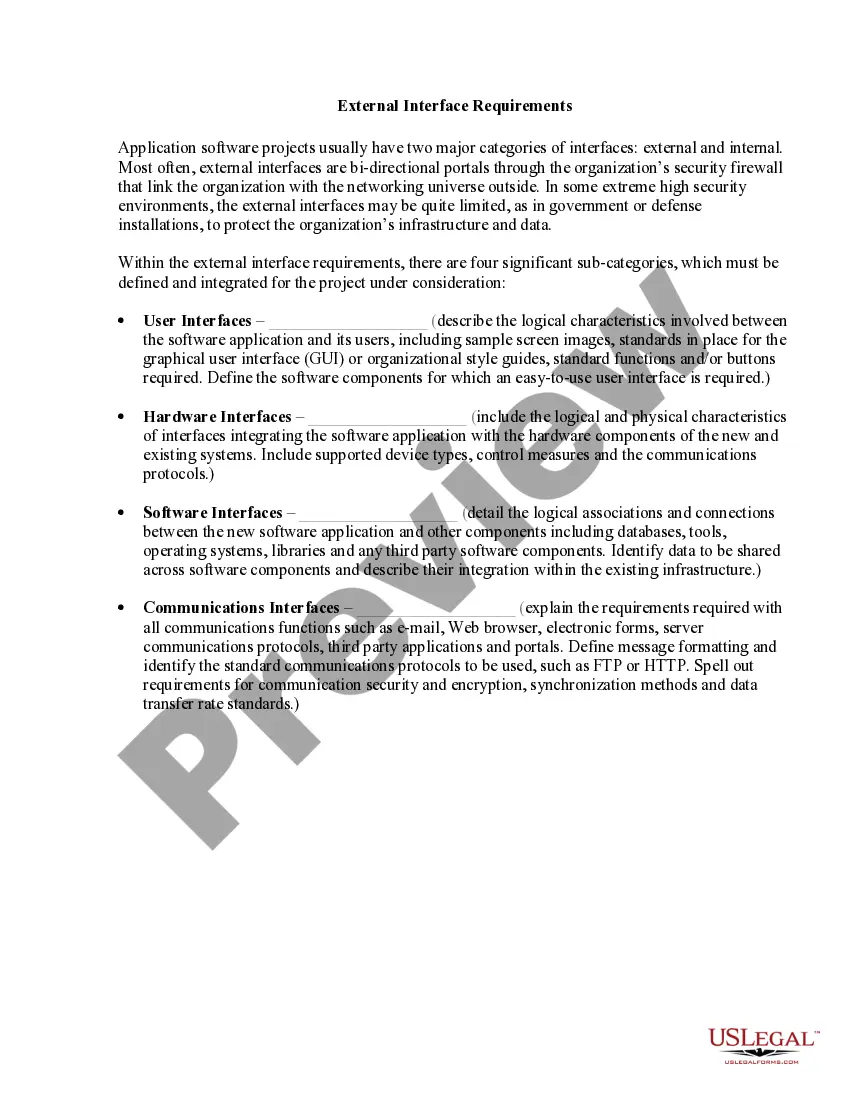
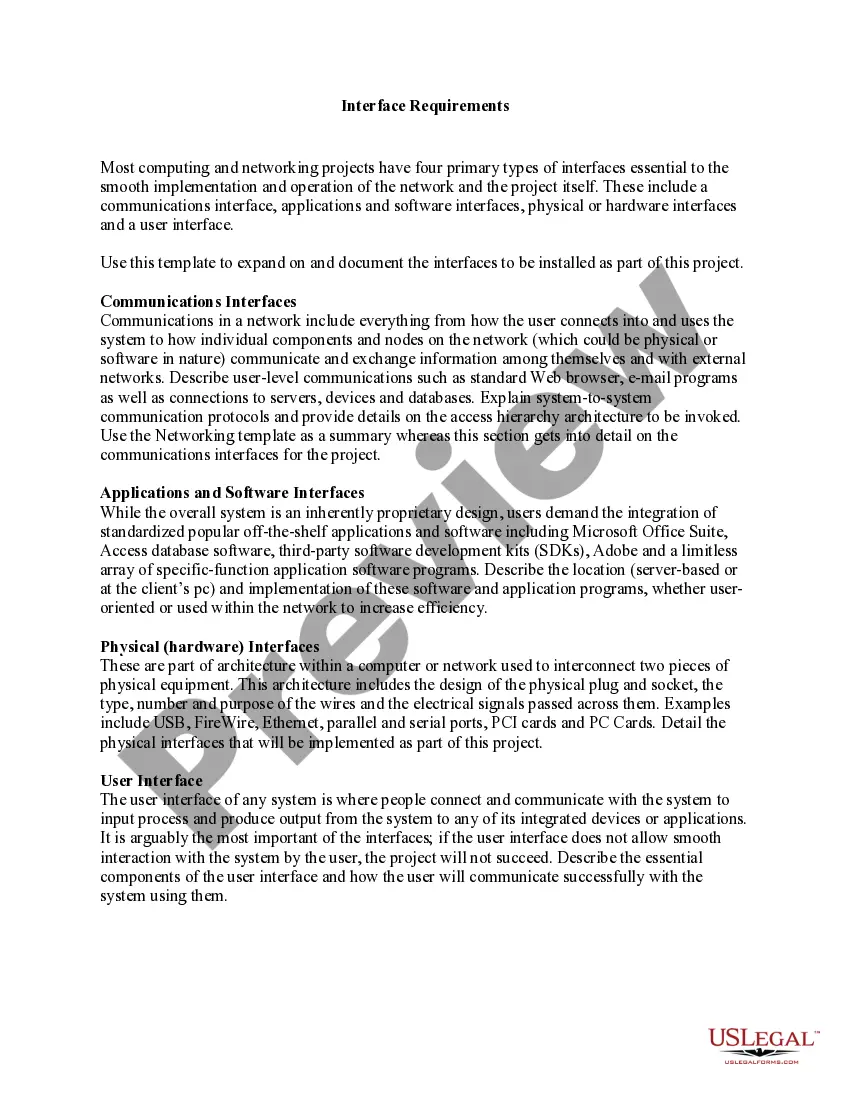
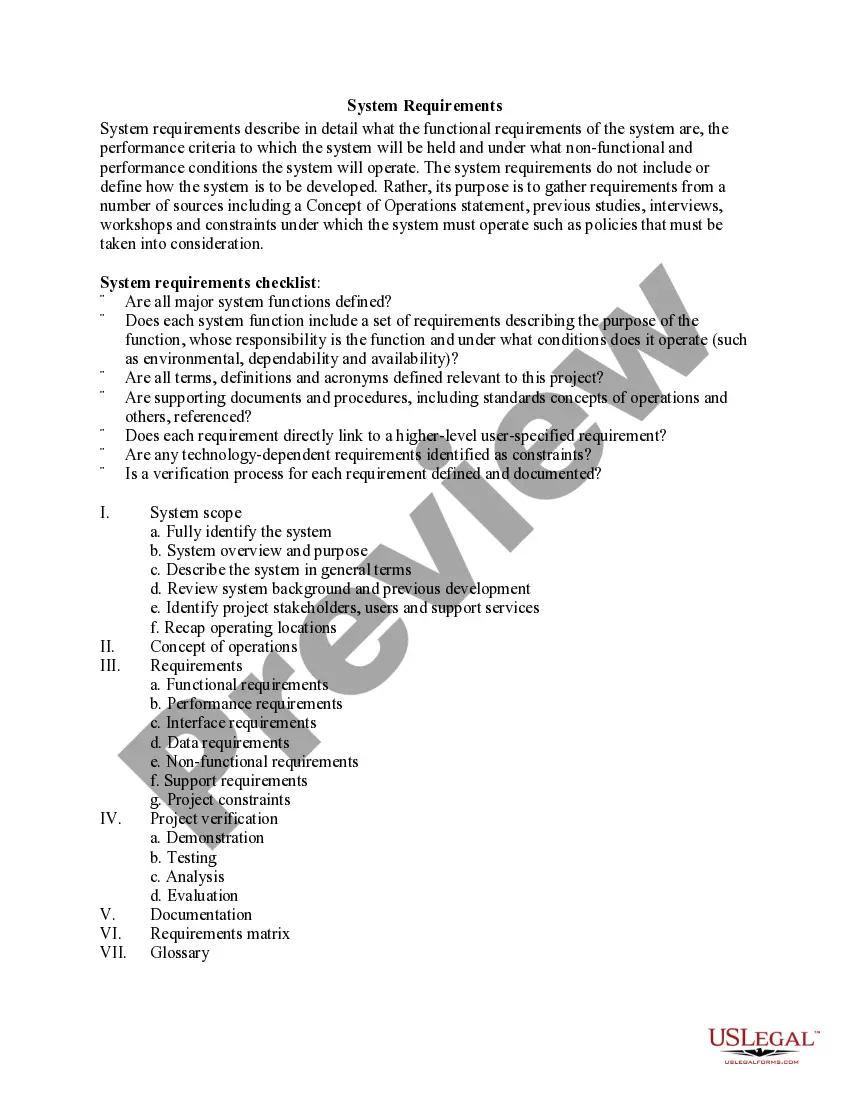
The Performance Requirements form outlines the essential criteria for the performance of a project or product. It focuses on various factors that determine how well the final deliverable meets its intended functions, differing from other forms that may cover broader project specifications. This form serves to clarify non-functional requirements, ensuring that usability, reliability, and maintainability are clearly defined and addressed.
Form components explained
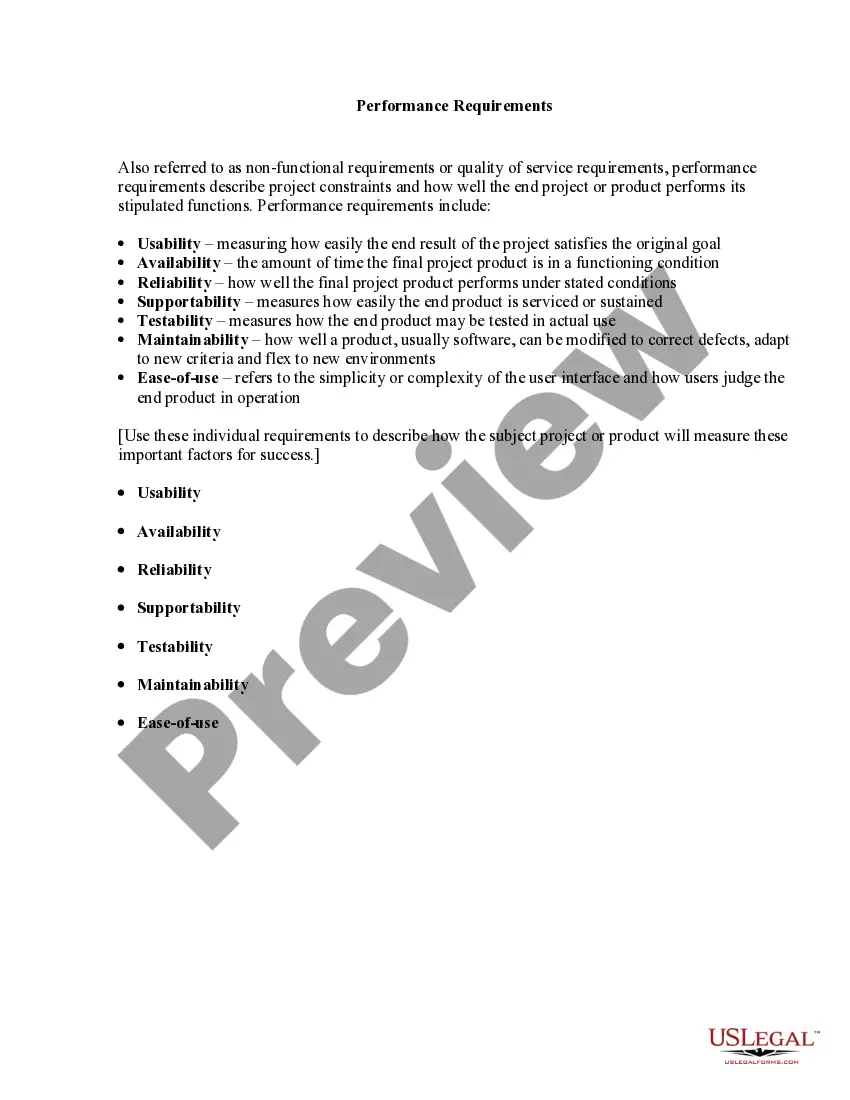
- Usability: Measures how easily the end result satisfies the original goal.
- Availability: Indicates the amount of time the product is operational.
- Reliability: Assesses how well the product performs under specified conditions.
- Supportability: Evaluates the ease of servicing or sustaining the end product.
- Testability: Measures how the product can be tested in actual use.
- Maintainability: Describes how easily the product can be modified or adapted.
- Ease-of-use: Refers to the simplicity of the user interface and user experience.
Common use cases
This form is useful during the planning and development phases of a project, particularly when clear performance metrics need to be established. It can be employed for software development, product design, or system implementation to ensure that all stakeholders understand the expected quality and functionality requirements. Use this form when preparing project contracts, specifications, or product launch documents that require a clear outline of performance criteria.
Intended users of this form
This form is designed for:
- Project managers tasked with overseeing project performance.
- Developers and engineers involved in product design and implementation.
- Quality assurance professionals ensuring that products meet established criteria.
- Business stakeholders looking to define performance expectations for a project.
How to prepare this document
- Identify the specific project or product related to the performance requirements.
- List each individual performance criterion that the product must meet.
- Specify measurable targets for usability, availability, reliability, and other factors.
- Ensure clarity in language to avoid ambiguity in the requirements.
- Review the completed form with key stakeholders to confirm agreement on the stated requirements.
Notarization requirements for this form
This form does not typically require notarization to be legally valid. However, some jurisdictions or document types may still require it. US Legal Forms provides secure online notarization powered by Notarize, available 24/7 for added convenience.
Get your form ready online
Our built-in tools help you complete, sign, share, and store your documents in one place.
Make edits, fill in missing information, and update formatting in US Legal Forms—just like you would in MS Word.
Download a copy, print it, send it by email, or mail it via USPS—whatever works best for your next step.
Sign and collect signatures with our SignNow integration. Send to multiple recipients, set reminders, and more. Go Premium to unlock E-Sign.
If this form requires notarization, complete it online through a secure video call—no need to meet a notary in person or wait for an appointment.
We protect your documents and personal data by following strict security and privacy standards.

Make edits, fill in missing information, and update formatting in US Legal Forms—just like you would in MS Word.

Download a copy, print it, send it by email, or mail it via USPS—whatever works best for your next step.

Sign and collect signatures with our SignNow integration. Send to multiple recipients, set reminders, and more. Go Premium to unlock E-Sign.

If this form requires notarization, complete it online through a secure video call—no need to meet a notary in person or wait for an appointment.

We protect your documents and personal data by following strict security and privacy standards.
Common mistakes
- Failing to define clear metrics for performance evaluation.
- Using vague language that can lead to misinterpretation of requirements.
- Neglecting to involve all relevant stakeholders in the requirements definition process.
- Forgetting to update performance requirements as project scope changes.
Benefits of using this form online
- Convenient access to a professionally drafted template that can be downloaded and modified.
- Editable format allows for easy customization according to specific project needs.
- Reliable source of legal forms created by licensed attorneys ensures adherence to legal standards.
- No need for in-person consultations, allowing for quicker completion and implementation.
Legal use & context
- This form serves to outline essential performance expectations, making it a crucial part of contract discussions.
- Clearly defined performance criteria can help mitigate disputes regarding project deliverables.
- It provides a basis for assessing compliance with project specifications.
Summary of main points
- The Performance Requirements form defines critical non-functional project criteria.
- It is essential for project managers, developers, and stakeholders to ensure clear communication of performance expectations.
- Completing this form carefully can prevent misunderstandings and enhance project success.
Looking for another form?


Form popularity
FAQ
Functional requirements define what a product must do, what its features and functions are. Nonfunctional requirements describe the general properties of a system. They are also known as quality attributes.
When writing a performance requirement, it should be quantifiable and define at minimum, the context and expected throughput, response time, max error rate, and sustained amount of time.
Why Are Performance Standards Important? Performance standards are essential because they provide context for how employees should perform. This makes it possible for the employer and employee to have frank conversations. It also describes how specific employees can achieve company goals.
Functional requirements need to be clear, simple, and unambiguous. Here are some examples of well-written functional requirements: The system must send a confirmation email whenever an order is placed. The system must allow blog visitors to sign up for the newsletter by leaving their email.
Functional requirements are unique and are the heart of what your system is expected to do and capabilities it needs to have. Performance requirements tell us how the function will be done ? how well, how often, how much, how many, etc.
Performance requirements means the operating capabilities, maintenance, and reliability characteristics of a system that are determined to be necessary for it to fulfill the requirement for which the system is designed.
Performance requirements define how well the software system accomplishes certain functions under specific conditions. Examples include the software's speed of response, throughput, execution time and storage capacity. The service levels comprising performance requirements are often based on supporting end-user tasks.
Performance requirements define how well the software system accomplishes certain functions under specific conditions. Examples include the software's speed of response, throughput, execution time and storage capacity. The service levels comprising performance requirements are often based on supporting end-user tasks.