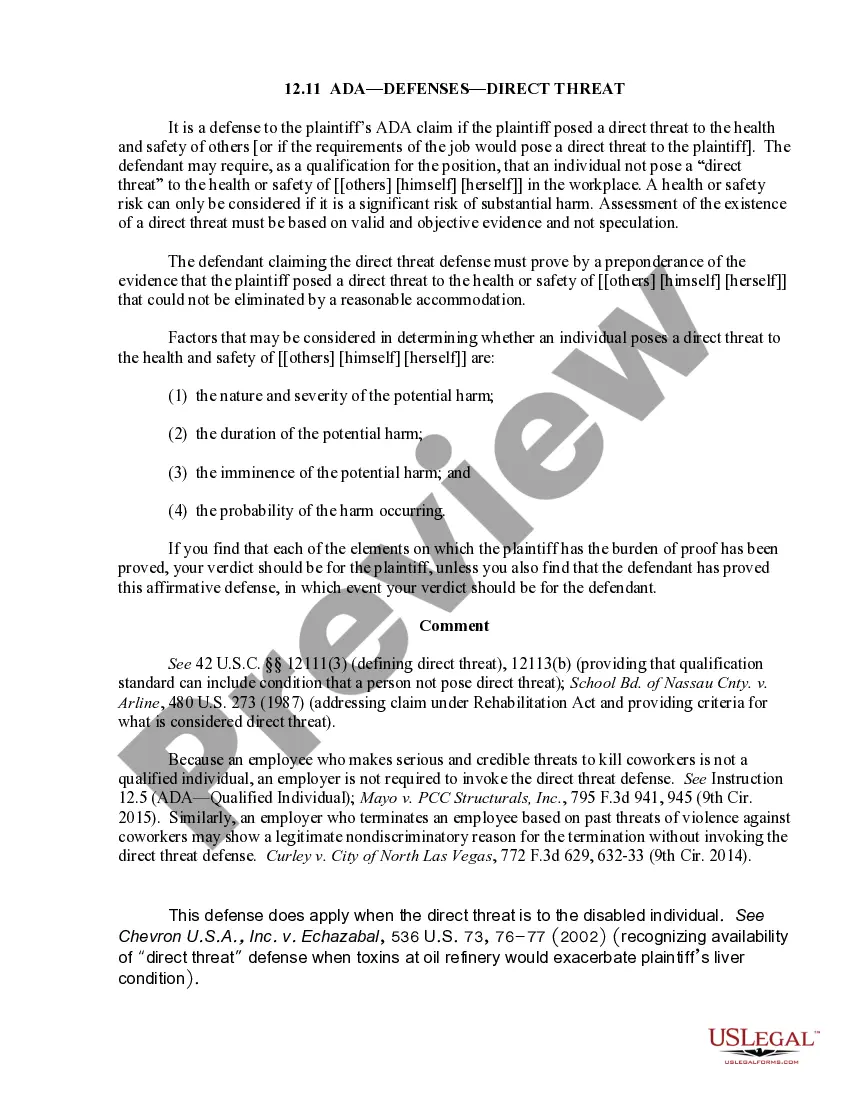
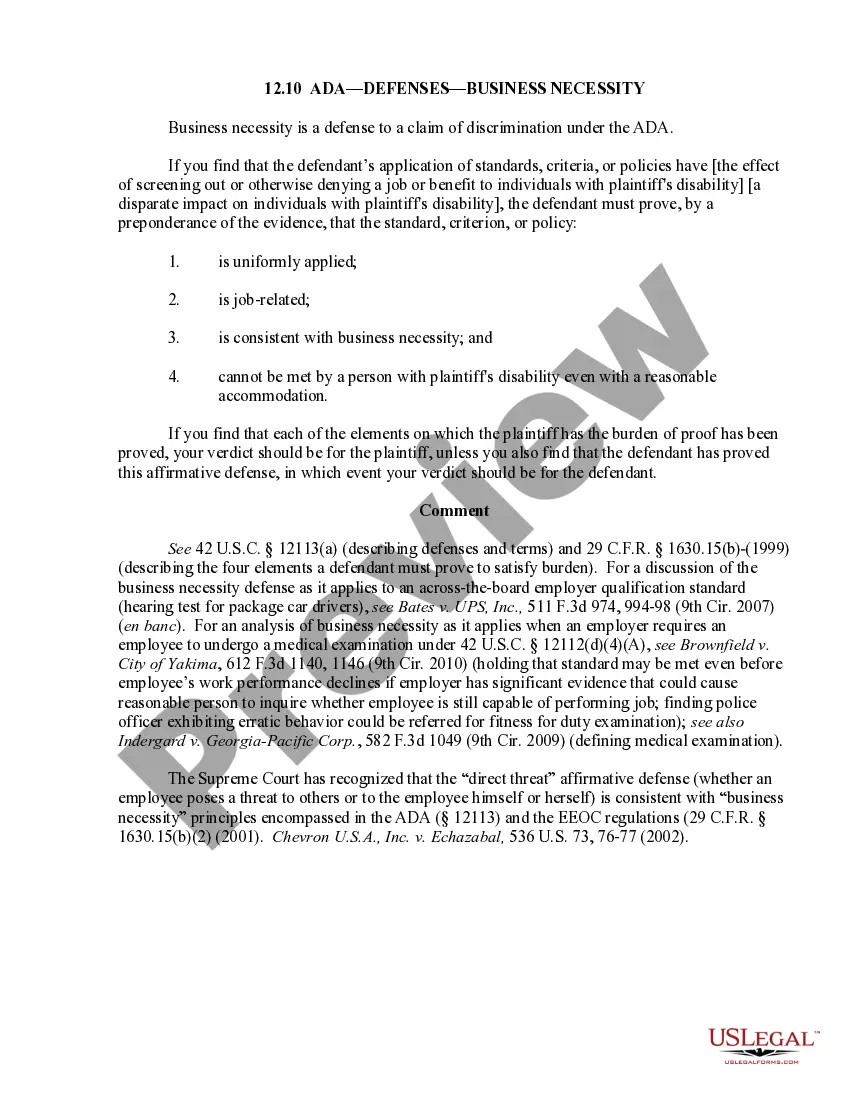
12.11 ADA-Defenses-Direct Threat
Notarization guidance
Notarization is not commonly needed for this form. However, certain documents or local rules may make it necessary. Our notarization service, powered by Notarize, allows you to finalize it securely online anytime, day or night.
Get your form ready online
Our built-in tools help you complete, sign, share, and store your documents in one place.
Make edits, fill in missing information, and update formatting in US Legal Forms—just like you would in MS Word.
Download a copy, print it, send it by email, or mail it via USPS—whatever works best for your next step.
Sign and collect signatures with our SignNow integration. Send to multiple recipients, set reminders, and more. Go Premium to unlock E-Sign.
If this form requires notarization, complete it online through a secure video call—no need to meet a notary in person or wait for an appointment.
We protect your documents and personal data by following strict security and privacy standards.

Make edits, fill in missing information, and update formatting in US Legal Forms—just like you would in MS Word.

Download a copy, print it, send it by email, or mail it via USPS—whatever works best for your next step.

Sign and collect signatures with our SignNow integration. Send to multiple recipients, set reminders, and more. Go Premium to unlock E-Sign.

If this form requires notarization, complete it online through a secure video call—no need to meet a notary in person or wait for an appointment.

We protect your documents and personal data by following strict security and privacy standards.
Looking for another form?
Form popularity
FAQ
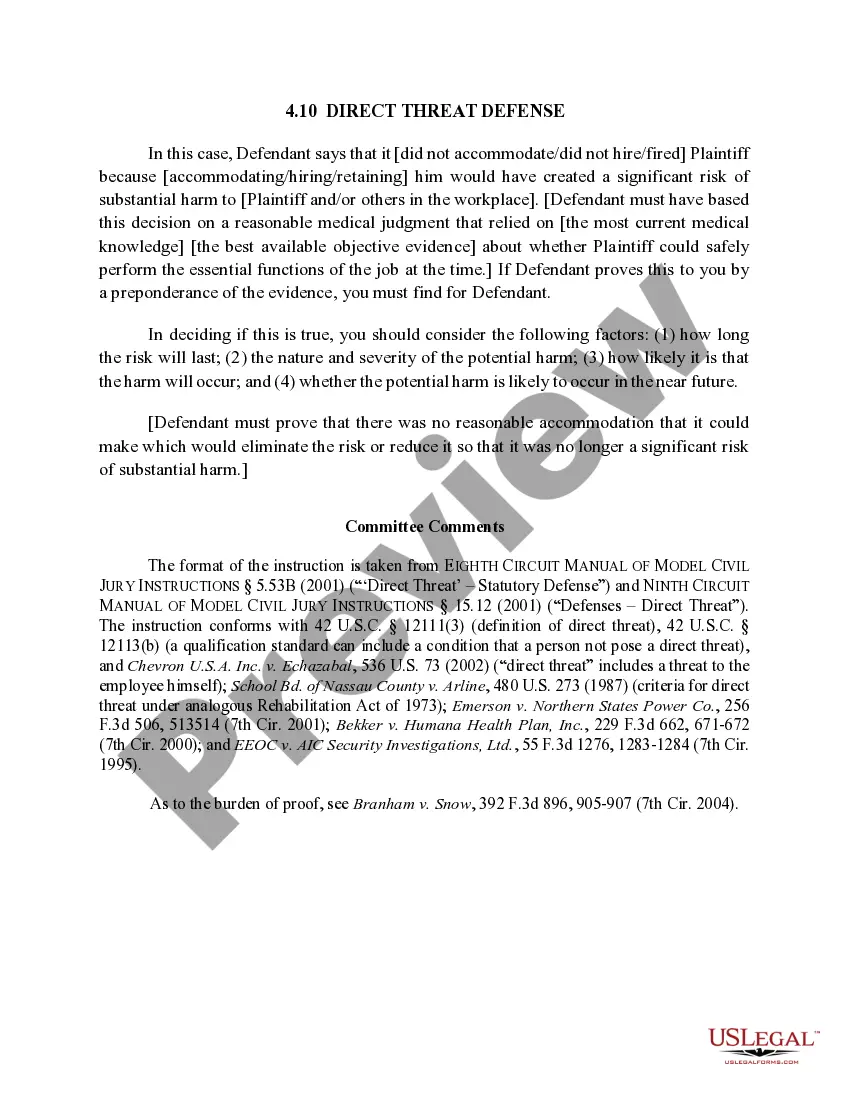
The direct threat defense is a narrow exception to the general rule that employers may not discriminate based on disability. An employer's determination that an employee poses a direct threat cannot be based on fears, misconceptions, or stereotypes about the employee's disability.
Significant risk of substantial harm For an individual with a disability to be considered a direct threat, the risk of harm must be significantly likely to occur AND the amount of potential harm must be substantial.
? Direct threat is a defense that employers may raise to a charge of employment. discrimination against persons with disabilities. ? In some instances, a person's limitations may pose a direct threat to the health and safety. of others in the workplace.
On the defense side, don't forget about any affirmative defenses, such as: undue hardship; undue burden; fundamental alteration; readily achievable, etc. If a title II architectural barrier case, remember readily achievable doesn't enter into the equation.
Direct threat means a significant risk of substantial harm to the health or safety of the individual or others that cannot be eliminated or reduced by reasonable accommodation.
That term ?means a significant risk of substantial harm ? that cannot be eliminated or reduced by reasonable accommodation.? Whether an employee poses a direct threat requires an individualized assessment that is based on a reasonable medical judgment relying on the most current medical knowledge and/or on the best
Direct Threat Under the ADA. The assessment must consider: (1) the duration of the risk; (2) the nature and severity of the potential harm; (3) the likelihood that the potential harm will occur; and (4) the imminence of the potential harm.