Alaska Assignment of Easement
Understanding this form
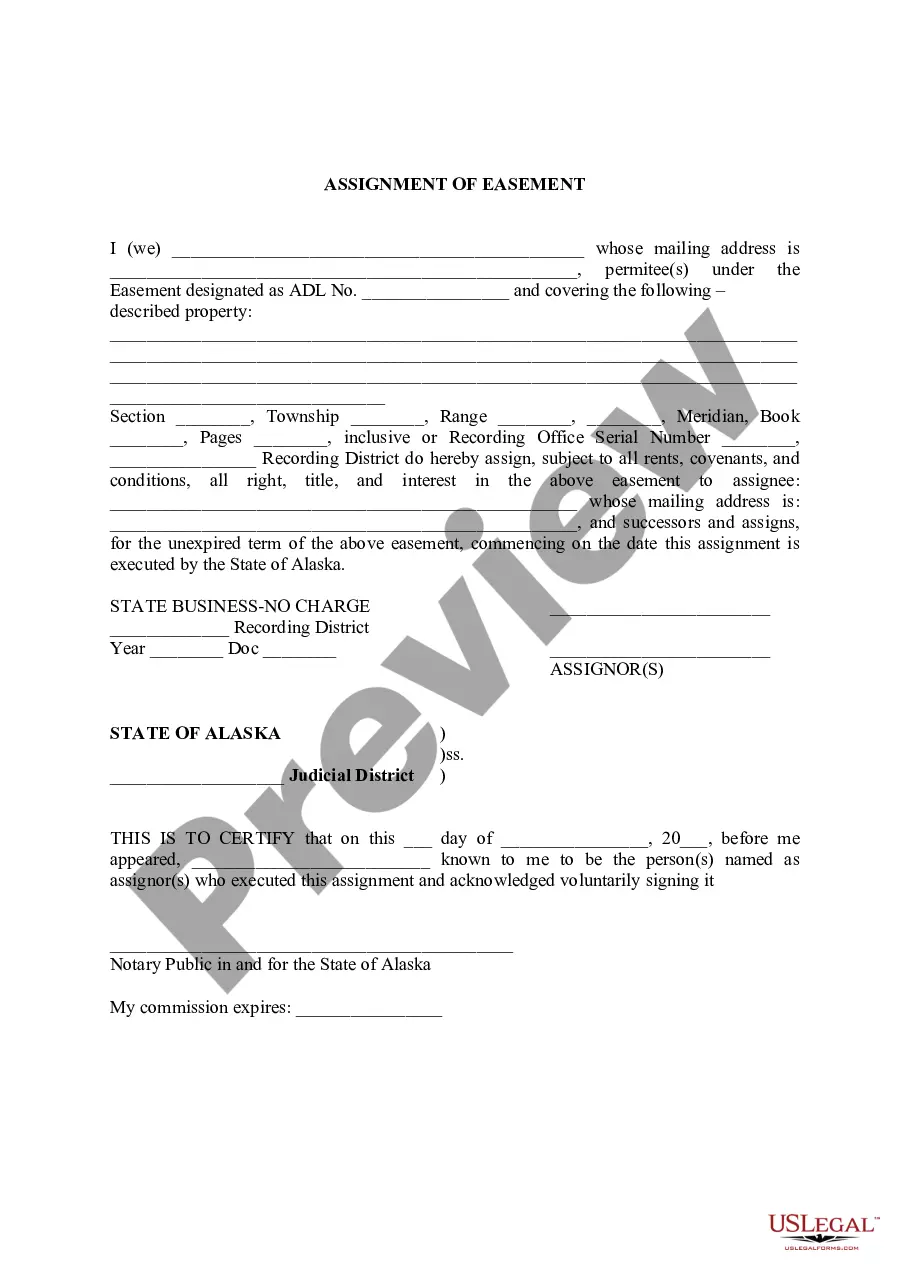
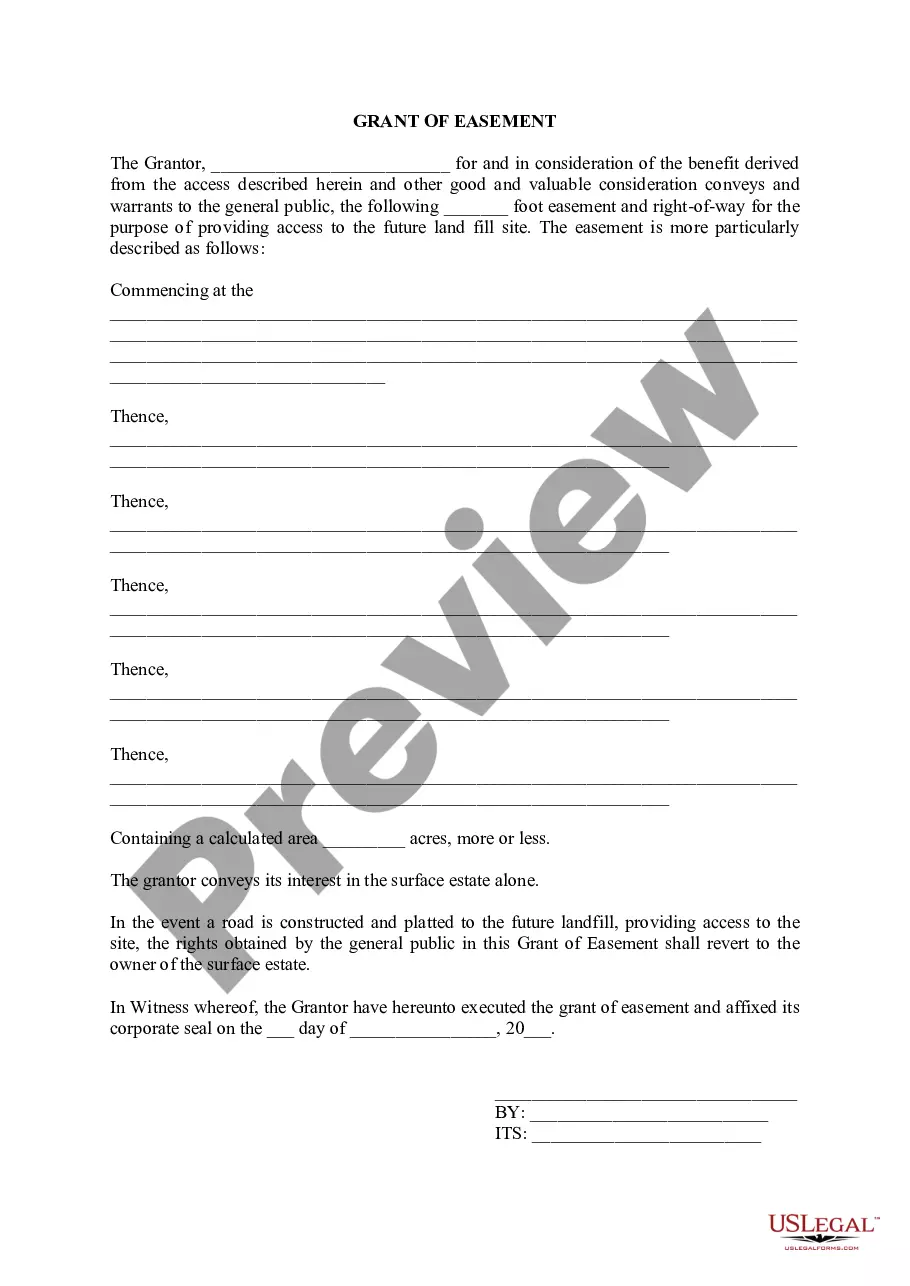
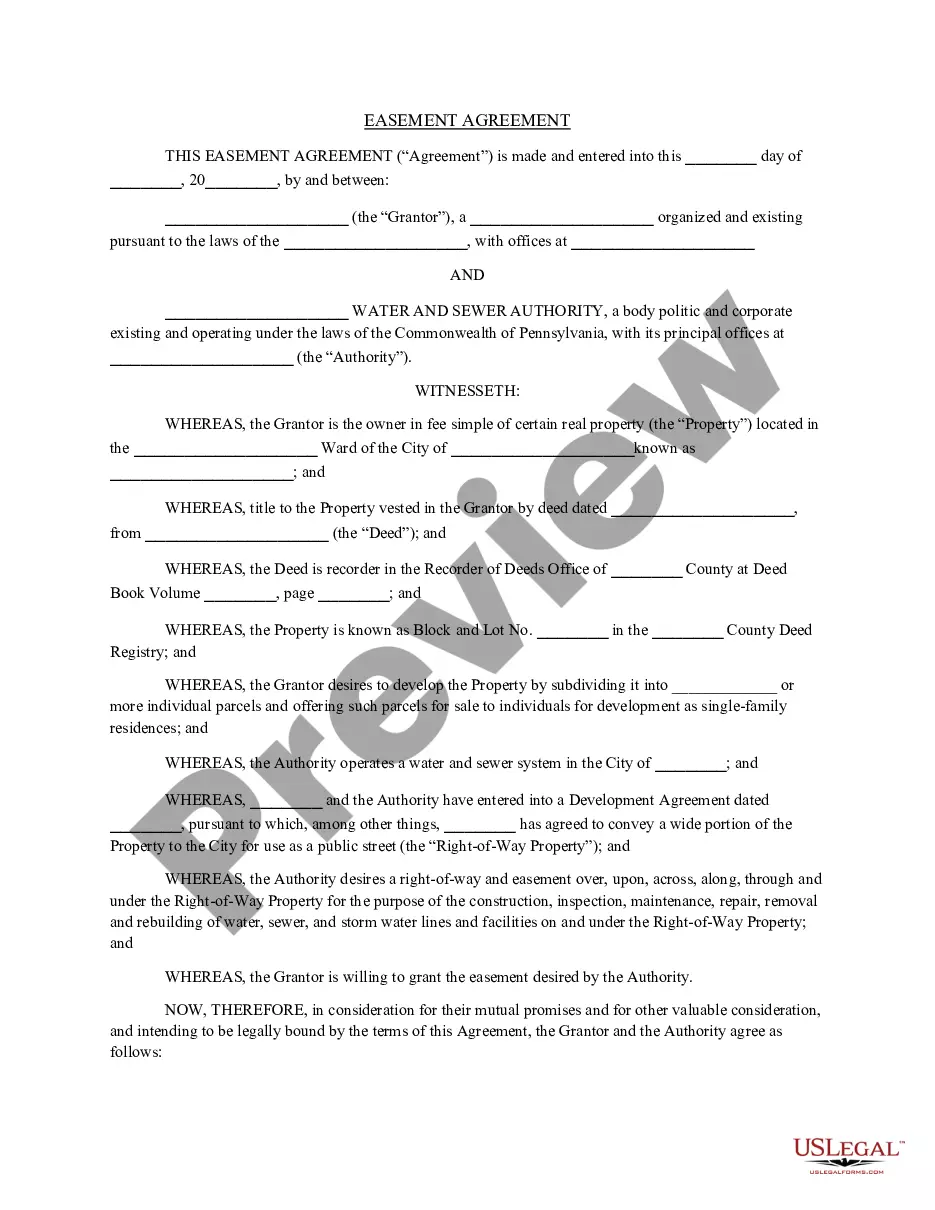
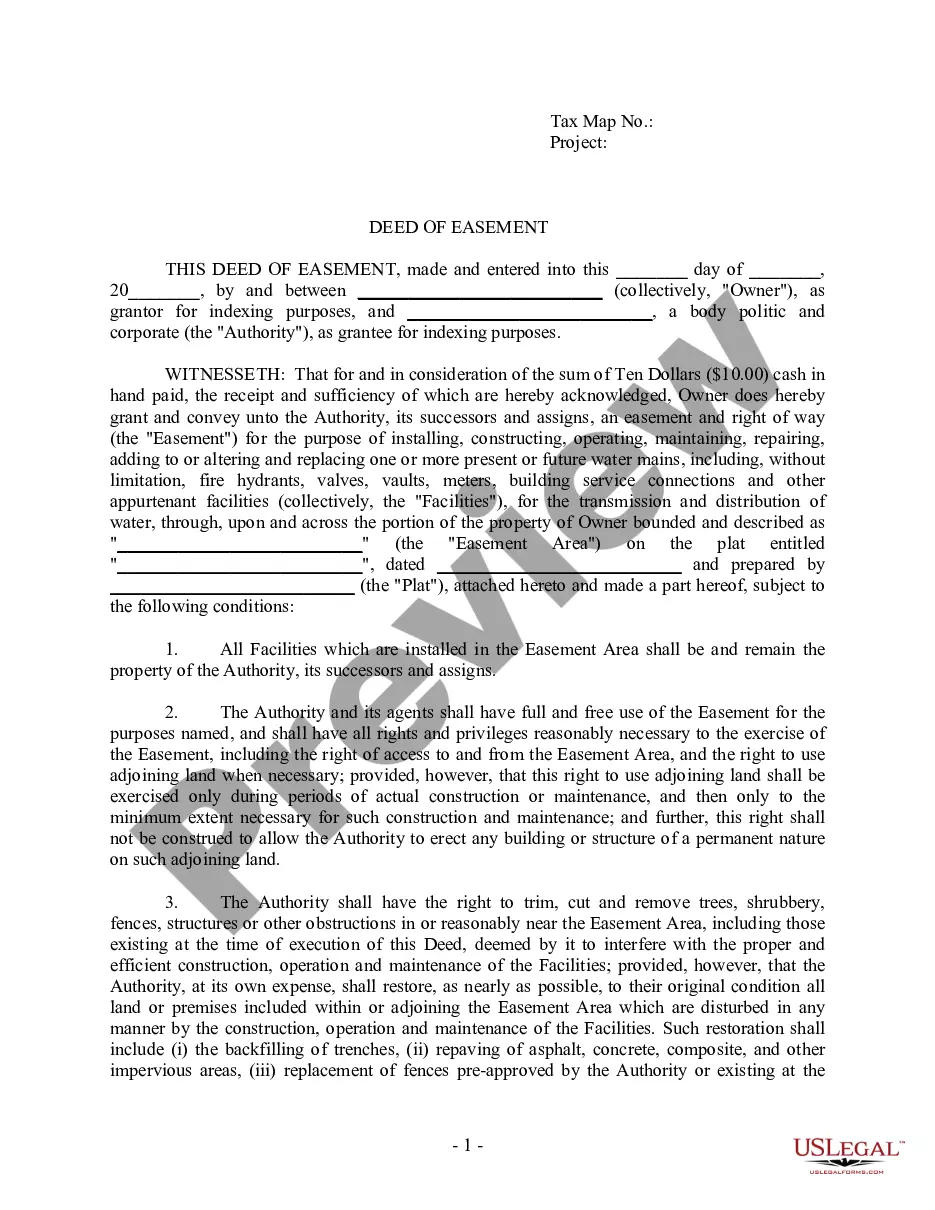
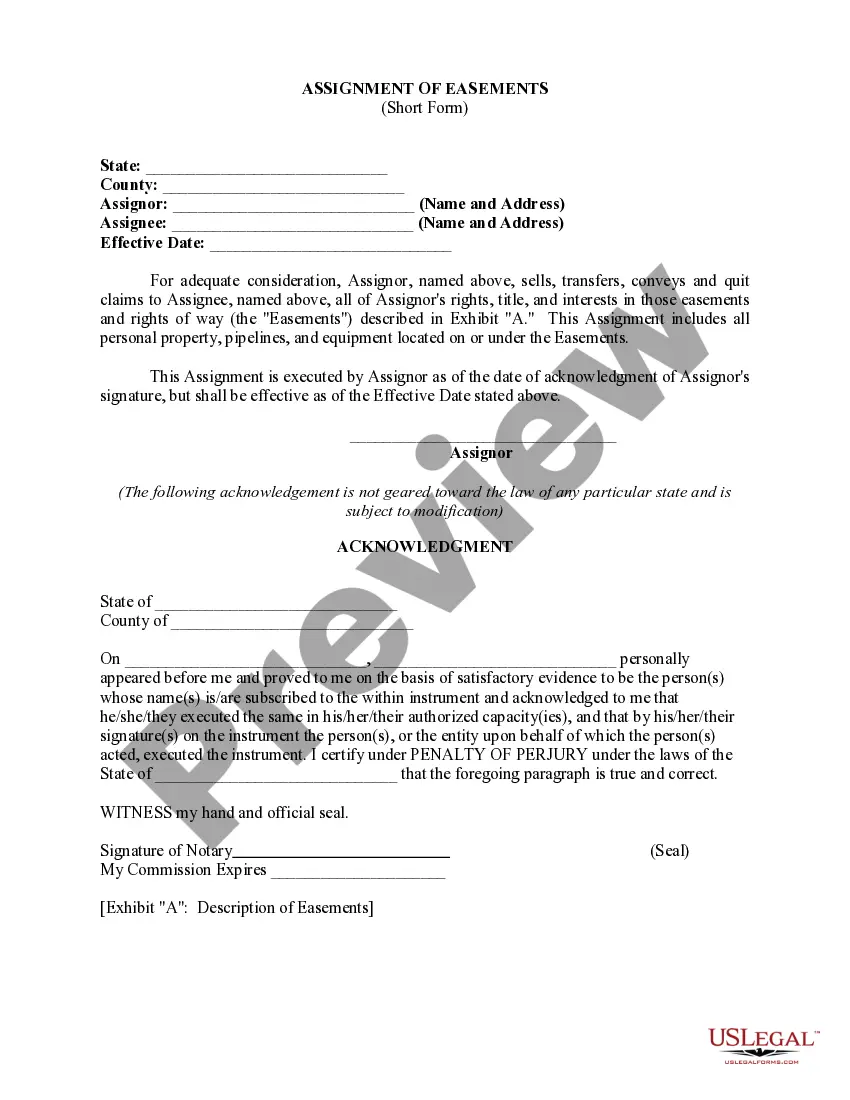
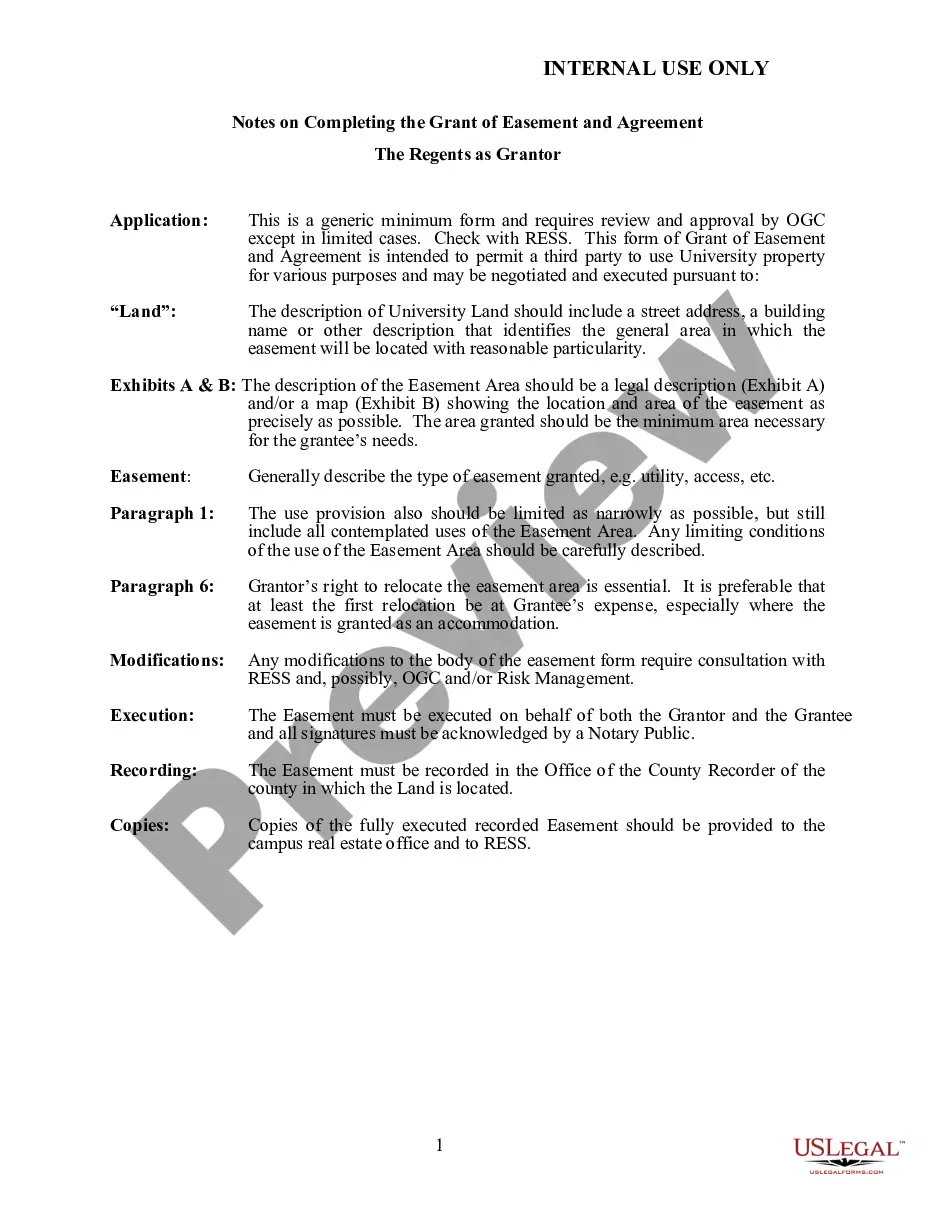
The Assignment of Easement is a legal document that allows a property owner to transfer their rights to an existing easement to another party. An easement is a right that enables someone to use a portion of someone else's land for a specific purpose, such as access or utility installation. This form is crucial for formalizing such rights, ensuring clarity and legal recognition of the assignment between the original easement holder and the new assignee.
Form components explained
- Parties involved: identifies the original easement holder (assignor) and the new easement holder (assignee).
- Description of the property: outlines the specific land subject to the easement.
- Easement designation: includes ADL numbers and details related to the original easement.
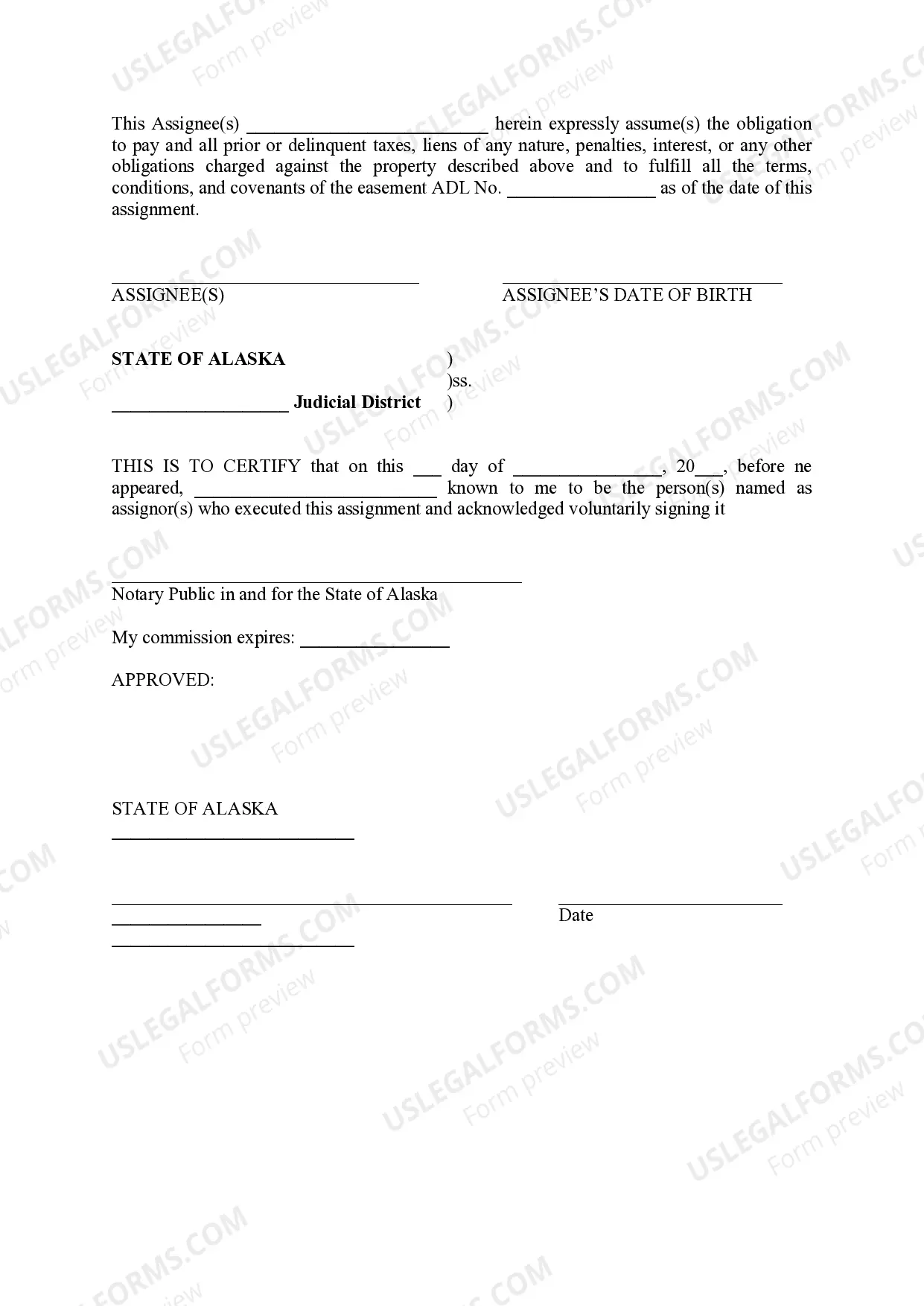
- Obligations of the assignee: specifies the assignee's responsibility for existing taxes and compliance with easement terms.
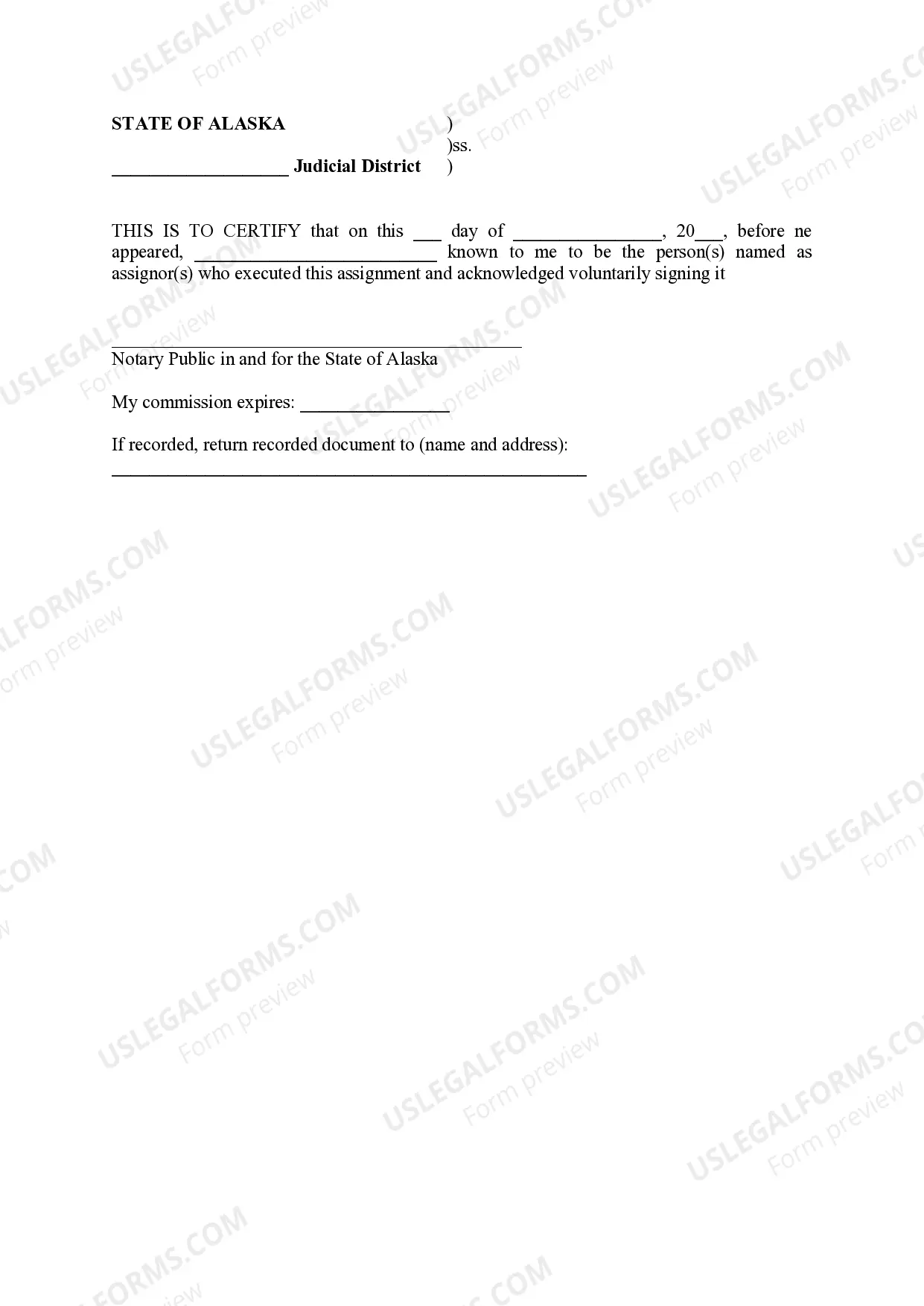
- Notary acknowledgment: confirms the signatures of both parties in the presence of a notary public.
Situations where this form applies
This form should be used when a property owner wishes to transfer an easement to another individual or entity. Common scenarios include changing property ownership, transferring rights for business purposes, or updating contact details for property access. It ensures that the new easement holder has the legal authority to utilize the rights previously held by the original owner.
Intended users of this form
- Property owners looking to assign their rights in an easement.
- Real estate professionals assisting clients with easement transfers.
- Legal representatives handling property transactions involving easements.
- Anyone seeking to formalize an agreement about land use with clear documentation.
How to complete this form
- Identify the parties involved: fill in the names and addresses of both the assignor and assignee.
- Specify the property: provide a detailed description of the property covered by the easement, including legal descriptions.
- Enter the easement designation: include the relevant ADL number and any other identifying information as required.
- Obtain notary signatures: arrange for both parties to sign the document in front of a notary public.
- Ensure compliance: confirm that the assignee understands their obligations regarding property taxes and easement terms.
Does this document require notarization?
Yes, this form must be notarized to be legally valid. The notarization confirms that the signatures on the document are genuine and that both parties entered into the agreement voluntarily. US Legal Forms provides integrated online notarization, available 24/7, ensuring a secure video call experience without needing to travel.
Get your form ready online
Our built-in tools help you complete, sign, share, and store your documents in one place.
Make edits, fill in missing information, and update formatting in US Legal Forms—just like you would in MS Word.
Download a copy, print it, send it by email, or mail it via USPS—whatever works best for your next step.
Sign and collect signatures with our SignNow integration. Send to multiple recipients, set reminders, and more. Go Premium to unlock E-Sign.
If this form requires notarization, complete it online through a secure video call—no need to meet a notary in person or wait for an appointment.
We protect your documents and personal data by following strict security and privacy standards.

Make edits, fill in missing information, and update formatting in US Legal Forms—just like you would in MS Word.

Download a copy, print it, send it by email, or mail it via USPS—whatever works best for your next step.

Sign and collect signatures with our SignNow integration. Send to multiple recipients, set reminders, and more. Go Premium to unlock E-Sign.

If this form requires notarization, complete it online through a secure video call—no need to meet a notary in person or wait for an appointment.

We protect your documents and personal data by following strict security and privacy standards.
Common mistakes
- Failing to provide an accurate legal description of the property.
- Not having the document notarized, which can render it invalid.
- Neglecting to mention all obligations of the assignee regarding the easement.
- Incorrectly identifying parties or not updating addresses, which may lead to legal complications.
Benefits of using this form online
- Convenience of downloading and printing the form from anywhere.
- Editable fields allow for precise input of information.
- Reliable templates drafted by licensed attorneys ensure legal compliance.
- Immediate access to the necessary form, saving time and effort in legal processes.
Main things to remember
- The Assignment of Easement facilitates the transfer of easement rights between property owners.
- It is essential for formalizing the agreement and ensuring legal protection for both parties.
- Proper completion and notarization are crucial for the validity of the document.
- Understanding the specific requirements for your state, especially if located in Alaska, is important.
Looking for another form?
Form popularity
FAQ
Easement deeds provide a valuable tool to grant or restrict land use by a non-owner. They are legal contracts enforceable by law.
A property easement is generally written and recorded with the local assessor's office.
Easements can be created in a variety of ways. They can be created by an express grant, by implication, by necessity, and by adverse possession.
Ask him to grant you a formal easement by deed. Your neighbor the servient, or burdened landowner can give the easement of his own accord, but he is not obligated to do this. The chances are, you will have to negotiate a price; an easement is, after all, an interest in land, which has a value attached to it.
An easement may be created by means of an appropriate dealing registered in NSW LRS or by the inclusion in a Section 88B instrument lodged with a new deposited plan.
When you're buying a house, you might find out that the property has an easement on it. Essentially this means that someone other than you could have access to the land. This isn't necessarily a bad thing. For example, utility companies typically hold easements in case they need to access pipes or cables.
A property easement is a legal situation in which the title to a specific piece land remains with the landowner, but another person or organization is given the right to use that land for a distinct purpose.
Easements can be valid even when not recorded. That being said, an unrecorded easement Is much harder to establish.
An easement appurtenant is an easement that benefits one parcel of land, known as the dominant tenement, to the detriment of another parcel of land, known as the servient tenement.Similarly, if Landowner B sells his property to another landowner, that landowner will be able to use the easement. Easement in Gross.