Alaska Grant of Easement
About this form
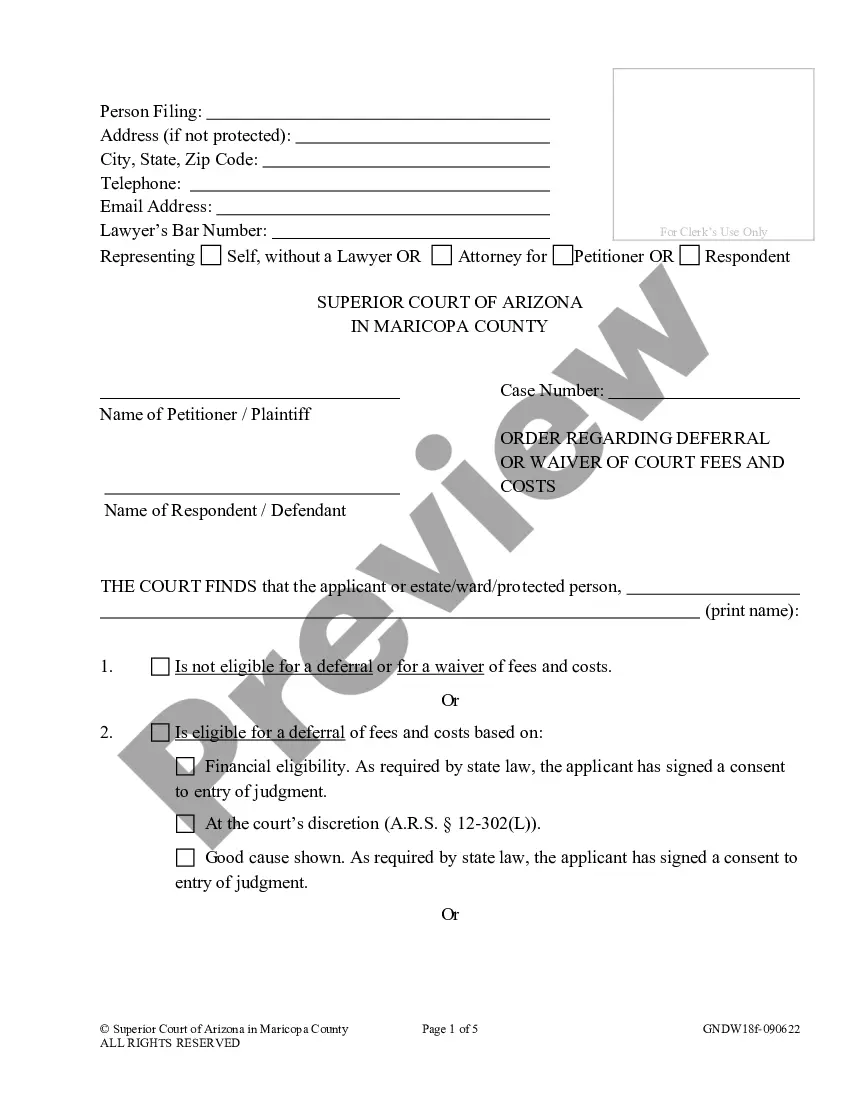
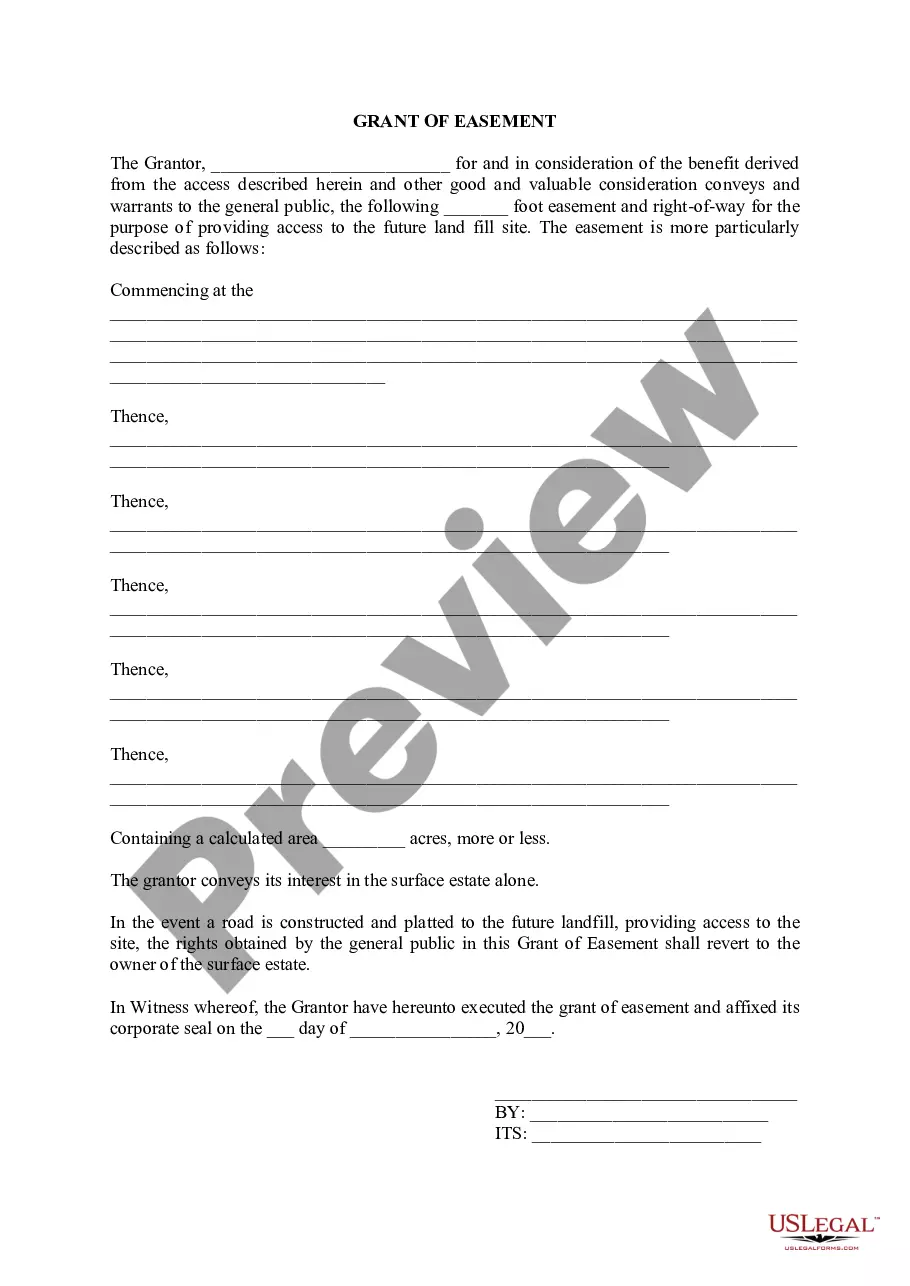
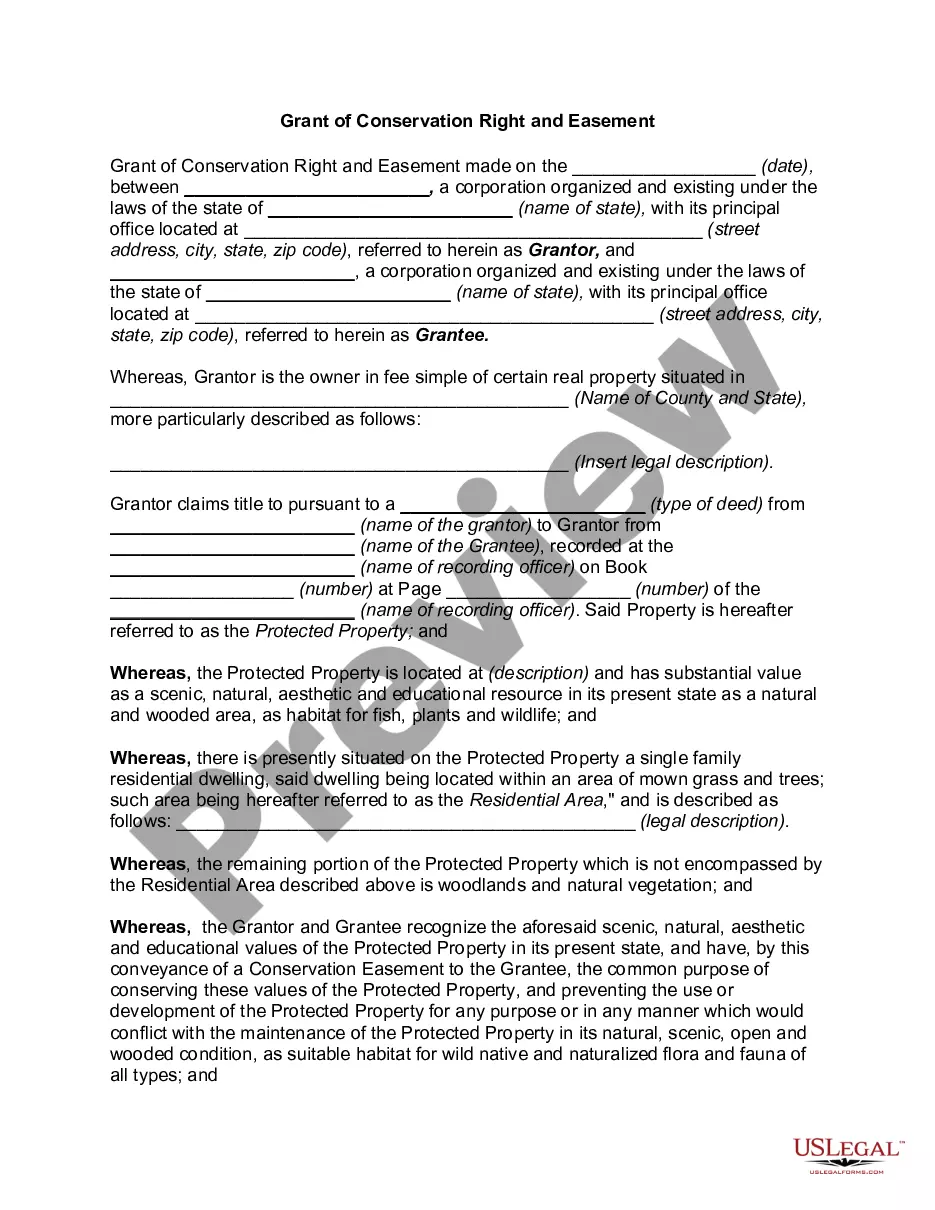
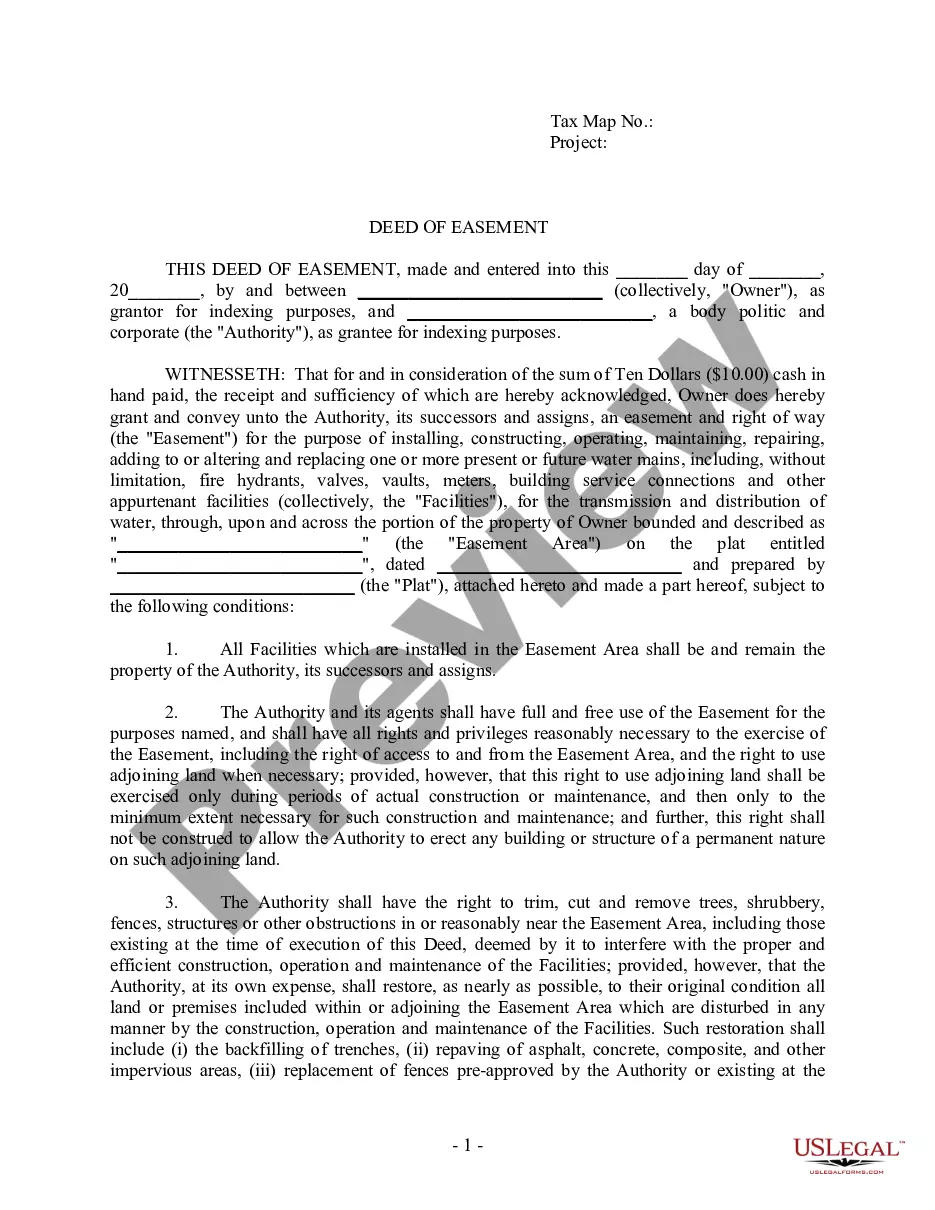
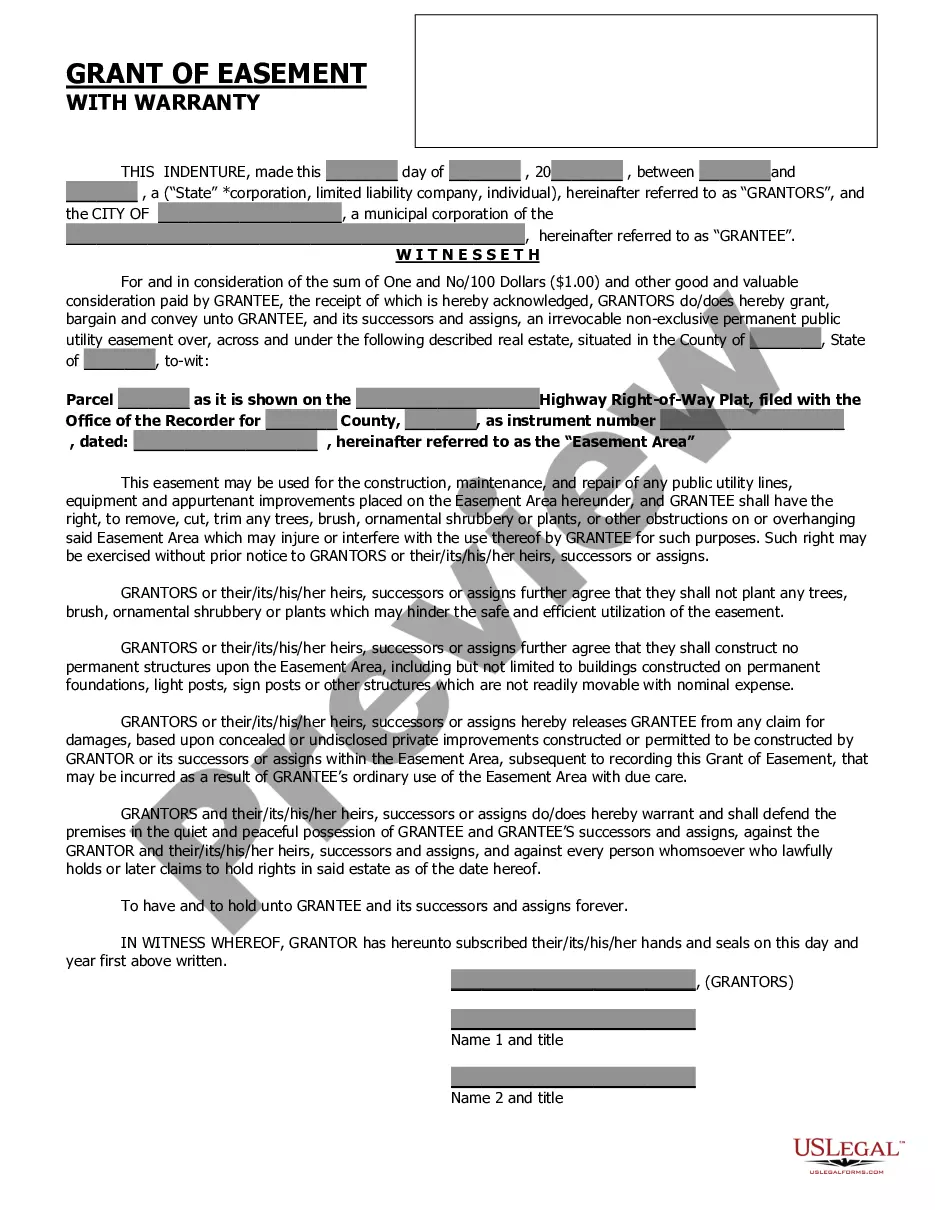
A Grant of Easement is a legal document that allows a person or entity to use another person's land for a specific purpose without owning it. This form specifically grants the general public access to a future landfill site. Unlike other property interest documents, this easement does not transfer ownership of the land but permits use under certain conditions.
Key parts of this document
- Identification of the Grantor (the party granting the easement).
- Description of the easement width and purpose.
- Detailed property descriptions, including starting points and boundaries.
- Statement of rights reversion upon construction of a new road.
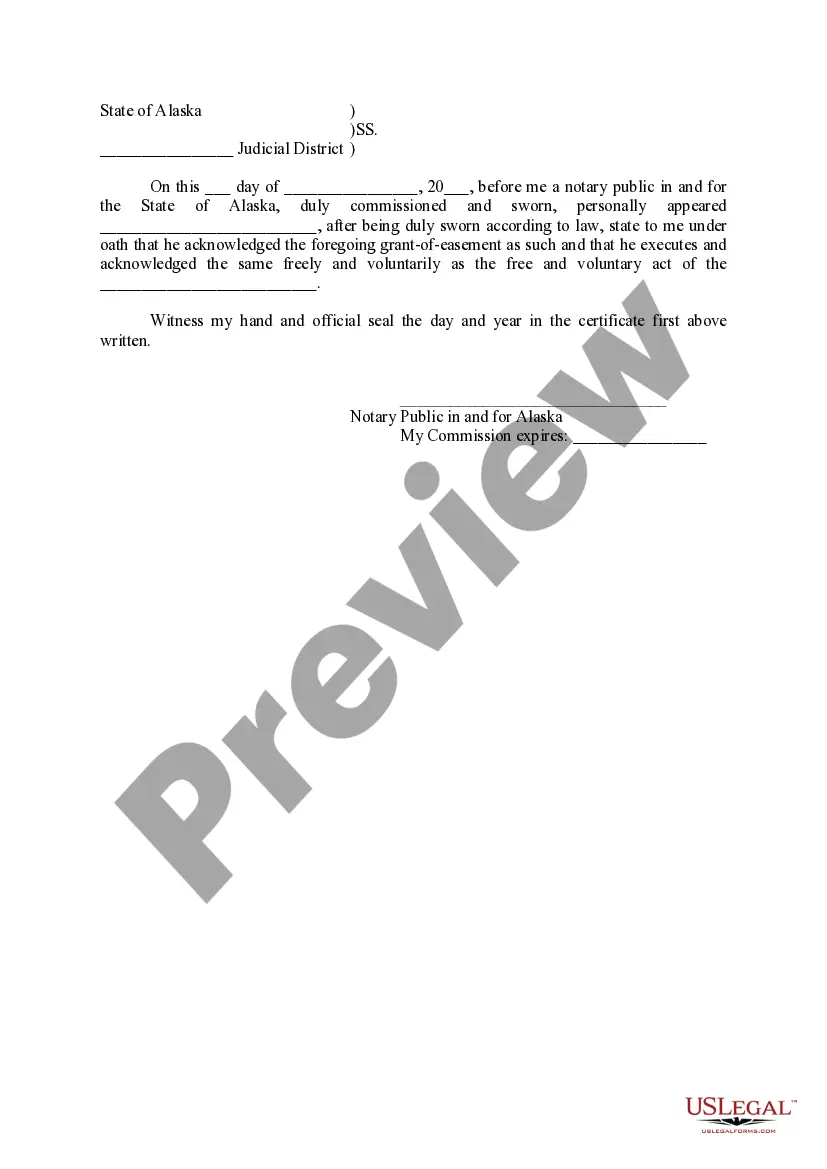
- Signature section for the Grantor and requirement for notarization.

Situations where this form applies
This form should be used when you need to grant an easement to the general public to access a designated area, such as a future landfill site. It is commonly used by property owners or developers who wish to provide temporary access to their land for public utilities or services while retaining ownership rights.
Intended users of this form
- Property owners looking to grant easements for public access.
- Developers planning future land projects that require public utility access.
- Municipal or governmental entities managing land use and access rights.
Steps to complete this form
- Identify the Grantor and provide their name and details.
- Specify the width of the easement and describe its purpose.
- Attach a detailed description of the land and easement boundaries.
- Review and sign the document, ensuring all necessary parties agree.
- Obtain notarization to validate the Grant of Easement.
Does this form need to be notarized?
Yes, this form must be notarized to be legally valid. US Legal Forms offers integrated online notarization services, allowing you to complete this process securely via a video call at any time, without the need to travel.
Get your form ready online
Our built-in tools help you complete, sign, share, and store your documents in one place.
Make edits, fill in missing information, and update formatting in US Legal Forms—just like you would in MS Word.
Download a copy, print it, send it by email, or mail it via USPS—whatever works best for your next step.
Sign and collect signatures with our SignNow integration. Send to multiple recipients, set reminders, and more. Go Premium to unlock E-Sign.
If this form requires notarization, complete it online through a secure video call—no need to meet a notary in person or wait for an appointment.
We protect your documents and personal data by following strict security and privacy standards.

Make edits, fill in missing information, and update formatting in US Legal Forms—just like you would in MS Word.

Download a copy, print it, send it by email, or mail it via USPS—whatever works best for your next step.

Sign and collect signatures with our SignNow integration. Send to multiple recipients, set reminders, and more. Go Premium to unlock E-Sign.

If this form requires notarization, complete it online through a secure video call—no need to meet a notary in person or wait for an appointment.

We protect your documents and personal data by following strict security and privacy standards.
Common mistakes to avoid
- Failing to accurately describe the easement boundaries.
- Not obtaining the required notarization.
- Leaving out essential details about the purpose of the easement.
Advantages of online completion
- Immediate access to professionally drafted forms tailored for your needs.
- Convenient download options that allow you to fill out the form at your own pace.
- Secure and reliable, ensuring compliance with legal standards.
Summary of main points
- A Grant of Easement allows public access to private land for specified uses.
- Accurate and detailed property descriptions are crucial.
- Notarization is required for legal validity.
Looking for another form?
Form popularity
FAQ
Rights of way (similar to the driveway example, but also including walkways or pathways); Public utilities, such as gas, electricity or water and sewer mains; Parking areas; Access to light and air; and. Shared walls.
A property easement is generally written and recorded with the local assessor's office. The documented easement will show up when a title search is conducted and it stays there indefinitely, unless both parties agree to remove it.
While an unrecorded easement may still be enforceable, the easement may be nullified by a "bona fide purchaser" of the property if the property is sold for value and the subsequent purchaser has no notice (constructive or otherwise) of the unrecorded easement.
Creating an easement requires the same formalities as the transferring or creating of other interests in land. It typically requires a written document, a signature, and proper delivery of the document.Easements of necessity are typically implied to give access to a landlocked piece of property.
The value of the easement is based on the difference between the value of the whole property before the taking and its value after the taking with the easement in place.
An easement may be created by means of an appropriate dealing registered in NSW LRS or by the inclusion in a Section 88B instrument lodged with a new deposited plan.
Include the whole length and width. Do this by reference to plans and a ground inspection. Deduct the "after scenario" value from the "before scenario" value to arrive at a value per unit of the easement land. Multiply by the measured area of the easement land to arrive at a total market value.
A Legal Easement is an easement that is Recorded in the same County Office where Deeds to Property are Recorded. This easement is also called a Deeded Easement or a Recorded Easement.No other type of easement gives you the legal right to cross someone's private land to access your land.
In most situations, easements will not decrease the value of the property. If the easement has strict rules or requirements the property owner must follow, however, it can affect property value and marketability.